Author: admin

  • Digital Transformation Consulting for Professional Services: Bringing Proven Automation into Legal and Accounting Firms

    Digital Transformation Consulting for Professional Services: Bringing Proven Automation into Legal and Accounting Firms

    For law firms, accounting practices, and other professional services organizations, digital transformation is no longer defined by adding another software subscription. It is defined by how effectively the firm connects its people, data, decisions, and client experience.

    Partners and managing directors often see the same operational pattern: strong professionals supported by fragmented systems. Intake arrives through email, websites, phone calls, and referrals. Conflict checks depend on manual searches. Matter or engagement setup requires repeated data entry. Time capture happens after the fact. Billing teams reconcile information across platforms. Client documents move through inboxes and shared folders without a consistent operating model.

    These issues are not simply administrative inconveniences. They affect responsiveness, realization, utilization, risk management, and the firm’s capacity to grow without adding proportional overhead.

    Pure Technology Consulting approaches this challenge through digital transformation consulting and business process automation consulting. The objective is not to force a law or accounting firm into a generic technology model. It is to adapt proven architectures from adjacent industries to the firm’s specific workflows, governance requirements, and growth strategy.

    Transformation begins with the operating model

    The most effective automation initiatives start with the way work actually moves through the organization.

    A professional services firm may use a CRM, practice management platform, document management system, accounting software, timekeeping application, and communication tools. Each system may function adequately on its own. The operational drag appears in the handoffs between them.

    A prospective client submits information, but the data does not automatically become a structured intake record. A conflict check may require searching multiple databases. Once a matter or engagement is approved, staff may recreate information in several systems. Time entries, billing rules, expenses, and payment data may not align cleanly enough to support timely reporting.

    A transformation roadmap should therefore answer practical questions:

    • Where does a client, matter, or engagement first enter the firm?
    • Which decisions require partner or manager approval?
    • Which data should become the authoritative record?
    • What exceptions require human judgment?
    • Which systems need to exchange information?
    • How should the firm measure cycle time, utilization, realization, and profitability?

    The answers create the foundation for automation. Technology follows the operating model rather than defining it.

    Proven architecture from adjacent industries

    Pure Technology Consulting is not approaching legal and accounting automation as a blank-page exercise. Our work across healthcare, field operations, fintech, debt management, and local search has required many of the same architectural disciplines professional services firms need.

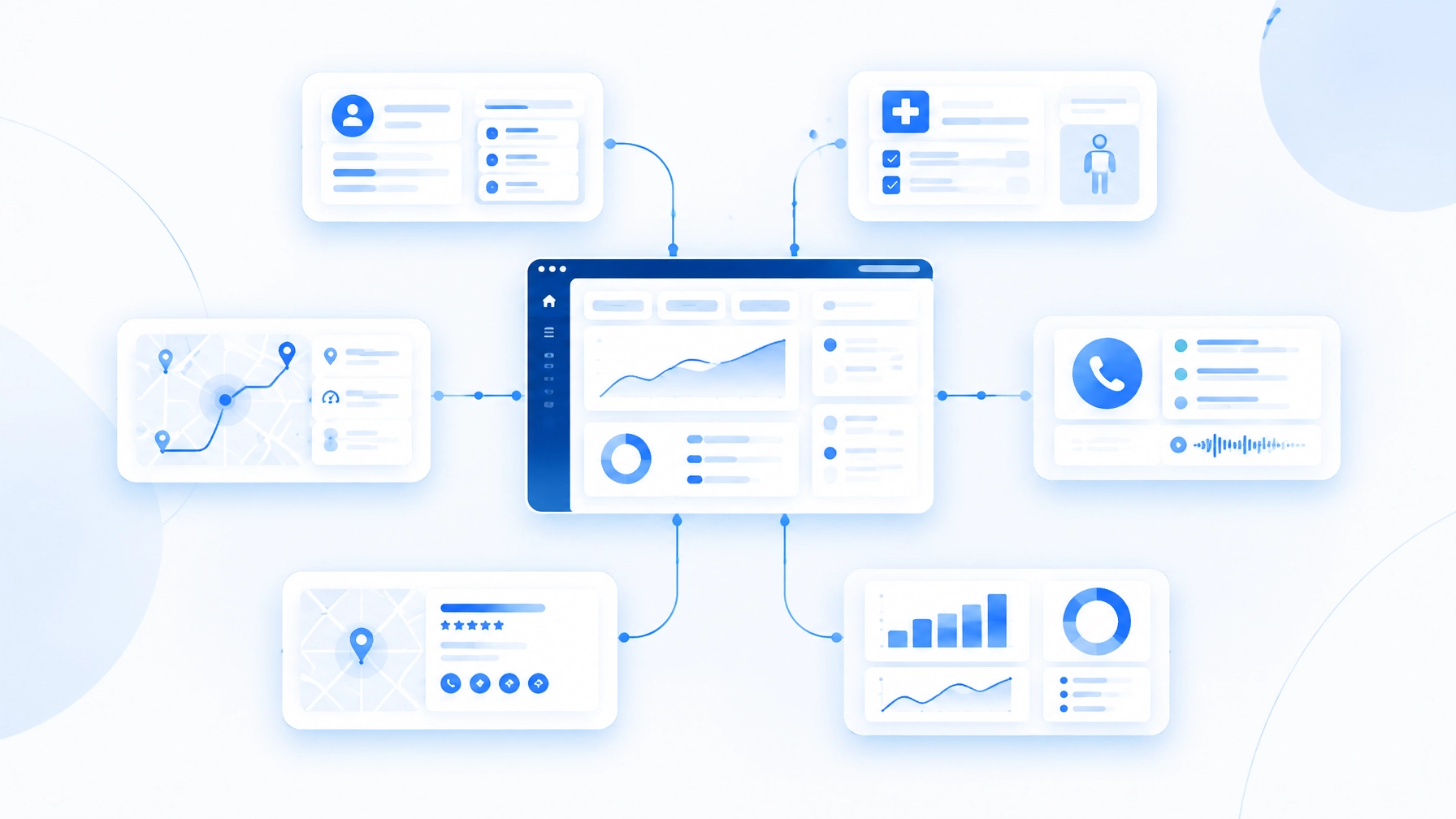
    Abstract illustration showing healthcare, field operations, telephony, and local SEO systems converging into a governed workflow

    Healthcare: structured intake and matching logic

    Our Thrive and EHRIO work demonstrates how a complex intake journey can be converted into structured, actionable data. A workflow may include approximately 70 questions, conditional paths, matching logic, scheduling requirements, document collection, and HIPAA-adjacent controls.

    The important capability is not the healthcare interface itself. It is the architecture behind it:

    • Structured data capture instead of unsearchable email or PDFs
    • Rules-based routing and matching
    • Role-based review queues
    • Exception handling
    • Integration with downstream systems
    • Activity history and audit-oriented records

    For a law firm, the equivalent may be a guided client intake that captures matter type, jurisdiction, parties, referral source, urgency, conflicts information, and required documents before routing the opportunity to the appropriate practice group.

    For an accounting practice, the same pattern may support tax, audit, advisory, or bookkeeping intake, with different questions and approval paths based on service line and client profile.

    Operations and field work: accountability across distributed activity

    D2D Tracking demonstrates another relevant capability: connecting activity to accountability through GPS-verified rep workflows.

    Professional services firms may not need GPS logging, but they do need visibility into distributed work. Partners, associates, managers, and administrative teams often operate across offices, matters, engagements, and client accounts. A custom system can define ownership, record status changes, surface bottlenecks, and show where work is accumulating.

    The shared principle is operational visibility. Leadership should not have to wait for a monthly report to discover that a client onboarding process is stalled or that a matter setup queue is creating downstream billing delays.

    Fintech and debt: telephony integrations and attribution

    Debt agency systems have required integrations between telephony, call records, attribution logic, follow-up workflows, and reporting.

    That experience translates to professional services in several ways. Firms may want to associate inbound communications with a client or prospect, record the responsible team, preserve a history of interactions, and trigger next steps based on the outcome of a call.

    The architecture must preserve context across systems. A phone call should not become an isolated event. It should contribute to the client record, business-development workflow, service request, or engagement timeline.

    Local SEO: multi-entity governance at scale

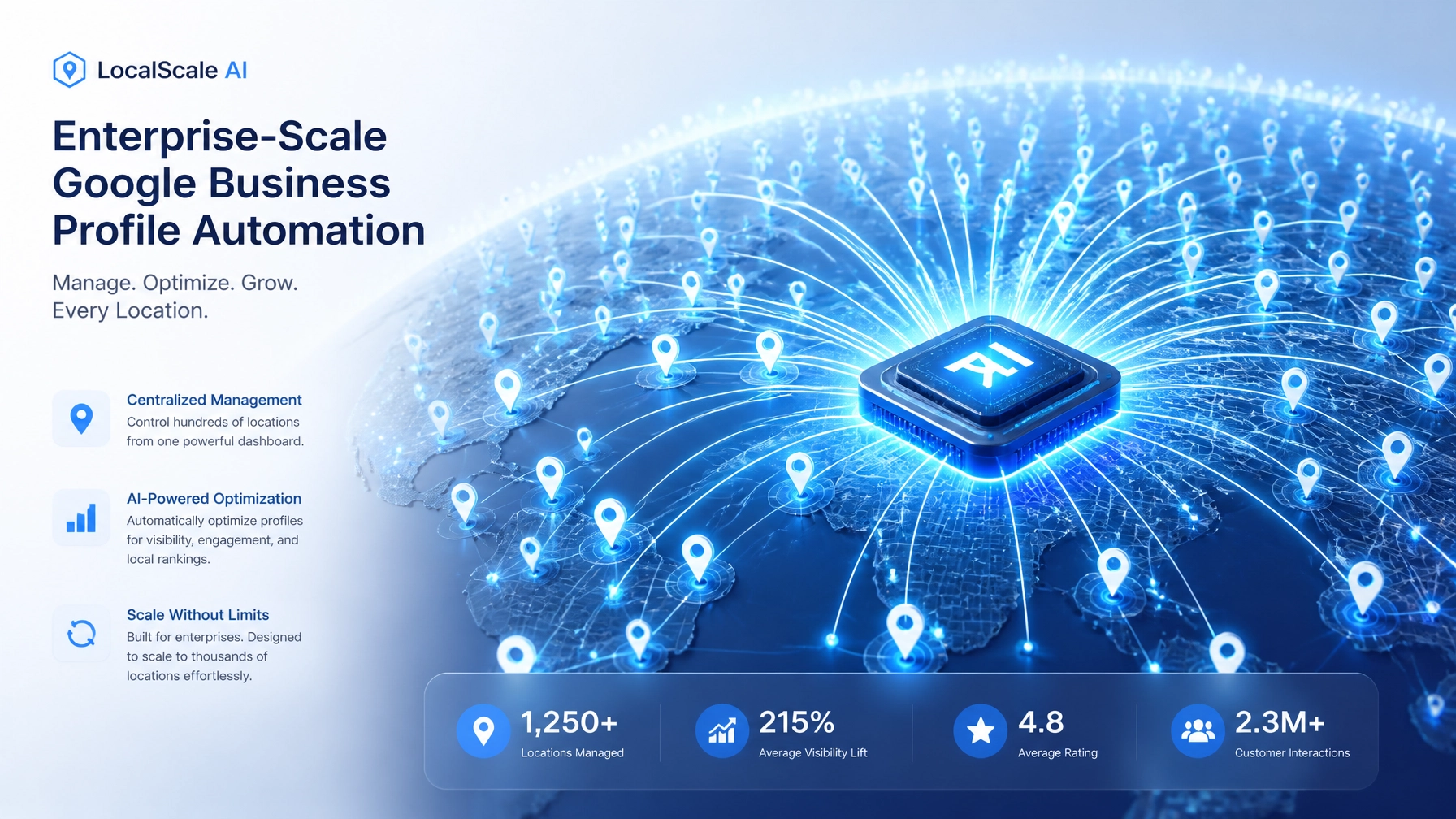
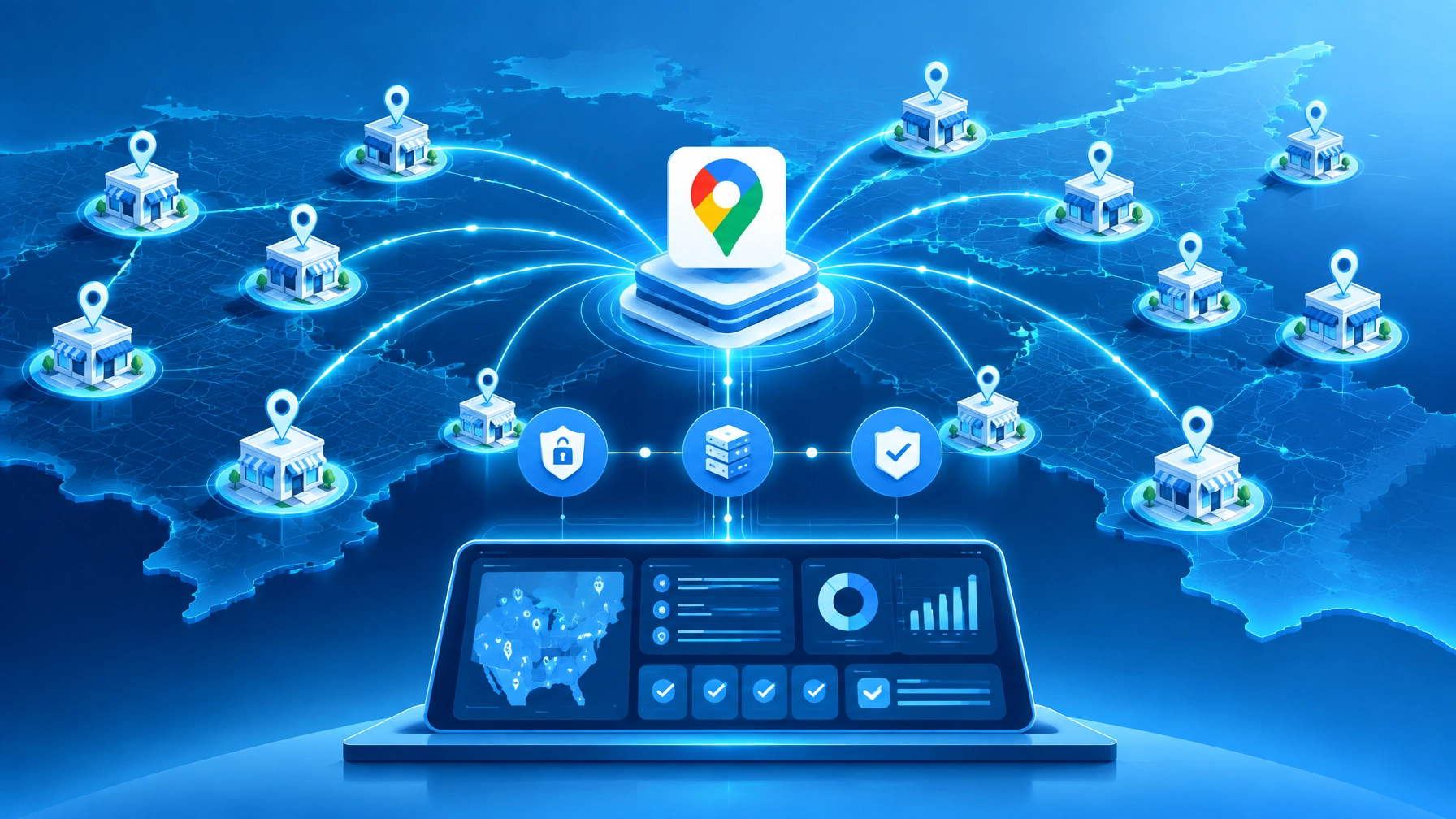
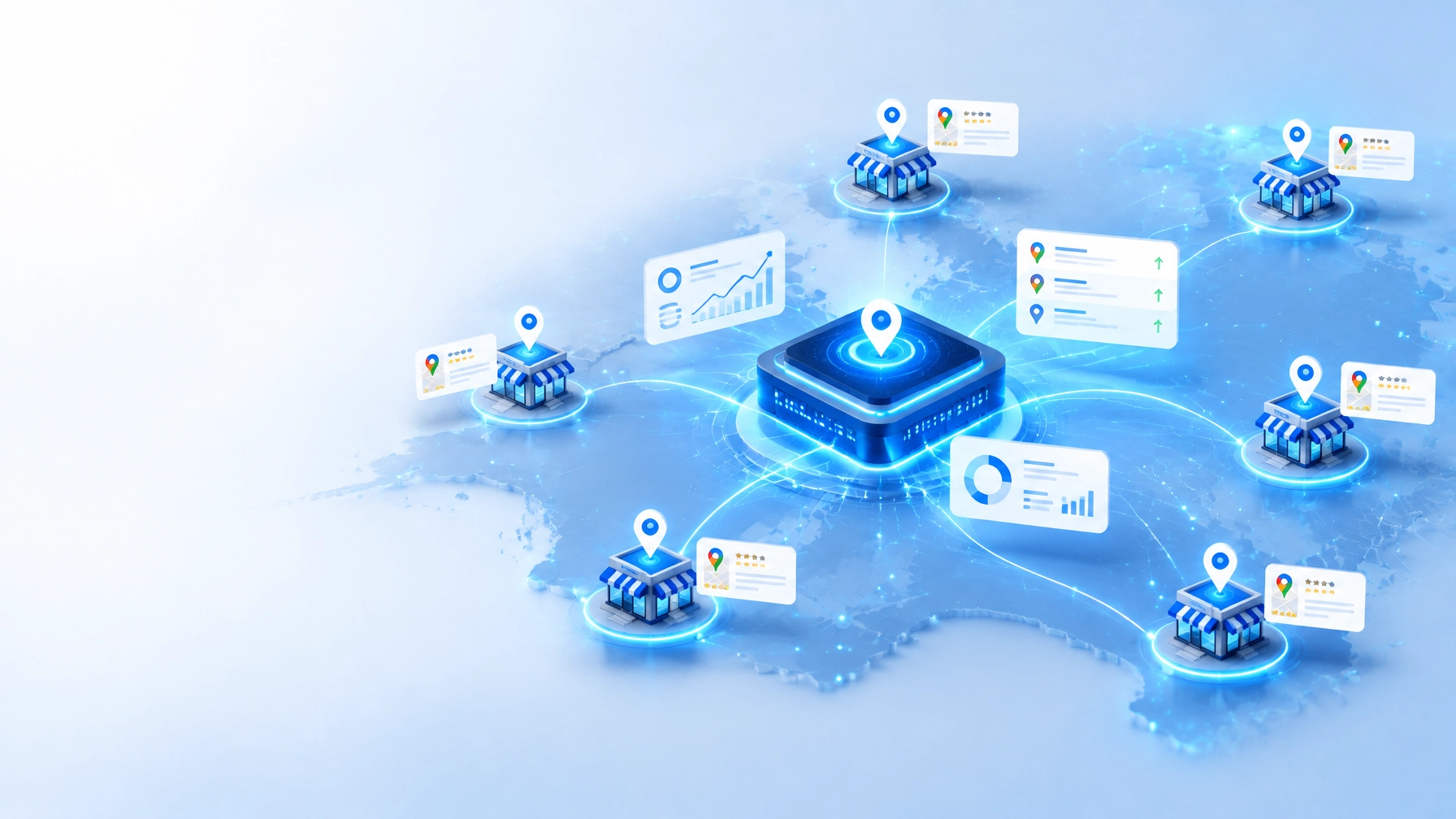
    AI Local Boost was engineered as a proof-of-concept for managing Google Business Profile workflows across multiple business entities and locations. It demonstrates tenant-aware data structures, role-based permissions, approvals, scheduled activity, error handling, dashboards, and change history.

    The platform is not presented as a product for law or accounting firms to purchase. It is evidence of PTC’s ability to design complex, scalable systems where central governance must coexist with local or departmental control.

    That same architecture can support multiple offices, practice groups, client portfolios, entities, or service lines within a professional services environment.

    The shared architecture behind effective automation

    Across these proof-of-work examples, the same technical pattern appears repeatedly.

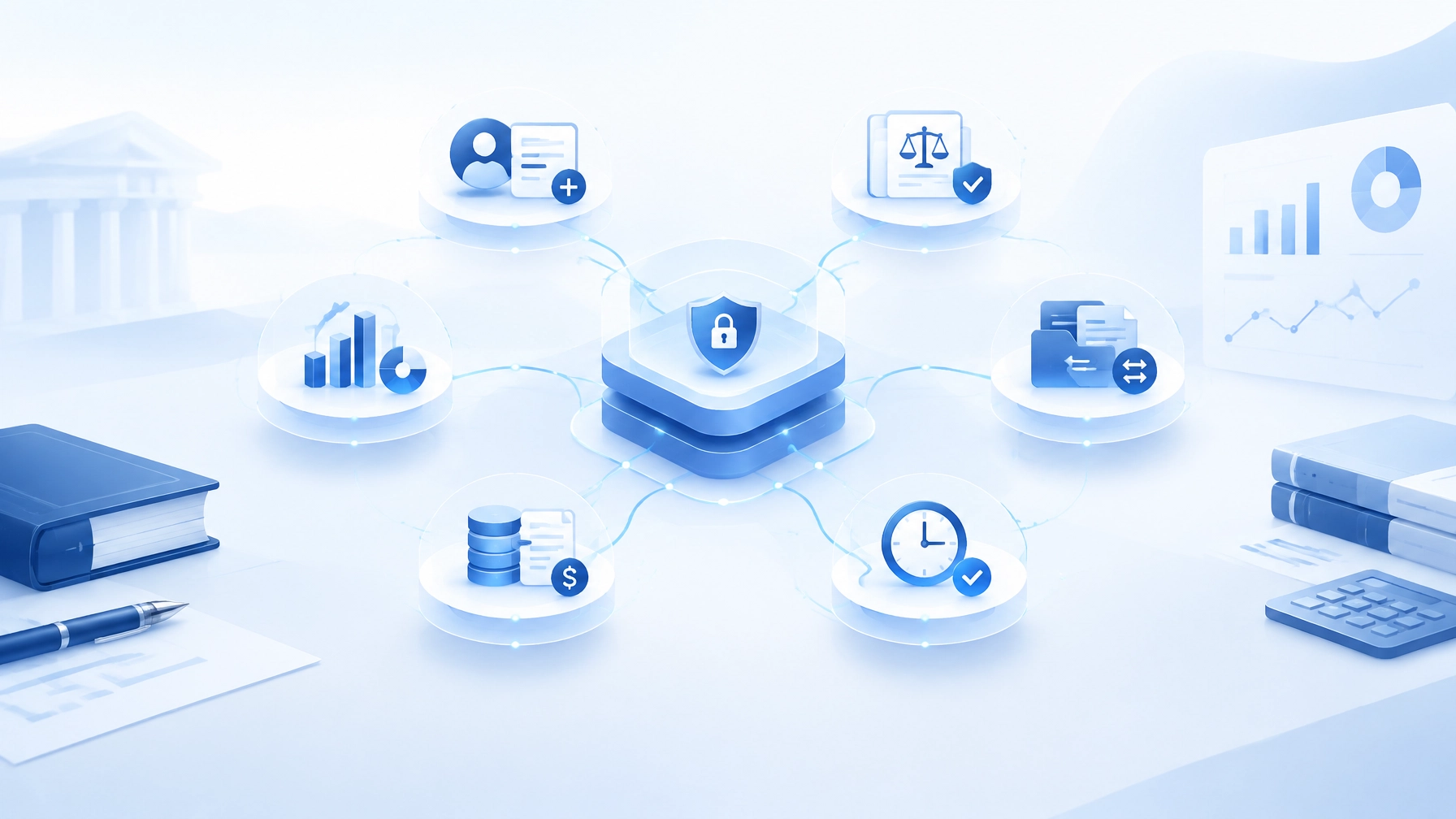
    Professional services operating system illustration showing secure intake, conflict checks, document exchange, time capture, billing, and analytics

    Multi-entity data governance

    A firm must be able to distinguish among clients, prospects, matters, engagements, offices, departments, service lines, and responsible professionals. Data models should support those relationships without forcing teams to maintain duplicate records in spreadsheets.

    Role-based workflow

    Not every user should see or approve the same information. Partners, associates, billing teams, intake coordinators, and administrators may require different permissions and queues.

    Audit trails

    Important actions should be traceable. A governed system can record who reviewed an intake, approved a matter, changed a billing status, uploaded a document, or modified a workflow decision.

    Integration layers

    Automation should connect existing systems where practical rather than replacing every platform at once. APIs, webhooks, scheduled synchronization, and controlled data exchange can reduce duplicate entry while preserving the firm’s investment in core software.

    Operational dashboards

    Leadership needs more than activity counts. Dashboards should help answer whether matters are being opened on time, whether onboarding is stalled, whether time is being captured accurately, whether invoices require repeated correction, and where utilization or realization is changing.

    Where professional services firms can apply automation

    A focused transformation initiative may begin with one high-value workflow and expand from there.

    Client intake and conflict checks

    A guided intake system can collect structured information, identify missing fields, check client and party records, and route exceptions for human review. The goal is not to automate professional judgment. It is to make the relevant information available earlier and reduce avoidable administrative work.

    Matter and engagement setup

    Once work is approved, a workflow can create the appropriate records, assign ownership, generate task lists, request documents, and notify relevant teams. This reduces the gap between winning work and being ready to deliver it.

    Time capture and billing reconciliation

    Custom workflow logic can connect time entries, rates, expenses, budgets, billing rules, and invoice status. Instead of discovering inconsistencies at month-end, teams can surface exceptions earlier and direct them to the right reviewer.

    Utilization and profitability reporting

    A reporting layer can unify operational and financial data to show utilization, realization, matter or engagement performance, write-offs, cycle times, and workload distribution. The value is not another dashboard. It is a more reliable basis for management decisions.

    Client onboarding and document exchange

    A secure client portal or workflow can organize questionnaires, documents, approvals, deadlines, and communications in one experience. Clients receive clearer next steps, while internal teams gain visibility into incomplete requests and outstanding dependencies.

    A practical roadmap for transformation

    Staged digital transformation roadmap from assessment to pilot, scale, and continuous optimization

    A responsible engagement typically moves through four stages:

    1. Assess: Map current workflows, systems, data ownership, handoffs, and bottlenecks.
    2. Prioritize: Select a process where operational impact is meaningful and scope can be governed.
    3. Pilot: Build and test the workflow with representative users, integrations, permissions, and reporting.
    4. Scale: Expand across practice groups, offices, or service lines after the operating model has been validated.

    This staged approach avoids two common mistakes: purchasing technology before defining the process, and attempting a firmwide transformation without learning from a controlled implementation.

    The right starting point may be an intake and conflict workflow, a matter-opening process, or billing reconciliation. The decision should be based on the firm’s baseline: cycle time, staff touches, error frequency, revenue leakage, and leadership visibility.

    When custom development is the right investment

    Off-the-shelf software remains valuable when a firm’s needs align with the product’s workflow. Custom web application development becomes more compelling when the firm’s operating model is distinctive, its systems are disconnected, or its growth depends on a process that generic tools cannot adequately support.

    A bespoke system may be appropriate when the firm needs to:

    • Integrate several existing platforms
    • Preserve firm-specific approval and governance rules
    • Support multiple entities, offices, or service lines
    • Build a secure client-facing experience
    • Create reporting around its own economic model
    • Automate repeatable work while retaining professional review
    • Establish a scalable foundation for future AI-powered business systems

    AI should be applied selectively. AI workflow automation can classify submissions, summarize documents, identify missing information, draft communications, or recommend routing. But high-impact decisions should remain governed by permissions, review steps, transparent rules, and auditability.

    Bring proven capability into your firm

    Digital transformation in professional services is not about chasing every new technology trend. It is about creating an operating model in which skilled people spend more time on judgment, client service, and growth, and less time moving information between disconnected systems.

    Pure Technology Consulting brings proven capabilities from healthcare, field operations, fintech, debt, and local SEO into legal and accounting environments. The architectures are adapted to the firm’s requirements, not copied without context.

    If your firm is evaluating intake automation, conflict checks, matter or engagement setup, billing reconciliation, client onboarding, or utilization reporting, request a workflow discovery consultation or call +1 (803) 921-0969. We can help define the current-state process, identify the highest-value opportunity, and shape a practical roadmap for a custom system.

    Amin Said, Founder of Pure Technology Consulting LLC
    https://puretechconsult.com
  • Case Study: How a Multi-Location Franchise Group Launched Its Own Local SEO Platform on PTC’s White-Label Infrastructure

    Case Study: How a Multi-Location Franchise Group Launched Its Own Local SEO Platform on PTC’s White-Label Infrastructure

    Amin Said, Founder of Pure Technology Consulting LLC, approached this engagement from a product strategy perspective: the franchise group did not simply need another local SEO tool. It needed a technology asset it could offer to its franchisees as a recurring-revenue service.

    The group had the market access, franchise relationships, and operational knowledge. What it did not have was an internal engineering team capable of building a secure, multi-tenant SaaS platform, integrating location data, managing Google Business Profile connections, and supporting a branded customer experience.

    Pure Technology Consulting used AI Local Boost as the proof-of-concept foundation for that opportunity. The result was not a generic marketing dashboard. It was a white-label infrastructure model designed to help a franchise organization launch, manage, and eventually license its own local search visibility platform.

    The client and commercial terms are presented without identifying details. The architecture and delivery model reflect the type of white-label SaaS engagement PTC is equipped to design and deploy.

    The business opportunity: turn operational capability into recurring software revenue

    Franchise groups often manage a complex relationship between corporate leadership, regional operators, local managers, and external vendors.

    Each location needs accurate business information, consistent messaging, timely updates, and visibility into performance. Corporate teams need governance and reporting. Franchisees need practical tools that help them manage their own locations without exposing data belonging to other operators.

    That creates an opportunity beyond internal efficiency.

    A franchise group can package its local visibility processes into a software service and make that capability available to franchisees through a recurring subscription or technology fee. The platform becomes part of the group’s operating model while creating an additional revenue channel.

    The challenge is that this product requires more than a branded login screen. It needs:

    • Tenant isolation across franchise groups and locations
    • Secure connections to Google Business Profile accounts
    • Role-based access for corporate and local users
    • Centralized location data management
    • Automated publishing workflows
    • Reporting at both network and location level
    • A supportable infrastructure that can grow with the franchise system

    This is where a white-label development partnership becomes more valuable than assembling disconnected tools.

    Why AI Local Boost was the right proof of concept

    PTC had already engineered AI Local Boost to demonstrate how local visibility workflows could be coordinated through custom software. That existing capability included structured location data, multi-location controls, publishing workflows, reporting, and white-label configuration.

    For this engagement, the emphasis shifted.

    The earlier question was: How can a multi-location business govern and automate local SEO activity at scale?

    The franchise licensing question was different: How can a franchise group own the customer experience, provision access to franchisees, and operate local SEO software as a branded SaaS product?

    That distinction changed the architecture and the commercial design.

    The platform needed to behave like a product ecosystem rather than an internal automation tool. PTC focused on tenant structure, account provisioning, permissions, configuration, integrations, and reporting portability.

    This is consistent with PTC’s broader custom web application development approach: start with the operating model, then build the technology around the organization’s commercial and workflow requirements.

    The architecture: one platform, multiple controlled environments

    Technical architecture illustration showing a multi-tenant white-label local SEO platform connecting corporate, franchisee, and location workflows

    Multi-tenant tenancy with isolated business data

    The platform was structured around a hierarchy that separated the franchise organization from the locations it managed.

    A typical model included:

    • Platform layer: The underlying PTC infrastructure and shared services
    • Franchise group tenant: The corporate organization operating the branded platform
    • Franchisee accounts: Individual operators or regional business units
    • Location records: The stores, clinics, offices, or service areas connected to each account
    • User roles: Corporate administrators, regional managers, franchisees, and location-level users

    This structure allows the same platform to support many locations without mixing data between accounts.

    Tenant-aware design also makes it possible to configure branding, permissions, reporting views, and workflow rules at the appropriate level. A corporate user can see the network overview. A franchisee can see assigned locations. A local manager can work within the boundaries of one location.

    The architecture is designed so those boundaries are enforced by the application and database model, not merely by hiding menu items.

    Per-location Google Business Profile connections

    Each location requires a controlled relationship with its Google Business Profile data.

    The integration path was designed to associate a location inside the platform with the appropriate Google account, Business Profile account, and location resource. This allows the platform to manage authorized location data while preserving an auditable connection between the franchise record and the external profile.

    Google’s Business Profile APIs support programmatic management of account and location data, but access requires eligibility, OAuth authorization, a Google Cloud project, and compliance with usage policies. API rate limits and account permissions also need to be considered during implementation.

    For that reason, the integration was treated as a product capability rather than a one-time connection. The system needs to handle:

    • Authorization and token management
    • Location matching and connection status
    • Permission changes and disconnected accounts
    • API failures and retry behavior
    • Publishing history
    • Exceptions requiring human review

    A resilient integration layer protects the franchise group from turning every Google-side change into a support ticket.

    Role-based access that matches franchise operations

    A white-label franchise platform must recognize that not every user should have the same level of control.

    The access model was designed around practical responsibilities:

    • Corporate administrators manage brand standards, templates, users, and network-wide reporting.
    • Regional managers oversee assigned groups of locations and review exceptions.
    • Franchisees access their own locations and approved workflows.
    • Location managers maintain location-specific information within defined limits.
    • Support or agency users can assist with operations without automatically receiving unrestricted access.

    This approach creates a balance between central consistency and local ownership.

    Corporate teams can publish approved location data or templates across a group. Local operators can contribute relevant information without changing high-impact fields that should remain governed centrally. The system can also create approval steps for sensitive edits, such as address changes, categories, or core business information.

    The result is a more useful operating model than either extreme: complete corporate control or unrestricted local editing.

    Automated location data publishing

    White-label franchise reporting dashboard illustration with network overview, regional groups, and location-level performance cards

    The platform established a central source of truth for location data. That record could include:

    • Business name and address
    • Phone number and website
    • Hours of operation
    • Categories and services
    • Service areas
    • Location-specific descriptions
    • Approved photos and media
    • Publishing status and synchronization history

    When a change is approved, the platform can send it through a publishing workflow rather than relying on staff to update each location manually.

    This workflow includes validation, permission checks, queue management, and status tracking. If an external API rejects an update or becomes temporarily unavailable, the platform can record the failure, retry when appropriate, and surface the exception to an operator.

    That operational detail is important. Automation is not simply the ability to send data. It is the ability to know what was sent, whether it succeeded, what failed, and who needs to act next.

    Reporting designed for two audiences

    The reporting model had to serve both the franchise group and the franchisees using the platform.

    At the corporate level, dashboards could organize information such as:

    • Location connection status
    • Profile completeness
    • Publishing activity
    • Review and response trends
    • Local visibility indicators
    • Location-level exceptions
    • Network performance by region or franchise group

    At the franchisee level, the interface could provide a narrower view focused on the locations they were authorized to manage.

    This dual reporting model supports the commercial purpose of the platform. Corporate leadership can demonstrate value across the network, while franchisees receive actionable information about their own businesses.

    The white-label layer also extends to presentation. Branding, colors, support information, report exports, and customer-facing language can be configured for the franchise group rather than exposing the underlying technology partner.

    White-label SaaS is therefore not only a visual customization exercise. It is a combination of tenant-aware infrastructure, product configuration, permission design, reporting, support workflows, and commercial ownership.

    The integration and deployment path

    Illustration of a phased SaaS deployment roadmap from workflow discovery through integrations, pilot locations, rollout, and optimization

    For a platform of this type, PTC recommends a phased deployment rather than attempting to activate every feature and location simultaneously.

    An illustrative delivery plan looks like this:

    Phase one: discovery and operating model

    The first stage maps the franchise group’s account structure, user roles, location records, approval rules, reporting needs, and commercial packaging.

    The objective is to define what the platform must do before deciding how the interface should look.

    Phase two: architecture and integration design

    The next stage establishes tenancy, data models, authentication, role-based access, Google Business Profile authorization, publishing workflows, and reporting requirements.

    At this point, the team also confirms API eligibility, access requirements, and integration constraints.

    Phase three: branded product configuration

    The platform is configured around the franchise group’s identity, terminology, onboarding flow, support model, and customer-facing reporting.

    This is where an internal capability becomes a licensable product experience.

    Phase four: pilot deployment

    A limited set of locations is connected first. The pilot validates data mapping, permissions, publishing behavior, reporting accuracy, and support procedures before broader rollout.

    Phase five: network expansion and optimization

    Once the pilot is stable, additional franchisees and locations can be onboarded through repeatable provisioning workflows. New features, directory integrations, and reporting improvements can then be prioritized based on actual usage.

    For a focused first release, a practical implementation may take approximately 6–10 weeks after scope, access, and brand requirements are confirmed. A larger deployment involving additional directories, complex billing, advanced analytics, or extensive migration will require a broader roadmap.

    What this proves about PTC’s licensing capability

    This engagement demonstrates that PTC can do more than build a custom internal application.

    The same engineering foundation can be adapted into:

    • A branded SaaS product for a franchise system
    • A licensed platform for an industry vendor
    • A white-label operational tool for a consulting firm
    • A recurring-revenue technology layer for an established service business

    AI Local Boost serves as proof that PTC can design and operate complex multi-location software. The white-label engagement extends that proof into product strategy, tenant architecture, integration management, permissions, reporting, and commercial deployment.

    It also reflects a broader PTC capability: bringing proven systems thinking into new industries without forcing clients to start from a blank page. The company’s experience spans healthcare intake workflows, field operations, debt agency telephony, local SEO automation, and custom business platforms.

    When white-label custom development is the right move

    A white-label build makes sense when the platform itself is part of the organization’s competitive advantage.

    It may be the right strategy when a business wants to:

    • Create recurring software revenue
    • Own the customer relationship and product experience
    • Support workflows that generic tools cannot model
    • Combine multiple systems under one branded interface
    • Control permissions and data by account or location
    • Add proprietary reporting and automation
    • Expand without building a full internal engineering department

    The investment is typically a scoped, five-figure custom software engagement or larger, depending on integrations, migration, billing, security, and rollout requirements. The relevant question is not only the build cost. It is whether the platform can create operating leverage, retention, differentiation, and new revenue over time.

    If your organization is evaluating a white-label SaaS product, book a discovery call with Pure Technology Consulting. We can help define the tenancy model, integration roadmap, deployment phases, and technical scope before development begins.

    +1 (803) 921-0969

    Amin Said, Founder of Pure Technology Consulting LLC
    https://puretechconsult.com

  • Bespoke AI Solutions: The Architecture Decisions That Separate Scalable Automation from a Pilot That Stalls

    Bespoke AI Solutions: The Architecture Decisions That Separate Scalable Automation from a Pilot That Stalls

    Amin Said
    Founder of Pure Technology Consulting LLC

    AI pilots often demonstrate what is technically possible. Far fewer become dependable systems that support revenue, operations, and decision-making at scale.

    The difference is rarely the model alone. It is the architecture surrounding the model: who owns the data, how systems connect, where humans remain accountable, and how performance is evaluated after deployment.

    For executives evaluating bespoke AI solutions, these decisions should be made before development begins. A compelling demonstration can be built quickly. A reliable AI-powered business system requires a more deliberate operating model.

    Scalable AI begins with the operating model

    The strongest AI initiatives start with a workflow, not a model.

    Before selecting a platform or language model, leadership should understand:

    • Which process is creating measurable operational drag
    • Where decisions are being delayed or repeated
    • Which systems contain the required data
    • What outcomes define success
    • Which actions can be automated safely
    • Where human approval must remain part of the process

    This approach prevents a common failure pattern: building an impressive AI feature that does not fit the way the organization actually operates.

    For example, a multi-location healthcare group may not need an isolated chatbot. It may need a governed intake and routing system that connects inquiries, structured forms, provider matching, scheduling, communications, and reporting.

    A debt collection agency may not need a generic AI assistant. It may need telephony integrations, call attribution, compliance workflows, prioritization logic, and dashboards that connect conversations to operational outcomes.

    The architecture should follow the business process.

    1. Data ownership is the foundation

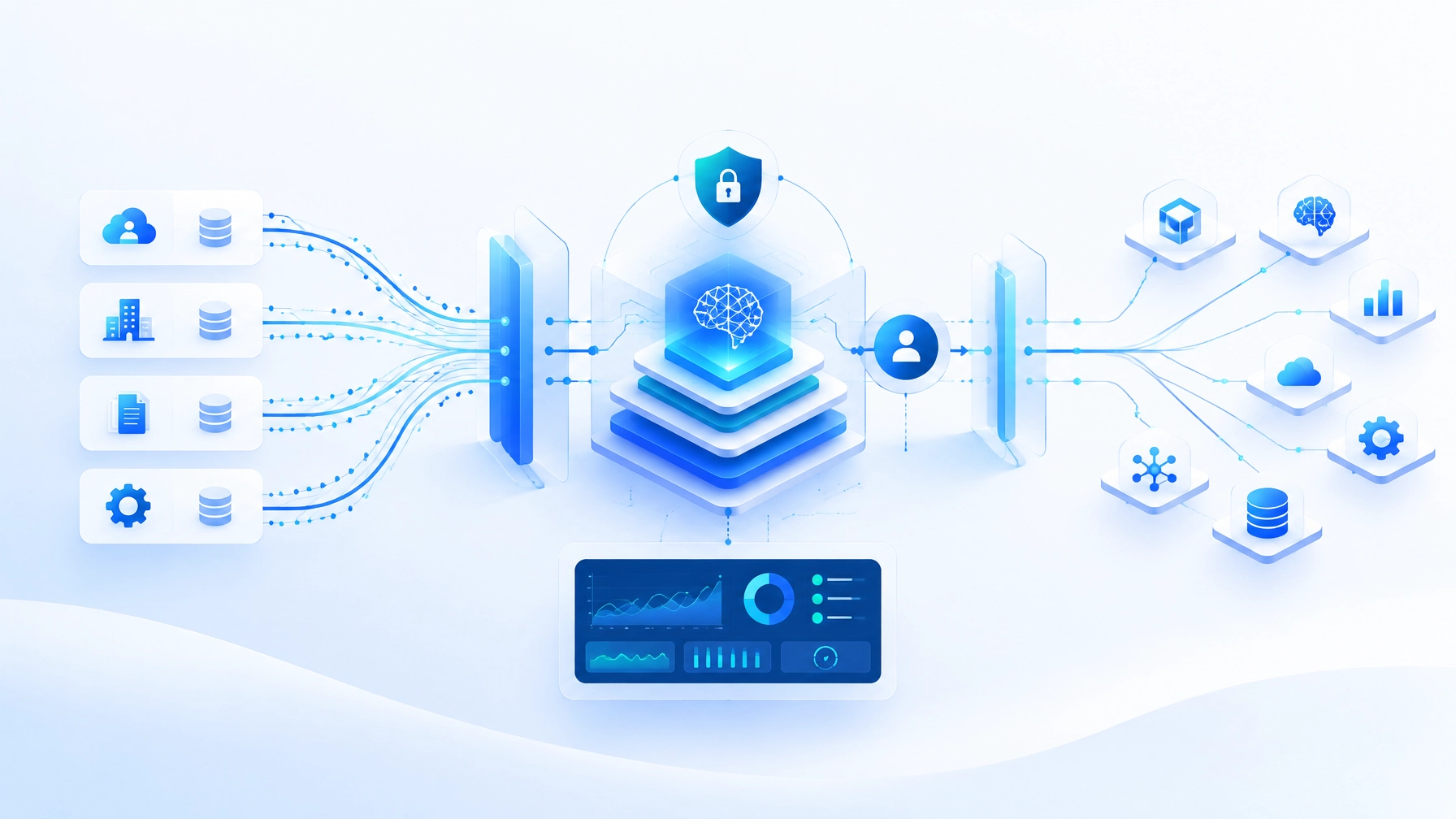
    Enterprise data governance architecture with secure data sources, ownership controls, lineage, and protected AI infrastructure

    AI automation is only as reliable as the information it can access and trust. That makes data ownership one of the earliest strategic decisions in a custom build.

    Executives should establish:

    • Which data the organization owns and has permission to process
    • Where the data is stored
    • How data moves between systems
    • Which users and services can access it
    • How data quality is validated
    • How records are retained, corrected, or deleted
    • Whether model outputs and workflow history remain under company control

    Data is often fragmented across CRMs, EHRs, spreadsheets, scheduling platforms, phone systems, document repositories, and legacy applications. A bespoke AI system must create a controlled foundation across those sources rather than introduce another disconnected silo.

    This may include a centralized data model, event logs, validation services, access controls, and audit-oriented records. The goal is not to move every piece of information into one place. It is to establish clear ownership and reliable pathways for the information required by each workflow.

    A custom development partner should address these questions during discovery, not after a prototype has already created new dependencies.

    2. Integration boundaries determine resilience

    AI should rarely sit directly inside every business system. It is usually more effective to treat AI capabilities as governed services with clearly defined boundaries.

    That means deciding:

    • Which systems can provide information to the AI workflow
    • Which systems can receive recommendations or completed actions
    • Which actions are synchronous and require an immediate response
    • Which tasks can run asynchronously in the background
    • Where APIs, queues, or middleware are required
    • How failures are logged, retried, and escalated

    Clear boundaries make the system easier to maintain. If a model changes, the CRM or scheduling platform should not require a complete redesign. If an external API becomes unavailable, the workflow should have a controlled fallback rather than silently losing work.

    This is especially important for multi-location businesses and high-ticket enterprises. Different locations, departments, or clients may require different permissions, rules, branding, and approval paths. The architecture must support those variations without duplicating the entire system.

    Pure Technology Consulting’s custom web development services are designed around this type of integration-first thinking: scalable applications, secure data flows, and operating systems that connect existing tools rather than replace everything indiscriminately.

    3. Human-in-the-loop checkpoints create control

    Human-in-the-loop AI workflow routing routine cases automatically while ambiguous decisions move through an approval checkpoint

    Automation should reduce unnecessary effort without hiding important decisions.

    A practical human-in-the-loop design separates work into three categories:

    1. Routine actions that can proceed automatically under defined rules
    2. Reviewable recommendations that require employee approval
    3. High-risk or ambiguous cases that must be escalated

    For example, an AI workflow may categorize an incoming request, extract information from a document, or draft a response automatically. A staff member may still need to approve a financial action, change a patient-routing decision, publish a sensitive customer response, or authorize a compliance-related communication.

    The checkpoint must be built into the existing workflow. Employees should be able to review, correct, approve, or reject an output without switching between multiple disconnected portals.

    Human feedback also becomes valuable operational data. Corrections can reveal recurring model weaknesses, unclear business rules, or gaps in the source data. Over time, the system can improve because the organization is capturing how decisions are actually made.

    This is the difference between automation that removes visibility and automation that increases organizational capacity.

    4. Evaluation and monitoring must continue after launch

    A pilot can appear successful because it works on a small sample of curated inputs. Production systems face incomplete records, unusual requests, shifting customer behavior, new regulations, integration failures, and changing business priorities.

    Scalable ai workflow automation requires continuous evaluation.

    Before launch, teams should define:

    • The business KPI the system is expected to influence
    • The acceptable error rate for each workflow
    • Quality thresholds for model outputs
    • Expected response times and system availability
    • Conditions that require human review
    • The process for reporting incorrect or harmful outputs

    After launch, monitoring should cover more than uptime. Leadership may need visibility into:

    • Workflow completion rates
    • Exception and escalation volume
    • Time saved per transaction
    • Data-quality failures
    • Model confidence and output quality
    • Integration errors
    • Changes in input patterns
    • Drift in performance over time

    Enterprise AI operations monitoring with evaluation pipelines, drift detection, audit logs, alerts, and continuous improvement loops

    A responsible system also needs fallback logic. When confidence is low, an integration fails, or a policy condition is triggered, the workflow should move to a known state. It should not invent an answer or continue silently.

    Monitoring turns AI from a one-time implementation into a managed operating capability.

    What should you automate first?

    The best starting point is usually a workflow that is repetitive, measurable, and important enough to justify improvement, but structured enough to govern.

    Strong early candidates often include:

    • Intake and qualification
    • Document classification and data extraction
    • Appointment or assignment routing
    • Customer follow-up and status notifications
    • Review and approval queues
    • Reporting and exception management
    • Data synchronization between established systems

    Avoid starting with the most ambiguous or highest-risk decision in the organization. Instead, choose a process where the baseline is visible and improvement can be measured.

    Useful initial metrics may include cycle time, number of staff touches, completion rate, manual data-entry volume, exception frequency, and time from inquiry to next action.

    The first release should establish a foundation for expansion. A narrowly scoped workflow can later become part of a broader AI-powered business system.

    Where does a bespoke build beat off-the-shelf SaaS?

    Modular bespoke AI business system with custom connectors, workflow orchestration, dashboards, and scalable operating-model integration

    Off-the-shelf SaaS is often appropriate when the business can adopt a standardized process without significant compromise. It becomes less effective when the workflow itself is a source of differentiation or operational complexity.

    A custom or bespoke build may be the better strategy when you need to:

    • Coordinate multiple systems with different data structures
    • Support unique approval, compliance, or routing rules
    • Manage complex relationships across locations, departments, or accounts
    • Create a branded partner or white-label experience
    • Preserve ownership of data, workflows, and application logic
    • Connect AI actions to operational events
    • Build reporting around your own performance model
    • Scale without increasing manual administration proportionally

    Pure Technology Consulting’s proprietary platforms provide proof-of-concept examples of this capability. AI Local Boost demonstrates multi-location workflow orchestration and Google Business Profile automation. ChainHQ reflects the challenges of centralized operations across distributed entities. EHRIO Pro demonstrates structured intake, matching logic, and HIPAA-adjacent workflow design. FTP Inform represents the value of purpose-built information and operational systems.

    These platforms are not being presented as standalone products to purchase. They illustrate how PTC approaches complex architecture: understand the operating model, define the boundaries, and build the system around the organization’s actual requirements.

    The same principles apply when bringing proven capabilities into legal, accounting, healthcare, field operations, debt management, and other professional environments. Clients do not have to begin from a blank page, but the final system should still be designed around their data, stakeholders, and governance requirements.

    Bespoke AI solutions require a deliberate roadmap

    Custom AI development is not simply a decision to use a more advanced model. It is a decision to create a technology layer that can participate safely and measurably in the business.

    That requires alignment across:

    • Business process design
    • Data ownership and governance
    • Integration architecture
    • Human accountability
    • Security and access control
    • Evaluation and monitoring
    • Long-term application management

    At Pure Technology Consulting, these engagements are positioned as premium, scoped custom builds, often $10,000 or more depending on the workflow, integrations, security requirements, and deployment scope. The investment is justified when the system can reduce operational drag, improve decision consistency, create new capacity, or support a differentiated operating model.

    If your organization is evaluating an AI pilot, the next question should not only be whether the prototype works. Ask whether the architecture can support the business six months, two years, and ten times the current volume from now.

    To discuss a custom AI roadmap, book a discovery call or contact Pure Technology Consulting at +1 (803) 921-0969. We can help identify what to automate first, define the governance model, and scope an AI-powered business system built for durable growth.

    Amin Said, Founder of Pure Technology Consulting LLC
    https://puretechconsult.com

  • Case Study: Custom Web Application Development for Multi-Channel Commerce — Pricing, Inventory, and Margin Intelligence in One System

    Case Study: Custom Web Application Development for Multi-Channel Commerce — Pricing, Inventory, and Margin Intelligence in One System

    Amin Said here: a multi-channel commerce business can generate substantial revenue while still operating with fragmented systems.

    One team may manage Amazon listings, another may update eBay prices, and a third may maintain the company’s own storefront. Inventory decisions may depend on spreadsheets. Margin calculations may happen after an order is completed, when the opportunity to correct pricing has already passed.

    This case study examines a high-ticket custom web application development engagement for an e-commerce operator selling through Amazon, eBay, and its own storefront. The objective was not to build another generic reporting dashboard. It was to create a governed commerce intelligence engine that connected pricing, inventory, order data, channel fees, and contribution margin in one operating system.

    The result was a bespoke architecture designed around the company’s actual commercial rules rather than the limitations of disconnected seller tools.

    The business context: revenue was growing faster than operational visibility

    The operator had established demand across multiple sales channels. Each channel contributed revenue, customer data, fees, fulfillment requirements, and pricing considerations.

    The challenge was that the business did not have one reliable view of what each sale was actually worth.

    A product could appear profitable at the listing level while becoming unprofitable after accounting for:

    • Marketplace referral fees
    • Fulfillment and shipping costs
    • Payment processing
    • Product acquisition cost
    • Packaging and handling
    • Promotions and discounts
    • Returns, refunds, and adjustments
    • Channel-specific pricing differences

    Inventory created a related problem. Stock needed to be allocated across channels without creating overselling risk, while pricing decisions needed to account for availability, demand, fees, and target margin.

    The organization had enough data to make decisions, but that data was distributed across seller portals, spreadsheets, exports, accounting records, and internal workflows. Staff became the integration layer.

    That operating model can work at a smaller scale. As channel volume increases, it creates decision latency, duplicate entry, reconciliation work, and inconsistent commercial judgment.

    The operating constraints the system had to address

    The application needed to coordinate several different realities at once.

    Amazon, eBay, and the company’s own storefront each have their own APIs, identifiers, order states, fee structures, rate limits, and synchronization behavior. A SKU may be represented differently across systems. An order may be created in one channel while inventory is being reserved in another.

    The system therefore had to support:

    • A normalized product and SKU model
    • Channel-specific listings and identifiers
    • Inventory quantities by location or fulfillment source
    • Price rules that could vary by channel
    • Cost and fee calculations at the order level
    • Returns, cancellations, and adjustments
    • Synchronization monitoring and retry handling
    • User permissions and approval workflows
    • Historical records for pricing and inventory decisions

    The most important constraint was governance. A pricing engine should not quietly publish an unexpected price across thousands of listings. An inventory service should not overwrite a trusted quantity without recording the source and time of the change.

    The application needed to automate routine work while preserving visibility and control.

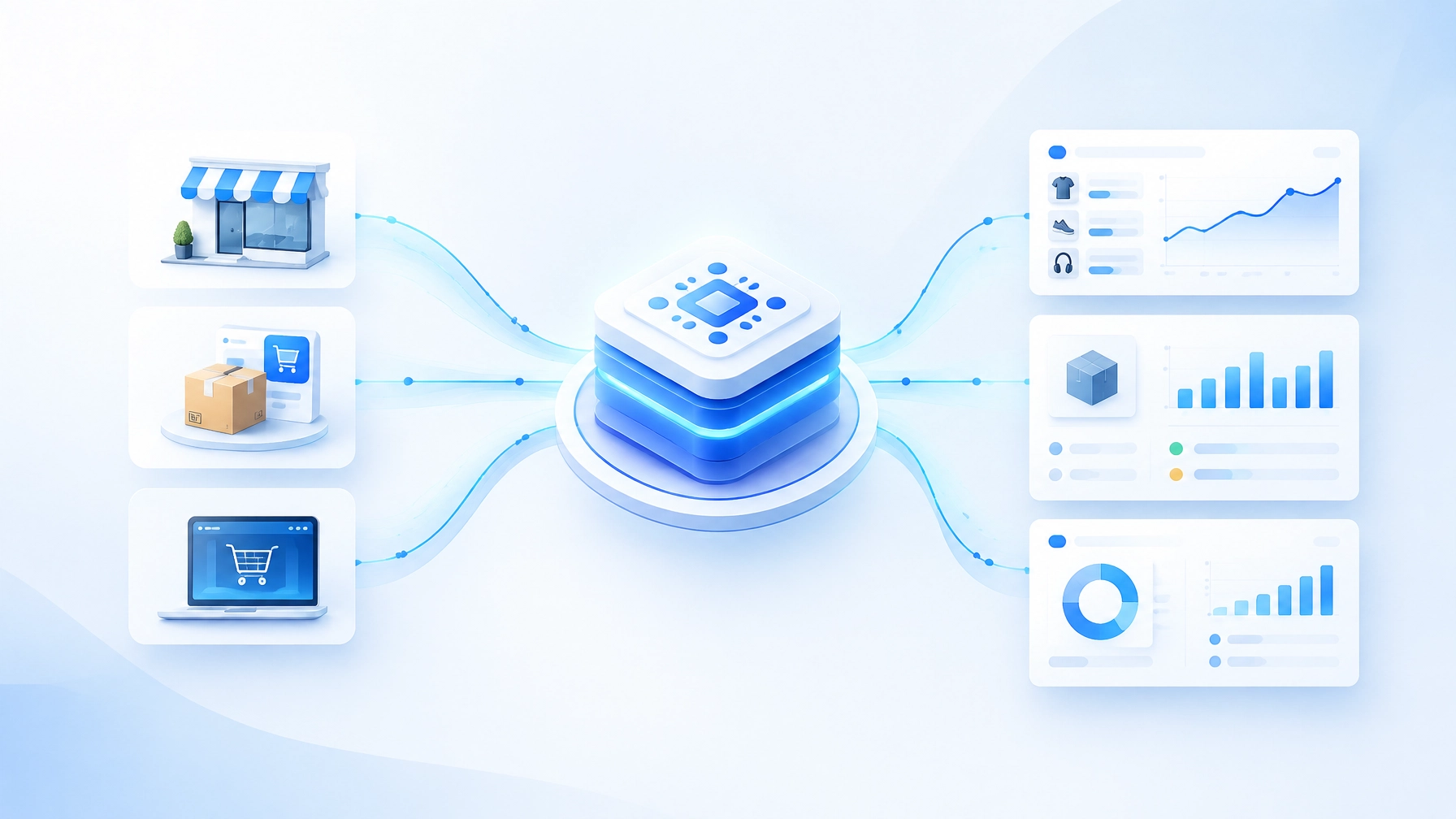
    Abstract architecture showing Amazon, eBay, and a branded storefront connected to a centralized commerce data layer

    The architecture: one commerce intelligence layer between channels and decisions

    The core design placed a centralized commerce engine between the external sales channels and the internal operating team.

    Rather than allowing each channel to become its own source of truth, the platform created a normalized internal model for:

    • Products and variants
    • SKUs and channel listings
    • Inventory positions
    • Orders and order lines
    • Costs and fee schedules
    • Pricing rules
    • Margin calculations
    • Exceptions and approvals

    The channel integration layer was responsible for communicating with Amazon, eBay, and the branded storefront. It handled channel-specific requirements while presenting consistent data to the core application.

    This separation was important. Channel-specific complexity could remain inside the connectors instead of spreading throughout the application. If a new marketplace or fulfillment system were added later, the core pricing and margin logic would not need to be rebuilt from scratch.

    The web application then gave operators a unified environment for reviewing commercial conditions, approving changes, investigating exceptions, and understanding performance at the SKU and channel level.

    This approach reflects the broader principles used in Pure Technology Consulting’s custom web development services: scalable architecture, secure integrations, modern web interfaces, and business logic designed around the client’s operating model.

    Pricing intelligence built around actual commercial economics

    A basic repricing tool changes a price according to a narrow rule. A custom pricing engine can account for the complete economics of a sale.

    The application was designed to support pricing logic based on variables such as:

    • Product cost
    • Channel fees
    • Fulfillment expense
    • Shipping and packaging
    • Target contribution margin
    • Inventory availability
    • Promotional rules
    • Minimum and maximum price thresholds
    • Channel-specific commercial strategy

    The important distinction is between a calculated recommendation and an uncontrolled automated change.

    A pricing recommendation could be evaluated against guardrails before publication. For example, the system could identify a price that would meet a target margin but require approval if the change exceeded a defined threshold. It could also flag SKUs where the available price range could not satisfy the desired margin.

    Pricing and margin intelligence engine showing SKU economics, channel fees, inventory levels, and decision signals

    This created a more useful management conversation. Instead of asking, “What did we sell?” leadership could ask:

    • Which products are profitable by channel?
    • Which fees are eroding contribution margin?
    • Where is inventory tied up in slow-moving products?
    • Which price changes require review?
    • Which listings should be paused, adjusted, or prioritized?
    • How do returns and fulfillment costs change the economics?

    The system was designed to make those questions answerable from the same underlying data model.

    Inventory orchestration with controlled synchronization

    Inventory accuracy is not simply a matter of copying a quantity from one system to another. It requires rules about reservations, timing, fulfillment sources, safety buffers, cancellations, returns, and channel priority.

    The custom application treated inventory as a governed operational service.

    A typical flow could include:

    1. A sale is received from one channel.
    2. The order is normalized and validated.
    3. Available inventory is reserved against the correct SKU.
    4. Channel quantities are recalculated according to allocation rules.
    5. Updates are sent to the other connected channels.
    6. Failures or delays are recorded for review.
    7. Cancellations, returns, and adjustments are reconciled.

    The application also needed to distinguish between a successful synchronization and a merely attempted synchronization. That meant recording status, timestamps, source data, response details, and retry state.

    This is where custom development creates leverage. The system does not just move data; it establishes ownership, sequence, exception handling, and accountability.

    Commerce operations control room with inventory allocation, order orchestration, synchronization health, and exception handling

    Governance and guardrails for a high-volume operating environment

    Automation is valuable only when the business can trust it.

    The platform included governance concepts that allowed the operator to scale automation without surrendering control. These included:

    • Role-based permissions for pricing and inventory actions
    • Approval thresholds for material changes
    • Audit records for user and system activity
    • Reconciliation workflows for conflicting data
    • Error queues for failed integrations
    • Retry logic for temporary channel or network failures
    • Historical snapshots for price and margin review
    • Separation between recommendations and published changes

    These controls are especially important when a system influences revenue, customer experience, and inventory commitments.

    An AI-powered business system could later assist with anomaly detection, price recommendations, or demand signals. However, those capabilities should operate within the same governance model. AI can help identify patterns and recommend actions, but commercial rules, approval boundaries, and traceability still matter.

    Measuring operational leverage without inventing performance claims

    A responsible case study should distinguish between system capability and measured business outcomes.

    For this type of engagement, the most relevant performance measures would include:

    • Time required to update prices across channels
    • Percentage of price changes completed without manual re-entry
    • Inventory synchronization failure rate
    • Time required to reconcile channel orders
    • Number of spreadsheet-based workflows retired
    • Margin visibility by SKU and channel
    • Frequency of unprofitable sales
    • Stock-out and overselling incidents
    • Staff hours spent on exception handling
    • Time from order completion to reliable margin reporting

    These metrics create a baseline for evaluating the platform after deployment. The objective is not to claim a universal result for every e-commerce operator. It is to build an environment where operational improvement can be observed, governed, and refined.

    The value of the system comes from reducing the distance between commercial activity and commercial understanding.

    What this proves about Pure Technology Consulting

    This commerce build is one example of a broader capability: designing complex software around the decisions that make a business unique.

    Pure Technology Consulting has developed proof-of-work across several demanding operating environments, including:

    • Healthcare workflows involving EHRIO and Thrive matching engines, approximately 70-question intakes, and HIPAA-adjacent process design
    • Field operations involving D2D representative accountability and GPS-logged activity
    • Fintech and debt operations involving telephony integration and call attribution
    • Local SEO operations involving AI Local Boost and Google Business Profile automation

    Those platforms are not presented as standalone products for this engagement. They demonstrate the ability to build and manage systems that combine structured data, integrations, business rules, user workflows, and operational reporting.

    For a multi-channel commerce operator, a comparable custom web application development engagement is typically scoped as a premium initiative, often $10k or more depending on channel complexity, data volume, integration requirements, security controls, and the number of workflows being replaced.

    Transformation from disconnected spreadsheets and seller tools into a centralized, governed commerce operating system

    What a similar engagement could look like for another operator

    The right starting point is not a predetermined feature list. It is a clear assessment of where fragmented systems are creating commercial risk or operational drag.

    A similar engagement may include:

    • A unified product and SKU data model
    • Amazon, eBay, and storefront integrations
    • Centralized inventory and allocation rules
    • Channel-aware pricing and margin calculations
    • Order and return normalization
    • Approval workflows for sensitive changes
    • Reconciliation and exception management
    • Executive views of margin, inventory, and channel health
    • A roadmap for AI-assisted recommendations and anomaly detection

    The architecture should be sized to the operator’s current needs while preserving a path for additional channels, fulfillment partners, brands, or business units.

    That is the strategic advantage of bespoke development: the system can be shaped around the operating model instead of forcing the operating model into a generic tool.

    Build the commerce intelligence layer your growth requires

    Multi-channel commerce creates scale, but it also multiplies operational complexity. When pricing, inventory, and margin decisions remain distributed across disconnected tools, growth can become harder to govern.

    A custom system brings those decisions into one trusted operating layer.

    If your commerce business is outgrowing spreadsheets, seller portals, and disconnected integrations, Pure Technology Consulting can help define the architecture for a scalable solution. Schedule a consultation or visit https://puretechconsult.com to discuss a custom web application or business process automation consulting engagement.

    For project inquiries, call +1 (803) 921-0969.

    Amin Said, Founder of Pure Technology Consulting LLC
    https://puretechconsult.com

  • Business Process Automation Consulting: What a High-Ticket Custom Build Looks Like from Discovery to Deployment

    Business Process Automation Consulting: What a High-Ticket Custom Build Looks Like from Discovery to Deployment

    Amin Said here : when a company reaches the point where disconnected tools, manual handoffs, and repetitive administrative work are limiting growth, buying another SaaS subscription is rarely the complete answer.

    The real opportunity is to design an operating system around the way the business actually works.

    That is the purpose of business process automation consulting. A premium engagement combines operational strategy, custom web application development, integration engineering, governance, and ongoing improvement. It is not simply a collection of automated tasks. It is a structured effort to make the business more measurable, scalable, and resilient.

    A scoped custom build of $10,000 or more should produce more than software. It should produce clarity about how work moves through the organization, where decisions belong, which systems should connect, and how leadership will measure improvement.

    Here is what that engagement looks like from discovery to deployment.

    Why a custom build is different from buying SaaS

    SaaS is effective when your business can adapt to a vendor’s predefined workflow. It provides speed and convenience, but it may also require compromises:

    • Employees work around rigid process assumptions.
    • Data remains divided across several platforms.
    • Important exceptions stay manual.
    • Reporting reflects the software’s model rather than your operating model.
    • Strategic workflows become dependent on tools your competitors can also buy.

    Custom software development becomes more compelling when the process itself creates competitive value. This may include patient intake and provider matching, field team accountability, debt collection call attribution, multi-location operations, or a proprietary client onboarding model.

    The goal is not to replace every existing tool. The goal is to create the right orchestration layer around your people, data, and systems.

    Phase 1: Discovery and operational audit

    Blue and white illustration of a business workflow map, operational audit, and automation roadmap

    The first phase is not a software demo. It is an investigation into how work is performed today.

    A consulting team interviews executives, managers, and frontline operators. They review systems, documents, spreadsheets, approval chains, communication patterns, and exception handling. The objective is to understand the real workflow, including the steps that are not documented.

    What the client gets

    A thorough discovery phase typically produces:

    • Current-state process maps
    • A systems and data-flow audit
    • A list of bottlenecks, duplicate tasks, and manual handoffs
    • An automation opportunity assessment
    • A prioritized roadmap based on business impact and implementation complexity
    • Initial success metrics and a recommended phase-one scope

    This is where an organization distinguishes between a process that is merely inconvenient and one that is creating material operational drag.

    For example, a healthcare intake process may involve a 70-question assessment, provider matching, insurance review, scheduling, and EHR preparation. A field sales operation may require GPS-verified activity logs and rep accountability. A debt collection agency may need telephony integrations that connect calls, attribution, records, and follow-up actions.

    Each requires a different operating model.

    Decisions the client owns

    The client remains responsible for business priorities and risk tolerance. Leadership decides:

    • Which workflows matter most to the organization
    • Which problems should be addressed first
    • What level of human review is required
    • Which outcomes define success
    • Which systems must remain in place
    • What data, teams, or locations belong in the initial scope

    The consultant brings structure, technical judgment, and strategic options. The client owns the business decisions.

    Phase 2: Architecture and data model

    Blue and white illustration of scalable application architecture, secure data entities, APIs, and role permissions

    Once the workflow is understood, the team designs the system that will support it.

    This phase translates operational requirements into an architecture. It defines how data will be captured, where it will be stored, how systems will communicate, which users can access it, and how the solution can evolve without requiring a complete rebuild.

    A high-quality architecture should account for more than the successful path. It must also account for incomplete data, failed integrations, ambiguous cases, permissions, auditability, and future growth.

    What the client gets

    Typical deliverables include:

    • A solution architecture and technical blueprint
    • A data model that defines core entities and relationships
    • Integration specifications for CRM, EHR, ERP, scheduling, telephony, or other systems
    • User roles and permission structures
    • Workflow states, business rules, and escalation paths
    • Security, logging, and data-retention considerations
    • A phased delivery plan with defined milestones

    This is also where the team decides whether AI is appropriate. Bespoke AI solutions can support classification, document extraction, recommendations, content generation, and routing. But AI should be placed inside a governed workflow rather than added as a novelty.

    Decisions the client owns

    The client decides:

    • Which data is authoritative when systems disagree
    • What information each role can view or change
    • Which decisions can be automated
    • Which decisions require approval
    • How much flexibility users need
    • What must be recorded for audit or compliance purposes
    • Whether the first release should be a focused internal tool, customer-facing portal, or broader platform

    For organizations in regulated or sensitive environments, this includes decisions about security controls, vendor requirements, retention policies, and review procedures. In healthcare, for example, a workflow may be HIPAA-adjacent, but the production compliance assessment must be specific to the client’s systems and obligations.

    Phase 3: Build and integration

    Blue and white illustration of modular software components connecting CRM, scheduling, telephony, analytics, and an AI layer

    The build phase turns the architecture into working software.

    This may include a custom web application, internal dashboard, customer portal, mobile-responsive workflow, integration layer, or AI-powered business system. The development team connects APIs, creates interfaces, implements business rules, and builds the automation logic required to move work from one stage to the next.

    A premium engagement is not just “connecting apps.” It must handle the realities of production operations:

    • Missing or inconsistent data
    • Duplicate records
    • Failed API requests
    • Human approvals
    • Unusual customer or patient scenarios
    • Retry logic and notifications
    • Role-based access
    • Activity history and reporting

    What the client gets

    Depending on scope, deliverables may include:

    • A working application or workflow engine
    • CRM, EHR, ERP, scheduling, payment, or telephony integrations
    • Custom dashboards and operational queues
    • AI-assisted classification, routing, or content generation
    • Notifications, approvals, and exception handling
    • Authentication and role-based permissions
    • Audit logs and integration monitoring
    • Documentation for core workflows and configuration

    This is where ai workflow automation becomes practical. The system can classify a request, recommend a provider, draft a response, identify a missing document, or route a case to the right team. Human oversight remains part of the design wherever the decision carries operational, financial, reputational, or compliance risk.

    Decisions the client owns

    The client reviews working software throughout development and decides:

    • Whether the workflow reflects real operating conditions
    • Which features are essential for launch
    • Which edge cases belong in the first release
    • How teams should be notified
    • Which metrics belong on leadership dashboards
    • When a feature is ready for user acceptance testing

    This iterative approach reduces the risk of building a technically elegant system that employees do not trust or use.

    Phase 4: Governance, testing, and rollout

    Blue and white illustration of staging, testing, controlled deployment, monitoring, and governance

    A system is not ready because the code runs. It is ready when the organization can operate it with confidence.

    Governance and testing establish that confidence. The team validates the workflow in a staging environment, tests integrations, reviews permissions, examines edge cases, and compares automated results with the manual baseline.

    Testing may include:

    • Functional testing against approved requirements
    • Integration and API testing
    • Permission and access testing
    • Regression testing after changes
    • Performance testing under realistic volume
    • Edge-case and exception testing
    • User acceptance testing with trained staff
    • Real or masked production data in a controlled environment

    Rollout should generally be staged. A limited group, location, or transaction type may be used first. Feedback from that release informs training, configuration, and final adjustments before wider deployment.

    What the client gets

    A mature rollout includes:

    • Test plans and documented results
    • User acceptance criteria
    • Deployment and rollback procedures
    • Staff training and workflow documentation
    • Standard operating procedures
    • Monitoring dashboards and alerting
    • Early-life support after launch
    • A clear ownership model for ongoing administration

    Decisions the client owns

    Leadership decides:

    • Who participates in acceptance testing
    • What level of performance is required before launch
    • Whether to use a pilot or broader release
    • Which employees need training
    • Who approves production changes
    • What risks require a rollback or manual fallback process

    This governance layer is one of the clearest differences between serious enterprise automation consulting and a quick automation project.

    Phase 5: Ongoing iteration

    A custom system should improve as the organization learns.

    After launch, the team monitors cycle time, error rates, throughput, exception volume, user adoption, and other agreed measures. Those metrics reveal where the workflow is creating leverage and where additional refinement is needed.

    Ongoing iteration may include:

    • Refining business rules
    • Improving dashboards
    • Adding integrations
    • Updating AI prompts or evaluation criteria
    • Expanding to additional departments or locations
    • Automating new workflow stages
    • Strengthening controls based on operational feedback

    Pure Technology Consulting has applied these principles across several proof-of-work systems. AI Local Boost demonstrates Google Business Profile automation and multi-location workflow management. EHRIO Pro and Thrive demonstrate healthcare intake, provider-matching engines, 70-question assessments, and HIPAA-adjacent workflows. Field operations work has included GPS-verified accountability for door-to-door sales teams, while debt collection systems have incorporated telephony integrations and call attribution. ChainHQ and FTP Inform further demonstrate the ability to build structured, scalable software around complex business requirements.

    These platforms are not presented as substitutes for every client’s needs. They show what a custom software development agency can create when technology is designed around an operating model rather than imposed on top of it.

    That experience also transfers into legal, accounting, healthcare, and other professional services environments. The goal is not to start from zero. It is to bring proven capabilities in workflow design, integrations, automation, and product engineering into a new business context.

    What a premium engagement should ultimately deliver

    A high-ticket custom build should leave the client with more than a new application. It should provide:

    • A documented understanding of how the business operates
    • A prioritized transformation roadmap
    • An architecture aligned with current and future needs
    • Integrated systems and structured data
    • Governed automation with appropriate human oversight
    • A tested and documented production workflow
    • Internal capability to manage the system
    • A measurable path for continued improvement

    That is the difference between buying software and investing in digital transformation consulting. The technology is important, but the larger outcome is operational leverage.

    If disconnected systems, manual handoffs, or fragmented data are limiting your next stage of growth, book a discovery consultation. We can evaluate the workflow, identify the highest-value opportunities, and define a practical scope for custom web application development, enterprise automation consulting, or ai consulting services.

    Contact Pure Technology Consulting

    Call +1 (803) 921-0969 or visit puretechconsult.com.

    Amin Said, Founder of Pure Technology Consulting LLC
    https://puretechconsult.com
  • Case Study: Custom Web Application Development for Collections : Telephony, Call Attribution, and Compliance in One System

    Case Study: Custom Web Application Development for Collections : Telephony, Call Attribution, and Compliance in One System

    Amin Said, Founder of Pure Technology Consulting LLC

    Debt collection operations depend on precise coordination between account data, calling activity, agent workflows, payment outcomes, and compliance requirements. When those functions are spread across a collections platform, a separate dialer, spreadsheets, reporting tools, and disconnected storage systems, the organization loses visibility at the moments when accuracy matters most.

    Pure Technology Consulting developed a proprietary proof-of-concept for a debt collection operation to demonstrate how custom web application development can unify telephony integrations, call attribution, workflow automation, and compliance-aware controls in one operating system.

    The goal was not to build another generic CRM or dialer. It was to demonstrate how a complex, high-value operation can be translated into a scalable web application with explicit business rules, connected data, and audit-ready event history.

    The strategic problem: collections data was fragmented across systems

    In a typical collections environment, agents may work from one application while placing calls through another. Payment activity may be recorded elsewhere, and managers may depend on exported reports to understand performance.

    This creates several operational challenges:

    • Call outcomes must be manually entered or reconciled.
    • Account activity and telephony records may not share a reliable identifier.
    • Managers cannot easily determine which campaigns, scripts, or channels influence payment outcomes.
    • Consent, opt-out, contact frequency, and calling-window rules may be managed inconsistently.
    • Compliance teams have to reconstruct events from multiple systems during reviews.
    • Leadership lacks a complete view of cost per contact, resolution paths, and agent performance.

    These are not isolated software problems. They are operating-model problems.

    A collections organization needs to know not only whether a call occurred, but also:

    • Which account and debt was involved?
    • Which phone number was used?
    • What consent or suppression status existed at the time?
    • Which agent, campaign, or workflow initiated the contact?
    • What was the result?
    • Did the interaction lead to a promise to pay, payment, dispute, or opt-out?
    • Can the organization reconstruct the full sequence later?

    The proof-of-concept was designed around those questions.

    The architecture: one application coordinating multiple systems

    The system centers on a unified collections web application with an integration layer connecting telephony, account records, payment outcomes, compliance controls, and analytics.

    Enterprise architecture connecting a collections platform with telephony, CRM records, payments, analytics, and audit storage

    The architecture is organized around several core components:

    1. Collections operations interface
      Agents and managers work from account queues, customer profiles, contact history, payment information, and workflow tasks.

    2. Telephony integration layer
      APIs and webhooks connect the application to external dialers, SIP providers, contact-center platforms, SMS systems, or voice automation tools.

    3. Compliance rules engine
      Before a contact attempt is initiated, the system evaluates configurable rules related to consent, opt-outs, contact windows, frequency limits, dialing modes, and jurisdiction.

    4. Event and attribution store
      Calls, messages, payments, disputes, promises to pay, and other activities are stored as structured events connected to the appropriate account.

    5. Recording and audit repository
      Call references, metadata, transcripts, disclosures, dispositions, and workflow changes can be retained according to organizational policy and applicable requirements.

    This architecture reflects a principle we use across our enterprise automation consulting engagements: external systems should remain connected, but the organization should not lose control of its operating logic.

    Why an account-level event model matters

    The most important design decision was to treat each interaction as a structured business event rather than a disconnected activity log.

    An event can include:

    • Account or debt identifier
    • Consumer and phone-number references
    • Agent, campaign, or automation identifier
    • Communication channel
    • Timestamp and time zone
    • Dialing mode
    • Call outcome or disposition
    • Consent status
    • Recording reference
    • Workflow and script version
    • Payment or resolution outcome
    • Related follow-up actions

    This creates a complete operational timeline for each account.

    For example, a resolution path might include:

    SMS reminder → automated call → live agent conversation → promise to pay → payment confirmation

    With a structured event model, the organization can analyze that path without manually combining data from five different applications.

    It also enables multiple attribution approaches. Leadership may want to understand the first meaningful touchpoint in a resolution journey. Operations may need to evaluate the final interaction before payment. Strategy teams may want a multi-touch view that considers every channel involved.

    The right attribution model depends on the decision being made. Custom software allows those models to be represented directly instead of forcing the organization into generic marketing analytics.

    Telephony becomes part of the workflow, not a separate activity

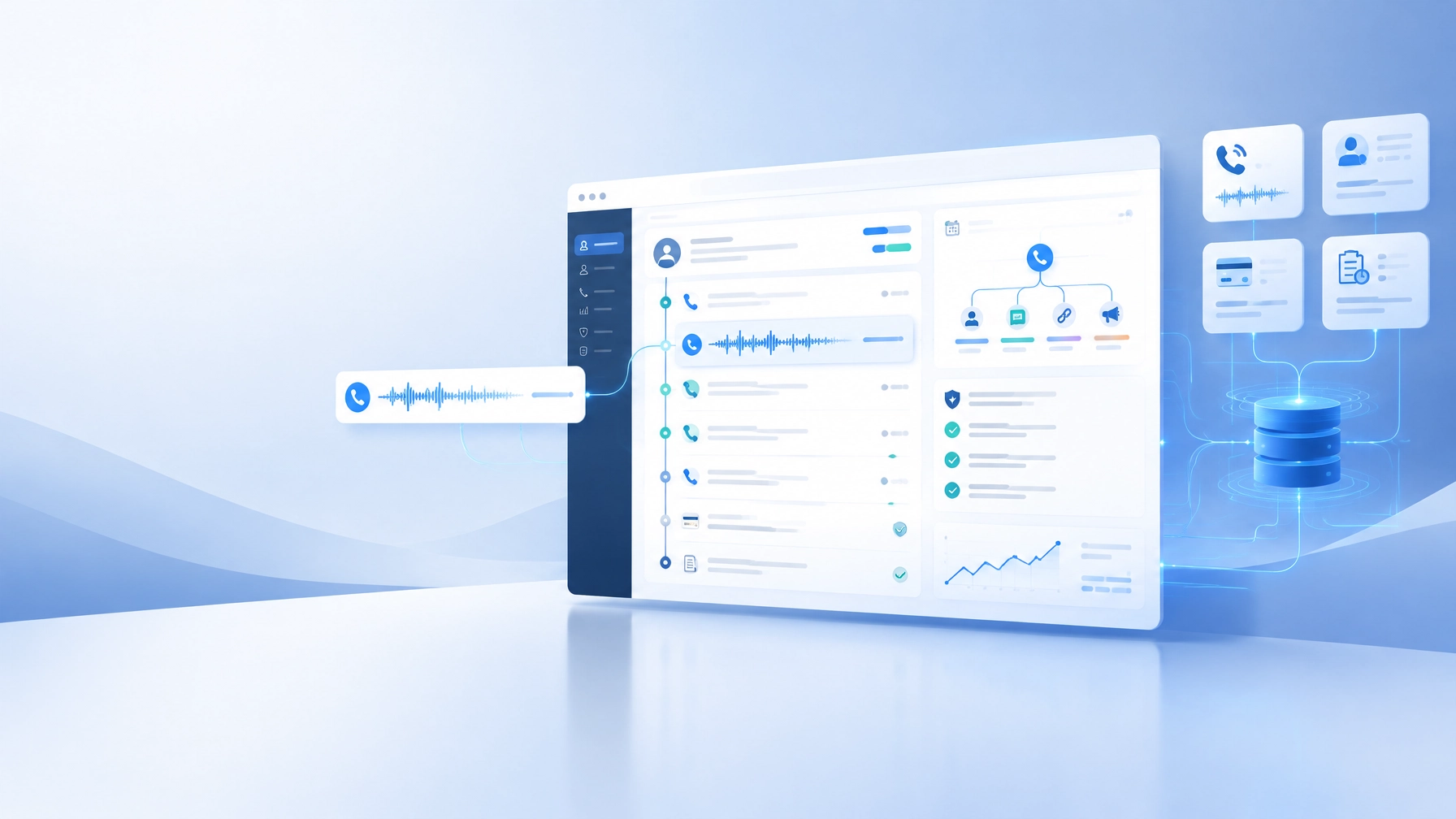
    Collections agent workspace with account timeline, click-to-call workflow, compliance status, consent history, and call disposition panels

    The proof-of-concept connects the agent’s workflow to telephony so that calling activity is initiated, tracked, and evaluated from the same operational environment.

    A typical call workflow can operate as follows:

    1. An agent opens a prioritized account queue.
    2. The system displays the account, debt details, contact history, and recommended next action.
    3. The agent selects a contact number.
    4. The rules engine evaluates whether the call is permitted under the configured policy.
    5. If approved, the application triggers the telephony provider.
    6. Call status, duration, connection result, and recording reference are returned through an API or webhook.
    7. The agent completes or confirms the disposition.
    8. Any payment, promise to pay, dispute, or opt-out is attached to the account timeline.
    9. Follow-up actions are created automatically based on the outcome.

    This approach reduces duplicate entry and improves the consistency of operational records. It also makes exceptions visible. If a call cannot be initiated because consent is missing or a contact threshold has been reached, the application can show the reason and route the account to an approved alternative workflow.

    The system is not intended to replace legal or compliance counsel. Instead, it gives the organization a technical framework for enforcing approved policies consistently at the point of action.

    Compliance controls are designed into the operating layer

    For debt collection organizations, compliance cannot be treated as a report generated after activity has already occurred.

    A rules-based system can be configured to evaluate requirements and internal policies such as:

    • Calling windows based on the consumer’s time zone
    • Account-level contact frequency
    • Per-number consent records
    • Do-not-call and internal suppression lists
    • Opt-out propagation across channels
    • Manual versus automated dialing requirements
    • State-specific policies
    • Recording and retention workflows
    • Escalation requirements for disputes or complaints

    The CFPB’s Debt Collection Rule FAQs provide important regulatory context for organizations designing these controls. Actual implementation should be reviewed by qualified legal and compliance professionals.

    From an engineering perspective, the key requirement is traceability. The system should be able to show which rule was evaluated, what data was available at the time, what decision was made, and whether a user later changed the record.

    That creates a stronger foundation for internal reviews, client reporting, dispute resolution, and future system improvements.

    Call attribution connects activity to business outcomes

    A call log alone does not explain operational value. The system must connect communications to outcomes that matter to the business.

    Potential outcomes include:

    • Right-party contact
    • Payment received
    • Promise to pay
    • Arrangement enrollment
    • Kept or broken promise
    • Dispute submitted
    • Consumer portal registration
    • Opt-out request
    • Account resolution
    • Escalation to a specialist

    With these relationships in place, leaders can evaluate questions such as:

    • Which calling sequences produce the strongest payment results?
    • How do manual, automated, and AI-assisted calls compare?
    • Which scripts improve promise-to-pay rates?
    • What is the cost per resolved account?
    • How long does it take to reach the first payment?
    • Which contact paths create the most compliance exceptions?
    • Where are agents spending time without advancing resolution?

    This is where ai-powered business systems can create additional leverage. Once the underlying data is structured and governed, AI can assist with prioritization, anomaly detection, call summarization, disposition recommendations, and workflow routing.

    AI should enhance a reliable operating model, not conceal a fragmented one.

    Proof of capability across complex industries

    The debt and telephony proof-of-concept is part of a broader body of work at Pure Technology Consulting.

    Our proprietary builds demonstrate how the same engineering principles can be adapted to different operating environments:

    • Healthcare: Thrive and EHRIO matching engines, 70-question intake workflows, and HIPAA-adjacent process design demonstrate our experience with structured intake, matching logic, and sensitive operational data.
    • Ops and field service: D2D Tracking demonstrates rep accountability, GPS logging, activity monitoring, and field-team visibility.
    • Fintech and debt: Debt agency telephony integrations and call attribution demonstrate how communications, account events, and financial outcomes can be connected.
    • Local SEO: AI Local Boost demonstrates governed Google Business Profile automation across distributed business locations.
    • Data exchange: FTP Inform demonstrates secure ingestion, schema validation, exception governance, deterministic routing, and audit trails for compliance-sensitive operations.
    • Multi-location operations: ChainHQ demonstrates location-aware architecture, role-based access, intelligent assignment logic, and centralized reporting.

    These are proof-of-work examples, not generic products being presented as a replacement for a client’s operating model. They show how Pure Technology Consulting brings proven capabilities into bespoke software engagements.

    When a custom collections application is justified

    A custom build becomes especially valuable when an organization:

    • Operates across multiple disconnected systems
    • Needs telephony and CRM data synchronized in near real time
    • Requires account-level attribution
    • Has complex compliance policies
    • Depends on manual reconciliation or spreadsheet reporting
    • Needs workflow rules that generic SaaS cannot support
    • Handles high volumes of sensitive data
    • Wants to reduce labor dependency without sacrificing oversight
    • Is preparing for AI workflow automation

    A project of this complexity should be scoped as a premium technology engagement, often reaching $10,000 or more depending on integrations, security requirements, data migration, compliance controls, reporting, and rollout strategy.

    The appropriate starting point is not a feature list. It is a discovery process that maps the current operating model, identifies integration dependencies, defines governance requirements, and establishes a phased roadmap.

    Build the system behind the operation

    This case study demonstrates what custom web application development can accomplish when it is treated as a business transformation initiative rather than a standalone software project.

    Telephony becomes part of the application. Call attribution becomes part of the data model. Compliance becomes part of the workflow. Analytics becomes part of daily decision-making.

    If your collections, financial services, healthcare, or professional services operation is constrained by disconnected systems, Pure Technology Consulting can help define the next stage of your technology roadmap through business process automation consulting and custom engineering.

    Book a discovery conversation to discuss your current systems, workflow constraints, and integration priorities. The objective is a practical scope for a scalable solution: not a commitment to technology for its own sake.

    Phone: +1 (803) 921-0969

    Amin Said, Founder of Pure Technology Consulting LLC

    https://puretechconsult.com

  • AI Consulting Services for High-Ticket Enterprises: Designing Automation Around the Operating Model

    AI Consulting Services for High-Ticket Enterprises: Designing Automation Around the Operating Model

    Enterprise AI creates the most value when it is designed around the way an organization actually operates.

    That means understanding how work moves between departments, where decisions are made, which systems hold critical data, and which controls must remain in place. It means treating automation as an operating-model initiative rather than a collection of disconnected tools.

    The strongest AI consulting services engagements do not begin with the question, “Where can we add AI?” They begin with a more strategic question:

    Which business processes are limiting growth, creating unnecessary risk, or preventing leadership from acting on reliable information?

    From there, AI consulting can move from strategy to a scoped automation roadmap, measurable pilot, and scalable production system.

    AI strategy should begin with the operating model

    An operating model defines how an organization delivers value. It includes people, processes, technology, decision rights, governance, data, and performance measures.

    When these elements are not aligned, automation can create more complexity instead of less. A team may deploy an AI assistant into a workflow that still depends on incomplete data. A business may automate task routing without clarifying ownership. A department may improve its own process while creating delays for the next department in the chain.

    For this reason, effective enterprise automation consulting begins with an assessment of:

    • How work enters the organization
    • Which teams own each stage of the process
    • Where information is duplicated or manually re-entered
    • Which decisions rely on tribal knowledge
    • What exceptions require expert judgment
    • Which systems need to exchange data
    • How performance and risk are currently measured

    This assessment creates the foundation for an AI roadmap that reflects business priorities rather than technology trends.

    Strategic operating model flowing into connected AI workflows and measurable enterprise outcomes

    From opportunity mapping to a prioritized automation roadmap

    Most enterprises have more possible AI use cases than they can responsibly implement at once. The challenge is not identifying ideas. It is deciding which opportunities deserve investment first.

    A practical prioritization framework evaluates each opportunity across four dimensions:

    1. Business value

    Will automation reduce cycle time, increase throughput, improve customer experience, reduce errors, or create additional capacity?

    The answer should be tied to a measurable baseline. For example, the organization may currently spend a defined amount of staff time reviewing intake submissions, reconciling records, assigning work, or responding to routine requests.

    2. Feasibility

    Does the organization have the data, system access, process stability, and technical foundations required to automate the workflow?

    An AI use case may be strategically attractive but difficult to implement if source data is inconsistent or key decisions are not documented.

    3. Risk and governance

    What happens if the system makes an incorrect recommendation? Which decisions require human review? What information can the system access? How should actions be logged?

    These questions are especially important in healthcare, financial services, legal, accounting, and other compliance-sensitive environments.

    4. Scalability

    Can the solution support additional teams, locations, customers, or business units without requiring a complete rebuild?

    A strong first use case should ideally create reusable architecture, integration patterns, and governance practices for future initiatives.

    The result is a roadmap that distinguishes between quick operational improvements, strategic automation initiatives, and longer-term AI-powered business systems.

    What to automate first

    The best starting point is rarely the most visible process. It is often the process where repetitive coordination, fragmented data, and measurable operational drag intersect.

    High-value candidates frequently include:

    • Intake and qualification workflows
    • Document classification and data extraction
    • Assignment and scheduling decisions
    • Customer or patient communication routing
    • Exception management
    • Reporting and reconciliation
    • Knowledge retrieval for internal teams
    • Data synchronization between CRM, ERP, EHR, billing, and operational platforms

    These workflows are valuable because they contain repeatable patterns while still benefiting from human oversight.

    For example, an AI system may classify an incoming request, identify missing information, recommend the next action, and route the case to the right team. A human can remain responsible for approval when the decision has material financial, legal, clinical, or customer consequences.

    This is the foundation of responsible business process automation consulting: automate predictable work, support complex decisions, and make exceptions visible.

    Designing AI-powered business systems around real constraints

    AI is only one layer of an enterprise solution. The larger system may also require custom web applications, APIs, workflow orchestration, role-based access, dashboards, audit logs, and integrations with existing platforms.

    A successful design accounts for the full operating environment:

    • Data architecture: Where information is stored, structured, validated, and exchanged
    • Integration architecture: How the system connects to existing applications
    • Decision logic: Which actions are rules-based, AI-assisted, or human-controlled
    • Security: How access, identity, encryption, and data boundaries are managed
    • Governance: Who owns the process, approves changes, and reviews outcomes
    • Observability: How leaders monitor throughput, errors, exceptions, and system performance
    • User experience: How each role interacts with the system based on its responsibilities

    This is why high-value AI initiatives often require more than configuring an off-the-shelf tool. The solution must fit the organization’s data model, permissions, workflows, and decision hierarchy.

    Through its custom web development and application services, Pure Technology Consulting designs systems that connect these layers into a coherent operating environment.

    Governed human-in-the-loop AI workflow with validation, policy controls, exception routing, and audit trails

    Human-in-the-loop automation is a design strength

    Enterprise automation should not be evaluated by how many human actions it removes. It should be evaluated by how effectively it directs human attention.

    In a mature workflow, automation can handle:

    • Data validation
    • Record matching
    • Routine classification
    • Status updates
    • Notifications
    • Standardized routing
    • Repetitive reporting
    • First-pass recommendations

    People can remain responsible for:

    • Policy exceptions
    • Ambiguous cases
    • High-impact approvals
    • Relationship-sensitive decisions
    • Compliance review
    • Process improvement

    This model reduces administrative load without turning important decisions into opaque system behavior. It also creates a clearer audit trail because the organization can distinguish between automated recommendations, human approvals, and manual overrides.

    For high-ticket enterprises, that distinction is essential. An AI solution must be useful in daily operations while remaining understandable, governable, and adaptable.

    A practical engagement model for AI consulting services

    A well-scoped AI consulting engagement should connect strategy to implementation through defined stages.

    Discovery and operating-model assessment

    The consulting team documents current workflows, systems, stakeholders, data sources, bottlenecks, and control requirements. The objective is to establish a shared view of the operating environment.

    Use-case prioritization

    Potential automation opportunities are evaluated according to business value, feasibility, risk, and scalability. This stage produces a prioritized portfolio rather than an unstructured list of ideas.

    Solution and architecture design

    The future-state workflow is defined. Deliverables may include:

    • Process maps
    • System architecture
    • Integration requirements
    • Data models
    • AI and automation decision boundaries
    • Security and governance requirements
    • KPI definitions
    • Pilot and implementation roadmap

    Pilot development

    A focused pilot tests the highest-value workflow under controlled conditions. The pilot should establish a baseline, define acceptance criteria, and capture evidence about adoption, quality, and operational impact.

    Production deployment and optimization

    Once the solution has been validated, it can be extended to additional teams, locations, or processes. Ongoing optimization may address model performance, workflow exceptions, user adoption, cost, and new integration requirements.

    This structure allows enterprise leaders to make informed investment decisions at each stage.

    Measuring automation by business impact

    AI initiatives should be measured through operational outcomes rather than activity alone.

    Relevant metrics may include:

    • Cycle time from intake to resolution
    • Manual touches per transaction
    • Error and rework rates
    • Exception volume and aging
    • Staff capacity returned to higher-value work
    • Throughput per employee or team
    • Customer response time
    • Data completeness and reconciliation quality
    • Percentage of cases handled without manual intervention
    • Adoption and override rates

    The correct KPI depends on the process. A healthcare intake workflow may emphasize scheduling time and incomplete submissions. A financial operations workflow may focus on exception resolution and data lineage. A multi-location service business may prioritize assignment speed, capacity utilization, and cross-location visibility.

    The important principle is to define the measurement model before implementation begins.

    Executive AI-powered business systems dashboard connecting operational data, workflow performance, governance, and KPI visibility

    Proof of engineering capability across complex environments

    Pure Technology Consulting’s proprietary platforms provide examples of the engineering patterns that can support bespoke engagements.

    AI Local Boost demonstrates governed automation for multi-location Google Business Profile workflows. ChainHQ illustrates location-aware assignment logic, operational visibility, and centralized coordination. EHRIO Pro demonstrates structured intake, matching, and healthcare workflow orchestration. FTP Inform reflects governed data exchange, validation, exception management, and downstream routing for compliance-sensitive operations.

    These platforms are not substitutes for a client-specific strategy. They are proof-of-concept evidence that complex workflows can be translated into scalable web applications, integrations, dashboards, and automation systems.

    The same capabilities can be applied to legal, accounting, healthcare, field operations, debt, e-commerce, and professional services environments where generic software no longer reflects the organization’s operating model.

    When bespoke AI solutions are the right investment

    Custom development is most valuable when:

    • Business processes contain specialized decision logic
    • Multiple systems must exchange information
    • Existing tools create data silos
    • Leadership needs role-specific dashboards and reporting
    • Compliance or auditability is important
    • The organization’s operating model is a competitive advantage
    • Manual coordination is constraining growth
    • Off-the-shelf platforms require too many process compromises

    The objective is not to build custom technology for its own sake. It is to create a system that improves the economics, visibility, resilience, and scalability of the business.

    Move from AI ambition to a scoped automation engagement

    AI consulting becomes meaningful when it produces a clear operating-model diagnosis, a prioritized roadmap, measurable outcomes, and an implementation path that respects the organization’s constraints.

    Pure Technology Consulting helps enterprises design bespoke AI solutions, custom web applications, and automation systems around the way their teams, data, and decisions actually work.

    To discuss an automation opportunity, book a discovery consultation or review the broader Pure Technology Consulting approach. For direct inquiries, call +1 (803) 921-0969.

    Amin Said, Founder of Pure Technology Consulting LLC
    https://puretechconsult.com

  • Case Study: What Four Production SaaS Platforms Prove About High-Ticket Custom Development

    Case Study: What Four Production SaaS Platforms Prove About High-Ticket Custom Development

    A high-ticket custom software engagement should produce more than a polished interface. It should create an operating system for the client’s business: one that connects data, enforces workflow logic, supports governance, and creates measurable operational leverage.

    At Pure Technology Consulting, four production platforms demonstrate how we approach that challenge:

    • AI Local Boost: governed local SEO and Google Business Profile automation
    • ChainHQ: multi-location scheduling, inventory, and operational management
    • EHRIO Pro: healthcare intake, matching, scheduling, and practice workflows
    • FTP Inform: governed data exchange for compliance-sensitive, file-driven operations

    These platforms are not presented as standalone products to purchase. They are proof-of-concept systems that show how Pure Technology Consulting designs and deploys complex web applications, AI-powered workflows, integration layers, and scalable SaaS infrastructure for high-ticket clients.

    Across very different industries, the same engineering principles appear repeatedly: multi-tenant architecture, API orchestration, governed AI, compliance-sensitive data handling, white-label infrastructure, and reporting designed around executive decisions.

    The shared engineering challenge: complexity rarely lives in one system

    Businesses rarely struggle because one application is missing. More often, the problem is the space between applications.

    A lead enters through a website, a referral, a phone call, or a partner file. From there, information may move through a CRM, scheduling platform, EHR, telephony system, accounting application, reporting database, or human approval queue.

    When those transitions are managed manually, staff members become the integration layer.

    That creates familiar problems:

    • Data is entered multiple times.
    • Important context is lost between systems.
    • Exceptions are handled inconsistently.
    • Leadership receives delayed or incomplete reporting.
    • Growth requires additional administrative headcount.
    • Compliance and auditability become difficult to demonstrate.

    The four platforms below were built around a different operating model: treat the workflow as a connected system, not a series of disconnected software features.

    AI Local Boost: governed automation across locations and brands

    AI-powered local SEO dashboard concept showing multiple business locations, content workflows, and performance reporting

    AI Local Boost demonstrates how AI can be integrated into a governed, multi-location workflow rather than used as an isolated content generator.

    The platform coordinates local visibility activity across business profiles, locations, reviews, content calendars, and reporting requirements. Its underlying architecture supports:

    • Tenant and location-level data separation
    • Shared templates with local customization
    • Google Business Profile API integrations
    • Review ingestion and response workflows
    • AI-assisted content generation
    • Approval queues and escalation rules
    • Scheduled publishing and retry logic
    • White-label configurations for agencies and partners
    • Location-level and organization-wide reporting

    The important engineering distinction is governance. An AI model can draft a review response or local post, but a production system must also determine:

    • What information should provide context?
    • Which actions can be automated?
    • Which changes require approval?
    • How should exceptions be routed?
    • What should be recorded for audit and reporting?

    This “suggest, review, and publish” approach gives operators efficiency without removing control from reputation-sensitive workflows.

    For a franchise group, agency, or multi-location service business, white-label infrastructure also requires more than a custom logo. It requires tenant-aware architecture, account isolation, configurable permissions, branded reporting, and flexible business rules.

    AI Local Boost shows how these requirements can be combined into a scalable automation layer.

    ChainHQ: multi-tenant architecture for distributed operations

    Centralized multi-location architecture connecting inventory, scheduling, events, teams, and executive reporting

    ChainHQ demonstrates the value of a location-aware data model for businesses operating across branches, events, pop-up locations, or regional teams.

    The platform was designed around a unified data core rather than isolated software instances for every location. Core records can remain centralized while transactions are scoped with tenant and location identifiers.

    That structure supports a balance between corporate visibility and local control:

    • Headquarters can view organization-wide performance.
    • Regional managers can manage their assigned locations.
    • Local teams can access only the workflows relevant to their responsibilities.
    • Inventory, scheduling, customer, and transaction data remain connected.
    • Role-based permissions preserve governance across the network.

    ChainHQ also demonstrates how intelligent assignment logic can replace manual scheduling decisions. Availability, location, skills, workload, timing, and business priorities can be evaluated through configurable rules.

    The resulting workflow is more than a calendar. It is a controlled lifecycle:

    1. A request or event enters the system.
    2. Required information is validated.
    3. Matching logic evaluates available resources.
    4. The system recommends or assigns a team member.
    5. Notifications are triggered.
    6. Managers review exceptions.
    7. Assignment history and outcomes become reportable data.

    This architecture is relevant well beyond permanent jewelry operations. The same pattern applies to healthcare groups, field service organizations, franchise networks, and professional services firms coordinating work across distributed teams.

    EHRIO Pro: structured intake and compliance-sensitive workflows

    Healthcare intake and matching workflow connecting patient data, scheduling, provider routing, and secure operational reporting

    EHRIO Pro demonstrates how a custom intake engine can connect information collection, matching, scheduling, and downstream preparation in a healthcare environment.

    The proof-of-concept supports detailed, dynamic intake workflows of approximately 70 questions. Instead of presenting every patient with the same static form, the workflow can adapt based on the information already provided, appointment type, location, referral source, insurance status, and practice-defined rules.

    The resulting data can support:

    • Provider and location matching
    • Scheduling preparation
    • Insurance and authorization review
    • Missing-information follow-up
    • Staff exception queues
    • EHR preparation workflows
    • Pre-visit communications
    • Operational reporting

    This is a compliance-sensitive environment. EHRIO Pro is best understood as a HIPAA-adjacent workflow automation architecture, not a blanket compliance claim. A production deployment would need to be evaluated against the client’s security program, legal obligations, vendor agreements, access controls, and data-handling requirements.

    Relevant engineering considerations include role-based access, encryption, API authentication, activity logging, data minimization, document security, retention policies, and defined human review paths.

    The broader lesson applies to any industry handling sensitive intake data. Custom software becomes valuable when a business needs to preserve context, route exceptions, and connect decisions across several systems without turning staff into manual data-entry operators.

    FTP Inform: governed data exchange and call attribution

    Governed data exchange architecture connecting secure file ingestion, validation, telephony, operational systems, and audit reporting

    FTP Inform demonstrates how a file-monitoring workflow can become a governed data exchange layer for high-volume operations.

    In debt and fintech environments, a partner file may contain account identifiers, balances, payment information, customer records, or telephony fields. Simply receiving the file securely does not answer the operational questions that follow:

    • Did the file meet the approved schema?
    • Were duplicate or invalid records identified?
    • Which exceptions require partner action?
    • Where was the validated data routed?
    • Which downstream systems consumed it?
    • Can the organization reconstruct the processing history?

    FTP Inform addresses these requirements through controlled stages:

    1. Secure partner ingestion
    2. Technical and business-rule validation
    3. Transformation into a canonical data model
    4. Exception classification and ownership
    5. Deterministic routing
    6. Downstream delivery
    7. Reconciliation and audit reporting

    The telephony use case makes data lineage particularly important. Call attribution may depend on account IDs, agent IDs, timestamps, dispositions, campaigns, and contact outcomes. If upstream data is incomplete or incorrectly mapped, CRM activity and compliance reporting can become unreliable.

    A governed exchange architecture preserves the relationship between the original file, normalized record, transformation logic, routing decision, and downstream result. That creates a more defensible operating model for debt agencies, fintech companies, and other organizations managing sensitive financial workflows.

    What the four platforms prove together

    Viewed separately, the platforms serve different industries. Viewed together, they reveal a repeatable custom development capability.

    1. Multi-tenant architecture is an operating model

    Tenant-aware systems must define who owns data, who can access it, which records are shared, and how local flexibility coexists with central governance.

    That applies to locations, departments, clients, partners, franchises, and white-label relationships.

    2. APIs are part of the workflow, not a technical afterthought

    Google Business Profile, scheduling tools, EHRs, telephony platforms, CRMs, file servers, and accounting systems all become more valuable when they participate in a coherent process.

    API orchestration connects those systems while preserving business rules, error handling, retry logic, and ownership.

    3. AI requires decision boundaries

    AI can draft, classify, recommend, summarize, and prioritize. Production automation still requires approval rules, escalation paths, data controls, and auditability.

    The most effective AI workflows automate repeatable decisions while preserving human judgment for ambiguous or high-impact cases.

    4. Reporting must reflect how the business operates

    Operational reporting should answer questions leadership actually asks:

    • Where are cases or files stalled?
    • Which locations are under capacity?
    • How many actions require manual review?
    • Which partners generate recurring exceptions?
    • What work is being completed automatically?
    • Where is administrative labor limiting growth?

    Dashboards are most valuable when they expose the organization’s operating model, not just application activity.

    Bringing proven capabilities into legal and accounting

    Legal and accounting firms face many of the same architectural challenges demonstrated by these systems.

    A firm may need to coordinate lead intake, conflict checks, document collection, client communication, approvals, billing, deadlines, and reporting. Generic software may cover individual functions while leaving the firm to manage the handoffs manually.

    PTC brings proven capabilities from healthcare intake, local SEO automation, multi-location operations, and fintech data exchange into these professional services environments. That means firms do not have to begin with a blank page. The architecture patterns already exist; the engagement is scoped around the firm’s workflows, systems, governance requirements, and growth strategy.

    Potential deliverables may include:

    • Custom intake and qualification workflows
    • CRM and practice-management integrations
    • Secure document routing
    • Role-based dashboards
    • AI-assisted classification and summarization
    • Approval and escalation queues
    • Client and partner portals
    • Operational and financial reporting

    Build the system your operating model requires

    AI Local Boost, ChainHQ, EHRIO Pro, and FTP Inform are evidence of a broader principle: complex businesses need software designed around the way work actually moves.

    When disconnected systems, repetitive administration, and weak reporting begin to limit growth, the answer may not be another subscription. It may be a custom operating layer that connects the organization’s people, data, decisions, and systems.

    Book a discovery call with Pure Technology Consulting to map your workflow, identify high-value automation opportunities, and define a practical roadmap for a bespoke system.

    For direct inquiries, contact PTC at +1 (803) 921-0969.

    Amin Said, Founder of Pure Technology Consulting LLC
    https://puretechconsult.com

  • Business Automation Consulting: From Custom Development to AI-Powered Business Systems

    Business Automation Consulting: From Custom Development to AI-Powered Business Systems

    Amin Said, Founder of Pure Technology Consulting LLC

    Digital transformation is no longer defined by how many software tools a company adopts. It is defined by how effectively those tools work together to support the way the business actually operates.

    For growth-focused organizations, the difference is significant. A CRM may capture leads, a scheduling platform may manage appointments, and an accounting system may track revenue. Yet if employees still move data between systems manually, follow up through disconnected email threads, or rely on spreadsheets to coordinate decisions, the technology stack is not creating enough operational leverage.

    That is where business automation consulting becomes strategic.

    Business automation consulting connects process design, custom web application development, integrations, workflow automation, and artificial intelligence into a practical operating model. The objective is not to automate for its own sake. It is to reduce operational drag, improve visibility, strengthen consistency, and create a technology foundation that can support the next stage of growth.

    Business automation starts with the operating model

    The strongest automation initiatives begin with business context rather than software selection.

    Before recommending a platform or writing code, an automation consultant should understand:

    • How work enters the organization
    • Which teams own each stage of the process
    • Where information is collected and stored
    • Which decisions are rules-based
    • Where staff intervention is required
    • Which systems need to exchange data
    • How leaders measure performance
    • What security, compliance, and approval controls apply

    This discovery process often reveals that the central problem is not a lack of software. It is a lack of orchestration.

    A healthcare practice may have separate systems for intake, scheduling, records, and communications. A debt collection agency may have telephony, call attribution, customer records, and reporting tools that do not share a consistent workflow. A multi-location service business may have local marketing, lead management, scheduling, and field operations spread across multiple platforms.

    Each tool may function adequately on its own. The business still experiences friction because the handoffs between systems remain manual.

    A practical automation roadmap prioritizes the workflows where better coordination can improve cycle time, reduce errors, reclaim staff capacity, or increase management visibility.

    Blue and white editorial illustration showing CRM, intake, scheduling, documents, analytics, and AI connected through a central orchestration layer

    When custom web application development creates more value

    Off-the-shelf software is often the right starting point. It can provide useful capabilities quickly and reduce the need to build common functionality from scratch.

    Custom web application development becomes more valuable when the workflow itself is part of the company’s competitive advantage or when existing tools leave important gaps.

    A bespoke application may be appropriate when an organization needs to:

    • Coordinate multiple systems through one operating workflow
    • Apply unique assignment or matching logic
    • Support complex approval paths
    • Create a secure client, partner, or employee portal
    • Combine operational data into executive dashboards
    • Manage multi-location or multi-tenant relationships
    • Build a branded white-label experience
    • Automate processes that do not fit a standard SaaS product

    The goal is not to replace every existing system. In many cases, the best architecture preserves the systems that already work while adding a custom orchestration layer around them.

    That layer can validate information, trigger next steps, route exceptions, synchronize records, notify staff, and give leadership a more complete view of performance.

    The result is a system designed around the organization’s operating model rather than a collection of tools that employees must adapt around.

    From workflow automation to AI-powered business systems

    Traditional workflow automation follows defined rules. If a form is completed, create a record. If a payment is received, send a notification. If a lead meets certain criteria, assign it to a representative.

    These automations remain valuable, but AI expands what business systems can support.

    An AI-powered business system can help interpret unstructured information, classify requests, summarize records, generate drafts, identify exceptions, and recommend the next operational step. When combined with business rules and human oversight, AI can become part of a broader decision-support architecture.

    Examples include:

    • Classifying inbound inquiries by service need or urgency
    • Summarizing documents before staff review
    • Drafting customer or patient communications
    • Identifying missing information in an intake workflow
    • Recommending provider, location, or team assignments
    • Detecting unusual patterns in operational data
    • Routing high-risk or ambiguous cases for human approval
    • Generating reports from connected systems

    The important distinction is that AI should not operate as an isolated feature. It should be connected to reliable data, defined permissions, approval controls, and a workflow that explains what happens next.

    Responsible automation does not remove accountability. It directs human attention toward decisions that require judgment while allowing software to handle repeatable work.

    Responsible AI governance illustration with approval checkpoints, audit trails, secure data flows, and controlled workflow gates

    What Pure Technology Consulting’s proprietary builds demonstrate

    Pure Technology Consulting’s proprietary platforms serve as proof-of-concept for the company’s ability to design and build complex, scalable systems. They are not presented as one-size-fits-all products for every organization. They demonstrate the engineering patterns that can be adapted to high-value custom engagements.

    AI Local Boost: multi-location workflow orchestration

    AI Local Boost demonstrates how a repetitive, multi-location process can become a governed operating system.

    The platform was designed to coordinate Google Business Profile activity, location data, review workflows, AI-assisted content, approvals, reporting, and partner configurations. Its architecture addresses challenges such as tenant separation, role-based access, audit history, scheduling, error handling, and location-level reporting.

    The broader lesson applies beyond local SEO: a scalable system must combine automation with governance and visibility.

    ChainHQ: complex scheduling and assignment logic

    ChainHQ’s scheduling architecture illustrates how custom software can support multi-location operators with more sophisticated assignment logic.

    When schedules depend on location, availability, service type, staff qualifications, capacity, or business rules, a basic calendar may not be enough. A custom application can turn those variables into a structured workflow, reducing manual coordination and making exceptions more visible.

    EHRIO Pro: structured healthcare intake and matching

    EHRIO Pro demonstrates the design of a healthcare intake and matching workflow around approximately 70 questions, provider and location logic, scheduling requirements, and downstream coordination.

    This proof-of-concept reflects PTC’s experience with HIPAA-adjacent workflows, structured data collection, exception routing, and human review. The same architecture can inform custom intake systems for healthcare, legal, accounting, and other professional services organizations.

    FTP Inform: governed data exchange

    FTP Inform represents another important capability: designing controlled data exchange for high-volume and compliance-sensitive operations.

    A secure data exchange workflow requires more than file transfer. It may involve access policies, monitoring, audit-oriented records, user permissions, notifications, and operational visibility. Those principles are relevant wherever organizations manage sensitive documents or recurring data movement between teams and systems.

    Digital transformation roadmap showing fragmented legacy tools evolving into a scalable AI-powered business operating system

    A practical roadmap for business automation consulting

    A high-quality engagement should create clarity before it creates complexity.

    A typical roadmap includes:

    1. Discovery and process mapping
      Document the current workflow, systems, bottlenecks, ownership, and business constraints.

    2. Opportunity prioritization
      Evaluate potential initiatives by business impact, implementation effort, risk, and measurable value.

    3. Architecture and integration planning
      Decide what should remain in existing systems, what requires custom development, and how data should move.

    4. Proof-of-concept development
      Validate the highest-risk assumptions with a focused prototype or initial workflow.

    5. Iterative implementation
      Build in stages with stakeholder feedback, testing, security review, and operational documentation.

    6. Measurement and optimization
      Track cycle time, staff touches, exception volume, error rates, throughput, and other agreed-upon indicators.

    This approach reflects a broader point made by organizations such as Bain & Company and IBM Consulting: automation creates sustainable value when it is connected to process redesign, governance, adoption, and measurable business outcomes.

    Build the operating system your growth requires

    The next generation of business systems will not be defined only by artificial intelligence. They will be defined by how well AI, automation, data, people, and existing software work together.

    For some organizations, the right next step may be a custom intake engine. For others, it may be an operational dashboard, a scheduling platform, a secure document workflow, a CRM integration layer, or a proprietary SaaS system built around a differentiated business model.

    Pure Technology Consulting helps growth-focused organizations evaluate those opportunities, define the architecture, and build technology around the way the business needs to operate.

    If disconnected systems and manual workflows are limiting your growth, book a discovery call to scope the opportunity. You can also review PTC’s custom web development capabilities to understand how strategy, application development, and automation can come together in one engagement.

    +1 (803) 921-0969

    Amin Said, Founder of Pure Technology Consulting LLC
    https://puretechconsult.com

  • Case Study: AI Local Boost : How We Built a Governed Google Business Profile Automation Engine for Multi-Location Enterprises

    Case Study: AI Local Boost : How We Built a Governed Google Business Profile Automation Engine for Multi-Location Enterprises

    A technical case study by Amin Said, Founder of Pure Technology Consulting LLC

    For multi-location organizations, Google Business Profiles are not isolated marketing pages. They are operational records that influence how customers discover a location, evaluate its credibility, request directions, visit a website, or make a call.

    Managing one profile manually can be straightforward. Managing dozens or hundreds introduces a systems problem.

    Business information changes. Reviews arrive continuously. Content requires approval. Local teams need flexibility, while corporate teams need consistency. API limits, publishing errors, permission boundaries, and incomplete data can all create operational risk.

    At Pure Technology Consulting, we engineered AI Local Boost as a proof-of-concept for solving that class of problem through custom software. The objective was not to promote a standalone SEO product. It was to demonstrate how a governed automation engine can coordinate distributed business data, AI-assisted workflows, external APIs, human approvals, and audit trails within one scalable operating model.

    The same architecture applies to custom CRM platforms, healthcare intake systems, financial operations software, field-service applications, and enterprise workflow automation.

    The engineering challenge: automation must remain controlled

    Google recommends that businesses maintain complete and accurate profile information, respond to reviews, and keep profile content current. Those activities become difficult when every location is managed through separate logins, spreadsheets, reminders, and disconnected tools.

    The core challenge is not simply publishing more content. It is maintaining a reliable system of record across a distributed business footprint.

    A multi-location automation engine must answer questions such as:

    • Which business entity owns each location?
    • Who is authorized to approve a change?
    • Which fields are centrally controlled?
    • Which updates can be handled automatically?
    • What happens when an API request fails?
    • How can an operator identify the source of a change?
    • Can a published update be reversed?
    • How should local exceptions coexist with corporate standards?

    These questions led us toward a governed architecture rather than a collection of scripts.

    Layered software architecture illustrating location data, API orchestration, AI workflows, approvals, and publishing endpoints

    Designing a normalized location data model

    The foundation of AI Local Boost is a structured data model for businesses, locations, users, content, reviews, actions, and integrations.

    Instead of treating each Google Business Profile as an independent record, the system organizes location data into a broader business context. A location can be associated with:

    • A parent organization or account
    • A regional or franchise grouping
    • Address, phone number, hours, and service areas
    • Categories, services, attributes, and descriptions
    • Local brand or compliance requirements
    • Approved media and content sources
    • Assigned managers and approval roles
    • External profile identifiers
    • Historical changes and workflow status

    This normalization layer matters because external systems rarely represent business data in exactly the same way. A CRM may use one location identifier. Google may use another. An internal reporting system may organize locations by region or operating unit.

    The application needs a stable internal representation that can reconcile those differences without losing source information.

    That model also allows automation to work with context. A post for a physical therapy clinic should use different language and business facts than a post for a permanent jewelry brand. A regional holiday-hours update may apply to a subset of locations, while a corporate policy may apply across the entire organization.

    The goal is not merely to store data. It is to make business rules executable.

    Building the API orchestration layer

    The external API is only one part of the system. The more important engineering work happens in the orchestration layer around it.

    AI Local Boost was designed to coordinate data synchronization, content generation, approvals, publishing, reporting, and exception handling through controlled workflows.

    A typical workflow includes:

    1. A scheduled audit or business event creates a task.
    2. The system identifies the affected organization and locations.
    3. Existing profile data is compared with the internal source of truth.
    4. The engine determines whether the change is low-risk, reviewable, or restricted.
    5. AI generates a draft or recommendation where appropriate.
    6. The workflow routes the action to the correct approver.
    7. Approved changes are sent to the external platform.
    8. The response is recorded, including success, failure, or pending status.
    9. The final state is reflected in dashboards and audit history.

    This approach avoids the fragility of a single bulk operation. If one location fails because of invalid data, a temporary API issue, or an authorization problem, the rest of the workflow should not disappear with it.

    A production-grade orchestration layer generally requires:

    • Queued jobs instead of uncontrolled parallel requests
    • Rate limiting for external APIs
    • Idempotent actions that can safely be retried
    • Backoff rules for temporary failures
    • Validation before publishing
    • Per-location status tracking
    • Dead-letter or exception queues
    • Monitoring for repeated failures
    • Reconciliation jobs to detect state drift

    These design principles are useful far beyond local search. Any custom application that coordinates multiple external systems needs a similar control plane.

    Governance: AI should operate within policy

    The defining characteristic of this case study is governance.

    An AI model can draft a review response or suggest a profile improvement. It should not automatically change every business-critical field without considering authority, context, or risk.

    AI Local Boost uses a risk-based approach to automation:

    Lower-risk actions

    These may be candidates for automated execution when they meet defined rules:

    • Drafting routine profile posts
    • Classifying incoming reviews
    • Suggesting content topics
    • Flagging incomplete fields
    • Preparing recurring reports

    Review-required actions

    These typically require a human approval step:

    • Publishing location-specific promotional content
    • Responding to sensitive or negative reviews
    • Changing service descriptions
    • Updating local attributes
    • Applying regional exceptions

    Restricted actions

    These should receive elevated controls or remain fully manual:

    • Business name changes
    • Primary category changes
    • Core address changes
    • Major operating-hours updates
    • Actions involving legal, compliance, or reputational risk

    This distinction allows teams to gain operational leverage without treating automation as permission to bypass judgment.

    Governed AI workflow passing through policy controls, human approval checkpoints, exception routing, and secure publishing

    Exception handling is part of the product

    A common weakness in automation projects is designing only for the successful path.

    Real systems encounter incomplete data, conflicting instructions, expired credentials, duplicate locations, rejected content, API timeouts, and unexpected responses. A reliable platform must make those conditions visible and actionable.

    For AI Local Boost, exception handling is treated as a first-class workflow rather than a technical afterthought.

    Each action can carry a state such as:

    • Draft
    • Awaiting approval
    • Approved
    • Queued
    • Published
    • Rejected
    • Retry scheduled
    • Failed
    • Escalated

    This gives operators a clear view of what requires attention. It also prevents a failed action from being confused with a completed one.

    A useful exception record should include the location, workflow, request type, timestamp, response details, retry count, and responsible user or process. That information gives engineering and operations teams enough context to resolve the issue without reconstructing events from scattered logs.

    Auditability creates operational trust

    When a system changes customer-facing business information, the organization needs to know what happened and why.

    AI Local Boost was designed around location-level auditability. Every significant action can be associated with:

    • The initiating user, workflow, or AI process
    • The previous value
    • The proposed or updated value
    • The approval decision
    • The publishing result
    • The timestamp
    • The affected location
    • The relevant policy or workflow

    This supports more than compliance. It improves day-to-day operations.

    A regional manager can review why a location was flagged. A corporate team can confirm whether a holiday-hours update reached the intended locations. An administrator can identify which workflow produced a problematic response. Engineering teams can trace a failed integration without relying on assumptions.

    Enterprise observability dashboard showing distributed locations, audit history, workflow states, exceptions, and traceable system events

    What the architecture proves

    AI Local Boost demonstrates several capabilities that are central to custom web application development:

    • Designing normalized data models around complex business entities
    • Integrating external APIs through resilient orchestration layers
    • Building multi-tenant and multi-location permission structures
    • Combining AI generation with deterministic business rules
    • Creating human-in-the-loop approval workflows
    • Managing retries, failures, and exception queues
    • Providing audit history and operational reporting
    • Supporting centralized governance with local flexibility

    The public AI Local Boost platform shows the business-facing result of this work, including automated posts, review workflows, profile management, and reporting. Its value as a PTC case study, however, is the engineering pattern underneath those capabilities.

    The pattern generalizes to other high-value systems.

    In healthcare, similar architecture can support structured intake, matching engines, and permission-sensitive workflows. In field operations, it can coordinate GPS logging, representative accountability, and assignment logic. In debt and financial operations, it can connect telephony events, call attribution, and case workflows. In legal and accounting environments, it can support secure intake, document routing, client approvals, and reporting.

    When a governed custom system is justified

    Off-the-shelf software is often appropriate when a business can adapt its processes to the product.

    A custom system becomes more compelling when the workflow itself is strategically important or when existing tools cannot coordinate the required data, permissions, and approvals.

    A purpose-built platform may be appropriate when you need to:

    • Connect several systems around a unified operating model
    • Apply different rules to different business units or locations
    • Preserve human approval for sensitive decisions
    • Reduce repetitive administrative work without removing oversight
    • Create reliable audit trails for customer-facing changes
    • Support future integrations and new operating units
    • Build a proprietary advantage around internal processes

    The right question is not simply whether custom software costs more than a subscription. It is whether better control, scalability, data ownership, and operational leverage justify the investment.

    Build the operating system behind your growth

    AI Local Boost began as a proof-of-concept for governed local-search automation. It became a practical demonstration of how Pure Technology Consulting approaches complex software systems: begin with the operating model, define the controls, then build the architecture that makes reliable execution possible.

    If your organization is managing critical workflows through spreadsheets, disconnected applications, or manual handoffs, the next step may not be another point solution. It may be a custom system designed around the way your business actually operates.

    Book a discovery call with Pure Technology Consulting to map your workflow, identify the highest-value automation opportunities, and define a practical development roadmap.

    +1 (803) 921-0969

    Amin Said, Founder of Pure Technology Consulting LLC
    https://puretechconsult.com