Author: admin

  • FTP Inform Case Study: How a Custom File-Based Automation Engine Replaced Disconnected Legacy Systems for High-Volume Operations

    FTP Inform Case Study: How a Custom File-Based Automation Engine Replaced Disconnected Legacy Systems for High-Volume Operations

    Amin Said, Founder of Pure Technology Consulting LLC

    High-volume operations rarely fail because a business lacks software. They slow down when critical work is distributed across too many systems, manual handoffs, fragile scripts, and files that require constant supervision.

    That was the operating reality for a national debt collection agency that partnered with Pure Technology Consulting. Its teams relied on three separate enterprise tools, custom scripts, manual CSV exports, and spreadsheet-based reconciliation to move debt portfolio data through the organization.

    The result was more than inconvenience. File validation delays affected recovery workflows, errors were difficult to trace, and compliance evidence was scattered across disconnected applications.

    The solution was not another general-purpose platform. It was a custom file-based automation engine designed around the client’s actual operating model: FTP Inform.

    For questions about custom automation and enterprise data workflows, contact Pure Technology Consulting at +1 (803) 921-0969.

    The business challenge: high-volume files moving through disconnected systems

    The client’s operation depended on structured files arriving from external partners. These files contained debt portfolios that needed to be checked, normalized, segmented, and routed into downstream workflows.

    Before FTP Inform, that process involved several points of operational friction:

    • Debt files arrived in different formats, including CSV, fixed-width text, and Excel workbooks.
    • Teams manually checked file structures and investigated missing or invalid fields.
    • Data moved between three separate enterprise systems through scheduled jobs and custom scripts.
    • Spreadsheet reconciliation was used to identify discrepancies between systems.
    • Compliance and operational activity were recorded in different places.
    • A failed transfer or malformed file could delay work across the recovery process.

    This is a common pattern in established organizations. The individual systems may each perform a useful function, but the operating model between them becomes the real bottleneck.

    The client did not simply need file storage or a notification tool. They needed an integration layer capable of receiving data, understanding its structure, enforcing business rules, and creating a reliable record of what happened next.

    Why a custom build was the right approach

    Off-the-shelf software is often effective when an organization can adopt its standard workflows. That was not the case here.

    The agency had specialized requirements around portfolio intake, account segmentation, dunning workflows, compliance controls, and downstream integrations. Replacing one legacy tool with another would have left the same fundamental problem in place: the business would still be adapting its processes to software that was not designed for its data movement model.

    A custom system provided a different path.

    Instead of treating file ingestion as an isolated technical task, Pure Technology Consulting designed FTP Inform as a coordinated operating layer. The platform could be shaped around the client’s file formats, validation rules, routing logic, and reporting requirements.

    That approach created a foundation that could:

    1. Receive files securely.
    2. Detect and classify inbound data.
    3. Validate records against client-specific rules.
    4. Quarantine exceptions without stopping valid processing.
    5. Transform data into a canonical internal model.
    6. Route approved records to downstream workflows.
    7. Record each event for monitoring and auditability.

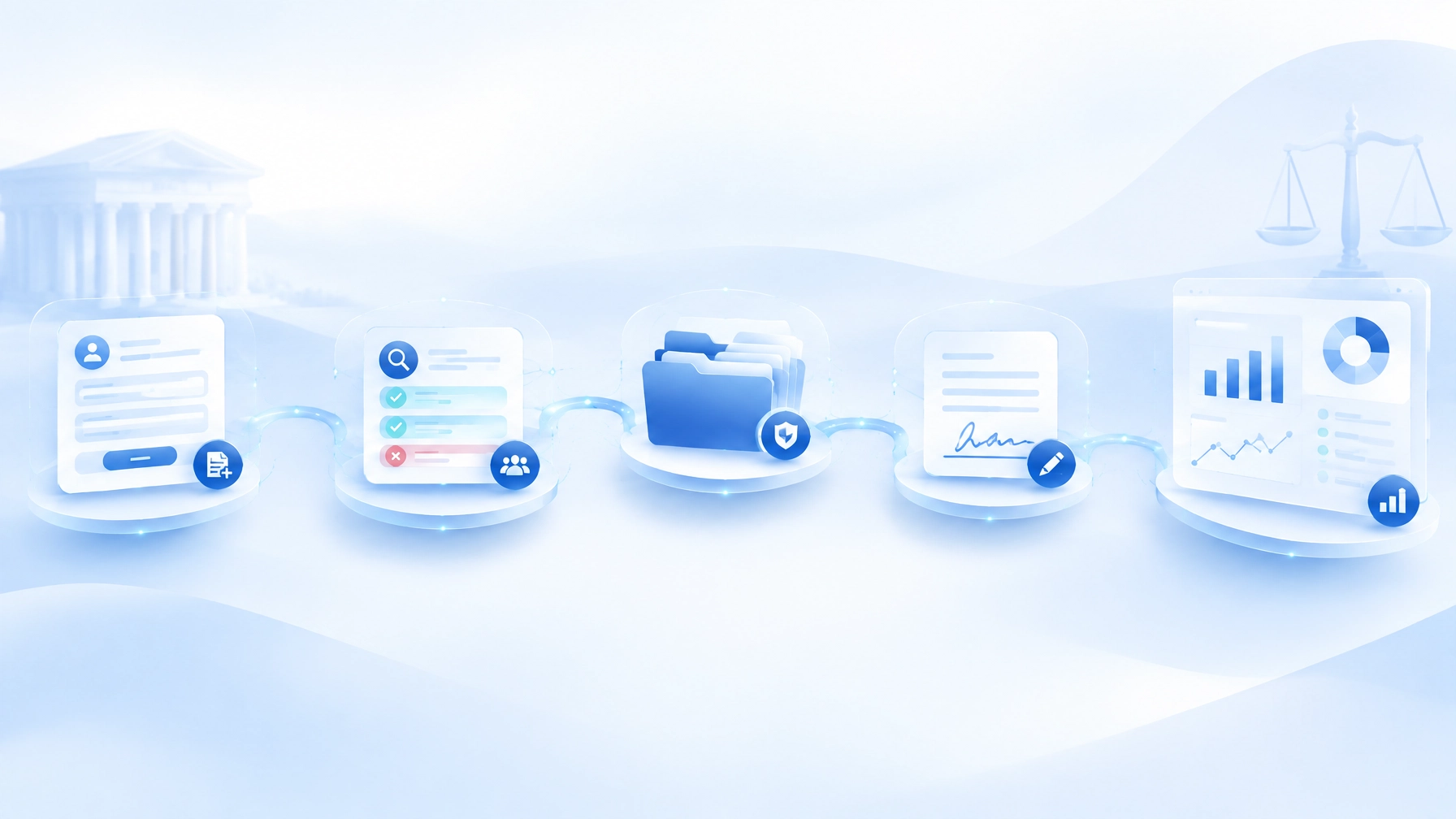
    Secure SFTP ingestion, transformation, schema validation, and monitoring workflow

    The FTP Inform architecture

    FTP Inform was engineered as a secure, multi-tenant file ingestion and orchestration platform. Its architecture separated the stages of processing so that each step could be monitored, tested, and improved independently.

    Secure file ingestion

    Each corporate client received an isolated ingestion endpoint. Automated listeners monitored inbound locations and initiated processing when new files arrived.

    The design supported file-driven operations while applying modern security practices. Where available, SFTP was preferred because it encrypts authentication and data in transit. The FTP Inform user guide also recommends dedicated accounts, limited permissions, connection testing, and secure credential handling.

    This distinction matters. Traditional FTP is not encrypted and should not be used for sensitive external data without appropriate compensating controls. For enterprise environments, secure transfer protocols, restricted access, and clear ownership should be part of the architecture rather than afterthoughts.

    Schema validation and transformation

    The ingestion engine inspected each file against a defined schema. It validated expected columns, data types, required fields, formatting rules, and business constraints.

    Invalid records were not silently discarded or mixed with approved data. Instead, they were routed to an exception or quarantine process. Automated feedback reports made it easier for operations teams and external partners to understand what needed correction.

    Validated records were transformed into a canonical data model. In practical terms, this meant different partner formats could be converted into a consistent internal structure before downstream processing.

    That unified model reduced the need for separate scripts and one-off mappings across every connected system.

    Rules-based workflow orchestration

    Once data was validated and normalized, FTP Inform applied business logic to determine how accounts should move through the recovery operation.

    Portfolios could be segmented according to factors such as:

    • Aging buckets, including 30-, 60-, and 90-plus-day categories.
    • Balance size.
    • Historical recovery probability.
    • Regulatory jurisdiction.
    • Account status and operational priority.

    The platform then connected those segments to downstream actions. These included dunning sequences, agent workload assignment, client reporting, telephony integrations, payment systems, and accounting ledgers.

    The important capability was not merely automation for its own sake. It was the ability to make workflow decisions consistently from structured data.

    Governance was built into the workflow

    For financial operations, a successful file transfer is not enough. Leaders also need to know what happened to the data after arrival.

    FTP Inform maintained an audit trail from the initial file drop through processing and final resolution status. That created a more complete operational record than the previous collection of disconnected logs and spreadsheets.

    The system incorporated controls such as:

    • Role-based access permissions.
    • Encryption in transit and at rest.
    • File and processing history.
    • Validation results.
    • Exception records.
    • Contact-time window rules.
    • Activity and integration logs.

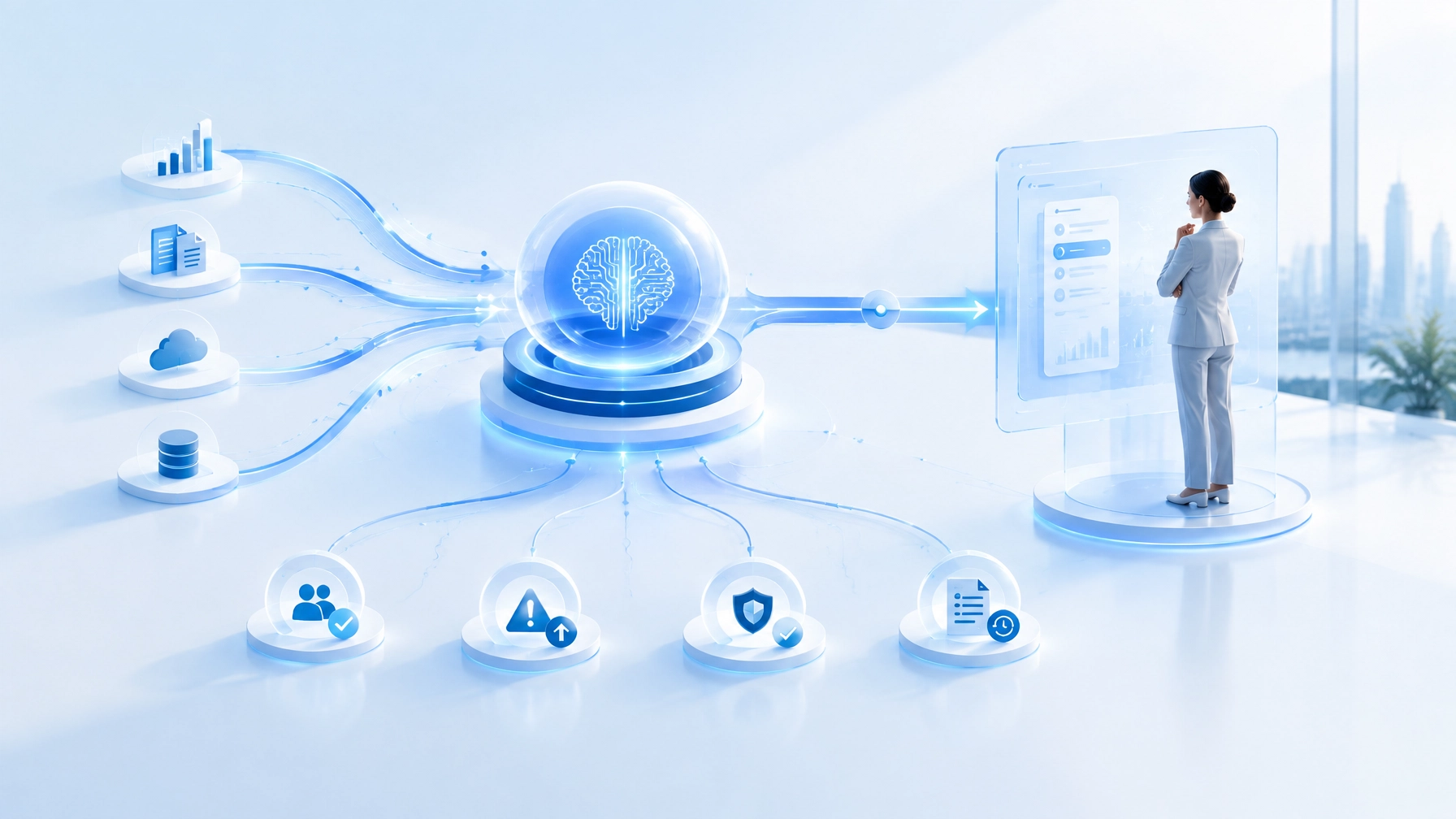
    Enterprise integration architecture with secure pipelines, monitoring, lineage, and governance controls

    This model reflects a broader principle in enterprise automation: governance should be designed into the process. When validation, permissions, and audit records are embedded in the workflow, compliance becomes easier to monitor and less dependent on manual memory.

    Organizations modernizing legacy file transfers should also review current guidance on secure SFTP practices, including key-based authentication, access restrictions, and current encryption standards.

    The measurable impact

    Within 90 days of deployment across the client’s national operation, FTP Inform delivered measurable operational improvements:

    • Three enterprise tools were consolidated into one unified proprietary platform.
    • Cycle time decreased by 40%, accelerating the path from file ingestion to first-contact execution.
    • Manual data-entry errors were eliminated from the core ingestion process through automated validation and exception handling.
    • Manual intervention decreased by more than 75%, allowing staff to focus on complex negotiations and higher-value recovery activity.
    • File processing failures moved upstream, where they could be identified and addressed before affecting downstream teams.

    The value was not limited to labor savings. The organization gained a clearer operating model, stronger visibility into data movement, and a platform that could evolve with its requirements.

    Representative operations dashboard showing workflow automation, throughput, alerts, and performance metrics

    What this case study demonstrates for other enterprises

    FTP Inform is a proof of concept for a broader category of custom software: file-based automation systems that connect legacy environments to modern workflows.

    This approach can be relevant when an organization:

    • Receives recurring CSV, Excel, XML, or fixed-width files from partners.
    • Depends on manual file checks before data can be used.
    • Maintains multiple systems with overlapping or inconsistent records.
    • Needs exception handling rather than all-or-nothing imports.
    • Requires audit trails for operational or compliance review.
    • Has specialized business rules that standard SaaS products do not support.
    • Needs a controlled modernization path instead of a disruptive replacement.

    A custom build does not necessarily mean abandoning every existing system. In many cases, the better strategy is to introduce a purpose-built integration and orchestration layer that allows the business to modernize incrementally.

    The architecture can begin with file monitoring and validation, then expand into transformation, routing, reporting, API integrations, and workflow intelligence.

    When should a business consider a custom automation engine?

    The decision should begin with the operating model, not a technology trend.

    A custom solution becomes worth evaluating when the cost of manual coordination, errors, delays, and disconnected licenses exceeds the cost of designing a system around the business. That assessment should include:

    • Current labor spent checking, correcting, and reconciling files.
    • Revenue delayed by slow or failed processing.
    • Compliance exposure created by incomplete records.
    • Licensing and maintenance costs across existing tools.
    • The strategic value of owning the workflow logic and data model.
    • Future integration and reporting requirements.

    Pure Technology Consulting begins this process with a workflow audit and technical roadmap. The expected deliverables may include solution architecture, secure ingestion endpoints, validation rules, transformation pipelines, dashboards, exception queues, integrations, and governance controls.

    Build the operating layer your business actually needs

    FTP Inform demonstrates how a focused custom system can replace fragmented enterprise tooling without forcing a business into a generic operating model.

    The lesson is not that every organization needs an FTP platform. It is that high-volume operations benefit from technology designed around the movement of data, the decisions made from that data, and the controls required to trust the outcome.

    Pure Technology Consulting brings proven capabilities from healthcare intake and EHR workflows, field operations tracking, debt-agency telephony integrations, and local SEO automation into complex custom development engagements. The objective is to create systems that reduce operational drag while giving leadership a clearer, more scalable foundation for growth.

    To discuss a file-based automation project, request a workflow audit, or scope a custom integration layer, call +1 (803) 921-0969 or schedule a consultation.

    Amin Said, Founder of Pure Technology Consulting LLC
    https://puretechconsult.com
  • Custom Software Isn’t an Expense : It’s the Strategy High-Ticket Enterprises Compete On

    Custom Software Isn’t an Expense : It’s the Strategy High-Ticket Enterprises Compete On

    Amin Said, Founder of Pure Technology Consulting LLC

    For high-ticket enterprises, technology is no longer a support function operating in the background. It is part of the operating model: the structure that determines how quickly the business responds, how consistently teams execute, and how effectively leadership converts data into decisions.

    That is why custom software should not be evaluated as another IT expense.

    When a business relies on specialized workflows, complex integrations, proprietary data, or multi-location operations, custom web application development becomes a strategic investment. It gives the organization the ability to build around how it competes rather than forcing its processes into software designed for the average company.

    The question is not whether custom software costs more than a subscription on day one. The more important question is whether your current software stack is quietly limiting growth, increasing labor dependency, and weakening your competitive position.

    The real cost of software is operational friction

    Off-the-shelf SaaS is often the right choice for standardized, non-differentiating functions. Payroll, email, basic collaboration, and general accounting do not usually require proprietary infrastructure.

    The challenge begins when a business uses a growing collection of generic tools to manage a process that is unique to its operating model.

    A typical fragmented stack may include:

    • A CRM for lead and customer records
    • Separate intake and scheduling software
    • Spreadsheets for exception handling
    • Middleware for integrations
    • Manual exports for reporting
    • Additional tools to fill gaps in the original platforms

    Each individual subscription may appear reasonable. Together, they create a system that depends on manual reconciliation and institutional memory.

    Employees become the integration layer. They copy information between systems, check whether updates succeeded, resolve duplicate records, and create workarounds for processes the software cannot support. Leadership then receives reporting that is delayed, incomplete, or difficult to trust.

    The result is not simply a higher technology bill. It is slower execution, greater error exposure, weaker visibility, and a business that must add people in order to scale.

    PTC refers to this pattern as the enterprise automation paradox: adding more tools to create efficiency can ultimately make the operating environment more expensive and more difficult to manage.

    Custom software turns your operating model into an asset

    A custom application is valuable when it encodes the way your organization creates value.

    That may include a proprietary intake process, a specialized routing model, a complex approval structure, location-aware inventory logic, or a customer experience that competitors cannot easily reproduce. Instead of treating these workflows as exceptions, custom software makes them part of the system’s foundation.

    This creates several strategic advantages.

    Your workflows become more precise

    Generic platforms are designed for broad markets. They offer configuration options, but those options still exist within the boundaries of the vendor’s product model.

    A custom system begins with your actual process. The software can reflect the decisions your team makes, the data it needs, the rules that govern exceptions, and the handoffs that determine speed and quality.

    That precision reduces unnecessary steps and allows teams to work within a consistent operating framework.

    Your data becomes more useful

    Data scattered across multiple systems is difficult to govern and even harder to analyze. A custom architecture can create a shared data model that connects operational activity to business outcomes.

    Executives can see where demand originates, where work is delayed, which locations are performing, and which process changes are producing measurable improvement.

    The goal is not to collect more data. It is to create a reliable source of truth that supports better decisions.

    Your technology can evolve with your strategy

    A vendor’s roadmap is designed for its entire customer base. Your roadmap is designed around your growth priorities.

    When your platform is custom-built, new capabilities can be planned around the organization’s direction. That may mean adding locations, introducing a new service line, connecting a partner ecosystem, or automating a workflow that did not previously exist.

    This flexibility matters for enterprises competing in changing markets. Technology should support strategic movement rather than make the organization wait for a vendor to address an emerging need.

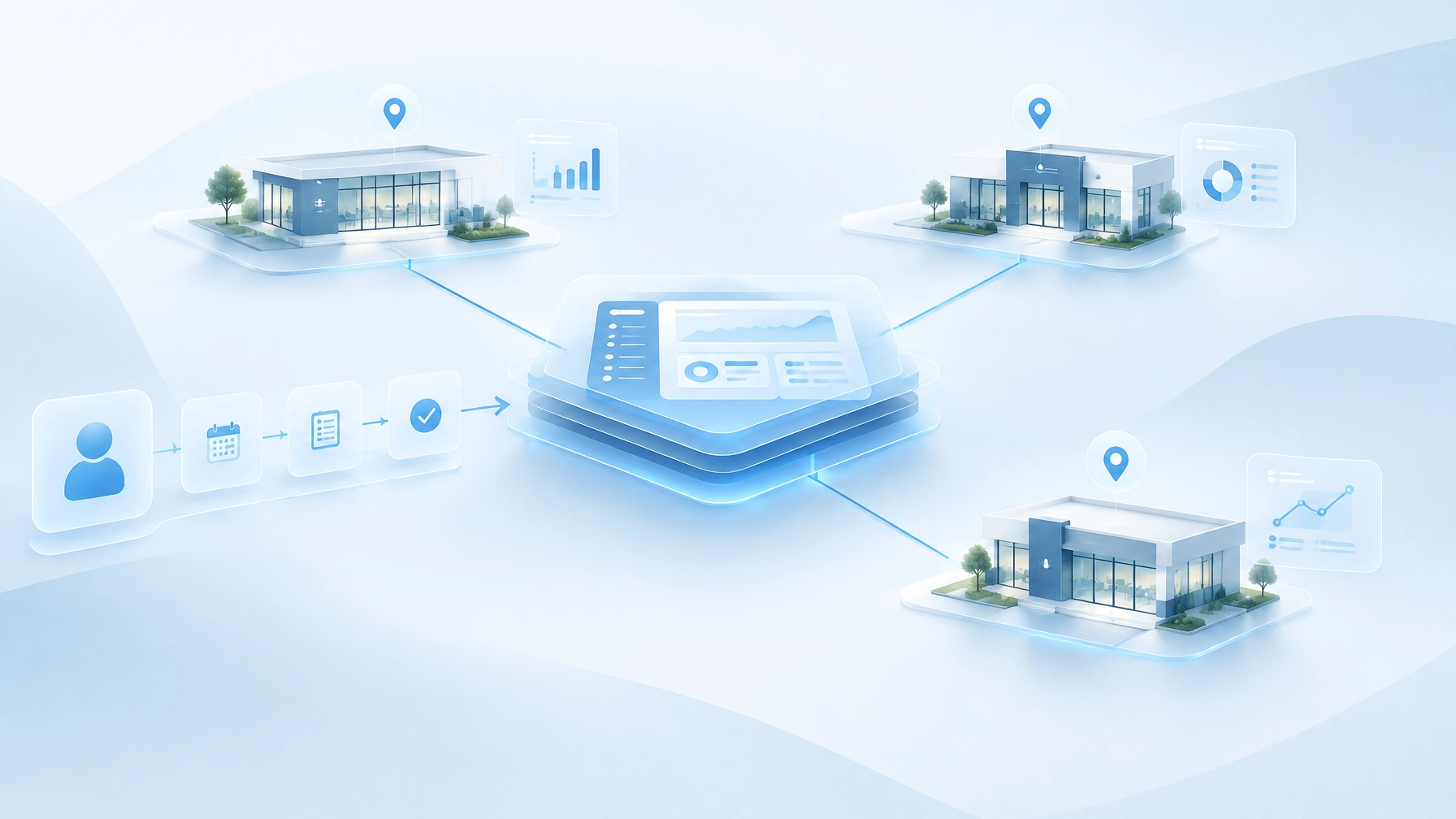
    Centralized enterprise data hub connecting multiple locations with governed, scalable infrastructure

    The build-versus-buy decision should begin with differentiation

    The right question is not, “Can we buy a tool that does something similar?”

    The better question is, “Is this capability central to how we compete?”

    Custom development is most compelling when a process:

    1. Directly influences revenue, retention, service quality, or operational capacity.
    2. Requires coordination across several departments or systems.
    3. Contains proprietary rules or data that create an advantage.
    4. Must scale across locations, teams, customers, or business units.
    5. Cannot be measured reliably with the current technology stack.

    If the process is standardized and has little strategic differentiation, buying is usually more efficient. If the process is core to the organization’s identity or growth model, ownership may create more value over time.

    This is also where total cost of ownership becomes important. A fair comparison includes more than the initial development estimate or monthly subscription. It should account for:

    • Licensing and per-user expansion
    • Integration development and maintenance
    • Manual reconciliation and administrative labor
    • Reporting delays and data-quality issues
    • Training and change management
    • Vendor limitations and future migration risk
    • Security, governance, monitoring, and support

    A custom build requires greater planning and upfront investment. For high-ticket clients, a serious engagement is often a scoped investment of $10,000 or more, depending on architecture, integrations, data complexity, and compliance requirements. The purpose of that investment is not to create a larger software bill. It is to build infrastructure that can reduce recurring friction and support higher-value growth.

    Proven architectures can transfer across industries

    Custom software does not mean starting from an empty page. Experienced engineering partners bring patterns, frameworks, and lessons from previous high-complexity environments into new engagements.

    At Pure Technology Consulting, our proprietary platforms demonstrate the range of systems we can architect and deploy.

    In healthcare, EHRIO Pro demonstrates how intelligent 70-question intakes, matching engines, scheduling logic, and secure data workflows can be coordinated around a specialized patient journey.

    In multi-location operations, ChainHQ demonstrates how a unified, location-aware architecture can replace isolated databases with centralized visibility, governed access, and scalable workflows.

    In debt and financial operations, FTP Inform demonstrates how secure file ingestion, schema validation, data transformation, and workflow orchestration can replace fragmented enterprise tooling.

    And through AI Local Boost, PTC has demonstrated how AI-driven content orchestration and Google Business Profile automation can support complex multi-location visibility programs.

    These platforms are not presented as products for every business to purchase. They are proof-of-work examples. They show how PTC approaches architecture, automation, integrations, governance, and scale when a client’s operational requirements exceed what a standard platform can provide.

    Workflow automation engine connecting intake, validation, routing, communications, and reporting

    The premium approach is strategic before it is technical

    A successful custom build does not begin with a list of screens. It begins with a business case.

    Before development starts, leadership should be able to answer:

    • Which process is creating the greatest operational drag?
    • What does that friction cost in labor, delays, errors, or missed revenue?
    • Which systems need to exchange data?
    • What decisions should become automated, assisted, or more visible?
    • Which controls are required for security, privacy, and governance?
    • How will success be measured after launch?

    This is the role of high-level automation consulting. The consultant is not simply translating a wish list into software. The consultant is helping leadership decide what should be built, what should remain standardized, and what sequence will create the greatest business leverage.

    A disciplined roadmap may include workflow discovery, technical architecture, data modeling, integration planning, interface design, automation rules, reporting, security controls, and a phased deployment plan.

    The result is a system designed to produce a measurable operating improvement: not a collection of features that looks impressive but fails to change how the business works.

    Build the infrastructure your next stage requires

    The strongest enterprises do not compete by owning the most software. They compete by operating with greater clarity, speed, and control.

    Custom software becomes strategic when it removes the constraints that generic tools impose on a differentiated business. It gives leadership a way to unify data, automate decisions, improve governance, and scale execution without adding complexity at the same rate as revenue.

    The investment is premium because the problem is important. A purpose-built platform can influence capacity, customer experience, margin, compliance, and the organization’s ability to pursue its next opportunity.

    If your current systems are forcing your team to work around the business instead of supporting it, book a discovery call with Pure Technology Consulting. We can review your workflows, integration landscape, and growth objectives to determine where custom development or automation consulting would create the strongest return.

    Contact Pure Technology Consulting

    Phone: +1 (803) 921-0969

    Amin Said, Founder of Pure Technology Consulting LLC
    https://puretechconsult.com

  • Case Study: How Custom Healthcare Automation Replaced Three Disconnected Systems for a Multi-Site Practice

    Case Study: How Custom Healthcare Automation Replaced Three Disconnected Systems for a Multi-Site Practice

    For a multi-site healthcare practice, growth can expose a costly technology problem: the practice may have an EHR for clinical records, a CRM for inquiries and referrals, and a scheduling platform for appointments, yet none of the systems share a complete view of the patient journey.

    The result is familiar. Staff re-enter information, providers receive incomplete context, scheduling decisions depend on manual review, and leadership lacks a reliable operational picture across locations.

    Pure Technology Consulting developed EHRIO Pro as a proof-of-concept for solving that problem through bespoke healthcare automation. The system demonstrates how one coordinated workflow can replace the operational role of three disconnected legacy systems:

    • A CRM used to manage inquiries, referrals, and pre-visit activity
    • An EHR used to store patient and clinical information
    • A scheduling system used to manage provider availability and appointments

    The goal was not to add another software layer. It was to create an operating model in which intake, matching, scheduling, and workflow updates move through a unified architecture designed around how the practice actually works.

    The business challenge: three systems, one fragmented patient journey

    The practice’s systems each performed a useful function. The problem was the space between them.

    A new patient might begin with a phone call, website form, referral document, or message to the front desk. Staff then had to transfer information into a CRM, request additional intake details, check provider availability, determine whether a provider was appropriate, and manually enter the final information into the EHR and scheduling system.

    That process created several forms of operational drag:

    • Repeated data entry across multiple platforms
    • Delayed scheduling while staff reviewed intake information
    • Inconsistent routing between locations and providers
    • Limited visibility into incomplete forms or stalled referrals
    • Difficulty tracking the status of each patient before the first visit
    • Increased risk that important information would be missed during handoffs

    The practice did not necessarily need three more tools. It needed a coordinated workflow that could interpret information once and use it across the organization.

    The strategic decision: build around the practice’s operating model

    The first step was not selecting a vendor or connecting APIs. It was mapping the practice’s actual operating model.

    Pure Technology Consulting evaluated how the practice handled:

    • New patient inquiries and referrals
    • Demographic and insurance collection
    • Clinical history and reason-for-visit information
    • Consent and authorization steps
    • Provider specialties and location coverage
    • Telehealth and in-person appointment rules
    • Scheduling availability and escalation paths
    • Staff review requirements
    • Pre-visit communication and follow-up

    This discovery process identified which decisions could be automated, which required human review, and which data elements needed to remain tightly controlled.

    That distinction is important in healthcare. Automation should reduce repetitive work without obscuring responsibility. EHRIO Pro was therefore designed with configurable rules, review states, and audit-oriented workflow visibility rather than treating every decision as an unattended automation.

    A 70-question intake workflow that adapts to the patient

    The intake workflow was one of the system’s central capabilities.

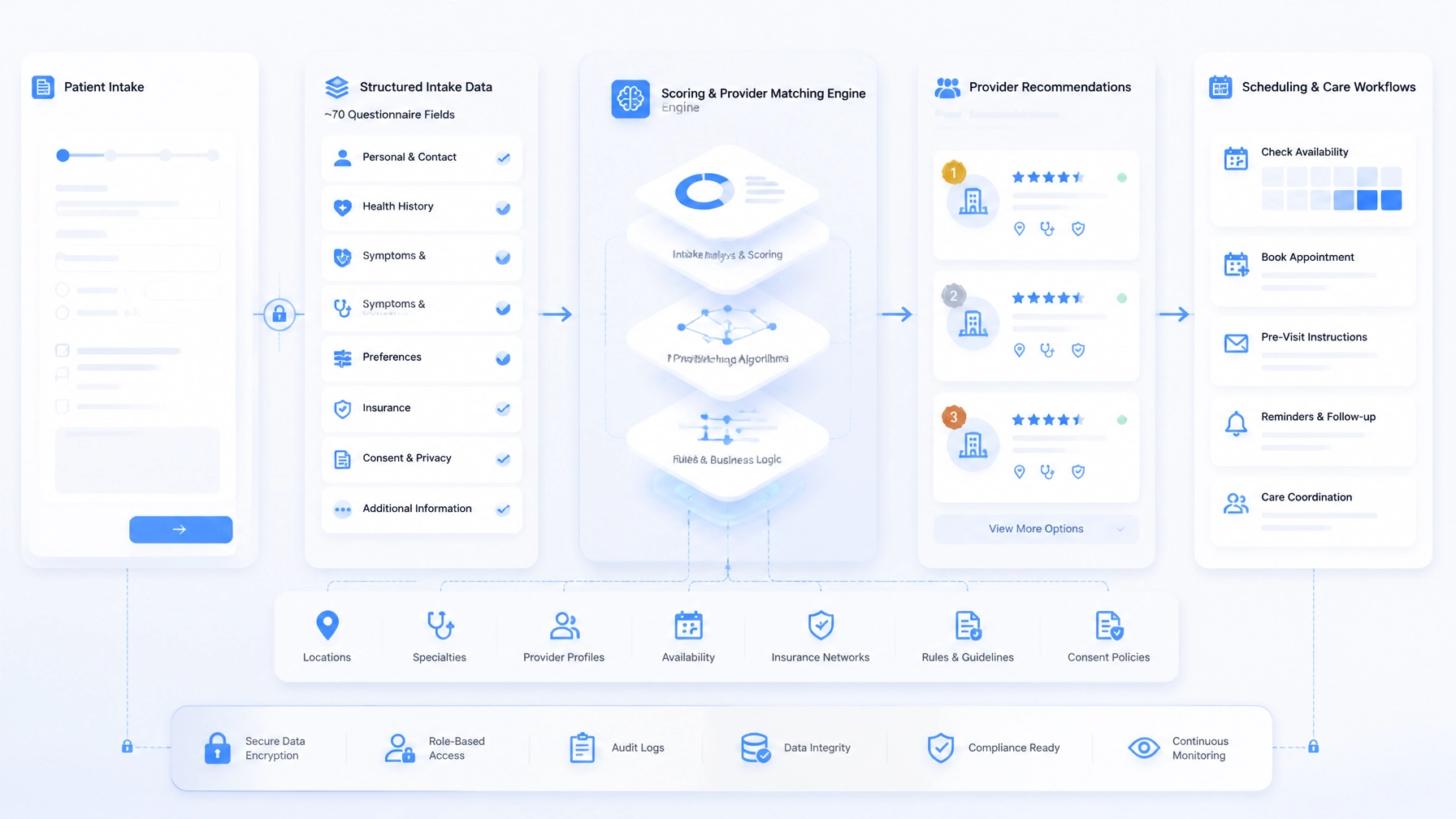
    Instead of presenting every patient with a static, lengthy form, EHRIO Pro uses a structured intake journey built around approximately 70 questions. The workflow can branch based on the patient’s answers, visit type, symptoms, history, location, and other practice-defined criteria.

    The intake architecture can support information such as:

    • Patient demographics and contact details
    • Insurance and coverage information
    • Medical history, medications, allergies, and prior procedures
    • Current symptoms and reason for seeking care
    • Preferences related to location, provider, or visit type
    • Consent, communication preferences, and required acknowledgments
    • Referral details and supporting documents

    Conditional logic helps avoid asking irrelevant questions while still capturing a complete record when the patient’s situation requires additional context. A patient with a straightforward appointment may move through a shorter path. A patient with a more complex history may be routed through additional questions before scheduling is offered.

    The system also normalizes responses into structured data. That means the information is not trapped in a PDF or an email inbox. It can be used by the matching engine, operational dashboards, staff work queues, and downstream EHR workflows.

    Healthcare workflow automation engine connecting intake forms, scheduling, communications, and EHR integrations

    A provider-patient matching engine built around real constraints

    A major limitation of generic scheduling tools is that they often treat availability as the primary decision. In practice, the earliest open appointment is not always the right appointment.

    EHRIO Pro demonstrates a provider-patient matching engine that considers multiple variables before recommending a routing path. Depending on the practice’s requirements, those variables may include:

    • Clinical needs and specialty requirements
    • Provider qualifications and service capabilities
    • Accepted insurance plans
    • Patient location preferences
    • In-person or telehealth requirements
    • Provider availability
    • New-patient capacity
    • Appointment type and expected duration
    • Practice-defined escalation or review conditions

    The matching engine can apply configurable rules and scoring logic to identify the best operational fit. It can also separate high-confidence matches from cases that require staff review.

    This creates a more deliberate scheduling process. Instead of asking staff to interpret the entire intake manually, the system presents a recommended path with the relevant reasoning and exceptions visible. Staff remain involved where judgment is necessary, while routine routing becomes faster and more consistent.

    Replacing the CRM-to-EHR handoff

    The system’s value is not limited to the patient-facing intake form. The larger opportunity is the elimination of the manual handoff between front-office workflows and clinical systems.

    In the proof-of-concept architecture, an intake record can progress through defined stages:

    1. New inquiry or referral received
    2. Patient begins the intake workflow
    3. Required information is validated
    4. Matching logic identifies provider and location options
    5. Insurance or authorization requirements are flagged
    6. Staff review is requested when rules require it
    7. Appointment availability is presented
    8. Scheduling information is synchronized
    9. Relevant intake data is prepared for the EHR
    10. Pre-visit tasks and communications are triggered

    This approach replaces the CRM’s isolated pipeline with a workflow state that connects directly to operational activity. It also reduces the need for staff to copy information from one system into another.

    Where an existing EHR remains the system of record for clinical documentation, the custom application can operate as an orchestration layer. It coordinates intake and pre-visit workflows while respecting the practice’s existing clinical and administrative systems.

    Integration designed for security and accountability

    Healthcare automation requires more than functional integration. Patient information must be handled according to the practice’s compliance obligations, internal policies, vendor agreements, and technical controls.

    For that reason, EHRIO Pro is framed as a HIPAA-adjacent workflow automation architecture, not as a substitute for a complete compliance program. The final deployment environment would need to be evaluated against the practice’s specific legal, administrative, and technical requirements.

    Relevant design considerations include:

    • Role-based access to sensitive workflow data
    • Encryption in transit and at rest
    • Controlled API access and authentication
    • Audit-oriented activity logging
    • Data minimization between systems
    • Defined retention and deletion policies
    • Secure handling of uploaded documents
    • Clear human review and escalation paths
    • Vendor and business associate requirements

    The technical implementation may use secure APIs and healthcare data standards where supported by the practice’s EHR and connected systems. The exact integration strategy depends on the existing environment, available interfaces, data ownership, and operational constraints.

    Secure EHR integration dashboard showing data synchronization, API health, monitoring, and audit controls

    The operational impact of replacing disconnected workflows

    The business outcome is a more coherent patient onboarding process across locations.

    By bringing intake, matching, and scheduling into one coordinated workflow, the practice can work toward:

    • Less manual data entry for front-desk teams
    • Faster movement from inquiry to scheduled appointment
    • More consistent provider and location routing
    • Earlier visibility into missing information
    • Fewer avoidable handoff errors
    • Better coordination between administrative and clinical teams
    • More useful reporting across locations and workflow stages

    These outcomes should be measured against the practice’s baseline rather than assumed. A practical measurement plan could include time from referral to scheduling, intake completion rates, manual touches per patient, exception volume, rescheduling activity, and staff time spent on pre-visit administration.

    Healthcare operations ROI dashboard showing location performance, appointment utilization, wait times, and workflow metrics

    What this proof-of-concept demonstrates

    EHRIO Pro is not presented as a standalone product for practices to purchase. It is proof of work demonstrating Pure Technology Consulting’s ability to design and build complex healthcare workflows around a client’s operating model.

    The same engineering principles can be applied to a custom engagement involving:

    • Multi-location intake architecture
    • Conditional 70-question forms
    • Provider-patient matching engines
    • CRM and EHR workflow orchestration
    • Scheduling and availability logic
    • Secure document and consent handling
    • Staff dashboards and exception queues
    • Audit-oriented automation controls
    • Operational reporting and performance visibility

    This healthcare capability is part of a broader body of work that includes Thrive and EHRIO matching engines, detailed intake workflows, field-operations accountability systems, debt-agency telephony integrations, and local SEO automation through AI Local Boost.

    For a growing practice, the right question is not simply whether another SaaS subscription can be added. The more strategic question is whether the current technology stack supports the patient journey, staff responsibilities, compliance requirements, and growth plan.

    When three systems perform separate functions but create one fragmented operation, bespoke development may provide a more durable path forward.

    Plan the next version of your healthcare operating model

    Pure Technology Consulting works with healthcare organizations that need more than disconnected integrations. We help leadership teams define the workflow, data model, automation rules, and technology roadmap required to support scalable operations.

    To discuss a custom healthcare automation initiative, call +1 (803) 921-0969 or book a discovery consultation. No obligation is required to begin the conversation.

    For additional context, read Beyond Off-the-Shelf: How We Built EHRIO Pro to Automate an Entire Healthcare Practice.

    Amin Said, Founder of Pure Technology Consulting LLC
    https://puretechconsult.com

  • Enterprise Automation Consulting: What a Custom Build Actually Delivers for High-Ticket Clients

    Enterprise Automation Consulting: What a Custom Build Actually Delivers for High-Ticket Clients

    Amin Said, Founder of Pure Technology Consulting LLC

    For high-ticket clients, enterprise automation consulting should deliver more than another dashboard, integration, or collection of software subscriptions.

    It should create a durable operating advantage.

    A well-designed custom build connects fragmented systems, reflects the way the business actually operates, strengthens governance, and gives leadership better control over growth. The objective is not to automate for its own sake. It is to remove operational friction from the workflows that influence revenue, compliance, customer experience, and scalability.

    At Pure Technology Consulting, we bring proven capabilities from healthcare, multi-location operations, debt management, field services, and local SEO automation into complex custom engagements. Our proprietary platforms: including ChainHQ, EHRIO Pro, FTP Inform, and AI Local Boost: serve as proof of work: each demonstrates how bespoke architecture can solve operational problems that generic SaaS cannot fully address.

    What a custom enterprise build is designed to deliver

    A custom automation engagement begins with the operating model, not a software catalog.

    Instead of asking a business to adapt its process to the limitations of an off-the-shelf application, the consulting and engineering team maps the current workflow, identifies decision points, reviews system dependencies, and defines a target-state architecture.

    The result typically includes:

    • A purpose-built web application or workflow platform
    • Integration with CRM, ERP, EHR, accounting, telephony, payment, or marketing systems
    • Role-based access controls and approval paths
    • Automated data validation and exception handling
    • Centralized reporting and operational dashboards
    • Documented processes, governance rules, and support procedures
    • An architecture that can expand with new locations, teams, products, or business units

    The value is not limited to the initial software release. The client receives a technology foundation that can evolve as the organization changes.

    Case study: ChainHQ turns multi-location complexity into one operating system

    Multi-location businesses often reach a point where each branch has its own tools, spreadsheets, customer records, and informal workarounds. Leadership then spends valuable time consolidating reports instead of managing performance.

    ChainHQ was designed around this problem. Rather than treating every storefront or branch as an isolated instance, the platform uses a unified, location-aware architecture.

    The system centralizes core data while associating transactions with the appropriate organization and location identifiers. This gives headquarters a complete view of performance while allowing local managers to access only the data and workflows relevant to their branch.

    The architecture also supports:

    • Hierarchical inventory management across warehouses, regional hubs, and storefronts
    • Automated transfer and replenishment workflows
    • Granular role-based access control
    • Cross-location customer profiles
    • Consolidated financial and operational reporting

    This is what custom development delivers when the challenge is structural rather than cosmetic. The client does not simply receive a prettier interface. They receive a shared operating model that preserves local flexibility while establishing enterprise-wide visibility.

    Case study: EHRIO Pro connects intake, matching, and practice operations

    Healthcare practices frequently use several systems to manage scheduling, intake, patient records, billing, and follow-up. Each system may perform its individual function well, but the gaps between them create administrative drag.

    EHRIO Pro demonstrates how a custom build can address those gaps through workflow design and integration.

    The platform was engineered around complex healthcare practice requirements, including a dynamic 70-question intake process, eligibility checks, provider matching, and secure data synchronization. Instead of relying on staff to copy information from one portal to another, the system uses completion triggers and structured data flows to keep operational status current.

    The matching engine can evaluate factors such as:

    • Patient responses and care requirements
    • Provider specialization
    • Geographic location
    • Insurance panel acceptance
    • Scheduling availability
    • Authorization considerations

    For practices with specialized patient journeys, this level of orchestration is difficult to achieve with a generic form builder or scheduling tool. The custom platform becomes an intelligent coordination layer that supports the front desk, clinicians, billing teams, and leadership.

    The broader lesson applies beyond healthcare: when the workflow includes branching logic, sensitive information, multiple stakeholders, and operational consequences, custom software can provide the control and precision that disconnected tools lack.

    Custom healthcare workflow automation and secure data synchronization

    Case study: FTP Inform replaces fragmented enterprise tooling

    A national debt collection agency approached Pure Technology Consulting with three separate enterprise tools, fragile scripts, manual CSV exports, and spreadsheet-based reconciliation.

    The problem was not simply that the software was old. The underlying workflow was fragmented. File intake, validation, account routing, reporting, and compliance tracking operated across different systems.

    FTP Inform was built as a unified file-based automation engine for secure ingestion, validation, transformation, and downstream orchestration.

    The platform included:

    • Secure SFTP ingestion endpoints
    • Client-specific schema validation
    • Data normalization and transformation
    • Exception quarantine for invalid records
    • Automated portfolio segmentation
    • Telephony and payment gateway integrations
    • Immutable event and compliance logging
    • Role-based access and encrypted data handling

    According to the case study, the system consolidated three enterprise tools, reduced cycle time by 40%, and reduced manual intervention by more than 75%. These outcomes came from redesigning the entire data flow rather than automating one isolated task.

    For high-ticket clients, this distinction matters. A workflow automation project should not merely accelerate a broken process. It should establish a more reliable operating model.

    Secure file ingestion, workflow orchestration, and enterprise compliance dashboard

    Case study: AI Local Boost proves that automation must scale with volume

    Automation becomes more valuable: and more technically demanding: as volume increases.

    AI Local Boost was developed to demonstrate how a custom AI orchestration layer could manage Google Business Profile activity across more than 500 locations. The challenge involved generating and distributing localized content, managing review workflows, coordinating media, and connecting marketing activity with external systems.

    The AI Local Boost case study shows the importance of combining automation with governance.

    The platform was designed to support:

    • Location-specific content generation
    • Review sentiment analysis and response drafting
    • Suggest-and-approve workflows
    • Automated review request triggers
    • Multi-platform content distribution
    • Integrations with thousands of external tools

    The key capability is not simply artificial intelligence. It is the orchestration layer around the AI: rules, approvals, integrations, user roles, and exception handling. Enterprise automation becomes dependable when intelligent systems operate within a defined governance framework.

    AI-powered multi-location marketing and business performance dashboard

    What high-ticket clients should expect from the consulting process

    A premium custom development engagement should include strategic advisory before engineering begins.

    At a minimum, the process should clarify:

    1. Which workflow should be automated first?

    The best starting point is usually a high-volume process with measurable operational drag. Examples include intake, reconciliation, scheduling, account routing, reporting, or customer follow-up.

    2. Which systems must remain in place?

    Custom software does not always mean replacing every existing tool. In many cases, the right architecture acts as an orchestration layer that connects the systems already central to the business.

    3. What governance controls are required?

    Sensitive data, regulated workflows, and multi-user systems require defined permissions, approval paths, audit logs, retention rules, and exception management.

    4. How will value be measured?

    The roadmap should establish practical metrics, such as:

    • Cycle time from intake to completion
    • Manual touches per transaction
    • Error and rework rates
    • Time spent consolidating reports
    • Throughput per employee or location
    • Revenue delayed by process gaps
    • Adoption across teams and business units

    These measures create a business case for the investment and provide a framework for continuous improvement.

    Where custom development creates the strongest advantage

    Custom development is most valuable when a company has one or more of the following characteristics:

    • Its workflows are a meaningful part of its competitive advantage
    • It operates across multiple locations or business units
    • Its data is distributed across disconnected systems
    • Its processes include complex rules or exceptions
    • Its team relies heavily on spreadsheets and manual handoffs
    • Its industry requires stronger auditability or access control
    • Its growth plans exceed the capabilities of current SaaS tools

    A custom build is not automatically the right choice for every business. If a process is standardized and adequately supported by an existing platform, buying may be more efficient. The strategic question is whether the software constraint is becoming more expensive than the investment required to remove it.

    Build a technology roadmap around the business

    Enterprise automation consulting should leave leadership with more than working software. It should provide a clearer view of how the organization can operate at the next stage of growth.

    Pure Technology Consulting brings proven capabilities into custom engagements for healthcare practices, professional services firms, legal and accounting organizations, debt agencies, e-commerce brands, and multi-location operators. Clients do not have to start from a blank page. They can build on architectures and lessons developed through complex systems such as ChainHQ, EHRIO Pro, FTP Inform, and AI Local Boost.

    If manual workflows, disconnected systems, or rigid SaaS tools are limiting your growth, book a discovery consultation or contact Pure Technology Consulting at +1 (803) 921-0969. We can review your operating model, identify the highest-value automation opportunities, and outline a practical roadmap for a custom solution.

    Amin Said, Founder of Pure Technology Consulting LLC
    https://puretechconsult.com

  • Digital Transformation Isn’t an Upgrade. It’s an Operating System for Growth.

    Digital Transformation Isn’t an Upgrade. It’s an Operating System for Growth.

    By Amin Said, Founder of Pure Technology Consulting LLC

    Digital transformation is often described as an upgrade: move to the cloud, add automation, replace outdated software, or introduce artificial intelligence.

    That framing is too narrow.

    For a growth-focused business, digital transformation is not about installing another tool. It is about redesigning the operating system of the company: the connected structure of workflows, data, roles, decision-making, and technology that determines how work gets done every day.

    When that operating system is designed well, growth becomes more repeatable. Teams spend less time reconciling information, leadership gains clearer visibility, and the organization can handle more volume without adding administrative complexity at the same rate.

    This is the strategic role of digital transformation consulting and AI workflow automation: not simply to modernize individual tasks, but to create a scalable operating model for the business.

    Growth exposes the weaknesses in your operating model

    Many businesses do not experience operational friction when they are small. A founder can personally review every lead. A manager can reconcile reports across several spreadsheets. A front-desk employee can re-enter information into multiple systems.

    As volume increases, those workarounds become structural constraints.

    Growth often exposes:

    • Manual data entry between CRM, scheduling, billing, and reporting systems
    • Inconsistent processes across locations or departments
    • Delayed reporting that prevents timely decisions
    • Workflows dependent on individual employees’ memory
    • AI tools operating without clear governance or reliable business data
    • Disconnected customer, operational, and financial information

    The problem is not always that a company lacks software. More often, it has too much software without a coherent architecture connecting everything together.

    A digital transformation strategy begins by examining how work actually moves through the organization. Which systems create the data? Who makes decisions? Where are approvals delayed? Which steps are repeated? What happens when information is incomplete or an exception occurs?

    Those answers form the blueprint for a better operating model.

    A modern operating system has five connected layers

    A scalable digital operating model should connect five essential layers.

    1. Workflow design

    Before automating a process, the process itself must be understood.

    A workflow audit documents the steps, owners, systems, handoffs, decision points, exceptions, and measurable outcomes involved in a business process. This prevents companies from automating unnecessary steps or accelerating a process that is already poorly designed.

    Typical opportunities include:

    • Lead intake and qualification
    • Patient or client onboarding
    • Scheduling and assignment
    • File ingestion and validation
    • Approvals and notifications
    • Reporting and reconciliation
    • Customer follow-up and retention

    The goal is not to automate everything. It is to prioritize workflows that are repetitive, high-volume, error-prone, or directly connected to revenue and service delivery.

    2. Data architecture

    Automation is only as reliable as the information flowing through it.

    When customer records, appointments, transactions, and operational events live in separate systems, employees become the integration layer. They copy, reconcile, verify, and interpret data manually.

    A stronger architecture creates a trusted source of operational truth. This may involve a centralized data model, secure APIs, event-driven workflows, or a custom orchestration layer that connects existing systems without forcing the company to abandon every tool it already uses.

    The result is not simply better reporting. It is better decision-making throughout the business.

    3. Custom applications and integrations

    Off-the-shelf software is valuable when a company’s workflows are standardized. Custom software becomes strategically important when the organization’s differentiation depends on specialized processes, complex rules, or coordination across multiple systems.

    A bespoke web application can provide:

    • A unified internal workspace
    • Custom intake and routing logic
    • Role-based dashboards
    • Secure integrations with existing platforms
    • Exception handling and approval workflows
    • Operational reporting tailored to leadership needs
    • Customer or partner portals

    The right question is not whether custom development is more advanced than SaaS. The right question is whether the business can continue growing while adapting its operating model to the limitations of generic software.

    Custom healthcare software architecture connecting intake, scheduling, billing, documentation, and analytics

    AI workflow automation should support decisions, not create more noise

    AI workflow automation is most valuable when it is connected to a defined process and governed by clear rules.

    For example, an AI-enabled workflow may:

    • Classify incoming requests
    • Extract structured information from documents
    • Summarize customer or patient history
    • Recommend routing or assignment
    • Draft communications for human approval
    • Identify missing information
    • Trigger follow-up sequences
    • Detect exceptions that require escalation

    The design principle is simple: use rules for deterministic tasks and AI for tasks that require interpretation, classification, or contextual support.

    Human oversight remains essential in high-stakes environments such as healthcare, legal services, accounting, and financial operations. A well-designed system defines where AI can act independently, where a human must review the result, and how every action is recorded.

    That combination of automation, visibility, and governance creates leverage without turning the organization into a collection of unmonitored AI experiments.

    Proven builds reveal what custom transformation makes possible

    At Pure Technology Consulting, proprietary platforms are not presented as generic products to purchase. They are proof-of-concept evidence of the engineering capabilities we bring to complex custom engagements.

    EHRIO Pro: orchestrating specialized healthcare workflows

    The architecture behind EHRIO Pro demonstrates how a custom system can coordinate detailed intake, provider matching, scheduling, documentation, billing, and reporting.

    The platform’s healthcare workflow model includes a dynamic 70-question intake process, matching logic, secure data synchronization, and role-based access patterns. These capabilities illustrate how technology can be designed around the specific operating model of a clinic rather than forcing staff to work across disconnected portals.

    The broader lesson applies beyond healthcare: when the process is specialized, the software should reflect the process.

    ChainHQ: turning multi-location complexity into a unified system

    ChainHQ provides a case study in location-aware architecture.

    Multi-location businesses often operate with isolated databases, local spreadsheets, and inconsistent reporting. A unified architecture can centralize core records while preserving location-level permissions and workflows.

    This approach supports:

    • Centralized executive visibility
    • Location-specific access controls
    • Shared customer and product records
    • Automated inventory and operational synchronization
    • Consistent governance with local flexibility

    The capability is relevant to clinics, franchise groups, field-service businesses, retailers, and professional service organizations operating across branches.

    Unified enterprise data platform connecting multiple locations, pipelines, integrations, and executive analytics

    FTP Inform: building automation around file-driven operations

    The FTP Inform case study demonstrates another form of transformation: replacing fragmented file-processing tools with a unified ingestion and orchestration engine.

    For a national debt collection agency, the system consolidated three enterprise tools into one custom platform. It automated secure file ingestion, schema validation, data transformation, exception handling, and downstream workflow routing.

    The documented result included a 40% reduction in cycle time and more than 75% less manual intervention. Those outcomes came from aligning the software architecture with the client’s actual operating model: not from adding a generic automation layer on top of disconnected systems.

    Secure file-based automation engine connecting data sources, validation, transformation, routing, and business systems

    How to build a transformation roadmap that creates leverage

    A practical transformation roadmap should move through four stages.

    Assess the current operating model

    Map the workflows that affect revenue, service delivery, compliance, and administrative capacity. Measure cycle times, error rates, handoffs, and manual effort where possible.

    Prioritize the highest-value constraints

    Choose workflows where automation can produce a measurable operational impact. The best starting point is often a process that is repetitive, costly, visible to customers, or creating a bottleneck for growth.

    Design the target architecture

    Define the future workflow, data model, integrations, permissions, dashboards, and human review points before development begins. This is where digital transformation consulting creates value beyond software implementation.

    Build, measure, and scale

    Develop the custom components, connect the required systems, and launch with clear success criteria. Track metrics such as cycle time, error reduction, throughput, response time, and hours of manual work reclaimed.

    A transformation program should produce a system that improves over time. Governance, reporting, and continuous optimization are part of the operating system: not optional add-ons.

    The strategic shift: from operator to architect

    The purpose of digital transformation is not to remove people from the business. It is to remove unnecessary friction from the way people work.

    When routine coordination, data transfer, and reporting are automated, leadership can focus on operating the business at a higher level. Teams can spend more time on customer relationships, professional judgment, creative problem-solving, and growth initiatives.

    That is the difference between an upgrade and an operating system.

    An upgrade improves an existing tool. A redesigned operating system changes how the company creates value.

    If your business is growing faster than its internal processes can support, request a discovery consultation with Pure Technology Consulting. We can help map your workflows, identify the highest-value automation opportunities, and define a custom technology roadmap for the next stage of growth.

    Amin Said, Founder of Pure Technology Consulting LLC
    https://puretechconsult.com

    Phone: +1 (803) 921-0969

  • Scaling Local Visibility Through Engineering: How AI Local Boost Proves the Power of Custom Multi-Location Automation

    Scaling Local Visibility Through Engineering: How AI Local Boost Proves the Power of Custom Multi-Location Automation

    Amin Said, Founder and CEO of Pure Technology Consulting

    Local visibility is no longer a marketing task that can be separated from operations. For a multi-location business, every Google Business Profile, customer review, directory listing, post, photo, and call represents part of a larger technology system.

    When that system is managed manually, growth creates friction. More locations mean more logins, more approvals, more opportunities for inconsistent data, and more administrative work for teams that should be focused on customers.

    At Pure Technology Consulting, we approach this challenge as an engineering problem. Our proprietary asset, AI Local Boost, demonstrates how custom web applications and high-level automation can transform local visibility from a repetitive task into a scalable operating capability.

    The AI Local Boost Pro concept extends that proof of work into a multi-location architecture designed for brands, franchises, agencies, and high-growth service businesses.

    Local visibility becomes an operating model at scale

    A single location may be able to manage its local presence with a checklist and a few hours each week. That model changes when a business operates across dozens or hundreds of locations.

    A multi-location organization needs to coordinate:

    • Location-specific business information and services
    • Google Business Profile posts and media
    • Review monitoring and response workflows
    • Directory and citation consistency
    • Local content and frequently asked questions
    • Calls, messages, website visits, and direction requests
    • Brand governance across every market

    The challenge is not simply publishing more content. It is preserving local relevance while maintaining centralized control.

    A national brand cannot use identical messaging for every market. At the same time, it cannot allow every location to operate without standards. The system must support local variation inside a reliable governance framework.

    That is where custom software becomes strategically important.

    AI Local Boost as a technical proof of concept

    AI Local Boost was developed to show how Pure Technology Consulting designs and deploys AI-powered business systems. The public platform focuses on automated Google Business Profile management, content publishing, review responses, directory synchronization, and performance reporting.

    The deeper value is architectural. The platform demonstrates how a complex, repetitive workflow can be decomposed into reliable services and coordinated through a central application.

    The AI Local Boost case study was designed around an engine capable of managing 500+ locations without requiring human intervention for every routine action. That scale changes the design conversation. The objective is no longer to automate one task. It is to create an operating layer that can manage thousands of recurring decisions.

    The system must know:

    • Which location is being managed
    • Which services and keywords matter in that market
    • What content has already been published
    • Which reviews require escalation
    • Which data must remain consistent across directories
    • Which actions can run automatically
    • Which actions require approval

    This is the difference between adding an AI feature and engineering an automation platform.

    Custom multi-location automation architecture connecting location profiles, content workflows, integrations, and analytics

    What the multi-location architecture must solve

    1. Centralized control without generic content

    The first design requirement is a centralized control plane. Executives and marketing teams need a clear view of every location, but each profile must still reflect its market, services, audience, and business priorities.

    A custom application can maintain shared brand rules while allowing location-level configuration. For example, a healthcare practice may use a consistent brand voice across all offices while adapting posts to local services, seasonal needs, providers, and community events.

    The deliverables typically include:

    • Multi-tenant location management
    • Brand voice and content governance
    • Per-location service and keyword configuration
    • Reusable content templates
    • Approval rules and publishing schedules

    This model creates consistency without reducing every location to the same message.

    2. Automated content orchestration

    AI-generated content is only valuable when it is connected to a reliable workflow. A content engine needs context, scheduling logic, media handling, quality controls, and publishing integrations.

    AI Local Boost demonstrates this orchestration through automated posts, images, videos, review responses, and local content workflows. The platform can generate activity for individual profiles while preserving the operational logic required to run content at scale.

    A production-grade version of this architecture may include:

    • Content generation based on location and service data
    • Automated publishing queues
    • Media optimization and asset assignment
    • Duplicate-content controls
    • Failed-job retries and error logging
    • Human approval for sensitive content

    The result is not simply more activity. It is a repeatable system that makes local visibility manageable across a growing footprint.

    3. Review management with governance

    Reviews carry both marketing value and reputational risk. A missed positive review is a lost engagement opportunity. An inappropriate response to a negative review can create a larger business problem.

    AI Local Boost uses an intelligent review workflow that can monitor incoming reviews, assess context, draft responses, and support approval or automation rules.

    A mature enterprise implementation should distinguish between:

    • High-confidence reviews that can receive automated responses
    • Sensitive or negative reviews that require approval
    • Reviews containing legal, medical, or compliance concerns
    • Escalations requiring a manager or location owner
    • Response-time reporting across the network

    This approach allows automation to handle volume while governance protects the brand.

    Measurement connects visibility to business outcomes

    Automation should not be evaluated by the number of posts published. The meaningful question is whether visibility is improving in ways that support business growth.

    AI Local Boost includes heatmaps and performance reporting designed to connect local search activity with measurable signals such as calls, website clicks, direction requests, and ranking movement.

    One documented AI Local Boost result for a sports chiropractor in Charlottesville, Virginia, showed average ranking movement from 20 to 6.48 over a 60-day period. The same report recorded a 95% increase in phone calls, a 41% increase in website clicks, and a 19% increase in direction requests during the measured period.

    Real AI Local Boost heatmap showing ranking improvement for a local business

    These figures should be understood in context. Local search outcomes vary by market, competition, starting position, profile quality, and execution period. The important lesson is that a custom platform makes those variables observable.

    For a multi-location operator, the reporting layer can support:

    • Location-by-location performance comparisons
    • Ranking heatmaps by service and market
    • Call and website engagement trends
    • Review volume and response-time monitoring
    • Directory consistency checks
    • Identification of underperforming locations

    This turns local SEO from a collection of disconnected activities into an operational dashboard.

    Why custom software outperforms disconnected tools

    Off-the-shelf tools can be useful when a business has a narrow requirement. They become less effective when the workflow crosses departments, locations, and systems.

    A multi-location brand may need local visibility data connected to:

    • A CRM
    • Scheduling software
    • Point-of-sale systems
    • Customer intake workflows
    • Email and SMS platforms
    • Call tracking
    • Internal reporting
    • Franchise or regional management systems

    Custom development allows the operating model to determine the technology, rather than forcing the organization to adapt to disconnected products.

    This is the same principle Pure Technology Consulting applies across industries. In healthcare, our EHRIO work includes matching engines and complex 70-question intake workflows. In field operations, D2D Tracking demonstrates accountability and GPS logging. In debt management, telephony integrations support call attribution and workflow visibility.

    AI Local Boost applies that same engineering discipline to local search.

    From proof of concept to premium business system

    The AI Local Boost Pro architecture is not positioned as a generic product to purchase off the shelf. It is a proof of what becomes possible when a technology partner understands both software engineering and business operations.

    For a franchise group, the next step may be a branded command center with regional permissions. For a healthcare network, it may be a visibility system connected to intake, scheduling, and review workflows. For a professional services firm, it may be a custom dashboard that connects local search activity to lead qualification and revenue attribution.

    These engagements are typically scoped as premium custom builds, often beginning at $10,000 or more depending on integrations, data requirements, compliance considerations, user roles, and location count. The investment is justified when the system removes recurring labor, improves decision-making, and creates an operating foundation for growth.

    The right starting point is not a feature list. It is a workflow audit.

    Engineering the next layer of growth

    Local visibility is becoming more competitive, more measurable, and more operationally complex. Businesses that treat it as a weekly manual task will continue to add labor as they expand. Businesses that engineer it as a system can create leverage.

    AI Local Boost proves that a custom platform can coordinate content, reviews, directories, integrations, and analytics across a large location network. More importantly, it demonstrates the broader capability of Pure Technology Consulting: designing software around the way a business actually operates.

    If your organization is managing multiple locations, disconnected tools, or repetitive visibility workflows, book a discovery call. We can map your current operating model, identify the highest-value automation opportunities, and define a practical roadmap for a custom web application or AI-powered workflow system.

    Contact Pure Technology Consulting: +1 (803) 921-0969

    Amin Said, Founder of Pure Technology Consulting LLC
    https://puretechconsult.com

  • Beyond Off-the-Shelf: How We Built EHRIO Pro to Automate an Entire Healthcare Practice

    Beyond Off-the-Shelf: How We Built EHRIO Pro to Automate an Entire Healthcare Practice

    For growing healthcare practices and multi-location medical groups, the operational bottleneck rarely lives in clinical care. It lives in the friction between disconnected systems. When front-desk staff juggle standalone EHR portals, legacy scheduling tools, manual intake paperwork, and ad-hoc billing follow-ups, patient experience suffers and administrative overhead balloons.

    At Pure Technology Consulting, we frequently partner with specialty clinics, physical therapy groups, and wellness practices hitting the $500K to $5M growth ceiling. Time and again, practice leaders tell us the same story: off-the-shelf SaaS tools solve 70% of their operational needs, leaving a jagged 30% gap filled by sticky notes, tribal knowledge, and exhausting manual data re-entry.

    To demonstrate how custom engineering bridges that gap, we look inward at our own proprietary development frameworks: specifically EHRIO Pro, our enterprise healthcare workflow automation engine. By examining how we architected EHRIO Pro to orchestrate complex intake, patient matching, and secure data pipelines, practice operators can see what is truly possible when technology is custom-built around your exact operating model rather than forcing your team to adapt to rigid software constraints.

    The Breaking Point of Off-the-Shelf Software

    Standard practice management platforms are built for the lowest common denominator. They offer generic templates, rigid scheduling grids, and isolated messaging windows. But as a healthcare practice scales to multiple locations or introduces specialized clinical programs, those generalized workflows begin to break down.

    Consider a multi-location physical therapy or chiropractic group handling hundreds of patient interactions weekly. Each patient requires:

    • Detailed multi-part intake questionnaires (often 70+ questions capturing symptom history, insurance verification, and consent).
    • Automated eligibility checks before arrival.
    • Dynamic provider matching based on specialization, geographic location, and insurance panel acceptance.
    • Post-visit follow-up sequences integrated with internal CRM and billing ledgers.

    When these steps rely on disconnected tools, staff members spend hours copy-pasting data between tabs. Errors creep in, appointment no-show rates climb due to generic reminder cadences, and patient intake feels disjointed.

    ![Smart healthcare workflow automation engine](https://cdn.marblism.com/XWQ-poHfo9s.webp)
    

    Engineering a Custom Solution: The Architecture Behind EHRIO Pro

    When we set out to build EHRIO Pro, our engineering mandate was simple: eliminate operational drag without adding administrative complexity. Rather than bolting together fragile third-party integrations, we designed a cohesive, HIPAA-compliant ecosystem from the ground up.

    1. Intelligent Intake & Multi-Part Matching Engines

    In healthcare, intake is not a single form; it is a complex data collection journey. For EHRIO Pro, we engineered a dynamic 70-question intake engine that adapts in real time based on patient responses. If a patient indicates chronic lower back pain, subsequent fields dynamically branch to capture specialized orthopedic history.

    Behind the interface, our proprietary matching engine cross-references patient insurance data against real-time provider schedules, instantly assigning the correct clinician while flagging potential authorization hurdles before the patient ever steps foot in the clinic. This exact architecture mirrors our work across high-stakes domains: such as D2D tracking rep accountability in field operations and complex telephony integrations in fintech debt recovery.

    2. Seamless EHR and Data Synchronization

    A custom web application is only as powerful as its data integrity. EHRIO Pro acts as an intelligent orchestration layer sitting alongside existing Electronic Health Record (EHR) systems. Using secure, encrypted API pipelines and FHIR-compliant data standards, discrete patient demographics, appointment milestones, and clinical status updates sync instantly across platforms.

    This eliminates dual-entry errors entirely. Front-desk staff no longer wonder whether a patient completed their pre-visit documentation; the system updates status flags automatically based on completion triggers.

    ![EHR system data synchronization and secure API integration](https://cdn.marblism.com/4VaoMDIvnzh.webp)
    

    Where Custom Software Beats Rigid SaaS

    When practice executives evaluate their technology stack, the perennial question arises: Should we buy another off-the-shelf tool or invest in custom development?

    The answer depends entirely on your growth trajectory. If your processes are standard and unvarying, generic SaaS is sufficient. But if your competitive advantage lies in your unique patient journey, specialized intake workflows, or proprietary multi-location coordination, off-the-shelf software becomes a ceiling on your growth.

    Custom development delivers four distinct advantages that rigid SaaS cannot replicate:

    • Exact Workflow Alignment: The software molds to your operating procedures, not the other way around. Your staff executes workflows the way your practice operates best.
    • Unified Data Ecosystem: No more data silos between your marketing leads, intake forms, EHR records, and billing dashboards. Everything lives in a single, cohesive source of truth.
    • Enterprise-Grade Security & Compliance: Custom builds allow for rigorous, role-based access controls, encrypted audit logs, and tailored HIPAA-compliant data handling protocols designed specifically for your compliance requirements.
    • Operational Scalability: As your practice opens new locations or adds clinical specialties, your custom platform scales infinitely without triggering runaway per-seat licensing cost increases.

    Quantifying the Impact: The ROI of Custom Automation

    Investing in custom software is a strategic capital expenditure, not an expense. When we deploy systems like EHRIO Pro for high-ticket clients, the return on investment manifests across three clear operational vectors:

    1. Drastic Reduction in Administrative Overhead: Automating 70-question intakes, eligibility checks, and appointment routing typically saves front-desk teams 15 to 25 hours per week per location. Staff can redirect that energy toward patient care and high-touch concierge service.
    2. Accelerated Revenue Cycles: Catching insurance eligibility errors and missing prior authorizations before the appointment virtually eliminates claim rejections caused by administrative oversight.
    3. Elevated Patient Retention: Patients experience a frictionless, modern digital onboarding process that sets a professional tone from their very first interaction with your brand.
    ![Modern analytics and operational ROI tracking dashboard](https://cdn.marblism.com/G8WNXi6Ehrk.webp)
    

    Bringing Proven Capabilities to Your Practice

    EHRIO Pro is more than a proprietary SaaS asset within our portfolio; it is proof of our core engineering capability. At Pure Technology Consulting, we bring battle-tested architectures from healthcare, field operations, and fintech into custom engagements for growth-focused business leaders.

    Whether you are looking to streamline patient intake across multi-location clinics, build a bespoke internal web application, or eliminate manual workflow bottlenecks, our team designs and deploys scalable technology that drives predictable growth.

    If your practice is ready to move beyond the limitations of off-the-shelf software and build a proprietary digital advantage, let's talk.

    Ready to explore a custom technology roadmap for your practice?
    Contact our team directly at +1 (803) 921-0969 or book a discovery consultation on our schedule page.


    Amin Said, Founder of Pure Technology Consulting LLC
    https://puretechconsult.com

  • Why Custom Web Application Development Is the Definitive Competitive Advantage for Scaling Enterprises

    Why Custom Web Application Development Is the Definitive Competitive Advantage for Scaling Enterprises

    Amin Said, Founder of Pure Technology Consulting LLC, explores how organizations scale beyond the rigid limits of off-the-shelf software.

    For growing enterprises navigating complex markets, the difference between market leadership and operational stagnation often comes down to software architecture. Standardized SaaS tools and out-of-the-box platforms offer a quick start, but they ultimately enforce rigid boundaries. When your competitors operate on the same generic templates, your operational workflows, customer experiences, and strategic agility remain capped by someone else's product roadmap.

    True differentiation requires a deliberate shift toward custom web application development. By building bespoke software designed explicitly around your operating model, your enterprise turns digital infrastructure from an operational expense into a proprietary competitive moat.

    At Pure Technology Consulting, we partner with growth-focused organizations to design and deploy bespoke web applications, bespoke AI solutions, and robust enterprise automation consulting frameworks that scale seamlessly alongside your business goals.


    Moving Beyond Off-the-Shelf Limitations

    Every enterprise reaches an inflection point where standard SaaS platforms create more friction than value. Data silos multiply, critical workflows require awkward manual workarounds, and reporting dashboards fail to capture the nuanced realities of your operations.

    When your team spends hours reconciling disparate systems or adapting internal processes to fit a software vendor's limitations, your organization loses agility. Digital transformation consulting is not about adopting more technology; it is about aligning technology precisely with your strategic intent.

    +-------------------------------------------------------+
    |                 Enterprise Strategy                   |
    +---------------------------+---------------------------+
                                |
                                v
    +-------------------------------------------------------+
    |        Bespoke Web Application Architecture           |
    +---------------------------+---------------------------+
                                |
            +-------------------+-------------------+
            v                                       v
    +-----------------------+               +-----------------------+
    |  AI Workflow          |               |  Cross-System Data    |
    |  Automation           |               |  Integration Hub      |
    +-----------------------+               +-----------------------+
    

    The Strategic Value of Bespoke Systems

    Investing in a custom software development agency allows you to architect solutions that reflect your exact business logic. Rather than compromising your service delivery to accommodate software constraints, your applications adapt to your workflow, your compliance requirements, and your growth trajectory.

    • Unmatched Workflow Efficiency: Custom solutions eliminate redundant manual steps, integrating seamlessly with your existing data layers.
    • Proprietary Intellectual Property: Features and algorithms built specifically for your enterprise cannot be licensed or duplicated by competitors.
    • Granular Security & Governance: Tailored access controls and compliance architectures safeguard sensitive data across healthcare, fintech, and professional services environments.

    Where Custom Software Outperforms Standard Platforms

    Custom workflows and AI-driven automation systems in a modern enterprise setting

    When evaluating technology investments, leadership teams often weigh the upfront speed of SaaS against the long-term leverage of bespoke engineering. While SaaS has its place for generic functions like basic accounting or email marketing, core operational and revenue-generating workflows demand dedicated architecture.

    Integrating Intelligence: AI-Powered Business Systems

    Modern scaling requires more than static databases; it requires intelligent execution. Integrating ai-powered business systems directly into your custom web application transforms passive data into active operational leverage.

    Through specialized ai consulting services, enterprises can embed intelligent decision support, automated document processing, and predictive analytics into their daily workflows. Whether matching complex healthcare intake protocols: similar to our work with intake engines and EHR-adjacent systems: or optimizing field service dispatch and GPS logging, custom applications make intelligence native to your operations.

    Eliminating Operational Drag Through AI Workflow Automation

    Manual handoffs and administrative bottlenecks drain profitability. Implementing ai workflow automation within a custom application architecture reduces cycle times and eliminates human error across repetitive tasks.

    Our approach to business automation consulting focuses on identifying high-friction operational handoffs: such as CRM synchronization, client onboarding sequences, and multi-location reporting: and replacing them with autonomous, event-driven pipelines.


    Architectural Pillars of Enterprise-Grade Web Applications

    Building a high-performance web application requires rigorous engineering discipline and a comprehensive understanding of enterprise stakeholder needs. When partnering with a premier custom software development agency, leadership can expect a structured, outcome-driven roadmap.

    Data integration and secure cloud architecture dashboards

    1. Unified Integration and Data Flow

    Enterprise environments rarely operate in a vacuum. A bespoke application serves as an integration hub, connecting legacy databases, third-party APIs, and proprietary billing systems into a single, cohesive interface. This eliminates data fragmentation and empowers executives with real-time visibility.

    2. Scalable Backend and Cloud Architecture

    As user volume and transactional throughput increase, application performance must remain uncompromised. Microservices and modular backend architectures ensure that your platform scales horizontally and vertically without requiring expensive rewrites down the line.

    3. Rigorous Security and Compliance Governance

    For businesses operating in regulated sectors, security cannot be an afterthought. Custom web applications allow for strict adherence to frameworks such as HIPAA, GDPR, and industry-specific security protocols, ensuring data integrity and audit readiness from day one.


    The Roadmap to Digital Transformation Consulting Excellence

    Transitioning from off-the-shelf software to a bespoke digital ecosystem requires a trusted technical partner who understands both software engineering and executive strategy.

    Strategic roadmap and partnership for scaling enterprises

    Our engagement model at Pure Technology Consulting is anchored in four strategic phases:

    1. Operational Discovery & Workflow Audit: We analyze your current operating model, identify friction points, and map out high-impact automation opportunities.
    2. Architecture & Solution Design: We engineer a comprehensive technical blueprint detailing database schemas, user experience flows, API integrations, and security protocols.
    3. Agile Development & Iterative Deployment: We build your platform through rigorous sprints, ensuring continuous stakeholder feedback and transparent milestone delivery.
    4. Optimization & Ongoing Governance: Post-launch, we provide continuous monitoring, performance tuning, and feature expansion to support your long-term growth.

    Whether you require specialized business process automation consulting or a complete custom platform overhaul, our team brings proven engineering capabilities across healthcare, fintech, field operations, and local enterprise ecosystems.


    Partner with Pure Technology Consulting

    Technology should accelerate your enterprise, not constrain it. If your organization has outgrown rigid SaaS tools and is ready to build a sustainable competitive advantage through custom engineering, let’s start a conversation.

    Explore how our ai consulting services and bespoke development capabilities can transform your operations.

    Book a discovery call or request a comprehensive workflow audit with our team today:

    Amin Said, Founder of Pure Technology Consulting LLC
    https://puretechconsult.com

  • FTP Inform Case Study: How We Built a Custom File-Based Automation Engine That Replaced 3 Enterprise Tools for a National Debt Collection Agency

    FTP Inform Case Study: How We Built a Custom File-Based Automation Engine That Replaced 3 Enterprise Tools for a National Debt Collection Agency

    By Amin Said, Founder of Pure Technology Consulting LLC

    In modern financial operations and debt recovery, speed, accuracy, and uncompromising compliance form the bedrock of sustainable growth. When a national debt collection agency approached Pure Technology Consulting, they were operating at a critical juncture. Their legacy infrastructure relied on three separate enterprise software tools patched together with fragile custom scripts, manual CSV exports, and endless spreadsheet reconciliations.

    The operational drag was immense. Every day, teams spent hours verifying client-provided debt files, chasing down schema validation errors, and manually routing accounts across disconnected platforms. Recovery timelines stalled, operational overhead climbed, and risk exposure multiplied.

    Rather than forcing their operations into another rigid off-the-shelf software package, our team designed and engineered FTP Inform: a bespoke, high-performance file-based automation engine built to ingest, validate, segment, and orchestrate complex debt portfolios at scale.

    In this case study, we examine the architectural strategy, engineering approach, and measurable business impact of replacing fragmented enterprise tooling with a unified custom system.


    The Operational Bottleneck: Why Off-the-Shelf Tools Failed

    For established financial and service-oriented enterprises, generic SaaS solutions often create more problems than they solve. Standard CRM platforms and collection suites are built for generalized workflows, lacking the specialized capabilities required for high-volume, file-driven batch processing.

    Secure SFTP file ingestion and automated schema validation

    Our client faced three distinct operational vulnerabilities:

    1. Fragmented Tooling: Their intake, dunning management, and reporting lived in three disparate silos. Data synchronization required scheduled batch jobs that frequently failed or duplicated records.
    2. High Error Rates in File Ingestion: Clients submitted debt portfolios in varied formats: custom CSVs, fixed-width text files, and unstructured Excel sheets. Manual parsing and validation caused daily bottlenecks.
    3. Regulatory and Audit Blind Spots: Tracking FDCPA compliance across disconnected systems created severe governance risks, leaving audit trails scattered and incomplete.

    To achieve true operational leverage, the client needed more than a patch. They required a resilient, purpose-built architecture designed specifically around their operational model.


    Engineering FTP Inform: A Custom Ingestion & Transformation Layer

    At Pure Technology Consulting, our approach to custom web application development begins with a comprehensive workflow audit and a clear technical roadmap. For FTP Inform, we engineered a secure, multi-tenant ingestion architecture capable of handling millions of records with absolute reliability.

    Core Architectural Pillars

    • Secure SFTP Ingestion Pipelines: Each corporate client is provisioned with an isolated, secure ingestion endpoint. Automated event listeners detect inbound file drops instantly, initiating asynchronous processing without human intervention.
    • Intelligent Schema Validation & Transformation: The engine inspects inbound files against strict client-specific schemas. It automatically normalizes data types, detects anomalies, flags negative balances or missing consent flags, and routes invalid records to a dedicated exception quarantine while generating automated feedback reports.
    • Canonical Data Modeling: Validated data is translated into a unified internal model, ensuring seamless synchronization across downstream collection workflows and executive reporting dashboards.

    By consolidating ingestion and validation into a single, cohesive engine, we eliminated the friction points that previously slowed down daily operations.


    Orchestrating Workflows and Enterprise Integrations

    File ingestion is only the first step. The true power of FTP Inform lies in its debt collection automation engine: a rules-based orchestration layer that translates raw account data into actionable recovery strategies.

    Workflow automation metrics and collection intelligence dashboard

    Once accounts are loaded and normalized, the system automatically segments portfolios based on aging buckets (30/60/90+ days past due), balance size, historical recovery probability, and regulatory jurisdiction.

    Key Workflow Capabilities Built Into the System:

    • Automated Dunning Sequences: Triggering multi-channel reminders (email, SMS, and secure self-service portal links) tailored to each segment's behavioral profile.
    • Dynamic Agent Workloads: Prioritizing high-impact accounts for senior recovery specialists while routing routine self-service options to automated client portals.
    • Seamless API Integrations: Connecting directly with telephony providers, payment gateways, and accounting ledgers to record promises-to-pay and post transactions instantly.

    This level of automation reduced manual intervention by over 75%, allowing the agency’s internal staff to focus exclusively on complex negotiations and high-value recovery engagements.


    Governance, Compliance, and Measurable Business Impact

    In the debt collection sector, compliance governance is non-negotiable. Building custom software allows organizations to embed compliance directly into the code rather than relying on manual oversight.

    Enterprise integration, secure data pipelines, and compliance governance

    FTP Inform maintains an immutable audit trail for every event: from the moment an account file hits the SFTP server to the final resolution status. Role-based access controls, encryption at rest and in transit, and strict contact-time window validations ensure full adherence to regulatory frameworks.

    The Quantifiable Results

    Within 90 days of deploying FTP Inform across their national operations, the client achieved:

    • Consolidation of 3 Enterprise Tools: Replaced disparate third-party software licenses with a single, unified proprietary platform.
    • 40% Reduction in Cycle Time: Accelerated time-from-ingestion to first-contact execution from hours to seconds.
    • Elimination of Manual Data Entry Errors: Automated validation caught and quarantined bad data upstream, achieving near-zero file processing failures.

    To explore how our team can architect a similar custom workflow automation engine or web application for your organization, visit https://puretechconsult.com.


    Let's Build Your Technological Advantage

    Technology should serve as an engine for profitable growth, not an operational burden. Whether you are modernizing internal data pipelines, launching a new SaaS product, or automating complex intake workflows, Pure Technology Consulting brings proven engineering expertise and strategic advisory to every engagement.

    To discuss your technical roadmap or request a workflow audit, contact our team directly at +1 (803) 921-0969 or schedule a discovery session through https://puretechconsult.com.

    Amin Said, Founder of Pure Technology Consulting LLC
    https://puretechconsult.com
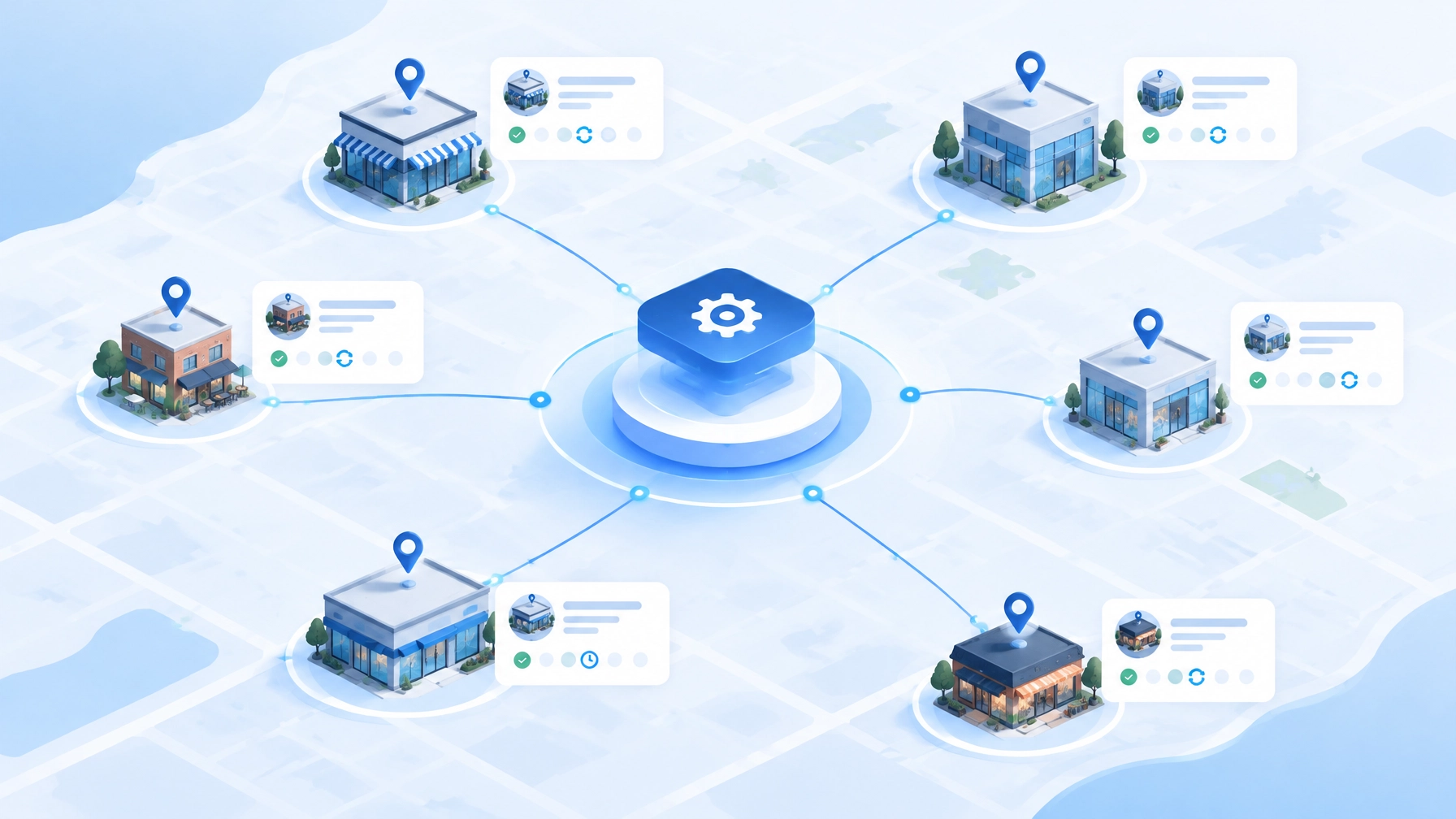
  • ChainHQ Case Study: How Custom Multi-Location Architecture Eliminates Data Silos and Unlocks Enterprise Scalability

    ChainHQ Case Study: How Custom Multi-Location Architecture Eliminates Data Silos and Unlocks Enterprise Scalability

    Written by Amin Said

    When scaling a business across multiple physical locations, regional hubs, or pop-up branches, operational friction is almost always the silent growth killer. As multi-location enterprises expand, off-the-shelf software solutions frequently fracture. Each store, clinic, or regional office adopts disparate tools, local spreadsheets, and siloed databases. The result? Fragmented reporting, duplicated data entry, inventory blind spots, and leadership teams making high-stakes decisions based on delayed, incomplete information.

    At Pure Technology Consulting, our work with high-growth enterprises and proprietary platforms like ChainHQ proves a fundamental truth: overcoming operational friction requires more than patching together disparate SaaS subscriptions. It demands purpose-built, scalable engineering. Through disciplined custom web application development, enterprises can replace brittle multi-system stacks with unified, multi-location architectures that turn geographic complexity into a competitive advantage.

    In this case study, we examine the architectural blueprint behind ChainHQ, demonstrating how strategic enterprise automation consulting and bespoke engineering eliminate data silos, streamline operations, and unlock true enterprise scalability.


    The Multi-Location Dilemma: Why Off-the-Shelf SaaS Breaks Down

    Growing businesses: from permanent jewelry brands and multi-location medical clinics to regional service providers: frequently reach an inflection point where standard, single-location software platforms fail.

    When an organization operates across five, ten, or fifty distinct locations, standard SaaS products often force companies into one of two undesirable compromises:

    1. Isolated Instances per Location: Setting up an independent account or software instance for every branch. While this gives local teams immediate autonomy, it instantly creates severe data silos. HQ has no real-time visibility into inventory levels, customer lifetime value, or cross-branch performance without manual report consolidation.
    2. Rigid Monolithic Restraints: Forcing every location into a rigid, non-customizable global tool that lacks the nuanced workflows required for local service delivery, localized pricing, or regional tax and compliance variations.
    [Store A: Isolated DB]    [Store B: Isolated DB]    [Store C: Isolated DB]
             \                        |                         /
              v                       v                        v
                --> [ Fragmented Data Silos & Blind Spots ] <--
    

    This structural disconnect leads directly to operational drag: staff spend hours reconciling inventory discrepancies, managers lack cross-site performance benchmarks, and leadership operates in the dark. For enterprises aiming to scale without linear increases in administrative headcount, these friction points are unsustainable.


    The Architectural Solution: Unified Infrastructure with Location-Aware Modeling

    To solve the multi-location data silo challenge for ChainHQ, our engineering and consulting teams approached the architecture not as a collection of separate storefronts, but as a single, distributed, location-aware ecosystem.

    Centralized enterprise data hubs connecting multiple remote business locations

    Through advanced custom software development agency capabilities, we established a robust foundation centered around core architectural principles:

    1. Centralized Data Core with Scoped Entities

    Rather than spinning up separate databases for every location, ChainHQ utilizes a unified multi-tenant schema where core entities: such as customers, master product catalogs, and global financial records: live in a centralized, highly secure repository. However, every transactional record is enriched with tenant and location identifiers (tenant_id, location_id).

    This structure ensures that:

    • Headquarters maintains complete, real-time visibility across all operational touchpoints.
    • Local Managers see only the data, inventory, and staff rosters relevant to their specific branch without sacrificing global governance.

    2. Hierarchical Inventory and Supply Chain Syncing

    In multi-location retail and service operations, inventory movement between warehouses, pop-up events, and permanent storefronts is notoriously difficult to track accurately. ChainHQ models inventory hierarchically (Global Warehouse $\rightarrow$ Regional Hub $\rightarrow$ Storefront Shelf). Every transfer is logged via automated event-driven workflows, ensuring real-time stock accuracy, eliminating shrinkage, and preventing overselling.

    3. Granular Role-Based Access Control (RBAC)

    Enterprise scalability requires strict security governance. By integrating granular permissions directly into the application layer, regional directors, store associates, and executive leadership interact with tailored interfaces. Staff members see streamlined workflows customized to their daily tasks, while executives access high-level analytical dashboards.


    Streamlining Workflows Through Intelligent Automation

    Architecture alone is only half the equation. True operational transformation requires removing manual intervention from repetitive, error-prone administrative tasks. As part of our comprehensive digital transformation consulting engagements, we design automated workflows that connect the software layer directly to day-to-day business execution.

    Workflow automation and multi-location inventory synchronization

    In the ChainHQ ecosystem, automation serves several critical functions:

    • Automated Reordering & Threshold Alerts: When local stock dips below predefined velocity thresholds, purchase orders trigger automatically upstream, notifying suppliers before stockouts occur.
    • Consolidated Financial Reconciliation: Daily sales, local tax breakdowns, and payment gateway payouts are automatically normalized and mapped to enterprise accounting systems, cutting bookkeeping reconciliation time from days to minutes.
    • Cross-Location Customer Profiles: A customer visiting a permanent jewelry location in one city can have their profile, purchase history, and preferences instantly recognized at a pop-up branch in another city, delivering a seamless brand experience.

    Measuring Impact: From Operational Drag to Predictable Growth

    When businesses replace disconnected tools with a purpose-built, unified web application, the operational metrics shift dramatically:

    Operational Dimension Fragmented SaaS Stack Unified Custom Architecture (ChainHQ Model)
    Inventory Visibility Delayed (24–72 hour manual reports) Real-time across all locations and pop-ups
    HQ Reporting Time Days of spreadsheet consolidation Instantaneous, multi-dimensional dashboards
    Administrative Overhead High (frequent manual reconciliation) Minimized through event-driven automation
    Cross-Branch Consistency Low (custom workarounds per site) Enforced governance with local flexibility

    By partnering with Pure Technology Consulting for custom web application development, businesses transition from reactive firefighting to proactive, data-driven scaling.


    Strategic Roadmap: How to Evaluate Your Multi-Location Architecture

    If your organization is experiencing the growing pains of multi-location data silos, evaluating your technology stack requires a deliberate, consultative approach. Here is how executive leadership teams can begin assessing their digital maturity:

    1. Audit Data Flow Intersections: Identify where operational data is manually copied between systems (e.g., from point-of-sale to inventory sheets to accounting software). Each manual transfer represents an automation opportunity and a potential data silo.
    2. Evaluate SaaS Limitations: Determine whether your current third-party tools constrain your expansion plans or require costly, fragile middleware integrations just to share basic customer records across branches.
    3. Engage in Strategic Advisory: Partner with experienced engineering consultants who understand enterprise architecture, workflow automation, and scalable database design.

    Professional executive strategy session and digital transformation roadmap


    Conclusion: Build for Where Your Business Is Going

    Technology should never be the bottleneck holding your enterprise back. As demonstrated by platforms like ChainHQ, investing in bespoke, multi-location software architecture transforms operational complexity into a seamless engine for predictable growth.

    At Pure Technology Consulting, we partner with growth-minded leaders across healthcare, professional services, e-commerce, and multi-location operations to design and deploy custom web applications and AI-driven automation systems that stand the test of time.

    Ready to eliminate operational data silos and build a scalable foundation for your enterprise? We invite you to explore our capabilities and schedule a discovery session with our advisory team.

    Visit us at https://puretechconsult.com to learn more about how we engineer custom software solutions tailored to your unique operating model.


    Amin Said, Founder of Pure Technology Consulting LLC
    https://puretechconsult.com
    Phone: +1 (803) 921-0969