Author: admin

  • Building SaaS at Scale: How We Engineered EHRIO Pro and AI Local Boost From the Ground Up

    Building SaaS at Scale: How We Engineered EHRIO Pro and AI Local Boost From the Ground Up

    At Pure Technology Consulting, our core philosophy has always been rooted in operational leverage. When growth-focused enterprises, healthcare clinics, and multi-location service providers approach us for custom software development, they are rarely looking for simple template code or off-the-shelf software packages. They are looking for reliable, high-performance digital infrastructure designed to eliminate operational friction and scale effortlessly.

    To validate our engineering methodologies and demonstrate our end-to-end capabilities, we did not just build custom applications for clients: we designed, engineered, and scaled two proprietary SaaS ecosystems from scratch: EHRIO Pro and AI Local Boost.

    These platforms serve as tangible proof-of-concept assets for what our engineering team achieves for high-ticket custom development clients. In this deep-dive case study, we examine the architecture decisions, technical hurdles, and strategic engineering principles that brought these two distinct platforms to life.


    The Engineering Mandate: Scalability Meets Real-World Complexity

    Building software that looks polished on day one is straightforward. Building software that maintains deterministic performance under heavy clinical data loads, multi-tenant database queries, and real-time AI API orchestrations requires rigorous systems architecture.

    When conceptualizing our proprietary platforms, our engineering leadership established three non-negotiable pillars:

    1. Modular Multi-Tenancy: Ensuring complete data isolation and security across distinct business accounts while maintaining shared infrastructure efficiency.
    2. Deterministic AI Integration: Translating unpredictable Large Language Model (LLM) outputs into structured, HIPAA-adjacent clinical documentation and automated local search assets.
    3. Resilient Event-Driven Workflows: Decoupling heavy background operations: such as batch review syndication, appointment reminders, and automated coding suggestions: from the core user request cycle.

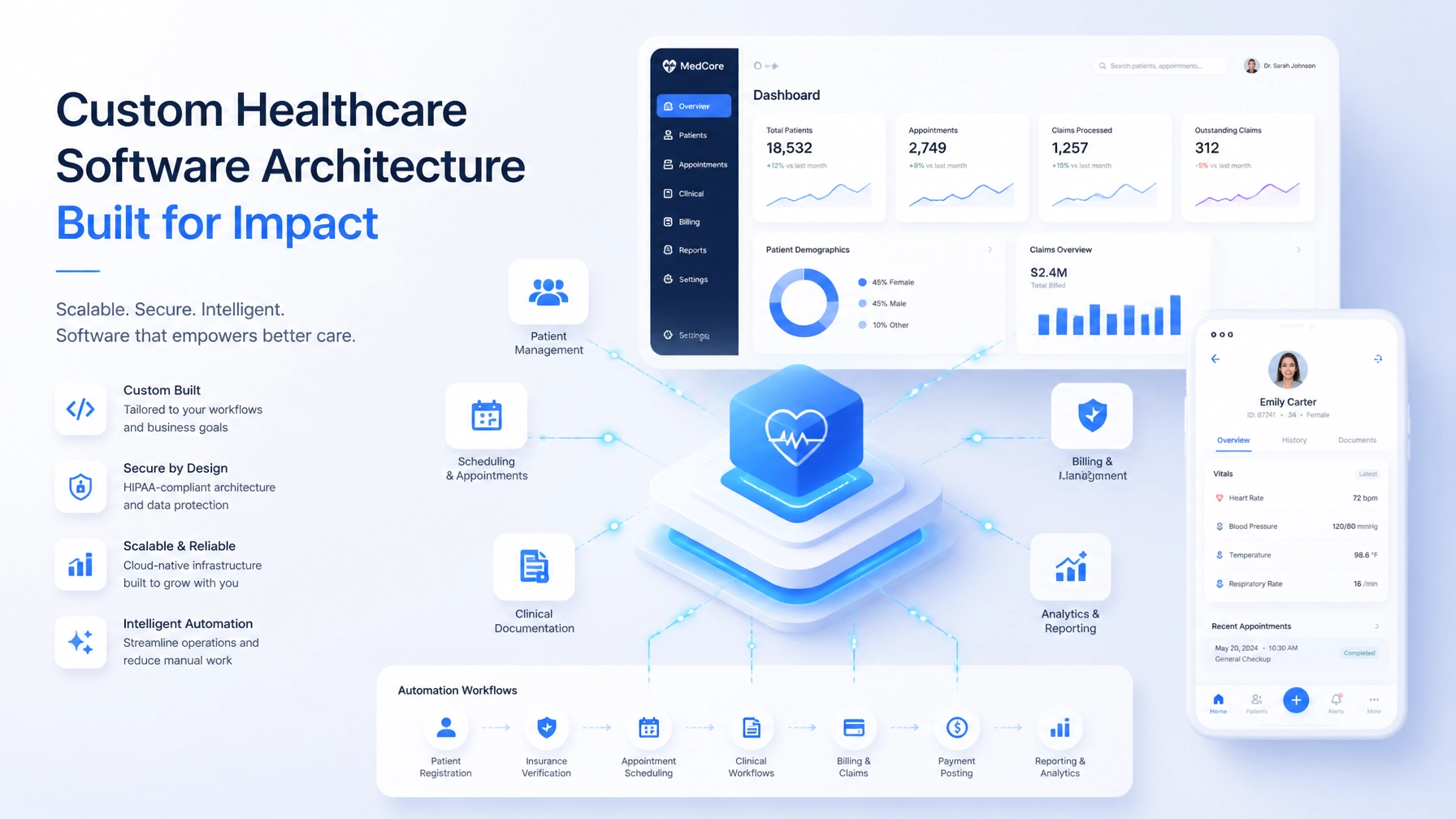
    Futuristic dashboard displaying AI clinical workflow automation and medical charting


    Case Study I: Architecting EHRIO Pro for Healthcare and Practice Management

    EHRIO Pro was built to solve a critical operational bottleneck in modern healthcare and wellness practices: the administrative drag of clinical documentation, fragmented patient scheduling, and rigid electronic health record (EHR) systems.

    The Technical Challenge

    Medical practices and specialized clinics operate in high-compliance environments where data security, low-latency charting, and precise medical coding are paramount. Traditional EHR solutions often force practitioners into clunky, manual workflows that consume hours of after-hours administrative time.

    Our engineering objective was clear: design a unified, HIPAA-compliant platform integrating full scheduling, clinical charting, patient portals, and automated billing, supercharged with real-time AI assistance.

    Architecture and Implementation

    To achieve sub-second response times while handling complex relational health records, we implemented a robust relational database schema with row-level security policies, paired with asynchronous background workers to manage billing synchronicities and appointment triggers.

    The crown jewel of EHRIO Pro’s engineering is its AI clinical documentation engine. We engineered a secure transcription pipeline that processes voice dictation, normalizes clinical terminology, and instantly generates structured SOAP notes alongside real-time suggested ICD-10, CPT, and DSM-5 codes.

    • Key Deliverables Engineered:
      • Secure multi-tenant database architecture with strict data isolation.
      • Real-time audio transcription and NLP token processing pipelines.
      • Automated coding suggestion algorithms mapped to clinical ontologies.
      • Unified patient booking, intake questionnaires, and telehealth streaming via secure WebRTC integrations.

    Case Study II: Scaling AI Local Boost for High-Volume Local SEO Automation

    While EHRIO Pro solved internal clinical operations, AI Local Boost was engineered to tackle a completely different operational challenge: digital visibility and lead generation for multi-location service businesses, medical clinics, and professional service firms.

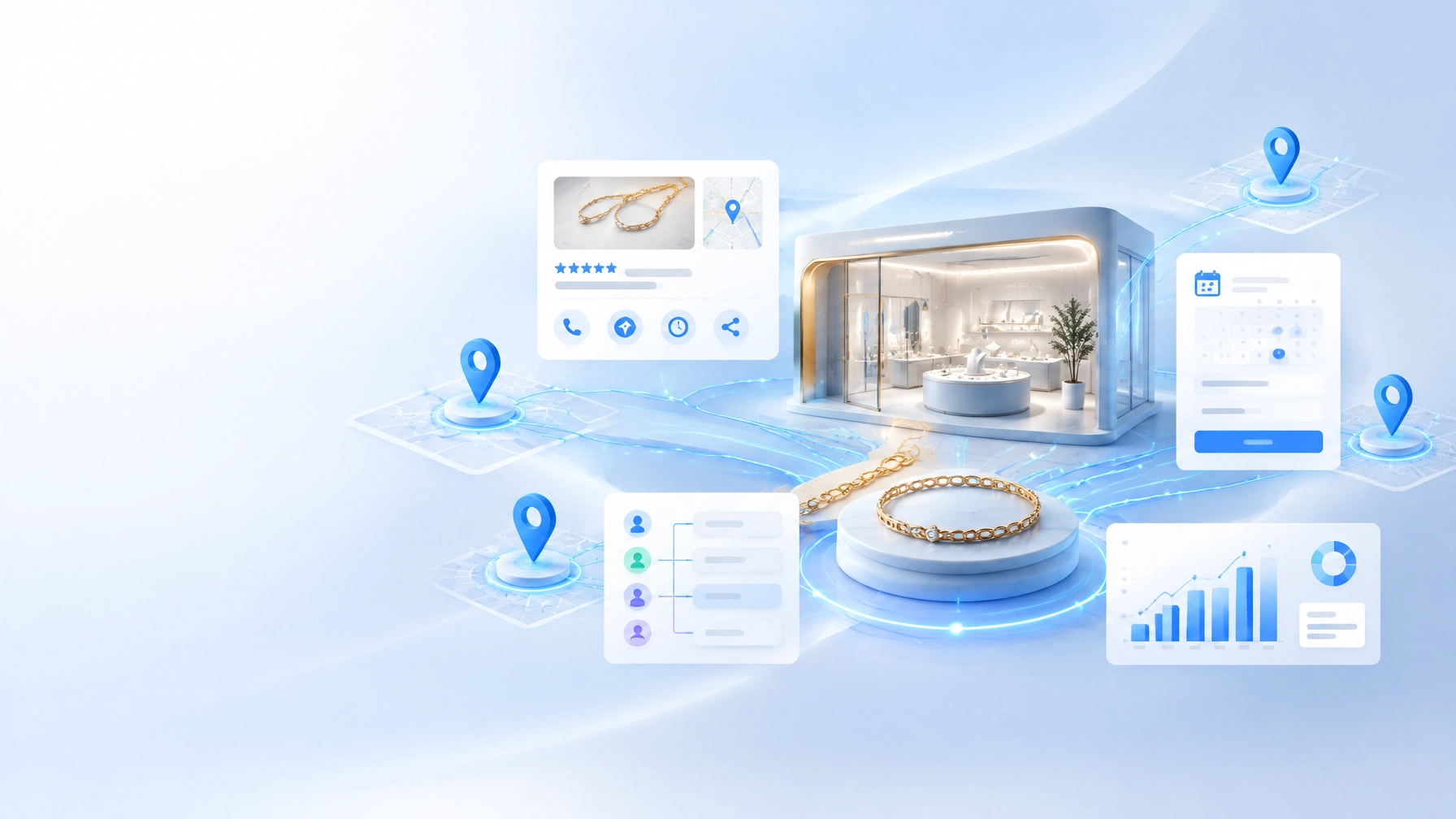
    Abstract representation of local SEO optimization and digital maps ranking analytics

    The Technical Challenge

    Local service businesses frequently struggle with maintaining consistent online visibility. Manually managing Google Business Profiles, publishing geo-targeted updates, responding to customer reviews, and syndicating local content across multiple directories drains internal resources and results in erratic lead flow.

    We needed to engineer an autonomous engine capable of managing hundreds of disparate business profiles simultaneously without triggering API rate limits or losing contextual brand voice.

    Architecture and Implementation

    We developed a distributed microservices architecture designed around event-driven task queues. The platform interfaces directly with major search and social APIs, scheduling automated content generation, media rendering, and review sentiment analysis on rigorous recurring intervals.

    By leveraging advanced image-to-video rendering scripts and automated NLP copywriting engines, AI Local Boost transforms standard business assets into high-converting local authority signals, driving measurable rank improvements within 30 to 45 days.

    • Key Deliverables Engineered:
      • Multi-platform API integration gateway with intelligent rate-limiting and retry logic.
      • Automated asset generation pipelines (image-to-video slideshows and geotagged media).
      • Sentiment analysis and review management dashboards.
      • Automated posting scheduler across Google Business Profile, Facebook, LinkedIn, and Instagram.

    From Proprietary SaaS to Enterprise Custom Builds

    The engineering rigor required to scale EHRIO Pro and AI Local Boost is the exact same discipline Pure Technology Consulting brings to every custom client engagement.

    Whether an enterprise client requires a bespoke internal CRM, an advanced data pipeline connecting disparate legacy systems, or a specialized SaaS product built from the ground up, our approach remains grounded in strategic architecture, clean code execution, and rigorous governance.

    Developer workspace displaying modular microservices and secure API integration maps

    Why Growth-Focused Leaders Choose PTC

    • Engineering Excellence: We do not rely on fragile no-code workarounds for complex enterprise logic. We write scalable, maintainable code designed for long-term operational leverage.
    • Security and Compliance: From HIPAA-aligned healthcare workflows to secure fintech integrations, we build systems that protect sensitive data.
    • True Partnership: We work alongside your internal stakeholders to scope, design, and deploy technology that directly impacts your top-line revenue and operational efficiency.

    Next Steps: Engineering Your Custom Solution

    If your business is experiencing operational bottlenecks, manual data silos, or looking to build a high-performance custom web application or AI-driven workflow, let’s discuss your roadmap.

    Contact our advisory team directly at +1 (803) 921-0969 or visit our schedule page to request a comprehensive workflow and architecture audit. No obligation: just expert guidance tailored to your growth goals.


    Amin Said, Founder of Pure Technology Consulting LLC
    https://puretechconsult.com

  • AI Local Boost Case Study: Designing a Scalable Local SEO Platform That Prove Custom Development Wins at Enterprise Scale

    AI Local Boost Case Study: Designing a Scalable Local SEO Platform That Prove Custom Development Wins at Enterprise Scale

    By Amin Said, Founder of Pure Technology Consulting LLC

    In the modern digital landscape, growing enterprises often reach a critical inflection point where off-the-shelf software ceases to be an asset and becomes an operational bottleneck. Generic SaaS products are built for the masses, offering rigid workflows that force businesses to bend their operations to fit someone else’s software model. At Pure Technology Consulting, we believe that true market leadership requires technology tailored precisely to your operational DNA.

    To demonstrate what is possible when bespoke engineering meets intelligent automation, we frequently point to our proprietary builds not as commercial products to buy, but as proof-of-concept case studies of our core capabilities. One of our signature engineering milestones is AI Local Boost: a fully managed, AI-powered Google Business Profile (GBP) automation platform built from the ground up to solve complex visibility, multi-location synchronization, and workflow friction at scale.

    In this case study, we examine how AI Local Boost was architected, the engineering principles behind its automated multi-signal optimization, and why forward-thinking organizations choose custom web application development and enterprise automation consulting over off-the-shelf compromises.


    The Strategic Challenge: Overcoming Manual Operational Drag in Local Visibility

    For multi-location service operators, healthcare groups, and specialized enterprises, maintaining consistent digital visibility across hundreds of local listings is an administrative nightmare. Every week, marketing teams and local managers grapple with repetitive operational tasks:

    • Publishing localized Google posts optimized for regional search intent.
    • Responding to customer reviews within strict SLA windows to protect reputation and local rank.
    • Synchronizing business hours, services, and directory data across fragmented mapping ecosystems.
    • Auditing profile completeness and tracking local ranking shifts against aggressive competitors.

    When managed manually, these tasks consume hundreds of staff hours and introduce human error, inconsistent messaging, and missed revenue opportunities. Standard directory tools offer blunt rule-based updates, but lack the contextual intelligence required to adapt to Google's rapidly evolving AI-driven search environment.

    Enterprises do not need another dashboard to monitor; they need autonomous systems that "just work." That realization is what drove our engineering team to design AI Local Boost as an end-to-end autonomous engine.


    Architectural Blueprint: How AI Local Boost Was Engineered

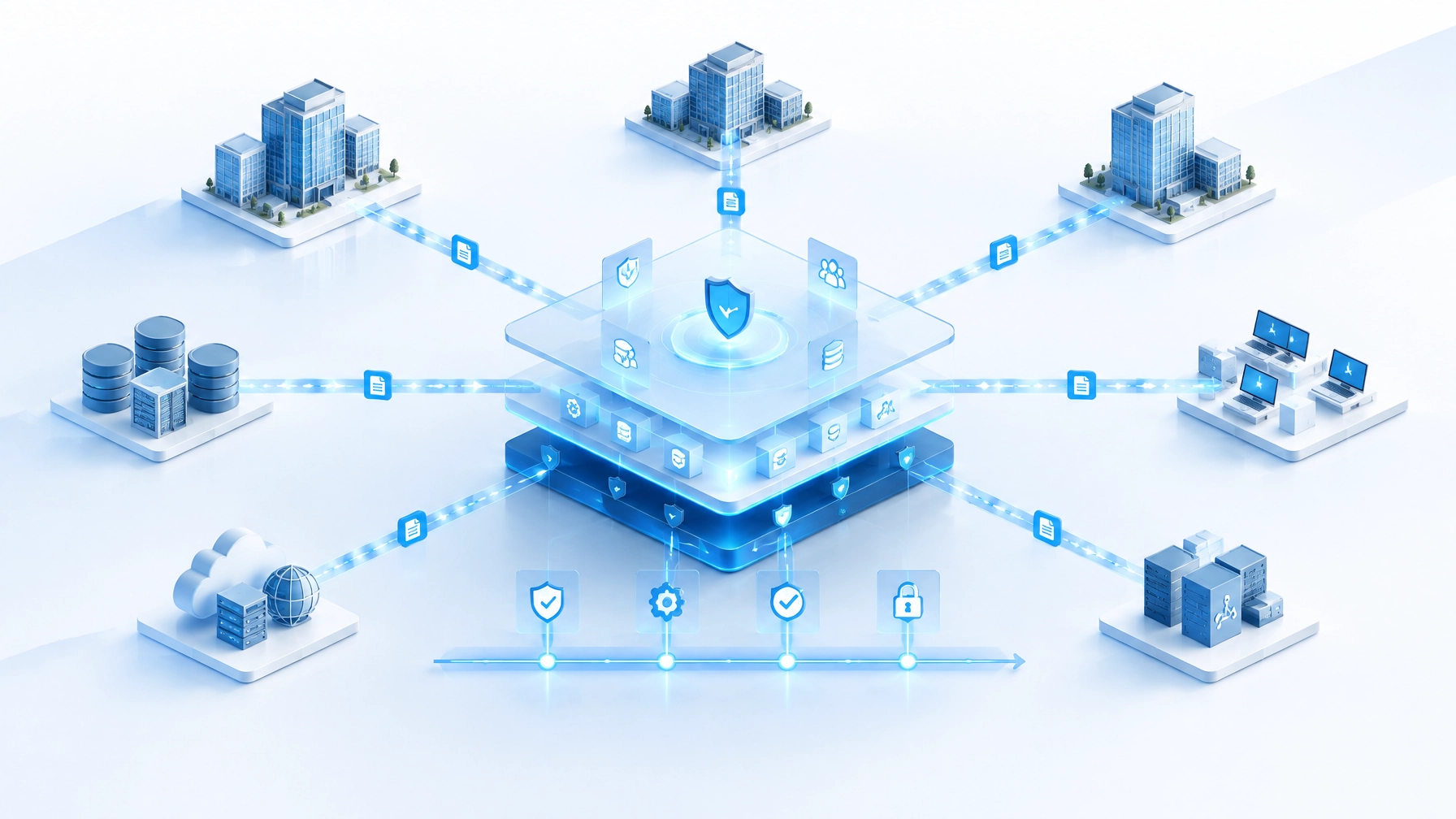
    Secure API integration and OAuth data connectors

    Building a high-throughput local SEO automation platform requires a robust, scalable backend capable of handling secure third-party integrations, high-frequency AI generation, and granular multi-location governance.

    1. Secure Authentication and Integrations Layer

    To manage Google Business Profiles at scale, our engineers implemented robust OAuth token management and secure API communication protocols. This ensures seamless, encrypted synchronization with Google's ecosystem while maintaining strict compliance with enterprise security standards. For edge cases where API coverage is limited, our architecture supports intelligent browser-automation agents that ensure uninterrupted profile updates.

    2. Intelligent Data Ingestion and Knowledge Graph

    Before automating content generation, a platform must deeply understand the business it represents. We built data ingestion parsers that analyze enterprise websites, service catalogs, historical customer interactions, and geographic target zones. This data feeds into a centralized knowledge graph that powers hyper-specific, brand-compliant content creation.

    3. AI Content and Workflow Engine

    Content generation at enterprise scale cannot rely on static templates. AI Local Boost utilizes advanced language models combined with strict brand guardrails to produce weekly localized posts, keyword-rich service descriptions, and contextual review responses. Through automated scheduling engines, content cadence is maintained flawlessly across single locations or massive multi-location franchises.


    Measuring Impact: Turning Automation Into Measurable ROI

    Enterprise technology investments must be justified by hard metrics and operational leverage. In analyzing the performance of deployments powered by AI-driven GBP automation frameworks, businesses consistently experience transformative outcomes:

    • Significant Rank Improvement: Sustained automated activity and review velocity drive an average ranking lift of over 200% across competitive local search markets over a 6-month observation window.
    • Administrative Relief: Operational labor associated with local directory management and review monitoring is reduced by nearly 90%, freeing staff to focus on high-value client care.
    • Enhanced Lead Attribution: Integration with call tracking and conversion metrics connects digital visibility directly to inbound phone calls, bookings, and walk-ins.

    These results validate a core tenet of our ai consulting services: when artificial intelligence is embedded directly into core business workflows rather than bolted on as an afterthought, it unlocks unprecedented operational leverage.


    Why Custom Web Application Development Beats Off-the-Shelf SaaS

    Many executives initially attempt to solve operational bottlenecks by stacking multiple SaaS subscriptions together, resulting in brittle "Frankenstein" tech stacks, disconnected data silos, and recurring licensing inflation.

    When you partner with Pure Technology Consulting for custom web application development, you gain distinct strategic advantages:

    1. Exact Fit for Your Operating Model: Your software reflects your exact intake workflows, compliance requirements, and reporting structures: not a generic vendor's assumptions.
    2. Proprietary IP and Enterprise Value: Custom-built applications belong to your organization, building long-term enterprise equity rather than renting utility from a third party.
    3. Seamless Systems Integration: We connect your web applications directly with your existing CRMs, EHRs, billing platforms, and telephony systems, eliminating redundant data entry.
    4. Scalability Without Friction: As your business grows from 3 locations to 50, your custom architecture scales effortlessly without sudden subscription tier price spikes or feature roadblocks.

    Where Custom Software Drives the Greatest Leverage

    AI Local Boost serves as a powerful proof-of-concept for what our team builds across multiple high-stakes industries, including healthcare providers, specialized clinics, professional services, and multi-location operators. Whether you are scaling a proprietary SaaS platform, automating complex intake workflows, or modernizing legacy internal systems, our engineering approach follows a proven roadmap:

    • Discovery & Architecture: We audit your existing workflows, identify operational bottlenecks, and design a scalable technical blueprint.
    • Agile Development & Integration: Our engineers build your custom web application with clean code, secure data governance, and seamless API integrations.
    • Deployment & Continuous Optimization: We launch your system with rigorous testing, team training, and ongoing technical partnership.

    To explore how tailored software and intelligent automation can transform your operations, we invite you to connect with our advisory team. Let's build technology that works the way you do.

    Ready to discuss your next technical initiative? Explore our available service models or book a discovery call with our engineering leadership today.

    Strategic technology partnership and enterprise architecture consulting


    Amin Said, Founder of Pure Technology Consulting LLC
    https://puretechconsult.com
    Phone: +1 (803) 921-0969

  • From Concept to Scalable Platform: How We Built ChainHQ – A Custom SaaS for Supply Chain Operations

    From Concept to Scalable Platform: How We Built ChainHQ – A Custom SaaS for Supply Chain Operations

    In today's global market, operational efficiency is no longer achieved by patching together disjointed commercial tools. High-growth enterprises operating complex logistics and supply chains require bespoke digital infrastructure designed specifically for their unique operating model. Too many organizations hit a ceiling when off-the-shelf SaaS solutions fail to adapt to specialized workflows, fragmented data silos, and rising transaction volumes.

    At Pure Technology Consulting, we believe that exceptional software is the ultimate catalyst for enterprise leverage. To demonstrate our engineering capabilities and architectural rigor, we developed ChainHQ: a proprietary, high-performance SaaS platform built from the ground up for modern supply chain operations. ChainHQ serves as a live, proven proof-of-concept of what our custom web application development and AI-driven automation practices can achieve for high-ticket clients.


    Defining the Strategic Roadmap: Moving from Concept to Core Architecture

    Building a resilient supply chain platform begins long before writing the first line of code. It requires a comprehensive technical roadmap that aligns business objectives with scalable cloud architecture. When conceptualizing ChainHQ, our engineering team evaluated the primary operational bottlenecks plaguing modern logistics: real-time inventory visibility, multi-vendor coordination, and manual exception handling.

    Sleek custom SaaS dashboard showing inventory metrics and automated workflows

    Rather than forcing complex operational data into rigid, generic schemas, we architected a bespoke web application centered around modular adaptability. Every data pipeline, user role, and reporting dashboard was designed to reflect the real-world dynamics of supply chain management.

    Our approach to custom web app development prioritizes:

    • Modular Microservices Architecture: Ensuring independent scalability for inventory, tracking, and communication modules without compromising system stability.
    • Robust API Governance: Facilitating secure, high-speed integrations with legacy enterprise resource planning (ERP) systems and third-party logistics (3PL) providers.
    • Executive-Ready Visibility: Delivering real-time analytics dashboards that empower leadership to make data-driven decisions instantly.

    Engineering AI-Driven Workflow Automation for High-Stakes Operations

    Supply chains are inherently dynamic, characterized by unexpected disruptions, fluctuating demand curves, and complex routing requirements. Manual intervention introduces latency and human error, which can cascade into costly operational delays. To eliminate these friction points, we integrated intelligent automation directly into the core of ChainHQ.

    Minimalist digital art illustrating artificial intelligence workflow automation and data pipelines

    Leveraging advanced machine learning models and automated event triggers, ChainHQ anticipates routing bottlenecks, optimizes inventory placement, and automatically initiates re-ordering sequences based on predictive consumption metrics. This level of workflow automation transforms routine administrative management into a self-optimizing operational engine.

    When designing custom automation systems for our clients, we focus on:

    • Intelligent Exception Handling: Automatically flagging supply chain anomalies and dispatching corrective workflows without manual oversight.
    • Seamless Data Synchronization: Eliminating duplicate data entry across CRM, inventory, and billing systems.
    • Measurable Operational Leverage: Reducing cycle times and operational drag while significantly lowering error rates.

    Ensuring Enterprise Scalability and Resilient Backend Infrastructure

    As enterprises scale, software performance must remain flawless under peak load conditions. A platform that performs well during testing can falter under the pressure of millions of daily transactions if not engineered with enterprise-grade resilience.

    Professional enterprise architecture visualization showing scalable cloud infrastructure

    ChainHQ was engineered on a robust cloud foundation capable of handling enterprise-tier data throughput with sub-second response times. By implementing rigorous security protocols, automated load balancing, and fault-tolerant database clusters, we ensured that the platform maintains absolute reliability even during peak seasonal surges.

    Our engineering standards for enterprise deployments include:

    • Secure Cloud Infrastructure: Adhering to rigorous data governance and compliance frameworks.
    • High-Availability Deployment: Utilizing automated failover systems to guarantee uninterrupted uptime.
    • Comprehensive Testing and Monitoring: Proactively identifying performance bottlenecks through continuous integration and automated testing pipelines.

    What ChainHQ Proves for High-Ticket Custom Development Clients

    Proprietary platforms like ChainHQ: alongside our other internal innovations such as AI Local Boost and EHRIO: are not merely standalone products; they are living testaments to our technical depth. They represent our capability to design, build, and deploy complex, enterprise-grade software solutions for clients across healthcare, supply chain, fintech, and professional services.

    When organizations partner with Pure Technology Consulting, they are not acquiring a generic software vendor. They secure a strategic technology partner equipped with proven frameworks, elite engineering talent, and a relentless focus on measurable business transformation. Whether you are looking to build a custom SaaS product from scratch, modernize legacy systems, or implement sophisticated AI workflow automation, we bring battle-tested expertise to every engagement.


    Partner with Pure Technology Consulting

    If your organization is navigating operational bottlenecks, manual inefficiencies, or the limitations of off-the-shelf software, it is time to explore a bespoke technological roadmap. Let's discuss how custom web application development and intelligent automation can drive predictable growth and long-term enterprise value for your business.

    Visit us at https://puretechconsult.com or contact our team directly at +1 (803) 921-0969 to schedule your discovery call.

    Amin Said, Founder of Pure Technology Consulting LLC
    https://puretechconsult.com

  • Beyond the Standard Stack: Why Custom Software Architecture Is the Ultimate Competitive Advantage for Growing Enterprises

    Beyond the Standard Stack: Why Custom Software Architecture Is the Ultimate Competitive Advantage for Growing Enterprises

    Amin Said, Founder of Pure Technology Consulting LLC
    https://puretechconsult.com

    For growing enterprises, the software stack is no longer just a collection of operational tools: it is the digital operating model of the business. Yet, many organizations plateau not because their market strategy is flawed, but because they have outgrown the rigid constraints of off-the-shelf software (COTS). When your business model relies on proprietary workflows, intricate cross-departmental coordination, and rigorous compliance standards, forcing your operations into generic software creates operational drag.

    Moving beyond the standard stack is not an exercise in vanity engineering. It is a strategic imperative. When custom software architecture is designed explicitly around your operating model, it transforms technology from a recurring overhead cost into a durable competitive advantage.


    The Strategic Limit of Off-the-Shelf Software

    Off-the-shelf software is built for the lowest common denominator. It is engineered to satisfy thousands of prospective buyers by offering generalized solutions to common business problems. While this works well for basic accounting or standard email management, it breaks down completely when applied to your core differentiator.

    When enterprises attempt to scale using disjointed COTS subscriptions, several structural friction points emerge:

    • Process Compromise: Your teams are forced to alter their workflows to match what the software permits, rather than having technology adapt to your most efficient practices.
    • Data Silos: Critical customer and operational data gets trapped across disparate platforms, preventing cohesive reporting and real-time visibility.
    • Brittle Integrations: Attempting to connect CRM, EHR, billing, and scheduling tools through rigid third-party connectors often results in sync failures, manual data entry, and hidden operational costs.

    When your technology stack dictates how you operate, you lose the agility that earned you market share in the first place.


    Architectural Principles That Drive Enterprise Leverage

    Modular cloud-native software architecture with interconnected microservices

    Building a custom enterprise SaaS platform requires moving away from monolithic patchworks toward purposeful, scalable architecture. At Pure Technology Consulting, our work with growing enterprises across healthcare, specialized operations, and fintech highlights four core architectural pillars that create sustainable business value:

    1. The Productized Platform Mindset

    Treating your internal systems as productized platforms: complete with clear roadmaps, lifecycle management, and commercial telemetry: changes how engineering investments are evaluated. When you connect feature development directly to revenue growth, throughput, and cost-to-serve, technology decisions become tightly aligned with executive strategy.

    2. Cloud-Native and Modular Design

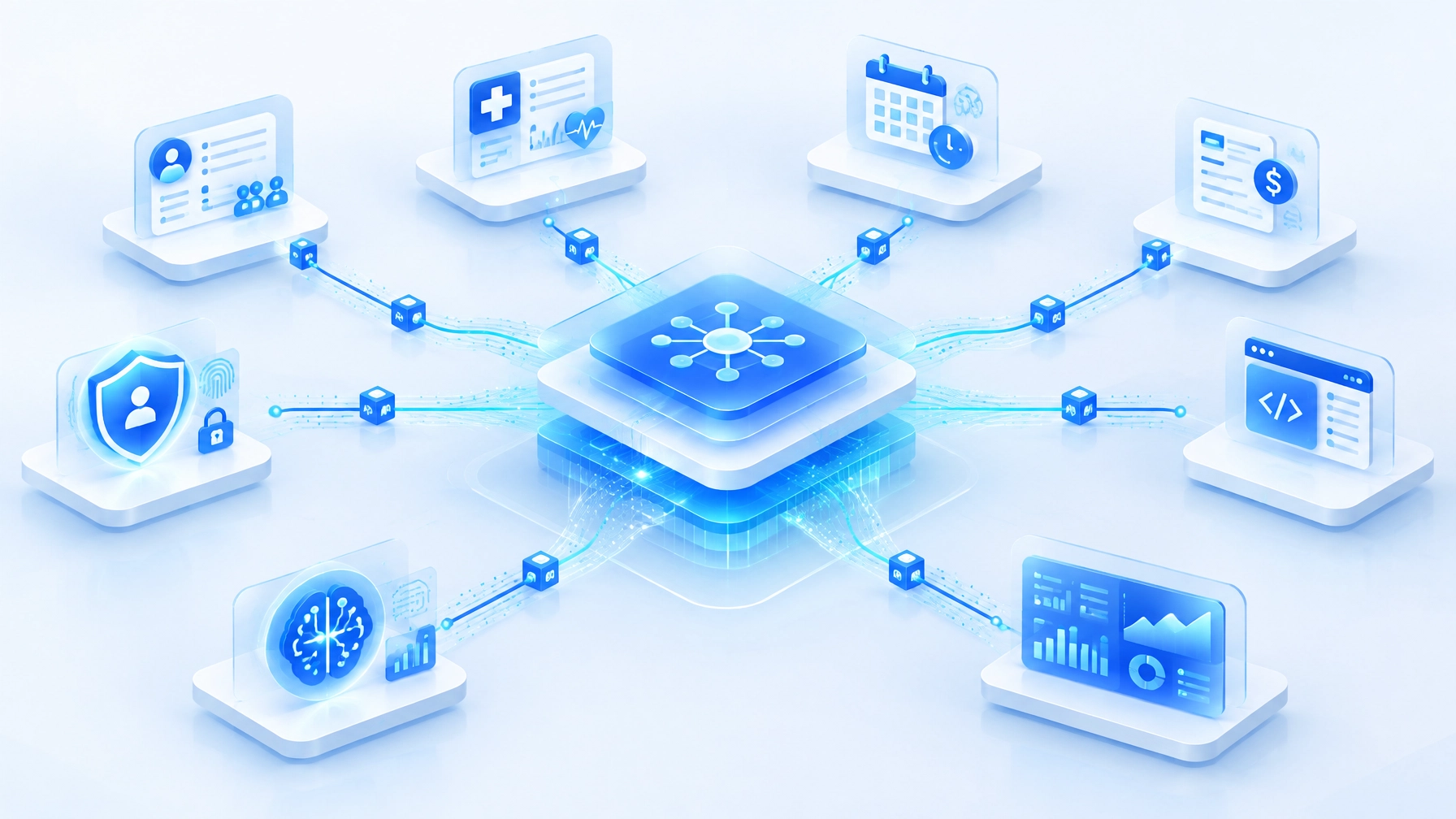
    Enterprise agility depends on decoupling services. Breaking monolithic applications into independent microservices or modular service layers allows different operational workflows: such as client onboarding, automated scheduling, and compliance verification: to scale and evolve independently without risking system-wide instability.

    3. API-First Composition and Data Contracts

    Enforcing API-first design ensures that services can be securely composed and integrated across internal teams and external partners. Formal data contracts between services eliminate integration friction, control technical debt, and make iterative updates safe and predictable.

    4. Centralized Observability and Automated Pipelines

    As workflows scale, operational risk increases. Embedding centralized logging, real-time tracing, and robust CI/CD deployment pipelines directly into the architecture ensures that performance bottlenecks are identified instantly and updates roll out without operational downtime.


    Workflow Automation as the Core Operating Engine

    Architecture is only as powerful as the workflows it orchestrates. True operational leverage comes from embedding intelligent automation directly into the codebase.

    Whether it is automating 70-question clinical intake matching engines inspired by our work with platforms like EHRIO, deploying field-rep accountability and GPS logging for operations teams, or integrating complex telephony and lead attribution for high-ticket service providers, custom automation eliminates human bottlenecks.

    Minimalist digital art visualization of workflow automation connecting business operations and data dashboards

    When you digitize end-to-end workflows around your exact business rules:

    • Cycle times decrease dramatically, accelerating time-to-revenue.
    • Human error is minimized, protecting compliance and data integrity.
    • Staff are liberated from administrative burdens, allowing them to focus on high-value client relationships and strategic growth.

    The Roadmap: From Strategic Discovery to Deployment

    Transitioning from a rigid standard stack to a bespoke architecture requires a disciplined, advisory-led roadmap. It begins long before writing code.

    1. Audit and Discovery: Map your existing operational bottlenecks, data silos, and manual workarounds to identify where custom automation yields the highest ROI.
    2. Architecture Blueprinting: Define the appropriate cloud-native patterns, data boundaries, and integration strategies tailored to your 3-to-5-year growth targets.
    3. Iterative Development & Governance: Build with modularity and security at the forefront, utilizing rigorous testing pipelines and cross-functional governance.
    4. Telemetry and Continuous Optimization: Instrument your platform with real-time feedback loops to continuously refine performance metrics and user experiences.

    For leadership teams exploring this transition, our team offers structured discovery sessions to help map your operational ecosystem. You can explore our approach or schedule a discovery call to discuss your organization's unique requirements.


    Conclusion: Engineering Your Competitive Future

    Custom software architecture is an investment in autonomy. By moving beyond the limitations of off-the-shelf software and designing a platform engineered explicitly around your operating model, you establish a permanent operational moat.

    Competitors can copy your marketing strategy or price points, but they cannot replicate an internal technology ecosystem built entirely to accelerate your unique strengths.


    Ready to Explore Custom Architecture for Your Enterprise?

    If your organization has outgrown standard SaaS tools and is ready to build scalable, high-performance web applications and automated workflows tailored to your exact operating model, let's start a conversation.

    Written by
    Amin Said, Founder of Pure Technology Consulting LLC
    https://puretechconsult.com

  • EHRIO Pro Case Study: How a Custom Healthcare Matching Engine Replaced Manual Intake for a Multi-Location Practice Group

    EHRIO Pro Case Study: How a Custom Healthcare Matching Engine Replaced Manual Intake for a Multi-Location Practice Group

    For multi-location medical and wellness groups, scaling operations is rarely limited by clinical talent. Instead, the primary bottleneck often lies at the administrative threshold: patient intake. When a practice expands across regional clinics, manual intake procedures quickly degenerate into fragmented spreadsheets, delayed scheduling callbacks, and administrative burnout.

    At Pure Technology Consulting (PTC), we engineered EHRIO Pro: our proprietary healthcare intake and provider-matching platform: not as a retail software product, but as a rigorous proof-of-concept for high-complexity, custom-built web applications. By examining how EHRIO Pro solves intricate routing and compliance hurdles in healthcare, executives across healthcare, legal, fintech, and professional services can evaluate what is possible when bespoke software replaces rigid, out-of-the-box SaaS limitations.

    The Operational Bottleneck of Modern Multi-Location Intake

    Growth-focused practices frequently hit a ceiling when their patient volume outpaces legacy administrative workflows. Standard forms capture basic contact details, but leave the heavy lifting of matching patients with the correct clinician, specialty, location, and insurance parameters to human schedulers.

    This manual triage model creates three persistent vulnerabilities:

    • Administrative Drag: Staff spend hours cross-referencing insurance directories, provider calendars, and clinical specialties by hand.
    • Friction in Patient Conversion: Delayed routing leads to prospective patients abandoning the intake process for more responsive competitors.
    • Data Fragmentation: Disconnected EHR, CRM, and scheduling databases obscure executive visibility into true acquisition costs and patient lifetime value.

    When designing custom architectures for regulated enterprises, PTC approaches these challenges not by forcing businesses into generic templates, but by engineering custom operating models that integrate seamlessly into existing enterprise workflows.

    Intelligent Matching: The Anatomy of a 70-Question Intake Engine

    To eliminate manual scheduling bottlenecks for a multi-location practice group, EHRIO Pro was architected around a dynamic, multi-stage matching algorithm powered by a comprehensive 70-question intelligent intake workflow.

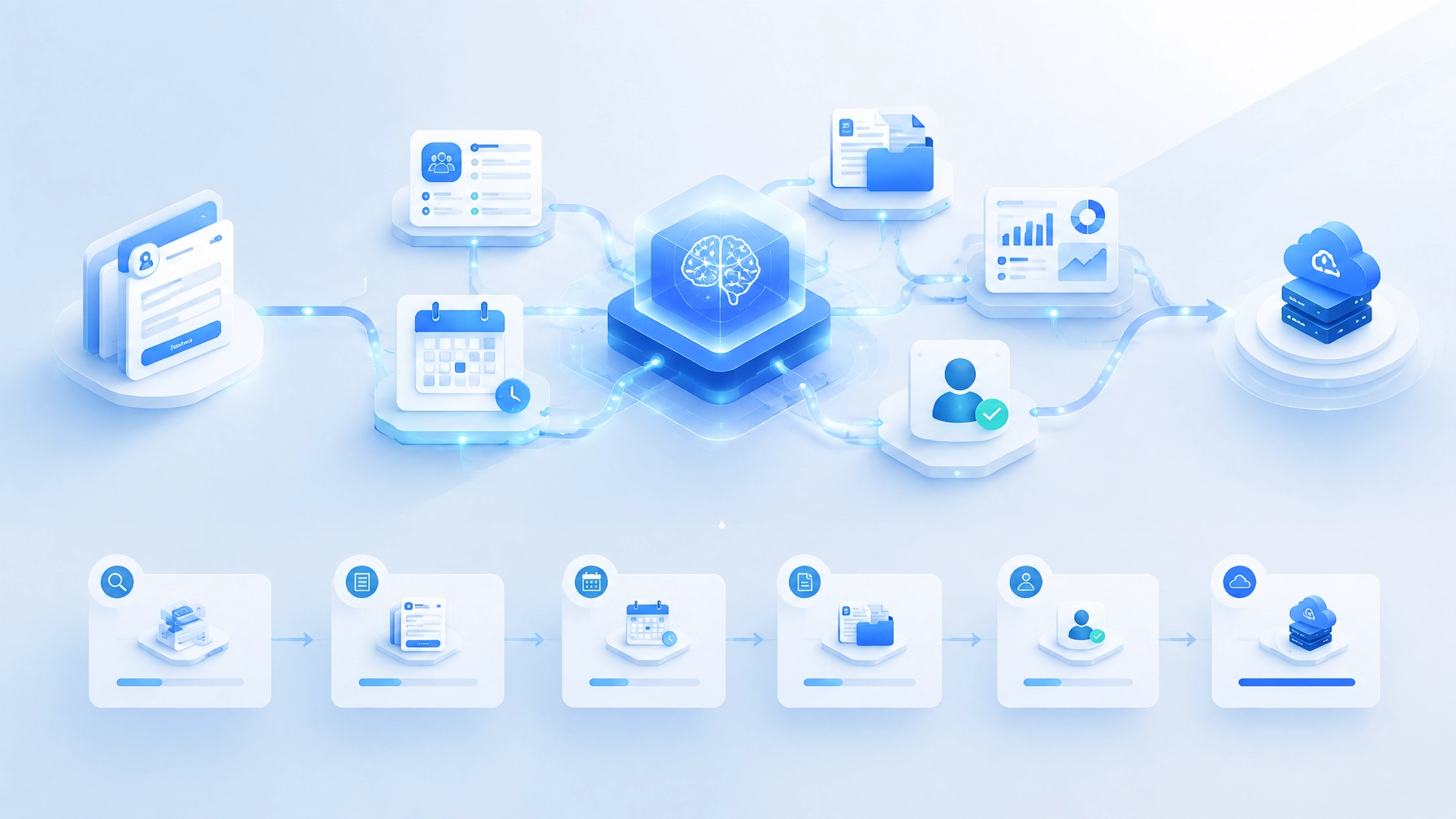
    An intelligent 70-question patient intake workflow illustration

    Unlike static web forms, this intake architecture functions as an automated clinical concierge:

    1. Dynamic Eligibility Filtering: The system instantly evaluates geographic ZIP codes, travel radiuses, telehealth preferences, and insurance carrier matrices to discard incompatible options.
    2. Clinical Fit Scoring: Structured inputs regarding chief concerns, chronic conditions, and medication histories map patient profiles directly to provider specialties and service lines.
    3. Preference Alignment & Capacity Matching: The engine weighs clinician gender preferences, primary language concordance, and real-time provider schedule availability before generating optimized recommendations.
    4. Automated Routing: Qualified patients are immediately routed to direct scheduling portals, specialized care pathways, or priority staff queues based on calculated risk scores.

    This capability demonstrates PTC’s core strength: building sophisticated web applications that turn unstructured intake data into immediate, actionable operational leverage.

    Engineering HIPAA-Adjacent Compliance From Scratch

    In regulated industries such as healthcare, fintech, and legal services, data governance is non-negotiable. Off-the-shelf automation tools often fall short of enterprise compliance requirements, leaving organizations exposed to severe security risks and audit failures.

    Secure HIPAA-adjacent compliance and data encryption workflows

    When developing EHRIO Pro, our engineering team prioritized security at the architectural foundation:

    • Encrypted Data Pipelines: All intake records, PHI (Protected Health Information), and client identifiers are encrypted in transit and at rest using modern cryptographic standards.
    • Role-Based Access Control (RBAC): Granular permissions ensure that regional administrators, clinical directors, and billing teams only access data necessary for their specific operational scope.
    • Auditable Audit Trails: Every form submission, routing decision, and status modification is immutably logged for compliance reporting and internal governance reviews.

    By embedding security directly into the software architecture, PTC ensures that high-ticket clients in compliance-heavy sectors operate with complete confidence.

    Proving Capabilities Across Regulated Industries

    EHRIO Pro stands as a concrete demonstration of our technical execution, but it is part of a broader portfolio of proprietary platforms and custom engagements that showcase PTC’s engineering breadth:

    • Healthcare & Clinical Operations: Our work with EHRIO and matching engines highlights our capacity to handle complex patient intake, HIPAA-adjacent workflows, and multi-location scheduling logic.
    • Field Operations & Accountability: Through our D2D Tracking architecture, we have built sophisticated rep accountability systems featuring real-time GPS logging and workforce visibility.
    • Fintech & Debt Collection: We have engineered robust telephony integrations and call attribution models for high-volume debt collection agencies, streamlining multi-channel communication workflows.
    • Local SEO & Visibility Automation: AI Local Boost (AILB) exemplifies our expertise in automated Google Business Profile management and multi-location digital visibility scaling.

    Whether an organization operates in healthcare, legal services, accounting, or enterprise operations, PTC brings proven technical patterns that eliminate operational friction and accelerate growth.

    A professional modern digital art dashboard showing multi-industry automation proof-of-concept

    Where Custom Software Beats Rigid SaaS

    Many executives hesitate to invest in custom development, assuming that commercial SaaS platforms will eventually cover their needs. However, growing businesses inevitably encounter the "SaaS ceiling": where rigid feature sets force teams to adopt inefficient workarounds, manual spreadsheets, and costly human oversight.

    Investing in a bespoke web application or custom automation system yields distinct strategic advantages:

    • Absolute Ownership: You own the intellectual property and the underlying architecture, tailored precisely to your operational workflows.
    • Seamless Integration: Custom APIs bridge the gap between your CRM, EHR, billing systems, and communication channels without data silos.
    • Unlimited Scalability: As your transaction volume and location count multiply, your custom platform expands predictably without arbitrary per-seat licensing penalties.

    Partnering for Long-Term Digital Transformation

    Technology should act as an accelerator of business strategy, not a source of operational drag. At Pure Technology Consulting, we partner with growth-minded executives who view technology as a vital investment in their enterprise's future.

    If your organization is constrained by manual intake processes, fragmented data silos, or rigid out-of-the-box software, let us help you design a scalable, custom roadmap.

    Next Steps

    To explore how a bespoke web application or intelligent workflow automation can transform your operations, we invite you to connect with our advisory team.


    Amin Said, Founder of Pure Technology Consulting LLC
    https://puretechconsult.com

  • The $100,000 Spreadsheet: Why Your Enterprise Is Bleeding Revenue Through Manual Workflows (And How Custom Automation Stops the Leak)

    The $100,000 Spreadsheet: Why Your Enterprise Is Bleeding Revenue Through Manual Workflows (And How Custom Automation Stops the Leak)

    By Amin Said, Founder of Pure Technology Consulting LLC
    Published by Pure Technology Consulting : https://puretechconsult.com

    For many mid-to-large enterprises, the most dangerous tool in the organization is not an unencrypted server or an outdated firewall. It is an intricate, multi-tab Microsoft Excel spreadsheet managed by a single operations manager who has been copy-pasting data between legacy CRMs, billing portals, and email inboxes for the past five years.

    On the surface, manual workflows look inexpensive because they avoid upfront software development costs. Executive leadership sees familiar routines: staff members transferring invoice numbers, sales reps logging call notes by hand, and administrative teams chasing approvals via endless email chains. Yet, data across digital transformation studies reveals that organizations routinely lose 20% to 30% of their annual revenue to manual re-keying, approval bottlenecks, and operational latency.

    When you scale this across dozens of employees, the true financial drain becomes staggering. This is what we call the $100,000 spreadsheet: a hidden tax on growth that quietly erodes enterprise margins while masking itself as routine administrative work.


    The Hidden Anatomy of Operational Drag

    When analyzing organizational efficiency, finance teams typically look at direct labor: salaries, overtime, and headcount. But direct labor represents only a fraction of the true cost of manual workflows. The remaining 70% to 80% is buried in hidden operational friction.

    Abstract digital illustration representing business process automation consulting and custom software development

    1. Decision Latency and Deferred Revenue

    When an approval process requires manual sign-off in an inbox rather than an automated workflow engine, deals stall, procurement delays, and customer onboarding slows down. This delay is not merely an inconvenience; it deferrers revenue and damages customer trust in competitive markets.

    2. Error Rates and Rework Costs

    Manual data entry carries an inherent human error rate of 1% to 4%. In document-heavy or compliance-driven domains, correcting these errors: whether through invoice reconciliation or client record adjustments: requires investigative overhead, managerial sign-off, and customer recovery efforts that far exceed the time required to originate the task correctly.

    3. The Scaling Tax

    In a manual operating model, headcount must grow linearly with transaction volume. Every new client, multi-location branch, or service contract demands more administrative hours. This creates an invisible ceiling on profitability, preventing organizations from scaling without a proportional explosion in back-office overhead.

    Addressing these challenges requires moving beyond generic out-of-the-box software patches and partnering with specialists in enterprise automation consulting to restructure core operational architecture.


    Where Off-the-Shelf SaaS Falls Short

    Many growing businesses attempt to solve operational bottlenecks by purchasing additional off-the-shelf SaaS applications. While commercial tools work well for standardized accounting or email marketing, they frequently fail when applied to complex, industry-specific workflows.

    Standard SaaS platforms enforce rigid data structures that rarely match your exact operating model. Enterprises end up maintaining brittle integrations: often bridged by spreadsheets and manual data exports: that recreate data silos under a modern user interface.

    This is precisely why organizations turn to a specialized custom software development agency to design bespoke web applications and tailored infrastructure. Custom engineering ensures that technology adapts to your business logic, rather than forcing your team to contort their operations around a rigid vendor template.

    At Pure Technology Consulting, we have engineered complex, scalable systems across demanding operational landscapes. Our work developing proprietary platforms: such as AI Local Boost for automated multi-location visibility, ChainHQ for multi-location operational synchronization, EHRIO Pro for complex healthcare matching engines and HIPAA-adjacent workflows, and FTP Inform for secure data exchange: serves as proof-of-concept for our ability to architect robust, high-performance web applications tailored to unique enterprise requirements.


    Intelligent Orchestration Through AI Workflow Automation

    As enterprise operations grow more sophisticated, basic macro-level scripting is no longer sufficient. Modern digital transformation leverages ai workflow automation to handle unstructured data, intelligent document routing, and predictive decision-making.

    Abstract digital illustration showing AI workflow automation and data integration with glowing nodes

    Consider how intelligent automation transforms enterprise intake and processing:

    • Unstructured Document Processing: Automatically extracting client requirements, clinical notes, or financial metrics from diverse file formats without human intervention.
    • Intelligent Routing and Assignment: Matching incoming service requests or support tickets with the appropriate personnel based on skill, location, and availability metrics.
    • Proactive Exception Management: Flagging compliance anomalies or missing verification data before a transaction enters downstream billing systems.

    By embedding AI capabilities directly into core workflows, businesses remove repetitive cognitive overhead, allowing skilled professionals to focus on strategic client engagements and high-value decision-making.


    Engineering Resilience Through Structured Consulting

    Implementing sustainable automation is not a weekend plug-and-play exercise. It requires a disciplined roadmap grounded in operational governance, data security, and stakeholder alignment.

    When engaging in business process automation consulting, leadership teams must evaluate workflows through a structured lens:

    1. Workflow Audit & Mapping: Identify high-volume manual touchpoints, measure cycle times, and quantify error frequencies across departments.
    2. Architecture & Governance Design: Establish secure API integrations, role-based access controls, and data synchronization frameworks that comply with industry regulations.
    3. Iterative Deployment: Roll out custom modules incrementally to ensure user adoption, minimal operational disruption, and immediate, measurable ROI.

    Abstract digital illustration of enterprise software architecture and scalability consulting in cool blue tones

    Closing the Leakage

    The $100,000 spreadsheet is not a permanent fixture of doing business; it is a symptom of legacy operating models that have outgrown their usefulness. By replacing manual friction with purpose-built software and intelligent workflows, enterprises unlock unprecedented operational leverage, protect their margins, and position themselves for predictable, scalable growth.

    If your organization is ready to eliminate operational drag and transition to resilient, custom-engineered systems, let us start the conversation.

    Book a discovery call with our engineering team today to explore your custom automation roadmap.


    Contact & Consultation

    Amin Said, Founder of Pure Technology Consulting LLC
    Website: https://puretechconsult.com
    Direct Phone: +1 (803) 921-0969
    Schedule a Strategy Session: https://puretechconsult.com/schedule

  • ChainHQ Case Study: How Custom Multi-Location Architecture Eliminates Data Silos and Unlocks Enterprise Scalability

    ChainHQ Case Study: How Custom Multi-Location Architecture Eliminates Data Silos and Unlocks Enterprise Scalability

    For growing enterprises operating across multiple locations, regional branches, or distributed franchise networks, technology scalability is rarely a simple matter of adding more software licenses. As organizations expand, they frequently encounter a subtle yet destructive operational bottleneck: data silos. When individual sites adopt fragmented tools, localized spreadsheets, or disconnected point solutions, leadership loses unified visibility. Operational friction compounds, reporting lags, and strategic agility grinds to a halt.

    At Pure Technology Consulting, we approach multi-location software engineering not as an exercise in patchwork integration, but as a discipline in designing unified operating systems. ChainHQ serves as a prime proof-of-concept of our custom development capabilities: demonstrating how purpose-built multi-location architecture can eliminate data silos, automate complex workflows, and establish an unshakeable foundation for enterprise scale.

    In this case study, we examine the architectural strategy behind ChainHQ, the mechanics of eliminating cross-site data fragmentation, and how custom web application development unlocks compounding operational leverage for high-growth businesses.

    The Operational Cost of Fragmented Multi-Location Tech Stacks

    When enterprises reach a certain revenue and footprint threshold: typically managing multiple facilities, branches, or regional teams: off-the-shelf software often forces a compromise. Standard SaaS tools are engineered for general audiences, meaning they rarely accommodate the nuanced operational hierarchies of multi-entity organizations.

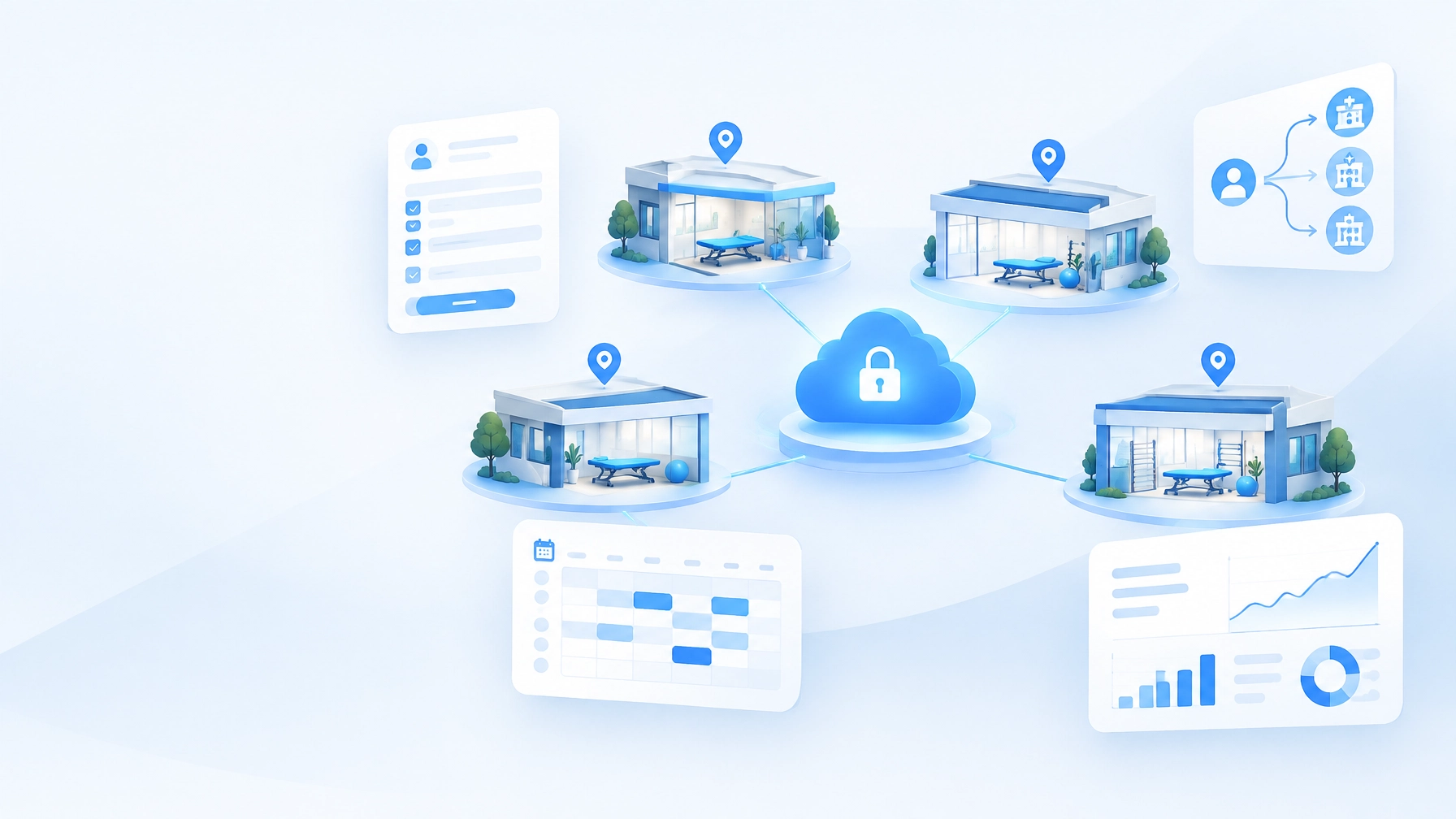
    Fragmented Data Silos vs Unified Architecture

    Left unaddressed, this architectural mismatch triggers predictable symptoms:

    • Data Fragmentation: Each location maintains its own repository of customer records, inventory counts, and financial transactions, preventing enterprise-wide analysis.
    • Redundant Manual Workflows: Staff spend valuable hours manually reconciling reports across disparate systems or re-entering data into separate platforms.
    • Governance Vulnerabilities: Inconsistent access controls and decentralized record-keeping elevate compliance risks across regions.
    • Delayed Decision-Making: Executive leadership must wait days or weeks for manual data aggregation before gaining a clear picture of enterprise performance.

    For businesses operating in demanding sectors: such as multi-location service providers, healthcare networks, and specialized professional firms: these friction points directly suppress top-line growth and inflate operational expenditure.

    Engineering the Solution: ChainHQ’s Custom Multi-Location Operating System

    To solve these systemic challenges, Pure Technology Consulting engineered ChainHQ as a high-performance, centralized operating architecture designed specifically for distributed organizations. Rather than forcing clients to stitch together disconnected third-party tools, ChainHQ models the entire enterprise hierarchy directly into a unified database schema.

    1. Centralized Master Data Management (MDM)

    At the core of ChainHQ’s architecture is a single source of truth for critical enterprise entities: customers, assets, pricing schedules, and operational templates. By establishing strict data governance rules at the enterprise layer while retaining flexible parameters for local execution, the platform ensures complete data integrity without sacrificing regional responsiveness.

    2. Hierarchical Data Models with Attribute-Level Inheritance

    Multi-location businesses require both centralized standardization and localized autonomy. ChainHQ implements a sophisticated hierarchical model (Enterprise → Region → Location → Department) equipped with attribute-level inheritance and override flags:

    • Global Defaults: Corporate-wide policies, core workflows, and baseline pricing remain synchronized across every site.
    • Regional Overrides: Regional managers can adapt tax rules, currency configurations, or regional compliance parameters.
    • Location-Specific Parameters: Individual facilities manage local operating hours, staff assignments, and specific client intake criteria seamlessly within the same unified system.

    This architecture ensures that local variations are handled via secure configuration rather than dangerous system forks or isolated spreadsheets.

    Streamlining Operations with Custom Workflow Automation

    Eliminating data silos is only half the equation; the true transformative value emerges when unified data powers intelligent workflow automation. ChainHQ integrates custom event-driven pipelines that replace manual handoffs with real-time digital routing.

    Real-Time Operational Dashboard and Automation

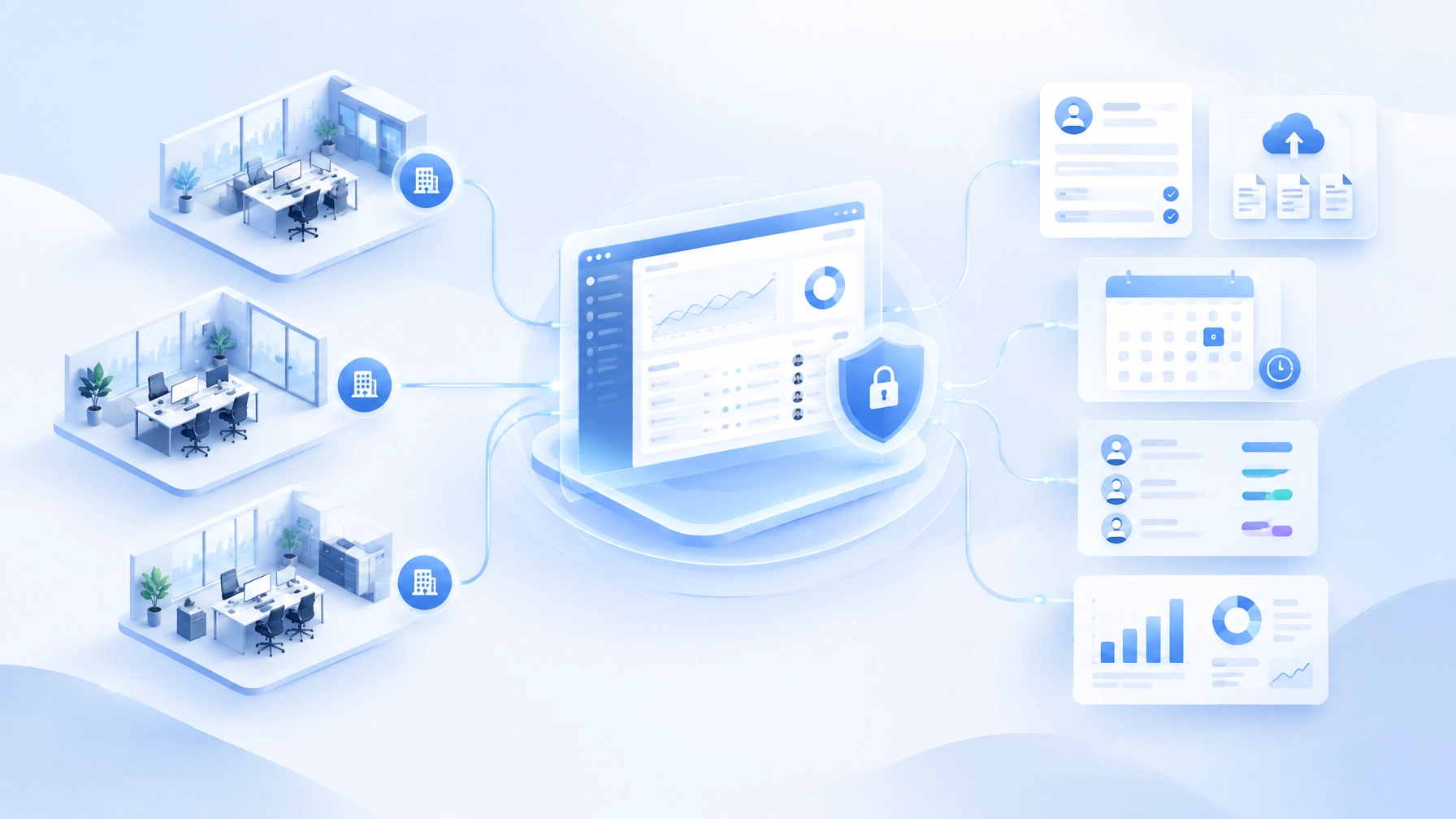
    Through API-first integration and microservices architecture, routine administrative tasks: such as multi-site scheduling, cross-facility inventory balancing, and compliance logging: execute automatically. Management dashboards provide real-time visibility into key performance indicators across every operating unit, empowering executives to spot trends, reallocate resources, and resolve bottlenecks instantly.

    Our work with ChainHQ reflects the same rigorous engineering methodology we bring to clients across our broader ecosystem, including our specialized healthcare matching engines (EHRIO Pro), automated local visibility platforms, and advanced workflow systems.

    Where Custom Software Outperforms Off-the-Shelf SaaS

    When business leaders evaluate their technology roadmap, the debate invariably turns to whether they should build custom applications or rely on commercial SaaS subscriptions. For enterprise-grade, multi-location operations, the comparison reveals distinct boundaries:

    Dimension Commercial SaaS Platforms Custom Multi-Location Architecture (PTC Approach)
    Data Architecture Multi-tenant or siloed per account; rigid schemas Unified enterprise schema with location as a core dimension
    Workflow Flexibility Restricted to vendor-provided configuration options Fully tailored to exact operational workflows and business logic
    Integration Capability Dependent on pre-built marketplace connectors and webhooks API-first design built to interface natively with legacy and modern stacks
    Ownership & Equity Monthly licensing fees with zero intellectual property value Proprietary enterprise asset that compounds in operational value

    For high-ticket, growth-focused businesses, investing in bespoke development transforms technology from an administrative expense into a strategic competitive advantage.

    Unlocking Enterprise Scalability and Long-Term Value

    Scaling a multi-location enterprise requires an operating infrastructure that grows gracefully without incurring exponential administrative overhead. By unifying data, automating routine workflows, and providing crystal-clear executive visibility, custom architecture enables organizations to double their location footprint without doubling their administrative headcount.

    Enterprise Scalability Blueprint

    Building this level of sophistication demands more than just technical coding proficiency; it requires deep operational insight, rigorous governance design, and a collaborative partnership approach. At Pure Technology Consulting, we partner with leadership teams to design, architect, and deploy resilient digital systems engineered for long-term compounding returns.

    Next Steps for Growing Enterprises

    If your organization is navigating the operational friction of data silos, manual reporting bottlenecks, or rigid software limitations across multiple locations, it is time to evaluate a more strategic technological foundation.

    We invite you to schedule a collaborative advisory session with our engineering leadership to discuss your operational architecture and explore a tailored roadmap.

    Request a Workflow Audit or visit our video walkthroughs to see our engineering capabilities in action.


    Amin Said, Founder of Pure Technology Consulting LLC
    https://puretechconsult.com
    Phone: +1 (803) 921-0969

  • The Enterprise Automation Paradox: Why Off-the-Shelf Software Is Costing Your Business More Than a Custom Build

    The Enterprise Automation Paradox: Why Off-the-Shelf Software Is Costing Your Business More Than a Custom Build

    For the modern executive, the allure of the "quick-fix" SaaS solution is powerful. In an era where speed is a competitive advantage, the ability to sign up for a monthly subscription and deploy a new tool in minutes feels like progress.

    However, as many growth-focused businesses are discovering in 2026, this convenience comes with a hidden, compounding cost. What began as a strategic move to digitize operations has, for many, evolved into a phenomenon known as SaaS sprawl.

    At Pure Technology Consulting (PTC), we call this the Enterprise Automation Paradox: the more "off-the-shelf" tools you add to solve specific problems, the more complex, expensive, and rigid your overall operation becomes.

    If your organization is currently managing 50+ subscriptions while manual workarounds continue to clog your workflows, it’s time to move beyond fragmented tools and toward a unified strategy through custom web application development.

    The Hidden Taxes of "Off-the-Shelf" Software

    The true cost of software isn't found on the pricing page. While a $50/user/month license sounds affordable, the secondary effects of fragmented software stacks often destroy 20–30% of the value they were intended to create.

    1. The Toggle Tax (Productivity Loss)

    Research shows that employees in companies with unmanaged software stacks lose up to 10 hours per week simply switching between applications and searching for fragmented data. This "toggle tax" is a silent killer of operational leverage. When your intake system doesn't talk to your CRM, and your CRM doesn't talk to your billing platform, your most valuable asset: your people: becomes the "human glue" holding disparate systems together.

    2. The Integration Tax

    Most SaaS tools offer "native integrations," but these are often shallow. As your business logic evolves, you find yourself paying for middleware, custom scripts, and third-party consultants to maintain fragile bridges between systems. For a mid-market firm, this digital transformation consulting challenge can easily cost hundreds of thousands of dollars annually in maintenance alone.

    3. The Scalability Wall

    Off-the-shelf software is built for the "average" business. But your competitive advantage lies in what makes you different. When you reach a certain scale, the per-seat pricing of SaaS becomes a liability, and the lack of flexibility in the software forces you to change your proven business processes to fit the tool’s limitations.

    Minimalist digital art. A human silhouette in a tech-focused office environment looking at a single, unified dashboard on a transparent screen. Represents focus, efficiency, and the removal of the

    Where Bespoke Beats "Best-of-Breed"

    The shift toward business process automation consulting isn't just about saving on license fees: it's about creating a proprietary operating system that functions as a competitive moat.

    At PTC, we’ve seen this transformation across multiple high-stakes industries where standard software simply couldn't keep pace with operational demands:

    • In Healthcare & Wellness: While generic EHRs offer basic scheduling, they often fail at complex intake and patient-matching logic. We’ve developed systems like EHRIO, which utilizes 70-question intelligent intakes and matching engines to ensure clinical precision that off-the-shelf tools can't replicate.
    • In Fintech & Debt Recovery: Standard telephony platforms often lack the granular call attribution and data logging required for strict compliance and high-volume collection strategies. Bespoke builds allow for deep telephony integration that aligns perfectly with recovery workflows.
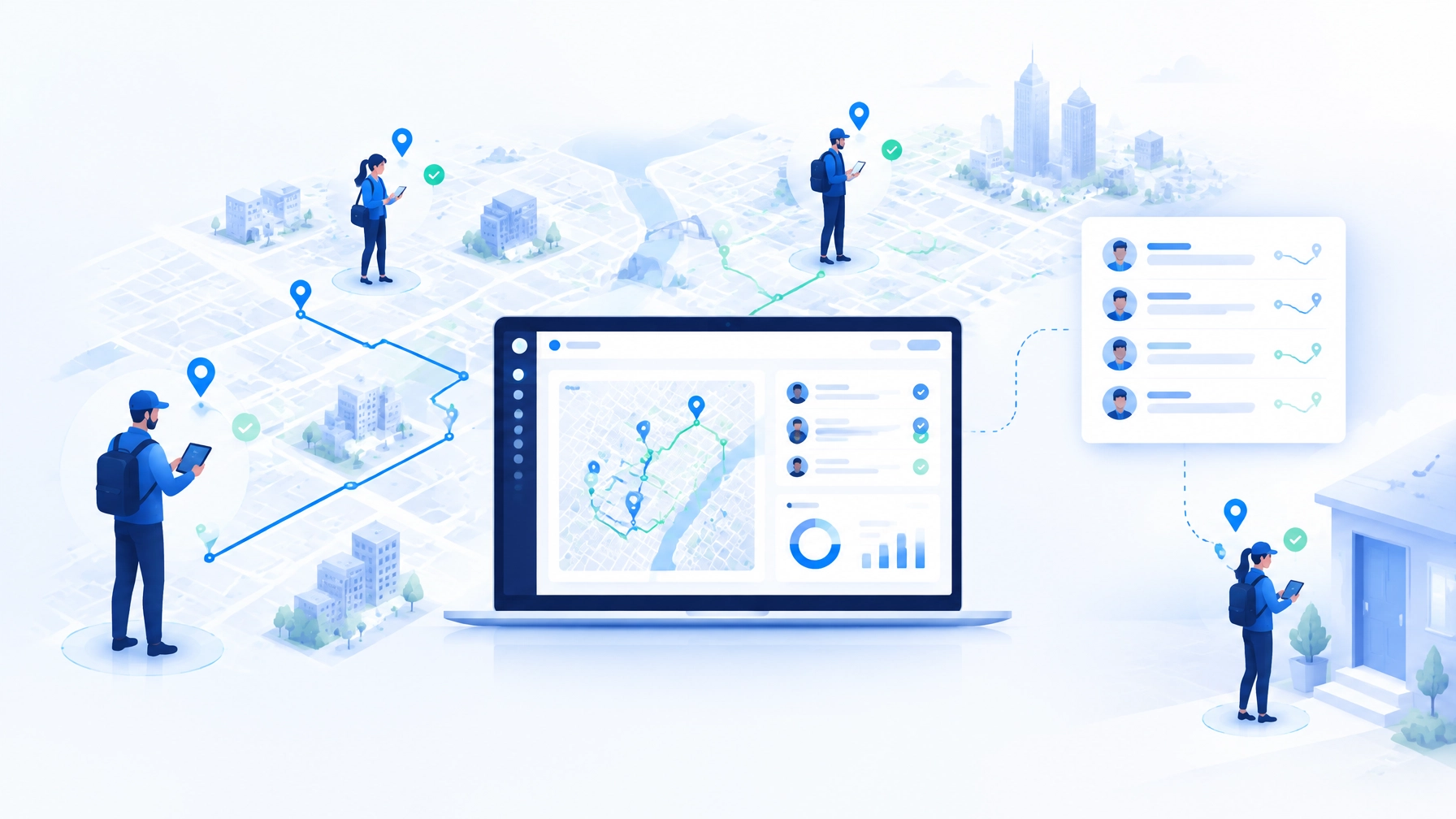
    • In Field Operations: For businesses managing door-to-door teams or multi-location services, off-the-shelf GPS trackers often lack the rep accountability and real-time logging needed for true visibility. Custom solutions, like those seen in our tracking projects, turn raw data into executive-level insights.

    By investing in custom web application development, you aren't just "buying a tool": you are building an asset that grows in value as your business scales.

    The ROI of Unified AI Workflow Automation

    The most significant advantage of a custom build in 2026 is the ability to leverage AI workflow automation at the data-layer level, rather than as a "plugin."

    Generic AI wrappers in SaaS tools are often disconnected from your core business context. A custom-built platform allows for "deep AI": systems that understand your unique data models and can automate decision-making across the entire lifecycle of a customer.

    Whether it’s automating Google Business Profile management through platforms like AI Local Boost or creating private custom solutions for enterprise intake, the goal is the same: removing the manual burden so your team can focus on high-value strategy.

    An abstract visualization of a complex workflow being streamlined. Tangled lines turning into perfectly straight, parallel glowing lines. Cool blue and white color palette.

    Navigating the Pivot: When to Go Custom

    Is a custom build right for every part of your business? No. You don't need a custom-built email client or word processor. However, you do need a custom-built core for any process that:

    1. Directly impacts your revenue generation.
    2. Involves proprietary logic that gives you a market edge.
    3. Requires data to flow seamlessly across three or more departments.

    The transition from a fragmented SaaS stack to a bespoke environment requires a visionary roadmap. As an enterprise automation consulting firm, we help leaders audit their current "software sprawl" to identify where they are bleeding capital and where a consolidated, custom architecture would provide the highest 5-year NPV (Net Present Value).

    The Long-Term Horizon: From Renting to Owning

    Choosing off-the-shelf software is like renting an office: it’s quick to move in, but you’re at the mercy of the landlord’s rules and rent hikes. Choosing custom web application development is like building your own headquarters: it requires more planning and upfront capital, but it’s designed for your workflow, and you own the equity in the system forever.

    In an increasingly automated world, the businesses that win are not the ones with the most tools, but the ones with the most efficient, unified systems.

    A high-tech digital landscape showing a bird's eye view of a glowing city grid that looks like a circuit board. Represents long-term ROI and business growth.

    If your current software stack feels like an anchor rather than an engine, it’s time for a different approach. We specialize in bringing proven technical capabilities from healthcare, fintech, and SEO automation into your industry to build the infrastructure you need for the next decade of growth.

    Ready to reclaim your operational leverage?

    Book a discovery call or request a workflow audit today. Let’s stop the SaaS leak and start building your competitive advantage.

    Contact us: +1 (803) 921-0969

    Amin Said, Founder of Pure Technology Consulting LLC
    https://puretechconsult.com

  • FTP Inform Case Study: How We Built a Custom File-Based Automation Engine That Replaced 3 Enterprise Tools for a National Debt Collection Agency

    FTP Inform Case Study: How We Built a Custom File-Based Automation Engine That Replaced 3 Enterprise Tools for a National Debt Collection Agency

    Amin Said, Founder of Pure Technology Consulting LLC.

    In the high-stakes world of debt recovery, speed is more than just an operational metric: it is the direct catalyst for revenue. For a national debt collection agency, the lifeblood of their operation is the daily influx of placement files, payment updates, and recall notices from hundreds of creditors. Yet, many of these organizations are still tethered to manual, legacy processes that create massive operational drag.

    At Pure Technology Consulting (PTC), we recently partnered with a national agency that was suffocating under the weight of three separate enterprise tools: a clunky Managed File Transfer (MFT) suite, a manual data-mapping utility, and a fragmented alerting system that consistently failed to notify the right people at the right time.

    By deploying FTP Inform: our proprietary automated FTP monitoring engine: as the core of a larger custom web application development project, we didn't just automate their file transfers. We transformed their entire intake workflow, replaced three expensive enterprise platforms, and shifted their operational model from "reactive checking" to "proactive processing."

    The Strategic Business Stakes: When Manual Systems Become Liabilities

    Before our engagement, the agency’s IT and administrative teams were caught in a cycle of manual redundancy. Their workflow was a textbook example of fragmented enterprise architecture:

    1. Tool 1 (The MFT Suite): A high-cost, legacy file transfer system that required manual configuration for every new creditor.
    2. Tool 2 (The Data Loader): A standalone utility where staff manually uploaded CSVs to "check" for formatting errors before pushing them to the CRM.
    3. Tool 3 (The Alerting App): A basic monitoring tool that frequently sent "false positive" alerts, leading to alert fatigue and missed deadlines.

    The results were predictable: data latency of 24–48 hours, inconsistent lead flow, and a constant risk of compliance breaches due to delayed recall processing. They weren't looking for another vendor; they needed a visionary technology partner to architect a unified solution.

    The Solution: A Custom Automation Engine Built on Proven Tech

    Our approach wasn't to build from scratch where proven solutions existed. Instead, we leveraged the technical backbone of FTP Inform: our specialized tool for custom web application development and enterprise automation: to create a bespoke orchestrator.

    Technical Walkthrough: The FTP Inform Integration

    We replaced their fragmented stack with a unified, AI-powered business system. Here is how the architecture works:

    • 24/7 Intelligent Monitoring: FTP Inform was configured to monitor unlimited FTP connections simultaneously. Unlike legacy tools that check on a rigid schedule, our engine utilizes intelligent polling intervals: down to 5-minute increments: to ensure that as soon as a creditor drops a placement file, the system is aware.
    • File-Specific Filtering & Routing: The system doesn't just "see" a file; it identifies the type (CSV, XLS, XLSX) and context. For this client, we built custom logic that automatically routes payment files to the accounting team and new placements to the dialer management team.
    • Encrypted Attachment Delivery: One of the agency's primary pain points was the "login-and-fetch" ritual. We eliminated this by configuring FTP Inform to securely attach the detected files directly to the notification emails. This removed the friction of logging into multiple disparate portals.
    • Audit-Ready Logging: In the debt collection industry, compliance is non-negotiable. Every connection, detection, and notification is logged in a centralized audit trail, providing the governance necessary for enterprise-level security.

    Fragmented systems being absorbed into a single central engine

    Where Custom Software Beats "Off-the-Shelf" SaaS

    Many businesses attempt to solve these problems with generic automation tools. However, for growth-focused service businesses, off-the-shelf software often creates more silos. Our enterprise automation consulting focuses on creating a "single source of truth."

    By building a custom wrapper around the FTP Inform engine, we were able to integrate directly with the agency's telephony and CRM systems. This is the hallmark of PTC's methodology: we don't just move files; we trigger entire business outcomes.

    When a placement file arrives via FTP Inform, it doesn't just sit in a folder. It triggers an automated sequence:

    1. The file is parsed and validated for HIPAA and industry-specific compliance.
    2. New accounts are instantly segmented based on proprietary logic.
    3. The dialer is updated in real-time, ensuring that agents are calling the most relevant leads within minutes of the file arriving.

    Proven Capabilities Across Industries

    This case study in the fintech and debt space is just one facet of what we do. Our team at Pure Technology Consulting brings proven, scalable capabilities into every project, drawing from our experience in highly regulated and operationally complex fields:

    • Healthcare: We’ve built the EHRIO matching engines and 70-question intake systems to manage complex patient workflows.
    • Operations & Field Services: Our D2D Tracking platform provides rep accountability and precision GPS logging for national field teams.
    • Local SEO: Through AI Local Boost, we automate Google Business Profile management for multi-location brands.
    • Fintech & Debt: Beyond FTP Inform, we specialize in telephony integrations and call attribution systems that link talk time directly to revenue outcomes.

    Modern enterprise command center representing data flow and success

    The ROI of Operational Leverage

    By consolidating three enterprise tools into one custom-built engine, the agency achieved:

    • 95% Reduction in Manual Checking: Staff no longer spend hours logging into FTP servers.
    • Accelerated Speed-to-Contact: Placement files that used to take two days to process are now live on the dialer in under 15 minutes.
    • Significant Cost Savings: The agency eliminated three separate software subscriptions, replacing them with a single, high-performance asset that they own and control.

    A Roadmap for Your Transformation

    If your organization is struggling with redundant manual workflows, data silos, or a lack of internal automation expertise, you don't need another vendor. You need a technology partner who can see the roadmap through the noise.

    Pure Technology Consulting specializes in taking the "operational drag" out of your business and replacing it with scalable, AI-powered business systems. Whether it’s a bespoke web application or a complex AI workflow automation engagement, we build the technical backbone that allows you to scale without increasing labor dependency.

    Digital interface showing successful connection and file notifications

    Ready to Audit Your Workflow?

    We offer a strategic discovery process to identify where custom software can drive the most significant ROI for your business. Let’s discuss how we can bring the same level of automation and precision to your operations.

    Contact Pure Technology Consulting LLC
    Phone: +1 (803) 921-0969
    Website: https://puretechconsult.com

    Amin Said, Founder of Pure Technology Consulting LLC
    https://puretechconsult.com

  • Beyond Templates: Why Custom Web Application Development Is the Only Path to True Digital Transformation in 2026

    Beyond Templates: Why Custom Web Application Development Is the Only Path to True Digital Transformation in 2026

    As we navigate the operational landscape of 2026, the term "digital transformation" has shifted from a corporate buzzword to a fundamental survival requirement. For service-based businesses: ranging from high-stakes healthcare clinics to specialized professional firms: the reliance on generic, off-the-shelf software has reached a breaking point.

    The promise of the "no-code" revolution and "all-in-one" templates was speed. However, as business models become more nuanced and customer expectations more demanding, these templates have become digital straitjackets. To achieve true scalability and operational leverage, the path forward is no longer about finding the right tool; it is about building the right system.

    At Pure Technology Consulting (PTC), we have observed a consistent pattern: businesses that rely on standard templates eventually hit a "process ceiling." Their software dictates their workflow, rather than their workflow driving the software. This is where custom web application development becomes the critical differentiator.

    The Mirage of the All-in-One Template

    In 2026, the marketplace is flooded with SaaS products claiming to solve every business need. While these platforms are excellent for startups or businesses with standard, linear processes, they fail to account for the proprietary "magic" that makes a high-ticket service business successful.

    Standard templates often lead to:

    • Data Silos: Information trapped in "black box" systems that don't communicate with your other essential tools.
    • Workflow Fragmentation: Forcing your team to jump between five different apps to complete a single client intake.
    • Scalability Roadblocks: Monthly fees that balloon as you add users, without a corresponding increase in operational efficiency.

    To move beyond these constraints, enterprises are turning to digital transformation consulting to design bespoke systems that integrate AI and automation directly into their core DNA.

    Proof of Concept: Turning Complexity into Scalable Assets

    At PTC, we don't just advocate for custom solutions; we build them. Our proprietary platforms serve as a masterclass in how bespoke AI solutions and custom architecture can solve hyper-specific industry challenges. These aren't just products; they are proof-of-concept examples of what we can build for your organization.

    1. Healthcare Precision: EHRIO Pro

    Modern medical and wellness clinics face a unique challenge: balancing rigorous HIPAA compliance with the need for a seamless patient experience. With EHRIO Pro, we demonstrated how a custom software development agency can build a system that integrates smart scheduling, AI-powered chart templates, and predictive analytics. It isn't just a database; it’s an intelligence layer that anticipates clinic needs, reducing administrative drag and allowing providers to focus on care.

    Healthcare Practice Management and AI Data Visualization

    2. Micro-Inventory Control: ChainHQ

    Specialized retail and service sectors, such as permanent jewelry brands, require tracking logic that standard POS systems simply cannot handle. ChainHQ was built to track inventory by the inch and manage mobile event workflows. By developing this as a custom web application, we provided artists with a tool that fits their exact business model, rather than forcing them to adapt to a generic retail template.

    3. Enterprise-Grade Monitoring: FTP Inform

    For businesses handling massive amounts of sensitive data, manual file monitoring is a high-risk bottleneck. FTP Inform serves as an enterprise automation consulting case study in real-time monitoring. By automating the detection and notification of critical file transfers (CSV, XLS, XLSX), we eliminated the human error inherent in manual data management.

    Inventory Tracking and Data Flow Automation

    4. Local SEO Dominance: AI Local Boost

    For service businesses relying on local visibility, AI Local Boost showcases the power of AI-powered business systems. It automates the complex interplay between Google Business Profile updates, review management, and customer engagement. It’s an example of AI workflow automation that replaces hours of manual marketing labor with a consistent, data-driven engine.

    Why 2026 Demands Bespoke AI and Custom Workflows

    The current technological era is defined by agentic AI: AI that doesn't just answer questions but performs tasks. Integrating these capabilities into your business requires more than a "plugin." It requires a custom-built infrastructure where AI has access to your proprietary data in a secure, governed environment.

    Business automation consulting now focuses on three core pillars of custom development:

    1. Seamless Data Integration

    Your data should flow like water between your CRM, your billing software, and your customer portal. Custom builds allow for API-first architectures that ensure you have a "single source of truth" for your operations.

    2. Proprietary Workflow Logic

    Every business has a unique "secret sauce" in how they handle leads or deliver services. A custom web application codifies this logic into the software itself. Whether it’s a 70-question intelligent intake form or a GPS-logged rep accountability system, custom development ensures the software works for you.

    3. Long-term Asset Value

    When you license a SaaS product, you are renting someone else's innovation. When you invest in custom web application development, you are building an intellectual property asset. This increases the valuation of your business and provides a competitive moat that competitors using standard templates cannot cross.

    Local SEO and AI Growth Nodes

    Navigating the Strategic Pivot

    Digital transformation is not a single event; it is a roadmap. For executives and business owners, the question is no longer "Which software should I buy?" but "How should my business operate at its theoretical maximum efficiency?"

    Strategic custom development allows you to:

    • Reduce Labor Dependency: Automate the repetitive "busywork" that currently consumes 10–20 hours of your staff's week.
    • Eliminate Manual Errors: Achieve up to a 95% reduction in data entry and processing errors through intelligent syncs.
    • Gain Real-Time Insights: Access custom dashboards that reflect the specific KPIs that drive your unique revenue model.

    Your Roadmap to Transformation

    The transition from "using software" to "owning a digital system" requires a partner who understands both the code and the commerce. At Pure Technology Consulting, we specialize in bridging the gap between visionary business goals and scalable technical execution.

    Whether you are an operationally constrained service business looking to remove bottlenecks or a growth-focused brand ready to add software value to your ecosystem, the first step is a strategic audit of your current workflows.

    We invite you to move beyond the limitations of templates. Let’s build the infrastructure that your business deserves.

    Ready to explore the possibilities of custom automation?

    Book a discovery call with our team or request a workflow audit to identify your highest-leverage opportunities for transformation.

    Amin Said, Founder of Pure Technology Consulting LLC
    https://puretechconsult.com
    Contact: +1 (803) 921-0969