Category: Blog

Your blog category

  • Why AI Workflow Automation Will Change the Way You Scale Your Operations

    Why AI Workflow Automation Will Change the Way You Scale Your Operations

    For decades, the blueprint for scaling a business was linear: if you wanted to double your output, you usually had to double your headcount. This "linear scaling" model created a perpetual "people tax", as revenue grew, so did the complexity of management, the cost of benefits, and the friction of human error.

    By March 2026, the paradigm has shifted. We are no longer in an era where growth is dictated by the size of your payroll. We are in the era of operational leverage, where AI workflow automation allows a lean, strategic team to manage the output of an organization ten times its size. At Pure Technology Consulting, we view AI not merely as a tool for efficiency, but as the foundational architecture for the modern enterprise.

    The End of Linear Scaling

    Traditional scaling is often a trap. As organizations grow, they become slower. Communication silos form, decision-making bottlenecks emerge, and the very processes designed to ensure quality become the anchors that hold the business back.

    AI workflow automation changes this by decoupling labor from throughput. Instead of hiring more people to process more data, organizations are deploying custom-built AI agents and integrated web applications that handle the heavy lifting of routine operations. Research indicates that organizations implementing these workflows see a 25–50% reduction in costs within targeted processes. This isn't just about saving money; it’s about liberating capital to be reinvested into high-level strategy and innovation.

    Conceptual visualization of AI workflow automation transforming chaotic data into efficient operations.

    Mechanism 1: Scaling Without the "People Tax"

    The primary constraint on growth for most professional services, particularly in high-stakes fields like law and accounting, is the intake and processing phase. In traditional models, a senior partner’s time is often consumed by data gathering or manual review.

    Consider our work with EHRIO Pro. By implementing sophisticated matching engines and 70-question automated intakes, we demonstrated how custom software can handle complex, HIPAA-adjacent workflows that would typically require a massive administrative team. This type of automation allows staff to work up to 35% faster because they are no longer bogged down by the "drudge work" of data entry and initial sorting.

    When your operating model is built on custom automation, you don't scale by adding more desks; you scale by increasing the compute power of your proprietary workflows.

    Mechanism 2: Accelerated Executive Decision-Making

    As a CEO, your most valuable asset is the speed and accuracy of your decisions. In a manual environment, data is often fragmented. By the time a report reaches your desk, the information is already dated.

    AI workflow automation transforms your data from a static record into a proactive advisor. By integrating disparate systems into a unified dashboard, much like we do when developing custom solutions for fintech and debt agencies, leaders can see real-time cycle times, throughput metrics, and compliance risks.

    This shift from reactive to proactive management is critical. When you can see a bottleneck forming in your order-to-cash cycle before it impacts your bottom line, you are no longer just "managing" growth, you are engineering it.

    Modern digital interface illustrating real-time business insights for executive decision-making.

    Mechanism 3: Breaking Silos with Bespoke Integration

    One of the biggest hurdles to scaling is "departmental drift," where the sales team, the operations team, and the finance team use different tools that don't talk to one another. This fragmentation leads to duplicate work and a 40–70% increase in cycle times for complex end-to-end processes.

    Our approach at Pure Technology Consulting is to build the "connective tissue" between these departments. Whether it’s through custom web apps or the implementation of our proprietary assets like ChainHQ, we focus on creating a single source of truth.

    For instance, when we integrate custom telephony with debt agency workflows, we aren't just giving them a new phone system. We are creating an automated loop where call attribution, GPS logging, and representative accountability are all handled by the system, not a middle manager. This is how you maintain quality and compliance at scale without adding layers of bureaucracy.

    Proof in Practice: Moving Data at the Speed of Trust

    In industries like legal and accounting, data security and movement are often the friction points that prevent rapid scaling. If your team is manually moving files via disparate FTP sites or email attachments, your operation is inherently unscalable.

    This is why we developed FTP Inform. It serves as a prime example of how bespoke automation can solve enterprise-level data movement challenges. By automating the tracking and notification of file transfers, we remove the human element from a purely technical process.

    You can explore how these types of integrations work at https://ftpinform.puretechconsult.com. When file movements are logged, tracked, and automated, your team can focus on the content of the data rather than the mechanics of moving it.
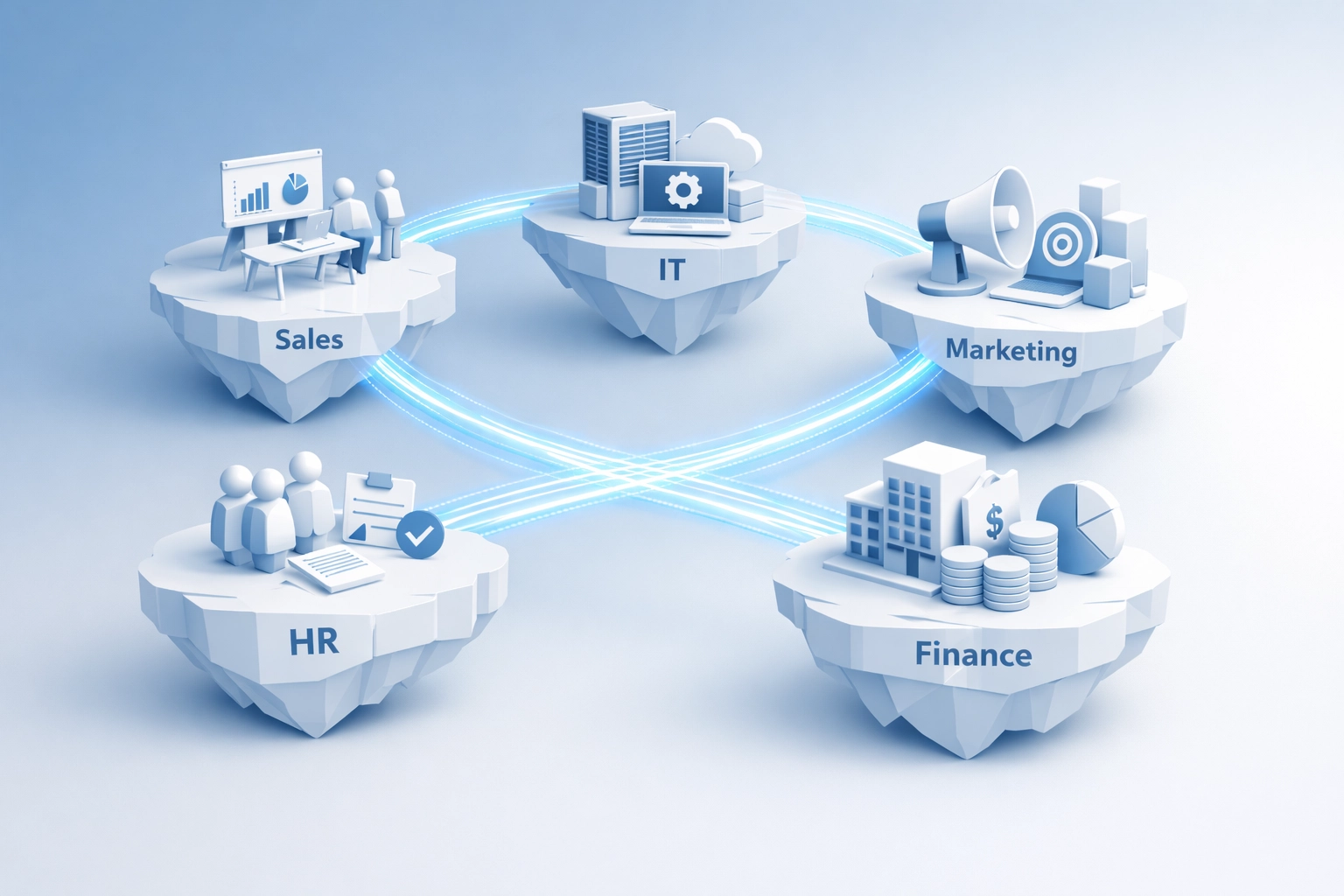
    Abstract islands connected by data streams representing integrated departments and scalable workflows.

    Leveraging AI for Local Dominance

    Scaling isn't just an internal operational challenge; it’s a market-facing one. As you expand into new territories or service lines, maintaining a consistent digital presence becomes increasingly difficult.

    This is where automation like AI Local Boost comes into play. For many of our clients, managing Google Business Profiles and local SEO across dozens of locations was a full-time job. By automating these updates and interactions, we provide a blueprint for how a brand can scale its visibility without scaling its marketing department. This is the visionary approach to growth: using custom builds to achieve what was previously thought to require a large agency or a massive in-house team.

    The Strategic Roadmap to Automation

    Scaling with AI is not a "plug-and-play" endeavor. It requires a consultative approach to identify where your unique operational drag exists. At Pure Technology Consulting, we don’t believe in one-size-fits-all SaaS. We believe in building the specific tools your business needs to win.

    1. The Workflow Audit: We begin by mapping your current processes to identify the 20% of tasks that are causing 80% of your operational friction.
    2. Bespoke Architecture: We design and build custom web applications that integrate directly with your existing tech stack, whether you are in healthcare, fintech, or the legal sector.
    3. Continuous Governance: Automation is not a "set it and forget it" solution. We provide the roadmap for ongoing optimization and integration as your business continues to evolve.

    Blueprint transitioning to 3D structure symbolizing a strategic roadmap for business automation.

    Why Now?

    The window of opportunity to gain a competitive advantage through AI workflow automation is closing. By 2027, these capabilities will be the baseline for survival. Today, they are a powerful lever for market dominance.

    If your operations are currently constrained by manual processes, or if you find that hiring is the only way you can keep up with demand, it is time to rethink your operating model. Scaling shouldn't be painful. It should be an exercise in precision.

    We invite you to move beyond the limitations of linear growth. Our team is ready to help you build the custom software and automated workflows that will define your organization's future.

    To discuss your specific scaling challenges and how a bespoke AI-powered solution can transform your operations, I encourage you to book a discovery call with us. We can review your current architecture and identify the high-impact areas where custom development will yield the greatest return on investment.

    You can schedule a consultation directly here: https://puretechconsult.com/schedule or call our office at +1 (803) 921-0969 to speak with our team.

    Let’s build the future of your operations together.

    Amin Said, Founder of Pure Technology Consulting LLC
    https://puretechconsult.com
  • One Vision, Ten Locations: How ChainHQ Automates Multi-Site Management in 2026

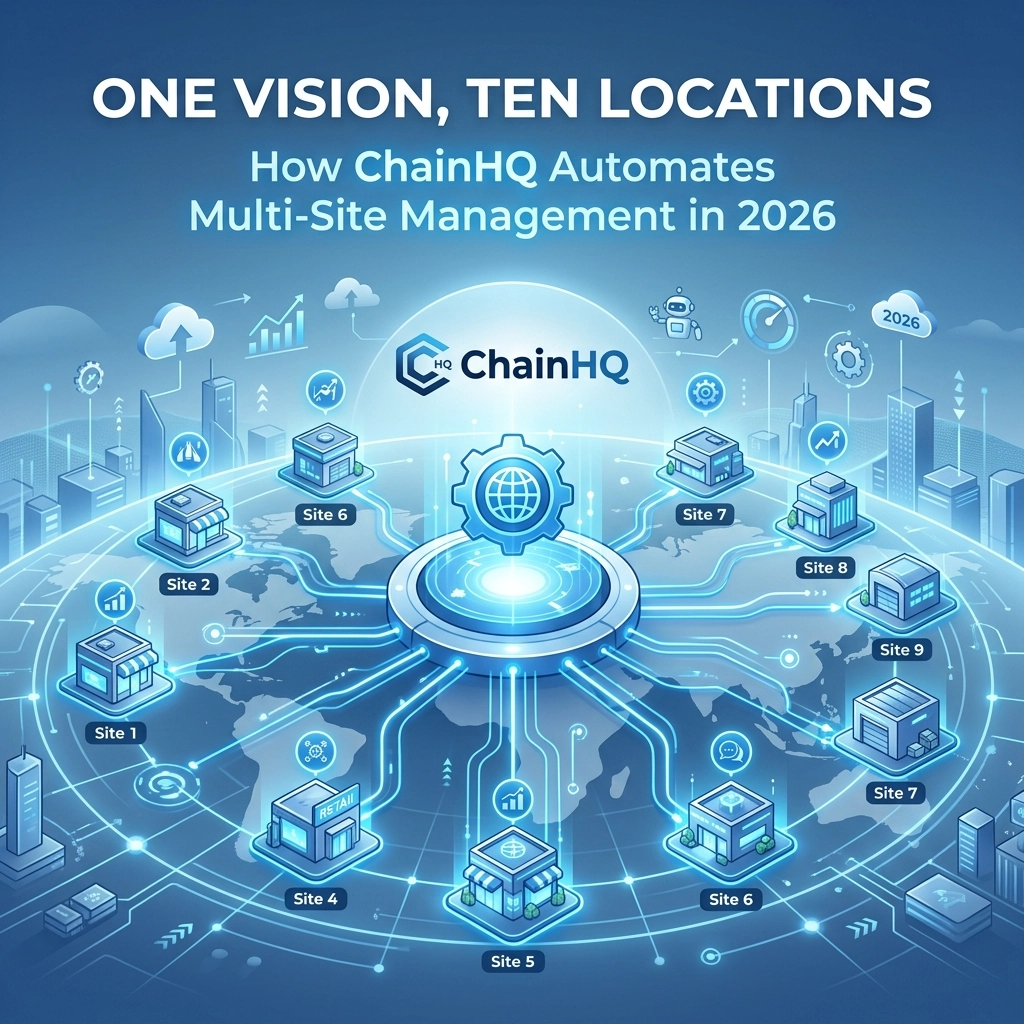
    One Vision, Ten Locations: How ChainHQ Automates Multi-Site Management in 2026

    As we navigate the business landscape of 2026, the definition of "scale" has shifted. For multi-location service businesses, the challenge is no longer just about opening new doors; it is about maintaining a cohesive vision across them without being consumed by the operational friction that growth creates.

    For many founders, the leap from three locations to ten feels less like a triumph and more like a loss of control. Information becomes siloed, reporting lags by weeks, and the "owner’s touch": that intangible quality that made the first location a success: starts to evaporate. This is the "multi-site trap," where the complexity of management grows exponentially while the owner’s capacity remains linear.

    At Pure Technology Consulting, we view this not as a management failure, but as an architectural one. The solution lies in high-level business process automation consulting and the deployment of bespoke systems designed to unify disparate data into a single, actionable truth. Our proprietary framework, ChainHQ, serves as a prime example of how we build scalable, complex web applications to solve this exact dilemma.

    The Invisible Cost of Manual Oversight

    In the past, managing ten locations required a small army of regional managers and an endless cycle of spreadsheets. By the time a consolidated report reached the CEO’s desk on the 15th of the month, the data was already stale. Opportunities to pivot were missed, and operational leaks: be it in labor costs, inventory, or lead conversion: remained undetected for weeks.

    The manual approach to multi-site management carries heavy, often invisible costs:

    • Decision Latency: Waiting for manual data entry prevents real-time course correction.
    • Operational Variance: Different locations begin to develop their own "shadow processes," leading to inconsistent customer experiences.
    • Executive Burnout: Owners spend 80% of their time "putting out fires" in existing locations rather than strategizing for the eleventh.

    To break this cycle, businesses are turning to ai consulting services to build custom nervous systems for their operations. The goal is to move from reactive management to proactive governance.

    Visualization of multi-location business data consolidation through custom ai consulting services.

    ChainHQ: A Blueprint for Unified Operations

    ChainHQ was born out of a necessity to provide multi-location service businesses with a "Single Source of Truth." Rather than attempting to force off-the-shelf SaaS products to talk to one another, we focus on custom development that integrates every facet of the business: from point-of-sale and CRM to field service logs and payroll.

    When we engage in a custom build for a high-ticket client, we aren't just selling software; we are building an operating model. ChainHQ demonstrates our ability to consolidate data across dozens of endpoints into a unified dashboard. This allows an executive to see, in real-time, how a location in New York is performing compared to one in Florida, with the ability to drill down into the specific metrics driving those results.

    Consolidating Data Across the Enterprise

    The first step in any small business automation strategy for multi-site operations is data hygiene and consolidation. Most businesses are sitting on a goldmine of data trapped within individual software silos. ChainHQ bridges these gaps.

    By leveraging custom API integrations, we pull live data from every site. This isn't just about financial data; it’s about operational KPIs. How long are customers waiting? What is the technician utilization rate? What is the sentiment analysis on local reviews? When this data is centralized, the "vision" of the company stops being a memo and starts being a measurable standard.

    Real-Time Performance Dashboards: From Data to Insight

    The value of data is zero if it doesn't lead to a decision. In 2026, the standard for excellence is the real-time performance dashboard. Executives no longer ask, "How did we do last month?" Instead, they ask, "What is happening right now, and how does it affect our quarterly roadmap?"

    Through our work in high-stakes industries: including healthcare via our EHRIO matching engines and debt agency telephony integrations: we have mastered the art of high-frequency data visualization. For a multi-location service business, this means:

    • Heat Maps of Productivity: Identifying which locations are over-performing and why, so those tactics can be replicated.
    • Automated Alerts: Getting a notification the moment a location’s labor-to-revenue ratio exceeds a pre-set threshold.
    • Predictive Forecasting: Using historical data to predict staffing needs or inventory shortages before they happen.

    This level of insight allows owners to step back from the day-to-day "noise" and focus on the "signal": the strategic growth of the brand.

    Executive dashboard interface showing real-time performance analytics for multi-site business management.

    Removing Manual Oversight to Fuel Growth

    Automation is often misunderstood as a way to replace people. In reality, for the scaling service business, automation is a way to leverage people. By removing the burden of manual reporting and administrative oversight, regional leaders can focus on coaching, quality control, and customer satisfaction.

    Our approach to business process automation consulting involves auditing every repetitive task within the organization. If a manager is spending four hours a week aggregating reports, that is four hours they aren't spent improving the business. ChainHQ automates these workflows, ensuring that governance is baked into the software itself.

    For example, in our work with field operations (D2D Tracking), we implemented GPS logging and rep accountability workflows that removed the need for manual check-ins. The system handles the "where" and "when," allowing the human leadership to focus on the "how."

    Why Custom Builds Beat Off-the-Shelf SaaS

    A common question we encounter is: "Why not just use a combination of existing apps?"

    The answer lies in the limitations of "middle-of-the-road" software. When your business model is your competitive advantage, forcing it into a pre-built template actually erodes that advantage. Off-the-shelf software is designed for the average business; successful multi-site operators are anything but average.

    Bespoke development offers several key advantages for high-ticket clients:

    1. Ownership of the Asset: You aren't renting your operating system; you own it.
    2. Zero Feature Bloat: The system does exactly what you need, with no unnecessary complexity.
    3. Seamless Integration: Your software fits your workflow, not the other way around.
    4. Scalability: Custom systems are built to handle your growth trajectory from 10 to 100 locations without hitting a "paywall" for more users or data.

    As a visionary partner, Pure Technology Consulting brings the same level of sophistication we've applied to HIPAA-adjacent healthcare workflows and complex fintech integrations to your service business. We provide the technical roadmap that allows your vision to remain intact as it expands.

    Digital blueprint of a custom software roadmap for scalable multi-location business process automation.

    Implementing Your Multi-Site Roadmap

    Transitioning to an automated, multi-site operating model is a strategic journey. It requires a partner who understands both the code and the commerce. Our process begins with a deep discovery phase, where we map out your current operational drag and identify the highest-leverage areas for automation.

    Whether it's implementing AI-driven local SEO via our AILB framework or building a custom field-service management tool, the goal is always the same: operational freedom for the owner and a superior experience for the customer.

    If you are managing multiple locations and feel the weight of manual oversight slowing your progress, it is time to shift your architecture. The technology of 2026 is here to serve your vision, not distract from it.

    Your Next Step Toward Scalable Operations

    The path to ten locations: and beyond: is paved with data and defined by automation. At Pure Technology Consulting, we specialize in building the custom web applications and bespoke automations that turn complex operations into streamlined machines.

    To explore how a custom build or a strategic audit of your current workflows can unlock your next phase of growth, we invite you to schedule a discovery call with our team. Let's discuss your roadmap and how we can bring your one vision to every location.

    For more insights into our approach and to see our work in action, visit our video walkthroughs or explore our blog.


    Amin Said, Founder of Pure Technology Consulting LLC
    https://puretechconsult.com

    +1 (803) 921-0969

  • Why AI Workflow Automation Will Change the Way You Run Your Business Forever

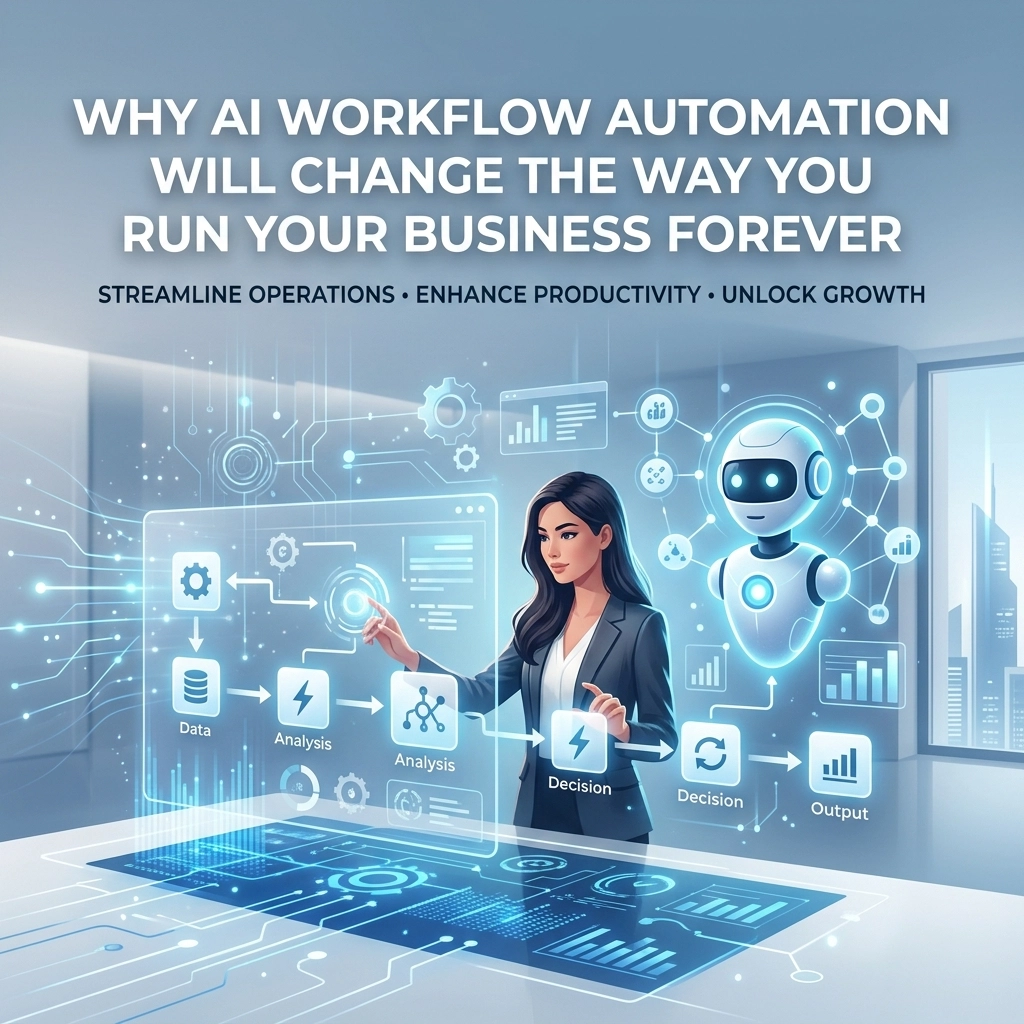
    Why AI Workflow Automation Will Change the Way You Run Your Business Forever

    The landscape of modern business is no longer defined by who works the hardest, but by who builds the smartest. We have entered an era where the traditional "operating model": characterized by manual oversight, reactive decision-making, and linear scaling: is being fundamentally dismantled. In its place, a new paradigm is rising: AI-driven workflow automation.

    For the visionary leader, AI is not merely a tool for cutting costs or shaving seconds off a task. It is the architect of a new kind of organization: one that is proactive, data-driven, and infinitely scalable. At Pure Technology Consulting, we view this shift not as an incremental improvement, but as a total transformation of what it means to run a business.

    The Strategic Shift: From Reactive to Proactive

    Most businesses operate in a state of constant reaction. They react to customer inquiries, react to market fluctuations, and react to internal bottlenecks. This reactive posture is an operational drag that limits growth and exhausts talent.

    AI workflow automation changes this by shifting the "brain" of the operation from retrospective analysis to real-time intelligence. By integrating AI into the core of your processes, you allow your systems to analyze massive volumes of structured and unstructured data far faster than any human team could. Research indicates that this shift can lead to 40–60% faster decision cycles. Imagine a scenario where your workflow doesn’t just wait for a human to flag an error, but identifies a trend, predicts a bottleneck, and redirects resources before the problem even manifests.

    This is the difference between looking at a dashboard of what happened last month and having a roadmap for what is happening now.

    Digital bridge symbolizing the transition from business chaos to proactive AI workflow automation.

    Scaling Without Proportional Gravity

    The historical "gravity" of business growth is that as revenue increases, payroll and overhead must follow a similar trajectory. To double your output, you traditionally needed to double your headcount, or at least significantly increase it. This linear relationship is the primary constraint on scaling a high-ticket service business.

    AI workflow automation breaks this bond. By building bespoke automation layers, businesses can handle significantly higher volumes without a proportional increase in payroll. These systems operate 24/7, providing consistent, error-free output that doesn't suffer from fatigue or distraction. Organizations that successfully implement integrated workflows often see process cycle times reduced by 40–70%. This isn't just about doing things faster; it’s about creating a business structure that can grow ten times its current size without breaking its operational foundation.

    Proof of Capability: AI Local Boost and the Power of Automation

    At Pure Technology Consulting, we don’t just consult on these theories; we build the engines that drive them. Our proprietary assets, such as AI Local Boost, serve as prime examples of how high-level automation can transform a specific business function: in this case, Local SEO and Google Business Profile management.

    Instead of a digital marketing team manually tracking reviews, updating posts, and analyzing local ranking factors, AI Local Boost automates these high-frequency, high-impact tasks. This demonstrates our ability to build custom, scalable web applications that take a complex, multi-step process and turn it into a streamlined, autonomous operation. For our high-ticket clients, this level of automation serves as a proof of concept: if we can automate the intricacies of local search presence, we can certainly architect the custom workflows required for complex legal, accounting, or fintech operations.

    Abstract geometric structure representing scalable business growth and efficient operational architecture.

    Workforce Transformation: Liberating Human Potential

    One of the most persistent myths about AI is that its primary goal is to replace employees. In a visionary organization, the opposite is true. AI workflow automation is a tool for human liberation.

    When you eliminate manual data entry, routine scheduling, and administrative status updates, you aren't just saving money: you are giving your team their time back. This time can then be reinvested into higher-value work: building deeper customer relationships, innovating on product offerings, and strategic planning.

    Employees who are freed from the drudgery of repetitive tasks report higher job satisfaction and engagement. They transition from being "cogs in the machine" to being "architects of the machine." By respecting the cognitive talent of your workforce and using AI to handle the "grunt work," you create a culture of innovation that is far more attractive to top-tier talent.

    Decision Intelligence: Data as a Strategic Asset

    In a traditional business, data is often siloed or trapped in static reports. AI workflow automation turns data into a dynamic asset. By building custom integrations: similar to what we’ve achieved in the fintech and healthcare sectors with platforms like EHRIO Pro: we allow data to flow seamlessly between systems.

    For example, in our work with healthcare intake workflows, we’ve developed matching engines and 70-question intake systems that ensure compliance while drastically reducing manual review time. This level of automation ensures that every piece of data captured is immediately actionable. When your workflow is "data-aware," your strategy moves from intuition-based to intelligence-based. You no longer guess where the market is going; you see the movement in the data flowing through your automated systems every single day.

    City grid with light beams showing automated data synchronization and competitive market intelligence.

    The Competitive Gap: The Cost of Inaction

    As we look toward the future, the gap between automated and non-automated organizations will continue to widen until it becomes an unbridgeable chasm. Companies that adopt AI workflow automation will enjoy lower costs (often 25–50% reductions in targeted processes), faster turnaround times, and a superior customer experience.

    Those that rely on legacy manual processes will find themselves unable to compete on price or speed. More importantly, they will struggle to provide the level of personalization and responsiveness that the modern client expects. AI enables a level of "mass customization" that was previously impossible. It allows a business to provide a bespoke, high-touch experience to thousands of clients simultaneously.

    Implementation: The Roadmap to Transformation

    Transitioning to an AI-driven operating model is not something that happens overnight. It requires a strategic approach and a partner who understands the intersection of software development and business operations. At Pure Technology Consulting, our process begins with a deep discovery phase.

    We don't just "plug in" AI; we audit your existing workflows to identify the points of highest leverage. We look for:

    1. Operational Drag: Where are your teams spending time on non-cognitive tasks?
    2. Information Silos: Where is data getting stuck between departments?
    3. Scalability Bottlenecks: What processes would break if your business doubled in size tomorrow?

    From there, we build bespoke web applications and custom automations designed to fit your specific operations: not the other way around. Whether it's integrating GPS logging for field operations or telephony call attribution for fintech, we bring proven capabilities from various industries to solve your unique challenges.

    Interconnected data streams representing custom software integration and seamless business automation.

    Conclusion: Designing the Future

    The shift to AI workflow automation is more than a technological upgrade; it is a leadership decision to design a business that is fit for the future. It is about moving away from the limitations of human-scale operations and embracing the infinite possibilities of machine-scale intelligence.

    By choosing to automate, you are not just improving your bottom line; you are future-proofing your vision. You are building an organization that can adapt, scale, and thrive in an increasingly complex world.

    If you are ready to explore how custom software and AI-powered automation can redefine your operating model, we invite you to take the first step toward a more visionary future.

    To discuss a custom workflow audit or to explore how we can build a bespoke solution for your organization, book a discovery call with our team here.

    Amin Said, Founder of Pure Technology Consulting LLC
    https://puretechconsult.com

    +1 (803) 921-0969

  • Built for Performance: Why Custom Internal Systems are the Secret Weapon for High-Volume Operations in 2026

    Built for Performance: Why Custom Internal Systems are the Secret Weapon for High-Volume Operations in 2026

    As we move through the first quarter of 2026, the divide between high-performing service businesses and those struggling to keep pace has never been more apparent. For operationally constrained businesses: those handling thousands of transactions, tickets, or client files: the bottleneck is rarely a lack of talent or market demand. Instead, it is the "invisible tax" of fragmented systems and manual data entry.

    In a landscape where information speed and decision latency determine your profit margins, relying on generic, off-the-shelf software is no longer a safe bet; it’s a strategic risk. To win in 2026, high-volume operations are turning toward custom internal systems as their primary competitive advantage.

    The Invisible Ceiling of Generic Software

    For years, the standard approach to scaling was to stack various SaaS subscriptions. You might use one tool for CRM, another for project management, and a third for billing. While this works for small-scale startups, it creates a "data silo" effect for high-volume service firms.

    When your data lives in separate islands, your team becomes the bridge. They spend hours exporting CSV files, manually reconciling spreadsheets, and double-checking entry errors. This is manual reporting at its worst, and it creates a ceiling on your growth. You cannot scale a business that relies on human labor to move data from point A to point B.

    Digital transformation consulting is no longer about just moving to the cloud: it’s about unifying these disparate threads into a single, high-performance engine. Custom internal systems eliminate the need for these manual workarounds, allowing your most valuable staff to focus on high-level judgment rather than administrative upkeep.

    Custom internal systems connecting isolated data silos into a unified architectural grid for efficiency.

    Why Custom Beats Off-the-Shelf in 2026

    The primary argument for generic software has always been cost and speed of deployment. However, in 2026, the "cost" of these systems is measured in lost efficiency. Generic tools are built for the average user, which means they lack the specific guardrails, automated workflows, and deep integration required for specialized, high-volume operations.

    1. Context-Specific Automation

    Generic AI tools can draft a generic email, but they cannot look into your proprietary database to flag a non-standard clause in a contract or automatically route a debt collection file based on historical recovery rates. Custom systems are purpose-built for these exact workflows. They integrate your actual operational data to make intelligent decisions at scale.

    2. Eliminating Data Silos

    Through professional data integration services, a custom system acts as a centralized nervous system. Whether it’s telephony data in a debt agency or patient intake forms in a healthcare facility, a custom build ensures that every department is working from a "single source of truth."

    3. Scalability Without Proportional Hiring

    The old model of growth was: to double our revenue, we must double our headcount. In 2026, that model is broken. Custom internal systems allow you to increase volume by 5x or 10x without a 1:1 increase in labor costs. By automating the high-volume, rules-based prep work, you allow a lean team to handle massive throughput.

    High-Volume Performance: Sector Insights

    At Pure Technology Consulting, we have seen how bespoke systems transform specific industries that are traditionally weighed down by operational complexity.

    Debt Collection and Fintech

    In the debt collection space, every second counts. Custom systems that integrate telephony with real-time call attribution allow agencies to understand exactly which campaigns are driving revenue. Instead of manually matching payments to accounts, an automated system can reconcile thousands of transactions instantly, ensuring compliance and maximizing recovery rates.

    Professional Services: Legal and Accounting

    Law firms and accounting practices are often drowning in document-heavy workflows. By implementing custom document extraction and intelligent triage, these firms can automate the "first pass" of discovery or audit. We leverage proven capabilities from projects like EHRIO Pro: where we developed complex 70-question intakes and HIPAA-adjacent workflows: to bring a new level of precision to professional service automation.

    E-commerce and Logistics

    For high-volume e-commerce, the challenge is managing the flow between inventory, sales channels, and shipping providers. A custom internal system doesn't just track orders; it predicts stockouts, automates supplier invoice processing, and flags anomalies in the supply chain before they become customer-facing issues.

    Automated data processing conduit organizing high-volume transactions for optimized service operations.

    The Strategic Path to Digital Transformation

    Many executives hesitate to pursue custom builds because they fear the complexity. However, the risk of inaction: the "operational drag": is far higher. A successful transition to a performance-built system follows a specific roadmap:

    1. Workflow Audit: Identifying where your team is performing "bridge work" between systems.
    2. Architecture Design: Planning a system that integrates your existing legacy data with modern, scalable web applications.
    3. Governance and Guardrails: Ensuring the system provides the auditability and logging required for your specific industry.
    4. Iterative Deployment: Building the most high-impact features first to ensure immediate ROI.

    Our approach to business automation consulting focuses on these pillars. We don't just write code; we architect operating models that give you leverage. Whether it's GPS logging for field accountability (similar to our work with D2D Tracking) or automated Google Business Profile management (like our AI Local Boost proof-of-concept), the goal is always the same: reducing the labor dependency of your core operations.

    Moving Beyond the Hype

    In 2024 and 2025, many businesses experimented with "AI" as a standalone tool. In 2026, the winners are those who have moved past the hype and integrated these capabilities into their internal architecture.

    A custom system is not just a software tool; it is a proprietary asset. It is a moat that protects your margins and allows you to move faster than competitors who are still waiting for their weekly manual reports to be compiled.

    If your current software is forcing your team to work around its limitations rather than empowering them to move faster, you have hit your operational ceiling. It’s time to build a system that is designed for your specific volume, your specific data, and your specific goals.

    A central software engine representing bespoke internal systems for high-performance business scaling.

    Let’s Build Your Secret Weapon

    The transition from a service-heavy operation to a technology-leveraged powerhouse is a strategic journey. At Pure Technology Consulting, we specialize in building the high-performance internal systems that define the industry leaders of 2026.

    We bring proven capabilities from healthcare, fintech, and field operations into the legal and accounting sectors, ensuring your digital transformation is grounded in practical, scalable results.

    Ready to eliminate the manual drag on your operations? Let’s map out your roadmap.

    Book a discovery call to audit your workflows and explore custom development opportunities:
    https://puretechconsult.com/schedule

    To learn more about our approach to custom web applications and business automation, visit our website at https://www.puretechconsult.com.

    Amin Said, Founder of Pure Technology Consulting LLC
    https://puretechconsult.com

    +1 (803) 921-0969

  • 10 Reasons Your Business Operations Aren’t Scaling (and How AI Workflow Automation Fixes It)

    10 Reasons Your Business Operations Aren’t Scaling (and How AI Workflow Automation Fixes It)

    Growth is often mistaken for scaling, but the two are fundamentally different. Growth is additive: you increase your revenue, but you also increase your expenses, headcount, and complexity at the same rate. Scaling, however, is exponential. It is the ability to increase revenue significantly while your operating costs remain relatively flat.

    Most mid-sized organizations eventually hit an "operational ceiling." They have a proven product and a hungry market, yet they can't seem to break through to the next level without the internal wheels coming off. The friction isn't usually in the sales department; it’s in the back-office architecture.

    At Pure Technology Consulting, we see this pattern across legal, healthcare, and fintech sectors. The solution isn't "hiring more people": it’s implementing a digital infrastructure that allows your existing team to do ten times the work with half the stress. Here are the ten primary reasons your operations aren't scaling and how AI-powered automation serves as the ultimate corrective force.

    1. The Dependence on "Heroic Effort"

    Many businesses scale on the backs of a few key employees who know where all the "bodies are buried." When a process relies on a specific person's memory or manual intervention rather than a documented, automated system, it cannot scale. If your operation requires "heroic effort" to meet a deadline, your process is broken.

    AI workflow automation replaces individual heroism with systemic reliability. By mapping out these manual touchpoints and replacing them with automated triggers, the process becomes independent of any one person’s capacity.

    2. Disconnected Data Silos

    As companies grow, they accumulate a "Frankenstein" tech stack. The accounting software doesn't talk to the CRM, and the project management tool is a complete stranger to the billing system. This fragmentation forces your team to act as "human middleware," manually moving data from one screen to another.

    This is where custom architecture like ChainHQ changes the game. We designed ChainHQ as a proprietary framework to demonstrate how disparate systems: from inventory to finance: can be unified into a single source of truth. By building custom integrations that act as a central nervous system, we eliminate the manual data entry that kills productivity.

    Light pulses connecting floating data silos, symbolizing unified business operations through AI integration.

    3. High-Complexity Intake Bottlenecks

    In professional services like law or accounting, the bottleneck often starts at the very first interaction. If your intake process involves a human sitting down for an hour to ask 70 questions, you are limited by the number of hours in that person's day.

    We’ve solved this for high-ticket clients using systems similar to our EHRIO Pro matching engine. By creating intelligent, AI-driven intake workflows: capable of handling complex 70-question logic trees: we can automate the qualification and matching of clients to services. This doesn't just save time; it ensures that your team only touches cases that are already vetted and ready for high-level expertise.

    4. The "Technical Debt" Tax

    Many businesses are still running on software built for a company half their size. Outdated legacy systems become a "tax" on every single transaction. Every minute your team spends waiting for a page to load or fixing a sync error is a minute stolen from your bottom line.

    A visionary operating model requires moving away from "off-the-shelf" limitations. Pure Technology Consulting specializes in taking these legacy bottlenecks and replacing them with bespoke web applications. Whether it’s debt agency telephony integrations or HIPAA-adjacent healthcare workflows, custom builds ensure your tech supports your roadmap rather than obstructing it.

    5. Lack of Real-Time Operational Visibility

    You cannot manage what you cannot measure. When operations are manual, leadership is always looking in the rearview mirror. Reports are generated weekly or monthly, meaning decisions are made based on stale data.

    AI automation provides real-time dashboards that offer a "God-view" of the organization. From GPS logging for field reps to call attribution in fintech, automation ensures that every action is logged and visualized instantly. This allows for proactive adjustments rather than reactive fire-fighting.

    6. Fragile Document and Data Movement

    In industries where compliance is king, the movement of documents is often the slowest part of the chain. Relying on manual uploads, email attachments, or insecure portals creates a massive operational drag and a significant security risk.

    To address this, we utilize frameworks like FTP Inform. It’s an example of how we handle secure, automated data transfers. By setting up triggers that watch for new data and instantly alert the necessary stakeholders or move the data into the next phase of the workflow, we turn a 24-hour waiting period into a 2-second automated event. You can learn more about these secure protocols at https://ftpinform.puretechconsult.com.

    A glowing digital data tunnel representing fast, secure automated file transfers and operational speed.

    7. The Rising Cost of Human Error

    As volume increases, the probability of error increases. In legal or accounting sectors, a single data entry mistake can result in thousands of dollars in fines or lost revenue. When your scaling strategy is simply "work faster," you are essentially asking for more mistakes.

    AI doesn't get tired. It doesn't overlook a checkbox on a compliance form at 4:55 PM on a Friday. By automating the validation steps in your workflow, you create a "compliance-by-design" environment. We bring this proven capability from our work in fintech and healthcare, ensuring that your growth doesn't come at the expense of your reputation.

    8. Invisible Field Operations

    For businesses with field reps or local service components, scaling often leads to a loss of accountability. If you don't know where your reps are or if they are following the prescribed "door-to-door" protocol, your efficiency plummets.

    We solve this through custom GPS logging and accountability tools. By integrating these field insights with local SEO automation: similar to the logic behind AI Local Boost: we ensure that your physical presence and digital footprint are scaling in lockstep. This creates a feedback loop where field activity informs marketing, and marketing drives field efficiency.

    9. Premature Scaling Without a Blueprint

    Scaling before your processes are "code-ready" is a recipe for disaster. Many CEOs try to automate chaos, which only results in "automated chaos." You must first audit the workflow, strip away the redundancies, and then apply the technology.

    Our approach at Pure Technology Consulting isn't just to write code; it’s to provide senior advisory. We help you build the roadmap first. We look at your current cycle times, error rates, and throughput to identify exactly where a custom web app or an AI integration will provide the highest ROI. If you're ready to see what that roadmap looks like for your business, you can request a workflow audit.

    10. The Talent Gap and Payroll Bloat

    The traditional way to scale was to increase payroll. However, in the modern economy, finding high-level talent is difficult and expensive. If you are hiring $80k-a-year employees to do $15-an-hour data entry tasks, you are burning capital.

    AI workflow automation allows you to "hire" digital workers for the repetitive, low-value tasks. This frees up your human capital to focus on strategy, client relationships, and high-level problem solving. It’s about moving from a labor-intensive model to a capital-intensive model where your technology is your most productive employee.

    Professional silhouette at a holographic dashboard representing business scaling and AI-driven strategy.

    The Visionary Path Forward

    Scaling is not a destination; it is a capability. It is the result of a deliberate decision to stop working in the business and start building the machine that is the business.

    The companies that will dominate the next decade are not those with the most employees, but those with the most efficient digital infrastructure. Whether it’s through bespoke matching engines, unified data hubs like ChainHQ, or secure automation protocols, the goal is the same: to create an organization that can grow without limits.

    At Pure Technology Consulting, we don’t just build software; we build the engines of scale. We invite you to move past the "heroic effort" phase and into the era of automated excellence.

    To discuss how we can build your custom scaling engine, contact us at +1 (803) 921-0969 or visit our video walkthroughs to see our work in action.

    Amin Said, Founder of Pure Technology Consulting LLC
    https://puretechconsult.com
  • The Agency Edge: Scaling Recurring Revenue with White-Label AI Solutions in 2026

    The Agency Edge: Scaling Recurring Revenue with White-Label AI Solutions in 2026

    The landscape for agencies in 2026 has shifted fundamentally. We are no longer in the era of "experimenting" with artificial intelligence; we are in the era of operationalizing it. For the modern agency, the challenge isn't just delivering a creative campaign or a sleek website: it’s about providing the technological infrastructure that keeps a client’s business running.

    If your agency is still relying solely on one-off project fees, you are leaving the most valuable asset on the table: predictable, scalable monthly recurring revenue (MRR). The "Agency Edge" today lies in bridging the gap between high-level digital transformation consulting and tangible software delivery.

    At Pure Technology Consulting (PTC), we’ve observed that the most successful agencies are no longer trying to build these complex systems from scratch. Instead, they are leveraging white-label AI solutions to add immediate tech value, allowing them to scale without the overhead of a massive in-house development team.

    The Build vs. Buy Dilemma: Why White-Label Wins in 2026

    In the past, an agency wanting to offer proprietary software faced a grueling choice: hire an expensive team of developers and spend 18 months in R&D, or simply refer clients to third-party tools and lose the "stickiness" of the relationship.

    By 2026, the global white-label market has surged toward $100 billion. The reason is simple: speed to market. When you license a proven infrastructure, you are not just buying code; you are buying years of debugging, security compliance, and feature refinement.

    A glowing white-label AI engine integrating into a business structure for rapid digital transformation.

    For an agency, white-labeling is the ultimate leverage. You provide the strategic vision: the ai consulting services: and we provide the engine. This allows you to:

    1. Launch in Days, Not Years: Deploy a fully branded SaaS platform to your clients within a week.
    2. Focus on Strategy: Spend your time on high-level business process automation consulting rather than managing server uptimes.
    3. Command Higher Retainers: When you provide the software that manages a client's lead flow or local reputation, you become an essential utility, not a line-item expense.

    Strategic Assets: AI Local Boost and ChainHQ

    To help our partners scale, we offer licensing for our proprietary ecosystems, each designed to solve specific operational bottlenecks. These aren't just "tools"; they are manifestations of our expertise in building high-ticket, bespoke applications for sectors like healthcare and fintech.

    1. AI Local Boost (AILB): Dominating Local SEO and Reputation

    Local businesses in 2026 are overwhelmed by the speed of Google Business Profile updates and the demand for instant customer interaction. AI Local Boost is our answer to local SEO automation.

    By white-labeling AILB, agencies can offer an automated engine that handles:

    • Intelligent review responses that maintain brand voice.
    • Automated local posting and image optimization.
    • Real-time lead capture from local search maps.

    This moves the agency from "writing a few blog posts" to "managing the digital storefront" of every local client in their portfolio. It is a perfect example of how business process automation consulting can be packaged into a scalable product.

    2. ChainHQ: Mastering Complex Workflows

    For clients with more intricate needs: those requiring deep integrations between CRMs, telephony, and AI agents: we offer ChainHQ. This platform is designed for agencies that want to position themselves as true digital transformation partners.

    ChainHQ allows you to build and deploy complex automation chains that connect disparate data sources. Whether it’s managing a debt agency’s telephony attribution or a healthcare provider’s patient intake, ChainHQ provides the backend reliability required for enterprise-grade service.

    The Financial Reality: From Projects to 80% Margins

    The math behind white-label AI is one of the most compelling arguments for the model. When you build a service based on human labor, your margins are capped by your headcount. When you build a service based on licensed software, your margins expand as you scale.

    Consider this: A typical agency might pay a fixed licensing fee for a platform that supports dozens of clients. If you bill a client $1,500 per month for an "AI-Driven Growth Engine" (powered by white-labeled PTC tech) and your effective software cost per client is $150, you are looking at a 90% gross margin before your internal account management costs.

    Scaling recurring revenue through automated AI solutions represented by glowing growth pillars.

    Furthermore, the "churn" rate for agencies providing software is significantly lower. In 2026, a client might fire a creative agency because they want a "fresh look," but they rarely fire the partner that owns their lead management database and automation workflows.

    Leveraging Proven Infrastructure

    One of the biggest risks in ai consulting services is the "hallucination" of reliability. Many agencies slap a brand on a basic GPT wrapper and call it a product. In 2026, clients are smarter than that. They demand security, compliance (especially HIPAA for healthcare or SOC2 for fintech), and uptime.

    At Pure Technology Consulting, we don’t just build "wrappers." Our white-label offerings are built on the same foundations as our custom enterprise work, such as:

    • EHRIO Pro: Our healthcare matching engine that handles complex 70-question intakes.
    • D2D Tracking: Our field-ops solution that logs GPS and rep accountability in real-time.
    • Fintech Integrations: Our work with debt agencies to provide seamless telephony and call attribution.

    When you partner with PTC, you are bringing this level of "battle-tested" engineering to your clients. You aren't starting from scratch; you are standing on the shoulders of systems that already process millions of data points securely.

    How to Position Your Agency as a Tech Leader

    To successfully sell white-label AI solutions, your sales narrative must shift. You aren't selling "features"; you are selling an operating model.

    A digital transformation roadmap showing interconnected nodes for expert AI consulting services.

    Here is how we recommend our partners frame their new offerings:

    1. The Diagnostic Approach: Start with a workflow audit. Identify where the client is losing time or data. This is where your digital transformation consulting expertise shines.
    2. The Integrated Solution: Don't present the software as a separate tool. Present it as the "Engine" behind your agency's strategy. "Our proprietary ChainHQ-powered system will automate your lead qualification so your sales team only speaks to high-intent prospects."
    3. The Performance Dashboard: Use our built-in reporting to show ROI. In 2026, transparency is the ultimate trust-builder. Show them exactly how the AI is reducing their cost-per-acquisition.

    Moving Toward the Future

    The agencies that thrive over the next decade will be those that own the "Tech Stack" of their clients. By licensing proprietary SaaS like AI Local Boost and ChainHQ, you bypass the risks of software development while reaping all the rewards of a SaaS business model.

    You provide the vision, the relationship, and the strategy. We provide the backend, the security, and the innovation. Together, we create a scaling mechanism that transforms your agency from a service provider into a high-value technology partner.

    Synergy between an agency and tech partner driving business process automation consulting growth.

    If you’re ready to stop trading hours for dollars and start building a high-margin recurring revenue engine, it’s time to look at how white-label AI can fit into your 2026 roadmap.

    To discuss licensing opportunities or to see a demo of our current ecosystems, let's schedule a discovery call. We can look at your current client base and identify which business process automation consulting strategies will yield the highest return for your agency.

    Ready to scale? Let’s talk.

    Book a discovery call with our team


    Amin Said, Founder of Pure Technology Consulting LLC
    https://puretechconsult.com

    Contact: +1 (803) 921-0969

  • 7 Mistakes You’re Making with AI Workflow Automation (and How to Fix Them)

    7 Mistakes You’re Making with AI Workflow Automation (and How to Fix Them)

    In the current landscape of digital transformation, AI-powered automation is no longer a luxury reserved for Silicon Valley giants; it is the new operating model for any business seeking to scale. However, there is a profound difference between implementing automation and achieving operational excellence. As we guide organizations through the complexities of bespoke software development, we often see a recurring pattern: companies rush into automation to save time, only to find themselves managing more technical debt and "automated chaos" than they started with.

    Efficiency is not a byproduct of speed; it is a byproduct of strategy. When automation fails to deliver the promised ROI, it is rarely a failure of the technology itself, but rather a failure in the architectural roadmap.

    Here are the seven most critical mistakes organizations make with AI workflow automation and the strategic pivots required to fix them.

    1. Automating Broken or Inefficient Processes

    The most dangerous mistake a leader can make is automating a process that is fundamentally flawed. If you take an inefficient manual workflow and apply AI to it, you simply enable the system to make mistakes: and generate waste: at machine speed. This leads to "automated chaos," where poor data quality or redundant steps are amplified across your entire infrastructure.

    The Fix: The Strategic Process Audit
    Before a single line of code is written or a single tool is integrated, you must perform a comprehensive process audit. Map every decision point, every handoff between departments, and every manual workaround. At Pure Technology Consulting, we advocate for a "lean before automate" philosophy. We identify the bottlenecks and eliminate unnecessary steps first. Only when a process is optimized should it be transitioned into an automated workflow.

    A glowing blue digital blueprint representing a strategic process audit and workflow automation map.

    2. Choosing Tools Over Strategy (The Platform Trap)

    Many organizations select automation platforms based on market popularity or seat-based pricing rather than strategic fit. This often results in a fragmented "Frankenstein" architecture where tools don't talk to each other, or your team lacks the specialized skills to maintain them. This creates vendor lock-in and limits your ability to scale custom features that your business actually needs.

    The Fix: Prioritize Integration and Scalability
    Evaluate platforms based on their ability to integrate with your existing tech stack and their flexibility for future growth. For high-ticket operations, bespoke solutions or highly customizable frameworks often outperform off-the-shelf SaaS. Whether we are building a custom intake engine like those used in our EHRIO Pro proof-of-concepts or a specialized telephony integration, the priority is always the long-term roadmap. Your infrastructure should serve your business model, not the other way around.

    3. Ignoring Data Integrity and Quality

    AI is only as intelligent as the data it consumes. Automation amplifies data quality issues exponentially. In a manual workflow, a human might notice a missing phone number or a misspelled address and correct it on the fly. An automated AI workflow will either crash when it hits a missing field or, worse, proceed with incorrect information, leading to cascading errors across your CRM and accounting systems.

    The Fix: Standardized Data Validation Protocols
    Implement rigorous data cleaning and validation before the automation triggers. At Pure Technology Consulting, we focus on creating "clean pipes." For example, when we developed FTP Inform, we focused on solving the transparency and reliability of data transfers. By establishing consistent formats and validation nodes within the workflow, you ensure that the AI is making decisions based on high-fidelity information, reducing the need for manual intervention.

    Digital visualization of data validation and purification for high-fidelity AI workflow automation.

    4. Building Overly Complex "Mega-Workflows"

    There is a temptation to build one massive workflow that handles every possible edge case. However, studies show that over 60% of automation failures stem from over-complication. These rigid, multi-branched monsters are difficult to troubleshoot, prone to breaking when a single API updates, and nearly impossible for your team to manage without external help.

    The Fix: Modular Architecture
    Instead of one giant workflow, build a series of interconnected, modular automations. This approach mimics the microservices architecture used in high-level software development. It allows for easier monitoring and ensures that if one component fails, the entire business operation doesn't come to a halt. We use AI-driven optimization to scan for redundancies and merge approval stages, aiming for the shortest path to the desired outcome.

    5. Neglecting the Human Element and Change Management

    Automation is often viewed as a way to replace human input, but the most successful systems are those designed with the user in mind. When automation is built in a vacuum, without consulting the people who manage the daily tasks, it leads to workarounds, "shadow IT," and internal resistance. If your staff feels the system is a hindrance rather than a tool, the implementation will fail.

    The Fix: Collaborative Design Cycles
    Involve end-users in the design phase. Organizations that involve their team in the workflow design see significantly higher satisfaction and fewer post-launch issues. At Pure Technology Consulting, we leverage our experience in legal and accounting sectors to build intakes and dashboards that mirror actual professional habits. By automating the mundane: like the 70-question intakes we've refined in our healthcare-adjacent projects: we empower staff to focus on high-value strategy.

    A professional hand interacting with blue holographic nodes representing human-centric AI automation.

    6. The "Set and Forget" Fallacy

    One of the most common misconceptions is that once an automation is live, the work is done. In reality, automated workflows require constant monitoring and maintenance. APIs change, business requirements shift, and data quality can degrade over time. Without a feedback loop, these systems can fail silently, leading to massive data discrepancies that aren't discovered for weeks.

    The Fix: Real-Time Monitoring and Performance Baselines
    Establish clear performance baselines and alert thresholds. You need a dashboard that provides visibility into the health of your automations. Using tools and frameworks similar to our AI Local Boost system: which requires constant monitoring of Google Business Profile metrics: allows for proactive maintenance. If an integration fails or an error rate spikes, your team should be alerted immediately, not when a client complains.

    7. Scaling Without Governance

    Success in one department often leads to a rush to automate everything else. Without a centralized governance strategy, you end up with "automation sprawl": different teams using different tools, duplicating efforts, and creating conflicting processes. This lack of standards creates a significant security and compliance risk, especially in sensitive industries like law, finance, or healthcare.

    The Fix: Centralized Governance and Standards
    Before scaling, establish a center of excellence or a set of standardized development protocols. Ensure that every automation project follows the same security, data privacy, and documentation standards. This centralized control allows you to maintain a high-level view of your entire automation portfolio, preventing duplication and ensuring that every new build aligns with the company’s broader strategic goals.

    Symmetrical digital towers symbolizing centralized governance and a scalable AI automation portfolio.

    Moving Toward Bespoke Excellence

    The transition to an AI-powered enterprise is a journey of refinement. At Pure Technology Consulting, we don’t just "plug in" tools; we build the custom digital infrastructure that allows businesses to thrive in a complex world. Whether it’s through GPS logging and rep accountability in field operations or telephony integrations in fintech, our focus is on building scalable, complex web applications that solve real-world problems.

    Automation is the engine, but strategy is the steering wheel. If you are ready to move beyond basic triggers and build a bespoke automation ecosystem that truly reflects your business's DNA, it's time for a professional audit.

    Ready to optimize your operations?
    We specialize in high-ticket custom web apps and bespoke automation consulting. Let’s identify the bottlenecks in your current workflows and build a roadmap for scalable growth.

    Schedule a discovery call today to begin your transformation.
    Contact us at +1 (803) 921-0969 or book directly through our site.

    Amin Said, Founder of Pure Technology Consulting LLC
    https://puretechconsult.com

  • Search Dominance at Scale: How AI Local Boost Puts Multi-Location Businesses on the Map in 2026

    Search Dominance at Scale: How AI Local Boost Puts Multi-Location Businesses on the Map in 2026

    For the modern clinic owner or multi-location service business leader, the definition of "being found" has undergone a seismic shift. As we navigate 2026, the traditional playbook of manual SEO: the tedious updating of spreadsheets, the location-by-location keyword stuffing, and the reactive response to algorithm updates: is no longer just inefficient. It is a liability.

    The challenge of managing digital visibility across ten, fifty, or one hundred locations is no longer a human-scale problem. It is a systems problem. When your business grows, your manual effort shouldn't have to grow with it. This is where the transition from "Local SEO" to "AI-driven search dominance" becomes the primary lever for sustainable growth.

    At Pure Technology Consulting, we’ve spent years building custom software and high-level ai automation services that turn operational drag into competitive leverage. One of our core proof-of-work pillars, AI Local Boost (AILB), serves as a masterclass in how custom automation can put a multi-location brand on the map: and keep it there: without adding a single person to the marketing payroll.

    The New Competitive Landscape: Beyond the Blue Links

    In 2026, your customers aren't just searching on Google. They are asking ChatGPT for the "best fertility clinic within 10 miles," querying Gemini via their car’s dashboard, and using Perplexity to compare service reviews.

    Recent data suggests a critical gap in the market: while many businesses appear in Google’s local 3-pack, only a tiny fraction (roughly 1.2% to 11%) are successfully indexed and recommended by AI search agents. This represents a massive untapped opportunity for multi-location businesses. AI local visibility is significantly harder to achieve because these models require high-trust, high-consistency data signals.

    If your data is fragmented across various platforms, AI assistants will simply ignore you. They prefer certainty. Our approach to ai consulting services focuses on building that certainty through automated data governance.

    Digital map showing multi-location business visibility through automated AI data signals.

    From Manual Maintenance to a Repeatable Visibility System

    The most successful brands we work with have stopped treating each location as a separate project. Instead, they view their entire footprint as a single, integrated architecture. When you open your 21st location, it shouldn't require a new SEO strategy; it should simply plug into an existing, automated system.

    1. Automated Data Accuracy at Scale

    Consistency is the bedrock of local authority. Inconsistencies in your Name, Address, and Phone number (NAP) across the web signal to search engines: and AI agents: that your business is unreliable.

    For a business with 50 locations, manual audits are impossible to maintain in real-time. We implement AI agents that continuously monitor your business information across dozens of discovery channels. When a platform or a user-suggested edit creates a discrepancy, the system pushes a correction automatically. This ensures your data remains the "single source of truth."

    2. Structured Data and Schema Automation

    AI agents interpret the web through structured data. By implementing advanced LocalBusiness schema: including geo-coordinates, specific service attributes, and real-time hours: we help AI systems understand the exact relationship between your brand and the local intent of the user.

    Our custom builds automate the generation and synchronization of this schema across hundreds of location pages. This isn't just about "ranking"; it’s about providing the technical map that allows an AI assistant to confidently recommend your clinic over a competitor’s.

    Enhancing Lead Flow Without Manual Effort

    Visibility is vanity if it doesn't lead to a conversion. In 2026, the "search-to-sale" window has shrunk. Customers expect instant gratification. If a prospect finds your dental clinic on Google Maps and sends a message, they expect a reply in seconds, not hours.

    AI workflow converting online customer interactions into qualified sales leads for service businesses.

    By integrating AI-driven interaction tools, multi-location businesses can centralize customer interactions across WhatsApp, Instagram, and Google Business Messages. These aren't simple chatbots; they are sophisticated agents that:

    • Detect customer intent.
    • Qualify leads based on your specific intake criteria (similar to the 70-question intake engines we’ve built for healthcare clients).
    • Book appointments directly into your CRM or EHR.

    This level of small business automation allows a lean corporate team to manage the lead flow of an enterprise-sized organization without getting bogged down in the "manual reply" trap.

    Operational Leverage: The Real ROI of AI Automation

    When we discuss ai automation services with executives, we focus on operational leverage. How much more output can you generate with the same (or fewer) resources?

    For multi-location service businesses, this leverage manifests in several ways:

    • Competitor Monitoring: AI agents can monitor competitor pricing and service changes across different regions, providing your leadership team with a weekly strategic roadmap of where to adjust your local offerings.
    • Dynamic Ad Bidding: Instead of a flat ad spend, automated systems can adjust Google Ads bidding strategies based on the specific performance of a local "3-pack" ranking. If a location is already dominating organically, the system pulls back on spend; if it’s lagging, it ramps up.
    • Reputation Management: AI can analyze the sentiment of hundreds of reviews across all locations, identifying systemic issues in specific regions before they become brand-wide crises.

    Positioning for the Future: Bespoke vs. Off-the-Shelf

    While there are many SaaS products that offer "local SEO," they are often rigid and incapable of integrating with your specific business logic. This is why we prioritize bespoke development.

    Whether we are building a GPS-logging rep accountability system or a HIPAA-adjacent workflow for medical clinics, the goal is always the same: to build a system that fits your operations perfectly, rather than forcing your operations to fit into a software's limitations.

    AILB is a testament to what is possible when you combine local SEO expertise with custom software capabilities. It’s not just about being on the map; it’s about owning the map.

    Custom software architecture designed for scalable local search dominance and business automation.

    Your Strategic Roadmap to Dominance

    The transition to AI-driven search dominance is not an overnight task: it is a strategic shift in how you view your digital presence. For multi-location businesses, the risks of staying manual include rising customer acquisition costs and a slow fade into digital irrelevance as AI search becomes the norm.

    The opportunity, however, is to capture the "AI visibility gap" and establish a lead in your market that manual competitors can never close.

    If you are managing multiple locations and feel the "manual drag" of scaling your visibility, it’s time to move toward a more sophisticated operating model. We focus on building the custom integrations and automated workflows that allow your business to scale predictably and profitably.

    To explore how bespoke automation can transform your location management and lead flow, let’s discuss your current architecture and where we can find the highest leverage for your growth.

    Amin Said, Founder of Pure Technology Consulting LLC
    https://puretechconsult.com

    +1 (803) 921-0969

    Visionary strategic roadmap for multi-location business growth through professional AI automation services.

    About Pure Technology Consulting

    We specialize in custom software development and AI automation for high-ticket service businesses. From healthcare intake engines to complex fintech integrations, we build the systems that drive operational excellence. If you are looking for a visionary partner to guide your digital transformation, we are ready to help you build the roadmap.

    Looking for more insights on scaling your business with custom tech? Visit our blog or schedule a discovery call to discuss your next project.

  • 7 Mistakes You’re Making with AI Workflow Automation (And How to Fix Them)

    7 Mistakes You’re Making with AI Workflow Automation (And How to Fix Them)

    The promise of Artificial Intelligence is no longer a futuristic concept; it is the current engine driving the next industrial revolution. For executives and business leaders, AI workflow automation offers a tantalizing vision: a world where operational drag is eliminated, human creativity is unleashed, and scalability is limited only by imagination.

    However, the transition from manual processes to AI-driven ecosystems is fraught with strategic pitfalls. Many organizations treat AI as a "plug-and-play" utility rather than a fundamental shift in their operating model. This leads to what we call "expensive friction": automation that costs more in maintenance and oversight than it saves in labor.

    At Pure Technology Consulting, we specialize in building bespoke web applications and high-level automation roadmaps for complex industries like healthcare, legal, and fintech. We’ve seen where the gears grind and where the sparks fly. If your automation efforts feel like they are spinning their wheels, you are likely making one of these seven critical mistakes.

    1. Automating Without a Strategic North Star

    The most common error is automating for the sake of automation. Businesses often identify a repetitive task and immediately look for a tool to "fix" it without asking how that task contributes to the overarching business objective. This creates a "Frankenstein" architecture: a collection of disconnected bots and scripts that don't speak the same language.

    The Fix: Lead with a consultative framework. Before writing a single line of code or deploying an agent, define your "North Star." Are you aiming for a 40% reduction in cycle time, or are you trying to improve data accuracy for compliance?

    Start with a discovery phase. Map your existing workflows and identify the high-impact leverage points. Successful digital transformation isn't about doing more things faster; it’s about doing the right things automatically so your team can focus on high-value strategy.

    2. Neglecting the "Data Foundation"

    AI is essentially a sophisticated mirror; it reflects the quality of the data it is fed. If your underlying data is fragmented, outdated, or poorly structured, your AI automation will simply generate errors at a higher velocity. We call this the "Garbage In, Garbage Out" trap, and it is the primary reason AI projects fail to scale.

    The Fix: Treat data governance as a prerequisite, not an afterthought. At Pure Technology Consulting, when we build custom engines like the matching logic found in EHRIO Pro, we prioritize data hygiene from day one.

    Invest in data cleaning and unified architecture. Use integration layers to connect disparate systems so that your AI has a "single source of truth." By establishing rigorous data protocols, you ensure that your automation is making decisions based on reality, not noise.

    Visualizing a single source of truth where AI organizes fragmented business data for streamlined workflow automation.

    3. The "Set It and Forget It" Fallacy

    There is a misconception that once an AI workflow is deployed, the work is done. In reality, business environments are dynamic. Market conditions shift, customer behaviors evolve, and data patterns drift. An automation sequence that worked perfectly in Q1 might be obsolete or even counterproductive by Q3.

    The Fix: Implement a continuous optimization loop. Establish Key Performance Indicators (KPIs) to monitor the health of your automations. Are error rates increasing? Is the throughput meeting expectations?

    We recommend regular "workflow audits" to ensure your bespoke systems are still aligned with your operational goals. Think of AI as a digital employee: it requires ongoing management, performance reviews, and occasional retraining to remain effective.

    4. Over-Automating the Human Element

    In the rush to achieve peak efficiency, some leaders attempt to automate every single touchpoint, including those that require empathy, nuanced judgment, or creative problem-solving. This often results in a rigid system that alienates clients and leaves no room for the "edge cases" that define high-ticket service industries like law or accounting.

    The Fix: Adopt a "Human-in-the-Loop" (HITL) architecture. AI should be viewed as a force multiplier, not a replacement for human intelligence.

    For example, use AI to handle the heavy lifting of data extraction and initial analysis, but route the final decision-making or client interaction to a human expert. This hybrid approach leverages the speed of machines and the wisdom of people, creating a workflow that is both efficient and resilient.

    5. Ignoring Governance and Security Risks

    As you connect AI agents to your internal databases and third-party SaaS tools, you inadvertently expand your attack surface. Many companies skip the security vetting process in favor of speed, leaving sensitive client data exposed or failing to meet industry-specific compliance standards like HIPAA or GDPR.

    The Fix: Build security into the architecture from the beginning. This is especially vital in sectors like healthcare and fintech, where we have extensive experience.

    Implement role-based access controls (RBAC), end-to-end encryption, and comprehensive audit logs. At Pure Technology Consulting, we ensure that every custom build: whether it's a GPS logging system for field ops or a telephony integration for debt agencies: adheres to the highest standards of data integrity and privacy. Security is not a feature; it is the foundation.

    A secure digital shield protecting interconnected network nodes to ensure data integrity and AI automation security.

    6. Falling for the "Tool vs. Solution" Trap

    The market is currently flooded with "AI-powered" SaaS products that promise to solve all your problems with a monthly subscription. The mistake is choosing a tool based on its features rather than how it fits into your specific ecosystem. When you buy a tool, you are often forced to adapt your business processes to the tool’s limitations.

    The Fix: Prioritize bespoke solutions over off-the-shelf software. While proprietary assets like FTP Inform or AI Local Boost demonstrate our ability to build high-performance products, the real value lies in our ability to create custom web applications tailored to your unique workflows.

    A custom-built solution fits your business like a glove, integrating seamlessly with your existing tech stack and providing a competitive advantage that a generic SaaS product simply cannot match. If you're looking for a roadmap that truly fits your operations, you can schedule a discovery call to discuss a tailored approach.

    7. Disregarding Cultural Adoption

    You can build the most sophisticated AI workflow in the world, but if your team is afraid of it or doesn't understand how to use it, the project will fail. Employee resistance is a significant hurdle in digital transformation. When people feel that automation is a threat to their job security, they are less likely to provide the feedback necessary to refine the system.

    The Fix: Transparent communication and upskilling. Explain to your team that AI is there to remove the "drudge work": the repetitive, soul-crushing tasks: so they can focus on the work that actually matters.

    Involve your department heads early in the development process. When they see how a custom-built dashboard or an automated intake process saves them hours of manual entry, they become champions of the technology rather than obstacles.


    Moving Toward a Visionary Future

    The journey toward a fully automated, AI-enhanced enterprise is not a sprint; it is a strategic evolution. By avoiding these seven common mistakes, you position your organization to capture the true value of digital transformation.

    At Pure Technology Consulting, we don't just build software; we architect the future of your operations. Whether you are looking to streamline complex healthcare intakes or seeking a robust GPS-logging solution for field accountability, our focus is on delivering high-ticket, high-impact results that drive long-term growth.

    Ready to audit your current workflows and identify where AI can provide the most leverage? Let's build something that moves the needle for your business.

    Contact Us:
    Pure Technology Consulting LLC
    Phone: +1 (803) 921-0969
    Book a Discovery Call

    Amin Said, Founder of Pure Technology Consulting LLC
    https://puretechconsult.com

  • The Paperwork Trap: Why Wellness Clinics are Switching to EHRIO Pro for AI Intake in 2026

    The Paperwork Trap: Why Wellness Clinics are Switching to EHRIO Pro for AI Intake in 2026

    The landscape of healthcare in 2026 is defined by a paradox: technology has never been more advanced, yet the average practitioner is more buried in administrative "noise" than ever before. For Chiropractors, Physical Therapists, and Behavioral Health specialists, the dream of a patient-centric practice is often deferred by a mounting pile of digital and physical paperwork.

    This is what we call the "Paperwork Trap." It is the silent killer of clinic growth, a bottleneck that limits the number of patients you can see and erodes the quality of care you provide. As we navigate this year, a significant shift is occurring. Forward-thinking clinics are no longer looking for simple digital forms; they are seeking comprehensive ai automation services to overhaul their entire front-office operating model.

    At Pure Technology Consulting, we have watched this evolution closely. Through our work developing complex systems like EHRIO Pro, we’ve demonstrated that the solution isn't just "more software": it’s strategic business process automation consulting that aligns technology with human outcomes.

    The Anatomy of the Paperwork Trap in 2026

    In a typical wellness clinic, the intake process is often the most friction-heavy touchpoint. Whether it’s a new patient at a physical therapy center or a client seeking behavioral health support, the journey usually begins with a 70-question gauntlet.

    For years, clinics settled for "digital" versions of paper forms: PDFs or basic web forms that still required manual review, manual data entry into the Electronic Health Record (EHR), and manual follow-up for missing information. In 2026, this "semi-automated" approach is no longer sustainable. It creates a "data silo" where the information provided by the patient stays trapped in a document rather than fueling the clinical decision-making process.

    The costs of the Paperwork Trap are measurable:

    • Provider Burnout: Clinicians spend up to 35% of their day on documentation instead of treatment.
    • Patient Drop-off: High-friction intake processes lead to a 15-20% abandonment rate before the first appointment.
    • Billing Errors: Manual data entry from paper or basic forms is the primary source of coding errors and insurance denials.

    Healthcare professional transitioning from manual paperwork to a streamlined AI intake digital workflow.

    Moving Beyond Forms: The EHRIO Pro Philosophy

    When we built EHRIO Pro, the goal wasn't just to create a better form. We aimed to build a high-level matching engine and an AI-driven workflow that acts as a bridge between the patient’s needs and the clinic’s capabilities.

    This is the core of small business automation in 2026. EHRIO Pro utilizes sophisticated AI to handle 70-question intakes not as a list of boxes, but as a conversational, intelligent data-gathering session. It understands the nuances of a patient’s reported symptoms and can dynamically adjust questions in real-time. For a chiropractor, this might mean the AI recognizes a specific mechanical pain pattern and automatically prompts for relevant historical data that a standard form would miss.

    This level of custom development and integration is what sets visionary practices apart. It’s the difference between buying a tool and investing in a bespoke operating model.

    How AI Intake Transforms Specific Disciplines

    The "Paperwork Trap" looks different depending on your specialty, and the automation strategy must reflect those nuances.

    Chiropractors: From Alignment to Efficiency

    Chiropractic care relies heavily on physical assessment and history. AI intake allows the practitioner to walk into the room with a pre-synthesized report of the patient’s biomechanical history. Instead of spending the first ten minutes asking where it hurts, the doctor is already reviewing a visualization of the data gathered by the AI.

    Physical Therapy: Tracking Progress Without the Stress

    In PT, documentation is constant. Every session requires updates. By integrating AI automation into the patient’s weekly check-ins, clinics can automate the progress-tracking reports required by insurance providers. This shifts the burden of proof from the therapist to a system that collects data directly and intelligently from the patient.

    Behavioral Health: Sensitivity and Security

    For behavioral health practices, the intake process is deeply sensitive. AI-driven intake can provide a non-judgmental, private space for patients to share details they might feel uncomfortable saying aloud to a receptionist. Furthermore, using systems built with HIPAA-adjacent workflows: a specialty of our consulting team: ensures that this sensitive data is handled with the highest level of governance and security.

    Digital collaboration between AI and healthcare providers for precise patient diagnostics and data management.

    The Role of Business Process Automation Consulting

    Many clinic owners ask: "Can't I just buy a SaaS subscription and fix this?"

    The reality is that off-the-shelf software often requires you to change your business to fit the software. Our approach at Pure Technology Consulting is the inverse. We provide business process automation consulting to ensure the technology fits your specific clinical roadmap.

    When we engage with high-ticket clients, we aren't just looking at the intake form. We are looking at the entire lifecycle:

    1. Lead Capture: How does a patient find you? (Often involving our AI Local Boost strategies).
    2. Intake & Triage: How does the AI categorize the severity and type of care needed?
    3. Scheduling: Integrating with your calendar to ensure no double-bookings or gaps.
    4. Treatment Documentation: Automating the transition of intake data into clinical notes.
    5. Billing & Follow-up: Ensuring the data flows into the revenue cycle management system without human intervention.

    This level of integration usually involves a custom roadmap. It’s about building a scalable architecture that allows a single-location clinic to grow into a multi-site practice without doubling their administrative headcount.

    Why 2026 is the Year of the Patient-Centric Pivot

    We are seeing a clear trend: patients in 2026 have zero patience for redundancy. They expect their healthcare providers to be as technologically fluent as their bank or their favorite travel app. If a patient has to write their name and address three times on three different forms, you have already lost their trust.

    Switching to an AI-driven intake system like EHRIO Pro is a signal to your patients that you value their time. It’s an investment in the "Patient Experience." When you remove the friction of the Paperwork Trap, you create space for empathy, connection, and better clinical outcomes.

    Modern wellness clinic patient using a paperless digital intake system to improve the patient experience.

    Building Your Custom Automation Roadmap

    At Pure Technology Consulting, we specialize in bringing proven capabilities from high-stakes industries: like our work in healthcare matching engines and fintech telephony: into the wellness space. We don't start from scratch; we leverage our proof-of-work pillars to build your bespoke solution.

    Whether it’s a custom web app to manage field operations or a sophisticated AI intake layer for your clinic, our focus is on operational leverage. We want to help you reduce cycle times, eliminate errors, and increase your clinic's throughput.

    The transition from an admin-heavy practice to a visionary, automated one doesn't happen overnight, but it does start with a single decision to stop accepting the status quo of the "Paperwork Trap."

    Ready to Audit Your Workflow?

    The first step in escaping the paperwork trap is understanding where your specific bottlenecks lie. We offer comprehensive discovery calls to scope out custom development and automation opportunities that can transform your practice’s bottom line.

    Don't let manual processes hold your clinical expertise hostage. Let’s build the operating model your patients deserve.

    Request a workflow audit or explore our video walkthroughs to see these systems in action.

    Amin Said, Founder of Pure Technology Consulting LLC
    https://puretechconsult.com

    Phone: +1 (803) 921-0969
    To schedule a discovery session, visit: https://puretechconsult.com/book/pure-technology-consulting


    Pure Technology Consulting is a software development and business automation firm based in the US, specializing in bespoke web applications, AI integrations, and strategic technology roadmaps for growth-oriented businesses.