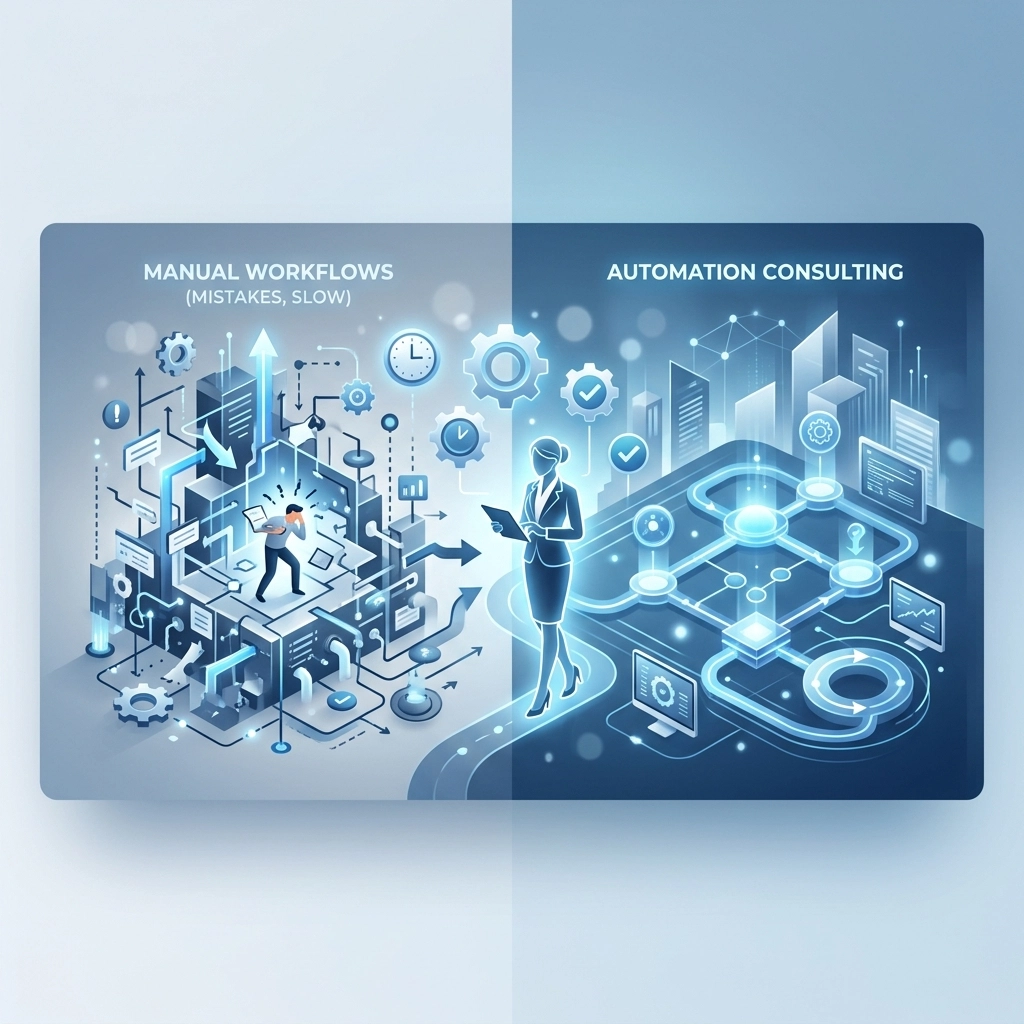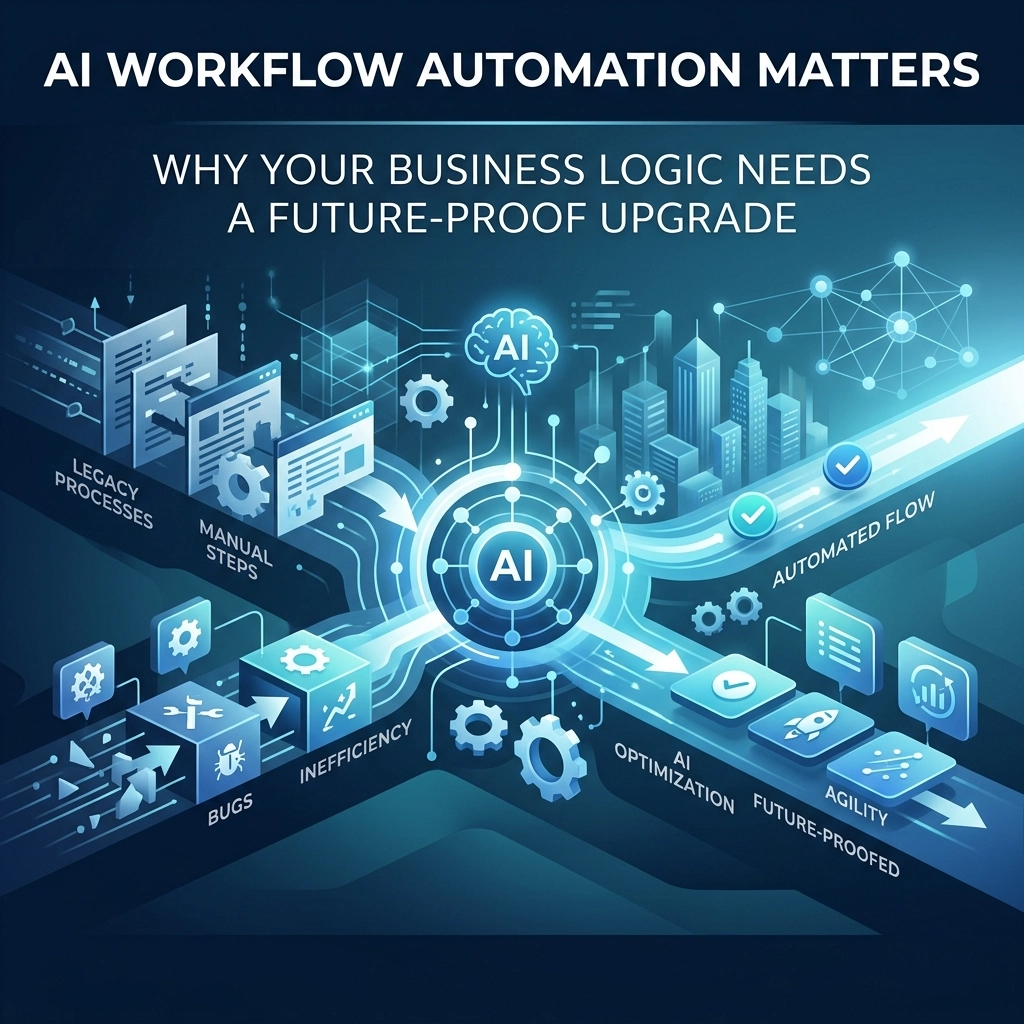
In the current landscape of 2026, the gap between companies that "get it" and those that are "getting by" has never been wider. Many organizations are still operating on the backbone of manual workflows: processes held together by spreadsheets, frantic emails, and the institutional memory of a few key employees.
While manual work feels safe because it's familiar, it is the silent killer of scale. As the CEO of Pure Technology Consulting, I’ve seen how these hidden inefficiencies act as an anchor, dragging down even the most visionary leaders. AI automation isn't just about replacing a task; it's about rearchitecting how value flows through your business.
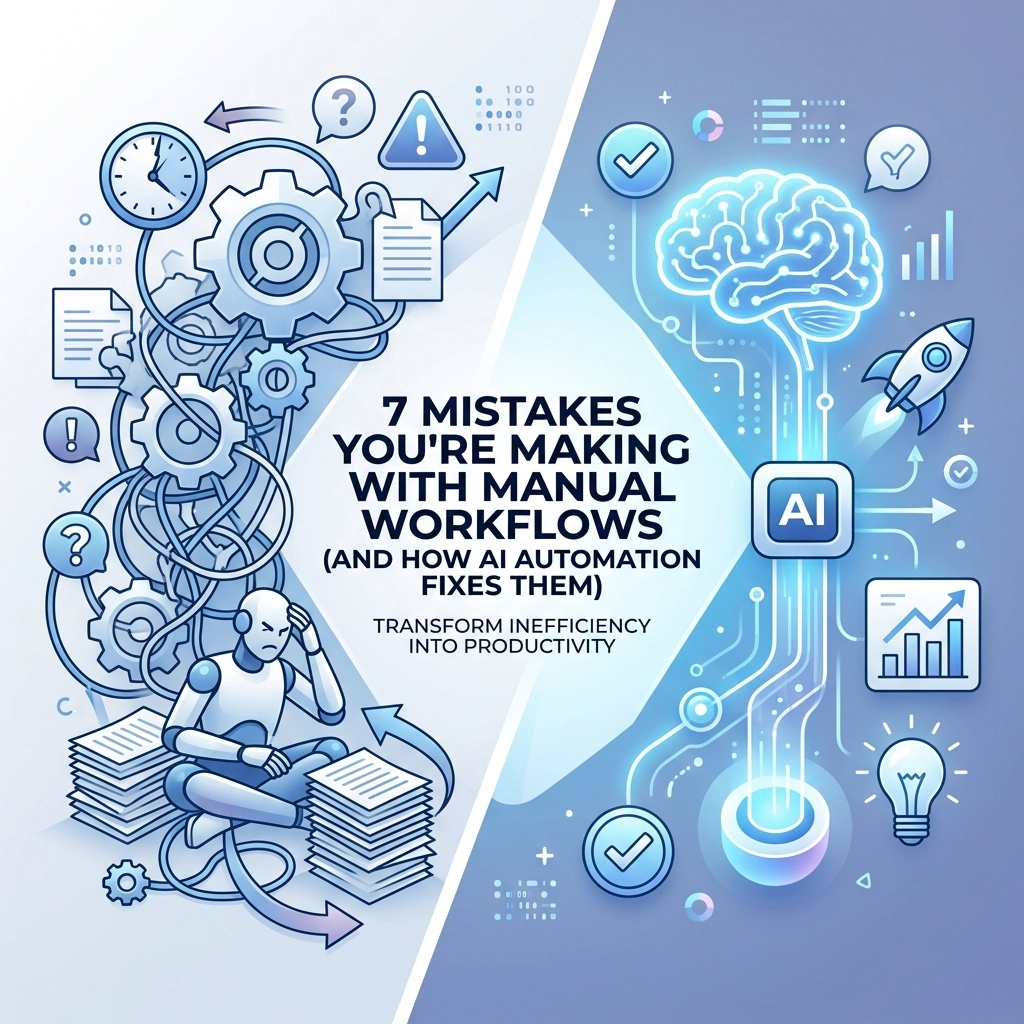
If you’re still relying on manual hand-offs, you’re likely making one of these seven critical mistakes. Here is how we fix them using bespoke AI-powered solutions.
1. Automating a Broken Process
The single most common mistake is taking an inefficient manual process and simply "digitizing" it. If your current workflow is a mess of redundant steps and unnecessary approvals, automating it just creates "automated chaos." You end up doing the wrong things faster.
AI automation allows us to perform a "process audit" first. Instead of just copying your manual steps, we use AI to analyze data patterns and identify where bottlenecks actually exist. We don't just build a script; we build a streamlined operating model.
2. The "Spaghetti Infrastructure" Trap
Manual workflows often lead to fragmented systems. One team uses a specific spreadsheet, another uses a legacy CRM, and a third relies on physical notes. This creates a "spaghetti infrastructure" where data is siloed and inconsistent.
When we approach custom software development, we look at integration as the priority. By centralizing your data through custom web apps, we ensure that every part of your business speaks the same language. This is where high-level governance meets operational execution.

Case Study in Capability: EHRIO Pro
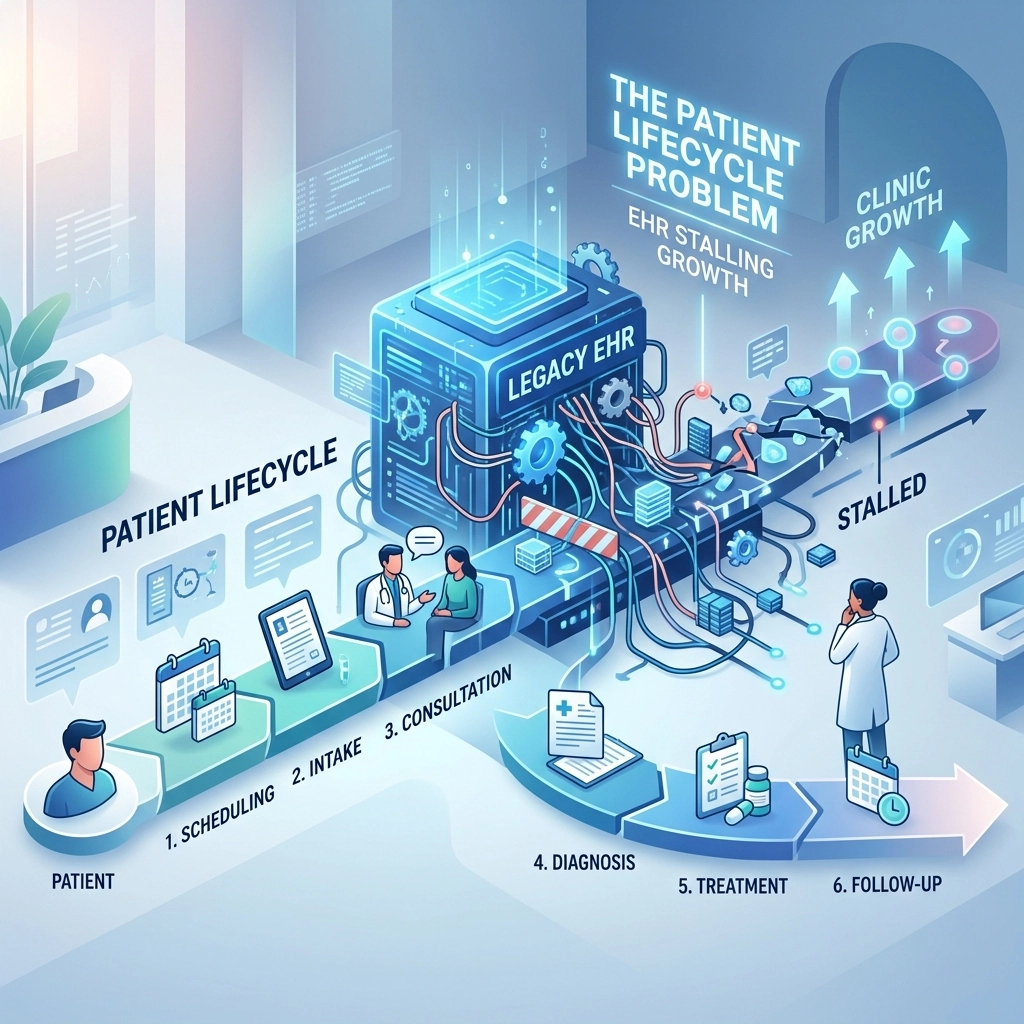
Our work with EHRIO Pro serves as a perfect example of how we handle complex, high-stakes data environments. In the healthcare sector, manual intake and patient matching are fraught with risk. We developed custom matching engines and 70-question intake workflows that ensure data integrity while maintaining HIPAA-adjacent compliance. This wasn't just a software patch; it was a total reimagining of how patient data is handled, moving from manual uncertainty to automated precision.
3. Relying on "Tribal Knowledge"
In many firms, the "workflow" exists only in the head of a senior manager. If that person leaves or takes a vacation, the process grinds to a halt. This reliance on individual knowledge is a massive operational risk.
AI automation fixes this by codifying your business logic. By building custom platforms like those we offer at Pure Technology Consulting, we transform "how Bob does it" into "how the system handles it." This ensures continuity and allows you to scale without being held hostage by the availability of a single person.
4. Scaling Inefficiency (The "More People" Fallacy)
When a business grows, the instinctual manual response is to "hire more people." But if your workflow is inefficient, adding more people only adds more communication overhead and more room for human error.
Visionary leaders understand that operational leverage comes from technology, not just headcount. AI-powered automation allows your existing team to handle 10x the volume by removing the "drudge work" from their plates.

Case Study in Capability: ChainHQ
To see this in action, look at ChainHQ. We designed this to solve the visibility gap in supply chain and complex workflow management. Instead of having a dozen people calling vendors and checking manifests manually, ChainHQ provides a centralized command center. It demonstrates our ability to build scalable, complex web applications that provide real-time oversight, allowing executives to make decisions based on data rather than "gut feelings" or manual reports.
5. Poor Data Integrity at the Entry Point
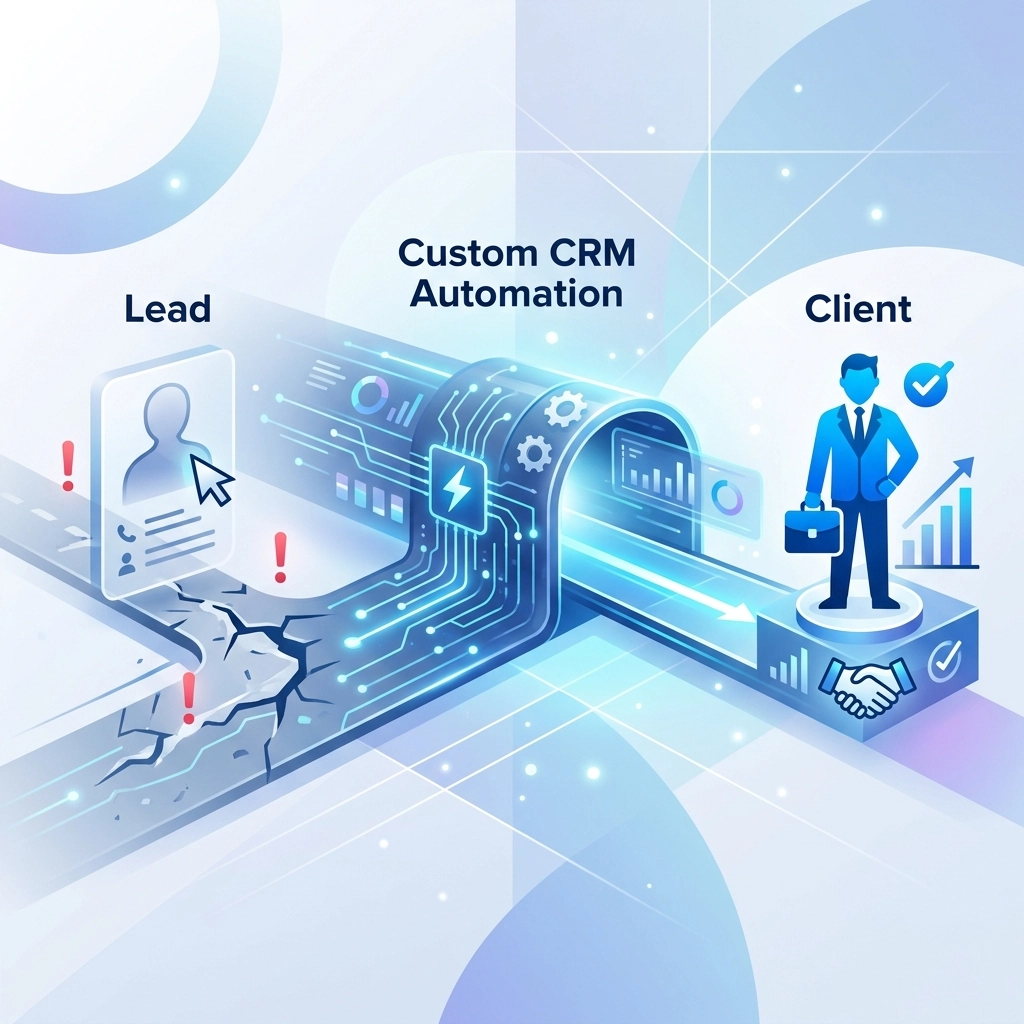
Manual data entry is the enemy of AI. If your team is manually typing leads into a CRM or copying invoice data into an accounting tool, errors are inevitable. Small mistakes at the beginning of a workflow cascade into massive problems during reporting and analysis.
AI fixes this through intelligent document processing (IDP) and automated data capture. We build custom interfaces that validate data in real-time, ensuring that by the time information reaches your core systems, it is clean, structured, and ready for high-level analysis.
6. The "Black Box" Mistake
Many businesses fear automation because they feel they will lose control: that the process will become a "black box" they can no longer see into. This happens when you use generic, off-the-shelf SaaS products that don't fit your specific business logic.
Our approach to bespoke development is different. We believe in the "human-in-the-loop" model. We design dashboards and feedback loops that give you more visibility than you ever had manually. You aren't losing control; you're gaining a cockpit.

Case Study in Capability: AI Local Boost
With AI Local Boost (AILB), we proved that even localized tasks like SEO and Google Business Profile management can be strategically automated without losing the "human touch." For our legal and accounting clients, AILB automates the tedious aspects of local visibility: posting updates, monitoring reviews, and managing citations: while providing a clear dashboard of results. It shows how we can take a traditionally manual marketing task and turn it into a high-leverage asset. You can explore our strategy further on our blog.
7. Lack of Strategic Integration
The final mistake is viewing automation as a "one-off" project. Real digital transformation happens when your automations are strategically aligned with your long-term roadmap. Many companies automate a few tasks but leave them disconnected from the rest of the business.
At Pure Technology Consulting, we don't just write code. We provide an advisory roadmap. We look at your telephony, your CRM, your field operations, and your financial backend to ensure that every automation reinforces the others. Whether it's GPS logging for field reps or call attribution for debt agencies, the goal is a unified ecosystem.
Case Study in Capability: FTP Inform
A common hurdle for established firms is "legacy lag": valuable data trapped in old systems or via outdated protocols like FTP. We built FTP Inform to bridge that gap. It acts as a sophisticated translator, taking data from legacy sources and making it accessible for modern AI workflows. This is a prime example of our capability to integrate modern web apps with the "old world" of business, ensuring that no data is left behind during your transformation. You can see more about our approach at ftpinform.puretechconsult.com.
The Path Forward: From Manual to Visionary
The transition from manual workflows to AI-driven automation is not just a technical upgrade; it’s a strategic pivot. It’s about moving your team away from being "data movers" and turning them into "data users."
When you eliminate the seven mistakes mentioned above, you stop reacting to your business and start leading it. You gain the clarity needed to spot new opportunities, the speed to act on them, and the infrastructure to support growth without breaking.
If your organization is ready to stop "getting by" with manual work and start building a bespoke automated future, we are here to guide that journey. We specialize in high-ticket, custom web applications and deep automation consulting for firms that require precision and scale.
Ready to audit your workflows?
Let’s discuss your roadmap. You can schedule a discovery call or reach out to our office directly.
Amin Said, Founder of Pure Technology Consulting LLC
Phone: +1 (803) 921-0969
Website: https://puretechconsult.com