Category: Blog

Your blog category

  • Bespoke AI Solutions Secrets Revealed: What Experts Don’t Want You to Know

    Bespoke AI Solutions Secrets Revealed: What Experts Don’t Want You to Know

    The artificial intelligence gold rush is in full swing. Every day, business leaders are bombarded with promises of "instant ROI," "fully autonomous workflows," and "plug-and-play AI." The market is flooded with off-the-shelf SaaS tools that promise to solve every operational headache with the click of a button.

    But here is the reality that many high-priced AI consultants and generic software vendors won't tell you: Most off-the-shelf AI tools are designed for everyone, which means they aren’t truly optimized for anyone.

    At Pure Technology Consulting (PTC), we’ve spent years building and deploying scalable technology solutions for healthcare, professional services, and local service businesses. We have seen firsthand that the "secrets" to AI success aren't found in a subscription box. They are found in the bespoke architecture that connects your unique data to your specific operational DNA.

    In this guide, we are pulling back the curtain on what it actually takes to build AI that drives revenue, reduces labor dependency, and creates a defensible competitive advantage.

    The Integration Trap: Why "Off-the-Shelf" Often Falls Short

    When a business owner buys a generic AI tool, they aren't just buying a solution; they are often buying a new silo. You might have an AI chatbot for your website, a separate AI tool for writing emails, and another for analyzing spreadsheets.

    The problem? None of them talk to each other. Your staff ends up performing "manual digital labor": copying and pasting data between systems that were supposed to automate their jobs. This is what we call "Integration Debt."

    Bespoke AI is different. It is built as a layer that sits inside your existing workflows. It doesn’t ask your team to change how they work; it changes how the work gets done.

    Case in Point: EHRIO Pro and the 70-Question Intake

    In the behavioral health and specialty medical space, the intake process is notoriously complex. Generic CRM tools can capture a name and email, but they can't handle the nuanced, 70-question clinical intake forms required for HIPAA-adjacent workflows.

    We developed EHRIO Pro not as a standalone tool, but as a demonstration of how custom matching engines and deep intake automation can transform a clinic’s operations. By building a system that understands the specific logic of clinical data, we eliminated the manual data entry that previously took staff hours per day. That is the power of a bespoke approach: the software fits the business, not the other way around.

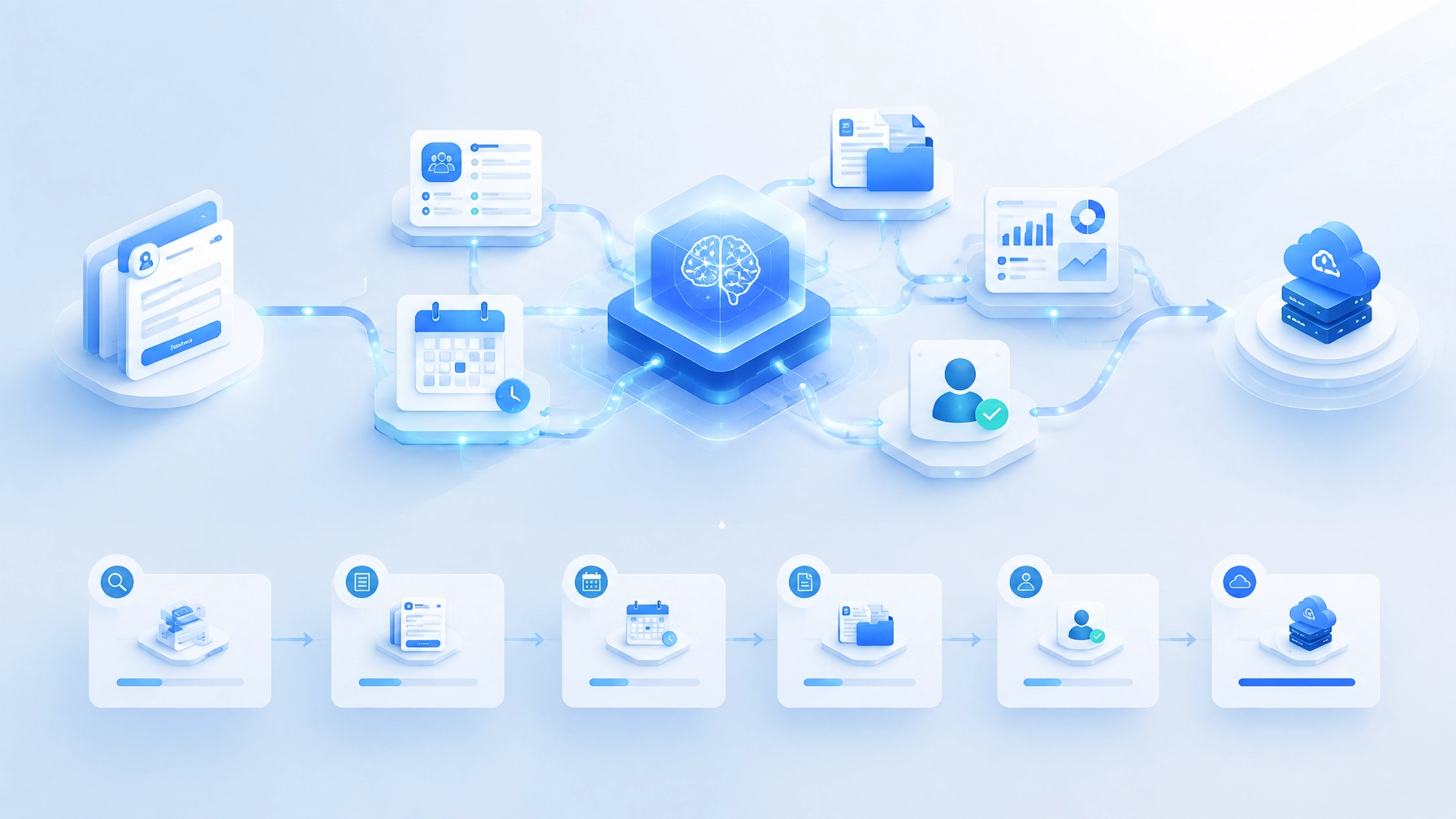
    Interconnected Workflow Automation

    Secret #1: The Workflow is the Product, Not the Model

    There is a common misconception that the "secret sauce" of AI is the large language model (LLM) itself. The truth? The model is a commodity. Whether you use GPT-4, Claude, or a custom Llama instance, the intelligence is increasingly cheap and accessible.

    The real secret is the Workflow Orchestration.

    Experts don’t want you to know that a $10,000+ custom automation engagement often spends 10% of the time on the AI model and 90% of the time on the data pipelines and logic gates that tell the AI what to do and when to do it.

    For example, our work with ChainHQ focuses on rep accountability and GPS logging for field operations. The "AI" isn't just a chatbot; it’s a sophisticated logic engine that analyzes location data, timestamps, and activity logs to provide actionable insights to management. It’s about turning raw data into a governance tool that ensures nothing falls through the cracks.

    Secret #2: Small, Clean Data Beats "Big Data" Every Time

    We often hear from mid-sized business owners who are hesitant to invest in AI because they think their data is "too messy" or "too small."

    Here is the secret: Bespoke AI doesn't need millions of data points to be effective. It needs context.

    When we build custom solutions, we focus on high-fidelity data: the specific interactions, customer histories, and operational bottlenecks that are unique to your firm. By cleaning and structuring this "small" data, we can create models that are far more accurate for your specific niche than a generic model trained on the entire internet.

    Driving Visibility with AI Local Boost

    Consider the challenge of local SEO. Most agencies use generic tools to track rankings. We built AI Local Boost to automate Google Business Profile visibility specifically for multi-location service businesses.

    Instead of relying on broad market trends, AI Local Boost focuses on the specific "local signals" that matter for a chiropractor in Charlotte or a physical therapist in Phoenix. It leverages proprietary automation to manage reviews, updates, and local signals at scale. This isn't "Big Data": it's highly targeted, contextual automation that produces a clear ROI.

    Digital Growth and Visibility

    Secret #3: Ownership is the Ultimate Competitive Moat

    When you license a third-party AI tool, you are essentially renting your efficiency. If that vendor raises their prices, changes their API, or goes out of business, your operational advantage vanishes overnight.

    The most successful companies we work with understand that custom software is a capital asset.

    By building a bespoke web application or a private automation system, you are creating intellectual property (IP). This is particularly relevant for our SaaS licensing and white-label partners. They don't want to just use a tool; they want to own the infrastructure that serves their clients.

    Whether it’s a custom debt collection telephony integration or an e-commerce dashboard for Amazon sellers, owning the code means owning the future of your margins. We help firms move from "software as a cost" to "software as an equity-building asset."

    Secret #4: The "Human-in-the-Loop" is Not a Failure

    You will often hear AI "gurus" talk about 100% autonomous systems. In the world of high-stakes professional services: legal, accounting, and healthcare: 100% autonomy is often a liability.

    The secret to successful AI deployment is the 80/20 Rule of Automation:

    • 80% of the work (data collection, initial drafting, sorting, scheduling) is handled by the AI.
    • 20% of the work (final review, strategic decision-making, empathetic client interaction) is handled by your high-value human staff.

    This approach, which we utilize in platforms like FTP Inform, ensures that your team is augmented, not replaced. It reduces the "administrative drag" that causes staff burnout while maintaining the high standards of quality your clients expect.

    Healthcare Technology Interface

    How to Start: The Strategic Discovery Phase

    Building a bespoke AI solution isn't about writing code on day one. It starts with a visionary assessment of your current operating model. At Pure Technology Consulting, we guide our clients through a structured discovery process:

    1. Workflow Audit: Where are your staff members spending more than 2 hours a day on repetitive tasks?
    2. Data Architecture: Where is your most valuable information stored, and is it accessible to an automation layer?
    3. Governance & Compliance: Especially for our medical and financial clients, how do we ensure every automation meets industry-specific standards?
    4. Scalability Roadmap: We don’t just build for today; we build a system that can handle your growth from $1M to $10M+ in revenue.

    Your Partner in Digital Transformation

    The "secret" is out: generic tools are a starting point, but bespoke solutions are the finish line. If you are a growth-minded business owner or an operational leader frustrated by manual processes and disconnected systems, it’s time to look beyond the off-the-shelf options.

    Pure Technology Consulting brings proven capabilities from healthcare, fintech, and local SEO into your industry. We don't start from scratch; we bring a library of proprietary assets and a history of successful custom builds to ensure your project is delivered on time, on budget, and with a clear path to ROI.

    Ready to see what a custom-built automation roadmap looks like for your business?

    Book a discovery call with our team today or call us at +1 (803) 921-0969 to discuss your project.

    Amin Said, Founder of Pure Technology Consulting LLC
    https://puretechconsult.com

  • AI Workflow Automation Secrets Revealed: What Experts Don’t Want You to Know About Scaling Operations

    AI Workflow Automation Secrets Revealed: What Experts Don’t Want You to Know About Scaling Operations

    Scaling a business is often sold as a dream of "working on the business, not in it." But for most founders: especially those in healthcare, legal, or high-volume service industries: the reality of growth usually looks like a mountain of manual tasks, disconnected spreadsheets, and a team that is perpetually "under water."

    You’ve likely heard that AI and automation are the "magic pills" for these growing pains. You might have even tried setting up a few Zaps or experimented with ChatGPT to draft emails. But here’s the secret the "gurus" won't tell you: Most off-the-shelf automation is just digital duct tape.

    At Pure Technology Consulting (PTC), we’ve spent years building custom software and AI-driven systems for businesses doing $500K to $5M in revenue. We’ve seen what happens when companies try to scale on a "Frankenstein" stack, and we’ve seen the transformative power of a unified, custom-built automation fabric.

    Today, we’re pulling back the curtain on the secrets to scaling operations without doubling your headcount.


    Secret #1: The "Frankenstein" Trap vs. Unified Architecture

    Most business owners fall into the "App Trap." They buy a CRM, a separate scheduling tool, an EHR, and a marketing platform. Then, they use a tool like Zapier to try and make them talk to each other.

    It works at first. But as you scale, you end up with 50 different "Zaps" that break whenever an app updates. You have data silos where your CRM says one thing and your billing system says another. This is what we call a "Frankenstein" stack: it’s alive, but it’s clumsy, fragile, and terrifying to maintain.

    The Expert Secret: True scaling happens when you move away from "connecting apps" and toward Unified Architecture.

    Instead of forcing five different tools to cooperate, high-growth companies invest in custom web applications or deeply integrated platforms that serve as a single source of truth. At PTC, we don’t just "link" your tools; we architect solutions where the data flows naturally from intake to delivery.

    When we built EHRIO, our proprietary healthcare matching engine, we didn’t just connect a form to a database. We built a 70-question intake system that automatically matches patients to providers based on complex logic. That’s not a "Zap"; that’s a custom-built nervous system for a business.

    A comparison between a messy 'Frankenstein' tech stack and a clean, unified custom software architecture.


    Secret #2: Automate Outcomes, Not Just Tasks

    The biggest mistake in automation is looking at a single task: like "sending an appointment reminder": and automating it. That saves you three minutes. Great. But it doesn't change your business.

    The experts focus on Outcome-Based Automation.

    An "Outcome" isn't a sent email. An outcome is a "Fully Onboarded and Vetted Client." To automate that outcome, your system needs an Intelligence Layer. This is where AI moves beyond a chatbot and becomes a decision-maker.

    Imagine a workflow where:

    1. The Trigger: A new lead submits a complex inquiry form.
    2. The Intelligence Layer (AI): An LLM reads the inquiry, extracts key pain points, checks your current capacity, and qualifies the lead.
    3. The Action: The system automatically drafts a personalized proposal, creates a record in your CRM, and routes a high-priority notification to your sales lead.

    By focusing on the outcome (the qualified proposal), you remove five manual handoffs. This is the logic we’ve applied to our Local SEO automation platforms, like AI Local Boost. It doesn’t just "post to Google"; it understands the local intent and automates the outcome of higher visibility.


    Secret #3: The "Narrow Domain" Advantage

    Generic AI is a toy. Domain-specific AI is a tool.

    Experts don’t use generic prompts; they build AI that is "wrapped" in the context of their specific industry. This is why Pure Technology Consulting focuses so heavily on industries like healthcare, fintech, and professional services. We aren't starting from scratch; we’re bringing proven frameworks into your business.

    For example, our work in Fintech and Debt Collection involved integrating telephony systems with call attribution logic. We didn't just "automate calls"; we built a system that understood which marketing channel produced the most profitable conversations.

    When we work with legal or accounting firms, we take the lessons learned from our EHRIO matching engines and apply them to complex intake and document workflows. We know how to handle "HIPAA-adjacent" data and high-stakes compliance because we’ve built those systems before.

    A futuristic data dashboard showing the power of domain-specific AI and custom-built systems.


    Secret #4: Data Visibility is the Fuel for AI

    You cannot automate what you cannot measure. Most businesses are "data rich but insight poor." They have mountains of data buried in various platforms, but no one can see the whole picture.

    The secret to scaling is creating Automated Feedback Loops.

    When we develop custom solutions, we prioritize reporting dashboards that give executives a "God-eye view" of their operations. If you can see that a specific bottleneck in your intake process is costing you 15% of your leads, you can automate a fix.

    This is the philosophy behind FTP Inform, one of our proprietary tools. It’s designed to turn chaotic data into actionable intelligence. When your data is structured and visible, AI can actually do its job: identifying patterns and suggesting optimizations that a human would miss.


    The Path Forward: Strategy Over Software

    If you want to scale, stop looking for the next "shiny" AI tool. Instead, look for a partner who understands the architecture of growth.

    At Pure Technology Consulting, we don’t just sell you a subscription. We act as your visionary technology partner. Whether it’s building a bespoke web app for your multi-location service business or deploying an AI-driven intake workflow for your clinic, our goal is to create systems that "just work."

    What to automate first?

    1. High-Volume Intake: If you're manually processing more than 20 leads or requests a day, you're losing money.
    2. Repetitive Decision Making: If your staff spends hours "triaging" or "assigning" tasks based on a set of rules, AI should be doing that.
    3. Multi-System Data Entry: If you're copying data from one screen to another, you have a "Frankenstein" problem.

    A strategic discovery session where professionals look at a digital architectural blueprint of an automated system.

    Ready to Build Your Scaling Engine?

    Scaling is an investment in your company’s future operating model. It’s about moving from a business that relies on the "heroics" of a few staff members to a business that is powered by a scalable, automated engine.

    Pure Technology Consulting LLC (PTC) specializes in precisely this transformation. From our roots in healthcare and local SEO to our expansion into legal and accounting automation, we bring the "heavy machinery" of enterprise-level software to growth-minded businesses.

    Stop fighting your tech stack. Start leveraging it.

    A glowing bridge of light representing the path to infinite scalability and digital transformation.

    If you're ready to move beyond "digital duct tape" and build a custom system designed for $10M+ operations, let's talk.

    Book a discovery call or request a workflow audit today.

    Amin Said, Founder of Pure Technology Consulting LLC
    https://puretechconsult.com
    Phone: +1 (803) 921-0969

  • Stop Wasting Time on Manual Data Entry: Try These 7 AI Workflow Automation Hacks

    Stop Wasting Time on Manual Data Entry: Try These 7 AI Workflow Automation Hacks

    Manual data entry is the "hidden tax" on your business growth. It doesn’t just slow down your staff; it creates a ceiling on your ability to scale. Every hour a highly-paid employee spends retyping an invoice, updating a CRM field, or cross-referencing a spreadsheet is an hour they aren't spending on strategy, patient care, or closing deals.

    At Pure Technology Consulting (PTC), we view automation not as a way to replace people, but as a way to liberate them. By 2026, the businesses that thrive will be those that have moved from "manual-first" to "automation-first" operating models.

    If your team is still drowning in spreadsheets, here are seven AI-powered workflow hacks to reclaim your time and accuracy.

    1. Transform Static Documents into Living Data

    The most common source of manual entry is the PDF. Whether it’s a medical intake form, a vendor invoice, or a signed contract, the "human bridge": someone reading the page and typing the data: is a massive bottleneck.

    Modern AI document processing has evolved past simple OCR (Optical Character Recognition). Today’s systems understand context. For example, our work with EHRIO Pro involves processing complex medical intakes where the AI doesn't just "see" text; it identifies patient history, matching symptoms to specific diagnostic codes automatically.

    The Hack: Build a "Document-to-System" pipeline. Use an AI parser to extract fields from incoming emails or scans and push that data directly into your CRM or EHR. You only step in for the 2% of cases that require a human eye.

    Digital art of a healthcare document being scanned and transformed into data points

    2. Automate Your Reputation and Local Visibility

    For local service businesses: from physical therapy clinics to specialty retailers: managing Google Business Profiles often feels like a full-time job. Responding to reviews and updating photos manually is a repetitive task that often falls through the cracks.

    We developed AI Local Boost to handle the heavy lifting of local SEO. By automating the intake of customer feedback and the generation of localized content, businesses can maintain a 5-star presence without ever logging into a dashboard.

    The Hack: Use AI to monitor your local listings. When a new review lands, have a workflow draft a response based on your brand voice and update your local ranking reports automatically. This ensures consistency without the manual oversight.

    Digital illustration of a city map with glowing markers representing local SEO automation

    3. Implement "Enter Once, Sync Everywhere" Architecture

    One of the biggest time-wasters is data silos. You enter a customer's info in your CRM, then you enter it again in your billing software, and once more in your project management tool.

    Bespoke web applications can bridge these gaps. Our platform, ChainHQ, was designed to solve this exact problem for multi-platform environments. It acts as the "connective tissue," ensuring that when a record changes in one location, the update ripples through the entire supply chain or service network.

    The Hack: Identify your "Source of Truth" (usually your CRM). Use automation tools like Zapier, Make, or a custom API integration to ensure that any change in the Source of Truth automatically updates every other tool in your stack.

    Digital art of interconnected links forming a chain with data flowing through them

    4. Move Field Data Entry to Real-Time Voice and GPS

    For businesses with field reps or multi-location operations, waiting for "end-of-day reports" is a recipe for data loss and inaccuracy. Manual logging of visits or status updates is often the first thing reps skip when they’re busy.

    We’ve seen incredible results by moving field data to automated logs. Using GPS-gated triggers: similar to our D2D Tracking solutions: you can log a representative's location and duration of visit automatically.

    The Hack: Stop asking for manual logs. Use mobile-first automation that triggers based on location or allows for "Voice-to-Data" entry. A rep speaks their notes into an app, and AI parses those notes into structured CRM fields.

    5. Automate File Intake with Intelligent Notifications

    If your business relies on receiving large batches of data from vendors or partners, the manual "check and notify" process is a drain. You shouldn't have to refresh a folder to see if a file has arrived.

    This is why we built FTP Inform. It turns passive file storage into active communication. When a file lands, the system not only alerts the right team member but can also trigger a secondary AI process to analyze the file content and provide a summary before a human even opens it.

    The Hack: Set up "Active Listeners" on your data folders. When a vendor uploads a file, have an automated workflow ping your Slack or Teams channel with a summary of the data received and its validation status.

    6. Use AI for Predictive Record Matching

    In industries like debt collection or healthcare, data entry isn't just about typing; it's about matching. Does this new record belong to an existing patient? Is this payment tied to this specific account?

    Manual matching is prone to "duplicate-itis," where your database becomes a mess of redundant records. AI excels at fuzzy matching: looking at multiple data points (name, address, partial ID) to determine the probability of a match with near-perfect accuracy.

    The Hack: Before a new entry is created, run it through a matching algorithm. If the AI is 95% sure it’s an existing record, have it suggest an "Update" instead of a "New Entry." This keeps your data clean and your reporting accurate.

    7. Automate Compliance and Audit Logs

    Manual data entry often fails the most during the "boring" parts: compliance logging. Ensuring that every action is tracked for HIPAA, GDPR, or internal governance is usually a manual checkbox exercise.

    Visionary leaders automate the audit trail. By building bespoke internal systems, every data movement is logged automatically at the database level. There is no "forgetting" to log an action because the system doesn't allow an action without a log.

    The Hack: Replace manual "activity logs" with system-generated audit trails. Every time a record is accessed or changed, have the workflow create a non-editable log entry. This reduces liability and saves hundreds of hours during audit season.

    A professional digital illustration of a dashboard showing automated reporting

    Bespoke Web Apps That Fit Your Operations

    The common thread among these hacks is a shift toward custom-fit technology. Off-the-shelf software often forces you into their manual workflows. Custom development: the kind we specialize in at Pure Technology Consulting: allows the software to bend to your business logic.

    Whether it’s a HIPAA-adjacent workflow for a wellness clinic or a telephony integration for a professional services firm, the goal is always the same: Operational Leverage.

    If you are ready to stop fighting your software and start scaling your operations, we can help you map out an automation roadmap. We don't just provide tools; we provide the strategy to ensure your technology is an investment, not a drag.

    Ready to audit your workflows?

    If your team is losing hours to manual data entry, it's time for a professional assessment. We help growth-focused businesses identify the bottlenecks that are holding them back.

    Schedule a Discovery Call: Pure Tech Consulting Schedule
    Phone: +1 (803) 921-0969

    Amin Said, Founder of Pure Technology Consulting LLC
    https://puretechconsult.com

  • 7 Mistakes You’re Making with AI Workflow Automation (and How to Fix Them)

    7 Mistakes You’re Making with AI Workflow Automation (and How to Fix Them)

    The promise of AI workflow automation is seductive. We’re told it will reclaim our time, eliminate human error, and scale our operations to heights previously reserved for enterprise giants. For many business owners: from chiropractic clinics to debt collection agencies: this promise is why they invest.

    However, there is a wide chasm between "installing an AI tool" and "building an automated operation."

    At Pure Technology Consulting, we’ve seen dozens of firms attempt to bridge this gap. Often, they come to us after a "DIY" automation project has stalled or, worse, created more manual work than it saved. Automation is not a magic wand; it is a precision engine. If the fuel is dirty or the gears aren't aligned, the engine won't just stop: it might break the machine.

    Here are the seven most common mistakes we see business leaders making with AI workflow automation and, more importantly, the strategic roadmap to fix them.


    1. Automating a Broken Process

    The most frequent mistake is the desire to "fix" a chaotic workflow by automating it. If your intake process is disorganized or your data entry is inconsistent, adding AI will only help you produce errors at a much higher frequency.

    The Fix: Map and Simplify First
    Before a single line of code is written or a tool is connected, you must map your current workflow. Identify every decision point, input, and bottleneck. At PTC, we often find that 20% of a process can be eliminated entirely before automation even begins. Clean the "analog" version of your business first; then, use automation to accelerate that efficiency.

    Broken process vs optimized workflow comparison

    2. Falling into the "Set and Forget" Trap

    Many executives view automation as a one-time capital expense. They build it, launch it, and walk away. But business environments are fluid. APIs update, customer behavior shifts, and AI models "drift" over time, potentially providing less accurate outputs as the data landscape changes.

    The Fix: Scheduled Governance
    Treat your automated workflows like employees. They need performance reviews. We recommend a quarterly "Automation Audit" to ensure your systems: like your AI Local Boost integrations: are still hitting their KPIs and that the logic remains sound in the face of new market variables.

    3. Removing the "Human-in-the-Loop"

    In the rush for 100% efficiency, businesses often remove human oversight from sensitive areas. This is particularly dangerous in high-stakes industries like healthcare or legal services. When an AI makes a logic error in a patient intake or a billing sequence, the fallout isn't just a technical glitch: it’s a compliance risk.

    The Fix: Strategic Checkpoints
    Automation should be a co-pilot, not an autopilot. For example, our work with EHRIO Pro: a sophisticated healthcare matching and intake engine: utilizes 70-question deep-dive intakes. While the AI processes the data and suggests matches, a human-in-the-loop checkpoint ensures that clinical nuances are never missed. Use AI to do the heavy lifting of sorting and summarizing, but keep your experts in the seat for the final "Yes."

    Human-AI collaboration and oversight

    4. Building a "Frankenstein" Tech Stack

    Many local business owners start with a "tool-first" mentality. They buy a CRM, then a separate lead-gen AI, then a scheduling tool. Soon, they have a "Frankenstein" stack where data is siloed and systems don't talk to each other. You end up spending more time moving data between apps than you do actually working.

    The Fix: Centralized Architecture
    Stop looking for "apps" and start looking for a "system." This is why we developed ChainHQ. It serves as an operational backbone that connects disparate parts of a business into a single, cohesive unit. Whether you are managing field reps with GPS logging or syncing e-commerce sales to a custom dashboard, your data must flow through a unified architecture to be truly useful.

    Integrated systems and unified data architecture

    5. Overlooking Data Context and Quality

    AI is only as good as the context you provide. Feeding an AI model vague prompts or messy, unorganized data is like asking a world-class chef to cook a gourmet meal with spoiled ingredients. If your CRM is a graveyard of incomplete lead profiles, your "AI-powered" follow-ups will feel generic and robotic.

    The Fix: Clean Inputs and Prompt Engineering
    Invest time in data hygiene. Ensure your intake forms and CRM fields are standardized. When we build custom web applications for our clients, we prioritize the "Data Layer": the foundation of how information is captured: before we ever layer on the AI automation. High-quality context leads to high-quality outcomes.

    6. Solving for "Trendy" Instead of "Impactful"

    It’s easy to get distracted by the latest AI trend. But does your chiropractic clinic really need a 3D avatar in the lobby, or does it need a system that automatically re-engages patients who haven't booked in six months? Many businesses waste thousands on "cool" tech that doesn't move the needle on revenue or retention.

    The Fix: ROI-Driven Automation
    Focus on the "Big Three": Revenue, Risk, and Resources. If an automation doesn't increase lead flow (like AI Local Boost does for Google Business Profiles), reduce operational risk, or free up significant staff time, it’s a distraction.

    ROI and success metrics dashboard

    7. Relying on Generic "SaaS Wrappers"

    The market is currently flooded with generic SaaS tools that are essentially thin interfaces over OpenAI. These tools are often inflexible and don't account for the unique logic of your specific industry. When your business grows, these tools often become the very bottlenecks they were supposed to solve.

    The Fix: Bespoke Development
    For businesses with $500K to $5M in revenue, the "off-the-shelf" phase eventually ends. You need systems that fit your operations: not the other way around. At Pure Technology Consulting, we specialize in building proprietary solutions like FTP Inform or custom intake workflows that are owned by the client, scalable, and built specifically for their unique competitive advantage.


    The Path to Visionary Automation

    Automation isn't just about doing things faster; it's about doing things better. It’s about creating a business that can breathe, grow, and serve customers without the owner being chained to a desk.

    If you’ve felt the frustration of a failed automation project or if you’re ready to stop "tinkering" and start building a scalable operating model, it’s time for a professional roadmap. We don't just sell software; we design the technical future of your business.

    Ready to audit your workflows?
    Let’s move past the trial-and-error phase. Book a discovery call with our team to explore how a custom-built, AI-powered system can transform your operations.

    Book a discovery call today or call us at +1 (803) 921-0969.

    Amin Said, Founder of Pure Technology Consulting LLC
    https://puretechconsult.com

  • 7 Mistakes You’re Making with AI Workflow Automation (and How to Fix Them)

    7 Mistakes You’re Making with AI Workflow Automation (and How to Fix Them)

    The promise of AI in 2026 isn't just about "doing things faster": it’s about restructuring the very DNA of how your business operates. We’ve moved past the era of experimental chatbots and entered a phase where automation is a strategic asset. However, as more local businesses and service providers race to integrate AI, many are hitting a wall.

    At Pure Technology Consulting, we’ve seen that the difference between a high-ROI automation system and a "spaghetti mess" of brittle tools often comes down to strategy. If your team is still spending hours on manual intake, if your leads are falling through the cracks, or if your data feels like it’s trapped in a dozen different silos, you’re likely making one of these seven common mistakes.

    Here is how to identify them and, more importantly, how to fix them with a visionary approach to custom technology.


    1. Automating a Broken or Obsolete Process

    The most expensive mistake a business can make is "paving the cow path": automating a manual process that was inefficient to begin with. AI can execute tasks at lightning speed, but if those tasks are redundant, you’re simply creating digital waste faster.

    The Fix: Before you write a single line of code or sign up for a new tool, map your workflow end-to-end. Ask yourself: If I had to build this process from scratch today with zero legacy constraints, what would it look like?

    At PTC, we don't just "plug in AI." We consult on the underlying operating model. Often, the solution isn't just an automation script; it’s a custom web application designed to consolidate three redundant steps into one intelligent interface.

    2. Missing the "Human-in-the-Loop" for High-Stakes Decisions

    In industries like healthcare, behavioral health, and legal services, total automation is a liability, not an efficiency. Letting an AI handle 100% of a patient intake or a legal conflict check without human oversight introduces unacceptable risks in compliance and quality.

    The Fix: Design "checkpoints" where the AI does the heavy lifting (summarizing, matching, or drafting) but a human expert provides the final sign-off.

    Healthcare professional using an AI-powered matching engine for patient intake

    Take our proprietary platform, EHRIO Pro, as a prime example of this "Augmented Intelligence" philosophy. We built EHRIO to handle complex matching engines and 70-question intake forms for healthcare providers. The AI handles the data processing and suggests the best matches, but the clinician remains the ultimate decision-maker. This balance reduces burnout by 40% while keeping HIPAA-adjacent workflows secure and accurate.

    3. Creating a "Spaghetti Mess" of Data Silos

    Many service businesses try to solve automation by connecting a dozen different SaaS tools through basic triggers. The result? A "spaghetti mess" where your CRM doesn't talk to your billing, and your lead source doesn't talk to your project management. Every time one tool updates its interface, your entire workflow breaks.

    The Fix: Stop building bridges and start building a hub. Centralize your business-critical data.

    For our clients in the field services and e-commerce industries, we utilize ChainHQ principles. We design integrated systems that ensure data flows seamlessly from a rep’s GPS log in the field directly into a central reporting dashboard. By building custom integrations: rather than relying on fragile, third-party connectors: we ensure that your reporting is accurate and your systems are resilient.

    Centralized data hub integrating multiple business streams

    4. The "Set It and Forget It" Trap in Digital Visibility

    Many local business owners treat automation as a one-time setup. They automate their Google Business Profile posts or their review replies and never look back. But AI models drift, Google’s algorithms change, and customer sentiment shifts. A "set it and forget it" mindset leads to stale content and missed ranking opportunities.

    The Fix: Implement "Managed Automation." Your systems should be dynamic, not static.

    This is where AI Local Boost shines. Instead of just "scheduling posts," it provides a continuous loop of local SEO visibility. It monitors Google Search trends and adapts your digital presence in real-time. By automating the high-volume tasks of local SEO while allowing for strategic adjustments, businesses maintain a "top-of-mind" status without the manual labor of a full-scale marketing agency.

    Local SEO visibility and growth tracking map

    5. Over-Engineering Early Workflows

    It’s tempting to want a "God-mode" AI that handles everything from the first lead click to the final invoice on day one. This leads to "analysis paralysis" and massive technical debt. Over-engineering makes your systems hard to debug and even harder for your staff to adopt.

    The Fix: Follow the "Rule of One." Identify one high-volume, low-risk workflow: like initial lead triage or document tagging: and automate it perfectly. Once that ROI is proven, expand.

    Our work in the fintech and debt collection space with FTP Inform follows this lean methodology. We started by solving a very specific problem: call attribution and telephony integration. By mastering that one critical node in the workflow, we provided a foundation that now supports complex, multi-location operations.

    6. Thinking SaaS is Always Better Than Custom

    There is a common misconception that "Custom Software" is too expensive or too slow. Consequently, businesses settle for "Frankenstein-ing" five different SaaS subscriptions together, paying thousands in monthly licensing fees for features they don't use, and still not getting exactly what they need.

    The Fix: Evaluate the "Buy vs. Build" ROI over a 24-month horizon. Custom development is an investment in an asset you own.

    Pure Technology Consulting specializes in building bespoke web applications that do exactly what you need: no more, no less. Whether it’s a private CRM for a debt agency or a specialized intake platform for a wellness clinic, custom builds often pay for themselves within the first year by eliminating redundant SaaS fees and labor costs.

    7. Neglecting the Roadmap to Scalability

    Automation should be built for where you want to be in three years, not just where you are today. Many businesses build "single-use" automations that break the moment they add a second location or double their headcount.

    The Fix: Build with a "SaaS-First" architecture. Even if you are building an internal tool, treat it like a product that needs to scale.

    Visionary business roadmap and strategic technology planning

    At PTC, we often help clients transition from "doing work" to "owning the platform." We’ve helped industry leaders turn their internal custom solutions into white-label SaaS products that create new, recurring revenue streams. When you build for scalability, your technology becomes a profit center, not a cost center.


    Your Strategic Path Forward

    AI workflow automation isn't about the tools; it's about the transformation. It’s about taking the manual, "soul-crushing" admin work off your team’s plate so they can focus on what they do best: serving clients and growing the business.

    Are you ready to audit your current workflows and stop the "spaghetti mess"? At Pure Technology Consulting, we bring proven expertise from healthcare, fintech, and professional services to help you build a bespoke digital future.

    Don't leave your growth to chance. Let’s build the system that scales with you.

    Book a Discovery Call & Workflow Audit or call us directly at +1 (803) 921-0969.

    Amin Said, Founder of Pure Technology Consulting LLC
    https://puretechconsult.com

  • Stop Wasting Time on Manual Data Entry: Try These 7 AI Workflow Hacks

    Stop Wasting Time on Manual Data Entry: Try These 7 AI Workflow Hacks

    For the modern business owner, growth is often a double-edged sword. As your client base expands and your service locations multiply, so does the administrative drag. You start spending more time "feeding the machine": typing data from one form into another, manual scheduling, and chasing down lead sources: than actually serving your customers or scaling your vision.

    At Pure Technology Consulting (PTC), we view manual data entry not just as a time-sink, but as a strategic risk. Every minute your high-value staff spends on a keyboard is a minute they aren't spent on innovation or high-ticket service delivery.

    Digital transformation isn't about buying more software; it’s about architecting a flow where data moves itself. Here are 7 AI-powered workflow hacks to help you reclaim your time and turn your operations into a high-performance engine.


    1. Implement Intelligent Document Processing (IDP)

    The traditional way to handle intake forms, invoices, or medical records is to have a human read a PDF and re-type the fields into a CRM or EHR. Intelligent Document Processing (IDP) uses vision-based AI to "read" these documents, understand the context, and extract structured data automatically.

    By moving away from static OCR (Optical Character Recognition) to AI-driven extraction, you can handle messy handwriting, varied layouts, and complex multi-page documents with 99% accuracy.

    Spotlight: EHRIO Pro – Healthcare Intake at Scale

    We applied this exact principle to the healthcare sector with EHRIO Pro. In behavioral health and specialty medical clinics, intake is notoriously complex: often involving 70+ question forms and HIPAA-adjacent workflows.

    Instead of manual entry, we built matching engines and automated intake flows that process these high-volume data points instantly. This ensures that patient data moves from the initial "handwritten" digital form directly into the treatment plan without a single keystroke from your clinical staff.

    Minimalistic digital illustration of a digital medical tablet processing data


    2. Automate Local Presence and Reputation Management

    If you run a local service business, your Google Business Profile (GBP) is your digital storefront. Manually updating hours, responding to every review, and posting updates is a full-time job that often gets neglected.

    AI workflow hacks allow you to synchronize your operational data with your public visibility. When you complete a job in your CRM, an AI can automatically generate a geo-tagged update or a personalized review response that maintains your brand voice while boosting your SEO.

    Spotlight: AI Local Boost

    Our proprietary platform, AI Local Boost, was born from the need to automate local SEO for growth-focused owners. It doesn’t just "monitor" your presence; it automates the interactions that Google values most. By integrating AI into the local search workflow, we help businesses like chiropractors and physical therapy clinics dominate their local map pack without spending hours on manual digital marketing tasks.

    A visionary map of a city showing glowing digital nodes for business locations


    3. Leverage Real-Time Lead Attribution via Telephony

    For debt collection agencies and professional services, the phone is the primary revenue driver. But manual entry of "where did this call come from?" is notoriously unreliable.

    The hack here is integrating your telephony directly into your data pipeline. AI can transcribe the call in real-time, extract the intent (is this a new lead or a billing inquiry?), and automatically tag the record in your CRM. This eliminates the "post-call notes" lag and ensures your data is 100% accurate.

    Spotlight: FTP Inform – Fintech & Debt Intelligence

    In the high-stakes world of debt recovery and professional services, we developed FTP Inform. This platform specializes in telephony integrations and call attribution. It removes the manual guesswork by linking every incoming call to a specific marketing campaign and agent workflow. For our clients, this means a clear ROI roadmap and a massive reduction in the administrative burden of call logging.

    A high-tech dashboard showing call waveforms being converted into data


    4. Centralize Multi-Location Field Operations

    Multi-location service operators often struggle with "data silos." Each location feels like its own island, with managers manually reporting numbers back to HQ.

    The visionary approach is to build a "central nervous system." By using AI to log GPS data, rep accountability, and field performance automatically, you gain a bird's-eye view of your entire organization without waiting for weekly manual reports.

    Spotlight: ChainHQ – The Command Center

    ChainHQ is our answer for businesses that have outgrown manual spreadsheets. Whether it’s tracking door-to-door (D2D) rep accountability or managing the operational flow of multiple wellness centers, ChainHQ acts as the technical backbone. It automates the logging of field activity and synchronizes it with a central dashboard, giving executives the real-time data they need to make scaling decisions.

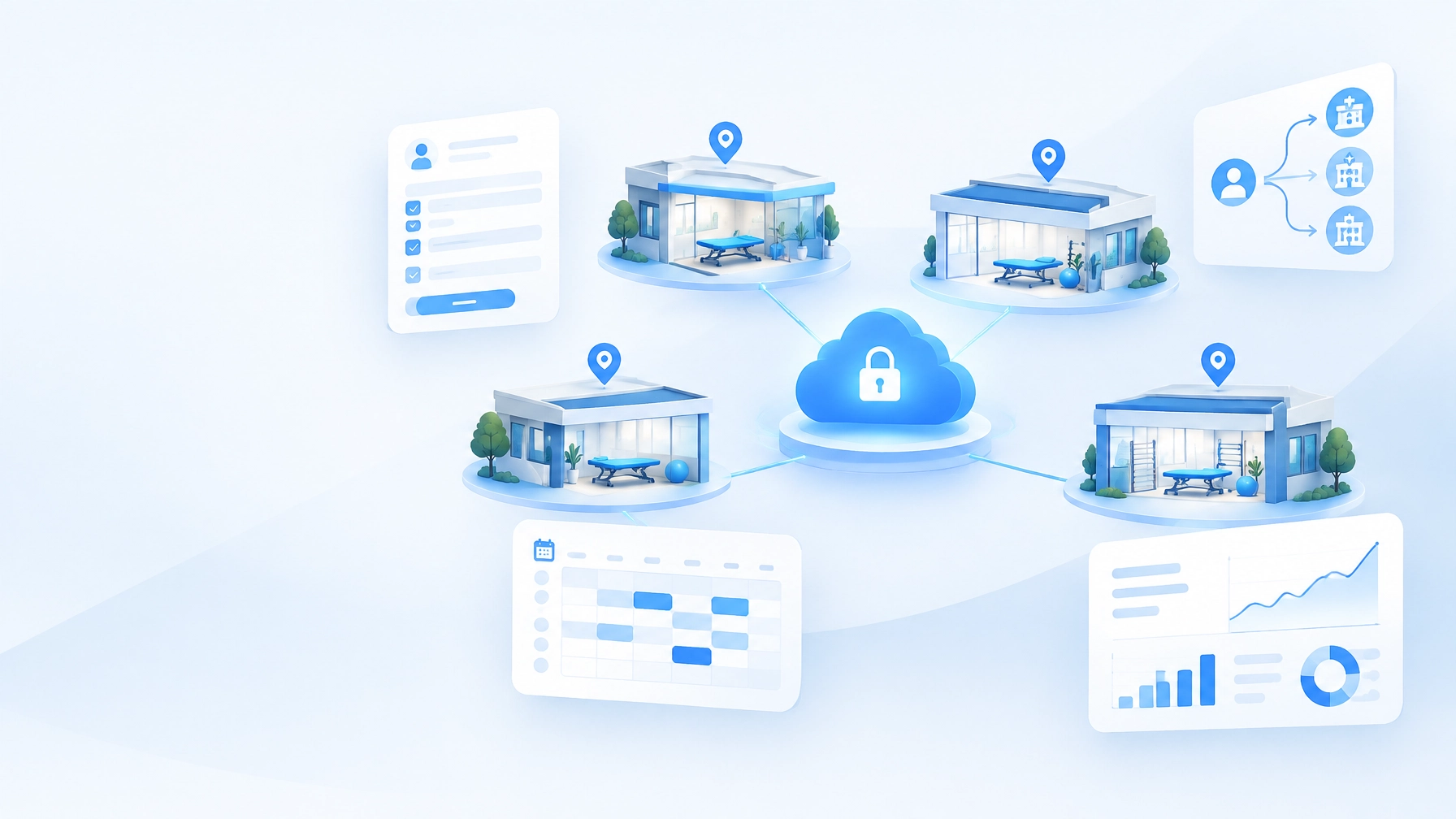
    A digital grid showing multiple business branches connected by glowing blue lines


    5. Use "API Glue" Instead of Copy-Paste

    Most manual data entry is simply moving information between SaaS tools that don't talk to each other. Your scheduling software doesn't talk to your billing software; your CRM doesn't talk to your email marketing.

    The "hack" is to stop looking for the "perfect" all-in-one software and start building a bespoke integration layer. At PTC, we specialize in custom web application development that acts as the "glue" between your existing systems. By using APIs to trigger actions: like automatically creating an invoice in QuickBooks when a job is marked "Complete" in your CRM: you eliminate the need for manual data transfer entirely.


    6. Implement Confidence Thresholds and Validation

    One of the biggest fears in automation is "garbage in, garbage out." You don't want an AI to incorrectly enter a $10,000 invoice as $1,000.

    A strategic workflow hack is the use of Confidence Thresholds. You program the AI to post data automatically only if it is 95% certain of the accuracy. If the confidence is lower, the system flags it for a 30-second human review. This "shadow mode" approach allows you to automate the 90% of "easy" entries while maintaining total governance over the complex ones.


    7. The Human-in-the-Loop Review UI

    Don't eliminate humans; elevate them. Instead of having a staff member type data, give them a "Review Queue."

    A modern AI workflow presents the extracted data on one side of the screen and the original source document on the other. The human just clicks "Approve." This simple UI shift can increase a single employee’s data processing capacity by 10x, turning a data entry clerk into an operational auditor.


    Moving From "Survival Mode" to "Growth Mode"

    At Pure Technology Consulting, we don’t just build apps; we build operating models. The difference between a business that stays stagnant and one that scales to $5M+ annual revenue is often the quality of its internal systems.

    If your staff is overwhelmed by admin tasks and your lead flow is inconsistent due to manual bottlenecks, it’s time for a workflow audit. We bring proven capabilities from healthcare, fintech, and field operations to help you design a custom solution that "just works."

    Stop wasting time on the keyboard. Let's build the technical backbone your business deserves.

    Ready to automate your operations?
    Book a discovery call with our team or call us directly at +1 (803) 921-0969.

    Amin Said, Founder of Pure Technology Consulting LLC
    https://puretechconsult.com

  • 10 Reasons Your Internal Operations Are Stalling (and How AI Workflow Automation Fixes It)

    10 Reasons Your Internal Operations Are Stalling (and How AI Workflow Automation Fixes It)

    For many growing businesses, there comes a point where "the way we’ve always done it" starts to feel like an anchor. You’ve hired great people, you have a solid service, and the demand is there: yet, somehow, everything feels slower than it should. Projects linger, data is scattered across three different spreadsheets, and your leadership team is spending more time answering Slack messages than making strategic moves.

    This isn't a personnel problem; it’s an operational drag. When your internal systems don’t scale alongside your vision, your growth begins to stall.

    At Pure Technology Consulting, we specialize in identifying these friction points and replacing them with high-leverage AI-powered automation systems. Here are the 10 most common reasons internal operations stall: and how custom AI workflow automation provides the roadmap out of the stagnation.


    1. The "Spreadsheet Trap" (Manual Data Entry)

    Many businesses rely on manual entry to bridge the gap between their CRM, their billing software, and their delivery tools. Every time a human has to copy-paste an email address or an invoice number, the risk of error grows, and valuable hours are lost.

    The Fix: Custom automation can sit between your existing tools, acting as the connective tissue. By building bespoke middleware, we ensure that data entered once flows everywhere it’s needed instantly, with zero manual intervention.

    2. Disconnected Software Silos

    If your marketing team uses one tool, sales uses another, and operations uses a third, you don't have a workflow: you have a data scavenger hunt. When systems don't talk to each other, the "truth" about your business is impossible to find.

    The Fix: We design unified architectures that integrate your disparate tools into a single source of truth. Whether it’s through custom API integrations or a proprietary dashboard, we ensure your data is synchronized in real-time.

    Abstract 3D digital art representing operational bottlenecks being untangled by beams of pure white light

    3. High-Friction Client Intake

    For service-based businesses, especially in healthcare or professional services, the intake process is often the biggest bottleneck. If a client has to fill out a PDF, email it back, and then wait for a staff member to manually enter that data into an EHR (Electronic Health Record), you’ve already lost momentum.

    The Fix: This is exactly why we developed EHRIO Pro. By implementing high-level intake automation: like our 70-question intelligent intake engines used in healthcare matching: we turn a manual hurdle into a seamless, automated onboarding experience that respects compliance and privacy while maximizing speed.

    4. Decision Fatigue and Approval Bottlenecks

    Does every $500 decision need to cross your desk? In many SMBs, execution stops because it’s waiting for a "yes" from a leader who is already underwater.

    The Fix: AI workflow automation can handle "rules-based" decisions. By codifying your logic into an automated system, the software can approve standard requests, flag exceptions, and only interrupt you when a human perspective is actually required.

    5. The "Black Hole" of Data Visibility

    If you can’t tell at a glance how many leads came in yesterday, where they are in the pipeline, or what your fulfillment capacity is for next week, you are flying blind.

    The Fix: We build custom reporting dashboards: similar to the architecture behind ChainHQ: that give multi-location operators and franchise groups a bird's-eye view of their entire operation. Real-time data visibility allows you to manage by fact, not by feeling.

    Stylized digital map with glowing pins representing automated Google Business Profile activity and local SEO optimization

    6. Local SEO and Visibility Blind Spots

    For local service businesses, stalling operations often start with a "leaky" lead funnel. If your Google Business Profile isn't being updated and your reviews aren't being managed, your organic visibility drops, and your sales team has nothing to work with.

    The Fix: This is the core capability of AI Local Boost. We automate the heavy lifting of local SEO: from profile updates to review management: ensuring that while you focus on internal operations, your digital front door stays wide open.

    7. Talent Misallocation

    Your highest-paid employees shouldn't be spending 30% of their day on administrative tasks like scheduling, file management, or basic follow-ups.

    The Fix: Automation is a force multiplier. By offloading the "busy work" to an AI-driven system, you free up your team to do the high-value work they were hired for. It’s not about replacing people; it’s about giving them back their time.

    8. Inconsistent Customer Follow-ups

    Speed-to-lead is everything. If it takes your team four hours to respond to a new inquiry, your conversion rate is plummeting. Manual follow-up is prone to human forgetfulness.

    The Fix: We implement automated communication sequences that trigger the moment a lead enters your system. Whether it’s via SMS, email, or AI-driven voice bots, your prospects get an immediate, professional response every single time.

    Sleek digital visualization of telephony data being transformed into organized records

    9. Data Integrity in High-Stake Environments

    In industries like fintech or debt collection, data accuracy isn't just about efficiency: it's about compliance and attribution. Losing track of a file or misattributing a call can have major financial consequences.

    The Fix: Our work with platforms like FTP Inform demonstrates our commitment to enterprise-grade data monitoring. By automating FTP file tracking and call attribution integrations, we ensure that every piece of data is logged, tracked, and accounted for, 24/7.

    10. Scaling Without a System

    The final reason operations stall is simple: the "scrappy" methods that got you to $1M will break at $5M. Scaling without a robust technology backbone leads to burnout and operational collapse.

    The Fix: We don't just sell software; we provide a visionary roadmap for your digital transformation. We help you build the custom web applications and internal tools that allow your business to grow without exponentially increasing your headcount or your stress levels.


    Moving Beyond the Stall

    Operational stagnation is a sign that your business has outgrown its current tools. It’s an opportunity to rebuild with intention. At Pure Technology Consulting, we take the proven capabilities we've built in healthcare, local SEO, and fintech and bring them into your specific industry: be it legal, accounting, or professional services.

    We don't start from scratch; we bring a technical backbone that has already handled millions of data points and thousands of automated workflows.

    A clean, modern medical clinic setting showing a tablet with automated intake forms

    Ready to Audit Your Workflow?

    If any of these 10 reasons felt a little too familiar, it might be time for a professional assessment. We offer high-level automation consulting and bespoke software development designed for businesses that value data as a competitive advantage.

    Take the next step toward a frictionless operation:

    Your operations don't have to be a source of stress. With the right AI-powered strategy, they can become your greatest engine for growth.

    Minimalist office setting with a large window looking out at a digital sunrise, symbolizing clarity and a new path forward

    Amin Said, Founder of Pure Technology Consulting LLC
    https://puretechconsult.com

  • Why AI Workflow Automation Will Change the Way You Scale Your Service Business

    Why AI Workflow Automation Will Change the Way You Scale Your Service Business

    For years, the blueprint for scaling a service business was simple but painful: to double your revenue, you had to nearly double your headcount. Growth was synonymous with more management layers, more manual oversight, and an ever-increasing list of administrative tasks that threatened to bury your core mission.

    But we are entering a new era. The traditional link between revenue and headcount is being severed. At Pure Technology Consulting (PTC), we see this shift every day. AI-powered workflow automation isn't just a "nice-to-have" productivity booster; it is the fundamental infrastructure that allows a $1M business to operate with the efficiency of a $10M enterprise.

    In this guide, we’ll explore how bespoke automation and custom web applications are redefining what it means to scale, and how you can apply these visionary strategies to your own operations.

    The Scaling Paradox: Why More People Isn’t Always the Answer

    Most service business owners: whether they run chiropractic clinics, debt collection agencies, or professional service firms: reach a ceiling where the cost of managing the next client exceeds the profit that client brings in. This is the "Scaling Paradox."

    When your processes are manual: lead intake via phone, manual scheduling in a spreadsheet, hand-written notes, and fragmented CRM entries: your staff becomes the bottleneck. Every new client adds a linear amount of "busy work." Eventually, your best people spend more time managing data than delivering the high-value expertise your clients pay for.

    The visionary path to scaling doesn't involve hiring faster; it involves automating the friction. By implementing AI-driven automation systems, you transform your business from a labor-heavy organization into a technology-leveraged powerhouse.

    Spotlight: Scaling Visibility with AI Local Boost

    One of the first hurdles in scaling is consistent lead flow. For local service businesses, visibility on Google is the lifeblood of growth. However, managing a Google Business Profile (GBP), responding to reviews, and maintaining local SEO rankings is a full-time job that many owners simply don’t have time for.

    AI Local Boost and SEO automation concept

    This is where our proprietary asset, AI Local Boost, serves as a perfect case study for the power of automation. Rather than hiring a marketing agency to manually post updates or chase reviews, AI Local Boost automates the entire lifecycle of local search visibility. It ensures that your business remains at the top of the "Local Pack" through automated activity and data-driven optimizations.

    For our clients, this represents more than just a software tool; it’s a demonstration of how custom web application development can solve a specific, high-value business problem at scale. When the top of your funnel is automated, your team can focus on what happens after the lead comes in.

    Breaking the "Operational Drag"

    Once the leads are flowing, the next challenge is processing them. "Operational Drag" occurs when your internal workflows: intake, scheduling, billing, and follow-up: are disconnected.

    Consider a typical healthcare clinic. A new patient enquiry might involve:

    1. An initial phone call or web form.
    2. A manual triage process to see if they fit the clinic's services.
    3. Multiple emails back and forth to gather insurance and medical history.
    4. Coordination between a CRM and an EHR (Electronic Health Record) system.

    Every manual step is an opportunity for a lead to drop off or for an error to occur. A visionary approach replaces these touchpoints with a unified, automated journey. By integrating your CRM and intake workflows, you ensure that data moves seamlessly through your system without human intervention.

    Spotlight: Complex Automation with EHRIO Pro

    At PTC, we don't just build simple "zap" integrations; we design complex, custom engines that handle high-stakes data. A prime example of this is EHRIO Pro, a platform we developed to solve the intricate challenges of the healthcare and wellness industry.

    Modern healthcare dashboard for EHRIO Pro

    EHRIO Pro is built to manage 70-question digital intakes and sophisticated patient-matching engines. In a world where HIPAA-adjacent workflows require both security and speed, EHRIO Pro demonstrates our ability to build bespoke technology solutions that automate the most sensitive parts of a business.

    When a clinic uses a custom-built solution like EHRIO Pro, they aren't just saving time; they are increasing the accuracy of their medical matching and ensuring a "gold-standard" patient experience that off-the-shelf software simply cannot replicate.

    Where Custom Software Beats the "SaaS Trap"

    Many business owners fall into the "SaaS Trap": buying 15 different subscriptions for 15 different problems. You end up with a "Frankenstein" tech stack where nothing talks to each other, and your team spends half their day copying data from one tab to another.

    While SaaS products are great for starting out, they often lack the "last-mile" integration required for true scaling. This is where custom web application development becomes a strategic investment.

    A custom build allows you to:

    • Own your logic: Build the exact assignment logic, scheduling rules, and reporting dashboards your unique business requires.
    • Eliminate silos: Create a "single source of truth" where your CRM, billing, and operations are housed in one cohesive ecosystem.
    • Create a Moat: Proprietary software is an asset that increases the valuation of your company. It becomes a competitive advantage that your rivals cannot buy off the shelf.

    Spotlight: Engineering Excellence with ChainHQ and FTP Inform

    Our work with platforms like ChainHQ and FTP Inform showcases our depth in operational engineering.

    • FTP Inform leverages telephony integrations and call attribution to help businesses understand exactly where their revenue is coming from. In high-ticket industries like debt collection or fintech, knowing which call led to which dollar is the difference between a profitable campaign and a wasted budget.
    • ChainHQ provides the infrastructure for multi-location operators to maintain visibility across their entire footprint.

    These aren't just products; they are proof-of-work pillars. They show how we bring sophisticated tech: like GPS logging for field reps or advanced telephony attribution: into industries that have traditionally relied on pen, paper, and manual oversight.

    The Future: Bringing Proven Capabilities to Legal and Accounting

    At Pure Technology Consulting, we are now taking the lessons learned from healthcare, fintech, and field services and applying them to the legal and accounting sectors. These industries are ripe for a "digital pivot."

    Imagine a law firm where the initial intake and conflict check are handled by an AI agent before a human ever sees the file. Or an accounting firm where document collection and categorization are fully automated through a custom portal. We aren't starting from scratch; we are bringing a decade of automation expertise to help these professional services firms unlock their next level of growth.

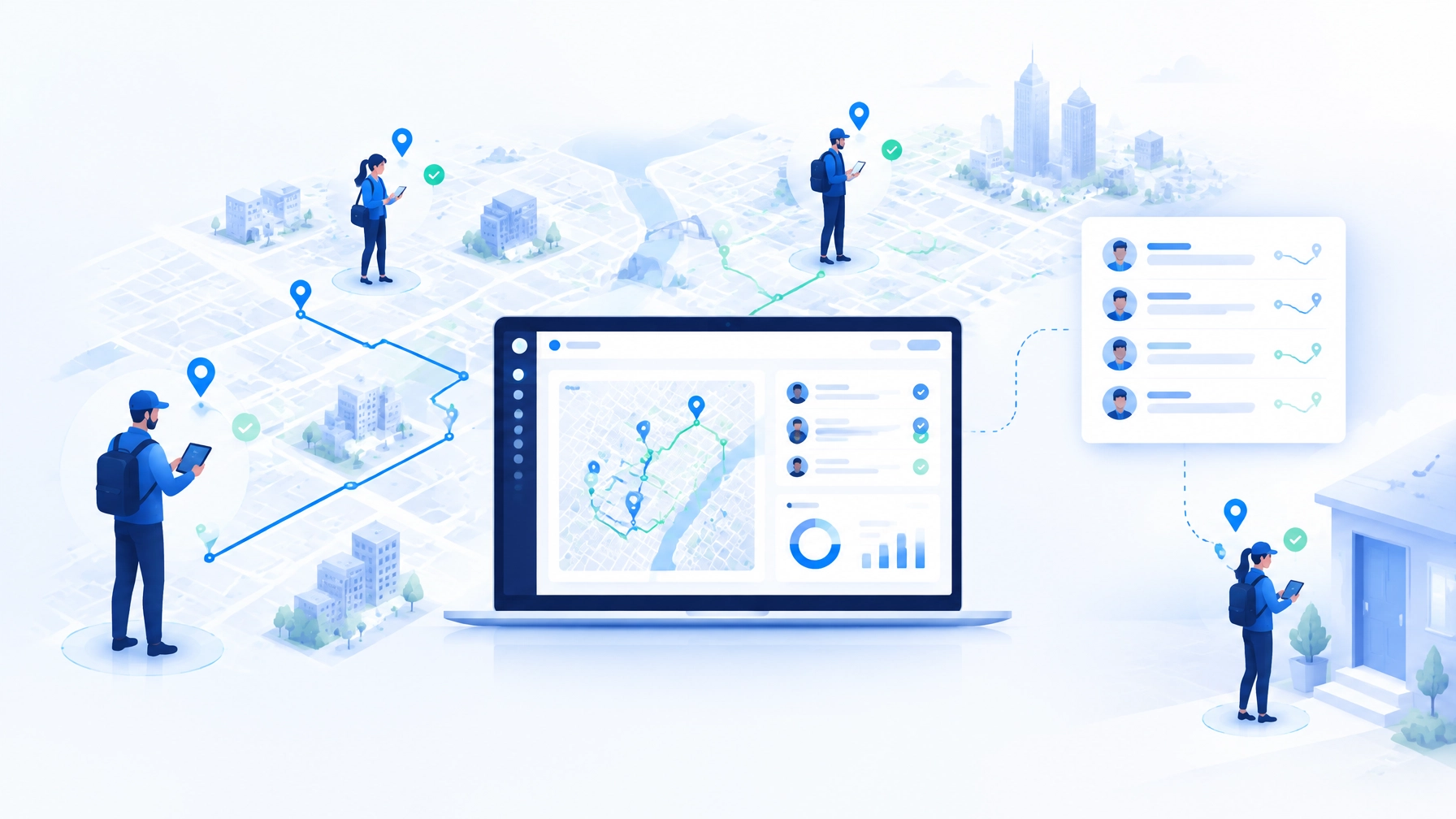
    A service business scaling upwards via automation

    Conclusion: Your Roadmap to an Automated Future

    Scaling a service business in 2026 and beyond requires a shift in perspective. You must stop looking at technology as a cost and start seeing it as your most scalable employee.

    Whether you are a chiropractor looking to automate patient flow with a system like EHRIO Pro, or a multi-location service brand needing the visibility of AI Local Boost, the path forward is clear: automate the redundant, and empower the human.

    At Pure Technology Consulting, we specialize in building the custom web applications and AI-powered workflows that make this possible. We don't just give you a tool; we partner with you to engineer a more profitable, scalable, and stress-free business.

    Ready to see where your operational bottlenecks are?

    Book a discovery call today or call us directly at +1 (803) 921-0969 to request a workflow audit. Let’s build the technology that scales with your vision.


    Amin Said, Founder of Pure Technology Consulting LLC
    https://puretechconsult.com

  • The Ultimate Guide to AI Workflow Automation: Everything You Need to Succeed

    The Ultimate Guide to AI Workflow Automation: Everything You Need to Succeed

    In 2026, the conversation around AI has moved past the novelty of generative chat. For growth-focused business owners and operationally constrained service firms, the focus has shifted toward a more critical objective: operational leverage.

    We are no longer just asking what AI can write; we are asking what AI can do. At Pure Technology Consulting (PTC), we view AI workflow automation as the bridge between a business that is simply "running" and one that is scaling with precision. This guide explores the strategic landscape of AI automation, the pillars of a successful implementation, and how bespoke technology is redefining the "system of action" for modern enterprises.

    What is AI Workflow Automation in 2026?

    For years, automation meant "if this, then that." It was rigid, rule-based, and prone to breaking when faced with the messy reality of human data. Today, AI workflow automation is defined by agentic autonomy and unified orchestration.

    Instead of isolated bots performing repetitive clicks, we now deploy AI agents that can detect work, initiate multi-step actions, and make nuanced decisions within a governed framework. These systems transform your CRM, EHR, or ERP from a "system of record": where data simply sits: into a "system of action" that actively drives revenue and efficiency.

    From Basic Triggers to Intelligent Processes

    Traditional automation handles the "low-hanging fruit," like moving a lead from a form to a spreadsheet. AI workflow automation handles the "middle-management" tasks:

    • Intelligent Lead Routing: Classifying leads based on intent and fit before assigning them to a high-ticket closer.
    • Contextual Intake: Automatically processing complex documents: like medical histories or legal filings: and flagging anomalies for human review.
    • Predictive Scheduling: Optimizing service routes or clinical appointments based on historical patterns and real-time data.

    The synergy between human professionals and AI agents in complex workflows

    The Strategic Pillars of Success

    To succeed with AI automation, you cannot simply "buy a tool." You must build a strategy. At Pure Technology Consulting, we help clients move through a specific framework designed for long-term ROI.

    1. Focus on Outcomes, Not Prompts

    The most common mistake is starting with the technology rather than the business bottleneck. Are you trying to reduce patient intake time? Do you need to increase the lead-to-close ratio? By defining the outcome first: such as "reducing cycle time by 40%": you create a roadmap that dictates which technical architecture is required.

    2. The Hybrid Architecture

    Complete autonomy is rarely the goal. The most robust systems use a hybrid model: deterministic rules for compliance and security, paired with AI for judgment and classification. This ensures that while the AI handles the heavy lifting, your business logic remains governed and predictable.

    3. Governance and Security-First Design

    As AI agents gain more access to sensitive data, governance becomes your primary operational risk. In industries like healthcare and finance, security isn't a feature; it's the foundation. Our approach integrates "Policy-as-Code," ensuring every automated action is logged, auditable, and compliant with regulatory frameworks like HIPAA.

    Proven Capabilities: Authority Anchors

    We don't just consult on automation; we build it. Our proprietary SaaS platforms serve as proof-of-concept examples of how we handle complex, high-stakes data environments.

    • Healthcare & Clinical Workflows: Through our work with EHRIO, we’ve pioneered matching engines and 70-question digital intakes. These systems don't just collect data; they process it, ensuring HIPAA-adjacent workflows are both efficient and secure.
    • Local SEO & Growth: With AI Local Boost (AILB), we’ve automated the "manual drag" of Google Business Profile management. By using AI to handle local visibility at scale, we allow multi-location businesses to grow without a linear increase in marketing staff.
    • Operational Accountability: For field-heavy industries, our experience with GPS logging and rep accountability demonstrates how automation provides visibility into the "black box" of daily operations.

    A system of action connecting CRM, healthcare records, and marketing dashboards

    Bespoke Web Apps vs. Off-the-Shelf SaaS

    A common question we hear from executives is: "Why build a custom solution when I can license a SaaS tool?"

    The answer lies in operational fit. While off-the-shelf software is great for general tasks, it often forces you to change your proven workflows to fit their code. This creates "operational drag": the friction that occurs when your staff has to jump between five different tools that don't speak to each other.

    Bespoke web application development allows you to:

    1. Eliminate Data Silos: We build the "connective tissue" between your CRM, billing, and scheduling.
    2. Own the IP: Instead of paying per-seat forever, you invest in an asset that grows your company's valuation.
    3. Scale Without Limits: Custom systems are built to handle your specific logic, whether that’s complex assignment logic for a debt collection agency or multi-location scheduling for a physical therapy group.

    Your AI Implementation Roadmap

    If you are ready to transition from manual processes to an automated operating model, we recommend a phased approach:

    Phase 1: The Workflow Audit

    Before writing a single line of code, we identify the bottlenecks. We look for redundant manual workflows, data silos, and missed revenue opportunities.

    Phase 2: Rapid Prototyping

    We build the core engine: the "Minimum Viable Automation." This allows your team to see the ROI in weeks, not months. Whether it’s an AI-driven intake system or an automated reporting dashboard, we focus on the highest-impact area first.

    Phase 3: Orchestration & Scaling

    Once the core is stable, we connect the rest of your ecosystem. This is where we integrate platforms like FTP Inform or custom CRM hooks to ensure data flows seamlessly across the entire organization.

    Business growth dashboard showing ROI and operational leverage

    Conclusion: Moving Toward Operational Leverage

    The goal of AI workflow automation is not to replace your experienced team. It is to amplify them. By removing the administrative burden, you free your best people to focus on strategy, patient care, and high-ticket sales.

    At Pure Technology Consulting, we bring proven capabilities from healthcare, fintech, and local SEO to help businesses in legal, accounting, and professional services reach their next stage of growth. We don't just provide a vendor relationship; we provide a technical backbone.

    If you are tired of disconnected systems and manual processes holding back your growth, it’s time to build a custom system that fits your operations.

    Ready to audit your workflows?
    Book a discovery call today to see how we can design a bespoke automation roadmap for your business.

    Pure Technology Consulting LLC
    Phone: +1 (803) 921-0969
    Website: https://puretechconsult.com

    Amin Said, Founder of Pure Technology Consulting LLC
    https://puretechconsult.com

  • Bespoke AI Solutions Secrets Revealed: What Experts Don’t Want You to Know About Scalable Automation

    Bespoke AI Solutions Secrets Revealed: What Experts Don’t Want You to Know About Scalable Automation

    The promise of "instant AI" is everywhere. From LinkedIn gurus to flashy SaaS advertisements, the narrative is the same: plug in a generic tool, flip a switch, and watch your business scale. For the executive managing a multi-million dollar service business or a high-volume healthcare clinic, this narrative often leads to a "technology ceiling", a point where your tools stop solving problems and start creating them.

    At Pure Technology Consulting, we work with growth-focused business owners who have realized that off-the-shelf software is a commodity, not a strategy. The real secret to scalable automation isn't found in the AI models themselves; it is found in the bespoke architecture that connects those models to your specific business operations.

    In this deep dive, we are revealing the strategic "secrets" of bespoke AI solutions, the quiet architectural decisions that separate industry leaders from those perpetually fighting their own software stack.

    The Illusion of the "One-Size-Fits-All" SaaS

    Most businesses start their automation journey with off-the-shelf SaaS products. These are excellent for "quick wins", simple email triggers or basic CRM notifications. However, as a business grows toward $5M or $10M in revenue, the limitations of these tools become "operational drag."

    When you use generic tools, you are forced to contort your business processes to fit the software's logic. This results in manual "bridge" work, where your staff spends hours moving data between systems that don't quite talk to each other. Experts rarely tell you that these small manual patches eventually become a massive hidden labor cost.

    True scalability comes from building systems that fit your business, not the other way around.

    Secret #1: The Architecture is Your Competitive Moat

    In the software world, "bespoke" is often misinterpreted as "expensive." In reality, bespoke development is about leverage. When you own the architecture, you own the competitive advantage.

    Take, for example, our work with workflow orchestration. Many service businesses struggle with disparate systems for lead tracking, rep accountability, and reporting. Instead of stacking three more SaaS subscriptions, we focus on building unified backbones like ChainHQ and FTP Inform. These proprietary assets serve as proof-of-concept for how custom internal systems can eliminate data silos.

    Professional dashboard representing operational leverage and bespoke internal systems

    By building a custom orchestration layer, we’ve helped organizations in the Fintech and Debt Collection industries integrate telephony systems with call attribution and automated reporting. This isn't just "automation"; it's a proprietary operating model that competitors cannot simply buy off a shelf.

    Strategic Pillar: System-Level Wiring

    A major secret experts hide is that true AI automation happens when the AI is "wired" directly into your core systems. It shouldn't just be an "AI helper" that suggests an answer; it should be a system-level agent that:

    • Classifies incoming documents.
    • Updates your internal database.
    • Routes approvals to the right stakeholder.
    • Triggers the next step in the workflow without a human clicking "OK."

    Secret #2: Data Governance as a Revenue Driver

    Scalable AI requires high-quality, structured data. Most businesses have "fragmented data": information scattered across spreadsheets, emails, and three different CRMs.

    When we build custom web applications for healthcare providers, such as our EHRIO platform, we focus on the "intake-to-output" journey. By implementing 70-question intelligent intakes and HIPAA-adjacent matching engines, we ensure that the data entering the system is clean, compliant, and ready for automation.

    Secure healthcare automation and HIPAA-compliant workflows visual

    In the medical and wellness space, the secret isn't just having an EHR (Electronic Health Record); it’s having a system that automates the matching of patients to the right clinicians based on complex criteria. This reduces administrative labor by 40% and ensures that the clinic can scale without hiring an army of intake coordinators.

    Secret #3: Automated Visibility is an Asset, Not an Expense

    For local service businesses: Chiropractors, Physical Therapy clinics, and specialty medical practices: visibility on Google is often their primary growth lever. The "expert" advice is usually to hire an agency to manually post updates and manage reviews.

    The secret to scaling this is Local SEO Automation. We developed AI Local Boost to demonstrate how bespoke logic can manage Google Business Profile automation at scale. Instead of relying on manual labor to maintain digital visibility, we use automated systems to ensure your practice remains at the top of local search results.

    Automated local SEO and digital visibility represented by a glowing map pin icon

    When visibility is automated, it becomes a predictable asset rather than a variable expense. This is how multi-location service operators scale their lead flow without scaling their marketing department’s headcount.

    Where Custom Software Beats SaaS

    How do you know when to stop buying SaaS and start building bespoke? Look for these three indicators:

    1. Process Contortion: You are changing your internal workflows to accommodate your software's limitations.
    2. The Integration Gap: You have "data islands" that require manual export/import or complex, brittle "zaps" to connect.
    3. High Volume, Simple Logic: You are paying per-transaction or per-user fees for a high-volume process that could be automated by a private internal system.

    Pure Technology Consulting brings proven technical capabilities: developed through our work in healthcare, fintech, and local services: into the legal and accounting sectors. We don't start from scratch; we apply the same "matching engine" logic used in healthcare to complex legal intakes, or the same "GPS logging" logic used in field sales to professional service accountability.

    The Roadmap to Bespoke Automation

    Scaling your business through technology requires a strategic roadmap, not a shopping list of tools.

    • Step 1: The Workflow Audit. Map your repeatable, high-volume tasks. Where is the labor going?
    • Step 2: Architecture Design. Build the "plumbing" first. Ensure your CRM, billing, and scheduling talk to each other in a single, governed environment.
    • Step 3: AI Integration. Layer AI agents onto your existing data flows to handle decision-making and routing.
    • Step 4: Continuous Optimization. Software is an investment, not a one-time purchase. Scale your system as your revenue grows.

    Your Strategy Moving Forward

    If you are tired of manual workarounds and are ready to build a technology stack that actually scales, it’s time to move beyond off-the-shelf tools. Whether you are looking for a custom web application to manage internal operations or a system to automate your customer journey, the path forward starts with a consultation.

    We specialize in designing and deploying scalable technology solutions that automate operations and optimize internal business processes for high-ticket clients.

    Are you ready to audit your workflows and reclaim your operational leverage?

    Book a discovery call with our team to explore a bespoke roadmap for your business.

    Amin Said, Founder of Pure Technology Consulting LLC
    https://puretechconsult.com