Category: Blog

Your blog category

  • Digital Transformation 101: A Beginner’s Guide to Mastering AI-Powered Business Systems

    Digital Transformation 101: A Beginner’s Guide to Mastering AI-Powered Business Systems

    Digital transformation is one of those phrases that has been used so often it has almost lost its meaning. For many business owners, it sounds like an expensive, multi-year project reserved for Fortune 500 companies with massive IT budgets. But in reality, digital transformation is simply the strategic process of using technology to change how your business operates and delivers value to its customers.

    At Pure Technology Consulting (PTC), we view digital transformation not as a single software purchase, but as a journey toward an AI-powered operating model. It’s about moving away from "buying tools" and toward "building systems" that work while you sleep.

    Whether you are a growth-focused local service business or an operationally constrained enterprise, this guide will break down the fundamentals of mastering AI-powered business systems without the technical overwhelm.

    The Strategy: Outcomes Before Implementation

    The biggest mistake most companies make is starting with the "what" (e.g., "We need an AI chatbot") instead of the "why." A visionary digital transformation strategy starts with identifying operational drag: those manual, repetitive tasks that slow down your team and frustrate your customers.

    To master this shift, you must view technology as an investment in leverage. Every manual data entry point, every disconnected spreadsheet, and every missed lead represents a leak in your business's efficiency. Digital transformation is the act of plugging those leaks with custom, scalable code.

    1. Identify Your Core Pillars

    Before you can automate, you must audit. Most successful transformations focus on three specific areas:

    • Intake and Onboarding: How customers enter your ecosystem.
    • Operations and Fulfillment: How work gets done and tracked.
    • Growth and Visibility: How new leads find you and stay engaged.

    By focusing on these pillars, you ensure that the technology you build has a direct, measurable ROI on your bottom line.

    A sleek visualization of an automated business workflow

    Pillar 1: Strategic Workflow Automation

    The most immediate impact of digital transformation is felt in workflow automation. This isn't just about simple "if-this-then-that" rules; it's about building intelligent systems that handle complex logic.

    Take, for example, our work in the healthcare space with proprietary assets like EHRIO Pro. In high-stakes medical and wellness environments, the intake process is often a bottleneck. Manual forms lead to errors, HIPAA compliance risks, and administrative burnout.

    By developing custom, 70-question intelligent intake engines, we’ve demonstrated how bespoke software can match patients to the right providers and services instantly. This isn't just "automation": it’s a sophisticated matching engine that removes the need for manual triaging. When you build custom, you don't have to change your business to fit a software’s limitations; the software is built to fit your unique clinical or business logic.

    Pillar 2: Data Centralization and AI Visibility

    If data is the new oil, then most businesses are currently sitting on untapped reserves that they can’t access. Digital transformation centralizes your data so that AI can actually use it to drive decisions.

    Visibility starts with how you appear to the world. Many local businesses struggle with inconsistent lead flow because their digital presence is managed manually. We addressed this challenge through the development of AI Local Boost (AILB). This platform serves as a prime example of how Google Business Profile automation can transform a manual marketing chore into a hands-off, AI-driven visibility engine.

    When your SEO and local visibility are automated, your data remains consistent across the web, ensuring that AI-powered search engines can accurately index and recommend your services. This creates a feedback loop: better data leads to better visibility, which leads to more leads, which provides more data to optimize your sales funnel.

    Pillar 3: Integration and Custom Infrastructure

    The third pillar of a successful transformation is the technical backbone: the infrastructure that allows your various tools to talk to one another. Many businesses suffer from "data silos" where their CRM doesn't speak to their billing system, which doesn't speak to their scheduling tool.

    Our approach to custom development often involves building the "glue" that connects these systems. A perfect example of this is FTP Inform, our fintech and debt collection integration tool. It showcases our ability to handle complex telephony integrations and call attribution.

    By integrating high-level communication data directly into business workflows, we provide executives with a real-time reporting dashboard that reflects the truth of their operations. Whether it’s GPS logging for field reps (as seen in our D2D Tracking capabilities) or telephony logging for professional service firms, the goal is the same: absolute accountability and visibility.

    A modern mockup of a clean healthcare intake dashboard

    The Roadmap: Crawl, Walk, Run

    Mastering AI-powered systems doesn't happen overnight. We recommend a phased approach to ensure long-term scalability and team adoption.

    Phase 1: The "Crawl" (Discovery and Quick Wins)

    Start by identifying one high-friction process. For a law firm, it might be the initial client intake. For an e-commerce brand, it might be inventory reporting. The goal is to build a "quick win" that saves at least 5–10 hours of staff time per week.

    Phase 2: The "Walk" (Integration)

    Once a single process is automated, the next step is connecting it to your existing ecosystem. This is where we look at your CRM, EHR, or project management tools and ensure data flows seamlessly between them. This reduces redundant data entry and creates a single source of truth.

    Phase 3: The "Run" (AI Optimization)

    In the final phase, we layer AI over your centralized data. This allows for predictive analytics, automated lead scoring, and intelligent chatbots that can handle tier-one support or scheduling without human intervention. This is where your business reaches true operational leverage.

    Why Custom Beats Off-the-Shelf

    While many SaaS products are excellent for general use, they often fail when a business has a specific, high-ticket workflow. Off-the-shelf software forces you to work the way the developer intended. Custom software, however, is built around your competitive advantage.

    At Pure Technology Consulting, we don’t just sell licenses; we build assets. Whether we are leveraging the infrastructure behind ChainHQ to manage complex supply chains or deploying custom HIPAA-adjacent workflows, our focus is on building a technical moat around your business.

    A custom build is a one-time investment in a permanent asset that scales with you, rather than a monthly "tax" on a system you don't own and can't fully control.

    A digital city representing a unified business ecosystem

    Conclusion: Starting Your Journey

    Digital transformation is a strategic necessity for any business looking to grow beyond its current manual capacity. By mastering AI-powered systems, you aren't just saving time: you are building a scalable engine that increases the enterprise value of your company.

    Are you ready to move past manual processes and step into a visionary operating model? Whether you need to automate your patient intake, secure your local search visibility, or integrate complex telephony data, we are here to scope the roadmap with you.

    Pure Technology Consulting specializes in taking the proven capabilities we've built in healthcare, fintech, and SEO and applying them to your unique business challenges.

    Take the Next Step

    • Review our capabilities: See our video walkthroughs to see custom systems in action.
    • Request a Workflow Audit: Let us identify your biggest operational bottlenecks.
    • Book a Discovery Call: Ready to build? Schedule a consultation with our team.

    For direct inquiries, you can reach our office at +1 (803) 921-0969. Our team, including Amin’s assistant, Emily, is ready to help you coordinate your discovery session.

    Amin Said, Founder of Pure Technology Consulting LLC
    https://puretechconsult.com

  • 7 Mistakes You’re Making with Manual Workflows (and How AI Consulting Fixes Them)

    Visionary tech dashboard representing automation and custom software solutions

    In the current landscape of business operations, "manual" has become synonymous with "expensive." Whether you are running a high-volume physical therapy clinic, a debt collection agency, or a multi-location service brand, the friction of manual workflows is more than just a nuisance: it’s a silent drain on your EBITDA.

    At Pure Technology Consulting (PTC), we see technology not just as a tool, but as a strategic investment in operational leverage. The transition from manual to automated isn't about replacing people; it’s about liberating them from repetitive, low-value tasks so they can focus on what actually moves the needle.

    Here are the seven most common mistakes businesses make with manual workflows and how bespoke AI consulting turns those bottlenecks into competitive advantages.

    1. The "Copy-Paste" Data Tax

    The most visible sign of an inefficient workflow is a team member retyping data from one system to another. Whether it’s moving lead info from a Facebook ad into a CRM or transferring patient data from a PDF into an EHR, every manual keystroke is a chance for error.

    How AI Consulting Fixes It: We don't just "link" apps; we build intelligent data bridges. Using the same architectural principles we applied to EHRIO Pro, we design custom web applications that ingest data once and distribute it everywhere. Imagine a 70-question medical intake that doesn’t just store text but intelligently flags risks and populates your billing system simultaneously.

    2. Inconsistent Lead Follow-Up (The "Speed-to-Lead" Crisis)

    For local service businesses, the difference between a booked appointment and a missed opportunity is often measured in minutes. If your leads are sitting in an inbox waiting for a manual reply, you are effectively ghosting your revenue.

    How AI Consulting Fixes It: We leverage automation frameworks similar to our AI Local Boost platform. By automating the Google Business Profile interactions and lead response triggers, we ensure that every inquiry is met with an immediate, intelligent response. It’s about building a system that never sleeps, ensuring your local visibility translates directly into your calendar.

    Seamless data flow and integration between software systems

    3. Fragmented Processes and "Data Silos"

    When your marketing data lives in one place, your operations in another, and your billing in a third, you lose the "single source of truth." Manual workflows often result in different departments operating on different versions of the same reality.

    How AI Consulting Fixes It: Our approach to bespoke development focuses on centralization. We build custom dashboards: drawing from the logic used in FTP Inform: to provide a unified view of your business. Whether it’s telephony integrations for a debt agency or call attribution for a law firm, we ensure that every piece of data is accessible, actionable, and accurate.

    4. Scaling via Hiring Instead of Software

    Many $1M–$5M businesses try to solve growth problems by adding more headcount. This is a linear solution to a non-linear problem. If you need a new employee for every 50 new clients, your margins will eventually compress to zero.

    How AI Consulting Fixes It: We help you build "SaaS-level" infrastructure within your own company. By white-labeling or licensing proven frameworks like ChainHQ, we allow multi-location businesses to manage 100 sites with the same effort it used to take to manage five. Automation provides the "operating model" that makes your business scalable without the proportional increase in labor costs.

    5. Compliance and HIPAA "Sticky Note" Risks

    In healthcare and professional services, manual handling of sensitive information isn't just slow: it's a liability. Relying on staff to remember to encrypt an email or file a document correctly is a recipe for a regulatory nightmare.

    How AI Consulting Fixes It: We specialize in HIPAA-adjacent workflows. Using the logic we perfected for EHRIO, we build custom intake and matching engines that bake compliance into the code. When the system handles the data, the human error factor is removed, protecting both your patients and your practice.

    Tech-focused illustration of a healthcare intake process

    6. Opaque Reporting and "Flying Blind"

    If it takes you three days to pull a report on your monthly performance, you aren't running your business: it’s running you. Manual reporting is slow, prone to bias, and usually outdated by the time it reaches the CEO’s desk.

    How AI Consulting Fixes It: We integrate automated logging and GPS accountability systems, much like the ones we developed for D2D Tracking. Whether it’s field rep accountability or real-time revenue tracking, we build the reporting layer directly into your custom application. You get a live roadmap of your business, not a rearview mirror.

    7. Ignoring Local Visibility Automation

    Many businesses manually post to social media or update Google listings once a month. In a competitive local market, this "set it and forget it" manual approach results in declining rankings and fewer calls.

    How AI Consulting Fixes It: Through the lens of AI Local Boost, we demonstrate how local SEO automation can be a 24/7 growth engine. We don’t just "do SEO"; we build systems that automate the collection of reviews, the posting of updates, and the optimization of map rankings.

    Local SEO automation and business growth visualization

    The Strategic Path Forward: Where Custom Software Beats "Off-the-Shelf" SaaS

    While many businesses try to patch these mistakes with generic SaaS tools, they often find that the tools don't talk to each other, creating "automation debt."

    AI consulting at Pure Technology Consulting is different. We don’t just give you a login; we build a bespoke operating system for your business. Whether you need a custom web application to manage a complex intake process or an AI-driven automation system to handle your lead flow, our goal is to provide a technical backbone that requires zero maintenance from your side.

    What to automate first?

    We typically recommend a three-step roadmap:

    1. The Workflow Audit: Identify the 2–3 manual tasks that consume the most staff time.
    2. The Bespoke Build: Develop a custom solution or integrate a proprietary PTC asset (like EHRIO or ChainHQ) to solve the bottleneck.
    3. The Scaling Phase: Refine the system and add reporting layers to ensure clear ROI.

    Strategic consultation for digital transformation

    Ready to audit your workflows?

    If your staff is overwhelmed by admin tasks and your growth has hit a manual ceiling, it’s time for a different approach. We bring proven capabilities from healthcare, fintech, and local service industries into your business, ensuring you aren't starting from scratch.

    Request a workflow audit or book a discovery call today:

    Amin Said, Founder of Pure Technology Consulting LLC
    https://puretechconsult.com

  • The Ultimate Guide to Bespoke AI Solutions: Everything You Need to Succeed in the New Economy

    Bespoke AI Solutions Hero

    The "New Economy" is no longer a futuristic concept: it is the present-day reality for every business owner, from local specialty clinics to multi-location service providers. In this landscape, the divide between industry leaders and those struggling to keep pace is defined by one factor: operational leverage.

    For years, businesses relied on off-the-shelf SaaS products to manage their growth. But as markets become more saturated and consumer expectations rise, generic software has become a bottleneck. We are entering an era where "bespoke" is the only way to achieve true scalability. Custom AI solutions and automated workflows are not just luxuries for Silicon Valley giants; they are the essential infrastructure for any $5M+ enterprise looking to hit the next level of growth without doubling their headcount.

    At Pure Technology Consulting, we’ve seen firsthand how transitioning from disconnected systems to a unified, custom-built ecosystem transforms a business's DNA. This guide outlines the strategic roadmap for navigating this transition and why bespoke development is your most powerful competitive advantage.

    The Fallacy of "Good Enough" Software

    Custom Software Blueprint

    Most business owners start with a "Frankenstein" tech stack. They use one tool for lead generation, another for scheduling, a third for billing, and a fourth for client records. Individually, these tools are "good enough." Collectively, they create data silos and manual drag.

    When your staff spends hours manually moving data from an intake form to a CRM, or from a CRM to a billing platform, you aren’t just losing time: you are increasing risk. Manual processes are prone to error, and in industries like healthcare or professional services, a single error can lead to a compliance nightmare or a lost client.

    Bespoke AI solutions eliminate this drag by creating a "digital nervous system." Instead of adapting your business to fit a software’s limitations, we build software that adapts to your unique operating model. This shift from "software as a tool" to "software as a strategy" is the hallmark of the New Economy.

    Visibility as an Asset: The AI Local Boost Blueprint

    For growth-focused local businesses: such as physical therapy clinics, counseling centers, and specialty medical practices: visibility is the primary growth lever. In the past, "local SEO" meant manually updating keywords and hoping for the best.

    In the New Economy, visibility is an automated outcome. We utilize the principles behind our proprietary platform, AI Local Boost, to demonstrate how custom automation can dominate local markets. By automating Google Business Profile updates, review management, and local citation synchronization, we remove the manual burden of digital marketing.

    When you treat your local visibility as an automated asset, you create a predictable lead flow. You are no longer at the mercy of shifting algorithms because your digital presence is constantly, autonomously optimized. This is the difference between a "marketing tactic" and a "growth engine."

    Orchestrating Complexity: The EHRIO Pro & FTP Inform Framework

    Healthcare Data Integration

    As a business grows, the complexity of its data grows exponentially. For our clients in the healthcare and wellness space, this complexity often centers around the Electronic Health Record (EHR). The challenge isn't just storing data; it’s making that data move seamlessly between systems without manual intervention.

    This is where custom integration becomes vital. Drawing from our expertise with EHRIO Pro, we specialize in building matching engines and high-volume intake systems: sometimes involving 70+ question clinical intakes: that map directly into HIPAA-adjacent workflows.

    However, visibility into these transfers is just as important as the transfer itself. This is why we leverage the logic of FTP Inform. In any high-ticket operation, knowing that a file was sent is not enough; you need real-time telemetry and audit trails. Whether it’s lab results, insurance claims, or legal documents, our custom builds include integrated monitoring to ensure that no data packet is ever lost in transit. This level of governance is what allows executives to sleep soundly as they scale.

    Scaling Operations: The ChainHQ Model

    Operational Command Hub

    For operationally constrained businesses: like debt collection agencies, e-commerce brands, or multi-location service operators: the primary bottleneck is often the "command and control" layer. How do you maintain rep accountability and visibility across multiple sites or field teams?

    The visionary approach to this problem is centralized orchestration. Inspired by the architecture of ChainHQ, we build custom internal systems that act as a centralized command center. Imagine a dashboard that doesn't just show you what happened yesterday, but uses AI to predict where bottlenecks will occur tomorrow.

    By integrating GPS logging for field reps (similar to our D2D tracking solutions) or telephony integrations for call attribution, we provide leaders with a 360-degree view of their operations. This isn't just "reporting"; it’s "decision intelligence." When you have a bespoke hub, you can assign logic, manage escalations, and optimize scheduling with a single click, rather than a dozen phone calls.

    The Strategic Roadmap: How to Move Forward

    Transitioning to bespoke AI and custom automation is an investment, but it’s one that yields a compounding ROI. At Pure Technology Consulting, we don’t believe in "black box" development. We believe in a collaborative, phased approach:

    1. Workflow Audit: We identify the manual "energy leaks" in your current process. Where is data being moved by hand? Where are the bottlenecks?
    2. Architecture & Scoping: We design a custom roadmap that integrates with your existing tools while building the custom layers needed for scale.
    3. Iterative Deployment: We deploy in 2–6 week cycles, ensuring that you see operational impact immediately rather than waiting months for a "grand reveal."
    4. Governance & Support: We provide the technical backbone, ensuring your systems are secure, compliant, and evolving with your business.

    Conclusion: Partner with Visionaries

    The New Economy rewards the efficient. By moving away from generic tools and toward bespoke AI solutions, you aren't just improving your business: you are future-proofing it. You are building a proprietary asset that increases the value of your company and provides the freedom to focus on high-level strategy rather than daily admin fires.

    At Pure Technology Consulting, we specialize in being the technology partner that turns your operational vision into a scalable reality. Whether you are looking to automate a complex healthcare intake or build a centralized command center for your multi-location business, we have the proven capabilities to get you there.

    Ready to audit your workflows and reclaim your time?

    Contact us today at +1 (803) 921-0969 or book a discovery call via our website to see how bespoke automation can transform your organization.

    Amin Said, Founder of Pure Technology Consulting LLC
    https://puretechconsult.com

  • The Ultimate Guide to Bespoke AI Solutions: Everything You Need to Succeed in 2026

    The Ultimate Guide to Bespoke AI Solutions 2026

    As we navigate through 2026, the conversation around Artificial Intelligence has shifted. It’s no longer about "experimenting" with AI or seeing what a chatbot can do for your customer service. For high-growth businesses and established service providers, AI has become the operational core: the very engine that drives efficiency, scalability, and competitive advantage.

    In this new landscape, "off-the-shelf" is often a synonym for "limited." While generic SaaS tools served us well during the initial AI boom, the market leaders of 2026 are those who have moved toward bespoke AI solutions. These are systems designed not for a generic user base, but for your specific workflows, your proprietary data, and your unique business goals.

    At Pure Technology Consulting, we’ve seen this transition firsthand. The businesses that thrive aren't just using AI; they are owning it. This guide will walk you through the strategic necessity of bespoke AI and how to build a roadmap that ensures your technology investment pays off.

    Beyond the "Good Enough": The Bespoke Advantage

    Custom Workflow Automation

    In the early 2020s, a subscription to a standard AI CRM or a generic automation tool was enough to stay ahead. Today, everyone has those tools. When every one of your competitors is using the same "out-of-the-box" automation, your technology is no longer a differentiator: it’s just a baseline cost.

    The "Bespoke Advantage" is about capturing the 20% of your business processes that make you unique. Every business has a "secret sauce": that specific way you handle intake, the proprietary logic you use for pricing, or the custom reporting that keeps your stakeholders informed.

    Why Generic SaaS Falls Short in 2026

    1. Data Silos: Standard tools often struggle to talk to your legacy systems or specialized industry software.
    2. Rigid Workflows: You shouldn't have to change your successful business processes to fit a software’s limitations.
    3. Ownership & Privacy: With bespoke builds, you own the logic and the data layer, ensuring your intellectual property stays yours.
    4. Scaling Friction: Generic tools often hit a wall when you scale to multi-location or enterprise-level operations.

    Bespoke AI allows for Agentic AI: autonomous agents that don’t just answer questions but take actions across your entire tech stack. Imagine an intake system that doesn't just collect a form but verifies insurance, checks provider availability, and triggers a personalized welcome sequence based on the patient's specific history: all without human intervention.

    The 2026 Decision Matrix: Build vs. Buy

    Strategic Decision Intelligence

    The most common question we hear at Pure Technology Consulting is: "When should we buy a SaaS product, and when should we build something custom?"

    In 2026, the answer lies in Competitive Differentiation.

    • Buy (Off-the-Shelf): Use these for non-core, commodity tasks. HR payroll, basic email marketing, and general office productivity tools are perfect for SaaS. There is no need to reinvent the wheel for tasks that don't directly impact your unique value proposition.
    • Build (Bespoke): Invest here for anything that touches your customers, your proprietary data, or your core service delivery. If the process is a reason why customers choose you over a competitor, it deserves a custom solution.

    For many of our clients, the winning strategy is a Hybrid Model. You might use a major platform like Microsoft Azure or AWS for the heavy lifting of data storage, but you build a bespoke "intelligence layer" on top that orchestrates your specific business logic.

    Proven Capabilities: Our Proprietary Proof-of-Work

    Bespoke AI for Various Industries

    At Pure Technology Consulting, we don’t just consult; we build. We’ve developed a suite of proprietary platforms that serve as high-level examples of how custom-engineered AI can transform specific industries. These aren't just products; they are the result of deep architectural expertise in solving complex business problems.

    AI Local Boost: Dominating Local Search

    For service-based businesses, visibility is everything. AI Local Boost demonstrates how we automate the "deep signals" that modern AI search engines (like Google’s SGE) crave. By automating hyper-local FAQ generation and citation syncing, we ensure our clients aren't just on page one: they are the answer the AI provides.

    EHRIO Pro: The Future of Healthcare Ops

    In the medical and wellness space, compliance and efficiency are often at odds. EHRIO Pro is our answer to that challenge. It showcases our ability to build HIPAA-adjacent workflows, 70-question intelligent intakes, and provider-matching engines. It proves that custom software can handle the most sensitive data while significantly reducing the administrative burden on staff.

    ChainHQ: Inventory Meets Intelligence

    For specialized retail and service brands, like permanent jewelry artists, generic POS systems fail to track inventory "by the inch." ChainHQ was built to bridge this gap, integrating mobile POS capabilities with AI-powered insights into stock levels and event performance.

    FTP Inform: Enterprise-Grade Governance

    When it comes to data movement and security, we developed FTP Inform. This platform highlights our expertise in real-time monitoring and automated notifications for critical file transfers: a must-have for industries like finance and legal where data integrity is non-negotiable.

    Your Roadmap to Bespoke Implementation

    Technology Roadmap 2026

    If you are looking to transition to bespoke AI in 2026, you need a strategy that prioritizes ROI over "cool tech." Here is the framework we use to guide our clients:

    1. The Workflow Audit

    Before writing a single line of code, we look at where your team is losing time. Are you manually moving data between your CRM and your billing software? Is your intake process a bottleneck? We identify the "operational drag" that is costing you revenue.

    2. The Data Layer Strategy

    AI is only as good as the data it feeds on. We help you centralize your data, creating a "single source of truth." Whether it's patient records in healthcare or rep accountability in field sales, we ensure your data is clean, accessible, and secure.

    3. Architecture & Integration

    We build systems that "play nice" with others. A bespoke solution shouldn't be an island. We focus on API-first development, ensuring your new AI tools integrate seamlessly with the software you already use and love.

    4. Scalable Deployment

    We don't believe in "big bang" launches that disrupt your business. We favor an iterative approach: deploying high-impact modules first, gathering data, and then expanding. This ensures you see a return on investment within weeks, not years.

    Partnering for the Future

    The "Ultimate Guide" to AI in 2026 isn't a list of tools; it's a mindset shift. It’s the realization that your technology should work the way you work, not the other way around.

    At Pure Technology Consulting, we specialize in building these custom bridges between where your business is and where it needs to be. Whether you are a multi-location clinic looking to automate patient lifecycles or an e-commerce brand needing a custom reporting dashboard, we have the proven infrastructure to make it happen.

    Are you ready to stop fighting with generic software and start building your competitive advantage?

    Book a discovery call today to discuss your custom roadmap. Let's talk about what we can automate first to give your team the leverage they deserve.

    Contact Us:
    Phone: +1 (803) 921-0969
    Email: support@puretechconsult.com
    Schedule a Consultation

    Amin Said, Founder of Pure Technology Consulting LLC
    https://puretechconsult.com

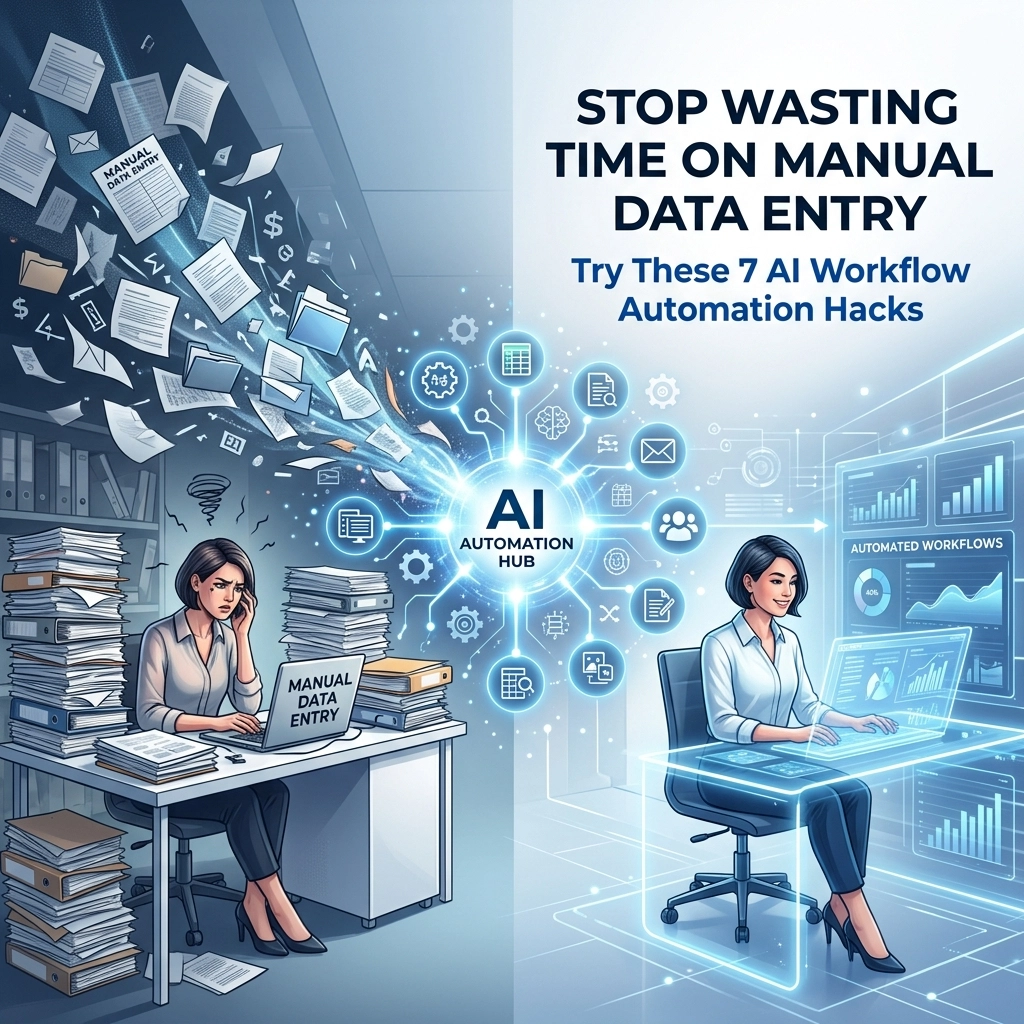
  • Stop Wasting Time on Manual Data Entry: Try These 7 AI Workflow Automation Hacks

    Stop Wasting Time on Manual Data Entry: Try These 7 AI Workflow Automation Hacks

    In the modern enterprise, manual data entry is more than a nuisance: it is a silent killer of momentum. When high-level talent spends hours transcribing emails into CRMs, extracting totals from invoices, or cleaning messy spreadsheets, your organization isn't just losing time; it is losing its competitive edge. At Pure Technology Consulting, we view manual entry as an "operational drag" that prevents visionary companies from reaching their next stage of growth.

    The era of "hiring our way out" of administrative bottlenecks is over. Today, the solution lies in sophisticated, AI-powered workflows that transform raw information into structured, actionable data without human intervention. By shifting your team's role from "data entry" to "data oversight," you unlock a new level of operational leverage.

    Here are seven strategic AI workflow automation hacks designed to eliminate manual entry and how we apply these principles to our custom builds.


    1. Transform Incoming Emails into Structured CRM Records

    Most business relationships begin in the inbox, yet many teams still manually copy-paste lead details, support requests, or budget requirements into their CRM. This process is prone to human error and creates a lag in response time.

    By utilizing AI parsers (via platforms like Zapier, Make, or custom OpenAI integrations), you can instruct an LLM to read an email, extract key fields: such as full name, company, intent, and estimated budget: and return them as a JSON object. This data is then instantly injected into your CRM (HubSpot, Salesforce, or a custom-built solution).

    The Visionary Shift: You aren’t just "saving time"; you are ensuring that your sales or support pipeline is updated in real-time, allowing your team to act while the lead is still hot.

    2. Auto-Extract Data from Complex PDFs and Scans

    Invoices, receipts, and legal contracts have traditionally been the final frontier of manual entry because of their varied formats. However, the combination of Optical Character Recognition (OCR) and Large Language Models (LLMs) has solved this.

    Instead of typing out line items from a PDF, an automated workflow can "read" the document, identify the vendor, calculate the tax, and verify the total against your internal purchase orders.

    Conceptual visualization of AI extracting data from invoices into a structured digital grid.

    Proof of Concept: FTP Inform

    At Pure Technology Consulting, we understand that data movement is the backbone of automation. Our proprietary tool, FTP Inform, serves as a prime example of how we handle specialized data workflows. While many systems struggle with the "dark data" trapped in legacy FTP servers, FTP Inform provides real-time notifications and tracking for file movements.

    For our clients in high-stakes industries like accounting and legal, we use these capabilities to trigger automation the moment a client uploads a sensitive document. Instead of waiting for a manual check, the system identifies the file arrival and kicks off the AI extraction process immediately. It’s a testament to how we build custom web apps that bridge the gap between legacy infrastructure and modern AI.


    3. Generate Tasks Automatically from Meeting Notes and Chats

    How many hours are lost because an action item from a Slack message or a Zoom transcript was forgotten? AI can now act as a silent observer that identifies "to-dos" within your conversations.

    By integrating your communication tools with your project management software (ClickUp, Asana, or Notion), you can set up a "listener" that scans transcripts for phrases like "I will send that over" or "Let's schedule a follow-up." The AI extracts the task, assigns a tentative due date, and places it in the relevant team member's queue.

    4. Continuous Spreadsheet Normalization and Enrichment

    "Dirty data": missing area codes, inconsistent capitalization, or broken links: is the bane of any data-driven department. Traditionally, an intern or junior analyst would spend Friday afternoons "cleaning" the master sheet.

    An AI-driven normalization hack involves setting a trigger for every new row added to your database. The AI checks the entry against your brand's formatting rules, fills in missing company websites based on email domains, and standardizes phone numbers to a global format.

    Visualization of automated data normalization transforming messy records into a clean digital matrix.

    Proof of Concept: EHRIO Pro

    Our work with EHRIO Pro demonstrates our ability to handle complex, high-volume data intake. Originally developed for the healthcare and matching engine space, EHRIO Pro utilizes 70-question intake forms and HIPAA-adjacent workflows to ensure data integrity from the start.

    We bring this same rigor to our legal and accounting clients. By building custom intake engines, we eliminate the need for "cleaning" data later. The system is designed to be "correct by construction," using AI to validate and enrich data the moment it enters your ecosystem. This level of bespoke development is what separates a $10k+ strategic engagement from a simple off-the-shelf SaaS subscription.


    5. The "Drop-Zone" Database Strategy

    For teams that handle a high volume of research, user interviews, or field notes, the "Drop-Zone" is a game-changer. You create a specific folder in Google Drive or a page in Notion where you drop raw, unstructured files.

    An AI agent monitors this folder. When a file appears, the agent reads it, synthesizes the core findings, categorizes it by client or project, and updates a master dashboard. This turns "raw noise" into "structured intelligence" without a single person having to summarize a document manually.

    6. Intelligent Inbox Triage and Routing

    Not every email requires a human response, but every email requires a decision. AI can act as your first line of defense, triaging incoming mail based on sentiment, urgency, and topic.

    For example, a "negative sentiment" email regarding a billing issue can be routed to a senior manager with high priority, while a general "thank you" can be archived automatically. This ensures your high-value talent is only touching the data that truly requires human judgment.

    Conceptual digital hub representing intelligent AI triage and automated routing of incoming data.

    Proof of Concept: AI Local Boost

    Automation isn't just about internal documents; it’s about external presence. AI Local Boost (AILB) is our answer to the manual labor of Local SEO and Google Business Profile management.

    Instead of an employee manually logging in to update business hours, respond to reviews, or post updates across multiple locations, AILB automates these touchpoints. It demonstrates our philosophy: if a task is repetitive and follows a logical pattern, it should be handled by a custom-built AI system. This allows our clients to maintain a visionary presence online while focusing their human energy on high-level strategy.


    7. The Daily AI "Control Center"

    The final hack is the transition from "searching for data" to "receiving insights." A daily AI Control Center pulls data from your calendar, your tasks, and your most urgent emails to generate a 2-minute briefing every morning at 8:00 AM.

    This briefing doesn't just list what's on your plate; it uses AI to prioritize it. It identifies potential conflicts (e.g., "You have a meeting at 10:00 AM but haven't finished the prep document assigned in ClickUp") and provides direct links to the files you'll need.

    Proof of Concept: ChainHQ

    To manage these sophisticated, multi-layered automations, you need a central nervous system. ChainHQ is our proprietary orchestration platform that showcases how we build "the brain" for our clients' operations.

    ChainHQ allows for the centralized control of disparate AI agents and workflows. It’s the difference between having five separate "hacks" and having a unified automated operating model. When we consult with high-ticket clients, we use the logic behind ChainHQ to design architectures that are scalable, secure, and fully integrated into their existing software stack.

    Unified AI control center pulling various business data streams into a single strategic dashboard.

    From "Hacks" to a Strategic Roadmap

    While these seven hacks can be implemented individually, the true power of automation is realized when they are woven into a custom-built digital transformation strategy. Off-the-shelf SaaS tools often force you to change your workflow to fit their limitations. At Pure Technology Consulting, we do the opposite: we build custom web apps and automation engines that fit your unique operations.

    Whether you are in legal, accounting, healthcare, or field services, the goal is the same: eliminate the mundane to empower the extraordinary.

    Are you ready to audit your current workflows and identify where manual entry is holding you back?

    We specialize in building bespoke solutions that integrate deep AI automation into your core business processes. From GPS logging for field reps to HIPAA-compliant matching engines, our team has the proven capability to build the infrastructure your vision requires.

    Contact us today to schedule a discovery call:
    Phone: +1 (803) 921-0969
    Schedule: https://puretechconsult.com/schedule

    Amin Said, Founder of Pure Technology Consulting LLC
    https://puretechconsult.com

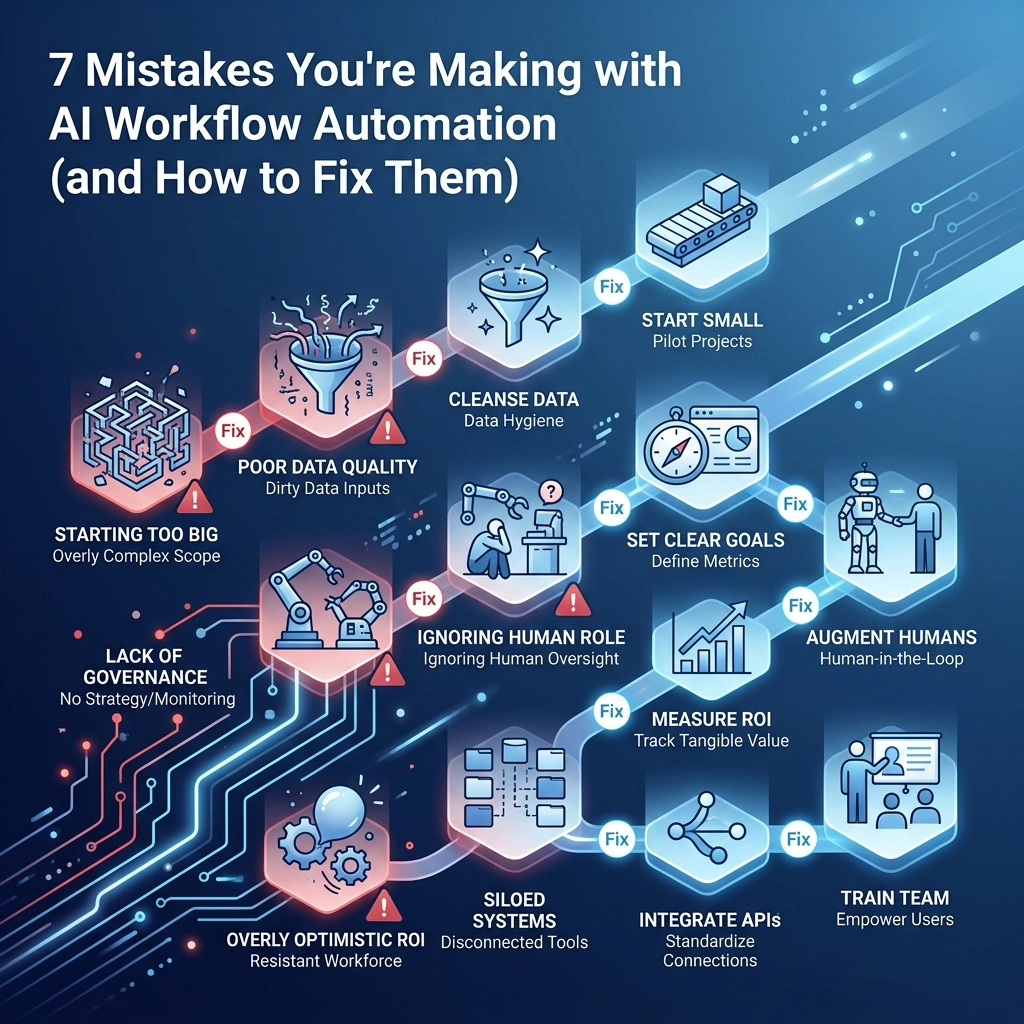
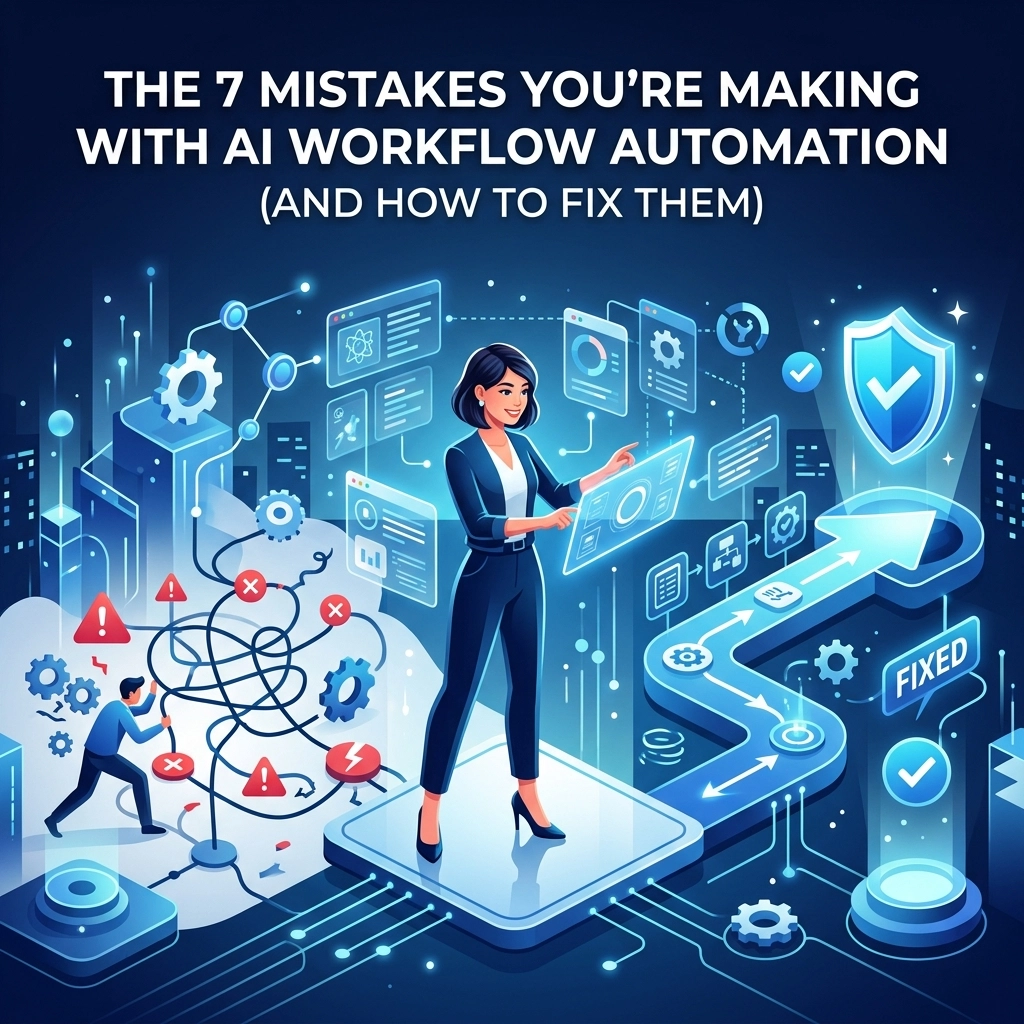
  • 7 Mistakes You’re Making with AI Workflow Automation (and How to Fix Them)

    7 Mistakes You’re Making with AI Workflow Automation (and How to Fix Them)

    The promise of AI workflow automation is seductive: a world where your business operates with surgical precision, costs plummet, and your team focuses purely on high-level strategy. At Pure Technology Consulting, we’ve seen this transformation firsthand. However, we’ve also seen the "automated chaos" that occurs when executives treat AI as a magic wand rather than a strategic architectural shift.

    The difference between a high-performing custom automation and a failed experiment usually comes down to a few fundamental architectural choices. If you’re looking to scale your operations: whether in legal, accounting, or enterprise field services: avoiding these seven common pitfalls is the key to unlocking true operational leverage.

    1. Automating a Broken (or Unknown) Process

    The most expensive mistake you can make is "AI-ifying" a messy manual workflow. If a process is chaotic when handled by humans, adding AI only makes it chaotic at the speed of light. We often see teams attempt to automate onboarding or billing without actually mapping out every branch and exception.

    The Fix: You must map the real process, not the ideal one. Before we write a single line of code for a custom web app, we shadow users and record sessions to understand the "happy path" and the weird edge cases. Simplify the workflow first. Remove redundant approvals and standardize inputs.

    At Pure Technology Consulting, when we build custom integrations, we often look at how data moves through tools like FTP Inform. Our proprietary FTP Inform platform isn’t just a file transfer utility; it’s a masterclass in how we approach data transparency. By ensuring the "where" and "when" of data movement is visible and structured, we eliminate the ambiguity that kills most automation projects before they start.

    2. Chasing “Cool AI” Instead of Clear Business Outcomes

    It’s easy to get distracted by multi-agent systems and fancy LLM interfaces. But technical completeness doesn't equal business value. If your automation doesn’t move a specific metric: like reducing Tier 2 ticket response time from 8 hours to 2 hours: it’s just a shiny toy.

    The Fix: Define one sharp outcome per workflow. At our firm, we don't just "add AI" to your stack; we architect solutions that address operational drag. Whether it's a custom CRM integration or a bespoke field service portal, every feature must justify its existence against a business target. If it doesn’t move the needle on revenue or cycle time, it doesn’t belong in the build.

    A digital target at the end of a data path representing clear business outcomes in AI automation.

    3. Treating LLMs as Deterministic APIs

    A common technical error is assuming an LLM will always return the exact same response or valid JSON. Unlike traditional software, AI is probabilistic. If your downstream systems (billing, scheduling, or reporting) expect a perfect, rigid input and the AI gives them a slightly creative variation, the whole system crashes.

    The Fix: Design for stochastic output. You need a "guardrail layer" between the AI and your core systems. This is where custom software development shines over off-the-shelf "no-code" tools. We build validation engines that check required fields, normalize types, and auto-repair model outputs before they touch your production database.

    Take our work with EHRIO Pro as an example. In the healthcare space, matching engines and patient intake forms (often involving 70+ complex questions) require absolute precision. We use the logic honed in EHRIO Pro to demonstrate how bespoke matching algorithms can coexist with flexible AI inputs, ensuring HIPAA-adjacent workflows remain compliant and accurate.

    4. Ignoring Data Quality and Context

    AI is only as smart as the context you provide. If your CRM data is full of duplicates or your product analytics aren't integrated, the AI will make decisions based on hallucinations or outdated information.

    The Fix: Clean and standardize your data first. You need a single source of truth for each entity: be it a client, an order, or a legal case. Good automation is "boringly strict" about data entry. We often recommend using structured forms and dropdowns upstream to prevent the AI from having to guess what a user meant.

    5. Picking the Wrong Tooling (or Overbuilding In-House)

    We see two extremes: companies using a consumer-grade toy for mission-critical flows, or engineering teams trying to build a custom orchestration platform from scratch before they’ve even validated the use case.

    The Fix: Match the platform to the team and the risk. For high-ticket, complex operations, you need an orchestrator that offers robust versioning and observability.

    This is where our proprietary asset, ChainHQ, comes into play. We developed ChainHQ as a demonstration of high-level orchestration. It shows our ability to build systems that handle multi-chain logic and complex integrations across disparate SaaS tools. When you engage us for a custom $10k+ build, we aren't starting from zero; we're bringing the architectural rigor of ChainHQ to your specific business problem.

    An interconnected digital network illustrating complex AI orchestration and software architecture.

    6. Defaulting to Full Automation When Users Need Guidance

    There is a psychological barrier to AI. If a system starts "touching production" without human oversight, your team will stop using it out of fear. The "black box" approach kills adoption.

    The Fix: Move through three stages: Explain, Guide, and Execute.

    • Explain: Tell the user exactly what the workflow is about to do.
    • Guide: Walk the user through the task interactively: the AI suggests, the human clicks.
    • Execute: Only move to full automation once the risk is low and the pattern is proven.

    In our Local SEO work via AI Local Boost (AILB), we demonstrate this balance. AILB automates Google Business Profile management at scale, but it’s designed to provide the high-level strategy and execution that local businesses need without stripping away the human touch that defines a brand's voice. It’s an example of how we scale high-volume tasks while maintaining quality control.

    7. Scaling Too Fast Without Governance

    A few wins in automation often lead to "shadow automations": where every department starts building its own flows in a vacuum. Suddenly, a change in your CRM breaks six different workflows that no one even knew existed.

    The Fix: Establish lightweight governance early. You don't need a massive committee, but you do need a central registry of all active workflows, their owners, and their dependencies.

    At Pure Technology Consulting, we treat every automation project as a long-term asset. We provide the architecture, the logging, and the runbooks needed to ensure that as you scale, your complexity decreases rather than increases.

    Building the Future of Your Operations

    The shift to AI-powered automation isn't just about software; it's about reimagining how your business functions at its core. Whether we are leveraging our experience in Fintech telephony integrations or field service GPS logging, our goal is to build bespoke web applications that fit your operations like a glove.

    If you’re ready to move past the "trial and error" phase of AI and want to build a robust, scalable operating model, let’s talk. My assistant, Emily, can help you schedule a discovery call to audit your current workflows and map out a visionary roadmap for your business.

    A futuristic digital horizon representing a strategic roadmap for business efficiency and scale.

    We don't just build apps; we build the future of your company’s efficiency.

    Amin Said, Founder of Pure Technology Consulting LLC
    https://puretechconsult.com
    +1 (803) 921-0969

  • The 7 Mistakes You’re Making with AI Workflow Automation (And How to Fix Them)

    The 7 Mistakes You’re Making with AI Workflow Automation (And How to Fix Them)

    The promise of the "AI Revolution" is often sold as a magic wand. You’ve likely heard the pitch: plug in an LLM, connect a few APIs, and suddenly your business runs on autopilot while you sip coffee. But for most executives in the legal, accounting, and healthcare sectors, the reality of implementing AI workflow automation is often a messy sprawl of "hallucinating" bots, broken triggers, and frustrated staff.

    At Pure Technology Consulting, we see automation not as a shortcut, but as a strategic multiplier. When done correctly, it provides the operational leverage that scales a $1M firm into a $10M powerhouse. When done poorly, it simply accelerates your mistakes.

    If you’re feeling the "automation drag," you’re likely falling into one of these seven common traps. Here is how to identify them and, more importantly, how to fix them with a visionary approach to custom software.


    1. Automating a Broken (or Undefined) Process

    The most expensive mistake any business can make is automating a process that shouldn't exist in the first place. If your manual client intake is a chaotic mess of sticky notes and "we’ll get to it later," digitizing it just gives you a digital mess that moves at the speed of light.

    The Fix: You must map the process before you automate. We often tell our clients that the first step of a custom build isn't coding: it's consulting. We look for redundant steps, unnecessary handoffs, and "ghost" tasks.

    Take our work with EHRIO Pro. In the healthcare and professional services space, intake is everything. Instead of just "automating" a form, we looked at the 70-question intake logic used by high-performing clinics. By streamlining the decision tree first, the resulting automation didn't just move data; it qualified it.

    Abstract visualization of streamlining manual processes into efficient AI workflow automation.

    2. Treating AI as a "Magical Black Box"

    Many teams throw a prompt at an LLM and hope for the best. They treat AI as a sentient employee rather than a deterministic system. This leads to "hallucinations" where the AI returns invalid data formats or guesses at facts it doesn't have.

    The Fix: Build deterministic logic around the AI. At Pure Technology Consulting, we use what we call "Structured Output" frameworks. We don't just ask an AI to "summarize this case"; we build a custom middleware that forces the AI to return data in a specific JSON schema.

    This is the philosophy behind ChainHQ. We treat prompts as code. By chaining specific, logic-gated steps together, we ensure that if step one (extraction) isn't 100% accurate, step column (execution) doesn't fire. This creates a "trust-but-verify" architecture that is essential for high-stakes industries like fintech or debt collection.

    3. Choosing the Wrong Platform Based on Hype

    It’s tempting to grab the latest "no-code" tool because it has a flashy landing page. However, many "off-the-shelf" SaaS solutions are built for generic use cases. When you need deep integration with a legacy legal database or a HIPAA-compliant healthcare system, these tools often crumble.

    The Fix: Start with requirements, not tools. If you are handling sensitive data or require complex branching logic, a bespoke web application is almost always more cost-effective in the long run than a "brittle" stack of five different subscriptions.

    We specialize in building these custom web apps that fit your operations like a glove. Whether it's GPS logging for field reps or telephony integrations for debt agencies, the platform should serve the strategy, not the other way around.

    Custom software architecture paths integrated within a complex business operations model.

    4. Ignoring Data Quality and Context

    AI is only as smart as the context you give it. If your automation doesn't have access to your CRM's history, your current project status, or your specific industry compliance rules, it will provide "generic" value at best. "Garbage in, garbage out" has never been more true.

    The Fix: You must normalize your data. This is where proprietary tools like FTP Inform come into play. In complex environments where data is moving between legacy servers and modern web apps, ensuring that data is structured, clean, and contextually rich is the difference between a failed bot and a visionary assistant.

    When we build for legal or accounting firms, we ensure the AI knows exactly who the client is, their prior history, and the specific regulatory framework involved before it ever suggests a workflow action.

    5. Defaulting to "Full Auto" When You Need a "Co-Pilot"

    There is a common misconception that automation means removing the human. In reality, the most successful AI implementations in high-ticket professional services follow a "Human-in-the-Loop" model. When you let an AI send a legal filing or a client invoice without a human "check," you are inviting a PR or legal nightmare.

    The Fix: Use progressive autonomy. Support three modes:

    1. Explain: The AI tells you what it thinks should happen.
    2. Guide: The AI walks you through the steps and asks for a "Proceed" click.
    3. Execute: The AI handles the task only after confidence thresholds are met.

    This builds trust. Your team shouldn't feel like the system is acting "behind their back." They should feel like they’ve been given a superpower.

    Collaborative human-in-the-loop AI interface representing a workflow co-pilot model.

    6. Building Fragile, Over-Complicated "Spaghetti" Workflows

    If your automation relies on "screen-scraping" or brittle UI interactions, it will break the moment the software updates its layout. We see many firms with "monster" workflows that nobody wants to touch because "if you change one thing, the whole house of cards falls down."

    The Fix: Prefer stable, API-first integrations. At Pure Technology Consulting, we focus on modular architecture. We break down big workflows into smaller, reusable components. If you need to change your email provider, you only change one module, not the entire logic of your business. This modularity is a hallmark of our bespoke development services.

    7. Scaling Without Governance or Monitoring

    The final mistake is "set it and forget it." AI models drift. Business rules change. A workflow that worked in January might be redundant by June. Without a dashboard to monitor success rates, human overrides, and error logs, you’re flying blind.

    The Fix: Establish automation governance. We help our clients create a catalog of active workflows. We use tools like AI Local Boost to demonstrate how automation can scale: specifically in the realm of local SEO and Google Business Profile management: while still maintaining a central "source of truth" and quality control.

    Success isn't measured by how many things you automated; it’s measured by the cycle time reduction and the increase in billable hours for your senior staff.


    The Visionary Path Forward

    AI workflow automation isn't about replacing your staff; it’s about freeing your best minds from the drudgery of "data moving." It’s about creating a business that is "digital-first" from the ground up, allowing you to compete with firms ten times your size.

    Whether you are looking to build a custom matching engine like EHRIO, or you need a sophisticated telephony integration for a fintech operation, the approach remains the same: Strategy first. Logic second. AI third.

    Are you ready to audit your current workflows and stop making these seven mistakes?

    We invite you to move beyond the hype and start building real, scalable leverage. Let's discuss how a custom-built solution can transform your operations.

    Next Steps:

    Stop fighting with brittle tools and start building the future of your firm.

    Amin Said, Founder of Pure Technology Consulting LLC
    https://puretechconsult.com

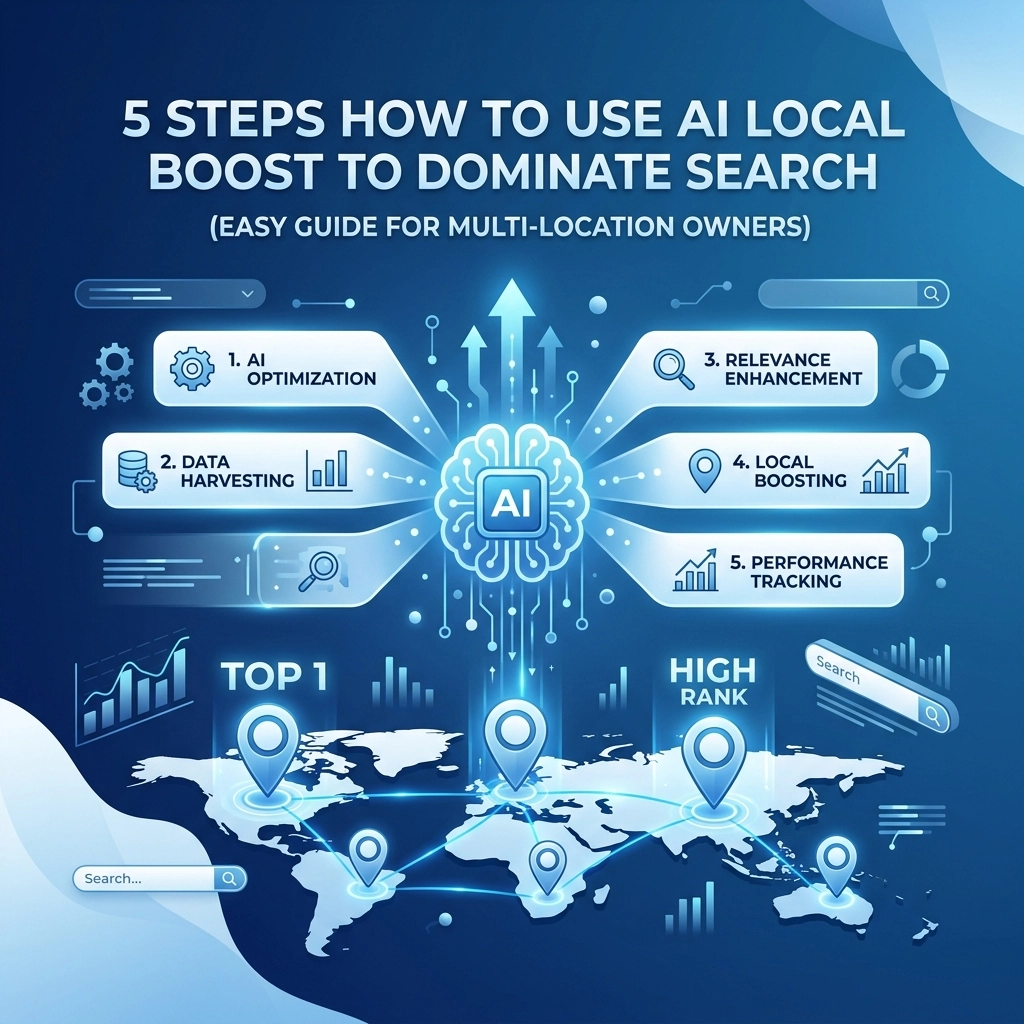
  • 5 Steps How to Use AI Local Boost to Dominate Search (Easy Guide for Multi-Location Owners)

    5 Steps How to Use AI Local Boost to Dominate Search (Easy Guide for Multi-Location Owners)

    For a business owner managing twenty, fifty, or five hundred locations, "local SEO" often feels like a massive operational drag. In the traditional model, maintaining visibility for every storefront requires a small army of coordinators or an expensive agency that manually updates hours, responds to reviews, and writes "local" blog posts that rarely feel local.

    The digital landscape has shifted. We are no longer in the era of manual data entry; we are in the era of automated intelligence. At Pure Technology Consulting, we’ve seen how multi-location enterprises struggle with the "scale vs. quality" trade-off. To solve this, we developed proprietary systems like AI Local Boost: not just as a tool, but as a proof of concept for how bespoke automation can transform a high-friction marketing task into a streamlined, high-yield operating model.

    Dominating local search in 2026 isn't about working harder; it’s about deploying an intelligent roadmap. Here is the 5-step guide to using AI Local Boost and automation strategies to capture every "near me" search in your territory.


    Step 1: Establish Data Integrity through AI Auditing

    Visibility begins with trust. If Google detects that your location on Main Street is listed as "Main St" in one directory and "Main Street – Downtown" in another, your ranking "trust score" drops. For multi-location owners, keeping this data clean across the web is the foundation of your digital real estate.

    Most companies use a spreadsheet that is outdated the moment it’s saved. We advocate for an AI-driven audit. By centralizing your data into a single source of truth, you can use automation to scan the web for inconsistencies.

    The Strategy:

    • Centralize: Every location ID, phone number, and unique service offering should live in a structured system.
    • Normalize: Use AI to identify and correct formatting errors (e.g., Suite vs. Ste.) across thousands of rows instantly.
    • Categorize: AI can analyze your specific services and suggest the most profitable Google Business Profile (GBP) categories for each specific region, ensuring you aren't just "a gym" but the "best functional fitness center in [City]."

    Abstract digital grid showing AI-powered organization of multi-location business data for local SEO audit.

    Step 2: Map Semantic Intent, Not Just Keywords

    The way customers search has evolved from "Pizza Brooklyn" to "Where is a kid-friendly Italian place open now with outdoor seating?" This is conversational, intent-based search. To dominate, you need to understand the why behind the query.

    Traditional keyword research takes weeks. With the logic behind AI Local Boost, we automate the discovery of long-tail, intent-driven phrases for every zip code you operate in.

    How to automate the mapping:

    • Intent Grouping: Group your locations by region and use AI to generate questions real customers are asking in those specific areas.
    • Refinement: Cross-reference AI-generated suggestions with your actual Google Search Console data.
    • The Outcome: You move from generic keywords to a roadmap of "problem-solving" content that positions your brand as the local authority.

    Step 3: Deploy Bespoke Location Pages & Schema at Scale

    Once you have the data and the keywords, you need a place for that traffic to land. A single "Locations" page with a list of addresses is no longer sufficient. Each branch needs a high-performing landing page that feels uniquely curated for its community.

    At Pure Technology Consulting, we focus on building custom web applications that handle this dynamically. Instead of a developer manually building 100 pages, we create a system that uses AI to draft unique, location-specific content that avoids the "duplicate content" trap.

    The Implementation:

    1. Dynamic Content: AI drafts unique descriptions for each location, mentioning local landmarks, neighborhoods, and specific parking instructions.
    2. Structured Data (Schema): This is the "hidden" code that tells search engines exactly what your business is. We use automated scripts to embed LocalBusiness and FAQPage schema into every page.
    3. Visual Proof: Automatically pull in local reviews and gallery photos specific to that branch.

    Digital map with connected canvases illustrating automated schema and location pages for business growth.

    Step 4: The Google Business Profile (GBP) Automation Engine

    Your Google Business Profile is often the first "office" a customer visits. For multi-location owners, keeping these profiles active: posting updates, answering questions, and adding photos: is an impossible task without automation.

    This is where the proprietary logic of AI Local Boost shines. We view GBP management as a workflow problem. By automating the "boring" parts, your regional managers can focus on the actual customer experience.

    The Workflow:

    • Automated Posting: Generate a 90-day calendar of hyper-local posts (promotions, holiday hours, community tips) and schedule them across all 50+ locations in one click.
    • Q&A Architecture: Pre-populate your GBP with the most common questions customers ask. AI can help draft these based on your historical customer service logs.
    • Visual Freshness: Set a cadence for uploading new photos to keep the profile "warm" in Google's eyes.

    Polished digital engine representing automated management of Google Business Profiles at enterprise scale.

    Step 5: Close the Loop with Review Intelligence

    Prominence is a primary ranking factor in local search. Google wants to see that you are active and that your customers are satisfied. However, managing reviews for a massive enterprise can lead to "response fatigue," where templates become robotic and brand trust erodes.

    The final step in dominating search is creating a continuous feedback loop.

    The Strategy:

    • Intelligent Response: Use AI to analyze the sentiment of a review and draft a personalized response. A 5-star review gets a thank you that mentions the specific service they liked; a 3-star review gets a professional apology and an escalation path.
    • Staff Accountability: Link review performance to internal dashboards. Systems like our ChainHQ or EHRIO Pro frameworks are built to give executives visibility into which locations are winning the "reputation war."
    • Performance Audits: Monthly, use AI to summarize thousands of reviews into actionable business insights. If ten locations in the Northeast are complaining about "wait times," that isn't an SEO problem: it's an operational one that needs executive attention.

    Luminous infinity loop depicting an intelligent AI feedback loop for customer review analysis and insights.

    Beyond Software: The Visionary Approach to Local Dominance

    At Pure Technology Consulting, we don’t just sell tools; we build the digital infrastructure that allows high-growth companies to scale without increasing their overhead. Whether it's our work in healthcare with EHRIO Pro or our local SEO automation via AI Local Boost, the goal is the same: Strategic Leverage.

    Dominating search across multiple locations is no longer a matter of headcount. It is a matter of architecture. By implementing these five steps, you move from a reactive posture: where you are constantly fixing errors: to a visionary posture, where your digital presence grows automatically while you focus on the bigger picture.

    If you are ready to stop managing spreadsheets and start managing a dominant digital empire, it’s time to look at custom automation tailored to your specific operations.

    Ready to audit your current workflow?
    Explore our Video Walkthroughs or Schedule a Discovery Call to see how we can build a bespoke solution for your multi-location enterprise.

    Amin Said, Founder of Pure Technology Consulting LLC
    https://puretechconsult.com
    +1 (803) 921-0969

  • Why AI Workflow Automation Will Change the Way You Scale Your Service Business Forever

    Why AI Workflow Automation Will Change the Way You Scale Your Service Business Forever

    For decades, the service business model has been built on a fundamental, linear equation: to grow your revenue, you must grow your headcount. If you wanted to double your output, you had to double your staff, your office space, and your management overhead. This "linear scaling trap" has historically capped the potential of even the most visionary firms, leaving founders caught between the desire for growth and the exhaustion of managing a ballooning payroll.

    But the operating model of the modern service business is currently undergoing a tectonic shift. We are moving away from the era of "more hands" and entering the era of "better logic." AI workflow automation is no longer just a buzzword for the tech-savvy; it is the strategic lever that allows a boutique firm to operate with the force of a multinational corporation.

    At Pure Technology Consulting, we don’t view automation as a tool to replace people. We view it as a way to liberate your high-value talent from the administrative drag that kills margins.

    The Invisible Ceiling of Traditional Scaling

    Most service businesses: whether in legal, accounting, healthcare, or logistics: reach a point of diminishing returns. As you add more clients, the complexity of communication, data entry, and project management grows exponentially. Suddenly, your senior partners are spending 40% of their day answering status emails instead of providing the high-level advisory work they were hired for.

    This operational drag creates an invisible ceiling. You can't take on more work because your existing team is red-lined, and you can't hire more people because the onboarding time and management overhead would eat the profit of the new contracts.

    AI workflow automation shatters this ceiling by decoupling your output from your hours worked.

    Shattering glass barrier representing how AI workflow automation enables scaling for service businesses.

    Strategic Orchestration: The Power of ChainHQ

    When we talk about automation, most people think of simple "if-this-then-that" sequences. But for a high-ticket service business, simple triggers aren't enough. You need strategic orchestration.

    This is where our proprietary engine, ChainHQ, changes the game. Unlike generic automation tools that struggle with complex, multi-step business logic, ChainHQ acts as a visionary orchestration layer for your custom web applications. It allows us to build bespoke workflows that handle conditional decision-making at scale.

    For example, imagine a client intake process where an AI doesn't just collect a form, but analyzes the data, cross-references it with your existing database, flags potential compliance risks, and prepares a customized briefing document for your team before they even jump on the first call. By the time a human enters the loop, the "work" is already 80% complete. This is the difference between simple automation and the custom-built intelligence we deploy at Pure Technology Consulting.

    Scaling Revenue Without Scaling Headcount

    The most compelling reason to adopt AI-powered automation is the ability to handle volume without proportional hiring. In a traditional model, a finance team processing 500 invoices a month might need four people. To process 2,000, they might need ten.

    With a custom-built AI workflow:

    • Data is extracted from fragmented documents with 99% accuracy.
    • Approvals are routed based on complex internal governance rules.
    • Discrepancies are flagged and categorized automatically.

    The result? That same four-person team can now handle 2,000 invoices with less stress than they handled 500. This shift turns your operational department from a cost center into a profit-generating engine. You are now scaling your margins alongside your revenue, creating a business that is not only larger but significantly more valuable.

    Speed as a Competitive Weapon

    In the service industry, responsiveness is often the primary differentiator. If a prospective client reaches out to three firms, the one that responds first with a comprehensive, personalized proposal usually wins the contract.

    In a manual environment, generating a complex quote might take three days of internal back-and-forth. AI workflow automation can reduce that cycle time to three hours: or even three minutes. By automating the data gathering and proposal generation phases, you remove the bottlenecks that allow your competitors to get a foot in the door.

    We’ve seen this transformation firsthand in industries like fintech and debt agency operations, where call attribution and telephony integrations allow firms to react to leads in real-time, closing deals before the competition has even opened their email.

    Luminous interconnected network symbolizing strategic orchestration and complex automated workflows.

    Secure Data Transparency with FTP Inform

    As you scale, data security and transparency become your biggest risks. When you are automating workflows that handle sensitive client information, you cannot afford "black box" processes where you don't know who touched what file and when.

    This is why we developed FTP Inform. For businesses that rely on secure file transfers: such as legal firms or healthcare providers: FTP Inform provides a layer of intelligence and accountability that off-the-shelf solutions lack. It’s not just about moving files; it’s about automated logging, real-time alerts, and integration with your custom dashboards.

    When your workflows are integrated with FTP Inform, you gain a bird's-eye view of your data movement. This level of governance is essential for scaling high-ticket services where trust and compliance are non-negotiable. It allows you to prove to your clients that their data is being handled with institutional-grade security, backed by bespoke automation.

    Why Custom Web Apps Beat Generic SaaS

    Many founders try to solve their scaling problems by stacking fifteen different SaaS subscriptions. They have one tool for CRM, one for project management, one for automation, and another for reporting. Soon, they realize they’ve just traded "people overhead" for "software overhead." The tools don't talk to each other, and the team spends all their time moving data from one tab to another.

    The visionary approach is to build a custom web application that fits your business like a glove. Instead of molding your operations to fit a software’s limitations, we build software that maps to your unique competitive advantage.

    Whether it’s our work in healthcare with the EHRIO Pro matching engines or our local SEO automation via AI Local Boost, we focus on creating unified platforms. A bespoke application serves as the single source of truth for your business, ensuring that your AI workflows are operating on clean, centralized data.

    Centralized digital core illustrating a single source of truth for unified custom business software.

    Preparing Your Roadmap for Transformation

    Transitioning to an AI-automated operating model doesn't happen overnight, but the roadmap is clear. It begins with a workflow audit: identifying the high-friction, low-value tasks that are currently tethering your team to their desks.

    If you are ready to stop hiring your way out of growth problems and start engineering your way into a more scalable future, it’s time for a high-level consultation. My assistant, Emily, can help coordinate a discovery call to audit your current architecture and identify where custom automation can provide the highest ROI.

    We don't just build software; we build the infrastructure for your company’s next decade of growth. Let’s move beyond the linear and start building the exponential.

    Ready to see how bespoke automation can transform your operations?
    Schedule a discovery call with our team here.


    Amin Said, Founder of Pure Technology Consulting LLC
    https://puretechconsult.com
    Phone: +1 (803) 921-0969

  • 10 Reasons Your Manual Workflow Isn’t Scaling (And How AI Workflow Automation Fixes It)

    10 Reasons Your Manual Workflow Isn’t Scaling (And How AI Workflow Automation Fixes It)

    At Pure Technology Consulting, we talk to business owners every day who have reached a frustrating plateau. Their product is great, their team is talented, and their market is hungry: but they simply can't grow any faster without everything breaking. When we look under the hood, the culprit is almost always the same: a manual workflow that was designed for five clients, now struggling to support fifty.

    Scaling a business isn't about hiring more people to do the same repetitive tasks. That’s just scaling your overhead. True growth comes from operational leverage. It comes from building bespoke systems that think, react, and execute while your team focuses on high-level strategy.

    If you feel like your team is "treading water" just to keep up with daily operations, here are 10 concrete reasons your manual workflow is failing you: and how we use AI-powered automation to solve them.


    1. Effort Scales Linearly with Volume

    In a manual world, every new client adds a predictable, heavy block of work. If it takes one hour to onboard a customer, ten customers take ten hours. There is no "economy of scale" when a human must manually download, clean, review, and copy-paste data between systems.

    The AI Fix: We build automated triggers. Instead of waiting for a staff member to check an inbox, the workflow starts the moment an event occurs. Whether it’s 10 or 1,000 items, the infrastructure handles the load. One well-designed automated flow provides the leverage needed to grow revenue without a 1:1 increase in headcount.

    2. Human Error Compounds Over Time

    We all make mistakes. But in a manual workflow, a tiny typo in a spreadsheet or a missed row in a database doesn't stay tiny. As your volume grows, these errors compound. Before you know it, you’re dealing with inconsistent data, missed anomalies, and frustrated clients.

    The AI Fix: AI doesn't get tired. By implementing structured logic and validation guardrails, we ensure that every entry follows the exact same rules every single time.

    AI workflow automation transforming unstructured data into a structured grid for perfect operational integrity.

    Pure Technology Consulting Insight: FTP Inform
    A perfect example of solving data integrity is our proprietary tool, FTP Inform. When businesses rely on manual file transfers, things get lost or corrupted. We built FTP Inform to provide real-time visibility and automation into file movements. It’s not just about moving data; it’s about ensuring that the data arrives safely and triggers the next step in your custom workflow without human intervention.


    3. Knowledge Lives in People’s Heads

    If your business relies on "asking Sarah" how a specific client's reporting is handled, you don't have a scalable process; you have a person-dependent bottleneck. Tribal knowledge makes onboarding slow and leaves your operations vulnerable if a key team member leaves.

    The AI Fix: We help you turn tacit know-how into "Policy as Code." By codifying your Standard Operating Procedures (SOPs) into an AI-driven workflow, the system itself becomes the source of truth. New hires don't need to shadow veterans for months; they just need to follow the guided, automated interface we build for them.

    4. Cognitive Load Becomes Unsustainable

    As you scale, the complexity of your rules increases. Your team has to remember which client gets which discount, which region follows which compliance rule, and which edge cases need special handling. This constant context-switching kills productivity.

    The AI Fix: AI is exceptional at handling multi-variable logic. We build systems that are "context-aware," automatically applying the right rules to the right segment. This shifts your team’s role from "data entry" to "exception management."

    Pure Technology Consulting Insight: EHRIO Pro
    In the healthcare space, complexity is the baseline. Our work with EHRIO Pro demonstrates how we handle high-stakes cognitive load. We built matching engines and 70-question intake systems that automate HIPAA-adjacent workflows. Instead of staff manually sorting through patient data, the system handles the heavy lifting, allowing providers to focus on care rather than paperwork.


    5. Inconsistent Quality Across Teams

    When work is manual, the quality of service often depends on who is working that day. High-value accounts might get deep attention, while smaller accounts get a superficial "once-over." This inconsistency erodes your brand and creates "noisy" clients who feel neglected.

    The AI Fix: Automation enforces a baseline of excellence. Every account, regardless of size, undergoes the same rigorous checks and balances. We build dashboards that highlight performance across the board, ensuring that your "standard" service is as high-quality as your "premium" service.

    6. Slow Turnaround and Missed Opportunities

    Manual workflows are reactive. Work is usually batched "when someone has time," meaning issues like wasteful spend or new leads might sit for 48 hours before being addressed. In today’s market, that’s an eternity.

    The AI Fix: Event-driven automation allows for near-real-time responses. If a lead hits your CRM, an AI can instantly classify it, research the company, and generate a personalized first-draft response for your sales team to review. You’re not just working faster; you’re capturing opportunities before they go cold.

    An interconnected digital network pulse illustrating fast, event-driven AI workflow automation for business growth.

    Pure Technology Consulting Insight: AI Local Boost
    For businesses managing multiple physical locations, local SEO is a massive manual chore. We developed AI Local Boost to automate the tedious aspects of Google Business Profile management. By using AI to handle updates and optimizations at scale, we allow businesses to maintain a visionary local presence across hundreds of locations without a massive marketing department.


    7. Reporting Is Manual, Late, and Error-Prone

    If your month-end reporting takes two weeks to compile because you're exporting CSVs and "massaging" data in Excel, you’re flying blind. You’re making decisions based on what happened 14 days ago, not what is happening right now.

    The AI Fix: We build automated data pipelines that pull, normalize, and visualize data in real-time. With AI-generated insights, your dashboard doesn't just show you numbers; it tells you why those numbers are moving, highlighting trends and anomalies before they become crises.

    8. Tools and Communication Are Fragmented

    The "SaaS tax" isn't just the subscription fee; it's the fragmentation. When your data lives across email, Slack, a CRM, and a billing tool, things fall through the cracks. Hand-offs between departments become points of failure.

    The AI Fix: We specialize in custom web apps that act as a "Single Pane of Glass." By integrating your existing tools into one cohesive environment, we eliminate the need for copy-pasting and ensure that every update in one system is reflected everywhere else.

    Pure Technology Consulting Insight: ChainHQ
    Managing complex supply chains or multi-step service operations requires absolute clarity. We built ChainHQ to unify fragmented operations. It serves as a testament to our ability to build bespoke platforms that bring order to chaos, centralizing tasks and communication so that every stakeholder has a clear roadmap of what needs to happen next.


    9. You Can’t Train or Scale People Efficiently

    When your processes are manual and messy, it takes forever to get a new hire "up to speed." You end up hiring "senior" people for tasks that should be handled by juniors, simply because the logic is too complex to teach quickly.

    The AI Fix: Guided workflows. We build software that walks users through the necessary steps, providing AI-assisted suggestions along the way. This lowers the barrier to entry for new staff and allows your most experienced people to stop "babysitting" processes and start innovating.

    10. Profitability and Morale Erode

    Repetitive manual work is a morale killer. High-talent employees don't want to spend four hours a day cleaning spreadsheets; they want to solve problems. When you force them into "data janitor" roles, they burn out, and your margins shrink as you’re forced to hire more people just to maintain the status quo.

    The AI Fix: Automating the routine allows your team to rediscover their purpose. It shifts the culture from "doing the work" to "improving the system." This not only makes your business more profitable but also makes it a place where top-tier talent actually wants to work.

    Professional overlooking streamlined data to symbolize strategic focus and business scaling via AI-powered workflows.


    How to Start Moving from Manual to AI-Driven

    Transitioning to an AI-powered workflow doesn't happen overnight, but it does start with a single step. Here is the roadmap we use at Pure Technology Consulting to help our clients find their leverage:

    1. Identify the High-Pain Process: Find the task that everyone hates or the one that breaks most often.
    2. Map the Deterministic Steps: Identify what can be handled by simple "if/then" rules.
    3. Layer in the AI: Use AI for the parts that require "judgment": summarization, classification, or routing.
    4. Build Bespoke: Don't try to force a generic SaaS tool to fit your unique business. Build a custom web app that fits your operations like a glove.

    The future of your industry isn't just "using AI": it's building a business that is powered by it. Whether you are in healthcare, legal, accounting, or field operations, the manual plateau is a choice. You can either stay there and struggle to scale, or you can build the infrastructure that allows you to soar.

    If you’re ready to see how custom automation can transform your specific workflow, we’re here to help you scope it out. We don’t just build software; we build the future of your company.

    Ready to stop treading water?
    Schedule a discovery call or browse our video walkthroughs to see our work in action.

    Amin Said, Founder of Pure Technology Consulting LLC
    https://puretechconsult.com
    +1 (803) 921-0969