Category: Blog

Your blog category

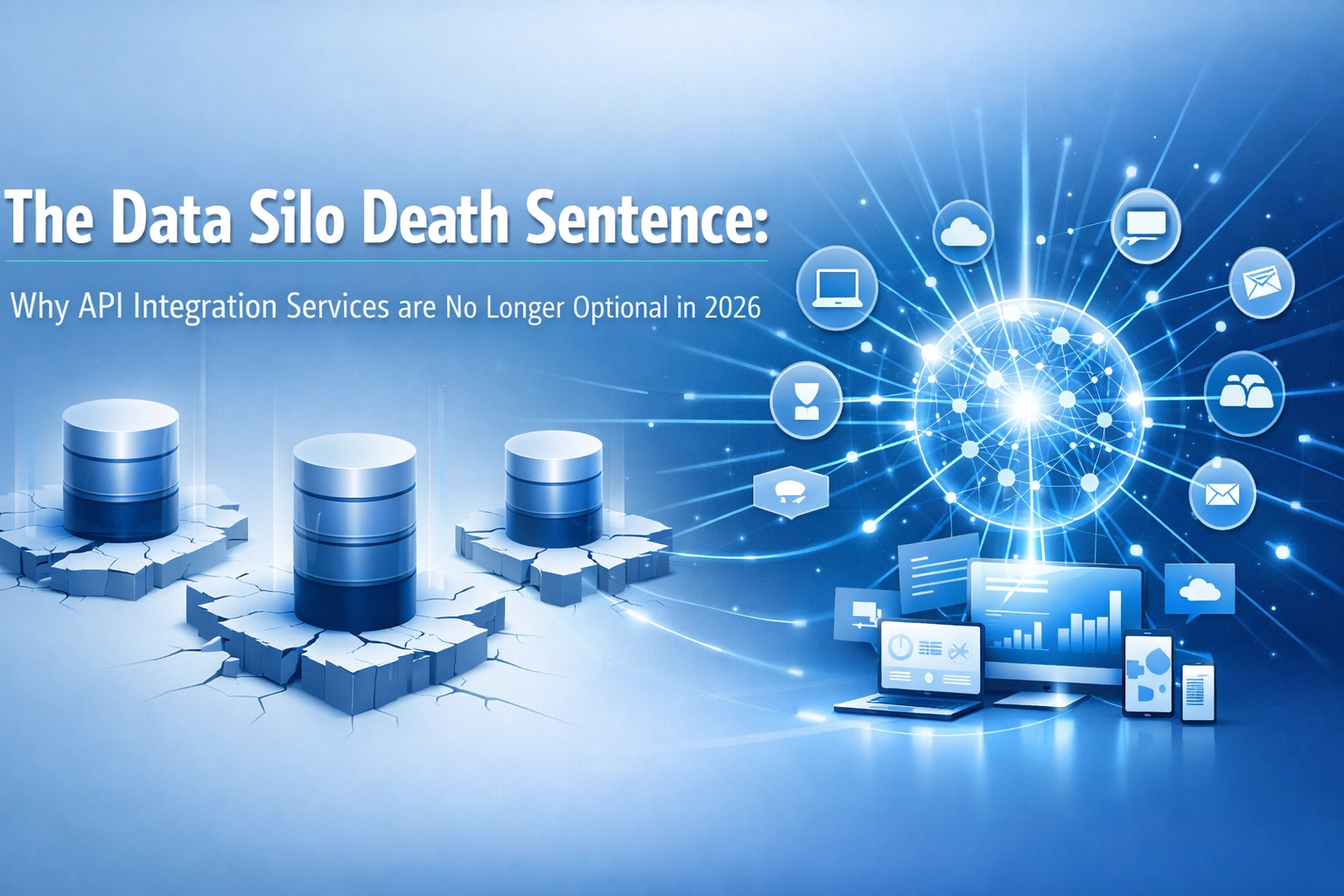
  • The Data Silo Death Sentence: Why API Integration Services are No Longer Optional in 2026

    The Data Silo Death Sentence: Why API Integration Services are No Longer Optional in 2026

    It’s Tuesday, March 24, 2026, and the landscape of service-based business has reached a definitive tipping point. For years, we’ve talked about "digital transformation" as a goal to be reached eventually. But as of this year, the grace period is officially over.

    If your organization is still relying on manual CSV exports to move data between your CRM, your accounting software, and your field operations tools, you aren't just dealing with a minor inconvenience. You are facing what I call the "Data Silo Death Sentence." In a market that moves at the speed of AI-driven automation, a disconnected system is a slow-motion catastrophe for your margins, your compliance, and your ability to scale.

    At Pure Technology Consulting, we’re seeing a massive shift. The conversation has moved from "Can we connect these tools?" to "How fast can we build a unified data backbone?" API integration services have evolved from a "nice-to-have" IT project into the most critical infrastructure investment a service business can make.

    The Operational Drag of Disconnected Systems

    For operationally constrained service businesses: especially those managing multiple locations: the biggest enemy isn't the competition; it’s the friction inside their own walls.

    When your data lives in silos, your team spends 30% of their day acting as "human middleware." They are copying data from a lead form into a scheduling tool, then exporting a spreadsheet to upload into an invoicing system, and finally trying to reconcile it all in a dashboard that is, by definition, already out of date by the time it’s viewed.

    This manual data handling creates three primary risks:

    1. Data Decay: Information loses value every minute it sits waiting to be moved.
    2. Integrity Erosion: Manual entry is the birthplace of the "typo that cost ten thousand dollars."
    3. Strategic Blindness: If your data isn't real-time, you are making 2026 decisions based on last week's reality.

    Professional silhouette viewing fragmented data silos and disconnected business systems causing operational drag.

    Why 2026 is the Year of No Return

    Why is this a "death sentence" now and not three years ago? The answer lies in the convergence of three powerful forces: Regulatory Mandates, the AI Explosion, and Ecosystem Connectivity.

    1. The Regulatory Hammer

    We are seeing a global shift toward mandatory interoperability. In the healthcare sector, the Fast Healthcare Interoperability Resources (FHIR) mandates are no longer suggestions: they are requirements. Patient data access requirements became firm in early 2026, with prior authorization APIs following closely behind.

    It’s not just healthcare. The financial sector has seen a 50% increase in customer connections through FDX-aligned APIs in the last year. If your service business interacts with these industries: or if you simply want to maintain high-standard security: you can no longer afford to be an island. Being incompatible with modern digital infrastructure means being ineligible for the highest-tier contracts.

    2. The AI Gap

    By now, every CEO has heard that AI will "revolutionize their business." But here is the secret: AI is only as good as its access to data. If your data is trapped in isolated silos, your AI tools are essentially working with one eye closed. Custom internal systems powered by real-time API integration services allow AI to see the entire picture, enabling predictive scheduling, automated client communication, and anomaly detection that manual systems simply can’t match.

    3. Ecosystem Connectivity

    The old model was "App A talks to App B." The 2026 model is "The Ecosystem." You are no longer just managing your internal tools; you are connecting to partners, vendors, and regulatory bodies in real-time. Without a robust API strategy, you are effectively opting out of the modern economy.

    From Manual Exports to Real-Time Automated Flows

    The "backbone" of any scalable service business today is a custom integration layer. We often see businesses try to solve this with "off-the-shelf" automation tools. While those have their place for simple tasks, they often fall short when dealing with complex, multi-location operations that require specific business logic and high-security standards.

    This is where bespoke data integration services become a game-changer. Instead of a fragile web of "zaps," we build a central nervous system for your business.

    The Shift:

    • The Old Way: Exporting a CSV from your field service software on Friday, cleaning it in Excel on Monday, and importing it into your accounting software on Tuesday.
    • The New Way: A technician finishes a job in the field. The moment they hit "complete," the API triggers an invoice in the accounting system, updates the inventory levels in the warehouse, and sends a personalized "thank you" and review request to the client: all in less than two seconds.

    A glowing digital backbone representing seamless API integration services and real-time automated data flows.

    API Integration as the Foundation for Custom Internal Systems

    At Pure Technology Consulting, we don’t just "plug things in." We look at API integration as the foundation for high-leverage custom software. Whether it’s building a custom web development solution or a complex automation engine, the goal is always the same: Operational Leverage.

    Consider our work in high-stakes industries:

    • In Healthcare: We’ve built matching engines that handle complex intakes while maintaining HIPAA-adjacent workflows. Without deep API integration, these systems would be impossible to scale.
    • In Fintech/Debt: We’ve integrated telephony systems with custom CRM platforms to provide real-time call attribution and rep accountability.
    • In Multi-location Operations: We’ve developed GPS logging and rep accountability tools that ensure data flows from the "boots on the ground" directly to the executive dashboard without a single manual touchpoint.

    When you treat integration as a service rather than a one-off task, you gain the ability to pivot. When a new tool comes out or a new regulation is passed, you don't have to rebuild your entire workflow; you simply update the integration point.

    Security and Compliance in the Age of Interconnectivity

    One of the biggest hesitations I hear from CEOs regarding API integration is security. "If everything is connected, isn't everything more vulnerable?"

    In reality, the opposite is true. Disconnected systems often lead to "Shadow IT," where employees use unauthorized tools to bridge the gaps, or they store sensitive data in insecure Excel files on their desktops.

    Modern API integration services actually improve security by:

    • Centralizing Governance: You control who has access to what data through a single, secure gateway.
    • Real-time Monitoring: We use behavioral analysis and telemetry to detect anomalies. If a system starts requesting an unusual amount of data, we can shut it down instantly.
    • Encrypted Identity Context: Each data exchange is backed by modern identity protocols, ensuring that data only moves between trusted entities.

    Secure data governance visualization showing protected central systems and encrypted API integration security.

    The Pure Technology Consulting Approach: Your Workflow Audit

    If you’re feeling the "operational drag" of disconnected systems, the solution isn't to buy more software. The solution is to optimize the software you already have through a strategic integration roadmap.

    We specialize in helping operationally constrained businesses break free from the "CSV trap." We don't just provide a service; we provide a vision for how your company should function in a world where data is your most valuable asset.

    Our process starts with a deep dive into your current operating model. We identify the bottlenecks, the manual data entries, and the "silent killers" of your productivity. From there, we build a bespoke architecture that connects your systems into a unified, automated, and scalable engine.

    Conclusion: Evolve or Become Obsolete

    The "Data Silo Death Sentence" isn't a threat; it’s a reality of the 2026 market. Businesses that continue to operate with fragmented systems will find their margins squeezed by competitors who can move faster, serve clients better, and adapt to regulations instantly.

    API and data integration services are no longer "IT projects." They are the core of your business strategy. If you are ready to stop managing spreadsheets and start managing a high-performance, integrated organization, it’s time to move.

    Let’s look at your current workflows and see where we can inject some real-time intelligence. You can schedule a discovery call with our team to start your audit. We’ll look at your systems, your data flows, and your growth goals to build a roadmap that makes sense for your specific scale.

    The future of your business is integrated. Don’t let your data be the thing that holds you back.

    Amin Said, Founder of Pure Technology Consulting LLC
    https://puretechconsult.com
    +1 (803) 921-0969
  • The Ultimate Guide to Bespoke AI Solutions: Everything You Need to Succeed in 2026

    The Ultimate Guide to Bespoke AI Solutions: Everything You Need to Succeed in 2026

    As we navigate the first quarter of 2026, the artificial intelligence landscape has shifted from a "gold rush" of experimental tools to a sophisticated era of architectural precision. For the modern enterprise, the question is no longer whether to adopt AI, but how to integrate it so deeply into your proprietary workflows that it becomes a permanent competitive moat.

    At Pure Technology Consulting, we’ve seen the market move away from "wrapper" applications: those thin layers over generic LLMs: toward bespoke AI solutions. These are systems built from the ground up to understand your specific data, your industry’s regulations, and your unique operational DNA.

    In this guide, we will explore the strategic roadmap for custom AI implementation and how high-level automation is redefining efficiency for high-ticket service providers, legal firms, and healthcare organizations.

    The Paradigm Shift: Why Bespoke Beats Off-the-Shelf in 2026

    By mid-2026, the limitations of generic AI have become glaringly obvious. Off-the-shelf solutions often struggle with "hallucinations," lack of context regarding private business data, and significant security risks. Research shows that nearly 58% of top-performing firms now prioritize custom-built AI systems to ensure higher accuracy and better ROI.

    Bespoke AI solutions offer three distinct advantages:

    1. Domain Specificity: They are grounded in your specific industry terminology and logic.
    2. Data Sovereignty: Your proprietary data stays within your controlled environment, essential for compliance.
    3. Process Integration: Unlike a separate chat window, bespoke AI lives inside your web applications, triggering actions and updating databases in real-time.

    Bespoke AI solution integration represented by a glowing puzzle piece fitting into a digital grid.

    Case Study in Precision: Our Engineering with EHRIO Pro

    When we look at the requirements for high-stakes industries like healthcare, the need for custom logic becomes undeniable. Our work on EHRIO Pro serves as a perfect example of how we approach complex, data-sensitive builds.

    EHRIO Pro wasn’t built as a generic tool; it was engineered as a high-performance matching engine capable of handling 70-question intake forms and HIPAA-adjacent workflows. This project demonstrated our ability to build custom software that doesn't just "process" data but understands the nuances of patient-provider alignment. For our clients, this represents the standard of bespoke development we bring to every $10k+ engagement: specialized, secure, and strategically aligned with professional standards.

    The Technical Pillars of Modern AI Architecture

    To succeed in 2026, your custom AI roadmap must leverage several key technologies that move beyond simple text generation.

    Retrieval-Augmented Generation (RAG)

    RAG is the backbone of the modern custom assistant. Instead of relying solely on the AI's training data, RAG allows the system to "look up" information in your company’s private documents: contracts, SOPs, and historical case files: before generating a response. This ensures every output is grounded in fact.

    Agentic AI and Multi-Step Reasoning

    We are moving away from single-prompt interactions. Today's bespoke solutions use "agents" that can reason through a problem, plan a series of steps, and execute them across different software systems. If you need an AI to audit a financial statement, cross-reference it with tax law, and then draft a summary for a partner, you are looking for an agentic workflow.

    Small Language Models (SLMs)

    While GPT-4 and its successors are powerful, many bespoke solutions in 2026 utilize SLMs. These are smaller, faster, and cheaper models trained or fine-tuned on a very narrow dataset. They offer incredible performance for specific tasks like legal document classification or medical coding without the massive overhead of "frontier" models.

    Abstract neural network nodes symbolizing agentic AI and multi-step reasoning capabilities.

    Scaling Digital Presence: Demonstrating Capability with AI Local Boost

    Strategic automation isn't just for internal workflows; it’s for how your business interacts with the world. Our development of AI Local Boost (AILB) serves as a testament to our expertise in API orchestration and large-scale automation.

    AILB was designed to solve a specific problem: the manual drudgery of managing Google Business Profiles at scale. By automating local SEO updates and reputation management, we proved that AI can maintain a "human" feel while operating at a velocity impossible for manual teams. When we consult with clients on custom web apps, we draw on the lessons learned from AILB: specifically, how to interface with massive external platforms while maintaining brand consistency and search authority.

    The Build vs. Buy Dilemma: A Strategic Framework

    Deciding between a managed solution and a custom-built one is the most critical decision an executive will make this year.

    • Choose Managed Solutions when you need a generic productivity boost (e.g., summarizing standard emails) and speed-to-market is the only priority.
    • Choose Bespoke Custom Solutions when the workflow involves proprietary "secret sauce," sensitive client data, or complex integrations with legacy systems.

    For high-ticket firms, the "Build" route is often the only way to ensure that the AI reflects the firm's specific expertise and ethical standards. It’s the difference between a generic template and a tailor-made suit.

    Secure Data Orchestration: The Foundation of FTP Inform

    Security is the silent partner in every AI conversation. In our experience building custom automation for the legal and accounting sectors, the transfer of sensitive files is often the weakest link.

    We developed FTP Inform to demonstrate our capability in building secure, automated notification systems for file transfers. In a bespoke AI ecosystem, "data in flight" must be handled with the same rigor as "data at rest." FTP Inform highlights our commitment to building infrastructure that respects the sensitivity of high-stakes professional data, ensuring that as your AI processes information, your security protocols remain uncompromised.

    Your Implementation Roadmap for 2026

    If you are ready to move toward a bespoke AI solution, we recommend a four-stage approach:

    1. The Discovery Phase: Identify the bottlenecks. Is it intake? Document review? Scheduling? We often start with a workflow audit to find where $10k+ of value can be unlocked through automation.
    2. The Architecture Design: This is where we choose between RAG, SLMs, or full agentic workflows. We map out how the AI will talk to your existing web apps.
    3. The Pilot Build: We build a functional version of the solution, often using proprietary frameworks like ChainHQ to orchestrate the multi-step AI logic.
    4. Scaling and Governance: Once the pilot is proven, we scale it across the department, implementing strict monitoring to ensure the AI remains accurate and cost-effective.

    Strategic roadmap for scaling bespoke AI solutions and implementing digital transformation.

    Orchestrating Complexity: The Logic of ChainHQ

    The final piece of the bespoke puzzle is orchestration. Our proprietary asset, ChainHQ, represents our philosophy on how AI should function: as a chain of intelligent actions.

    Building a custom web app today requires more than just a pretty interface; it requires a "brain" that can handle complex logic. ChainHQ is the proof-of-work for our ability to build these "brains." It shows how we can take a complex business requirement: like a multi-stage loan approval process or a legal discovery phase: and break it down into a sequence of AI-driven steps that are reliable, auditable, and incredibly fast.

    Looking Ahead: The Future is Custom

    In 2026, the competitive advantage belongs to those who own their technology stack. By investing in bespoke AI solutions, you aren't just buying a tool; you are building an asset that grows in value as it learns your business.

    At Pure Technology Consulting, we specialize in bridging the gap between visionary AI strategy and high-performance software engineering. Whether you are looking to automate a complex intake process or build a custom web app that redefines your industry, our team: supported by my assistant, Emily, who handles our scheduling and initial scoping notes: is ready to help you navigate this transition.

    The era of generic AI is over. The era of the bespoke enterprise has begun.

    Ready to scope your custom AI transformation?
    Contact us at +1 (803) 921-0969 or schedule a discovery call today.

    Amin Said, Founder of Pure Technology Consulting LLC
    https://puretechconsult.com

  • From Bottleneck to Benchmark: A CEO’s Guide to Digital Transformation Consulting in 2026

    From Bottleneck to Benchmark: A CEO’s Guide to Digital Transformation Consulting in 2026

    It’s Monday morning, March 23, 2026. You’re looking at your quarterly projections, and the numbers tell a story we’ve seen a thousand times. Your service business is growing, but your overhead is chasing that growth like a shadow you can't shake. To handle more clients, you need more people. To manage more people, you need more managers. Suddenly, the "scale" you dreamed of feels more like a weight.

    In 2026, the gap between a "growing business" and a "benchmark business" is no longer defined by your headcount. It’s defined by your digital architecture.

    If you feel like your operations are held together by "redundant manual workflows" and "data silos," you aren't alone: but you are at risk. Digital transformation consulting has moved past the "nice to have" phase. It is now the primary lever for CEOs who want to scale without increasing labor dependency.

    The Invisible Ceiling: Redundant Manual Workflows

    We’ve all seen it. A lead comes in through the website. Someone manually enters that data into a CRM. Then, someone else copies that data into a project management tool. A third person drafts an invoice based on a spreadsheet that: hopefully: is up to date.

    These redundant manual workflows are the silent killers of profitability. In a service-based business, time is your most expensive inventory. Every minute your high-ticket talent spends moving data from Point A to Point B is a minute they aren't spent delivering value to your clients.

    Visual representation of streamlining redundant manual workflows into efficient digital processes.

    When we look at operationally constrained businesses, the bottleneck is rarely a lack of talent. It’s a lack of flow. In 2026, "transformation" means auditing these touchpoints and building bespoke automation that handles the "grunt work" so your team can focus on the "strategy work."

    At Pure Technology Consulting, we don’t just suggest tools; we build the bridges between them. Whether it’s a custom web application or a complex API integration, the goal is the same: eliminate the human-as-a-router model.

    Breaking the Silos: Why Your Data Isn't Talking

    Data silos are the second horseman of operational stagnation. Your marketing team has one set of truths, your operations team has another, and your finance department is looking at a third.

    When your data doesn't talk, your leadership can't see.

    Strategic digital transformation consulting in 2026 is about creating a "Single Source of Truth." This isn't just about putting everything in one dashboard; it’s about ensuring that every piece of software in your ecosystem is interoperable.

    Imagine a system where a field rep logs a GPS-verified update (similar to the accountability systems we’ve built for D2D Tracking), and that data immediately triggers a client notification, updates the project timeline, and adjusts the labor forecast for next week. No emails, no Slack pings, no "did you see this?" Just pure, automated visibility.

    Scaling Without the Labor Trap

    The old-school way to scale a service business was simple: hire more people. But in today’s economy, labor is both expensive and scarce. The benchmark for success in 2026 is Operational Leverage.

    Operational leverage is the ability to grow revenue while keeping costs relatively flat. You achieve this by turning your processes into proprietary software assets. Instead of hiring a new administrative assistant every time you add five clients, you invest in a custom automation engine that can handle 500 clients without breaking a sweat.

    A digital automation engine integrated into business architecture for scalable growth and operational leverage.

    This is where custom development beats off-the-shelf SaaS every single time. Generic software forces you to change your business to fit the tool. Custom software changes the tool to fit your business. We’ve seen this work in high-stakes environments:

    • Healthcare: Using Thrive and EHRIO matching engines to handle 70-question intakes and HIPAA-adjacent workflows without manual intervention.
    • Fintech/Debt: Integrating telephony and call attribution to ensure every dollar is tracked and every rep is accountable.
    • Local SEO: Automating Google Business Profile updates via AILB to maintain visibility without manual posting.

    By taking these "proof-of-work" pillars and applying them to legal, accounting, and professional services, we turn bottlenecks into competitive advantages.

    The 2026 Consulting Mandate: Outcomes Over Hours

    The consulting landscape has changed. CEOs are tired of paying for "discovery phases" that lead to 50-page PDFs that sit on a digital shelf. You need measurable business impact within 12 to 24 months: often much sooner.

    In 2026, we focus on Sprint-Based Consulting. We identify the single biggest bottleneck in your workflow, build a bespoke solution, and deploy it. Then we move to the next one. This iterative approach ensures that you see ROI in real-time.

    Visualizing iterative digital transformation sprints for rapid business software development and ROI.

    Key Questions for the Visionary CEO:

    1. Where is AI actually creating value? Don't just "add AI." Use it for knowledge work, document processing, or decision support.
    2. Is your data portable? If you decided to leave your current software provider tomorrow, could you? Custom builds ensure you own your data and your destiny.
    3. What is your "Labor-to-Revenue" ratio? If this number isn't improving as you grow, your digital transformation has failed.

    Turning Your Operations into Your Benchmark

    When your operations are seamless, they become your best sales tool. Clients in 2026 are looking for more than just results; they are looking for the experience of working with a modern, efficient firm.

    When you can provide a video walkthrough of a client’s project status that was automatically generated by your backend system, or provide a secure FTP Inform portal for document exchange that feels like a premium extension of your brand, you aren't just a service provider. You are a benchmark.

    Moving Forward: Your Digital Roadmap

    Digital transformation isn't a project you "finish." It’s an operating philosophy. It’s the commitment to constantly asking: How can we do this better, faster, and more profitably through technology?

    For operationally constrained service businesses, the path out of the woods is clear. Stop fighting the tools you have and start building the tools you need.

    A strategic roadmap for CEOs to transition from operational bottlenecks to scalable software benchmarks.

    At Pure Technology Consulting, we specialize in taking the complex, "messy" workflows of established service firms and turning them into streamlined, scalable software assets. We don't start from scratch; we bring proven capabilities from healthcare, fintech, and field operations into your industry to give you an immediate edge.

    Ready to turn your bottlenecks into your biggest business benchmarks? Let’s talk about building something that scales.

    Next Steps:

    • Audit your current workflow for "double-entry" data points.
    • Identify the one process that requires the most manual "hand-offs."
    • Schedule a discovery call to map out your 2026 roadmap.

    Amin Said, Founder of Pure Technology Consulting LLC
    https://puretechconsult.com
    +1 (803) 921-0969

  • Stop Wasting Time on Manual Data Entry: Try These 7 AI Workflow Automation Hacks

    Stop Wasting Time on Manual Data Entry: Try These 7 AI Workflow Automation Hacks

    Manual data entry is no longer just a "cost of doing business." In the modern professional landscape, it is a symptom of a technical architecture that has failed to keep pace with your company's ambition. Every hour your high-value talent spends transcribing PDFs, updating CRM fields, or reconciling spreadsheets is an hour stolen from strategic growth, client relationships, and innovation.

    At Pure Technology Consulting, we view manual data entry as a friction point that limits scalability. For law firms, accounting practices, and healthcare providers, this friction isn't just annoying: it’s a risk to data integrity and a bottleneck for billable hours. The transition from manual processes to AI-driven workflows isn't merely about speed; it’s about creating a "zero-touch" data environment where information flows seamlessly from intake to insight.

    Here are seven AI-powered workflow automation hacks to help you reclaim your time and transform your operations.

    1. Implement Intelligent Document Processing (IDP)

    The days of manual OCR (Optical Character Recognition) that frequently misreads "8" for "B" are over. Intelligent Document Processing (IDP) leverages Natural Language Processing (NLP) to understand the context of a document. Instead of just "reading" text, AI understands that a specific number is an "Invoice Total" and another is a "Tax ID."

    For professional services, this means legal contracts or tax forms can be ingested, categorized, and filed without a human ever opening the file. This is a capability we’ve refined through our work on EHRIO Pro, where complex, 70-question healthcare intakes are processed through matching engines to ensure data flows precisely where it needs to go: adhering to the strictest compliance standards.

    Intelligent document processing scanning and converting text into structured digital data points.

    2. Leverage NLP for "Zero-Touch" CRM Updates

    Most CRMs are graveyards of incomplete data because professionals find it tedious to update them. An AI-driven hack to solve this involves using NLP to monitor your communication channels. By integrating AI agents with your email and meeting software, the system can automatically extract action items, update deal stages, and log contact details based on the natural language used in your conversations.

    Imagine a scenario where a discovery call ends, and by the time you close your laptop, your CRM has already been updated with the client’s budget, pain points, and a scheduled follow-up. This isn't a futuristic dream; it’s a strategic implementation of custom automation that bridges the gap between conversation and record-keeping.

    3. Deploy Predictive Autocomplete for Field Operations

    In industries like field services or logistics, data entry often happens on the go, leading to high error rates. Using Machine Learning models trained on your historical data, you can implement predictive autocomplete for your custom web applications.

    This hack uses pattern recognition to anticipate what a technician or representative is going to enter based on their GPS location, the time of day, and the client’s history. We’ve seen the power of this in our D2D Tracking solutions, where GPS logging and rep accountability are enhanced by AI that simplifies the data entry process, making it nearly impossible to enter incorrect information.

    4. Automate Data Validation with Logic Engines

    Data entry errors can have catastrophic downstream effects, especially in fintech or legal environments. A manual audit is time-consuming and prone to the same human errors it tries to catch. The hack here is to move validation to the "edge" of the data entry process.

    By building custom AI validation engines, you can check data against thousands of preset rules in milliseconds. This ensures consistent formatting, detects duplicates, and identifies logical inconsistencies (such as an end date occurring before a start date) before the data ever hits your primary database. This level of governance is what separates a standard SaaS tool from a bespoke enterprise solution.

    AI logic engine validating and organizing messy data into a structured grid for business governance.

    5. Use AI to Bridge Legacy Systems via Secure Pipelines

    Many firms struggle with "data silos": information trapped in old legacy software that doesn't talk to modern web apps. Instead of hiring a team to manually migrate data, you can use AI-managed secure pipelines.

    Our proprietary tool, FTP Inform, demonstrates the power of secure, automated data movement. By creating an AI-monitored bridge, you can ensure that data deposited in an old-school FTP server is automatically recognized, parsed, and pushed into a modern dashboard or CRM. This removes the manual "download and re-upload" cycle that plagues many back-office operations.

    6. Synthesize Unstructured Data into Structured Reports

    Executives often waste hours digging through reports to find a single metric. An AI workflow hack is to use Generative AI to act as a translator between your unstructured data (memos, call transcripts, emails) and your structured reporting tools (Power BI, Tableau).

    By using a custom-built intermediary AI, you can ask questions like, "What was the average sentiment of client feedback in Q3?" and have the system instantly generate a structured data visualization based on hundreds of unstructured text files. This moves your team from the role of "data gatherer" to "data strategist."

    7. Create Automated Communication Loops

    The final hack is about closing the loop. Workflow automation shouldn't just stop when the data is entered; it should trigger the next logical step. If an AI recognizes a specific keyword in an incoming legal filing, it shouldn't just save the file: it should automatically draft a summary, notify the lead attorney via Slack, and schedule a review task in their calendar.

    This level of integrated automation is where Pure Technology Consulting excels. We don't just build apps; we build ecosystems where data moves with purpose.

    Integrated AI workflow ecosystem showing automated data connections between different business functions.

    From Manual Drag to Operational Leverage

    The transition to an AI-automated workflow is a journey toward operational excellence. It requires more than just "off-the-shelf" software; it requires a strategic roadmap tailored to your specific business logic. Whether it's automating local SEO tasks with AI Local Boost or managing complex data integrations with ChainHQ, the goal is always the same: to remove the human burden from repetitive tasks.

    At Pure Technology Consulting, we specialize in building these bespoke solutions. We understand that for high-ticket clients in legal, accounting, and healthcare, "good enough" is not an option. You need systems that are compliant, scalable, and: above all: efficient.

    What to Automate First?

    If you are unsure where to begin your automation journey, ask yourself these three questions:

    1. Which task do my highest-paid employees perform that requires no creative thought?
    2. Where do we most frequently encounter "human error" in our records?
    3. Which data process currently takes more than 24 hours to complete?

    These are your primary candidates for an AI-powered overhaul.

    Partner with Pure Technology Consulting

    The future of business belongs to those who can move data at the speed of thought. If your organization is ready to move beyond the limitations of manual data entry and embrace a visionary approach to custom software and automation, we are here to guide the way.

    Our team, led by our AI-driven insights and supported by experts like Emily, my executive assistant, is prepared to audit your current workflows and design a custom architecture that positions you at the forefront of your industry.

    Ready to reclaim your time?

    Contact us at +1 (803) 921-0969 or visit our schedule page to book a discovery call. Let’s build the custom automation your business deserves.

    Amin Said, Founder of Pure Technology Consulting LLC
    https://puretechconsult.com

  • Beyond the Hype: How Small Businesses are Actually Using AI Consulting Services in 2026

    Beyond the Hype: How Small Businesses are Actually Using AI Consulting Services in 2026

    It is Monday, March 23, 2026. The era of "experimenting" with AI is officially over. Three years ago, businesses were scrambling just to figure out what a prompt was. Today, the novelty has worn off, and the focus has shifted to something far more critical: survival and scalability through strategic implementation.

    As a small business owner, you’ve likely seen the headlines. You’ve been told AI will replace your staff, write your emails, and maybe even brew your morning coffee. But if you’re running a service-based business: be it a law firm, a medical practice, or a specialized consultancy: you know that "hype" doesn't pay the bills. Real-world ROI does.

    At Pure Technology Consulting, we’ve spent the last few years moving past the buzzwords. We’re seeing a massive shift in how growth-focused local businesses approach AI consulting services. They aren’t looking for more tools; they are looking for a cohesive operating model that turns technical potential into operational leverage.

    The 2026 Shift: From Tools to Workflows

    In the early days, "AI" meant having a ChatGPT tab open. In 2026, the most successful small businesses treat AI as invisible infrastructure. They are no longer buying software-as-a-service (SaaS) products in isolation. Instead, they are investing in business automation consulting to weave these capabilities directly into their unique workflows.

    The primary challenge for the modern CEO isn't finding an AI tool: it's preventing "tool sprawl." Research shows that while 40% of professional service organizations have adopted AI, only 18% are actually tracking the ROI. This gap is where the value of a consultant resides. It’s about moving from "What can this tool do?" to "How does this increase my enterprise value?"

    Identifying the Founder Bottleneck

    Most small businesses hit a ceiling when the founder becomes the primary bottleneck for every decision and lead. We see this often in high-stakes industries like healthcare or legal services. The solution isn't just "more staff"; it's specialized automation.

    By implementing sequenced delivery of high-impact workflows, businesses are saving upwards of 100 hours per month. That is time reclaimed for strategic growth, client relationships, and high-level decision-making.

    Visualizing time saved and operational flow achieved through strategic business automation consulting.

    Dominating Local Visibility: AI and the Future of Search

    For a local business, visibility is oxygen. In 2026, the battle for the "top of the page" has changed. Google’s algorithms are more sophisticated than ever, prioritizing businesses that demonstrate real-time engagement and data-backed authority.

    This is one of the most practical applications for AI consulting services today. We’ve moved beyond basic keyword stuffing. Now, automation handles the heavy lifting of maintaining a dominant digital footprint.

    Practical Application: The Google Visibility Loop

    We use proprietary logic: honed through projects like our AI Local Boost initiatives: to automate the lifecycle of a Google Business Profile. This isn't just about posting updates; it's about:

    • Intelligent Review Response: Analyzing sentiment and responding in a way that signals authority to search engines.
    • Dynamic Content Updates: Automatically generating localized content that reflects the actual services being performed on the ground.
    • Data-Driven Insights: Understanding exactly where your leads are coming from and which services are driving the most profitable conversions.

    When your Google visibility is automated, your lead flow becomes a predictable system rather than a lucky break. You can explore how we approach web development to see how these automated systems are integrated into a high-converting digital presence.

    Operational Efficiency: The "Bespoke" Advantage

    One of the biggest lessons of 2026 is that off-the-shelf software rarely solves deep-rooted operational drag. If you are a lawyer or an accountant, your workflow is your competitive advantage. Forcing your team to adapt to a generic SaaS platform often creates more friction than it solves.

    This is where custom development and business automation consulting intersect. Instead of a "one-size-fits-all" approach, visionary businesses are opting for bespoke builds that mirror their existing, proven processes.

    Authority Pillars in Bespoke Automation

    Our approach is built on "proof-of-work" pillars across multiple complex industries:

    1. Healthcare: We’ve built matching engines and 70-question intake systems that handle HIPAA-adjacent workflows, ensuring that patients are routed to the right care without manual intervention.
    2. Field Operations: For businesses with teams on the ground, we’ve implemented GPS logging and rep accountability systems that ensure "boots on the ground" are actually where they say they are.
    3. Fintech & Debt Recovery: Integrating telephony and call attribution to ensure every lead is tracked and every compliance requirement is met.

    These aren't just "cool features." They are the building blocks of an operating model that allows a small business to punch way above its weight class.

    Bespoke software and business logic interlocking to create a scalable custom operating model.

    Measuring the ROI: Beyond the Spreadsheet

    In 2026, we measure AI success by three core metrics:

    1. Cycle Time Reduction: How much faster can you move a lead from "contact" to "closed contract"?
    2. Error Reduction: How many manual data entry mistakes were eliminated through automated syncing?
    3. Throughput: How many more clients can your current team handle without increasing headcount?

    The goal of AI consulting isn't just to cut costs; it's to increase throughput. If your staff is no longer bogged down by the "administrative tax" of running a business, they are free to focus on the high-ticket work that actually moves the needle.

    The Strategy-First Approach

    The reason many small businesses fail with AI is that they start with the technology. A visionary leader starts with the strategy. We recommend a "Discovery and Scoping" phase before a single line of code is written. This ensures that the automation we build serves the business goals, not the other way around.

    If you’re wondering where to start, you can view our video walkthroughs to see real examples of how complex workflows are simplified through custom software and AI.

    Cutting Through the Noise

    There is a lot of "AI noise" out there: consultants who promise the world but deliver a few ChatGPT prompts and a bill. In 2026, the market has matured enough to recognize the difference between a "prompt engineer" and a software partner.

    A true consulting partner looks at your data quality, your compliance risks (especially in legal and healthcare), and your long-term scalability. They don't just give you a tool; they give you a roadmap.

    A strategic technology roadmap providing a clear path through digital noise for small businesses.

    Your Roadmap to 2027

    As we move further into 2026, the gap between the "automated" and the "analog" business will only widen. Small businesses that leverage business automation consulting today are setting themselves up to dominate their local markets for years to come.

    Whether it’s streamlining your lead flow, automating your Google visibility, or building a custom web app to manage your operations, the goal is the same: freedom. Freedom from the manual grind, and the freedom to grow your business on your own terms.

    If you’re ready to move beyond the hype and see how bespoke automation can transform your specific operations, I invite you to schedule a discovery call. We’ll look at your current workflows and identify exactly where a strategic AI implementation will deliver the highest ROI.

    No fluff. No hype. Just a pragmatic path to operational excellence.


    Amin Said, Founder of Pure Technology Consulting LLC
    https://puretechconsult.com
    Phone: +1 (803) 921-0969
    Visionary Software Development & Automation Consulting


    For more insights on how we are shaping the future of business technology, visit our blog or check out our category archives.

  • The Ultimate Guide to Business Process Automation: Everything You Need to Scale with ChainHQ

    The Ultimate Guide to Business Process Automation: Everything You Need to Scale with ChainHQ

    In the current business landscape of 2026, scaling is no longer a matter of simply increasing headcount or working longer hours. For the modern enterprise, growth is a direct function of operational leverage. As a visionary leader, you aren't just looking for tools; you are looking for a strategy that transforms your back-office friction into a competitive advantage.

    Business Process Automation (BPA) has moved beyond simple "if-this-then-that" triggers. It has evolved into a sophisticated layer of workflow orchestration that harmonizes human talent, artificial intelligence, and legacy systems. At Pure Technology Consulting, we view automation as the architecture of your future success. This guide explores how to navigate this transformation and how proprietary frameworks like ChainHQ serve as the engine for high-scale growth.

    The Strategic Shift: From Task Automation to Workflow Orchestration

    Most businesses begin their automation journey by trying to fix isolated problems: a bot to handle emails here, a script to move data there. While these "band-aid" fixes offer temporary relief, they often create "automation debt" by siloing data and making processes harder to audit.

    True scaling requires a shift toward workflow orchestration. This involves the unified coordination of every moving part in your organization. It’s the difference between having ten talented musicians playing different songs and a full orchestra directed by a world-class conductor.

    When we design custom web applications and automation strategies for our clients, we look at the end-to-end lifecycle of a business process. Whether it is a complex legal intake or a multi-step accounting audit, the goal is to create a seamless flow where data moves intelligently between systems without manual intervention.

    Abstract digital network representing seamless workflow orchestration and automated data flow between systems.

    Scaling with ChainHQ: The Proprietary Edge

    At Pure Technology Consulting, we don’t just consult on automation; we build the infrastructure that makes it possible. ChainHQ is our proprietary solution designed specifically for businesses that have outgrown off-the-shelf SaaS products.

    ChainHQ isn't just another software tool; it is a proof-of-concept for what is possible when custom development meets visionary automation. It serves as a central hub for complex integrations, allowing organizations to:

    • Unify Disparate Systems: Connect your CRM, ERP, and custom-built databases into a single, cohesive ecosystem.
    • Embed AI-Powered Decisioning: Use machine learning models to route tasks, flag anomalies, and predict bottlenecks before they occur.
    • Maintain Executive Governance: Gain real-time visibility into every automated process, ensuring compliance and operational transparency.

    By leveraging frameworks like ChainHQ, we provide our high-ticket clients with the speed of a SaaS product and the precision of a bespoke build. This hybrid approach is what allows our clients to scale their operations by 10x without a linear increase in overhead.

    Why Custom Web Apps Beat Out-of-the-Box SaaS

    For high-ticket operations: particularly in the legal, accounting, and healthcare sectors: standard SaaS solutions often become a bottleneck. They force your unique business logic into a pre-defined "box."

    When you invest in a custom web application built on an automation-first foundation, you are investing in an asset that fits your operations like a glove. Consider the complexity of a healthcare matching engine like our EHRIO Pro platform. A generic CRM could never handle the 70-question intakes and HIPAA-adjacent workflows required for precise healthcare provider matching.

    Similarly, in fintech or debt agency management, the need for telephony integration and call attribution requires a level of customization that generic tools simply cannot provide. Our work in these fields: including GPS logging for field operations and rep accountability: demonstrates that the most successful companies are those that own their technical infrastructure rather than renting it.

    Bespoke digital component fitting into a grid, symbolizing custom software and technical infrastructure.

    The Pillars of a Modern Automation Strategy

    To build a scalable business in 2026, your automation strategy must be built on four critical pillars:

    1. Robust Integration Architecture

    Your automation is only as strong as its weakest connection. Effective scaling requires deep connectivity through APIs and pre-built connectors to enterprise systems like SAP, Salesforce, and Azure. We focus on building robust integration layers that ensure data integrity across the entire stack.

    2. Low-Code/High-Control Hybrid Models

    We believe in empowering your team. By utilizing low-code design interfaces within custom-built environments, we allow "citizen developers" within your organization to make minor adjustments to workflows while maintaining the high-level security and governance that only custom code can provide.

    3. Predictive Monitoring and Compliance

    In industries like law and accounting, "set it and forget it" is a dangerous mindset. Production-grade automation must include audit trails, SOC 2 compliance, and predictive monitoring. If a workflow fails, the system should not only alert you but also provide a path for manual override and error logging.

    4. AI Local Boost (AILB) and the SEO Connection

    Automation isn't just for internal operations; it’s for growth. Our AI Local Boost proprietary tool shows how automation can be applied to Google Business Profile management and local SEO. By automating the "busy work" of digital presence, your leadership team can focus on high-level strategy and client acquisition.

    Four glowing pillars with rising data particles illustrating the foundation of a scalable automation roadmap.

    Navigating the Implementation Roadmap

    Transitioning to a fully automated business model is a journey, not a single event. At Pure Technology Consulting, we guide our clients through a structured roadmap designed to minimize risk and maximize ROI:

    1. The Workflow Audit: We begin by identifying the "operational drag" in your current processes. Where are your most expensive human assets spending time on repetitive tasks?
    2. Architecture & Scoping: We design a bespoke roadmap that outlines the custom web apps and integrations needed. This is often where we introduce frameworks like ChainHQ or FTP Inform to solve specific data-transfer hurdles.
    3. Development & Integration: Our team builds the custom logic and integrates it with your existing tech stack.
    4. Optimization & Scaling: Once the foundation is laid, we continuously refine the workflows using AI-driven insights to ensure the system evolves with your business.

    The Pure Technology Consulting Difference

    We bring proven capabilities from the front lines of high-stakes industries. Whether it’s matching engines for healthcare, GPS accountability for door-to-door sales, or complex telephony for debt agencies, we understand that technology is a means to an end. That end is a scalable, profitable, and visionary business.

    We don't just write code; we architect operating models. Our engagements are typically high-ticket, scoped offerings designed for executives who recognize that the cost of manual inefficiency is far higher than the cost of a custom-built solution.

    If you are ready to stop managing tasks and start orchestrating a global enterprise, it is time to look at what custom automation can do for you. Our proprietary tools like ChainHQ and EHRIO Pro are just the beginning of what we can build for your specific needs.

    Let’s Build Your Future Infrastructure

    The journey to operational excellence begins with a single conversation. We invite you to explore our video walkthroughs to see our work in action or schedule a discovery call to discuss your specific needs.

    You can also reach our office directly at +1 (803) 921-0969. Let’s discuss how we can turn your business processes into your greatest asset.

    For more insights on digital transformation and custom software development, visit our blog.

    Amin Said, Founder of Pure Technology Consulting LLC
    https://puretechconsult.com

  • The Revenue Leak: How FTP Inform Plugged the Gaps in Service Business Workflows for 2026

    The Revenue Leak: How FTP Inform Plugged the Gaps in Service Business Workflows for 2026

    In the competitive landscape of early 2026, the difference between a high-growth service firm and one that is stagnating isn’t always the quality of their service. Often, it is the integrity of their data pipeline. As we navigate this year, we’ve observed a recurring phenomenon among operationally constrained service businesses: the "Revenue Leak."

    This leak isn’t a single, catastrophic burst. Instead, it’s a thousand tiny pinpricks: missed follow-ups, disconnected CRM records, and manual data entry errors: that drain the lifeblood of a firm’s profitability. At Pure Technology Consulting, we’ve spent the last year refining how custom software architecture can bridge these gaps. Our proprietary framework, showcased through our FTP Inform logic, has become the blueprint for how we solve these process fractures.

    The Invisible Drag of Disconnected Systems

    For most service businesses: whether in legal, accounting, or high-end field services: the "operating model" is often a patchwork of legacy tools and modern SaaS platforms that don't speak the same language.

    You might have a state-of-the-art intake form on your website, but if that data has to be manually transcribed into your CRM by a junior associate, you’ve already introduced a point of failure. If your field technicians are uploading reports to a server, but your billing department doesn't see them for 48 hours, your cash flow is suffering.

    These disconnected systems create an operational drag that limits your ability to scale. You aren't just paying for the software; you are paying for the human "glue" required to hold these disparate systems together. In 2026, that glue is far too expensive and prone to error.

    Strategic unification of disconnected data silos within a modern service business workflow.

    FTP Inform: Monitoring the Pulse of Your Workflow

    When we developed the logic behind FTP Inform, we didn't just build a file monitor; we built a workflow sentinel. In a bespoke automation engagement, we use this type of technology to watch for data movement in real-time.

    Consider a scenario in a high-volume accounting firm. Clients upload sensitive financial documents to a secure server. In a traditional workflow, a staff member would check that folder periodically, download the file, and then manually assign it to a preparer.

    With the FTP Inform methodology, the moment a file hits the server, the system:

    1. Identifies the Metadata: Who sent it? What is the document type?
    2. Validates the Record: Does this client exist in the CRM?
    3. Triggers the Workflow: It creates the task in the CRM, attaches the file link, and alerts the appropriate team member.

    By automating the "hand-off," we eliminate the gap where revenue often disappears. The time-to-action drops from hours to seconds.

    Eliminating Redundancy via AI-Powered Assignments

    The most significant evolution we’ve brought to service businesses in 2026 is the transition from manual dispatch to AI-powered assignments.

    Strategic business owners often find themselves acting as "traffic controllers," spending hours every morning deciding which team member should handle which incoming lead or task. This is a poor use of executive time.

    By integrating AI logic into the intake workflow, the system can evaluate:

    • Employee Capacity: Who is currently under-utilized?
    • Expertise Matching: Which lawyer or accountant has the highest success rate with this specific case type?
    • Priority Ranking: Is this a high-ticket client that requires immediate "white-glove" routing?

    This isn't about replacing humans; it's about governance and leverage. It ensures that your most expensive assets: your people: are always working on the highest-value tasks without waiting for manual direction.

    AI-powered automation network for intelligent lead routing and task assignment.

    Case Study Pillars: Proven Capabilities in Complex Environments

    Our approach at Pure Technology Consulting isn't built on theory; it's built on the architecture we’ve deployed across diverse, high-stakes industries. We bring the same rigor to legal and accounting workflows that we’ve used in healthcare and fintech.

    • In Healthcare: We’ve built matching engines for organizations like EHRIO, managing 70-question intake forms that require HIPAA-adjacent security and complex logic to route patients to the right providers.
    • In Field Operations: Our work with D2D Tracking involved GPS logging and rep accountability, ensuring that data captured in the field was instantly reflected in the central management dashboard.
    • In Fintech: We’ve integrated debt agency telephony with custom call attribution, ensuring that every interaction is logged and every lead is accounted for.

    When you engage us for a custom web development project, you aren't just getting code; you are getting a strategic roadmap based on these proven pillars of operational excellence.

    What to Automate First: Finding Your "High-Impact" Gaps

    Executive decision-makers often ask, "Where do we start?" The answer is usually found by looking at your intake process.

    1. Audit the "First Touch": Track a lead from the moment they click "Submit" on your website to the moment a human speaks to them. How many manual steps are in between?
    2. Identify the Data Silos: Where does data go to die? Is your marketing data (Google Business Profile, etc.) integrated with your sales data?
    3. Evaluate the "Check-In" Frequency: How often do your managers have to ask for a status update because the system doesn't provide it automatically?

    If you are seeing gaps in any of these areas, you are likely experiencing a revenue leak. In 2026, these are not just "annoyances": they are strategic risks.

    Digital analysis of complex workflows to identify and fix service business revenue leaks.

    Where Custom Software Beats SaaS

    Many businesses attempt to fix these leaks by buying more SaaS products. This often compounds the problem, adding yet another disconnected tool to the stack.

    Custom software development allows you to build a cohesive operating model where the software fits your business, not the other way around. Instead of changing your proven workflows to fit a generic CRM’s limitations, we build the integration layer that makes your CRM work for you.

    Our proprietary assets, such as FTP Inform, serve as proof-of-concept for how we handle complex data monitoring and real-time triggers. We leverage these capabilities to build scalable, bespoke solutions that provide a 10x return on operational efficiency.

    The Strategy for Transformation

    Transitioning to an automated, integrated workflow is a strategic journey, not a weekend project. It requires a clear understanding of your business governance and a roadmap for technical implementation.

    At Pure Technology Consulting, we specialize in this transformation. We don't just "build apps"; we design the digital infrastructure that allows service businesses to scale without adding proportional overhead. We take the complexity of AI, file monitoring, and CRM integration and turn it into a streamlined, high-performance engine.

    Take the Next Step

    If your business is feeling the weight of operational constraints, or if you suspect your current systems are leaking revenue through process gaps, it is time for a professional audit.

    We invite you to request a workflow discovery call. We will look at your current architecture, identify the bottlenecks, and propose a strategic roadmap for a custom-built solution that plugs the leaks for good.

    Ready to reclaim your operational leverage?

    Book a Discovery Call


    Amin Said, Founder of Pure Technology Consulting LLC
    https://puretechconsult.com
    +1 (803) 921-0969

  • 7 Mistakes You’re Making with AI Workflow Automation (And How to Fix Them)

    7 Mistakes You’re Making with AI Workflow Automation (And How to Fix Them)

    AI workflow automation isn’t just about moving faster. It’s about building an operating model that scales: where data, people, and systems stay aligned even as volume increases. The problem is that many teams “add AI” to the business the way they add a new tool: quickly, tactically, and without redesigning the underlying workflow.

    That’s how you end up with automations that technically run… but still create rework, errors, and invisible operational risk.

    Below are seven mistakes we see constantly across industries (including healthcare, local SEO, fintech/debt operations, and field ops), along with practical fixes you can apply immediately: whether you’re automating in a CRM, building an internal app, or orchestrating multi-system workflows.


    1) Automating broken processes (and speeding up the mess)

    The fastest way to “fail successfully” with AI is to automate a workflow that was already inefficient, unclear, or inconsistent. AI doesn’t fix a process: it executes it. If your process has unnecessary approvals, missing data, and vague decision points, automation multiplies those problems at machine speed.

    What it looks like:

    • An approval workflow that routes through 6 people “because that’s how we’ve always done it”
    • Intake forms that allow free-text inputs for critical fields (phone, address, dates), then an AI workflow tries to interpret the mess
    • Automated follow-ups that go out before a record is actually ready: creating customer confusion and internal scramble

    How to fix it (process-first, then automation):

    • Map the workflow end-to-end (triggers → decisions → outputs). If it can’t be explained clearly, it can’t be automated reliably.
    • Cut steps before you code. A strong rule of thumb: aim to reduce process steps meaningfully before automation begins. Don’t automate “just because.”
    • Standardize inputs and outputs. Define what “complete” means at each stage (required fields, validation rules, acceptance criteria).

    Where Pure Technology’s product experience shows up:
    Our healthcare-grade intake workflows (the kind you’d see in HIPAA-adjacent environments) taught us a simple truth: if you don’t control the intake structure, everything downstream gets expensive. In EHRIO Pro, robust intake logic and standardized data capture are the difference between a workflow that scales and one that collapses under volume.

    Visualizing the transformation of disorganized data into a streamlined and standardized AI workflow automation.


    2) Picking the wrong platform (tool-first decisions create architecture debt)

    Teams often choose an automation platform based on hype, procurement preference, or what a single power-user likes: then discover later it can’t integrate with the systems that matter, or it requires skills the organization doesn’t have.

    What it looks like:

    • Spending months learning a complex enterprise platform to automate two simple workflows
    • Discovering the key integration (EHR/CRM/accounting system) is limited or unstable mid-implementation
    • Hitting rate limits, pricing thresholds, or compliance blockers right when automation finally becomes valuable

    How to fix it (prove capability before you commit):

    • Run a real proof-of-concept: one workflow, real sample data, real edge cases.
    • Test the hard integrations first (the systems you can’t change).
    • Validate who will maintain it: if your team can’t operate it without a specialist, plan for that cost: or choose a simpler architecture.

    A practical decision lens:

    • If you need speed and flexibility across multiple systems, you may need a custom integration layer (or a bespoke app) instead of stacking more SaaS automations.
    • If you need regulated workflows, you need auditability, access control, and clear data handling: not just “it works on my laptop.”

    3) Ignoring data quality and integration reality (AI can’t reason around bad data forever)

    Manual operations “work” because people compensate. Humans interpret partial info, notice anomalies, and fix formatting issues on the fly. Automation doesn’t do that unless you explicitly design for it.

    When the data is inconsistent, AI workflows don’t just degrade: they become unpredictable.

    What it looks like:

    • Duplicate contacts across systems causing mismatched outreach
    • Inconsistent phone formatting breaks SMS/telephony workflows
    • “Status” fields that mean different things in different tools
    • AI summaries or routing decisions built on incomplete records

    How to fix it (data readiness is automation readiness):

    • Create a single source of truth for key entities (client, patient, lead, case, invoice).
    • Implement validation rules at the point of entry (not after the fact).
    • Build data monitoring: track missing fields, mismatches, duplicates, and integration failures.

    Where Pure Technology’s product experience shows up:
    In ChainHQ, we’ve seen how workflow orchestration lives or dies by clean identifiers and consistent schema. If “Account ID” isn’t stable across tools, you don’t have automation: you have a guessing engine. Our approach is to define the data contract first, then integrate systems with explicit rules and fallbacks.


    4) Over-automating (and removing the human checkpoints that prevent disasters)

    Not everything should be automated. Some steps exist for a reason: risk control, empathy, brand nuance, or judgment in edge cases. The goal is leverage: not rigidity.

    What it looks like:

    • “Monster workflows” with dozens of branches, exceptions, and hidden dependencies
    • AI sending messages that should have been reviewed (legal tone, healthcare sensitivity, VIP client handling)
    • Automation making final decisions without a human-in-the-loop for high-impact outcomes

    How to fix it (design a hybrid operating model):

    • Automate the repetitive, high-volume tasks:
      • data entry and normalization
      • tagging, routing, prioritization
      • drafting (not finalizing) emails, notes, summaries
    • Keep humans responsible for:
      • exceptions
      • approvals above a threshold
      • client-facing nuance when stakes are high

    A strong pattern that scales:

    • AI drafts → human approves → system logs decision → workflow continues
      This creates both speed and accountability.

    Human-in-the-loop interface showing professional oversight and accountability in an automated AI process.


    5) Automating without a strategy (activity replaces outcomes)

    A lot of automation initiatives start with: “We should use AI.” That’s not a strategy: it’s a tool preference. Without a clear roadmap, you’ll end up with disconnected automations that don’t compound value.

    What it looks like:

    • Several automations that solve tiny local problems but introduce global inconsistency
    • Different departments automating the same workflow differently
    • Metrics that measure “automations built” instead of cycle time reduction, error reduction, or throughput

    How to fix it (start with outcomes and scorecards):
    Ask these before building anything:

    • What operating constraint are we removing? (speed, cost, accuracy, compliance, visibility)
    • What’s the KPI? (cycle time, conversion rate, days-to-cash, SLA adherence)
    • What’s in scope: and what isn’t? (avoid automation creep)

    Then build a simple automation roadmap:

    1. One high-impact workflow (pilot)
    2. One integration layer (so you don’t rebuild connectors repeatedly)
    3. One monitoring dashboard (so failures aren’t invisible)
    4. One governance standard (so teams build consistently)

    6) Treating automation as “set it and forget it” (silent failures are expensive)

    Automations degrade. APIs change. Fields get renamed. A vendor updates authentication. A teammate “fixes” a form and accidentally breaks the mapping. The failure mode is rarely dramatic: it’s quiet.

    What it looks like:

    • Leads stop routing correctly and nobody notices for two weeks
    • Invoices generate with missing fields
    • Notifications fire at the wrong time because a status value changed
    • AI outputs drift because the input data quality slowly declined

    How to fix it (operate automation like a product):

    • Set baselines (expected volumes, conversion rates, error rates).
    • Create alerts for workflow failures and anomaly detection.
    • Maintain change logs for integrations and schema updates.
    • Schedule a monthly automation review: what broke, what’s noisy, what needs refactoring.

    Where Pure Technology’s product experience shows up:
    With FTP Inform, reliability matters because file workflows are often “invisible plumbing” for operations. That’s why we design automation with observability: status tracking, audit logs, and clear failure states: so issues surface early and can be corrected without guesswork. (If you’re handling sensitive workflows, also align with your legal and privacy requirements; see https://ftpinform.puretechconsult.com/privacy as a reference point for privacy-minded operations.)


    7) Scaling too fast without governance (automation sprawl becomes operational drag)

    The first automation win feels great: then everyone wants ten more. Without standards, you get automation sprawl: conflicting logic, duplicated workflows, inconsistent data definitions, and unclear ownership.

    What it looks like:

    • Multiple automations updating the same field differently
    • Different teams using different naming conventions and triggers
    • “Who owns this workflow?” becomes an unanswerable question
    • Security gaps appear because access control wasn’t standardized

    How to fix it (governance that doesn’t kill momentum):

    • Create a lightweight automation playbook:
      • naming standards
      • environment separation (dev/test/prod where relevant)
      • approval process for high-impact workflows
      • logging/audit requirements
    • Assign ownership:
      • business owner (defines success)
      • technical owner (maintains and monitors)
    • Build a shared integration foundation (APIs, webhooks, middleware, data contracts) so new workflows don’t reinvent the wheel.

    Where Pure Technology’s product experience shows up:
    In AI Local Boost, automation isn’t a single workflow: it’s a system of coordinated actions across listings, content, tracking, and reporting. That only works when governance exists: consistent data definitions, standardized triggers, and a clear operating cadence. We bring that same discipline into custom builds for law firms, accounting teams, healthcare ops, and service businesses that need scalable automation without chaos.

    Symmetrical digital pillar representing unified governance and scalable custom automation for professional services.


    A practical “Fix-First” checklist you can use this week

    If you’re already running AI automations (or planning to), this is a clean starting point:

    • Process clarity: Can you explain the workflow in one page with inputs, decisions, and outputs?
    • Data contract: Are required fields defined and validated at intake?
    • Integration map: Do you know which system is source-of-truth for each key entity?
    • Human checkpoints: Where does a human review high-impact actions?
    • Monitoring: Do you have alerts, logs, and a way to detect drift or silent failures?
    • Governance: Who owns each automation, and what standards prevent sprawl?

    If you want a second set of eyes, our team can run a focused workflow audit and recommend a roadmap: often the fastest path is a bespoke web app or integration layer that fits your operations instead of fighting them. Book a discovery call here: https://puretechconsult.com/schedule or call +1 (803) 921-0969.

    Amin Said, Founder of Pure Technology Consulting LLC
    https://puretechconsult.com

  • The Frictionless Clinic: Why Leading Wellness Practices are Switching to EHRIO Pro in 2026

    The Frictionless Clinic: Why Leading Wellness Practices are Switching to EHRIO Pro in 2026

    The landscape of healthcare has shifted dramatically over the last few years. By 2026, the baseline for patient expectations hasn’t just risen; it has evolved into a demand for total transparency and zero friction. For chiropractic and medical wellness clinics, this shift represents both a massive challenge and a strategic opportunity.

    If you are still operating your clinic with a "digital version of paper": think PDFs that need to be manually typed into an EMR or clunky web forms that don't talk to your scheduling system: you’re not just wasting time. You’re incurring a "friction tax" that erodes your margins, burns out your front-desk talent, and signals to your patients that your technology hasn’t kept pace with your clinical expertise.

    At Pure Technology Consulting, we’ve spent years building complex, high-stakes automation for the healthcare and legal sectors. What we’ve seen is that the most successful practices in 2026 have moved away from generic, off-the-shelf software. Instead, they are adopting sophisticated, bespoke operating models powered by engines like EHRIO Pro.

    The Admin Overwhelm: A Strategic Risk

    For many clinic owners, the symptoms of a broken workflow are obvious, but the root cause is often misdiagnosed. You see staff who are perpetually "behind," patients waiting too long in the lobby, and a constant stream of data entry errors.

    The "Manual Intake Maze" is the primary culprit. When a patient arrives at a wellness clinic, they are often facing a 70-question deep dive into their medical history, lifestyle habits, and insurance details. In a traditional setup, that data is siloed. It sits on a clipboard, then a tablet, then gets transcribed (often incorrectly) into a database.

    This isn’t just an administrative headache; it’s a strategic risk. Every minute your staff spends reconciling data is a minute they aren’t spent on patient care or revenue-generating activities. In 2026, operational leverage is the only way to scale without linearly increasing your headcount.

    Abstract visualization of EHRIO Pro automating chiropractic intake workflows to eliminate administrative chaos.

    Why EHRIO Pro is the 2026 Standard for Wellness

    When we developed the EHRIO Pro engine, we didn’t set out to build another EHR. We set out to build a workflow automation powerhouse that solves the specific complexities of the wellness journey. Leading practices are switching to this framework because it treats data as a liquid asset: it flows exactly where it needs to go without human intervention.

    1. The 70-Question Intake, Simplified

    Wellness clinics require more data than a standard GP visit. Whether it’s orthopedic testing results for a chiropractor or nutritional markers for a medical spa, the intake is dense. EHRIO Pro utilizes a smart matching engine. It doesn't just collect data; it validates it against existing records and flags inconsistencies before the patient even walks through your door.

    2. Eliminating the "Data Silo"

    The "frictionless" part of the frictionless clinic comes from integration. Most software tells you it "integrates," but EHRIO Pro actually communicates across your stack. From the moment a lead clicks an ad to the moment their final treatment plan is archived, the data moves through a governed pipeline. We’ve leveraged our experience in HIPAA-adjacent workflows to ensure that while the data is fluid, it is also incredibly secure.

    3. Staff Empowerment through Automation

    The biggest misconception about automation in 2026 is that it replaces people. In high-ticket wellness, the opposite is true. Automation replaces tasks, not people. By automating the "manual intake maze," your front-desk staff can transition into "Patient Experience Coordinators." They focus on the human element, which is what actually drives retention and referrals in a medical wellness setting.

    The Visionary Pivot: From SaaS to Custom Operating Models

    At Pure Technology Consulting, we’ve always believed that software should bend to your business, not the other way around. While EHRIO Pro serves as a world-class foundation, the "secret sauce" for the clinics we work with is the custom layer we build on top of it.

    Many clinics come to us after being frustrated by rigid SaaS platforms. They realize that their unique patient journey is their competitive advantage. Why settle for a generic workflow when you can have a bespoke automation suite that reflects exactly how you practice medicine?

    We bring the same rigor to wellness clinics that we bring to our fintech and debt agency clients. Whether it's integrating complex telephony systems for call attribution or building custom dashboards that track patient outcomes in real-time, the goal is always the same: operational excellence.

    Digital floor plan illustrating frictionless data flow and operational excellence in a medical wellness clinic.

    The ROI of Frictionless Operations

    When we audit a clinic’s workflow, we look at cycle time reduction and throughput. If we can reduce the intake-to-treatment time by 15 minutes per patient through smart automation, what does that do to your bottom line over a year?

    For a clinic seeing 40 patients a day, that’s 10 hours of recovered time per day.

    That is the power of a bespoke operating model. It’s not just about a "better form"; it’s about governance and architecture. It’s about ensuring that your clinic can handle a 20% increase in patient volume without adding a single administrative hire.

    Leveraging Proof-of-Work Pillars

    Our approach to the wellness sector is grounded in our work across other high-compliance industries:

    • Healthcare: We’ve perfected matching engines and complex intakes that handle the most sensitive data.
    • Operations/Field Service: We’ve implemented GPS logging and rep accountability systems that ensure data integrity at every touchpoint.
    • Local SEO: Through our AI Local Boost initiatives, we understand how to turn a frictionless internal experience into a 5-star public reputation.

    Three pillars of light representing healthcare data, operational tracking, and SEO automation strategies.

    Mapping Your Path to the Future

    The switch to a frictionless model isn't an overnight event: it's a strategic roadmap. It starts with identifying the "operational drag" in your current system.

    Is it the manual follow-up emails? The triple-entry of patient demographics? The lack of real-time visibility into your clinical data?

    In 2026, the clinics that are winning are the ones that have decided to stop fighting their software and start leveraging it as a strategic asset. They are the ones who recognize that bespoke automation is no longer a luxury for the "big players": it is a necessity for anyone who wants to lead in the wellness space.

    Conclusion: Let’s Audit Your Workflow

    The "Manual Intake Maze" is a choice. You can choose to keep paying the friction tax, or you can choose to build a clinic that runs with the precision of a high-performance machine.

    Pure Technology Consulting doesn't just provide software; we provide the architectural vision and the custom development expertise to transform your operations. Whether you are interested in how the EHRIO Pro engine can be tailored to your chiropractic practice or you need a ground-up bespoke automation strategy, we are here to guide that transformation.

    Stop letting admin tasks overwhelm your clinical mission. Let’s talk about how to make your clinic truly frictionless.

    Ready to reclaim your time and scale your impact?

    Request a Workflow Audit or Schedule a Discovery Call


    Amin Said, Founder of Pure Technology Consulting LLC
    https://puretechconsult.com
    Phone: +1 (803) 921-0969
    At Pure Technology Consulting, we specialize in building bespoke web applications and high-level automation for clinics, law firms, and accounting practices. We don’t just build tools; we build the future of your business.

  • Why AI Workflow Automation Will Change the Way You Scale Your Business

    Why AI Workflow Automation Will Change the Way You Scale Your Business

    Scaling a business has traditionally been a game of linear addition: if you want to double your output, you double your headcount. For decades, this has been the accepted price of growth. However, this model carries an inherent risk. As organizational charts expand, so does complexity, communication friction, and operational drag. The very resources you add to fuel growth often become the anchors that slow you down.

    We are currently witnessing a fundamental shift in the architecture of enterprise growth. AI workflow automation is no longer a peripheral "nice-to-have" tool; it is becoming the core operating model for companies that intend to scale without the proportional increase in overhead. At Pure Technology Consulting, we view automation not as a way to replace human talent, but as a way to liberate it, allowing your most valuable assets: your people: to focus on strategy while the "digital nervous system" handles the execution.

    Breaking the Bond Between Headcount and Revenue

    The most significant barrier to scaling is the "linear cost trap." In a traditional service or product model, increasing your customer base by 50% usually requires a significant increase in customer support, data entry, and project management staff. AI workflow automation shatters this relationship.

    By implementing intelligent systems that can process data, interact with clients, and manage backend logic, businesses can achieve elastic capacity. This means your infrastructure can handle a 200% surge in volume overnight without a single new hire. Research indicates that organizations adopting high-level AI automation typically see a 25% to 50% reduction in operational costs within targeted processes. This capital isn’t just saved; it is redirected into innovation and market expansion.

    When we developed EHRIO Pro, we saw this firsthand. By building complex matching engines and 70-question intake systems for the healthcare sector, we proved that even the most sensitive and high-stakes workflows could be automated to handle massive volume while maintaining HIPAA-adjacent compliance. This is the level of bespoke automation that allows a firm to grow its footprint without bloating its payroll.

    AI workflow automation enabling business scale and growth without increasing operational overhead.

    Operational Elasticity: Quality at Any Volume

    One of the greatest fears of any CEO during a scaling phase is the degradation of quality. When processes are manual, human error scales alongside the business. A 1% error rate is manageable when you process 100 transactions; it is a catastrophe when you process 10,000.

    AI doesn’t get tired, and it doesn't lose focus during repetitive tasks. By automating the "boring" parts of the workflow: manual data entry, document verification, and routine status updates: you ensure a baseline of 100% consistency. This operational elasticity allows your business to maintain a premium brand promise regardless of how fast you are growing.

    Consider our work with FTP Inform. Managing data movement and reporting across disparate systems is a task prone to human oversight. By automating these data pipelines, we’ve enabled clients to move information with absolute precision. Whether you are moving ten files or ten million, the process remains flawless. This is the "set it and forget it" reliability that foundational scaling requires.

    Eliminating the Silos That Stifle Growth

    As businesses grow, departments often become islands. Marketing doesn't know what Sales is doing; Ops is disconnected from Finance. This fragmentation creates "process debt," where time is wasted simply trying to figure out where a project stands.

    AI workflow automation acts as the connective tissue between these islands. It provides end-to-end visibility, ensuring that when an event happens in one department, the relevant data is instantly reflected across the entire organization. We’ve seen that integrating these processes can reduce complex cycle times by as much as 40% to 70%.

    Our proprietary platform, ChainHQ, was designed with this exact connectivity in mind. It demonstrates how complex, multi-layered workflows can be harmonized into a single source of truth. When your supply chain, inventory, and fulfillment are all talking to each other through an AI-mediated layer, the "bottlenecks" that usually plague scaling companies simply evaporate.

    Unified digital workspace connecting business silos through integrated AI workflow automation systems.

    Data-Driven Decision Making at Executive Speed

    Scaling requires constant course correction. You cannot steer a ship in a storm if your radar is ten days behind. Traditional businesses often rely on "lagging indicators": reports generated at the end of the month that tell them what happened thirty days ago.

    AI-powered automation provides "leading indicators." By continuously aggregating data across your various custom web applications, AI can detect patterns, predict churn, and identify upsell opportunities in real-time. This allows leadership to experience decision cycles that are 40% to 60% faster than their competitors.

    Instead of asking "What happened?" executives can ask "What is about to happen?" This shift from reactive to proactive management is what separates market leaders from those just trying to keep their heads above water.

    From Local Presence to National Authority

    Scaling isn't just about internal operations; it’s about how you dominate your market. For many of our clients, scaling means expanding their digital footprint across multiple geographies. Doing this manually is an SEO nightmare and a logistical burden.

    Through AI Local Boost, we’ve automated the complexities of Google Business Profile management and local SEO. This allows businesses to scale their local authority across dozens or hundreds of locations with the same effort it used to take to manage one. It’s a prime example of how bespoke automation can be used as a competitive weapon to capture market share rapidly.

    We are now bringing these proven capabilities: the same ones we’ve used in healthcare and fintech: into the legal and accounting sectors. These are industries ripe for a "workflow revolution," where high-ticket custom web apps can replace mountains of manual paperwork and archaic billing cycles.

    Visualization of rapid digital footprint expansion and local SEO authority across multiple territories.

    The Pure Technology Consulting Approach: A Roadmap to Automation

    Scaling with AI isn't about buying a dozen different SaaS subscriptions and hoping they talk to each other. In fact, "SaaS sprawl" is one of the biggest threats to operational efficiency. True scaling comes from bespoke development: building a custom web application that fits your specific business logic like a glove.

    Our process focuses on:

    1. Workflow Auditing: We identify the high-friction areas where manual work is slowing down your growth.
    2. Architecture & Governance: We design a system that is secure, compliant, and scalable from day one.
    3. Custom Integration: We bridge the gap between your existing legacy systems and modern AI capabilities.
    4. Continuous Optimization: As your business grows, the AI learns and adapts, finding even more efficiencies over time.

    Whether it’s the GPS logging and rep accountability we built for D2D Tracking in the field-ops space, or the telephony and call attribution systems we integrated for the debt industry, our goal is always the same: to create a system that works for you, not the other way around.

    The Visionary Future of Your Business

    The companies that will dominate the 2030s are being built today. They are being built on a foundation of intelligent automation, custom-tailored software, and a refusal to accept the old "linear growth" limitations.

    If you are ready to stop hiring for every new problem and start building systems that solve problems before they occur, it’s time to look at a custom automation roadmap. Scaling shouldn't be a struggle; it should be a deliberate, engineered outcome of a superior operating model.

    The transition from a manual organization to an AI-automated one is a journey, but it is the most important one you will take as a leader. By leveraging bespoke software and high-level integrations, you can ensure that your business is not just bigger, but smarter, faster, and more resilient.

    If you’re interested in seeing how custom web applications can transform your specific operations, I invite you to explore our web development services or schedule a discovery call to discuss your vision.

    Let’s build the future of your scale, together.


    Amin Said, Founder of Pure Technology Consulting LLC
    https://puretechconsult.com
    +1 (803) 921-0969