Category: Blog

Your blog category

  • The Recurring Revenue Cheat Code: Why White-Labeling AI is the Best Move for Agencies in 2026

    The Recurring Revenue Cheat Code: Why White-Labeling AI is the Best Move for Agencies in 2026

    In the current landscape of 2026, the conversation around Artificial Intelligence has shifted. We are no longer asking if AI can perform tasks; we are asking how quickly an organization can integrate AI into its core operating model to stay relevant. For agencies: whether you are in marketing, specialized consulting, or franchise management: the pressure to deliver "AI-powered" results is no longer a differentiator. It is a baseline expectation.

    However, many agencies are hitting a wall. They see the opportunity for recurring revenue, but they are trapped in a cycle of high-touch manual labor or, worse, they are attempting to build their own software from scratch.

    If you’ve considered hiring a dedicated development team to build a proprietary AI platform for your clients, I have a simple piece of advice: Don't.

    Building internal software as a non-tech company is the most efficient way to turn a profitable agency into a "money pit." The real "cheat code" for scaling in 2026 isn't building; it’s white-labeling proven infrastructure. At Pure Technology Consulting, we’ve seen firsthand how partnering with a technical architect allows agencies to skip the two-year development cycle and go straight to the recurring revenue phase.

    The Myth of the In-House Dev Team

    It starts with a visionary idea. An agency owner realizes that if they had a custom dashboard that automated local SEO or managed client intake via AI, they could charge $1,000 a month per client instead of a one-time project fee.

    They hire two developers. Then they realize they need a Project Manager. Then they need a QA tester. Then they realize the AI API they were using just updated, and half their code is deprecated. Suddenly, the agency is spending $30,000 a month on payroll for a product that isn't even in beta yet.

    This is what we call operational drag. When your core competency is strategy, marketing, or consulting, pivoting into software development creates a massive misalignment of resources. You aren't just building a feature; you are taking on the burden of technical debt, security compliance, and infrastructure maintenance.

    By the time the product is ready for market, the landscape has changed. In 2026, speed is the only currency that matters.

    Conceptual art showing the shift from complex internal development to a streamlined white-label AI path.

    Why White-Labeling is the Strategic Choice

    White-labeling AI allows you to position yourself as a technology leader without the risk. It’s the difference between building a car and leasing a fleet of Ferraris to rent out to your clients. You get the performance, the branding, and the profit without the mechanical headaches.

    Research shows that agencies using white-label platforms grow 2.3 times faster than those trying to build in-house. Why? Because they can focus 100% of their energy on sales, strategy, and client success.

    1. Improved Profit Margins

    When you white-label a solution like our AI Local Boost engine or our EHRIO matching logic, your overhead is fixed and predictable. You eliminate the costs of employee benefits, office space for a tech team, and the constant "scope creep" of custom builds. Agencies typically see a 30–40% increase in profit margins when reselling high-level automation because the "cost of goods sold" is significantly lower than manual labor.

    2. Radical Client Retention

    In 2026, services are commoditized, but infrastructure is "sticky." If you provide a client with a strategy, they might leave you for a cheaper freelancer. If you provide them with a custom-branded AI portal that handles their lead intake, manages their reputation, and automates their content pipeline, you are no longer a vendor: you are their operating system. Statistics suggest that white-labeled AI solutions can increase client retention by up to 42%.

    3. Immediate Market Entry

    Building a proprietary AI agent from scratch can take six to twelve months of active development. White-labeling reduces that timeline to days. You can sign a partner agreement on a Monday and be onboarding your first client by Friday.

    Leveraging Proven Infrastructure: The PTC Approach

    At Pure Technology Consulting, we don’t just build "software." We build engines that solve specific business problems. When we partner with agencies, we give them access to the same robust architecture we’ve used to transform industries like healthcare and local SEO.

    For example, look at our proof-of-work pillars:

    • AI Local Boost (AILB): We’ve perfected the automation of Google Business Profile management and local SEO. An agency can take this engine, wrap it in their own branding, and offer a "hands-off" local growth package to hundreds of small business clients simultaneously.
    • EHRIO & Thrive Logic: In the healthcare space, we developed 70-question intake engines and matching algorithms that handle complex data with HIPAA-adjacent security. For an agency consulting for law firms or medical groups, this backend infrastructure is a goldmine for automating client qualification.
    • Debt Agency Telephony: Our work in fintech involves deep integrations with telephony and call attribution. An agency focusing on lead generation can white-label these sophisticated tracking and reporting tools to prove their ROI to high-ticket clients.

    By leveraging these existing frameworks, you aren't starting from zero. You are starting from a foundation that has already been stress-tested and scaled.

    Grid of digital prisms representing scalable white-label AI assets for agency recurring revenue growth.

    Building Your Recurring Revenue Roadmap

    Transitioning from a service-based model to a recurring revenue model requires a shift in how you package your value. Here is how leading agencies are doing it in 2026:

    Step 1: Identify the "Manual" Bottleneck

    Look at your current client workflows. Where are your account managers spending the most time? Is it content creation? Reporting? Lead follow-up? These are the prime candidates for AI automation.

    Step 2: Choose Your Backend Partner

    You need a partner that understands the nuances of bespoke development. While "off-the-shelf" SaaS tools are fine for individuals, agencies need a partner who can provide a white-labeled experience that feels proprietary. This is where Pure Technology Consulting excels: we provide the high-level automation and custom web app capabilities that allow you to scale.

    Step 3: Brand the Experience

    The power of white-labeling is that the client never sees the "man behind the curtain." The platform carries your logo, your brand voice, and your domain. This builds brand equity for your agency, making it much more valuable if you ever decide to exit or sell.

    Step 4: Price for Value, Not Hours

    Stop charging for the time it takes to write a blog post or manage a campaign. Charge for the access to the AI-powered results. When you use a white-label backend, your cost to deliver those results remains low even as you scale to 50, 100, or 500 clients.

    The Visionary Path Forward

    The agencies that will dominate the remainder of the 2020s are those that recognize they are no longer just "service providers." They are technology partners.

    By choosing to white-label rather than build, you are making a strategic decision to prioritize growth over ego. You are choosing to provide your clients with the best technology available today, backed by a team of experts whose only job is to ensure that technology stays at the cutting edge.

    At Pure Technology Consulting, we specialize in building the "complex under the hood" so you can focus on the "beautiful on the surface." Whether it’s bespoke web apps or custom automation workflows, we provide the architecture that fuels your agency’s growth.

    If you are ready to stop being a "money pit" for internal development and start being a powerhouse of recurring revenue, it’s time to look at your roadmap through a new lens.

    Digital engine core representing sophisticated backend AI infrastructure and custom web app automation.

    Let’s Build Your Engine

    Are you ready to see how our infrastructure can become your agency’s biggest asset? Whether you're interested in the logic behind AI Local Boost or you need a custom-built solution for a high-ticket niche, we are here to consult on your strategy.

    Don’t get left behind in the build-cycle. Move straight to the revenue-cycle.

    Book a discovery call today to discuss your white-label roadmap:
    https://puretechconsult.com/schedule

    Amin Said, Founder of Pure Technology Consulting LLC
    https://puretechconsult.com
    +1 (803) 921-0969
  • Why AI Workflow Automation Will Change the Way You Scale Your Service Business

    Why AI Workflow Automation Will Change the Way You Scale Your Service Business

    Scaling a service business has traditionally been a linear, and often painful, equation. If you wanted to double your revenue, you usually had to nearly double your headcount. This "hire-to-grow" model creates a constant tension between growth and profitability. As your client list expands, your overhead balloons, your culture thins, and your operational complexity reaches a breaking point.

    In 2026, that equation has fundamentally changed. We are no longer limited by the number of hours our human team can work or the speed at which a manual process can be completed. AI workflow automation has shifted the focus from managing people to managing architectures. At Pure Technology Consulting, we view this transition not just as a technical upgrade, but as a complete reimagining of the modern operating model.

    The Economics of Intelligent Scaling

    The primary constraint on any service business: whether you are in legal, accounting, or healthcare: is capacity. When your team is bogged down by repetitive administrative tasks, data entry, or manual follow-ups, your "intellectual capital" is being wasted on "operational drag."

    Research into modern enterprise automation shows that organizations implementing AI workflow automation can achieve 25–50% cost reductions in targeted processes. For a service firm, these savings compound. Instead of hiring another junior associate to manage intake, you implement a custom-built AI engine that handles the 70-question discovery process, cross-references data with internal systems, and prepares a summarized briefing for your senior team before they even hop on a call.

    This isn't about replacing your people; it’s about increasing their leverage. When you decouple revenue growth from headcount growth, you move toward a high-margin, scalable model that was previously only available to software companies.

    Abstract blue pillars representing scalable business growth and AI workflow automation leverage.

    Breaking the 9-to-5 Constraint

    Your clients live in a 24/7 world, but most service businesses still operate on a 40-hour work week. This gap creates friction. When a lead reaches out at 8:00 PM on a Friday, a response on Monday morning is often too late.

    AI-powered workflows operate continuously across all time zones. This capability allows for:

    • Immediate Lead Qualification: Using custom web apps, we can build intake engines that qualify leads and schedule discovery calls via https://puretechconsult.com/schedule instantly.
    • Real-time Data Processing: For accounting and fintech firms, AI can process documents and reconcile entries as they arrive, ensuring that your data is always "live" rather than "lagging."
    • Proactive Client Communication: Automated updates keep clients informed of project milestones without a human having to send a manual email, significantly increasing satisfaction scores.

    By reducing process cycle times by 40–70%, you aren't just working faster: you are providing a superior experience that justifies premium pricing.

    Custom Web Apps: The Difference Between Efficiency and Mastery

    Many firms try to solve their scaling issues with "off-the-shelf" SaaS solutions. While these tools are a good start, they often force your business to fit into their rigid workflows. To truly scale a high-ticket service business, you need technology that fits your operations, not the other way around.

    This is where custom web app development becomes a strategic advantage. At Pure Technology Consulting, we don't just "implement" software; we build bespoke automation layers. We’ve seen this play out across various high-stakes industries:

    • In Healthcare: We developed the EHRIO Pro matching engines and 70-question intake systems to handle complex HIPAA-adjacent workflows, ensuring compliance while removing manual data entry.
    • In Legal and Accounting: We bring proven capabilities to help firms manage high-volume case files and financial data without losing the "white-glove" touch.
    • In Fintech: Our debt agency integrations involve sophisticated telephony and call attribution systems that turn raw data into actionable insights in real-time.

    Digital network sphere illustrating 24/7 automated service delivery and real-time business operations.

    Proof of Work: Orchestrating Complexity with ChainHQ

    To understand how we approach these complex builds, look at our proprietary asset, ChainHQ. We didn't build ChainHQ as a standalone product for the mass market; we built it as a robust orchestration platform that demonstrates our ability to manage multi-location, high-volume data flows.

    ChainHQ serves as a "command center" for complex service operations. It allows a business to see exactly where every client sits in the fulfillment funnel, which automated workflows are firing, and where human intervention is required. It’s an example of how a custom-built dashboard can provide the governance and visibility necessary to scale a business to $10M+ without losing control of the quality.

    When we consult with clients, we use the architecture behind ChainHQ to show how we can integrate their disparate systems: CRM, Email, Billing, and Project Management: into a single, unified workflow. This level of integration is what separates a "digital" business from a "transformed" business.

    The Strategic Roadmap: What to Automate First

    If you are an executive looking at your current operating model, the question isn't "if" you should automate, but "where" to start. We recommend focusing on areas where the business impact is highest and the manual effort is most repetitive.

    1. Client Intake and Onboarding: This is the first impression. If your onboarding is manual, it’s a bottleneck. We build automated discovery engines that collect, verify, and sort data before a human ever touches the file.
    2. Reporting and Dashboards: If your team spends hours every month pulling data into spreadsheets for client reports, that is a prime candidate for a custom web app.
    3. Cross-Platform Integration: Most businesses use 5–10 different tools that don't talk to each other. We specialize in building the "connective tissue" that ensures data flows seamlessly across your entire stack.

    For those ready to dive deeper into these technical possibilities, our video walkthroughs offer a glimpse into how these custom architectures function in the real world.

    Interlocking modules representing seamless integration of custom software and AI workflow automation.

    Strategic Governance and AI Integration

    Scaling with AI requires more than just code; it requires a strategy for governance and data integrity. As you move toward automated decision-making: where AI identifies pricing optimizations or staffing allocations: you need a roadmap that ensures your data is clean and your processes are compliant.

    We work with our clients to establish these frameworks early. Whether it’s ensuring HIPAA-adjacent compliance in healthcare or strict data privacy in legal services, our approach is visionary yet pragmatic. We focus on "intelligent decision cycles" that are 40–60% faster than manual review, giving you a competitive edge in a fast-moving market.

    Visionary Growth: The Pure Technology Consulting Approach

    At Pure Technology Consulting, we don’t just write code. We act as strategic advisors to help you navigate the transition from a labor-intensive service firm to a tech-enabled powerhouse. Our founder, Amin Said, and our entire team (including my colleague Emily, who manages our outreach and discovery scheduling) are focused on one thing: creating operational leverage for high-ticket service businesses.

    If your current operating model feels like it's stretching thin, or if you are hesitant to take on more clients because you're worried about the hiring headache, it's time to rethink your architecture.

    We invite you to request a workflow audit or book a discovery call to explore how a bespoke automation strategy can transform your business. You can reach our team directly at +1 (803) 921-0969 or schedule a session through our portal at https://puretechconsult.com/book/pure-technology-consulting.

    The future of service business scaling isn't more people: it's better systems. Let’s build the custom engine that drives your next stage of growth.

    Amin Said, Founder of Pure Technology Consulting LLC
    https://puretechconsult.com

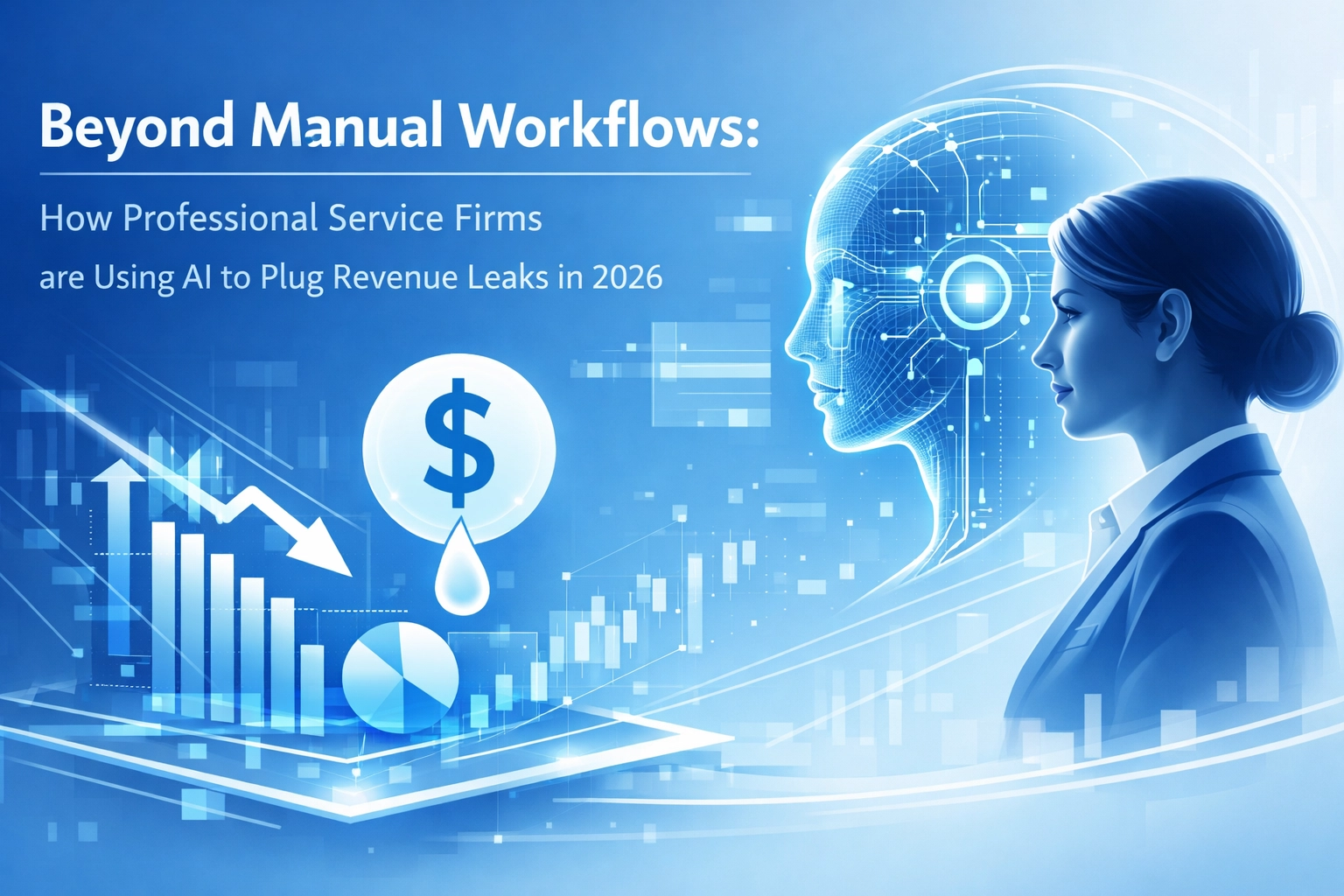
  • Beyond Manual Workflows: How Professional Service Firms are Using AI to Plug Revenue Leaks in 2026

    Beyond Manual Workflows: How Professional Service Firms are Using AI to Plug Revenue Leaks in 2026

    The landscape of professional services has shifted dramatically as we move through the first quarter of 2026. For debt collection agencies, law firms, and accounting practices, the primary challenge is no longer just "getting the work done." The challenge is identifying where the work: and the revenue associated with it: is quietly slipping through the cracks of legacy systems.

    In the past, growth was tethered to headcount. If you wanted to manage more accounts or handle more cases, you hired more people. But in an era where operational efficiency is the ultimate competitive advantage, scaling via labor dependency is a strategy of the past. Today, visionary firms are turning toward high-level business process automation consulting to transition from manual, error-prone workflows to intelligent, self-correcting systems.

    At Pure Technology Consulting, we’ve seen that the most significant "revenue leaks" aren't caused by a lack of effort, but by the friction of manual intervention.

    The Hidden Cost of Manual Workflows

    For a debt collection agency or a professional service firm, a "manual workflow" is often a euphemism for a revenue leak. When a team member has to manually move data from a telephony system into a CRM, or when a billing specialist has to cross-reference contract terms against invoiced hours, there is a statistical certainty of error.

    Research into revenue operations suggests that manual audits typically only catch a fraction of discrepancies: often sampling just 5% to 10% of transactions. By contrast, AI-driven systems monitor 100% of data flows in real-time. In 2026, the firms leading their respective markets are those that have replaced retrospective audits with proactive, automated governance.

    Identifying the Gaps

    Revenue leakage typically occurs in three specific areas:

    1. Administrative Friction: Time spent on data entry instead of high-value negotiation or advisory work.
    2. Process Gaps: Leads or accounts that fall out of the follow-up sequence because a manual "trigger" was missed.
    3. Contractual Deviations: Services rendered that are never billed because they don't fit the standard manual template.

    Digital automation repairing fragmented data nodes to plug revenue leaks in professional services.

    Strategic Business Process Automation Consulting

    When we engage with professional service firms, we don't start with tools; we start with the operating model. Business process automation consulting is about mapping the journey of a single dollar from the moment a lead is captured to the moment the cash hits the bank account.

    In debt collection, for instance, we leverage our experience with complex telephony integrations and call attribution. By automating the link between a call outcome and the next step in the legal or collection workflow, we eliminate the "human lag" that often results in missed recovery windows.

    For firms used to the "hire to grow" model, this shift requires a new roadmap. Instead of asking "Who can we hire to fix this?", the question becomes "How can we build a system that prevents this error from occurring in the first place?"

    Real-Time Reporting: From Hindsight to Foresight

    One of the greatest leaks in any professional service firm is the lack of real-time visibility. Traditional reporting is often a "post-mortem": you find out on the 15th of the month that you missed your targets for the previous month.

    Custom real-time reporting dashboards change the executive decision-making process. By integrating data from disparate sources: CRM, billing, project management, and communication tools: we provide a single source of truth.

    What Operational Efficiency Looks Like in 2026

    • Predictive Flagging: AI identifies accounts that are likely to default or cases that are falling behind schedule before they hit a critical threshold.
    • Automated Reconciliation: Systems that automatically match incoming payments to specific invoices, reducing the "unallocated cash" pile that plagues many accounting departments.
    • Dynamic Resource Allocation: Visualizing team bandwidth in real-time so that high-priority, high-revenue tasks are always handled by the right people at the right time.

    Operational efficiency dashboard visualizing real-time growth and cash flow for professional firms.

    Scaling Without Labor Dependency

    The "Staffing Trap" is a phenomenon where a firm's overhead grows at the same rate as its revenue, leading to stagnant margins. To break this cycle, firms must decouple their ability to generate revenue from the number of hours their staff works.

    This is where bespoke web applications and custom automation come into play. We’ve seen this transformation firsthand in other high-stakes industries. For example, in healthcare, we developed matching engines and HIPAA-adjacent workflows that handled complex intake processes involving 70+ variables. This same logic is now being applied to debt collection and legal workflows.

    By building a custom "operating system" for your firm, you allow your senior talent to focus on strategy and high-level negotiation, while the AI handles the repetitive, high-volume tasks that previously required a small army of entry-level staff.

    Proven Capabilities: The Cross-Industry Advantage

    At Pure Technology Consulting, we don’t believe in starting from scratch. We bring proven capabilities from highly regulated and complex fields into the professional services sector.

    • From Fintech & Debt: We apply our expertise in telephony integrations and call attribution to ensure every interaction is tracked and every follow-up is automated.
    • From Field Operations: We take the accountability and GPS logging logic used in door-to-door tracking and apply it to "digital accountability" for remote professional service teams.
    • From Healthcare: We use the logic of complex intake and matching engines to streamline how law firms and collection agencies categorize and prioritize their caseloads.

    The goal is to build a high-ticket, bespoke solution that fits your specific workflow, rather than forcing your firm to adapt to a "one-size-fits-all" SaaS product.

    Bespoke software integration connecting industry-specific modules into a custom business system.

    Where Custom Software Beats SaaS

    Many firms fall into the trap of "SaaS Sprawl": subscribing to a dozen different platforms that don't talk to each other. This creates new revenue leaks as data gets trapped in silos.

    A custom build or a deeply integrated automation layer acts as the "connective tissue" for your business. It allows you to maintain your proprietary processes: the things that actually make your firm unique: while benefiting from the scale that automation provides. Whether it's a custom web app for client onboarding or an automated reporting engine, the focus is always on the specific ROI of the engagement.

    Taking the First Step Toward Transformation

    Plugging revenue leaks is not an overnight task, but it is a systematic one. The transition from manual workflows to AI-driven efficiency follows a clear roadmap:

    1. The Workflow Audit: Identifying where manual intervention is currently required and quantifying the "friction cost" of those tasks.
    2. The Strategy Phase: Designing an operating model that prioritizes high-revenue activities.
    3. The Implementation: Building the integrations, dashboards, and custom automations that support that model.
    4. Governance & Scaling: Continuously monitoring the system to ensure compliance and identify new opportunities for optimization.

    If your firm is currently struggling to scale, or if you suspect that "process gaps" are costing you a percentage of your top-line revenue every month, it’s time to move beyond the manual.

    Book a Discovery Call

    The path to operational excellence starts with a conversation. We specialize in helping professional service firms and debt collection agencies build the custom software and automation systems they need to thrive in 2026 and beyond.

    To discuss your current workflows and explore how we can help you plug your revenue leaks, schedule a discovery call with our team. My assistant, Emily, will help coordinate a time that works for a deep dive into your firm's specific needs.

    You can also explore our video walkthroughs to see examples of the complex web applications and automation engines we have built for clients across the fintech, healthcare, and field operations sectors.


    Amin Said, Founder of Pure Technology Consulting LLC
    https://puretechconsult.com
    +1 (803) 921-0969

    Book a consultation

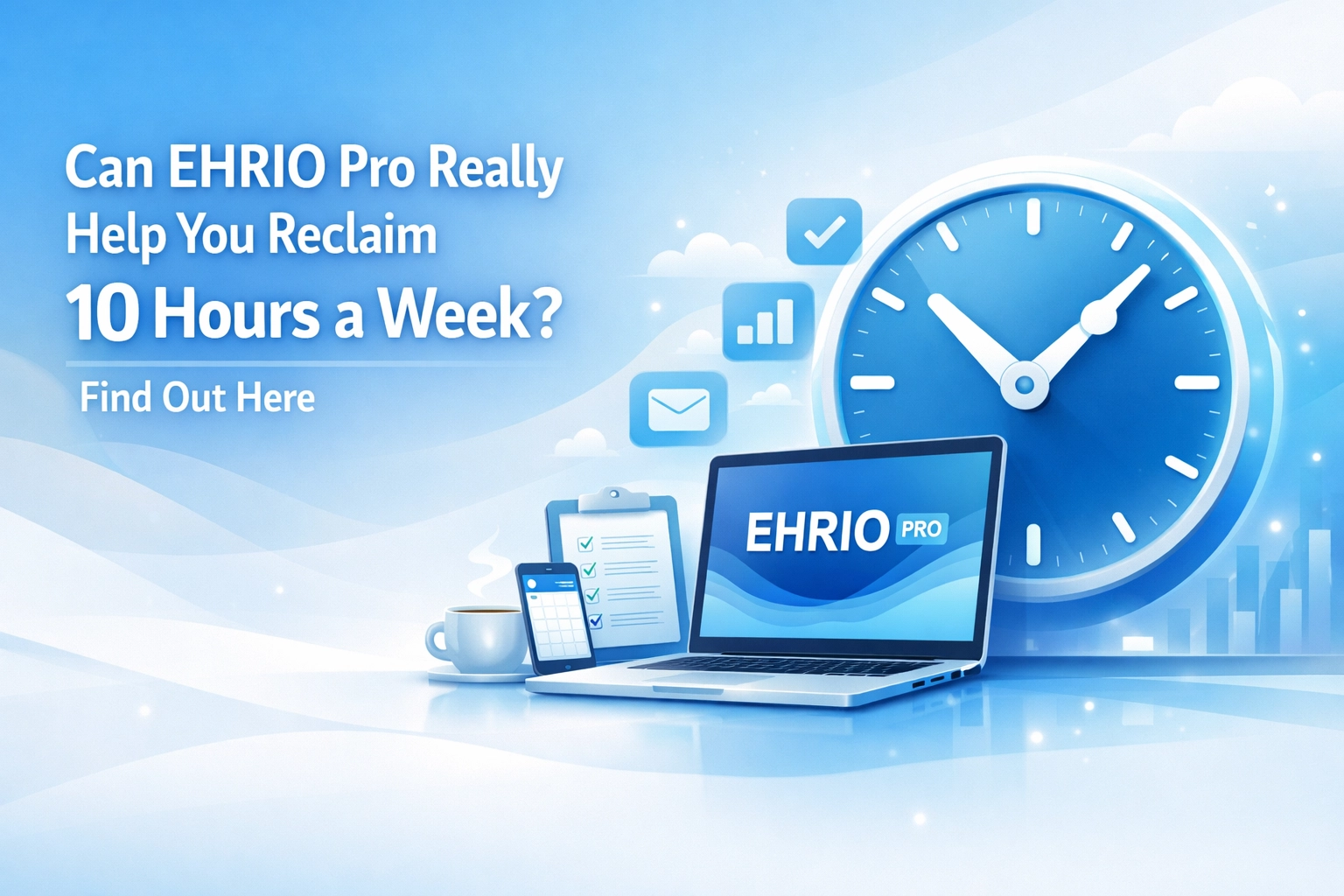
  • Can EHRIO Pro Really Help You Reclaim 10 Hours a Week? Find Out Here

    Can EHRIO Pro Really Help You Reclaim 10 Hours a Week? Find Out Here

    In the landscape of modern enterprise, time is the only non-renewable resource. For CEOs and operational leaders, the struggle isn't typically a lack of vision; it is the friction of execution. We often see brilliant strategies bogged down by "operational drag", the collective weight of manual data entry, fragmented communication, and outdated intake processes.

    When we talk about reclaiming 10 hours a week, we aren’t talking about a new calendar app or a "life hack." We are talking about structural transformation. At Pure Technology Consulting, we’ve demonstrated this through the development of proprietary assets like EHRIO Pro. While EHRIO Pro serves as a powerful healthcare matching engine, its true value lies in what it represents: the ability to automate complex, high-stakes decision-making.

    The Anatomy of the 10-Hour Leak

    Before we can discuss the solution, we must diagnose the "leak." In professional services, be it healthcare, law, or accounting, the most significant time-wasters are often hidden in plain sight. They live within the "intake-to-output" cycle.

    Consider a standard professional workflow:

    1. Initial Contact: Gathering basic data from a lead or patient.
    2. Validation: Verifying that data against internal or external standards.
    3. Matching/Assignment: Deciding which resource, provider, or specialist is best suited for the specific needs identified.
    4. Onboarding: Transitioning that data into an operating system.

    In most organizations, these four steps involve multiple spreadsheets, manual email chains, and cognitive heavy lifting from senior staff. This is where the 10 hours disappear. You aren’t losing 10 hours in one block; you are losing 15 minutes, 40 times a week, to tasks that a machine could perform with higher precision.

    EHRIO Pro: A Case Study in High-Level Automation

    EHRIO Pro was designed to solve a very specific, high-friction problem in the healthcare sector: matching patients with the right providers and care plans through a rigorous, 70-question intake process.

    In a manual environment, processing a 70-question intake is an administrative nightmare. It requires a human to read every answer, cross-reference them with provider availability and expertise, and ensure compliance with HIPAA-adjacent workflows. It is slow, prone to error, and expensive.

    Visual representation of EHRIO Pro streamlining fragmented data into an efficient, automated workflow.

    By building a custom matching engine within EHRIO Pro, we transformed this process into a near-instantaneous operation. The system doesn't just store data; it analyzes it. It applies governance and logic to the intake, ensuring that the output, the "match", is based on hard data rather than administrative intuition.

    Why Custom Logic Beats Off-The-Shelf SaaS

    Many executives attempt to solve their time-management issues by layering on more SaaS subscriptions. The problem is that generic software is built for a generic user. It forces your unique business logic to fit into a pre-defined box.

    When we build bespoke web applications or deploy assets like EHRIO Pro, we do the opposite. We build the box around your logic. This "bespoke development" approach is the key to reclaiming significant portions of your workweek.

    Where custom software provides leverage:

    • Complex Intakes: Transitioning from simple contact forms to intelligent, conditional logic systems that qualify leads or patients automatically.
    • Governance and Compliance: Automating the "check-and-balance" steps that usually require a human supervisor to sign off on.
    • System Integration: Ensuring that data flows from your intake engine (like EHRIO Pro) directly into your CRM or project management tool without human intervention.

    Translating Healthcare Efficiency to Legal and Accounting

    While EHRIO Pro was born in the healthcare space, the underlying architecture is a roadmap for any professional service firm. We are currently seeing a massive shift in how legal and accounting firms handle their operational workflows.

    A law firm managing personal injury cases or an accounting firm handling complex tax audits faces the same "matching" problem as a healthcare provider. They have a high volume of data points (the "intake") that must be matched against a specific set of rules, regulations, and internal resources.

    A digital illustration of a custom matching engine connecting client data to expert resources.

    By applying the same matching engine principles we used in EHRIO Pro, a law firm can automate the initial case assessment. Instead of a paralegal spending hours reviewing intake notes, a custom-built automation can flag high-priority cases, identify conflicts of interest, and assign the file to the correct attorney in seconds.

    This isn't just about speed; it's about shifting your highest-paid employees from "data processors" to "decision makers."

    The Strategic Value of Reclaimed Time

    What does a CEO do with an extra 10 hours a week? The answer defines the trajectory of the company.

    When you remove the burden of micro-managing workflows, you create space for:

    • Market Expansion: Exploring new niches or service lines.
    • Strategic Partnerships: Building the relationships that drive long-term growth.
    • Innovation: Thinking about the next evolution of your business model.

    Transformation is not about working harder; it is about increasing your operational leverage. If your current systems require you to be involved in the "how" of every project, you are capped by your own bandwidth. Automation allows you to focus exclusively on the "what" and the "why."

    How to Start Your Workflow Audit

    Reclaiming your time starts with a cold, hard look at your current operating model. We recommend a "Workflow Audit" to identify the bottlenecks that are ripe for automation.

    Ask yourself these three questions:

    1. Is this task repetitive? Does it happen every time a client or patient enters our ecosystem?
    2. Is the logic "if/then"? Could I write down the rules for this decision on a piece of paper? (e.g., "If the client is in New York and needs tax help, then assign to Partner A.")
    3. Is this task a prerequisite? Does it hold up other departments or team members from starting their work?

    If the answer to these questions is "yes," you aren't looking at a management problem: you're looking at a software opportunity.

    A CEO overlooking a clear horizon symbolizing mental clarity and time reclaimed through automation.

    The Pure Technology Consulting Approach

    At Pure Technology Consulting, we don’t just sell products; we architect solutions. Whether it's through our Local SEO automation via AI Local Boost, our telephony integrations for fintech, or the matching engines found in EHRIO Pro, our goal is to build the digital infrastructure that supports visionary growth.

    We specialize in high-ticket, bespoke web applications and custom automation. Our engagements often start at $10k+, because we aren't just building an app; we are building a new operating model for your business. We bring proven capabilities from highly regulated industries: like healthcare and fintech: and apply them to your specific challenges.

    If you are tired of losing 10 hours a week to the "administrative drag," it is time to stop looking for better habits and start looking for better systems.

    Building the Future of Your Operations

    The transition to a fully automated, high-leverage business doesn't happen overnight, but it does start with a single strategic decision. By choosing to invest in custom infrastructure, you are deciding that your time: and your team's time: is too valuable to be spent on manual data management.

    EHRIO Pro is a testament to what is possible when you apply visionary thinking to technical challenges. It’s not just about matching patients to doctors; it’s about reclaiming the human element of professional services by letting the machines handle the mundane.

    Are you ready to reclaim your 10 hours?

    Amin Said, Founder of Pure Technology Consulting LLC
    https://puretechconsult.com
    +1 (803) 921-0969

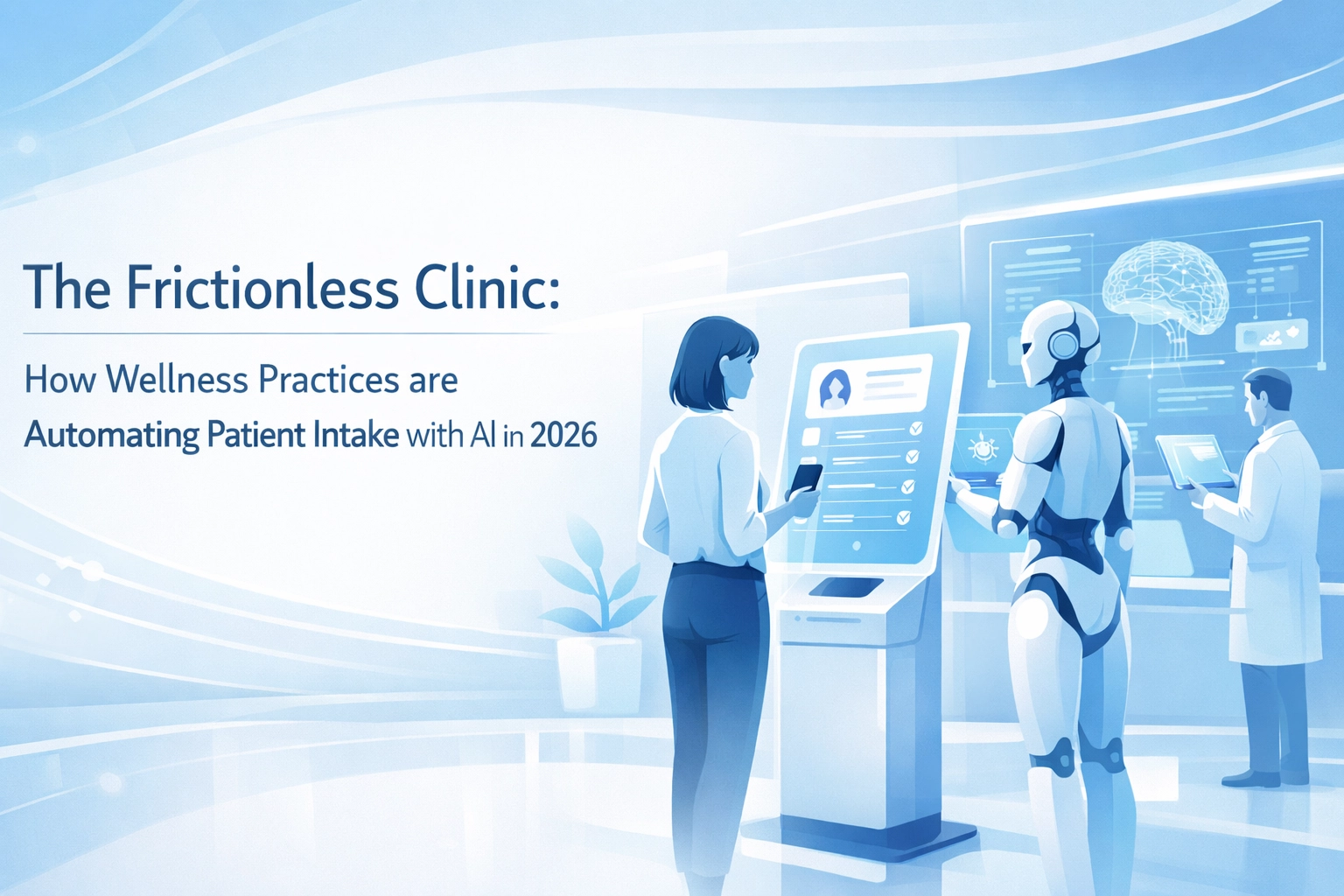
  • The Frictionless Clinic: How Wellness Practices are Automating Patient Intake with AI in 2026

    The Frictionless Clinic: How Wellness Practices are Automating Patient Intake with AI in 2026

    In the world of physical therapy, chiropractic care, and specialty medicine, the "waiting room" has historically been a place of friction. Patients arrive, balance clipboards on their knees, and transcribe the same medical history they’ve provided three times before. Meanwhile, front-desk staff are buried under a mountain of administrative tasks: scanning documents, verifying insurance eligibility, and manually entering data into an Electronic Health Record (EHR) that doesn't talk to the clinic’s marketing or follow-up systems.

    By 2026, this model has become obsolete. The most successful wellness practices have shifted toward a "frictionless" operating model. They aren’t just using digital forms; they are deploying advanced AI workflow automation to handle the entire patient journey from the first click to the first consultation.

    At Pure Technology Consulting, we’ve seen that the clinics winning today aren't necessarily the ones with the most expensive equipment: they’re the ones that have mastered their data flow.

    The Problem: The Great Administrative Drag

    For many specialty clinics, the bottleneck isn't clinical expertise; it’s the administrative drag. When your staff is overwhelmed by admin tasks, patient care suffers. Phone calls go to voicemail, follow-up emails are forgotten, and the "human touch" that defines wellness practices is replaced by a harried front-desk experience.

    The core of this issue is often the "Data Silo." Your EHR is excellent for clinical notes, but it’s a closed box. Your CRM (Customer Relationship Management) system might be great for patient acquisition, but if it doesn't talk to your EHR, you’re stuck in a loop of manual data entry. This lack of integration leads to errors, missed appointments, and a fragmented view of the patient.

    Paper medical forms digitizing into a tablet, representing AI patient intake automation.

    AI Workflow Automation: The New Clinical Teammate

    In 2026, AI is no longer a "feature": it’s a teammate. When we talk about AI workflow automation for patient intake, we aren't just talking about a chatbot on your website. We’re talking about an intelligent system that:

    1. Intercepts Inquiries: Whether a patient finds you via Google or a referral, the AI initiates a conversational intake.
    2. Performs Intelligent Verification: It doesn't just collect insurance info; it verifies eligibility in real-time against payer databases.
    3. Syncs Bi-Directionally: It pushes data into the CRM for the marketing team and into the EHR for the clinicians, ensuring a unified view of the patient without a human ever hitting "Copy-Paste."

    For Physical Therapy and Chiropractic clinics, where treatment plans are longitudinal, this continuity is vital. If a patient drops off their plan, the AI recognizes the gap in the EHR and triggers a personalized re-engagement sequence in the CRM.

    EHRIO Pro: Bridging the Gap Between EHR and CRM

    At Pure Technology Consulting, we’ve developed bespoke solutions like EHRIO Pro to solve the specific challenge of interoperability. While many generic automation tools struggle with the complexity of healthcare data, EHRIO Pro was built to function as a specialized matching engine.

    One of our core capabilities involves handling high-complexity intakes: sometimes involving 70+ specific health questions: and mapping that data directly into HIPAA-compliant clinical workflows. By using EHRIO Pro as a proof of concept for our custom development, we’ve shown that clinics can reduce their manual intake time by over 80%.

    Instead of a staff member spending 20 minutes per patient on data entry, the system handles the heavy lifting. The staff is then free to focus on what they do best: welcoming patients and providing care.

    EHR and CRM systems syncing through a secure bridge for a unified patient view.

    Why Physical Therapy and Chiropractic Clinics are Leading the Charge

    Specialty clinics are uniquely positioned to benefit from AI because their business model relies heavily on repeat visits and patient adherence.

    • For Chiropractors: AI can automate the "New Patient" funnel, ensuring that X-ray results or initial assessment notes are immediately available to the patient via a secure portal, increasing transparency and trust.
    • For Physical Therapists: Automation can track functional progress markers. If an AI identifies that a patient’s reported pain levels aren't improving based on their digital check-ins, it can alert the therapist to adjust the treatment plan before the next visit.

    By connecting the EHR to the CRM, you create a "Closed-Loop" system. You know exactly which marketing efforts led to which clinical outcomes, and you can automate the patient’s journey throughout the entire recovery process.

    The 2026 Standard: Voice and Multimodal Intake

    We are moving past the era of clicking boxes. In 2026, frictionless clinics are adopting Voice AI. Imagine a patient being able to complete their intake via a natural conversation on their phone while driving or at home.

    Modern AI systems now support sub-700ms latency and can detect over 50 languages. This isn't just a convenience; it’s an accessibility win. Patients who struggle with small text on digital forms can now simply speak their history. The AI parses this conversational data, extracts the relevant medical points, and populates the structured fields in your EHR.

    AI data engine transforming complex patient intake forms into structured clinical records.

    Reducing Staff Burnout with Intelligent Scheduling

    Scheduling remains one of the highest-friction tasks in any clinic. "Does Tuesday at 2:00 work? No? How about Wednesday?" This back-and-forth is a waste of human potential.

    AI-driven scheduling goes beyond a simple calendar link. It uses predictive logic to:

    • Balance the load: Ensuring no single therapist is overbooked while others are idle.
    • Prioritize urgent cases: Recognizing keywords in the intake process (e.g., "acute post-surgical pain") and bumping those patients to the top of the queue.
    • Automate reminders: Sending SMS or Voice reminders that allow patients to confirm or reschedule without calling the office.

    When you reduce the administrative burden, you don't just save money: you save your culture. Staff who aren't overwhelmed by "busy work" are happier, stay longer, and provide better patient interactions.

    How to Move Toward a Frictionless Operating Model

    Transitioning to an AI-automated clinic is a strategic shift, not just a software upgrade. It requires a roadmap that respects data security, HIPAA compliance, and your existing clinical workflows.

    1. Audit Your Friction Points: Where is the data stopping? Where is your staff doing "double entry"?
    2. Connect Your Core Systems: Prioritize the integration between your EHR and your CRM. This is the foundation of a unified patient view.
    3. Deploy Specialized Tools: Look for solutions like EHRIO Pro that understand the nuances of medical data rather than trying to force-fit generic tools.
    4. Iterate and Scale: Start with the intake process, then move to automated follow-ups, and finally to predictive patient analytics.

    The Pure Technology Consulting Approach

    We don't believe in one-size-fits-all SaaS products. Your clinic has a unique way of treating patients, and your software should reflect that. We specialize in building bespoke web applications and AI workflows that fit into your operations, not the other way around.

    Whether it’s a matching engine for a high-volume physical therapy group or a HIPAA-adjacent workflow for a specialty surgical center, our goal is to provide the technical strategy and custom development that turns your clinic into a frictionless machine.

    The future of wellness isn't just about better treatments: it's about a better experience for both the patient and the provider. By leveraging AI workflow automation, you can reclaim your time and focus on what truly matters: healing.

    Voice AI technology converting spoken patient history into organized digital clinical data.

    Ready to Automate Your Clinic's Workflow?

    If your staff is overwhelmed by admin tasks and you're ready to see how custom AI integration can transform your practice, let’s talk. We offer strategic audits to help you identify where automation will have the highest impact on your bottom line and your patient satisfaction.

    Schedule a discovery call with our team: https://puretechconsult.com/schedule

    Explore our video walkthroughs of custom builds: https://puretechconsult.com/video-walkthroughs


    Amin Said, Founder of Pure Technology Consulting LLC
    https://puretechconsult.com
    Contact: +1 (803) 921-0969

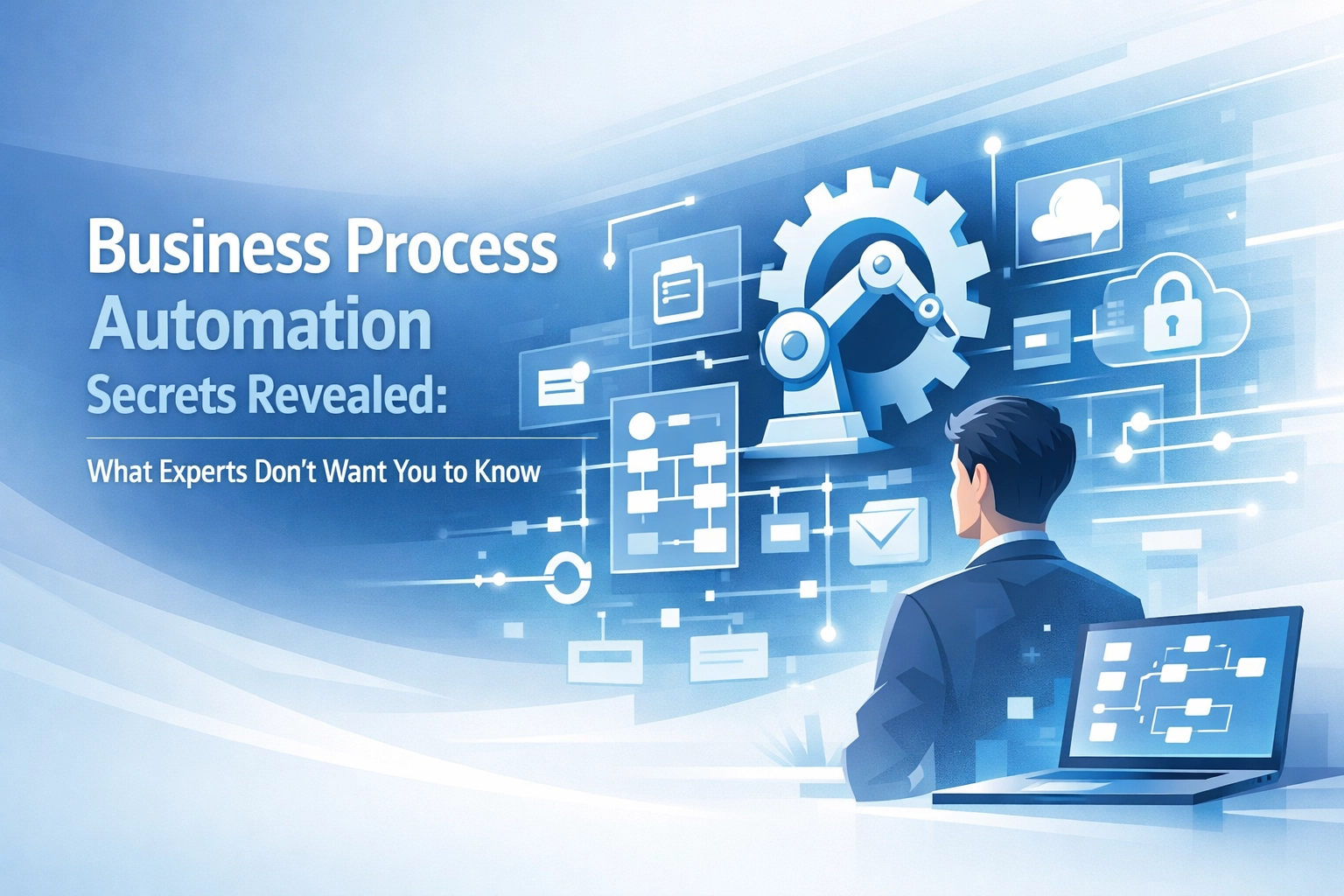
  • Business Process Automation Secrets Revealed: What Experts Don’t Want You to Know

    Business Process Automation Secrets Revealed: What Experts Don’t Want You to Know

    In the boardroom, "automation" is often pitched as a magic wand, a silver bullet that instantly slashes costs and skyrockets productivity. But behind the polished slide decks and software demos lies a reality that most consultants are hesitant to share: true automation is not a product you buy; it is a strategic operating model you build.

    At Pure Technology Consulting, we’ve seen the landscape shift. The gap between businesses that "use software" and those that "leverage intelligent systems" is widening. To stay ahead, executives must move beyond tactical fixes and embrace a visionary approach to their digital infrastructure.

    Here are the secrets to business process automation (BPA) that the industry rarely discusses, and how you can use them to transform your organization into a high-performance engine.

    The First Secret: Automation is a Strategy, Not a Tool

    Most organizations treat automation as a series of disconnected tasks. They automate an email here, a spreadsheet there, and a data entry point somewhere else. This creates "automation silos", fragments of efficiency that don't actually move the needle on the company's bottom line.

    The real secret? High-ticket transformation happens when automation is woven into your organizational DNA. It’s about looking at your entire workflow and identifying where manual drag is costing you more than just time. It’s about risk mitigation, data integrity, and freeing your most expensive assets, your people, to perform high-value, creative, and strategic work.

    When we approach a custom web application build, we don't start with code. We start with the roadmap. We look at the business context and the long-term goals. If your automation doesn't align with your 5-year vision, it's just technical debt in a fancy suit.

    Strategic digital blueprint showing a roadmap for long-term business process automation planning.

    Case Study in Precision: FTP Inform and Operational Centralization

    One of the most common pitfalls in modern business is the fragmentation of data across various servers and platforms. Experts often suggest buying more "integrator" tools, but these often add layers of complexity without solving the core issue.

    Our proprietary solution, FTP Inform, serves as a prime example of how bespoke thinking solves deep-rooted operational problems. While many companies struggle with manual file monitoring and data transfer protocols, FTP Inform automates the heavy lifting of server oversight.

    By centralizing notifications and status updates from various file transfer protocols, it eliminates the need for manual check-ins. This isn't just about "saving time"; it's about governance. When you know exactly how data is moving through your ecosystem in real-time, you reduce the risk of missed deadlines and broken pipelines. This is the level of transparency we bring to every bespoke software development project.

    The 10-Hour Rule: Why You Should Say "No" to Most Automation

    It sounds counterintuitive, but one of the biggest secrets in the industry is that not everything should be automated. There is a "marginal utility" to automation. If a process takes five minutes once a month, building an automated workflow for it is a waste of resources.

    The industry benchmark we use at Pure Technology Consulting is the 10-Hour Rule. We advise our clients to prioritize automating processes that currently consume a minimum of 10 hours of manual labor per week.

    Why? Because automation requires maintenance. APIs change, business requirements evolve, and systems need updates. If you automate a low-impact task, the maintenance cost will eventually outweigh the savings. By focusing on high-impact opportunities: like complex client intake or recurring financial reporting: you ensure a massive return on investment (ROI) and a meaningful shift in team capacity.

    Digital hourglass showing the conversion of manual labor into high-value time savings and operational ROI.

    Custom Builds vs. The SaaS Trap

    Many executives believe that subscribing to a dozen different SaaS products is the fastest way to achieve digital transformation. This is what we call the "SaaS Trap." You end up with a "Frankenstein's Monster" of apps that don't talk to each other, leading to "data islands" and subscription bloat.

    The secret that large-scale enterprises know is that bespoke web applications are often more cost-effective in the long run. When you build a custom tool, it is designed around your specific workflow, not a generic industry average.

    Take, for example, our work with EHRIO Pro. In the healthcare and professional services sectors, matching complex data sets and managing 70-question intake forms is a nightmare in off-the-shelf software. We built EHRIO Pro to handle these high-fidelity workflows with precision. This type of matching engine and intake automation is a blueprint we are now bringing to the legal and accounting sectors. When your software fits your business like a glove, the "operational drag" disappears.

    The Human Oversight Paradox

    Experts often claim that automation "eliminates human error." This is only half-true. Automation eliminates repetitive human error, but it can also scale systemic errors at lightning speed if not properly governed.

    Successful organizations maintain what we call "Human-in-the-Loop" (HITL) checkpoints. Whether it’s AI-powered automation or a custom data pipeline, there must be a layer of manual backup and routine auditing. At Pure Technology Consulting, we don’t just build "set and forget" systems. We design dashboards and monitoring tools that allow leadership to maintain total visibility and control over their automated assets.

    Human oversight of automated systems via a digital interface for operational visibility and control.

    Bridging the Gap Between IT and the Boardroom

    Another secret to BPA success is the total alignment of business and technical teams from day one. In many companies, the IT department is treated as a "ticket-taker" rather than a strategic partner.

    Visionary automation happens when business leaders and developers sit at the same table to understand the end-to-end process. We don't just look at the code; we look at the stakeholders, the compliance requirements, and the customer experience. This holistic approach ensures that the final product: whether it's a custom CRM, a Fintech telephony integration, or a GPS-logged accountability tool: actually solves a business problem rather than just checking a technical box.

    For instance, our AI Local Boost (AILB) product wasn't just built to "post to Google." It was built to solve a specific business problem: the time-consuming nature of local SEO and Google Business Profile management. By automating these interactions, we provide local businesses with the same level of digital authority that major corporations enjoy, without the massive agency overhead.

    A glowing bridge symbolizing the alignment between business strategy and custom software development.

    Automation as an Ongoing Evolution

    The final secret is that automation is never "done." It is a living part of your business that must evolve as you grow. A solution that works for a $1M firm will likely break at $10M.

    This is why we emphasize a consultative, visionary partnership. We aren't just here to write code; we are here to provide a roadmap for your digital future. Our experience in healthcare, fintech, and field operations: from D2D tracking with GPS logging to debt agency telephony integrations: allows us to bring "cross-pollinated" ideas to your specific industry. We take what works in high-compliance, high-stakes environments and apply it to your bespoke project.

    Your Path Forward

    If you are tired of fragmented systems and manual bottlenecks, it’s time to stop looking for a "plugin" and start looking for a partner. Business process automation is the key to unlocking the next level of your company’s potential, but it requires a disciplined, strategic approach.

    At Pure Technology Consulting, we specialize in building the high-ticket, custom web applications and AI-powered automations that drive real growth. Whether you need to centralize your data monitoring with tools like FTP Inform or build a completely custom platform to manage your complex operations, we have the proven capabilities to make it happen.

    Ready to stop the manual drag and start the transformation?

    Let’s discuss your roadmap. We offer a visionary discovery process to identify your high-impact automation opportunities and design a solution that scales with your ambition.

    Request a workflow audit and discovery call today.

    Pure Technology Consulting LLC
    +1 (803) 921-0969
    https://puretechconsult.com

    Amin Said, Founder of Pure Technology Consulting LLC
    https://puretechconsult.com

  • Scale Without the Stress: How Multi-Location Service Operators are Using AI Automation Services in 2026

    Scale Without the Stress: How Multi-Location Service Operators are Using AI Automation Services in 2026

    It is 2026, and the "scaling ceiling" has officially changed. A few years ago, growing from three service locations to twenty-five meant a massive increase in middle management, a mountain of spreadsheets, and a prayer that your brand quality wouldn't dilute into a generic mess.

    If you’re a multi-location operator today: whether you’re running a dental group, a string of HVAC franchises, or a network of specialized clinics: you know that physical expansion doesn't just add work; it multiplies complexity. When you double your locations, you often triple your administrative friction.

    But as we settle into 2026, the industry leaders aren't hiring more "coordinators." They are partnering with an automation agency to build custom digital nervous systems. By leveraging AI automation services, these growth-focused owners are achieving something that used to be impossible: scaling rapidly while actually reducing operational stress.

    The Multi-Location Friction Point: Why Traditional Scaling Breaks

    When you have one or two locations, you can manage by "heroics." You know the staff, you see the leads coming in, and you can personally ensure the customer experience is top-tier.

    Once you hit that five-to-ten-location mark, the cracks start to show:

    1. Inconsistent Lead Flow: One location is overbooked, while another has a silent phone. Marketing spend feels like a guessing game because you can’t see which lead sources are actually converting into high-value appointments across the board.
    2. Staff Overwhelmed by Admin Tasks: Your highly-skilled technicians or clinicians are spending 30% of their day on data entry, follow-up calls, and manual scheduling. This leads to burnout and high turnover.
    3. Brand Dilution: The "voice" of your business starts to vary wildly. One branch responds to Google reviews with professional warmth; another ignores them or uses one-word answers.

    In 2026, trying to solve these problems with more manual labor is a losing battle. The solution isn't "more people": it's a more intelligent architecture.

    Digital network showing intelligent architecture for multi-location service operations and workflow efficiency.

    Harnessing AI Automation Services for Quality and Consistency

    The biggest breakthrough for multi-location operators this year has been the shift from "basic bots" to coordinated AI workflows.

    At Pure Technology Consulting, we’ve seen that the most successful operators are using AI to act as a centralized "Brand Governor." Instead of hoping your branch manager in Charlotte remembers to follow up on a lead according to protocol, the system handles it automatically.

    1. Turning Operational Data into Marketing Fuel

    One of the most powerful trends we’re seeing in 2026 is the use of real-time service data to feed AI marketing engines. When a technician completes a complex job in Location A, that data: properly anonymized and structured: can be automatically converted into a geo-specific case study or a Google Business Profile update.

    This ensures that each of your 25 locations has a unique, high-authority digital footprint without requiring your local staff to write a single word of copy. It’s about demonstrating real expertise at scale.

    2. Solving the "Admin Fatigue" Crisis

    Administrative tasks are the silent killer of growth. We focus on building bespoke web development solutions that integrate directly with your CRM and scheduling software.

    Imagine an intake process where a patient or customer fills out a 70-question form (like the ones we’ve built for high-level healthcare matching engines). Instead of a staff member manually reviewing and routing that data, AI analyzes the complexity of the request, checks it against your current location-specific capacity, and routes the lead to the exact right specialist.

    This doesn't just save time; it ensures that the "lead-to-appointment" speed is near-instant, regardless of which location the customer is contacting.

    Why an Automation Agency is the Secret Weapon for Rapid Growth

    Many business owners make the mistake of buying five different SaaS products and trying to "zap" them together. This creates a "Frankenstein" system that eventually breaks under the weight of 25 locations.

    This is where a specialized automation agency comes in. We don't just give you a tool; we design an operating model.

    For example, when we work with multi-location service providers, we look at the entire lifecycle of a customer. We’ve built GPS logging and rep accountability systems for field operations that ensure that when you say a tech is "on-site," the system verifies it, logs the data, and updates the customer automatically. This level of transparency across 50 trucks or 20 clinics is what allows a CEO to sleep at night.

    Futuristic digital nervous system representing AI automation services and custom software integration for growth.

    Leveraging Proven Capabilities: From Healthcare to Legal and Beyond

    At Pure Technology Consulting, we don’t believe in starting from scratch. We bring proven "battle-tested" capabilities from complex industries into the local service space:

    • Matching Engines & Intake: Drawing from our work in healthcare (like the EHRIO Pro matching engines), we build intake systems that qualify leads before they ever touch your staff’s calendar.
    • Telephony & Call Attribution: Borrowing from high-stakes fintech and debt agency workflows, we integrate custom telephony that tracks every call, identifies the source, and uses AI to summarize the sentiment of the conversation. This gives you a "bird’s eye view" of lead quality across all 25 locations from a single dashboard.
    • Local SEO Governance: Using proprietary logic (similar to our AI Local Boost frameworks), we ensure that your Google Business Profiles are optimized across every territory simultaneously, solving the "inconsistent lead flow" problem for good.

    Strategic Governance: Keeping Control While Letting Go

    The biggest fear of scaling is losing control. How do you know that Location #14 is treating customers as well as Location #1?

    In 2026, AI provides "automated governance." We set up systems that monitor communication patterns, review scores, and response times across all branches. If a specific location’s performance dips below a certain threshold, the system flags it for the executive team before it becomes a crisis.

    This isn't about micromanaging; it’s about having the visibility required to lead. You can view video walkthroughs of how these types of dashboards function to see the level of clarity they provide.

    The Path to 25 Locations Starts with a Blueprint

    If you are currently at 3, 5, or 10 locations and feeling the "stress of the mess," it’s time to stop looking for more staff and start looking at your architecture.

    Scaling without the stress requires a partner who understands both the technical "how" and the strategic "why." At Pure Technology Consulting, we specialize in building the bespoke software and AI automation services that turn a scattered group of locations into a unified, high-performance machine.

    The transition from a local business owner to a multi-location operator is a mental shift as much as an operational one. It requires moving from "doing the work" to "designing the system that does the work."

    Digital map of business territories visualizing automated governance for multi-location service operators.

    Ready to Build Your Scaling Engine?

    Don't let admin tasks and inconsistent lead flow throttle your growth. The technology of 2026 is here to act as your force multiplier. Whether you need a complete workflow audit or a custom-built web application to manage your field operations, we are here to guide the way.

    Let’s talk about your roadmap to 25 locations.

    Schedule a Discovery Call to discuss your custom automation needs and see how we can help you scale without the stress.

    Pure Technology Consulting LLC
    Consultative. Visionary. Bespoke.
    +1 (803) 921-0969
    https://puretechconsult.com

    Amin Said, Founder of Pure Technology Consulting LLC
    https://puretechconsult.com

  • Why AI Workflow Automation Will Change the Way You Scale Your Service Business

    Why AI Workflow Automation Will Change the Way You Scale Your Service Business

    For decades, service-based businesses have been trapped in a linear growth model. If you wanted to double your revenue, you essentially had to double your headcount. This "1:1 ratio" of growth to labor has long been the primary bottleneck for CEOs in professional services, healthcare, and consultancy. Every new client meant a new account manager; every new project required a new specialist.

    But we are entering an era where this fundamental constraint is dissolving. AI workflow automation isn't just a marginal improvement for your back office; it is a complete restructuring of how service businesses scale. At Pure Technology Consulting, we view this transition as the most significant shift in operational strategy since the industrial revolution.

    Scaling no longer has to mean "growing pains." By decoupling your output from your headcount, you can finally build a business that is both highly profitable and operationally resilient.

    The Scaling Paradox: Why Traditional Growth Often Fails

    Most service businesses experience a "margin squeeze" as they expand. When you are small, you have high visibility and low overhead. As you scale, you introduce complexity. You hire middle management to oversee new staff, you implement more software that doesn't talk to each other, and you spend more time on "work about work" than on delivering actual value to clients.

    This is the scaling paradox: the larger you get, the less efficient you often become.

    AI workflow automation solves this by creating a "Digital Operating Layer" that handles the repetitive, high-volume tasks that typically bog down a growing team. Research indicates that organizations implementing these workflows see a 30–40% improvement in overall efficiency. Instead of your senior team members spending four hours a day on data entry, scheduling, or basic reporting, they return to the high-level strategy and client relationship management that actually drives the business forward.

    Streamlined digital pathway representing AI workflow automation and efficient business scaling.

    Scaling Without the Linear Staff Growth

    The goal of a modern service business should be to handle a 100% increase in workload with only a 10% or 20% increase in staff. This is achieveable when you treat AI as an "elastic workforce."

    Unlike human employees, AI does not need to be recruited, onboarded, or managed in the traditional sense. It doesn't get burnt out during peak seasons. Whether you are processing 10 intake forms a day or 1,000, an automated system performs with the same speed and accuracy.

    Consider the work we’ve done with EHRIO Pro. In the healthcare space, matching patients to practitioners and managing complex 70-question intake forms is a massive administrative burden. By building a custom matching engine and automating the intake workflow, we didn’t just speed up the process: we created a system that allows a small administrative team to manage a massive network of providers. This is the definition of operational leverage: achieving more output per unit of human input.

    Cost-Efficient Growth and Margin Protection

    One of the hardest parts of scaling a service business is maintaining your profit margins. As you hire, your payroll becomes your largest expense. AI automation typically delivers 25–50% cost reductions in targeted processes because it eliminates the need for manual labor on non-billable tasks.

    When we look at custom web applications, we aren't just looking at "apps"; we are looking at profit-protecting assets. Whether it’s integrating telephony systems for call attribution or automating billing and delivery, these custom builds ensure that your overhead remains flat even as your client list grows.

    By reducing reliance on manual labor, you minimize the risk of human error: errors that often lead to expensive rework, lost clients, or compliance issues. In industries like legal or accounting, where precision is paramount, the cost of an error isn't just a lost hour of work; it’s a potential liability.

    Strategic Proof: Leveraging Proprietary Systems for Custom Solutions

    At Pure Technology Consulting, we don’t just talk about automation; we build the architecture that sustains it. We use our proprietary products as blueprints for what is possible for our high-ticket clients.

    • AI Local Boost (AILB): We’ve used this to demonstrate how local service businesses can automate their Google Business Profile presence and reputation management. It’s not just about SEO; it’s about automating the "front door" of your business so your team doesn't have to manually manage reviews and updates.
    • ChainHQ: This is our proof-of-concept for complex data aggregation. For service businesses managing multiple locations or complex supply chains, ChainHQ serves as the "brain," showing how custom dashboards can provide real-time governance and visibility across a distributed organization.
    • FTP Inform: Data security and seamless file management are often the "unseen" friction points in scaling. FTP Inform demonstrates our ability to build secure, automated data transfer systems that ensure compliance without sacrificing speed.

    These aren't just standalone products; they are examples of the bespoke development we provide for firms that have outgrown "off-the-shelf" SaaS solutions.

    Interconnected digital blocks representing custom software architecture and bespoke automation solutions.

    Maintaining Consistent Quality at Scale

    The biggest fear most CEOs have when scaling is that their quality will drop. When you have five employees, you can watch everything they do. When you have fifty, you can't.

    AI workflow automation acts as a "Digital Standard Operating Procedure (SOP)." It ensures that every client gets the exact same experience, every time. Whether it’s the way a proposal is generated, how a project is kicked off, or how data is reported, the AI follows the logic you’ve set without deviation.

    In our work with high-stakes industries: like our Fintech/Debt Agency telephony integrations: consistency is a requirement, not a luxury. By automating call attribution and logging, we remove the "human variable" that leads to data gaps. This allows the business to scale its operations while actually improving its data integrity and client satisfaction.

    Real-Time Decision Support: The CEO’s Secret Weapon

    As you scale, the distance between the CEO and the front lines of the business increases. You begin to rely on reports that might be days or weeks old.

    AI-driven workflows offer 40–60% faster decision cycles. Because the data is being captured and processed in real-time through custom integrations, you can see exactly where the bottlenecks are occurring as they happen. This allows for a shift from reactive management (fixing problems after they occur) to proactive strategy (optimizing systems before they break).

    Imagine a custom dashboard tailored to your specific KPIs: one that doesn’t just show you "revenue," but shows you the "efficiency per billable hour" across three different departments, updated every 15 minutes. This is the level of visibility required to lead a modern, scalable service business.

    Digital interface representing real-time data visibility and strategic oversight for business scaling.

    Moving Toward a Bespoke Future

    The "one-size-fits-all" SaaS model is reaching its limits for high-ticket service businesses. While generic tools are a great starting point, true scaling requires custom architecture that fits your unique operations like a glove.

    Whether you are a legal firm looking to automate discovery and intake, an accounting firm looking to streamline complex tax filings, or a healthcare provider needing HIPAA-adjacent matching engines, the path to 10x growth isn't through hiring more people: it’s through building better systems.

    At Pure Technology Consulting, we specialize in this transition. We help you identify the "operational drag" in your current model and build the custom web apps and AI workflows that turn your business into a scalable machine.

    Your Strategic Roadmap

    If you are ready to stop trading hours for dollars and start scaling with precision, it begins with a workflow audit. We look at your current "operating model" and identify where custom software and AI can provide the most leverage.

    Change is not about "rescue"; it’s about leverage. It’s about taking the proven capabilities of your team and amplifying them with technology that doesn't sleep, doesn't make mistakes, and doesn't limit your growth.

    Ready to see how a custom-built digital infrastructure can redefine your business trajectory? My assistant, Emily, can help you coordinate a discovery call to audit your current workflows. Let’s build the engine that drives your next phase of growth.

    Amin Said, Founder of Pure Technology Consulting LLC
    https://puretechconsult.com
    Phone: +1 (803) 921-0969
    Schedule a Consultation

  • The Data Silo Death Sentence: Why API Integration Services are No Longer Optional in 2026

    The Data Silo Death Sentence: Why API Integration Services are No Longer Optional in 2026

    It’s Tuesday, March 24, 2026, and the landscape of service-based business has reached a definitive tipping point. For years, we’ve talked about "digital transformation" as a goal to be reached eventually. But as of this year, the grace period is officially over.

    If your organization is still relying on manual CSV exports to move data between your CRM, your accounting software, and your field operations tools, you aren't just dealing with a minor inconvenience. You are facing what I call the "Data Silo Death Sentence." In a market that moves at the speed of AI-driven automation, a disconnected system is a slow-motion catastrophe for your margins, your compliance, and your ability to scale.

    At Pure Technology Consulting, we’re seeing a massive shift. The conversation has moved from "Can we connect these tools?" to "How fast can we build a unified data backbone?" API integration services have evolved from a "nice-to-have" IT project into the most critical infrastructure investment a service business can make.

    The Operational Drag of Disconnected Systems

    For operationally constrained service businesses: especially those managing multiple locations: the biggest enemy isn't the competition; it’s the friction inside their own walls.

    When your data lives in silos, your team spends 30% of their day acting as "human middleware." They are copying data from a lead form into a scheduling tool, then exporting a spreadsheet to upload into an invoicing system, and finally trying to reconcile it all in a dashboard that is, by definition, already out of date by the time it’s viewed.

    This manual data handling creates three primary risks:

    1. Data Decay: Information loses value every minute it sits waiting to be moved.
    2. Integrity Erosion: Manual entry is the birthplace of the "typo that cost ten thousand dollars."
    3. Strategic Blindness: If your data isn't real-time, you are making 2026 decisions based on last week's reality.

    Professional silhouette viewing fragmented data silos and disconnected business systems causing operational drag.

    Why 2026 is the Year of No Return

    Why is this a "death sentence" now and not three years ago? The answer lies in the convergence of three powerful forces: Regulatory Mandates, the AI Explosion, and Ecosystem Connectivity.

    1. The Regulatory Hammer

    We are seeing a global shift toward mandatory interoperability. In the healthcare sector, the Fast Healthcare Interoperability Resources (FHIR) mandates are no longer suggestions: they are requirements. Patient data access requirements became firm in early 2026, with prior authorization APIs following closely behind.

    It’s not just healthcare. The financial sector has seen a 50% increase in customer connections through FDX-aligned APIs in the last year. If your service business interacts with these industries: or if you simply want to maintain high-standard security: you can no longer afford to be an island. Being incompatible with modern digital infrastructure means being ineligible for the highest-tier contracts.

    2. The AI Gap

    By now, every CEO has heard that AI will "revolutionize their business." But here is the secret: AI is only as good as its access to data. If your data is trapped in isolated silos, your AI tools are essentially working with one eye closed. Custom internal systems powered by real-time API integration services allow AI to see the entire picture, enabling predictive scheduling, automated client communication, and anomaly detection that manual systems simply can’t match.

    3. Ecosystem Connectivity

    The old model was "App A talks to App B." The 2026 model is "The Ecosystem." You are no longer just managing your internal tools; you are connecting to partners, vendors, and regulatory bodies in real-time. Without a robust API strategy, you are effectively opting out of the modern economy.

    From Manual Exports to Real-Time Automated Flows

    The "backbone" of any scalable service business today is a custom integration layer. We often see businesses try to solve this with "off-the-shelf" automation tools. While those have their place for simple tasks, they often fall short when dealing with complex, multi-location operations that require specific business logic and high-security standards.

    This is where bespoke data integration services become a game-changer. Instead of a fragile web of "zaps," we build a central nervous system for your business.

    The Shift:

    • The Old Way: Exporting a CSV from your field service software on Friday, cleaning it in Excel on Monday, and importing it into your accounting software on Tuesday.
    • The New Way: A technician finishes a job in the field. The moment they hit "complete," the API triggers an invoice in the accounting system, updates the inventory levels in the warehouse, and sends a personalized "thank you" and review request to the client: all in less than two seconds.

    A glowing digital backbone representing seamless API integration services and real-time automated data flows.

    API Integration as the Foundation for Custom Internal Systems

    At Pure Technology Consulting, we don’t just "plug things in." We look at API integration as the foundation for high-leverage custom software. Whether it’s building a custom web development solution or a complex automation engine, the goal is always the same: Operational Leverage.

    Consider our work in high-stakes industries:

    • In Healthcare: We’ve built matching engines that handle complex intakes while maintaining HIPAA-adjacent workflows. Without deep API integration, these systems would be impossible to scale.
    • In Fintech/Debt: We’ve integrated telephony systems with custom CRM platforms to provide real-time call attribution and rep accountability.
    • In Multi-location Operations: We’ve developed GPS logging and rep accountability tools that ensure data flows from the "boots on the ground" directly to the executive dashboard without a single manual touchpoint.

    When you treat integration as a service rather than a one-off task, you gain the ability to pivot. When a new tool comes out or a new regulation is passed, you don't have to rebuild your entire workflow; you simply update the integration point.

    Security and Compliance in the Age of Interconnectivity

    One of the biggest hesitations I hear from CEOs regarding API integration is security. "If everything is connected, isn't everything more vulnerable?"

    In reality, the opposite is true. Disconnected systems often lead to "Shadow IT," where employees use unauthorized tools to bridge the gaps, or they store sensitive data in insecure Excel files on their desktops.

    Modern API integration services actually improve security by:

    • Centralizing Governance: You control who has access to what data through a single, secure gateway.
    • Real-time Monitoring: We use behavioral analysis and telemetry to detect anomalies. If a system starts requesting an unusual amount of data, we can shut it down instantly.
    • Encrypted Identity Context: Each data exchange is backed by modern identity protocols, ensuring that data only moves between trusted entities.

    Secure data governance visualization showing protected central systems and encrypted API integration security.

    The Pure Technology Consulting Approach: Your Workflow Audit

    If you’re feeling the "operational drag" of disconnected systems, the solution isn't to buy more software. The solution is to optimize the software you already have through a strategic integration roadmap.

    We specialize in helping operationally constrained businesses break free from the "CSV trap." We don't just provide a service; we provide a vision for how your company should function in a world where data is your most valuable asset.

    Our process starts with a deep dive into your current operating model. We identify the bottlenecks, the manual data entries, and the "silent killers" of your productivity. From there, we build a bespoke architecture that connects your systems into a unified, automated, and scalable engine.

    Conclusion: Evolve or Become Obsolete

    The "Data Silo Death Sentence" isn't a threat; it’s a reality of the 2026 market. Businesses that continue to operate with fragmented systems will find their margins squeezed by competitors who can move faster, serve clients better, and adapt to regulations instantly.

    API and data integration services are no longer "IT projects." They are the core of your business strategy. If you are ready to stop managing spreadsheets and start managing a high-performance, integrated organization, it’s time to move.

    Let’s look at your current workflows and see where we can inject some real-time intelligence. You can schedule a discovery call with our team to start your audit. We’ll look at your systems, your data flows, and your growth goals to build a roadmap that makes sense for your specific scale.

    The future of your business is integrated. Don’t let your data be the thing that holds you back.

    Amin Said, Founder of Pure Technology Consulting LLC
    https://puretechconsult.com
    +1 (803) 921-0969

  • The Ultimate Guide to Bespoke AI Solutions: Everything You Need to Succeed in 2026

    The Ultimate Guide to Bespoke AI Solutions: Everything You Need to Succeed in 2026

    As we navigate the first quarter of 2026, the artificial intelligence landscape has shifted from a "gold rush" of experimental tools to a sophisticated era of architectural precision. For the modern enterprise, the question is no longer whether to adopt AI, but how to integrate it so deeply into your proprietary workflows that it becomes a permanent competitive moat.

    At Pure Technology Consulting, we’ve seen the market move away from "wrapper" applications: those thin layers over generic LLMs: toward bespoke AI solutions. These are systems built from the ground up to understand your specific data, your industry’s regulations, and your unique operational DNA.

    In this guide, we will explore the strategic roadmap for custom AI implementation and how high-level automation is redefining efficiency for high-ticket service providers, legal firms, and healthcare organizations.

    The Paradigm Shift: Why Bespoke Beats Off-the-Shelf in 2026

    By mid-2026, the limitations of generic AI have become glaringly obvious. Off-the-shelf solutions often struggle with "hallucinations," lack of context regarding private business data, and significant security risks. Research shows that nearly 58% of top-performing firms now prioritize custom-built AI systems to ensure higher accuracy and better ROI.

    Bespoke AI solutions offer three distinct advantages:

    1. Domain Specificity: They are grounded in your specific industry terminology and logic.
    2. Data Sovereignty: Your proprietary data stays within your controlled environment, essential for compliance.
    3. Process Integration: Unlike a separate chat window, bespoke AI lives inside your web applications, triggering actions and updating databases in real-time.

    Bespoke AI solution integration represented by a glowing puzzle piece fitting into a digital grid.

    Case Study in Precision: Our Engineering with EHRIO Pro

    When we look at the requirements for high-stakes industries like healthcare, the need for custom logic becomes undeniable. Our work on EHRIO Pro serves as a perfect example of how we approach complex, data-sensitive builds.

    EHRIO Pro wasn’t built as a generic tool; it was engineered as a high-performance matching engine capable of handling 70-question intake forms and HIPAA-adjacent workflows. This project demonstrated our ability to build custom software that doesn't just "process" data but understands the nuances of patient-provider alignment. For our clients, this represents the standard of bespoke development we bring to every $10k+ engagement: specialized, secure, and strategically aligned with professional standards.

    The Technical Pillars of Modern AI Architecture

    To succeed in 2026, your custom AI roadmap must leverage several key technologies that move beyond simple text generation.

    Retrieval-Augmented Generation (RAG)

    RAG is the backbone of the modern custom assistant. Instead of relying solely on the AI's training data, RAG allows the system to "look up" information in your company’s private documents: contracts, SOPs, and historical case files: before generating a response. This ensures every output is grounded in fact.

    Agentic AI and Multi-Step Reasoning

    We are moving away from single-prompt interactions. Today's bespoke solutions use "agents" that can reason through a problem, plan a series of steps, and execute them across different software systems. If you need an AI to audit a financial statement, cross-reference it with tax law, and then draft a summary for a partner, you are looking for an agentic workflow.

    Small Language Models (SLMs)

    While GPT-4 and its successors are powerful, many bespoke solutions in 2026 utilize SLMs. These are smaller, faster, and cheaper models trained or fine-tuned on a very narrow dataset. They offer incredible performance for specific tasks like legal document classification or medical coding without the massive overhead of "frontier" models.

    Abstract neural network nodes symbolizing agentic AI and multi-step reasoning capabilities.

    Scaling Digital Presence: Demonstrating Capability with AI Local Boost

    Strategic automation isn't just for internal workflows; it’s for how your business interacts with the world. Our development of AI Local Boost (AILB) serves as a testament to our expertise in API orchestration and large-scale automation.

    AILB was designed to solve a specific problem: the manual drudgery of managing Google Business Profiles at scale. By automating local SEO updates and reputation management, we proved that AI can maintain a "human" feel while operating at a velocity impossible for manual teams. When we consult with clients on custom web apps, we draw on the lessons learned from AILB: specifically, how to interface with massive external platforms while maintaining brand consistency and search authority.

    The Build vs. Buy Dilemma: A Strategic Framework

    Deciding between a managed solution and a custom-built one is the most critical decision an executive will make this year.

    • Choose Managed Solutions when you need a generic productivity boost (e.g., summarizing standard emails) and speed-to-market is the only priority.
    • Choose Bespoke Custom Solutions when the workflow involves proprietary "secret sauce," sensitive client data, or complex integrations with legacy systems.

    For high-ticket firms, the "Build" route is often the only way to ensure that the AI reflects the firm's specific expertise and ethical standards. It’s the difference between a generic template and a tailor-made suit.

    Secure Data Orchestration: The Foundation of FTP Inform

    Security is the silent partner in every AI conversation. In our experience building custom automation for the legal and accounting sectors, the transfer of sensitive files is often the weakest link.

    We developed FTP Inform to demonstrate our capability in building secure, automated notification systems for file transfers. In a bespoke AI ecosystem, "data in flight" must be handled with the same rigor as "data at rest." FTP Inform highlights our commitment to building infrastructure that respects the sensitivity of high-stakes professional data, ensuring that as your AI processes information, your security protocols remain uncompromised.

    Your Implementation Roadmap for 2026

    If you are ready to move toward a bespoke AI solution, we recommend a four-stage approach:

    1. The Discovery Phase: Identify the bottlenecks. Is it intake? Document review? Scheduling? We often start with a workflow audit to find where $10k+ of value can be unlocked through automation.
    2. The Architecture Design: This is where we choose between RAG, SLMs, or full agentic workflows. We map out how the AI will talk to your existing web apps.
    3. The Pilot Build: We build a functional version of the solution, often using proprietary frameworks like ChainHQ to orchestrate the multi-step AI logic.
    4. Scaling and Governance: Once the pilot is proven, we scale it across the department, implementing strict monitoring to ensure the AI remains accurate and cost-effective.

    Strategic roadmap for scaling bespoke AI solutions and implementing digital transformation.

    Orchestrating Complexity: The Logic of ChainHQ

    The final piece of the bespoke puzzle is orchestration. Our proprietary asset, ChainHQ, represents our philosophy on how AI should function: as a chain of intelligent actions.

    Building a custom web app today requires more than just a pretty interface; it requires a "brain" that can handle complex logic. ChainHQ is the proof-of-work for our ability to build these "brains." It shows how we can take a complex business requirement: like a multi-stage loan approval process or a legal discovery phase: and break it down into a sequence of AI-driven steps that are reliable, auditable, and incredibly fast.

    Looking Ahead: The Future is Custom

    In 2026, the competitive advantage belongs to those who own their technology stack. By investing in bespoke AI solutions, you aren't just buying a tool; you are building an asset that grows in value as it learns your business.

    At Pure Technology Consulting, we specialize in bridging the gap between visionary AI strategy and high-performance software engineering. Whether you are looking to automate a complex intake process or build a custom web app that redefines your industry, our team: supported by my assistant, Emily, who handles our scheduling and initial scoping notes: is ready to help you navigate this transition.

    The era of generic AI is over. The era of the bespoke enterprise has begun.

    Ready to scope your custom AI transformation?
    Contact us at +1 (803) 921-0969 or schedule a discovery call today.

    Amin Said, Founder of Pure Technology Consulting LLC
    https://puretechconsult.com