Amin Said, Founder of Pure Technology Consulting LLC
https://puretechconsult.com
A multi-location behavioral health group can have experienced clinicians, steady demand, and committed staff, yet still lose operational capacity to paperwork, repeated follow-up, and disconnected scheduling tools. The opportunity is not simply to digitize forms. It is to connect intake, eligibility, and clinician availability in a workflow that gives staff clear next steps and leaders a consistent view across locations.
This composite case study describes a representative operational challenge and a custom platform design that could address it. It is not a report of a named client engagement or verified client outcomes; the workflow and anticipated benefits are illustrative.
The operating problem: work was spread across people and tools
In the composite scenario, a growing counseling group managed referrals and intake paperwork through a mix of phone calls, email, PDFs, and manual data entry. Front-desk staff followed up with prospective patients, checked coverage through payer portals, and tracked clinician availability in spreadsheets.
The process created friction at several handoffs:
- Intake information arrived in different formats and was often incomplete.
- Eligibility checks depended on staff remembering when and where to verify coverage.
- Clinician schedules and location capacity were difficult to assess together.
- Appointment reminders and follow-up relied on manual work.
- Leaders lacked a consistent cross-location view of intake status and bottlenecks.
These issues are connected. A referral that sits in an inbox may not become a completed intake. An eligibility question left unresolved can delay scheduling. A clinician’s open time at one location may not be visible to the staff coordinating another. The result is operational drag, not because staff lack effort, but because the system asks them to coordinate too much by hand.
The design: one workflow layer around existing clinical systems
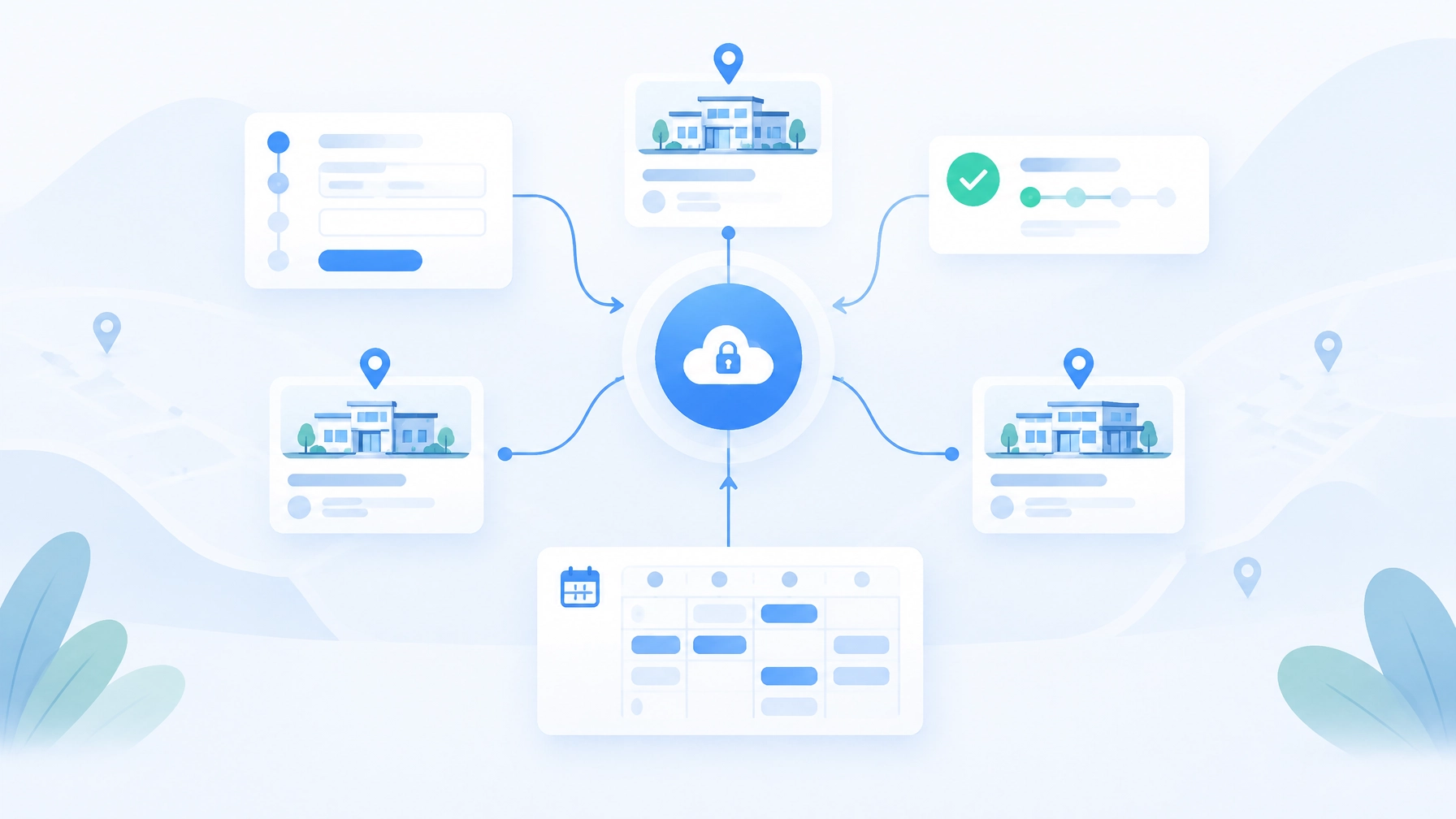
The proposed solution was a custom web application serving as an operational layer between referral intake, practice staff, scheduling, and the group’s existing EHR systems. Its purpose was to coordinate work and surface exceptions, not to replace the clinical record or disrupt systems that remained useful.
The application would give staff one place to see where each referral stood, what information was missing, which checks were complete, and what action was due next. It would also provide location-level views while keeping organization-wide rules and oversight centralized.
This is where custom web application development differs from simply adding another form or dashboard. The design reflects the group’s actual operating model: its locations, service lines, insurance rules, clinician credentials, handoffs, and exceptions.

Intake automation with staff oversight
The intake workflow begins when a referral arrives, whether from an online form or a staff-entered phone inquiry. The system creates a case, records the referral source, and guides the prospective patient through the required information and consent steps.
Instead of treating all missing information the same way, the application can identify what is incomplete and route the case accordingly. A reminder can be sent when a form remains unfinished; a staff task can be created when a referral requires human follow-up. Sensitive or potentially urgent information should trigger an appropriate review process rather than being automatically categorized as routine.
The practical objective is to reduce duplicate data entry and make follow-up visible. Staff can see what has been received, what remains outstanding, and who owns the next action. Online forms and staff review can be designed together, consistent with HHS guidance on planning telehealth workflows, which includes collecting visit, insurance, and health information as part of preparation.
Eligibility checks connected to the appointment journey
Eligibility verification is more useful when it is part of the workflow than when it exists as a separate portal task. In the proposed platform, a case can prompt staff to verify coverage at agreed points, capture the response and its timestamp, and record unresolved questions for follow-up.
Where payer connections and permissions allow, integrations can support eligibility requests and return relevant responses to the case. When an integration is unavailable or a response is ambiguous, the system should create a work item for staff rather than presenting uncertainty as a definitive answer. Coverage and benefits information can change; an automated result should not be treated as a guarantee of payment.
This approach preserves a human decision path while reducing the chance that a check is overlooked. It also creates a clearer record of what was reviewed and when, subject to the organization’s policies and applicable requirements.
Clinician matching and scheduling across locations
Scheduling logic can make operational rules visible instead of leaving them buried in spreadsheets or staff memory. The application can help narrow appointment options using factors such as location, service type, clinician availability, credentials, modality, and payer or program rules configured by the practice.
The system can then present viable options to staff or, where appropriate, to the patient. It can send appointment confirmations and reminders, surface cancellations, and support waitlist or rescheduling workflows. Staff remain able to review exceptions and make overrides with a recorded reason.
The platform does not need to become a new source of truth for every clinical or scheduling record. During discovery, the team defines which system owns each data element, which changes can be synchronized, and how conflicts or failed updates are handled. That boundary is central to reliable healthcare workflow automation: integrations coordinate systems without creating ambiguity about where authoritative information lives.

Privacy-aware access, audit trails, and operational visibility
Because the workflow may involve sensitive information, access and auditability belong in the design from the beginning. Role-based permissions can limit staff to the information and actions they need for their work, with additional location or team boundaries where appropriate. For example, scheduling staff may need appointment and availability details, while benefits staff may need coverage information.
Audit records can capture meaningful events such as a change to appointment status, an eligibility check, a permission update, or a manual override. Dashboards can show operational measures (such as referral status, incomplete intake, pending eligibility work, and schedule capacity) without exposing more detail than each user needs.
These are design controls, not a stand-alone declaration of compliance. The organization’s broader security program, policies, vendor agreements, training, and risk management still matter. The HHS HIPAA Security Rule overview describes safeguards for electronic protected health information, including access controls, audit controls, authentication, and transmission security.
A phased build that protects day-to-day operations
A responsible delivery plan starts with discovery, not interface mockups. The team maps referral sources, intake steps, payer checks, scheduling decisions, staff roles, system dependencies, and common exceptions. It then agrees on the first workflow to improve and how progress will be evaluated.
A phased rollout could proceed as follows:
- Map and scope: Document the current process, data ownership, integration boundaries, and operational baseline.
- Build a focused first release: Introduce intake tracking, staff work queues, and a limited set of location and scheduling rules.
- Test alongside current processes: Run a controlled parallel period to compare records, catch edge cases, and validate staff handoffs.
- Expand with evidence: Add eligibility integrations, reminders, or more locations as the initial workflow proves reliable.
During parallel operation, the team must define which system is authoritative and how duplicate actions will be prevented. A rollback or pause plan should also be clear before live work is routed through the new application.
This is the kind of build PTC does end to end. Our proprietary platforms, AI Local Boost, ChainHQ, EHRIO Pro, and FTP Inform, demonstrate experience designing, building, and operating scalable custom systems.

What changes, and what transfers to other operators
For the practice in this composite scenario, the intended operational change is a more coordinated path from referral to scheduled appointment: fewer handoffs dependent on memory, clearer ownership of incomplete tasks, and better visibility into where work is waiting. These are design objectives, not quantified client results.
The same principles transfer to professional services and other multi-location businesses. An intake or service request can be tracked from arrival through review, eligibility or qualification, assignment, and completion. The specific rules differ; the value comes from making the process observable and connecting work across roles and systems.
Custom software is worth considering when standard tools cannot support the organization’s rules without persistent workarounds, when integrations leave important gaps, or when managers lack the visibility to make operational decisions. A capable custom software development agency should help scope those constraints before recommending a build. That is the foundation of effective business process automation consulting, enterprise automation consulting, and digital transformation consulting: improve a defined operating process, preserve necessary controls, and make the system maintainable as the business grows.
Scope a workflow that fits your practice
If intake, eligibility, or clinician scheduling is limiting your group’s capacity, start by mapping the workflow and identifying the integration boundaries, not by assuming every system needs replacement. Pure Technology Consulting can help assess the process, define a phased roadmap, and determine whether a custom application is the right fit.
Request a discovery conversation about custom web application development or contact us at +1 (803) 921-0969.
Amin Said, Founder of Pure Technology Consulting LLC
https://puretechconsult.com
Leave a Reply