Category: Blog

Your blog category

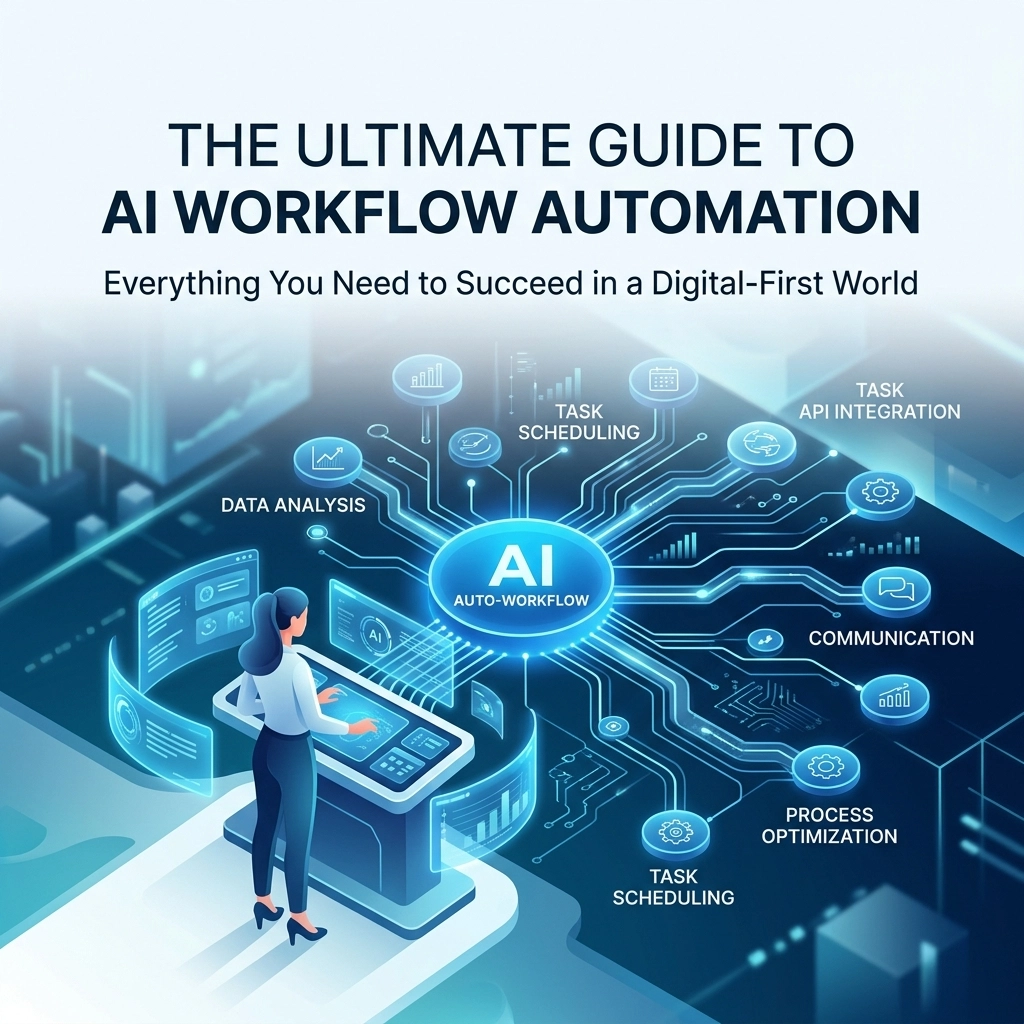
  • The Ultimate Guide to AI Workflow Automation: Everything You Need to Succeed

    The Ultimate Guide to AI Workflow Automation: Everything You Need to Succeed

    The landscape of modern business is no longer defined by who can work the hardest, but by who can build the smartest systems. As the CFO of Pure Technology Consulting, I’ve seen firsthand how the conversation in boardrooms has shifted. We’re moving away from "How do we hire more people to handle this growth?" and toward "How do we architect a system that grows without needing a linear increase in headcount?"

    This is the promise of AI workflow automation. It isn’t just about replacing a few manual clicks with a script; it’s about creating a visionary operating model where intelligence is baked into every layer of your business process. In this guide, we’re going to explore how to move beyond basic automation into the realm of intelligent orchestration.

    Redefining Workflow Automation for the AI Era

    For years, "automation" meant simple, rule-based triggers. If X happens in your CRM, then do Y in your email marketing tool. While useful, these legacy systems were brittle. If the data looked slightly different than expected, the whole thing broke.

    AI workflow automation changes the game by introducing reasoning. Instead of just following a path, the system understands the context. It uses natural language processing (NLP) to read a contract, machine learning (ML) to predict a customer’s needs, and intelligent document processing to extract data from a blurry invoice.

    At Pure Technology Consulting, we view AI automation as the "integration backbone" of a modern enterprise. It’s the difference between a static assembly line and a self-correcting ecosystem.

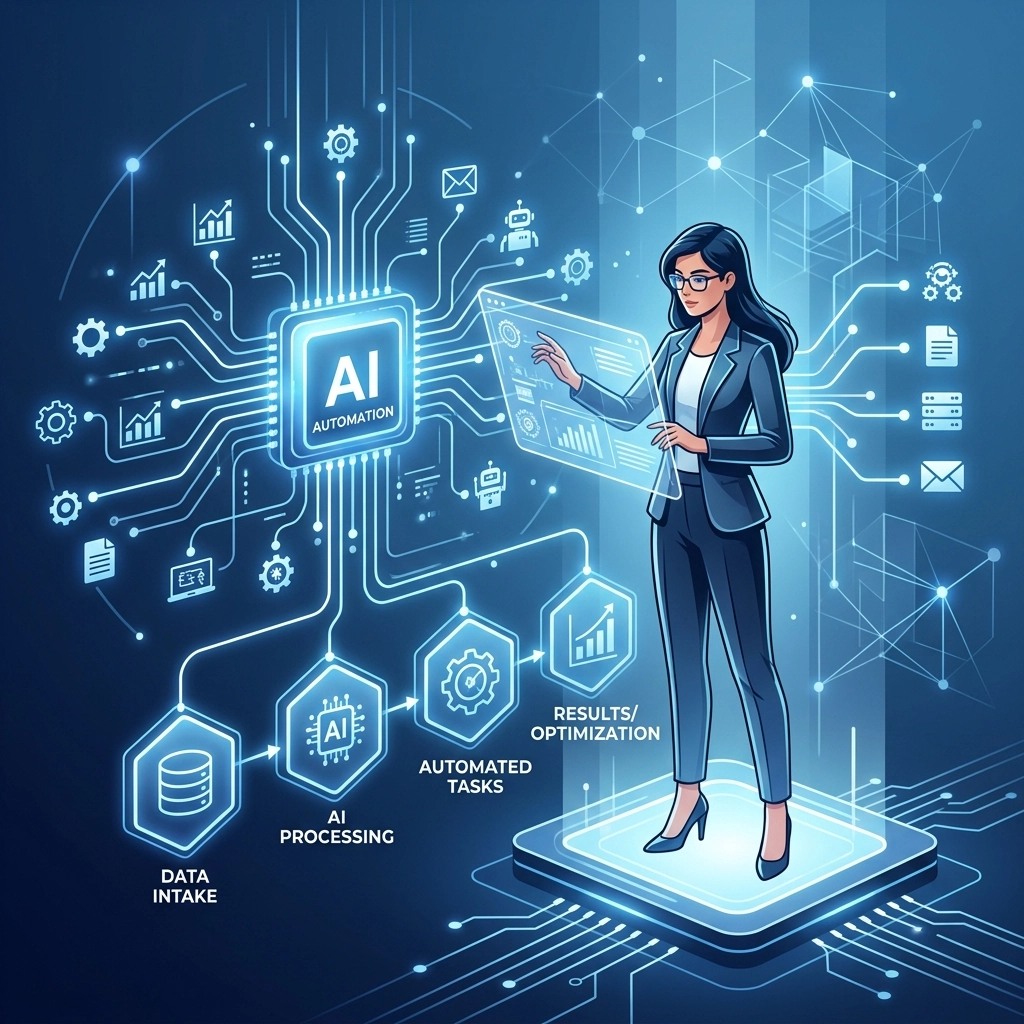
    Intelligent neural network nodes representing the backbone of modern AI automation and digital transformation.

    The Strategic Stakes: Why Automation is an Executive Priority

    From a strategic perspective, the "cost of inaction" is becoming the single greatest risk for mid-market and enterprise firms. When your competitors are using AI to respond to RFPs in minutes while your team takes days, the gap isn't just operational: it’s existential.

    1. Operational Leverage: You want to decouple your revenue from your headcount. By automating high-volume repetitive tasks, you allow your high-ticket talent to focus on strategy and relationship building.
    2. Data Integrity: Human error is the silent killer of profitability. AI systems don’t get tired; they catch inconsistencies in legal documents or accounting ledgers that a human eye might miss after eight hours of work.
    3. Scalability at Zero Marginal Cost: Once an AI workflow is built and integrated, processing 1,000 documents costs nearly the same as processing ten. This is how you prepare for 10x growth without a 10x increase in overhead.

    How AI Workflows Actually Function

    Understanding the anatomy of an intelligent workflow is crucial for any leader looking to invest in bespoke software development. We break it down into four primary phases:

    1. The Input Layer (Data Collection)

    This is where the system "senses" the world. Whether it’s an email coming into a support desk, a new file uploaded to an FTP server, or a lead form on a website, the AI pulls information from structured and unstructured sources.

    2. The Cognitive Layer (Processing & Interpretation)

    This is the "brain." The system cleans the data, categorizes it, and interprets intent. For example, in a legal context, the AI might identify whether a document is a Non-Disclosure Agreement or a Master Service Agreement and highlight the liability clauses.

    3. The Decision Layer (Orchestration)

    Based on the interpretation, the system determines the next best action. Should it approve the document? Should it route it to a human for review? Should it trigger a payment?

    4. The Action Layer (Execution)

    The workflow executes the task: sending the email, updating the ERP, or generating a custom report.

    Visual representation of an AI intelligence hub managing complex business process automation cycles.

    Proof of Concept: Beyond Generic SaaS with ChainHQ

    While many businesses try to patch together various SaaS tools, the most successful organizations realize that generic solutions often create more silos. This is where proprietary architecture like our ChainHQ comes into play.

    ChainHQ serves as a prime example of how we approach complex web applications and automation. Instead of a "one-size-fits-all" approach, we use ChainHQ to demonstrate how disparate systems: telephony, CRM, and internal databases: can be chained together into a singular, intelligent flow. For our clients in fintech and debt recovery, this means taking call attribution data and automatically triggering specific legal workflows without a single manual entry. It’s about building a bespoke "nervous system" for your business rather than just buying another software subscription.

    A Roadmap for Implementation: Where to Start

    If you’re looking to transform your operations, you can’t automate everything at once. You need a roadmap.

    Identify High-Impact Workflows

    Look for "bottleneck" processes. These are usually:

    • High-volume tasks that require human decision-making.
    • Processes involving unstructured data (emails, PDFs, voice notes).
    • Workflows that require real-time responses to changing conditions.

    The "Human-in-the-Loop" Pattern

    One of the biggest mistakes companies make is trying to remove humans entirely too soon. A visionary approach uses AI as a "Co-Pilot." The AI handles 90% of the heavy lifting and presents the final 10% to a human expert for a "sanity check." This ensures compliance and quality while still realizing massive efficiency gains.

    Integration is Everything

    Your automation is only as good as its connection to your systems of record. We specialize in building custom web apps that act as the glue between your legacy systems and modern AI models. Whether it’s integrating with a specialized healthcare database or a global ERP, the goal is a seamless flow of data.

    Futuristic data bridge connecting legacy software systems through an intelligent AI integration backbone.

    Industry-Specific Power Pillars

    At Pure Technology Consulting, we don’t just build software; we apply proven capabilities to specific high-stakes industries.

    • Healthcare & EHRIO Pro: We’ve mastered HIPAA-adjacent workflows, such as 70-question intake forms and matching engines that connect patients with providers. Our EHRIO Pro platform demonstrates our ability to handle sensitive data and complex logic at scale.
    • Legal & Accounting: We take the same rigor from healthcare and apply it to the "document-heavy" worlds of law and finance. Imagine an AI that doesn't just store files, but understands the lifecycle of a case or an audit.
    • Local SEO & AI Local Boost (AILB): For businesses looking to dominate local markets, we developed AI Local Boost. It’s a testament to our ability to automate Google Business Profile updates and local signals, turning a manual marketing task into an automated growth engine.
    • Field Operations: Through our work with D2D Tracking, we’ve built systems for rep accountability and GPS logging, proving that AI automation can extend from the office all the way to the field.

    Common Pitfalls to Avoid

    As you embark on this journey, keep these three warnings in mind:

    1. Over-Complicating the MVP: Start with one clear, high-value workflow. Prove the ROI, then expand.
    2. Neglecting Data Security: Especially in legal and healthcare, "off-the-shelf" AI tools can pose a security risk. This is why we advocate for bespoke, secure environments.
    3. Ignoring the Culture: Automation can be scary for employees. Frame it as "giving them superpowers" rather than "replacing their roles." When the AI handles the data entry, they get to do the work they actually enjoy.

    Human hand interacting with a bespoke software interface representing the synergy of AI and human talent.

    The Future is Bespoke

    The era of "buying an app for that" is maturing into the era of "building a system for us." To truly succeed in AI workflow automation, you need more than a tool: you need a strategy. You need a partner who understands the technical architecture of custom web development and the strategic needs of a growing business.

    Whether you are looking to streamline your document processing, automate your client intake, or build a complex SaaS solution from the ground up, the path forward starts with a clear vision and a robust integration strategy.

    Are you ready to stop managing manual tasks and start leading an automated enterprise? We’re here to help you scope the roadmap.

    Ready to discuss your custom automation roadmap?
    Book a discovery call today or visit our video walkthroughs to see our work in action.

    Contact Us:
    Phone: +1 (803) 921-0969
    Website: https://puretechconsult.com

    Amin Said, Founder of Pure Technology Consulting LLC
    https://puretechconsult.com

  • 7 Mistakes You’re Making with AI Workflow Automation (and How to Fix Them)

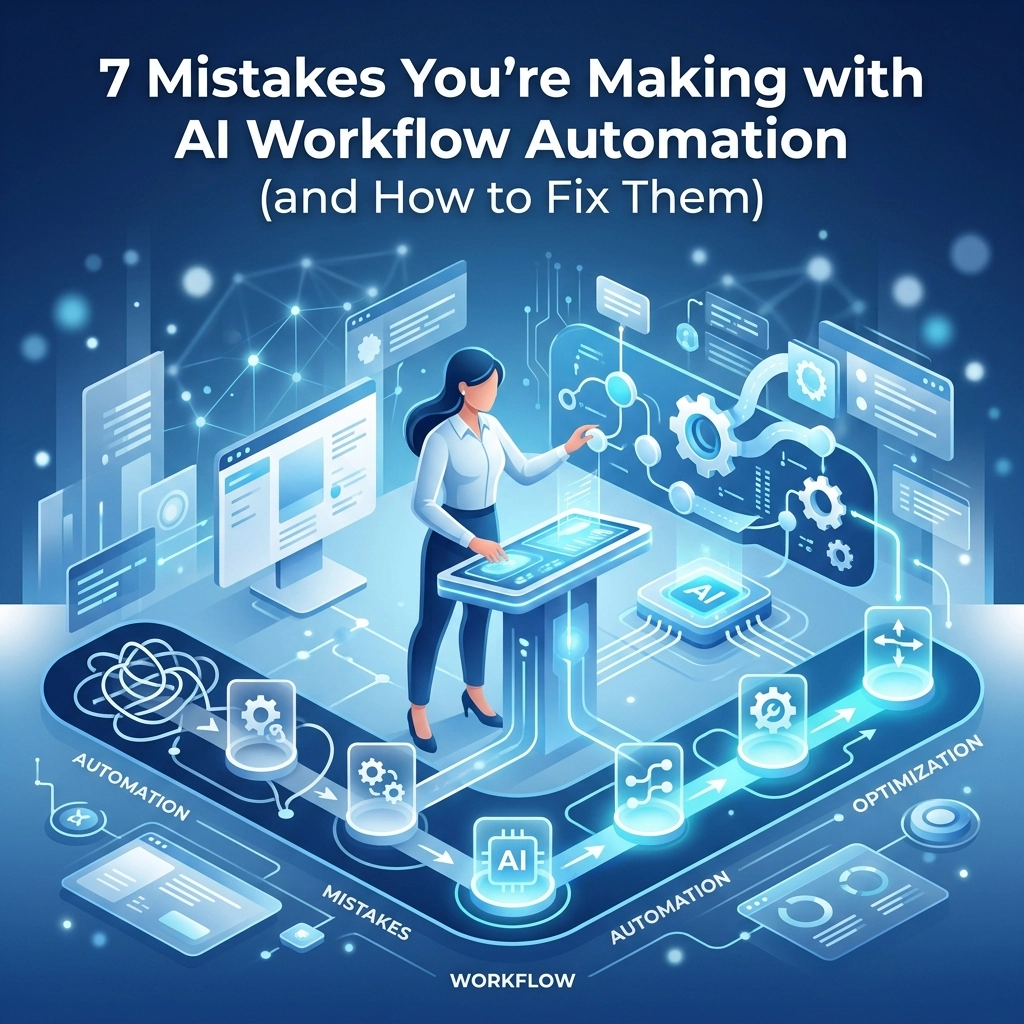
    7 Mistakes You’re Making with AI Workflow Automation (and How to Fix Them)

    The promise of artificial intelligence is no longer a futuristic concept: it is the current engine of operational excellence. As a CFO or executive leader, you likely view AI workflow automation as the ultimate lever for scaling your business without a linear increase in headcount. However, the bridge between "implementing AI" and "realizing transformative ROI" is often paved with common, yet expensive, errors.

    At Pure Technology Consulting, we’ve seen organizations invest six figures into automation only to find themselves with faster-running chaos. True digital transformation isn’t about just adding a "bot" to a task; it’s about architecting a bespoke operating model where technology and strategy align.

    Here are the seven most common mistakes businesses make when automating their workflows: and the visionary strategies required to fix them.


    1. Automating an Inefficient, Broken Process

    The most dangerous thing you can do is automate a process that was never optimized to begin with. If your manual workflow for client onboarding is convoluted, riddled with redundant steps, and relies on fragmented communication, adding AI will only accelerate those errors. You end up with "automated chaos," where mistakes reach your clients at machine speed.

    The Fix: Conduct a comprehensive workflow audit before writing a single line of code. At Pure Technology Consulting, we recommend a "First Principles" approach: deconstruct the workflow to its desired outcome and rebuild it for an AI-first environment. Ask yourself: if we started this department today with modern technology, would this step even exist?

    Digital art showing a chaotic manual process transformed into a streamlined AI workflow grid.

    2. Over-Reliance on "One-Size-Fits-All" SaaS Solutions

    Many firms attempt to solve complex, high-ticket operational hurdles with generic off-the-shelf SaaS tools. While these platforms are excellent for simple tasks, they often lack the deep integration and security protocols required for enterprise-level data handling. This results in "SaaS sprawl," where your data is trapped in silos that don't talk to each other.

    The Case for Custom Architecture (FTP Inform):
    Consider how we approach secure data transfers. For organizations handling high volumes of sensitive documentation: such as legal firms or accounting practices: generic file-sharing tools often fall short of compliance and automation needs. We developed FTP Inform as a testament to how specialized, custom-built automation can streamline the "unstructured data" problem. By creating bespoke triggers that alert the right stakeholders and trigger downstream workflows the moment a file hits a server, we transform a simple file transfer into a strategic data event.

    The Fix: Evaluate whether your problem is a generic task or a core business differentiator. If it’s the latter, a custom web application or a deeply integrated automation layer will always outperform a generic subscription service.

    3. Neglecting Data Integrity and the "GIGO" Principle

    Garbage In, Garbage Out (GIGO) is a law of nature in AI automation. If your underlying data: your CRM records, your financial logs, or your client history: is inconsistent or poorly formatted, your AI will make flawed decisions. An AI-powered credit scoring automation is useless if the input data lacks standardized formatting.

    The Fix: Prioritize data hygiene as a foundational project. Before launching a wide-scale automation, implement data validation layers. This ensures that every piece of information entering your automated ecosystem is verified, cleaned, and categorized.

    4. Failing to Build "Human-in-the-Loop" for High-Stakes Compliance

    In industries like healthcare or finance, full 100% autonomy can be a liability. A common mistake is removing human oversight entirely in an effort to maximize speed. This creates a "black box" where decisions are made without a clear audit trail or a safety net for edge cases.

    The Proof of Concept (EHRIO Pro):
    Our work with EHRIO Pro serves as a perfect example of how to balance high-level automation with human intelligence. Built for healthcare environments where HIPAA-adjacent workflows and complex intakes are the norm, EHRIO Pro utilizes a 70-question intake matching engine. It automates the heavy lifting of data collection and initial categorization but is designed to present that data to a human expert for the final decision.

    The Fix: Design your custom software with "checkpoints." Use AI to handle the 90% of repetitive processing, but flag the 10% of high-complexity cases for senior advisory review. This protects your brand and ensures compliance.

    Professional overseeing custom software automation through a human-in-the-loop digital interface.

    5. Ignoring Governance and the "Scalability Wall"

    When initial automations succeed, it’s tempting to scale as fast as possible. However, without a centralized governance framework, you will eventually hit the "Scalability Wall." This is the point where you have so many disconnected automated scripts and triggers that a single update to one system breaks five others.

    The Solution (ChainHQ):
    Strategic automation requires a centralized "command center." We built ChainHQ to demonstrate the power of managing complex, multi-step chains of command and supply chain logic. By centralizing the logic of how different tasks interact, you can scale indefinitely without the risk of systemic collapse.

    The Fix: Before scaling, establish an Automation Center of Excellence (CoE). Use a platform-first mindset where every new automation must adhere to your organization's architectural standards.

    6. Neglecting the Local Feedback Loop and Reputation

    Automation often focuses inward on operational efficiency while forgetting that a business exists in an ecosystem of customers. Many companies automate their backend but fail to automate the "last mile" of the customer experience: specifically, how that efficiency translates into local visibility and reputation.

    The Local Impact (AI Local Boost):
    We developed AI Local Boost to solve this specific gap. It’s not enough to have a great internal workflow; your excellence must be visible. By automating Google Business Profile management and review responses, we ensure that the efficiency our clients achieve internally is reflected in their local SEO and public reputation. It’s an "outward-facing" automation that drives top-of-funnel growth while the backend automation handles the fulfillment.

    The Fix: Ensure your automation roadmap includes milestones for customer-facing impact. Every hour saved in the back office should theoretically lead to a faster response time or a better service experience for the client.

    Network visualization of AI-powered local reputation management and customer service impact.

    7. Measuring Activity Instead of Outcomes

    Finally, the most common executive mistake is measuring the success of AI automation by "tasks completed" rather than "business outcomes." Processing 1,000 invoices per hour is an activity. Reducing your payment cycle from 30 days to 12 days is an outcome.

    The Fix: Define your KPIs based on business impact. We help our clients look at metrics like:

    • Cycle Time Reduction: How much faster are we delivering value?
    • Error Rate Mitigation: How much did we save by avoiding manual re-work?
    • Throughput per Employee: How much more revenue can our current team manage?

    Transforming Your Strategy

    AI workflow automation is the most potent tool in the modern CFO's arsenal, but it requires a visionary's perspective to implement correctly. It is not a "set it and forget it" solution; it is a continuous process of refinement, integration, and strategic alignment.

    If you are looking to move beyond simple triggers and into the world of bespoke, high-performance custom applications that truly move the needle, we are here to help. Whether it’s architecting a complex matching engine like EHRIO Pro or securing your data pipelines with tools like FTP Inform, our focus is on building the infrastructure for your company’s next decade of growth.

    Ready to audit your current workflows and identify the high-ticket opportunities for custom automation?

    Book a discovery call with our team to start your roadmap.

    Amin Said, Founder of Pure Technology Consulting LLC
    https://puretechconsult.com
    +1 (803) 921-0969

  • 7 Mistakes You’re Making with AI Workflow Automation (and How to Fix Them)

    7 Mistakes You’re Making with AI Workflow Automation (and How to Fix Them)

    As we navigate the business landscape of 2026, the question for most executives is no longer "Should we automate?" but "Why isn't our automation working as promised?"

    At Pure Technology Consulting, we’ve seen a massive shift in how firms approach digital transformation. The initial hype of 2023 and 2024 has matured into a pragmatic need for systems that actually move the needle on the P&L. Yet, many organizations are still falling into the same traps, treating AI automation as a "plug-and-play" miracle rather than a strategic operating model.

    If your automation initiatives are stalling, or if you’re seeing "silent failures" in your workflows, you’re likely making one of these seven common mistakes. Here is how to diagnose the drag and fix it for good.

    1. Automating the "Chaos Loop" (Broken Processes)

    The single most expensive mistake a CFO can oversee is the automation of an inefficient, manual process. If your current workflow is redundant, relies on messy spreadsheets, or involves three different people "checking" the same data point, automating it simply accelerates the chaos.

    The Fix: Before you write a single line of code or deploy an AI agent, you must perform a workflow audit. At Pure Technology Consulting, we advocate for the "Simplify, then Amplify" approach. We look at the bespoke requirements of your operation first. For example, when we work with healthcare or legal firms, we often utilize frameworks similar to our EHRIO Pro platform. It’s designed to handle complex, 70-question intakes and HIPAA-adjacent workflows by creating a structured matching engine first. By ensuring the logic is sound at the intake level, the automation that follows is clean, compliant, and actually reduces cycle time rather than just creating more digital noise.

    Digital visualization of streamlining chaotic manual processes into optimized AI workflow automation.

    2. The "SaaS Squeeze": Choosing Tools Over Strategy

    Many firms try to patch together ten different "No-Code" SaaS subscriptions to build an AI workflow. This leads to what we call the "SaaS Squeeze": where your data is siloed across various platforms, and you’re paying thousands in monthly seat licenses for tools that don't talk to each other.

    The Fix: Transition from a "tool-first" mindset to a "platform-first" mindset. Instead of trying to bend a generic CRM to fit your unique field operations, consider a custom-built web application. We’ve demonstrated this capability through proprietary projects like our D2D Tracking systems, where we integrated GPS logging and rep accountability into a single, cohesive interface. When your software is bespoke, the automation is baked into the architecture, not "bolted on" with fragile third-party integrations.

    3. Ignoring the "Garbage In, Garbage Out" Reality

    AI is only as visionary as the data it feeds on. We see many companies attempting to launch AI-driven customer service or predictive analytics while their underlying database is a graveyard of duplicates and inconsistent formatting. According to industry standards, bad data costs businesses trillions in wasted operational drag.

    The Fix: Implement strict data governance at the point of entry. This is where a consultative approach beats a software-only approach. We help clients build validation rules that act as gatekeepers. Think of how we use AI Local Boost for Google Business Profile automation. The success of that tool isn't just in the "posting": it’s in the structured way it handles local SEO data to ensure the AI isn't hallucinating information about your business locations. Clean data leads to clean automation.

    Strategic data purification transforming fragmented data into structured information for AI automation.

    4. The "Set-and-Forget" Fallacy

    Automation is often sold as a way to "fire your problems." In reality, automated workflows are living systems. APIs change, data schemas evolve, and AI models can "drift" over time. A silent failure in an automated billing cycle can go unnoticed for months, resulting in massive revenue leakage.

    The Fix: You need a monitoring and notification layer that keeps the humans in the loop when exceptions occur. This is why we developed FTP Inform. In complex enterprise environments, data transfers (FTP/SFTP) are often the backbone of the business, yet they are rarely monitored effectively. FTP Inform provides that missing visibility: alerting stakeholders the moment a file transfer fails or data isn't where it should be. High-ticket automation requires high-level oversight.

    5. Neglecting the User Experience (Internal and External)

    If your automated workflow makes life harder for your employees or creates a "robotic" and frustrating experience for your clients, it will fail. We see this often in debt agency telephony integrations or call attribution setups. If the AI doesn't feel human or the dashboard is too complex for a staff member to use, they will find manual workarounds.

    The Fix: Design for the "Human-in-the-Loop." Your custom web apps should be intuitive. When we build fintech or debt collection solutions, we focus on the UI/UX of the telephony integration. The goal is to empower the user with AI-driven insights in real-time, not to replace the human element entirely. The automation should be the "wind at the back" of your team, not a wall they have to climb over.

    A person interacting with a digital display symbolizing human-in-the-loop AI workflow integration.

    6. Scaling Too Fast Without Governance

    It’s tempting to see one successful automation and try to apply it to every department overnight. However, scaling without a centralized strategy leads to "Shadow IT," where different departments are running different (and often conflicting) automations.

    The Fix: Centralize your automation roadmap. This is a primary focus of our work with ChainHQ, where we manage complex supply chain and operations workflows. By having a central "headquarters" for your chains of command and data flow, you ensure that as you scale from one department to ten, the integrity of your operating model remains intact. You need a partner who understands how to bridge the gap between "cool tech" and "enterprise-grade infrastructure."

    7. Measuring Vanity Metrics Over ROI

    Processing 10,000 invoices an hour is a great stat, but if 20% of them have errors that require manual correction, you haven't actually saved money: you've just moved the bottleneck. Many firms measure "activity" instead of "impact."

    The Fix: Focus on high-level KPIs: Cycle Time Reduction, Error Rate improvement, and Throughput. At Pure Technology Consulting, we help our clients define these benchmarks before we build. Whether it’s a custom matching engine for a legal firm or a local SEO boost for a franchise, the goal is always a measurable increase in operational leverage.

    Moving Toward a Visionary Future

    AI workflow automation is the most powerful lever available to the modern executive, but it requires a surgeon’s precision, not a sledgehammer. At Pure Technology Consulting, we specialize in building the bespoke web applications and high-level automations that turn these "mistakes" into competitive advantages.

    We don't just sell software; we build the digital infrastructure that allows your company to scale without the traditional overhead. From HIPAA-adjacent healthcare workflows to complex fintech integrations, we bring proven capabilities to the table to ensure your transformation is both inspirational and, more importantly, profitable.

    Ready to audit your workflows and stop the operational drag?

    Let’s move past the "off-the-shelf" limitations and build something that fits your business perfectly. Reach out to our team to discuss your custom software and automation needs.

    Contact Us:
    Phone: +1 (803) 921-0969
    Schedule a Discovery Call: https://puretechconsult.com/schedule

    Amin Said, Founder of Pure Technology Consulting LLC
    https://puretechconsult.com

  • Why AI Workflow Automation Will Change the Way You Manage Your Team Forever

    Why AI Workflow Automation Will Change the Way You Manage Your Team Forever

    As we navigate through the second quarter of 2026, the definition of "effective management" has undergone a radical transformation. The days of the manager acting as a glorified traffic cop: manually routing tickets, chasing status updates, and triaging emails: are rapidly coming to an end. We have entered the era of the Autonomous Operating Model, where AI doesn't just assist your team; it orchestrates the very fabric of how work flows through your organization.

    At Pure Technology Consulting, we have seen this shift firsthand. It isn’t about replacing the human element; it’s about liberating it. When you remove the "operational drag" of routine decision-making, you empower your leaders to focus on high-level strategy, mentorship, and creative problem-solving. This is the roadmap to scaling a high-ticket service business without the proportional increase in management overhead.

    The Death of the "Human Middleware"

    For decades, middle management has functioned as "human middleware": the bridge between a client’s request and a technician’s execution. This layer of the business is often where the most friction occurs. Information gets lost, priorities are misinterpreted, and bottlenecks form as work waits for human approval.

    AI workflow automation solves this by applying consistent, high-velocity logic to every interaction. Imagine a system that doesn't just store data but understands it. When a new lead or a support request enters your ecosystem, an AI-powered engine can instantly analyze the intent, categorize the urgency, and assign the task to the specific team member whose current bandwidth and skill set are the perfect match for that requirement.

    This isn’t a futuristic concept; it is the baseline for competitive operations in 2026. By automating the "if-this-then-that" of daily management, you transform your team from a reactive group into a proactive powerhouse.

    AI workflow automation organizing chaotic data into streamlined business processes for improved team management.

    Scaling Expertise Through Custom AI Engines

    One of the primary challenges for legal, accounting, and high-level consulting firms is the "Intake Bottleneck." High-ticket clients require deep discovery, but your senior partners shouldn't be spending their hours on basic data collection.

    We’ve applied these principles to our proprietary builds, such as EHRIO Pro. In the healthcare sector, we developed complex matching engines and 70-question intake workflows that handle HIPAA-adjacent data with surgical precision. This type of bespoke automation doesn't just "save time": it ensures that by the time a human expert steps in, they are working with a perfectly curated set of data, ready for high-level decision-making.

    When we build custom web applications for our clients, we aren't just giving them a new dashboard. We are building a digital nervous system. Whether it’s automating local SEO dominance through AI Local Boost or managing complex telephony integrations for debt agencies, the goal is the same: to make the system smarter so the people can be more strategic.

    From Tactical Supervision to Strategic Orchestration

    When AI manages the workflow, the role of the manager shifts from supervision to orchestration. You are no longer checking if a task was done; you are analyzing the data to see how the process can be optimized.

    1. Real-Time Visibility and Governance

    Generic SaaS tools often provide data that is 24 hours old. In a custom-built automation environment, your visibility is instantaneous. You can see blockers the moment they arise. This is the level of governance we bake into tools like ChainHQ, where transparency and data integrity are paramount. If a workflow stalls, the system doesn't just report it; it can trigger contingency protocols to keep the project moving.

    2. Eliminating Decision Fatigue

    Managers make hundreds of micro-decisions every day. "Who should take this call?" "Is this document ready for review?" "Does this meet our compliance standards?" AI is exceptionally good at handling these micro-decisions. By offloading these to an automated engine, you preserve your team’s cognitive energy for the "Macro-Decisions": the ones that actually drive revenue and growth.

    3. Consistency at Scale

    Humans have bad days; AI does not. Automation ensures that every client receives the same high standard of service, every time. Whether it's the way files are managed via FTP Inform or the way a field rep’s GPS data is logged for accountability, the system provides a "floor" of quality that never wavers.

    Strategic oversight of a bespoke software automation ecosystem connecting team data and business operations.

    The Competitive Edge of Bespoke Automation

    There is a common misconception that you can achieve this level of transformation by simply stacking 20 different SaaS subscriptions. The reality is that "SaaS Sprawl" often creates more work, as your team now has to manage the integrations between those tools.

    The future belongs to the firms that invest in Custom Web Applications tailored to their unique operating models. At Pure Technology Consulting, we specialize in building these bespoke engines. We take the proven capabilities we've developed in fintech, healthcare, and professional services and apply them to your specific bottlenecks.

    For example, our work with debt agencies involved complex telephony integrations and call attribution. We didn't just give them a dialer; we gave them a system that understood which calls were most likely to convert based on historical data patterns. This is the difference between a "tool" and a "competitive advantage."

    What to Automate First: The Discovery Roadmap

    If you are looking at your current team and feeling the weight of operational drag, the question isn't if you should automate, but where you should start. We recommend focusing on the "High-Frequency, Low-Complexity" tasks first:

    • Intake and Onboarding: Use sophisticated matching engines to route clients to the right advisors.
    • Data Management and Transfers: Use secure, automated protocols like those found in FTP Inform to ensure data is where it needs to be, without manual intervention.
    • Routine Reporting: Stop spending Fridays building spreadsheets. Let the system surface the insights for you.
    • Local Market Dominance: Automate your Google Business Profile and local presence using the logic behind AI Local Boost to ensure you stay top-of-mind without manual posting.

    A strategic digital roadmap illustrating the growth path for businesses adopting AI workflow automation.

    A Vision for the Future of Work

    By 2027, the gap between "automated" firms and "manual" firms will be an unbridgeable chasm. The automated firm will be able to handle 5x the volume with the same headcount, all while providing a more personalized, responsive experience for their clients.

    The transition to AI workflow automation is a strategic pivot. It requires a partner who understands the nuances of software development, the complexities of data security, and the realities of high-stakes business operations. We bring the expertise from building EHRIO Pro and ChainHQ to your boardroom, helping you design a custom roadmap that fits your specific vision.

    Your team’s time is your most valuable asset. Stop wasting it on work that a machine can do better, faster, and more accurately. It’s time to move beyond managing tasks and start leading a legacy.


    Ready to Architect Your Autonomous Future?

    If you are ready to eliminate operational drag and scale your expertise through custom AI automation, let’s start the conversation. We provide bespoke consulting and development for firms that refuse to be slowed down by outdated workflows.

    Contact Pure Technology Consulting today:
    Phone: +1 (803) 921-0969
    Book a Discovery Call

    Amin Said, Founder of Pure Technology Consulting LLC
    https://puretechconsult.com

  • The Ultimate Guide to AI Workflow Automation: Everything You Need to Succeed in 2026

    The Ultimate Guide to AI Workflow Automation: Everything You Need to Succeed in 2026

    Welcome to 2026. If you’re reading this, you’ve likely realized that the "AI hype" of the early 2020s has matured into a fundamental shift in how business operates. We aren't just talking about chatbots anymore; we are talking about autonomous operating models.

    As a CFO, I look at automation through a specific lens: operational leverage. It’s not just about cutting costs, though that’s a nice side effect, it’s about expanding your capacity to generate revenue without a linear increase in headcount. In 2026, the winners aren't those with the biggest teams, but those with the most intelligent workflows.

    At Pure Technology Consulting, we’ve spent years building the infrastructure that makes this possible. This guide is designed to take you through the strategic landscape of AI workflow automation, showing you how to move from manual drag to high-velocity execution.

    The Paradigm Shift: From Task Automation to Agentic Workflows

    For years, automation was "if this, then that." You’d connect two apps, and a piece of data would move from Point A to Point B. In 2026, that’s baseline. The real competitive advantage lies in Agentic Workflows.

    Modern AI agents don't just follow a script; they interpret context, make decisions, and self-correct. They can ingest unstructured data, like a 50-page legal contract or a messy CSV from a legacy accounting system, and extract exactly what’s needed to trigger the next business action.

    Central AI core automating business workflows by processing unstructured data across different departments.

    Why Custom Development Beats Off-the-Shelf

    While SaaS tools have their place, high-ticket industries like legal, accounting, and healthcare require something more robust. You can't run a complex healthcare matching engine on a basic subscription service. This is why we focus on bespoke development.

    Take our proprietary product, EHRIO Pro, as an example. When we built EHRIO Pro, we didn't just automate a few emails. We created a matching engine capable of handling 70-question intakes and HIPAA-adjacent workflows. It’s a prime example of how custom AI automation can handle the nuance of professional services that a "one-size-fits-all" tool simply misses.

    The 6-Step Strategy for 2026 Implementation

    To succeed this year, you need a roadmap that prioritizes business impact over technical novelty. Here is the framework we use with our consulting clients:

    1. Identify Operational Drag

    Start where it hurts. Look for high-volume, repetitive processes that cause delays or human error. If your senior staff is spending ten hours a week on data entry or document routing, that is a prime candidate for a $10k+ custom automation engagement that pays for itself in months.

    2. Map the Decision Points

    Automation fails when it hits a "black box." You need to map out where decisions happen. In 2026, we use AI to handle these decision points. Instead of a human deciding if an invoice is "ready for payment," an AI agent trained on your specific business rules can validate line items, check against purchase orders, and flag only the anomalies for human review.

    3. Data Integrity and Governance

    Your AI is only as good as the data it accesses. This is where many firms stumble. Ensuring your data is structured, clean, and secure is the most critical step. We often integrate solutions like FTP Inform to ensure that data transfers, whether they are financial records or patient data, are handled with absolute security and transparency.

    4. Choose the Right Orchestration

    Will you use LLMs for reasoning? ML models for predictive analysis? Or a combination? In 2026, we often build "chains" of logic. This leads us to ChainHQ, our internal framework for managing complex AI sequences. By using a structured approach like ChainHQ, we ensure that each step of an automated process is logged, auditable, and scalable.

    5. Build with "Human-in-the-Loop"

    Even in 2026, total autonomy is a risk in high-stakes fields. Your workflow should include "checkpoints" where a human expert can provide a quick "yes/no" or adjustment. This maintains quality control while still reducing the manual workload by 90%.

    6. Test, Iterate, and Scale

    Don't automate your entire company on day one. Start with a pilot. Measure the cycle time reduction and the error rate. Once the ROI is proven, scale that logic to other departments.

    Visual representation of scaling AI automation from pilot projects to company-wide business operational growth.

    Case Study: Bringing Tech-Forward Ops to Professional Services

    We’ve seen incredible results by applying these pillars to sectors that were traditionally "slow" to change.

    In the Fintech and Debt Collection space, we’ve implemented telephony integrations and call attribution that automatically categorize conversations and update CRM records in real-time. This isn't just about recording calls; it’s about using AI to understand the sentiment and outcome of every interaction, then triggering the next step in the collection or sales funnel without a human lifting a finger.

    Similarly, for Lawyers and Accountants, we've shifted the focus to high-level automation. Imagine a legal firm where every incoming inquiry is automatically screened, documents are pre-filled using AI extraction, and the initial case brief is sitting on the attorney’s desk before they even finish their morning coffee. That is the reality we are building.

    Leveraging Local Presence: AI Local Boost

    For many of our clients, automation isn't just internal; it’s about how they interact with their local market. This is where AI Local Boost (AILB) comes into play.

    Marketing and SEO used to be a manual grind. In 2026, we’ve automated Google Business Profile updates and local SEO signals. AILB allows a business to maintain a visionary, inspirational presence in their local community without having to hire a full-time social media manager. It’s an "set and forget" engine that ensures when a potential high-ticket client searches for your services, you are the first thing they see.

    You can see some of our video walkthroughs to understand how these integrations work in practice.

    The CFO’s Bottom Line: ROI of Automation

    When I talk to other executives, they want to know the "buy-in." A custom, high-level automation project or a bespoke web app is an investment, often starting in the $10k+ range. But let’s look at the numbers:

    • Cycle Time: Reducing a 5-day process to 5 minutes.
    • Throughput: Handling 4x the volume without adding staff.
    • Compliance Risk: Eliminating human error in regulated data handling (e.g., HIPAA or Fintech compliance).

    If you are running a business in 2026 and you haven't audited your workflows for these opportunities, you are leaving margin on the table.

    A luminous rising graph illustrating increased profit margins and ROI through automated business workflows.

    Getting Started: Your 2026 Roadmap

    If you’re ready to move beyond basic tools and start building a bespoke automation strategy, the first step isn't buying software: it’s a conversation. We specialize in bringing proven capabilities from healthcare, fintech, and field operations into the legal and accounting worlds.

    We don’t start from scratch; we bring a toolkit of proprietary assets like ChainHQ and EHRIO Pro to give you a head start. Whether it’s GPS logging for field reps or complex matching engines for client intake, we have the architecture ready.

    Ready to see what's possible?

    Don't let operational drag hold back your vision. You can schedule a discovery call with our team to map out your 2026 automation roadmap. If you'd rather see the tech in action first, check out our blog for more insights on digital transformation.

    If you have specific questions about our process, feel free to reach out directly. My assistant, Emily, can help get you on the calendar for a deeper dive into your specific needs.

    Pure Technology Consulting is here to help you build the custom software and automation that doesn't just "work": it transforms.

    Amin Said, Founder of Pure Technology Consulting LLC
    Phone: +1 (803) 921-0969
    https://puretechconsult.com

  • Why AI Workflow Automation Will Change the Way You Scale Your Business

    Why AI Workflow Automation Will Change the Way You Scale Your Business

    By Amin Said

    Scaling a business has historically been a linear, often painful equation: to grow your revenue, you had to grow your headcount. More clients meant more administrative overhead, more project managers, and more manual data entry. In the traditional model, operational drag eventually catches up with growth, creating a "ceiling" where the cost of managing the business eats the profit of expanding it.

    As we move through 2026, that equation has been fundamentally rewritten. We are no longer in the era of "growth through hiring"; we are in the era of "growth through architecture." AI workflow automation is the catalyst that allows a lean, high-performing team to operate with the output of a much larger organization.

    At Pure Technology Consulting, we view automation not as a way to replace the human element, but as a way to liberate it. When you remove the friction of repetitive tasks, your best people are free to focus on strategy, relationship building, and high-value innovation.

    The Decoupling of Growth and Headcount

    The most significant shift in modern business strategy is the ability to decouple revenue growth from headcount. Research indicates that organizations leveraging AI-driven automation report 2.5× higher revenue growth and 3.3× better scalability outcomes compared to those stuck in manual processes.

    Traditional scaling requires adding layers of management and execution for every new tier of client acquisition. AI workflow automation breaks this link. By deploying intelligent systems that handle customer follow-ups, invoice generation, and data syncing across platforms, you can handle a 500% increase in volume with the same core team. This isn't just about efficiency; it’s about the underlying economics of your business.

    Centralized digital network hub expanding outward, representing scalable AI workflow automation and business growth.

    Case Study in Precision: EHRIO Pro and Intelligent Intake

    A prime example of how bespoke automation facilitates scaling can be found in our proprietary work with EHRIO Pro. In high-stakes industries like healthcare and legal services, scaling is often throttled by the complexity of intake and matching.

    When we developed the foundations for EHRIO Pro, the goal was to manage HIPAA-adjacent workflows and complex matching engines. Imagine a process requiring a 70-question intake form. Manually reviewing, categorizing, and matching those responses to the right service provider or legal expert would take hours of human labor per lead.

    By building a custom web application with automated logic, we enabled firms to process these intakes instantly. The system doesn't just collect data; it interprets it, scores it, and routes it. This allows a professional services firm to scale its client base ten-fold without hiring ten times the number of intake coordinators. It transforms a bottleneck into a competitive advantage.

    Moving Beyond "Rigid" Automation

    The old way of automating: often called "Robotic Process Automation" (RPA): was brittle. It relied on "if-this-then-that" rules. If a single variable changed, the workflow broke.

    Modern AI workflow automation is different. It utilizes AI Agents that can interpret unstructured data. Whether it's a messy email from a client or a non-standard PDF invoice, AI can extract the necessary context and decide on the next best action. This adaptability is what makes scaling possible in a volatile market. You no longer need to manually "fix" the automation every time a vendor changes their document format or a client sends an unconventional request.

    Adaptive digital energy flowing through a structured grid, illustrating flexible AI automation for complex businesses.

    Secure Infrastructure: FTP Inform and Data Governance

    As you scale, the volume of data moving in and out of your organization grows exponentially. For many of our clients in the fintech and legal sectors, this data movement represents a significant security and operational risk.

    This is where custom solutions like FTP Inform demonstrate their value. In a scaling business, you cannot afford to have data sitting in silos or moving through insecure channels. FTP Inform was designed to provide real-time notifications and transparency for file-based workflows.

    When a business scales, its "surface area" for errors increases. Automating the monitoring of file transfers and data integrations ensures that as you move from 100 files a day to 10,000, the integrity of your operations remains intact. This level of governance is a prerequisite for high-ticket custom web apps and enterprise-grade SaaS solutions. You can explore how we handle these complex integrations at https://ftpinform.puretechconsult.com.

    The Strategic ROI of "Found Time"

    The financial argument for AI automation is compelling. Recent industry data shows that 74% of companies using generative AI report measurable ROI, with many seeing a 60-90% reduction in manual activity. But the real ROI isn't just the money saved on labor: it’s the "found time" for your leadership.

    When a CEO or CFO is no longer buried in the minutiae of operational bottlenecks, they can focus on the "Visionary" work. They can look at the roadmap for the next two years rather than the fires of the next two hours. This shift from reactive to proactive management is what separates market leaders from those who are simply "busy."

    Digital hourglass transforming into a wide horizon, symbolizing strategic time saved through automated workflows.

    Local Dominance at Scale: AI Local Boost

    Scaling isn’t just internal; it’s about your footprint in the market. As you expand into new territories or offer new services, maintaining a consistent and dominant online presence becomes a logistical nightmare.

    Through AI Local Boost, we’ve demonstrated how automation can handle Google Business Profile management at scale. For a business with multiple locations or a broad service area, manually updating posts, responding to reviews, and optimizing local SEO is a full-time job.

    By automating these "Local SEO" pillars, we provide our clients with a way to scale their visibility without scaling their marketing department. It’s an example of how we bring proven automation capabilities: initially developed for high-growth field operations: into the professional services and legal/accounting sectors. You can see the impact of these strategies on our blog: https://blog.puretechconsult.com/category/blog.

    The Path to a Custom Solution

    Every business has a unique DNA. While off-the-shelf SaaS products can help with basic tasks, they often fall short when it comes to the core, proprietary workflows that give your business its edge. This is why we specialize in bespoke development and high-level automation consulting.

    Our engagements typically involve a deep discovery phase where we audit your existing operating model. We look for the "frictions" that are preventing you from reaching the next $10M or $50M in revenue. Whether it’s building a custom debt agency telephony integration or a GPS-logged rep accountability system for field sales, the goal is always the same: building a system that works for you, rather than you working for the system.

    Interconnected blue architectural blocks representing bespoke software development and scalable digital infrastructure.

    Bridging the Gaps with ChainHQ

    One of the biggest hurdles to scaling is the "fragmented tech stack." A typical scaling business might use 20 different software tools that don't talk to each other. This creates "data islands" and requires manual intervention to move information from one tool to another.

    ChainHQ serves as our proof-of-concept for how we solve this. By creating custom middleware and orchestration layers, we can link disparate systems: from CRM to ERP to custom web apps: into a single, cohesive workflow. When your data flows seamlessly, your business scales smoothly.

    If you’re ready to stop fighting your tools and start leveraging them, it’s time to look at a custom architecture built for your specific goals.

    Conclusion: Designing Your Future

    The future belongs to the firms that act as architects rather than just operators. AI workflow automation is the most powerful tool in the modern architect's kit. It provides the leverage needed to turn a vision into a scalable, high-margin reality.

    At Pure Technology Consulting, we don’t just build software; we build the engines of growth. From custom web apps to sophisticated AI integrations, we help you navigate the transition from a manual past to an automated, visionary future.

    If you are ready to explore how a custom-built automation roadmap can change the trajectory of your business, I invite you to schedule a consultation with our team. We specialize in high-ticket, bespoke solutions for leaders who are serious about scaling.

    Ready to automate your growth?
    Book a discovery call here or view our video walkthroughs to see our work in action.

    Amin Said, Founder of Pure Technology Consulting LLC
    https://puretechconsult.com
    +1 (803) 921-0969

  • The Ultimate Guide to Business Process Automation Consulting: Everything You Need to Succeed in 2026

    The Ultimate Guide to Business Process Automation Consulting: Everything You Need to Succeed in 2026

    As of April 2026, the landscape of Business Process Automation (BPA) has moved far beyond simple script-based tasks. We have entered the era of Agentic AI: where automation doesn’t just follow instructions but pursues goals. For executives in the legal, accounting, and healthcare sectors, the question is no longer whether to automate, but how to orchestrate a complex ecosystem of custom web apps and intelligent agents to gain a definitive market edge.

    At Pure Technology Consulting, we view automation not as a cost-cutting tool, but as a mechanism for scaling expert knowledge. When you automate a process, you are essentially digitizing your best employee’s decision-making logic. In 2026, the competitive advantage belongs to the organizations that break the linear dependency between headcount and revenue.

    The Evolution of Automation: From Tasks to Agents

    The maturity of your organization’s automation strategy determines your scalability. Most firms are currently navigating the transition between legacy Robotic Process Automation (RPA) and fully autonomous operations.

    1. Task Automation: Handling repetitive manual tasks like basic data entry.
    2. Process Automation (RPA): Connected workflows, such as employee onboarding or invoice routing.
    3. Decision Automation (Agentic AI): Systems that evaluate context, make decisions, and interact with multiple platforms to achieve a result.
    4. Autonomous Operations: End-to-end intelligent systems that self-correct and optimize in real-time.

    Stages of business process automation maturity from task management to autonomous agentic AI.

    Proof of Capability: Scaling Healthcare Intelligence with EHRIO Pro

    In the healthcare and fintech sectors, automation requires more than just "if-then" logic; it requires deep integration with sensitive data and complex compliance frameworks. Our work with EHRIO Pro serves as a prime example of how bespoke web applications transform operations.

    By building proprietary matching engines and 70-question intake workflows, we’ve demonstrated that custom software can handle HIPAA-adjacent workflows that off-the-shelf SaaS simply cannot. EHRIO Pro isn't just a product; it’s a blueprint for how we build high-ticket, secure automation for clients who need to match complex data sets with human expertise at scale.

    The Consulting Framework: A Strategic Roadmap for 2026

    Success in BPA consulting requires a structured approach that prioritizes high-impact workflows over "automation for the sake of automation." Our methodology focuses on identifying the "consultation bottleneck": the specific point where your experts spend the most time on non-billable, low-value activities.

    Phase 1: The Process Audit & Discovery

    Before a single line of code is written, we map your current systems using process mining. We look for friction points in your CRM, your document management, and your communication channels. For a detailed look at how we approach these audits, you can view our video walkthroughs.

    Phase 2: Strategy & Roadmap Development

    We define clear KPIs: cycle time reduction, error rate mitigation, and operational leverage. The goal is to create a roadmap that provides immediate ROI while building toward a long-term vision of autonomous operations.

    A strategic business automation roadmap illustrating milestones for digital transformation and ROI.

    Phase 3: Bespoke Implementation

    This is where we move beyond generic solutions. Whether it’s integrating telephony systems for a debt agency or building a custom portal for a law firm, we specialize in bespoke development. This ensures the technology fits your business, rather than forcing your business to fit the technology.

    Orchestrating Complexity: Custom Web Apps and ChainHQ

    Modern business processes are rarely contained within a single application. They span across emails, spreadsheets, CRMs, and legacy databases. This "data silo" problem is the greatest enemy of automation.

    To solve this, we leverage frameworks like ChainHQ. ChainHQ represents our expertise in building interconnected supply chain and operational tools that provide end-to-end visibility. By creating custom web apps that act as the connective tissue between disparate systems, we allow data to flow seamlessly. When you hire a BPA consultant in 2026, you should look for the ability to build these custom bridges: not just someone who can set up a Zapier integration.

    Data Governance and the Security-First Mindset

    As automation becomes more intelligent, the risks associated with data handling increase. In 2026, data readiness and governance are the primary constraints to scaling BPA. If your data is messy, your automation will be efficiently wrong.

    Secure data governance architecture ensuring integrity and compliance for enterprise automation.

    Secure Data Operations with FTP Inform

    At Pure Technology Consulting, security isn't an afterthought. Our proprietary tool, FTP Inform, illustrates our commitment to transparency and data integrity. In field operations and door-to-door tracking, knowing exactly where data is moving and ensuring rep accountability through GPS logging and secure file transfers is vital.

    FTP Inform provides the logging and attribution necessary for high-stakes environments. We use this same philosophy when building custom automation for our clients: every automated action must be logged, every data transfer must be secure, and there must always be a "human-in-the-loop" capability for critical decision points.

    Quantifiable ROI: Why Strategy Beats Software

    The market for BPA is projected to reach nearly $29 billion by 2029. However, the firms that see the highest returns are those that focus on strategic implementation. Studies show that automating recurring financial accounting processes can lead to cost reductions of up to 45%, and overall operating costs can drop by 60% when automation is deployed correctly.

    But these numbers are only achievable if the automation is built on a foundation of clean data and expert logic. This is why our consulting engagements often begin with a deep dive into your terms of use and operational constraints to ensure the solution is both compliant and effective.

    Scaling Local Presence: AI Local Boost as a Proof of Concept

    Many of our clients in the legal and accounting spaces struggle with the overhead of maintaining a digital presence while managing high-value casework. This is where we apply the lessons learned from AI Local Boost.

    AI Local Boost is our solution for automating Google Business Profile management and local SEO. It demonstrates how we can take a manual, high-frequency task: like responding to reviews or updating local listings: and automate it using AI that maintains a professional, visionary tone. For our custom dev clients, we take these same automation principles and apply them to their specific client intake and relationship management workflows.

    Digital network visualization of automated local SEO and scaled client intake business processes.

    Implementing Your 2026 Automation Strategy

    To succeed this year, you must move beyond fragmented pilots. The goal is to build a unified operating model. If you are ready to explore how custom automation can transform your firm, our team, including my assistant Emily, is ready to help you scope a solution that delivers measurable leverage.

    The Implementation Checklist:

    1. Identify the Bottleneck: Where are your highest-paid experts wasting time?
    2. Digitize Knowledge: Organize your documentation and decision-logic so an AI can understand it.
    3. Choose Custom Over SaaS: When the process is your "secret sauce," don't use a generic tool. Build a custom web app that protects your IP.
    4. Integrate and Secure: Ensure your data is moving through secure channels like those we've developed for our fintech and healthcare clients.
    5. Measure and Refine: Use real-time dashboards to track the ROI of every automated workflow.

    The future of business is autonomous, but the path to getting there requires human strategy and bespoke engineering. We don't just provide software; we provide the roadmap to an automated future.

    To begin your journey toward operational excellence, you can book a discovery call or schedule a workflow audit with our team. For any immediate inquiries, feel free to reach our office at +1 (803) 921-0969.

    Amin Said, Founder of Pure Technology Consulting LLC
    https://puretechconsult.com

  • Why AI Workflow Automation Will Change the Way You Scale Your Business

    Why AI Workflow Automation Will Change the Way You Scale Your Business

    For decades, the blueprint for scaling a business remained largely unchanged: to grow your revenue, you had to grow your headcount. Scaling was a linear equation where success was often penalized by increased complexity, rising overhead, and a gradual dilution of operational quality. If you wanted to double your output, you essentially had to double your staff, your office space, and your management layers.

    As we move through 2026, that old model has become a strategic liability. The emergence of AI-driven workflow automation has introduced a new era of "non-linear scaling." Today, the most visionary leaders are no longer asking how many people they need to hire to reach the next milestone. Instead, they are asking how they can architect a digital ecosystem that handles the heavy lifting of growth automatically.

    At Pure Technology Consulting, we view AI workflow automation not as a simple software upgrade, but as a fundamental shift in the corporate operating model. It is the transition from a business that runs on manual effort to one that runs on intelligent logic.

    The End of Linear Scaling

    The primary friction point in any growing business is the "operational drag": the administrative tasks, data entry, and coordination efforts that multiply as you acquire more clients. AI workflow automation eliminates this drag by enabling your existing team to focus exclusively on high-value, creative, and strategic tasks.

    According to recent industry benchmarks, companies that aggressively adopt AI-driven automation report up to 2.5x higher revenue growth and significantly better scalability outcomes compared to their peers. This isn't just about doing things faster; it’s about doing things that were previously impossible. When your systems can interpret unstructured data, make context-aware decisions, and trigger actions across different platforms without human intervention, your capacity for growth becomes virtually limitless.

    A digital bridge and data ribbons representing AI workflow automation for limitless business scaling.

    Intelligent Data Orchestration: The Lesson of FTP Inform

    One of the most significant barriers to scaling is data fragmentation. As a business grows, it ingests massive amounts of data from clients, partners, and internal systems. Traditionally, managing this required a dedicated team to monitor file transfers, verify data integrity, and move information into the right databases.

    We developed FTP Inform as a proof-of-concept for how custom automation can solve these high-stakes bottlenecks. While many see FTP as a legacy protocol, in industries like fintech and large-scale manufacturing, it remains a vital artery for data. FTP Inform demonstrates our capability to build custom web applications that transform a passive file server into an active participant in your workflow.

    By automating the monitoring and notification layers of data transfer, we allow businesses to handle thousands of incoming files with the same level of oversight they previously had over ten. This is the essence of visionary scaling: taking a manual, error-prone process and turning it into a silent, reliable infrastructure. It’s about building custom software that fits your specific operations rather than forcing your operations to fit a generic SaaS tool.

    Transforming High-Stakes Industries: Legal, Accounting, and Healthcare

    At Pure Technology Consulting, we specialize in bringing these advanced capabilities into sectors that have traditionally been burdened by paperwork and complex compliance requirements. For lawyers and accountants, the "scaling ceiling" is usually reached when the professional's time is entirely consumed by document review and manual intake.

    We approach these industries by applying the same rigour we used in our healthcare and fintech projects. For example, our work with EHRIO Pro showcases how we manage complex matching engines and HIPAA-adjacent workflows. Scaling a healthcare enterprise requires more than just a database; it requires an intelligent intake system: like our 70-question automated intakes: that can triage information, verify compliance, and route data to the appropriate stakeholder without a single manual click.

    When we build custom web applications for legal or accounting firms, we aren't just giving them a new interface. We are building an autonomous engine that can:

    • Automatically ingest and categorize client discovery documents.
    • Identify missing information and follow up with clients via automated, personalized triggers.
    • Integrate with specialized telephony systems for call attribution and lead tracking, similar to our work in the fintech and debt agency sectors.

    Intelligent network lattice symbolizing secure AI automation architecture for legal and healthcare firms.

    The Architecture of Automation: Beyond Simple Bots

    There is a common misconception that AI automation is just about "chatbots." In reality, true scaling comes from the architecture of the entire workflow. This is where ChainHQ serves as a vital example of our development philosophy.

    ChainHQ represents our expertise in building scalable, complex web applications that serve as the "brain" for a business's operations. Whether it's managing a supply chain, coordinating multi-state field operations, or tracking representative accountability with GPS logging: as we’ve implemented in our field operations solutions: the goal is always the same: visibility and control at scale.

    Visionary leaders recognize that the "off-the-shelf" software often fails when a business hits a certain level of complexity. Custom software development allows you to build a proprietary asset that evolves with you. It ensures that your automation is deeply integrated into your unique business logic, providing a competitive moat that a standard SaaS subscription simply cannot offer.

    Local Visibility as a Scalable Asset (AI Local Boost)

    Scaling isn't just internal; it’s also about how you scale your market presence. For businesses with a local or multi-location footprint, maintaining visibility can be an administrative nightmare. This is why we created AI Local Boost.

    AI Local Boost demonstrates our ability to automate Google Business Profile management and local SEO at scale. Instead of hiring a marketing army to manually update posts, respond to reviews, and manage local listings, our proprietary automation engine handles it. It’s an example of how we use AI to ensure that as your business grows from one location to one hundred, your digital storefront remains optimized and active without increasing your marketing team’s workload.

    Interconnected digital city grid illustrating multi-location business scaling and local SEO automation.

    Building Your Autonomous Roadmap

    How do you begin the transition from manual growth to automated scaling? It starts with a strategic audit of your current operating model. At Pure Technology Consulting, we don’t just write code; we act as high-level automation consultants for executives who are ready to invest in their infrastructure.

    The roadmap typically involves:

    1. Workflow Discovery: Identifying the high-volume, low-variability tasks that are currently consuming your team’s time.
    2. Architecture Design: Designing a custom web application or integration layer that connects your existing tools (CRM, ERP, Telephony) into a unified ecosystem.
    3. Deployment & Integration: Building bespoke solutions: leveraging the logic we’ve perfected in products like FTP Inform and EHRIO Pro: to automate your core processes.
    4. Optimization: Using AI to monitor your new workflows in real-time, identifying bottlenecks before they become crises.

    Scaling your business shouldn't feel like an uphill battle against complexity. With the right AI-powered automation strategy, growth becomes a byproduct of your system's efficiency rather than a strain on your human resources.

    If you are ready to move beyond the limitations of manual scaling and build a custom, autonomous infrastructure that drives your business forward, we invite you to take the first step toward transformation.

    Ready to see how custom automation can revolutionize your operations?
    Book a discovery call or explore our video walkthroughs to see our custom builds in action.

    Amin Said, Founder of Pure Technology Consulting LLC
    https://puretechconsult.com
    +1 (803) 921-0969

  • The Ultimate Guide to AI Workflow Automation: Everything You Need to Succeed in a Digital-First World

    The Ultimate Guide to AI Workflow Automation: Everything You Need to Succeed in a Digital-First World

    The landscape of modern business is no longer defined by who has the most data, but by who can move that data with the greatest speed and intelligence. As we navigate the complexities of 2026, the term "digital transformation" has evolved from a corporate buzzword into a fundamental survival mechanism. For executives in high-stakes industries like legal, accounting, and healthcare, the challenge is clear: legacy manual processes are the anchors holding back institutional growth.

    AI workflow automation represents the next frontier of operational excellence. It is the shift from simple, rule-based task execution to intelligent, adaptive systems that think, learn, and optimize in real-time. This guide explores how bespoke automation and custom-built software solutions are redefining the modern operating model, allowing firms to achieve unprecedented scale without the proportional increase in overhead.

    The Evolution of Automation: From RPA to Agentic Intelligence

    Early iterations of automation focused on Robotic Process Automation (RPA): software "bots" that mimicked human keystrokes to complete repetitive tasks. While effective for simple data entry, RPA lacks the cognitive flexibility required for complex decision-making.

    Today, we have entered the era of Agentic AI. This involves creating intelligent agents capable of understanding context, interpreting unstructured data, and executing multi-step workflows across disparate systems. In a digital-first world, success is found in the orchestration of these agents. Instead of a human manually moving a PDF from an email to a CRM, an intelligent workflow identifies the document type, extracts relevant metadata, checks it against compliance rules, and updates the necessary databases: all while alerting the relevant stakeholders of any anomalies.

    Glowing neural network representing intelligent AI workflow orchestration and agentic intelligence.

    Strategic Pillars of High-Impact Automation

    To successfully implement AI workflow automation, organizations must focus on three core pillars: integration, intelligence, and governance. At Pure Technology Consulting, we view these not just as technical requirements, but as strategic assets.

    1. Intelligent Document Processing (IDP)

    In sectors like law and accounting, documents are the primary currency. Manual review is slow, prone to error, and expensive. IDP leverages natural language processing (NLP) to turn unstructured text into actionable data. This is a capability we have refined through projects like EHRIO Pro, where complex 70-question intake forms are processed and matched against healthcare provider networks with surgical precision.

    2. Decision Orchestration

    Automation is most valuable when it handles the "grey areas" of business. Decision orchestration uses machine learning models to determine the next best action in a workflow. Whether it is routing a high-value lead or flagging a suspicious transaction in a fintech application, the system adapts based on real-time inputs.

    3. Unified Communication Loops

    Data silos are the enemy of efficiency. A truly automated workflow ensures that information flows seamlessly between the front-end user experience and back-end operations. Our work with FTP Inform demonstrates this perfectly, providing a secure, automated bridge for file management and communication that ensures stakeholders are never left in the dark.

    Where Custom Software Beats Off-the-Shelf SaaS

    Many organizations fall into the trap of trying to force their unique business processes into the rigid structures of "one-size-fits-all" SaaS platforms. While these tools have their place, they often create "integration debt": the cost of building workarounds to make the software do what you actually need.

    Bespoke web applications and custom automation allow for a "fit-to-purpose" architecture. For example, in our work within the fintech and debt recovery space, we have integrated complex telephony systems with call attribution models. This isn't something a standard CRM can handle out of the box; it requires a deep understanding of how data must move to drive rep accountability and GPS logging, similar to our D2D Tracking solutions for field operations.

    When you build custom, you are not just buying a tool; you are building an intellectual property asset that provides a competitive moat.

    Custom software integration symbol showing a bespoke digital key fitting into a business architecture.

    Industry Spotlight: Bringing Proven Capabilities to Legal and Accounting

    The pivot toward AI-driven automation is particularly urgent for professional services. We are seeing a massive trend where legal and accounting firms are adopting technologies originally perfected in high-volume sectors like healthcare and field ops.

    • The Healthcare Blueprint: Our experience with EHRIO Pro and HIPAA-adjacent workflows has taught us how to manage sensitive data under strict regulatory scrutiny. These same principles of secure data matching and automated intake are now being applied to legal discovery and client onboarding.
    • The Fintech Connection: The telephony and call attribution integrations we’ve built for debt agencies are being repurposed for law firms to track billable hours and client interactions automatically, removing the burden of manual time-tracking.
    • The Local Authority: Through AI Local Boost (AILB), we have mastered the art of Google Business Profile automation. For professional service firms, this means maintaining a dominant local SEO presence and managing reputation without a dedicated marketing team.

    The Roadmap to Implementation: A Consultative Approach

    Implementing high-level AI automation is not a weekend project; it is a strategic engagement. At Pure Technology Consulting, we follow a rigorous roadmap to ensure that every custom build delivers a clear ROI.

    1. Discovery & Workflow Audit: We begin by mapping your current processes to identify bottlenecks and "low-hanging fruit" for automation. This is where we determine if a custom build or an integration of our existing proprietary assets like ChainHQ is the best path forward.
    2. Architecture & Scoping: We design a solution that fits your existing tech stack while allowing for future scalability. This involves selecting the right AI models and defining the data governance framework.
    3. Bespoke Development: Our team builds the custom web applications and automation engines. We focus on creating intuitive interfaces that ensure high internal adoption.
    4. Integration & Testing: We connect the new system to your legacy databases, CRM, and communication tools, ensuring a "single source of truth" for your data.
    5. Deployment & Optimization: Post-launch, we monitor the system’s performance, using real-world data to fine-tune the AI models for even greater accuracy.

    Visionary strategic roadmap path for AI implementation and enterprise digital transformation.

    Quantifying the Value of Automation

    The impact of AI workflow automation is measured in more than just hours saved. It is measured in:

    • Cycle Time Reduction: Moving a client from intake to service delivery 40% faster.
    • Error Reduction: Eliminating the "human element" in data entry, which can lead to costly compliance risks.
    • Throughput: Enabling a small team to handle a volume of work typically reserved for an enterprise-level department.
    • Strategic Leverage: Freeing your senior partners to focus on high-level advisory work rather than administrative oversight.

    Building for the Future

    As we look toward the remainder of 2026 and beyond, the gap between automated firms and manual firms will only widen. The question for leadership is no longer if you should automate, but how fast you can do so while maintaining the integrity of your brand and the security of your data.

    Pure Technology Consulting specializes in building these bridges. Whether you are looking for a bespoke matching engine, a custom CRM integration, or a complete overhaul of your digital operating model, we bring the expertise of a seasoned consultancy with the agility of a cutting-edge software house.

    The future is automated. Let's build it together.

    To explore how bespoke AI workflow automation can transform your operations, schedule a discovery call or reach out to our team at +1 (803) 921-0969.

    Explore more of our insights on our official blog or learn about our specific solutions like FTP Inform.

    Amin Said, Founder of Pure Technology Consulting LLC
    https://puretechconsult.com

  • The Ultimate Guide to AI Workflow Automation: Everything You Need to Succeed

    The Ultimate Guide to AI Workflow Automation: Everything You Need to Succeed

    By Tuesday, April 21, 2026, the conversation around Artificial Intelligence has shifted from "what can it do?" to "how can it be seamlessly woven into our operations?" For the modern executive, particularly those navigating the complexities of the C-suite, AI workflow automation is no longer a luxury or an experimental pilot program. It is the new standard for operational leverage.

    At Pure Technology Consulting, we view AI workflow automation not as a replacement for human talent, but as a strategic orchestration layer that eliminates manual drag. This guide serves as a roadmap for leaders ready to transition from fragmented manual processes to a visionary, automated operating model.

    The Shift from Traditional to Intelligent Automation

    Traditional automation followed a rigid "if-this-then-that" logic. It was excellent for moving data between point A and point B, provided the data was perfectly structured. However, in most high-ticket service industries: like legal, accounting, and healthcare: data is rarely that clean. It exists in emails, messy PDFs, recorded consultations, and unstructured spreadsheets.

    AI workflow automation changes the game by introducing a layer of "understanding." By utilizing machine learning (ML) and natural language processing (NLP), these systems can interpret intent, categorize documents, and make nuanced decisions that previously required a human touch. This is the difference between a system that simply moves a file and a system that reads the file, realizes it’s a high-priority contract, and alerts the legal team while drafting a summary of the key risks.

    The Core Components of an AI-Powered Workflow

    To build a system that scales, you must understand the architectural pillars that support it. A successful implementation at the enterprise level requires more than just a handful of "Zaps"; it requires a cohesive strategy.

    1. The Orchestration Engine: This is the conductor of the orchestra. It manages the sequence of operations, ensuring that data flows correctly between your CRM, your AI models, and your reporting dashboards.
    2. Intelligent Input Collection: Using tools like intelligent document processing (IDP), the system pulls information from various sources: be it a 70-question healthcare intake form or a complex tax document.
    3. The Reasoning Layer: This is where the AI models live. These models (predictive, classification, or generative) analyze the input. For example, a predictive model might forecast a patient’s needs, while a generative model creates a customized follow-up plan.
    4. The Integration Framework: Custom-built APIs and secure data bridges that connect legacy software with modern AI capabilities.

    A central glowing core connecting digital nodes, representing an integrated AI workflow automation framework.

    Scaling Expertise: Custom Web Apps vs. Off-the-Shelf SaaS

    One of the most common mistakes we see at Pure Technology Consulting is a reliance on generic SaaS products for highly specific business problems. While a monthly subscription might solve a surface-level issue, it often fails to integrate with the deep, proprietary workflows of a growing firm.

    When we engage with clients for bespoke software development, we leverage our own proprietary assets as proof-of-concept models. For instance, ChainHQ serves as a perfect example of how we approach complex orchestration. It isn't just a tool; it represents our ability to build high-level automation that manages multiple AI agents and data streams simultaneously. For firms looking for a competitive edge, a custom web app designed specifically for your unique operations: often a $10k+ strategic investment: provides a much higher ROI than a suite of disconnected "affordable" tools.

    Sector-Specific Proof: Healthcare and Beyond

    Our experience in healthcare has shown that automation must be as secure as it is efficient. With EHRIO Pro, we’ve demonstrated how to handle sensitive, HIPAA-adjacent workflows. We’ve built matching engines and 70-question intake systems that reduce the administrative burden on clinical staff, allowing them to focus on patient outcomes rather than paperwork.

    This same philosophy applies to the legal and accounting sectors. By bringing these proven healthcare-grade capabilities into professional services, we help firms automate:

    • Conflict Checks and Client Onboarding: Moving from hours of manual verification to minutes of automated screening.
    • Document Summarization: Using NLP to distill thousands of pages of discovery into actionable executive summaries.
    • Billing and Call Attribution: Similar to our work in Fintech and Debt Agency telephony, ensuring every minute of billable work is captured and attributed correctly via automated call logging.

    Data Sovereignty and Security: The FTP Inform Model

    In an era where data is the most valuable asset, how you move that data matters. Many organizations fail to realize that their automation is only as strong as its weakest link: often the file transfer stage.

    Our proprietary asset, FTP Inform, highlights our commitment to secure, transparent data movement. In a custom automation build, we ensure that every file transfer is tracked and logged. If you are handling sensitive client financial records or legal evidence, you cannot afford a "black box" approach. Real-time notifications and audit trails are essential components of any visionary automation strategy.

    Bespoke digital architecture symbolizing the visionary scale of custom software development and automation.

    Strategic Implementation: What to Automate First?

    If you are looking to audit your current workflows, follow this prioritized roadmap to ensure success:

    1. Identify "High-Drag" Processes

    Look for workflows that are high-volume, repetitive, and prone to human error. A Box-sponsored survey revealed that 73% of top performers in content management have already automated these manual hurdles. If your team is spending more than 20% of their day on data entry or document routing, you have found your first target.

    2. Focus on "Agentic" Outcomes

    Don't just automate a task; automate a role. AI agents can now act as preliminary reviewers. In marketing, an agent can review campaign copy against brand guidelines before a human ever sees it. In finance, an agent can flag anomalies in expense reports in real-time.

    3. Ensure Local Visibility

    For businesses with a physical footprint, automation should extend to your digital presence. AI Local Boost is our proof-of-work in the SEO space, demonstrating how Google Business Profile updates and local engagement can be automated to maintain a visionary brand image without daily manual intervention. You can learn more about these strategies at our blog.

    The Path Forward: Custom Engineering for Executive Results

    The goal of AI workflow automation is to create a "frictionless enterprise." When your systems talk to each other, when your AI understands your business rules, and when your data is secure, your team is freed to do the high-value, visionary work they were hired for.

    At Pure Technology Consulting, we don’t just offer software; we offer a partnership in digital transformation. Whether it’s building a bespoke web app from the ground up or integrating complex AI orchestration into your existing stack, our focus is on delivering a high-ticket, high-impact solution that fits your specific operational model.

    The transition to an automated future requires more than just technology: it requires a roadmap. We invite you to schedule a discovery call or view our video walkthroughs to see how these custom solutions come to life.

    In the legal, accounting, and healthcare fields, the risk isn't in the technology: it's in the delay. The organizations that lead in 2026 are those that have already turned their workflows into a competitive advantage.

    Amin Said, Founder of Pure Technology Consulting LLC
    https://puretechconsult.com
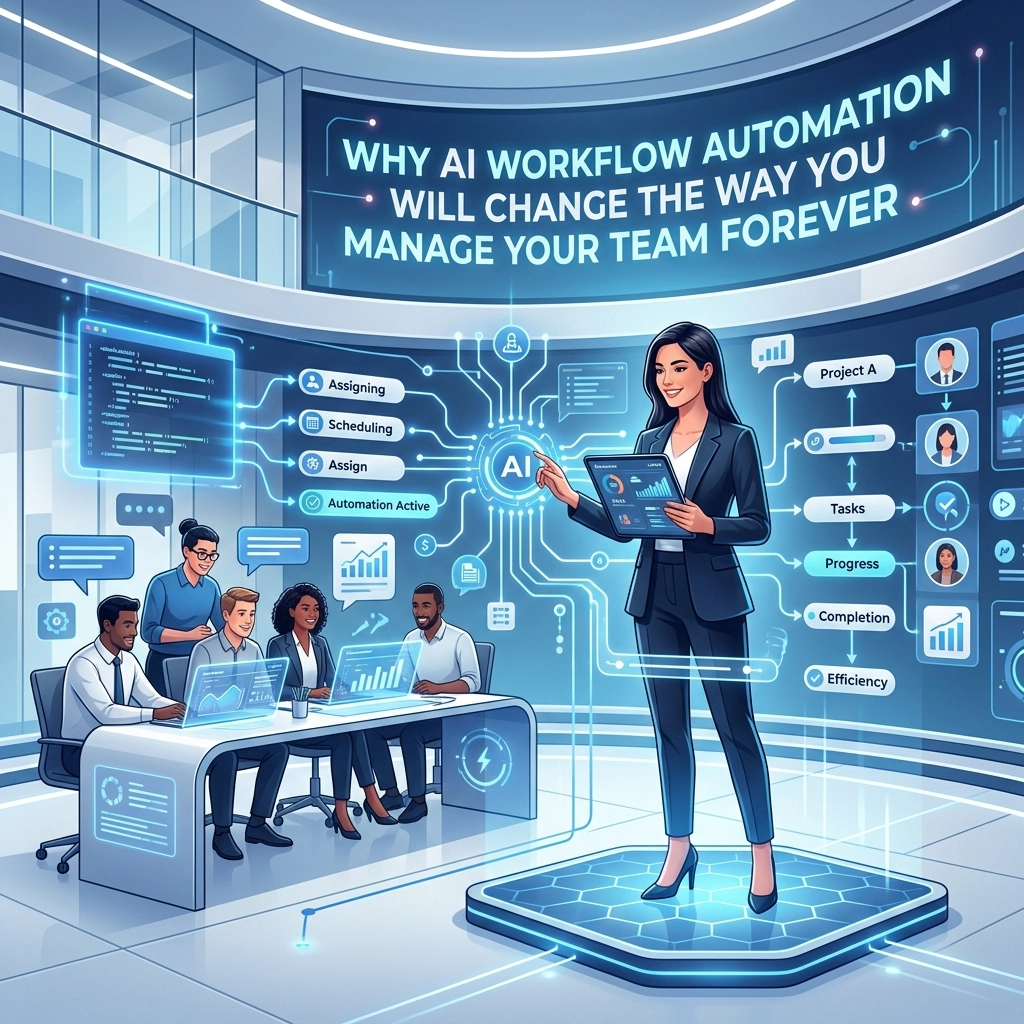
    Phone: +1 (803) 921-0969

    Holographic network sphere illustrating a frictionless business ecosystem powered by AI-driven efficiency.


    For more insights on custom software and digital transformation, visit our main website or explore our category blog. If you're interested in our specific proof-of-concept tools, you can check out FTP Inform's terms or privacy policy for a look at our enterprise-grade standards.