Amin Said, Founder of Pure Technology Consulting LLC
https://puretechconsult.com
This is a composite, illustrative case study drawn from common operational patterns in permanent jewelry fulfillment and inventory operations. Any figures mentioned are illustrative for discussion, not measured client results.
A permanent jewelry order can involve more than selecting a product and shipping it. A customer may choose a chain, specify a fit, select charms, and book an in-person appointment. At a pop-up, a stylist may assemble the piece on site. Each order has its own route from purchase to completion.
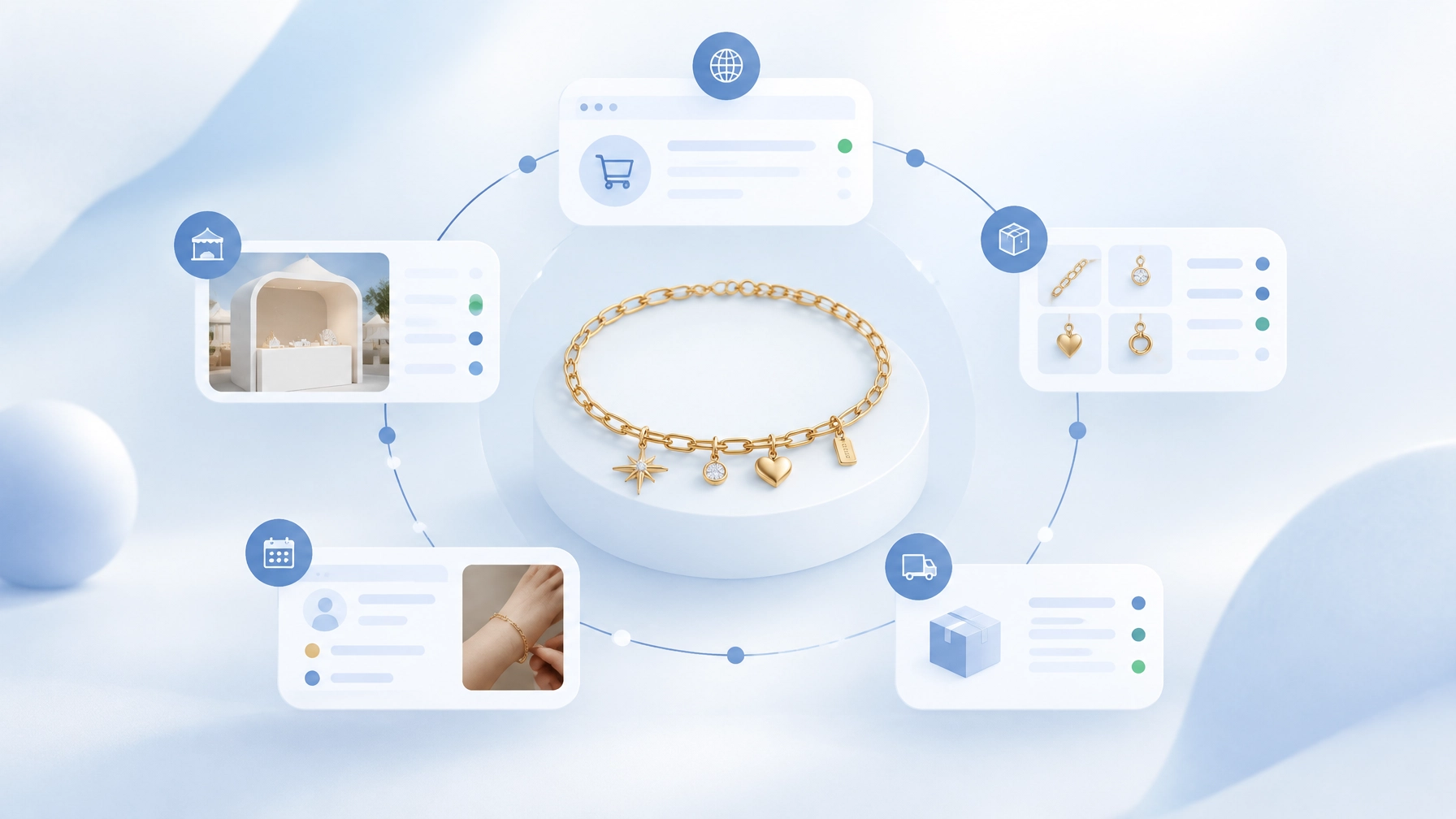
This composite case study explores how a growing direct-to-consumer jewelry brand could bring those moving parts into one operating workflow. The goal is not to replace every existing system. It is to make order details, component inventory, appointments, and fulfillment status visible in one place, so each handoff has the information it needs.
The operational challenge: orders scattered across channels
The brand in this scenario sells through a web store and in-person events. Its products are made to order or made to fit, and fulfillment may involve assembling a specific chain-and-charm combination, arranging a fitting, or preparing a finished item for shipping.
As channels multiplied, operational information spread across the storefront inbox, spreadsheets, and event lists. Staff had to reconcile orders and component counts manually. A personalization detail recorded at one point in the process could be missing when an order reached assembly. Appointment status and fulfillment progress were tracked separately.
The risk was not simply that a package might be delayed. When an order’s exact specifications are unclear, staff may need to pause work, find the right source of information, and confirm details with a customer or colleague. Meanwhile, inventory counts can drift as chain and charms are reserved, used at events, or assembled into orders.

The operating need was a shared workflow that treated each sale as a coordinated job, not just a line item to pick from a shelf.
Why off-the-shelf tools were not enough
Commerce, scheduling, and inventory tools each support important parts of the business. The challenge is connecting them around the specifics of permanent jewelry.
A standard product catalog can become difficult to manage when customers combine chain styles, metals, lengths, charms, and fitting choices. Creating a separate stock-keeping unit, or SKU, for every possible combination may produce unnecessary catalog complexity. Yet storing the details only in free-text notes makes those specifications harder to verify, search, and pass between teams.
Inventory also needs to reflect components, not just finished products. A chain may be measured and consumed by length, while charms and connectors are counted as individual pieces. An appointment may draw on the same component stock as an online order. If the system does not represent those differences, the business cannot confidently see what is available, reserved, or already used.
The appointment itself matters, too. A fitting session is part of the order journey, not merely a calendar entry. Staff need to know which order it belongs to, what the customer requested, and what changed after the fit was confirmed.
Commerce platforms already model fulfillment as a workflow. For example, Shopify’s fulfillment documentation describes inventory, order management, routing, fulfillment services, and returns as connected app capabilities. A custom layer can build on that structure while representing the additional details of personalized, appointment-linked assembly.
The custom application: one record from request to completion
The proposed build was a focused custom web application connected to the e-commerce platform. The application would provide the operational view that existing tools did not share, while keeping the storefront as the sales channel.

Order intake across web and events
The application would bring web orders and event sales into one order view. Each record would preserve its source channel, customer details, requested fulfillment method, and current status. Where integrations were available, orders could synchronize with the storefront; event or other in-person sales could be entered through a structured workflow.
The design would also account for exceptions, such as incomplete customer information or orders requiring a staff review. That keeps unusual cases visible rather than allowing them to disappear in a general inbox.
A structured personalization specification
Each order would have a dedicated specification for the details needed to assemble or fit the jewelry. Depending on the product and process, that could include chain style and metal, requested length or fit, selected charms, charm placement, and whether the order is for shipping or an appointment.
This information would be captured in defined fields rather than relying on a note alone. Staff could review the same specification during order preparation, fitting, quality check, and any later adjustment request. If a measurement or selection changed at the appointment, the record would show what was updated and when.
Component inventory connected to assembly
The inventory ledger would track chain, charms, and connectors in the units that make sense for each component. It would distinguish stock on hand from stock reserved for an order, appointment, or event. When an assembly is completed, the workflow would record the components used and any relevant adjustment.
That approach can improve visibility without requiring a unique finished-product SKU for every possible customer configuration. It also gives leadership a more useful view of the relationship between sales commitments and component availability.

A single fulfillment queue and audit trail
A shared queue would show the next action for each order. A typical shipping workflow might move through paid, specifications reviewed, components reserved, assembly, quality check, packed, and shipped. An appointment-linked order could include booked, checked in, fit confirmed, completed, and closed.
The exact status model should reflect how the team works. The important point is that staff can see who needs to act next and what has already happened. A timestamped audit trail can record changes to specifications, inventory reservations, fitting details, and completion status.
Reporting would draw from those same records. Leadership could review order stages, fulfillment exceptions, component availability, and appointment-linked work without stitching together separate spreadsheets. The purpose is to support operational decisions, not create dashboards for their own sake.
A measured rollout, one channel at a time
A practical rollout would begin with a pilot using one sales channel and a defined set of products. The team could validate whether the order fields match real assembly decisions, whether component units are accurate, and whether the status queue reflects day-to-day handoffs.
Once the workflow is reliable, the next step would be to include another channel, such as event sales or appointment-linked orders. This phased approach gives staff time to test the process and gives the build team feedback before expanding integrations and reporting.
An outsourced fulfillment partner can add another set of inventory, shipping, and status handoffs. The Fulfillment.com overview describes operations such as receiving, storage, picking, packing, shipping, and returns, alongside order and inventory visibility. For a brand that uses a third party, the custom application should clarify where the partner’s workflow begins and ends, and how order status returns to the brand’s central view.
What leadership gains from a connected operating model
In this illustrative scenario, the desired outcome is qualitative: one fulfillment queue, fewer lost personalization details, clearer component visibility, and faster handoffs between assembly and shipping. A connected workflow also gives managers a more dependable basis for understanding where work is waiting and which information needs attention.
For a growing brand, those improvements can create room to expand channels without multiplying disconnected processes. The underlying platform can also support future changes, such as more event locations, additional product options, or a different shipping arrangement.
Pure Technology Consulting brings experience building and operating scalable custom SaaS systems. Its proprietary platforms, AI Local Boost, ChainHQ, EHRIO Pro, and FTP Inform, serve as proof of concept for that development capability. They are examples of systems built and operated by PTC, not products being proposed for sale in this case study.
For a business evaluating a custom web application development engagement, the right scope starts with the operating model: which records must connect, which decisions need structure, and where a reliable system of record will reduce manual coordination. That is the foundation of effective business automation consulting and digital transformation consulting. When relevant, bespoke AI solutions or ai workflow automation can be considered later, once the underlying data and process are dependable. For more complex organizations, enterprise automation consulting can help align the application with existing platforms, governance, and team responsibilities.
Define the workflow before expanding the tools
The central lesson is that personalization changes the shape of fulfillment. The brand needs to coordinate customer choices, component inventory, fitting appointments, assembly, and shipping as parts of one operational journey.
A custom software development agency can help translate that journey into a system that fits the business rather than forcing the team to adapt to a generic workflow. The first step is to map the order lifecycle, identify where information currently gets re-entered or lost, and decide which channel to pilot.
If your team is reviewing similar operational handoffs, book a discovery call to discuss a workflow audit. No obligation.
Amin Said, Founder of Pure Technology Consulting LLC
https://puretechconsult.com
+1 (803) 921-0969
Leave a Reply