Author: admin

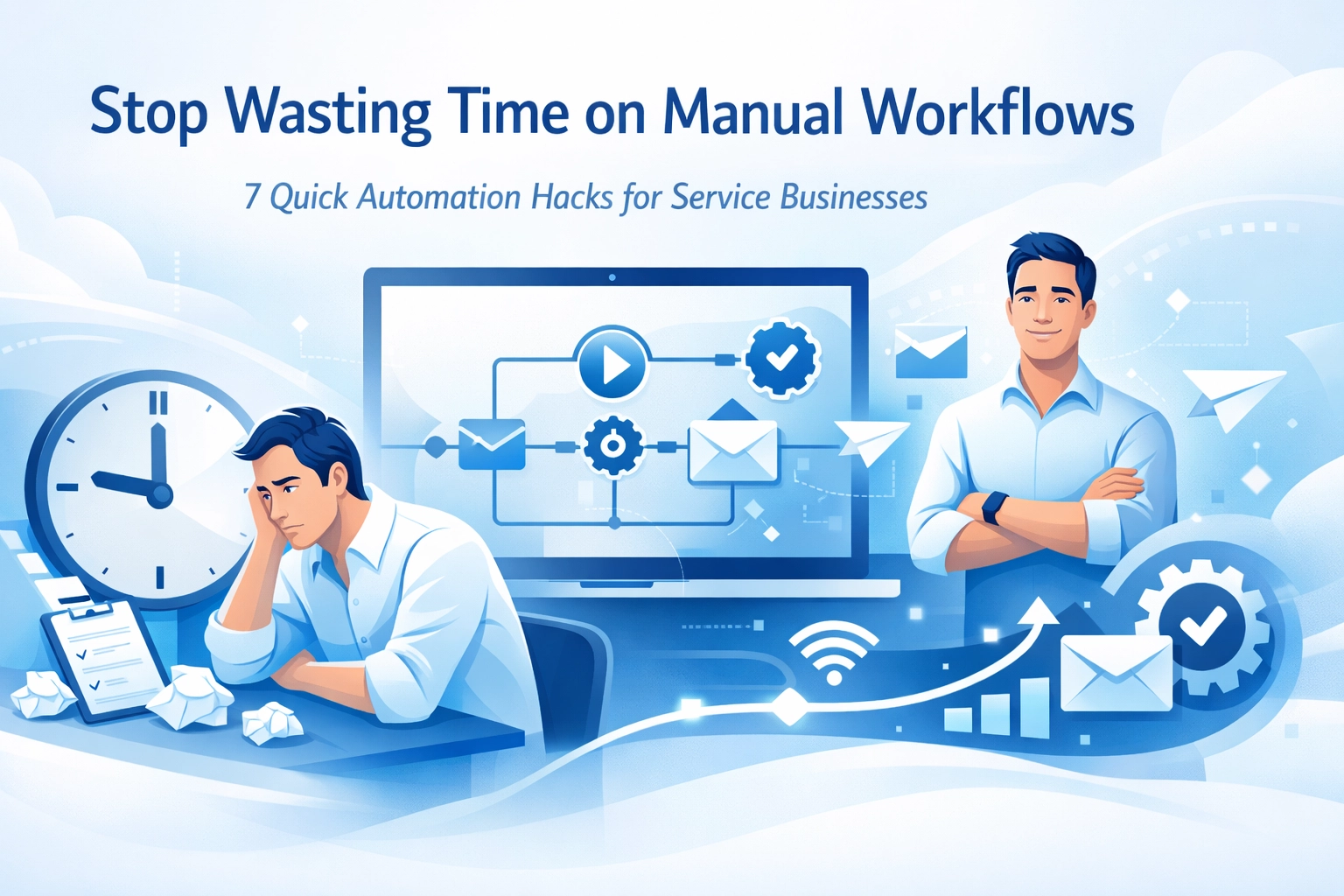
  • Stop Wasting Time on Manual Workflows: 7 Quick Automation Hacks for Service Businesses

    Stop Wasting Time on Manual Workflows: 7 Quick Automation Hacks for Service Businesses

    Your team spends 40% of their workweek on tasks a machine could handle in seconds.

    Every manual email followup. Every copy-paste client onboarding step. Every invoice you generate by hand. That's billable time disappearing into administrative noise.

    Service businesses lose $15,000 per employee annually to workflow friction. The fix isn't hiring more people. It's eliminating the friction entirely.

    Here are seven automation hacks you can deploy this week to reclaim those hours.

    Hack #1: Route Service Requests Automatically Based on Context

    Stop manually sorting through client emails and portal submissions.

    AI categorization pulls keywords, urgency markers, and client history to route requests to the right department instantly. Urgent issues land on your senior team's desk. Routine questions go to support. Complex technical problems route to specialists.

    Set SLA-based escalation rules. If a request sits unanswered for 4 hours, it escalates to management automatically. Nothing falls through the cracks. No more weekend emergencies caused by missed emails.

    What this eliminates:

    • Manual inbox sorting
    • Delayed response times
    • Escalation gaps
    • Cross-department confusion

    Automated service request routing system directing inquiries to departments instantly

    Hack #2: Turn Client Onboarding Into a Self-Service Workflow

    Your new client onboarding process shouldn't require 12 back-and-forth emails.

    Build an automated checklist that triggers when contracts are signed. The system requests branding assets, project requirements, payment details, and approval signatures through a centralized portal. It validates completeness. It sends reminders. It notifies your delivery team only when everything is ready to go.

    Tools like ChainHQ centralize multi-step client workflows into intelligent chains that move projects forward without constant human intervention. One trigger: contract signed: initiates an entire sequence of data collection, verification, and team notifications.

    Your team starts projects with everything they need. Clients never answer the same question twice.

    Hack #3: Generate Invoices the Second Work Is Billable

    Manual invoicing is a cash flow killer.

    Set up condition-based invoice automation. When project status changes to "Ready to Bill," the system pulls client details from your CRM, calculates billable hours or deliverables, populates your invoice template, generates a PDF, and emails it to the client.

    No human touches the process. Invoices go out within minutes of project completion instead of days.

    Add automated payment reminders. At 7 days overdue, send a polite nudge. At 14 days, send a firmer reminder. At 21 days, escalate to collections workflow. Your accounts receivable closes faster without awkward phone calls.

    What this unlocks:

    • Same-day invoicing
    • Faster payment cycles
    • Reduced AR aging
    • Eliminated manual data entry

    Hack #4: Let AI Triage Customer Support Tickets

    Your support team shouldn't spend the first 20 minutes of their day sorting tickets by priority.

    AI-powered ticket classification reads incoming requests, extracts intent and urgency, assigns priority levels, and routes to the appropriate team member. It sends Slack alerts for high-priority issues. It groups similar requests so one answer resolves multiple tickets.

    For service businesses running local operations, AI Local Boost integrates support ticket routing with Google Business Profile automation, so customer inquiries from your GMB listing flow directly into your CRM with AI-suggested responses based on past interactions.

    Response times drop from hours to minutes. Customer satisfaction scores climb. Your team focuses on solving problems instead of organizing them.

    AI-powered support ticket dashboard organizing and prioritizing customer requests

    Hack #5: Automate Client Progress Reporting

    Manual reporting steals 3-5 hours per client per month.

    Pull real-time data from your CRM, project management system, or analytics dashboard. Compile milestone-based performance reports automatically. Tailor dashboards to client KPIs. Schedule reports to send weekly or monthly without human involvement.

    When metrics fall below benchmarks, trigger automated task assignments to the relevant team. If a campaign underperforms, your optimization team gets notified immediately with the data they need to fix it.

    EHRIO Pro demonstrates this automation at scale in healthcare workflows, where patient intake data automatically generates progress reports for providers. The same logic applies to service delivery: capture data once, report on it infinitely.

    Clients see consistent, on-time updates. Your team eliminates report-building busywork.

    Hack #6: Track Vendor Performance Without Spreadsheets

    You work with freelancers, contractors, and third-party vendors. Tracking their performance manually is unsustainable.

    Set threshold-based alerts that monitor delivery times, quality scores, and SLA compliance. When a vendor misses a deadline or quality dips below acceptable levels, the system sends automated notifications to project managers and triggers structured feedback workflows.

    FTP Inform showcases this automation philosophy in file transfer monitoring: tracking file delivery status, flagging delays, and alerting teams when critical documents don't arrive on schedule. Apply the same monitoring layer to vendor deliverables.

    You catch performance issues before they impact clients. Vendor relationships improve through data-driven feedback instead of emotional confrontations.

    What this prevents:

    • Missed vendor deadlines
    • Quality degradation
    • Client-facing failures
    • Manual performance reviews

    Automated vendor performance tracking dashboard with real-time metrics and alerts

    Hack #7: Eliminate Data Entry Between Platforms

    Your team copies data from email to CRM to project management tool to invoicing system.

    Every manual transfer introduces errors. Every duplicate entry wastes time.

    API integrations connect your systems so data flows automatically. A new lead in your contact form becomes a CRM record, triggers a welcome email sequence, creates a project folder, and notifies your sales team: all without human intervention.

    ChainHQ specializes in building custom API integration chains that connect disparate business systems into unified workflows. One action in one system cascades through your entire tech stack automatically.

    Data accuracy improves. Team productivity doubles. Nothing gets lost in translation.

    The Bigger Picture: Automation Compounds Over Time

    Each hack saves 2-5 hours per week.

    Stack all seven, and you reclaim 20+ hours per team member monthly. That's half a full-time employee's capacity unlocked without adding headcount.

    The real transformation happens when automation becomes your default operating model. New processes get designed with automation first. Manual workflows become the exception, not the rule.

    Your team focuses on strategy, relationships, and high-value problem solving. Machines handle the repetitive coordination work.

    Ready to Stop Wasting Time?

    Pick one hack from this list. Implement it this week.

    Start with whichever manual workflow causes the most daily friction. Build the automation. Measure the time saved. Then move to the next one.

    Or skip the trial-and-error phase entirely.

    Pure Technology Consulting builds custom automation workflows for service businesses that eliminate manual bottlenecks permanently. We've deployed AI-powered routing, intelligent reporting, and cross-platform integrations for healthcare providers, local service businesses, and professional service firms.

    Schedule a consultation to map your biggest workflow pain points and design automation that fits your exact operations.

    Toll-Free: 888-424-7779
    Local: 803-715-4200

    Your team deserves to work on what matters. Let automation handle everything else.


    Amin Said, Founder of Pure Technology Consulting LLC
    https://puretechconsult.com
  • Struggling With Local SEO? How AI Local Boost Automates What Most Agencies Do Manually

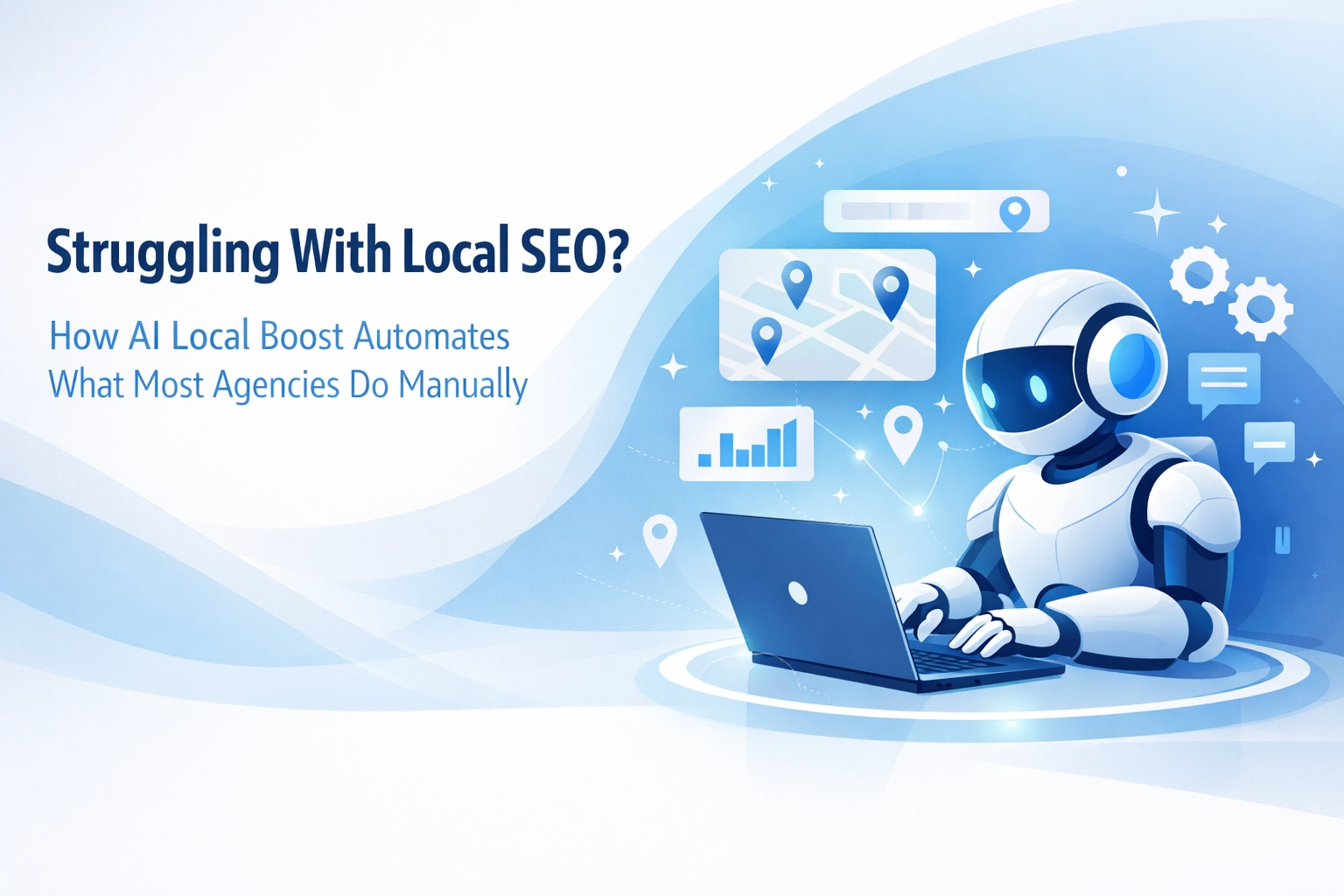
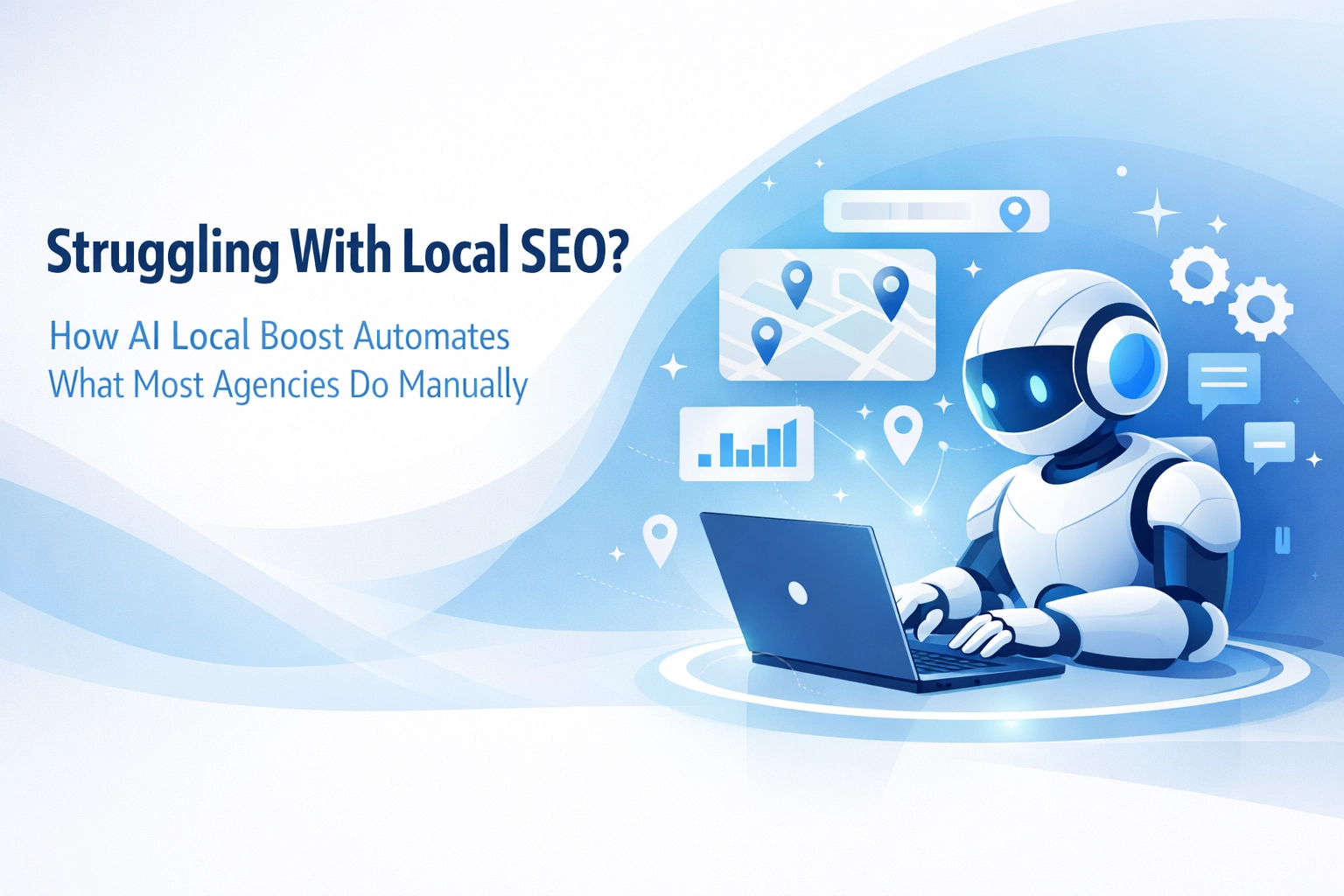
    Struggling With Local SEO? How AI Local Boost Automates What Most Agencies Do Manually

    Struggling With Local SEO? How AI Local Boost Automates What Most Agencies Do Manually

    Most local SEO agencies charge $2,000–$5,000 per month to do work a chiropractor's front desk could automate in 10 minutes.

    They manually update Google Business Profile posts. They copy-paste citation data into spreadsheets. They track rankings by physically searching Google from different zip codes. They reply to reviews one by one, refreshing browser tabs like it's 2015.

    It's expensive. It's slow. And it doesn't scale when you're trying to run a clinic.

    The Hidden Cost of Manual Local SEO

    Local service businesses lose an average of 15–20 hours per month managing their online presence across directories, review platforms, and Google Business Profile. That's half a week of patient care. Half a week of revenue generation. Gone.

    Here's what most agencies do manually:

    • Audit 40–60 business directories to find NAP inconsistencies
    • Update hours, services, and contact information across platforms
    • Generate weekly blog posts optimized for "chiropractor near me" keywords
    • Track local pack rankings by manually searching Google
    • Respond to patient reviews across Google, Yelp, and Facebook
    • Create and schedule GBP posts (photos, offers, updates)

    Each task requires human attention. Each task costs billable hours. Each task delays your ranking improvements by days or weeks.

    Manual local SEO work vs automated AI workflow dashboard comparison

    What AI Local Boost Actually Automates

    AI Local Boost eliminates 95% of the manual work local SEO agencies charge premium rates to perform. It's not a dashboard. It's not a reporting tool. It's a complete automation engine built specifically for local service businesses.

    Instant Citation Management Across 60+ Directories

    Stop paying someone to manually update your business information across the web. AI Local Boost audits every major directory, identifies mismatches, and pushes corrections automatically.

    • Real-time NAP consistency monitoring
    • Automated submission to high-authority directories
    • Priority targeting based on your industry vertical
    • Conflict resolution without human intervention

    One chiropractor in Phoenix had 14 different phone numbers listed across directories. His agency quoted $800 to "clean it up over the next 30 days." AI Local Boost fixed all 14 in 18 minutes.

    Hyperlocal Content That Ranks Without Writers

    You don't need a content team. You need content that answers "chiropractor near [neighborhood]" searches better than your competitors.

    AI Local Boost generates locally optimized blog posts, service pages, and GBP descriptions tailored to your city's neighborhoods. It pulls real community data: local events, seasonal trends, neighborhood demographics: and builds content that ranks.

    • Automated blog ideation based on trending local searches
    • GBP post scheduling (photos, offers, Q&As)
    • Neighborhood-specific landing pages
    • Seasonal content calendars without manual planning

    No more paying $500 per blog post to a freelancer who's never visited your city.

    AI-powered citation management network connecting 60+ business directories

    Real-Time Rank Tracking That Agencies Update Monthly

    Most SEO agencies send reports 30 days after the rankings changed. By the time you see the data, your competitor already stole the #2 spot.

    AI Local Boost tracks your local pack rankings in real time. Every search. Every neighborhood. Every keyword. You see exactly where you rank for "physical therapist [zip code]" the moment Google updates results.

    • Live visibility into local pack performance
    • Competitor movement alerts
    • Keyword opportunity identification
    • Location-specific insights by branch or service area

    When a new competitor launches five blocks away, you'll know before your agency's monthly call.

    Automated Review Management Without the Inbox Chaos

    Patient reviews drive 68% of local search visibility. But logging into Google, Yelp, Facebook, Healthgrades, and Vitals every day to respond? That's admin work disguised as marketing.

    AI Local Boost monitors reviews across every platform from one dashboard. It flags negative sentiment, drafts professional responses, and automates follow-up requests to happy patients.

    • Centralized review monitoring
    • Response templates that sound human
    • Automated review request campaigns
    • Sentiment analysis and trend alerts

    You're not hiring a reputation manager. You're automating reputation management.

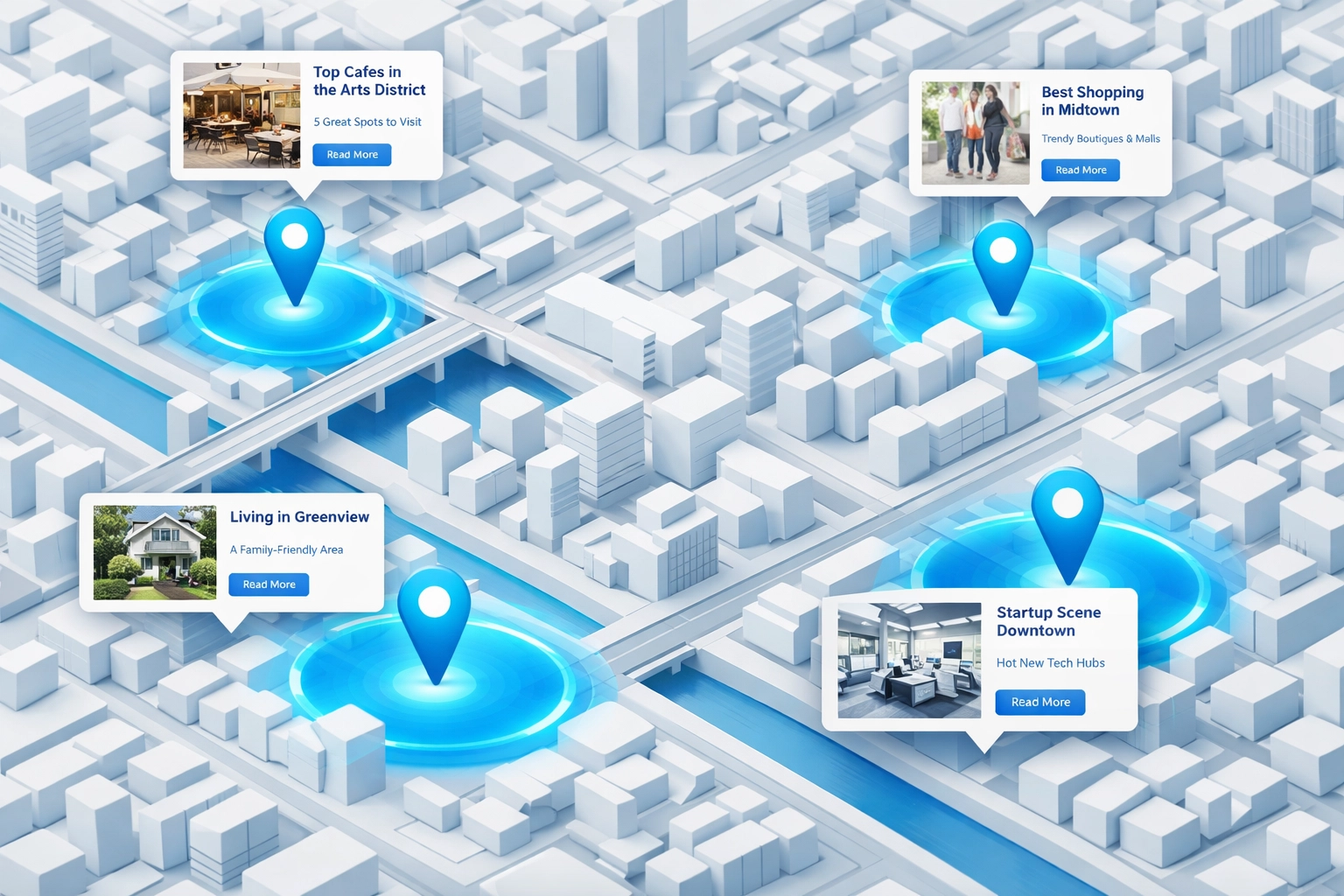
    Local SEO neighborhood targeting with location pins on city map

    Why Local Service Businesses Choose Automation Over Agencies

    Here's the math:

    A typical local SEO agency charges $3,000/month. Over 12 months, that's $36,000. They update your GBP twice a week, write two blog posts a month, and send a ranking report you barely read.

    AI Local Boost does the same work: plus citation audits, review monitoring, and real-time rank tracking: for a fraction of the cost. And it runs 24/7 without vacation days, sick leave, or billing hourly rates.

    Built for Chiropractors, PT Clinics, and Multi-Location Practices

    We didn't build AI Local Boost for e-commerce brands or SaaS companies. We built it for local service businesses that need Google visibility without hiring an SEO team.

    If you operate multiple locations, AI Local Boost scales instantly. Manage five clinics or fifty from one dashboard. Every location gets automated citations, content, and rank tracking without multiplying your workload.

    • Multi-location management from a single platform
    • Branch-specific performance insights
    • Standardized NAP data across all locations
    • Scalable automation without per-location fees

    When you're ready to open a second clinic, you're not calling your agency to renegotiate pricing. You're adding a location in 90 seconds.

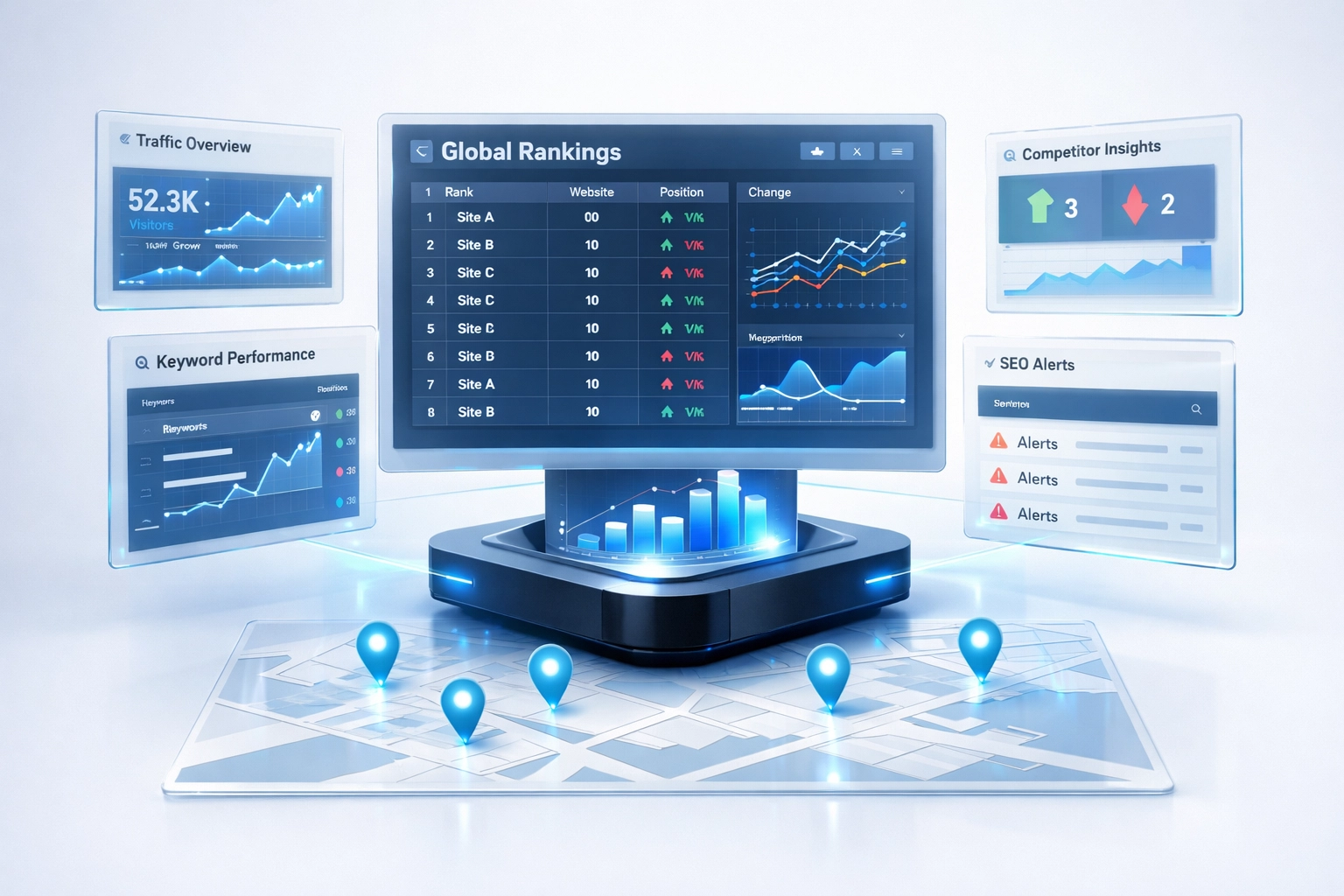
    Real-time local search ranking dashboard tracking competitor movements

    The Operational Bottleneck Most Clinics Ignore

    Local SEO isn't a marketing problem. It's an operations problem.

    Your front desk team doesn't have time to update 40 directory listings when you change office hours. Your office manager can't write blog posts between patient scheduling and insurance calls. Your clinic director isn't manually tracking rankings while managing staff.

    But Google doesn't care about your bandwidth. It ranks businesses that maintain consistent information, publish fresh content, and earn positive reviews. Miss any of those signals, and you lose visibility to competitors who automate better.

    AI Local Boost solves the operational bottleneck. It removes local SEO from your to-do list entirely. No manual updates. No content calendars. No monthly agency calls where you pretend to understand technical SEO jargon.

    What This Means for Your Growth Strategy

    When local SEO runs on autopilot, you stop treating Google visibility as a monthly expense. You start treating it as infrastructure: reliable, scalable, and predictable.

    You can open new locations without worrying about SEO setup delays. You can launch new services without hiring writers to create landing pages. You can respond to 50 patient reviews without opening 50 browser tabs.

    Most importantly, you can spend your time where it actually matters: treating patients and growing your practice.

    Stop Paying Agencies for Work Automation Handles Better

    Local SEO agencies aren't bad at what they do. They're just inefficient. They charge premium rates for tasks software performs faster, cheaper, and more accurately.

    AI Local Boost doesn't replace strategy. It replaces repetitive manual work that no human should be doing in 2026.

    If you're still paying someone to manually update your Google Business Profile, you're overpaying for automation you could deploy today.


    Amin Said, Founder of Pure Technology Consulting LLC
    https://puretechconsult.com
  • Why AI Workflow Automation Will Change the Way You Run Your Service Business

    Why AI Workflow Automation Will Change the Way You Run Your Service Business

    The Growth Trap Every Service Business Faces

    You built your service business on expertise. Your team delivers exceptional work. Clients love you.

    But here's the problem: growth means more clients, which means more administrative work, which means hiring more staff, which means higher overhead, which means thinner margins.

    You're stuck in the traditional service business equation: Revenue growth = Headcount growth.

    Traditional service business scaling vs AI workflow automation growth pathways comparison

    What if that equation is about to break?

    AI Workflow Automation Changes Everything

    Service businesses implementing AI workflow automation are seeing 30-40% improvements in workflow efficiency across their operations. But the numbers only tell part of the story.

    The real transformation isn't about speed or cost savings: though those are substantial. It's about fundamentally changing how service businesses scale.

    Traditional scaling: You land 10 new chiropractic clients, so you hire two more administrative staff to handle intake, scheduling, follow-ups, and billing.

    AI-powered scaling: You land 10 new clients, and your automated systems absorb the workload. No new hires needed.

    This isn't theory. AI agents complete workflows up to 15 times faster than skilled humans while making far fewer errors. For service businesses where rapid response directly impacts customer satisfaction, this speed advantage becomes a competitive moat.

    The Real Cost of Manual Workflows

    Let's talk about what's actually happening in your business right now.

    Your team spends hours on:

    • Manual data entry between systems
    • Scheduling and rescheduling appointments
    • Following up with clients who missed appointments
    • Processing intake forms and documentation
    • Chasing down payments and handling billing inquiries
    • Responding to routine customer questions

    Every hour spent on these tasks is an hour not spent delivering your core service. It's not just inefficiency: it's opportunity cost compounding every single day.

    Service businesses operating on manual workflows face another hidden cost: inconsistency. One team member follows up within 24 hours. Another takes three days. One documents thoroughly. Another forgets half the details.

    Manual workflow chaos transformed into efficient AI-automated service business operations

    AI workflow automation solves this by standardizing execution across your entire operation. Every client gets the same high-quality experience, regardless of volume or which team member is responsible.

    The Numbers That Matter

    Organizations deploying AI-driven customer workflows report 30-50% increases in customer satisfaction alongside significant gains in retention and loyalty.

    Think about what that means for a physical therapy clinic:

    • Patients get appointment reminders automatically
    • Intake forms are processed instantly
    • Follow-up care instructions arrive at exactly the right time
    • Billing questions get answered immediately
    • Review requests go out when patient satisfaction peaks

    But the financial impact runs deeper. Service businesses implementing AI workflow automation typically achieve 25-50% cost reductions in targeted processes through:

    • Lower labor costs for routine work
    • Reduced error-driven rework
    • Decreased compliance penalties
    • Better utilization of existing resources

    For service companies operating on thin margins, these improvements don't just boost efficiency: they transform profitability.

    Elastic Capacity Without Elastic Payroll

    Here's where AI workflow automation gets really interesting for service businesses.

    Traditional operations require you to staff for peak capacity. If patient volume spikes during certain seasons or unexpected growth hits, you're either scrambling to hire temporary staff or turning away business.

    AI-powered systems provide elastic capacity based on demand while maintaining consistent quality regardless of volume.

    AI automation providing elastic capacity and scalability for service businesses on demand

    Your automated chatbot handles 50 customer inquiries with the same speed and accuracy as it handles 500. Your workflow automation processes intake for 10 new patients as efficiently as it processes 100.

    This means you can:

    • Accept growth without panic hiring
    • Handle seasonal fluctuations smoothly
    • Test new service offerings without expanding staff
    • Scale specific departments independently
    • Maintain service quality during team transitions

    The constraint that's limited service business growth for decades: the need to hire proportionally with revenue: simply disappears.

    Real-Time Decision Support

    Service businesses gain 40-60% faster decision cycles with AI workflow automation through continuous data aggregation, automated pattern detection, and predictive analytics.

    Imagine knowing:

    • Which marketing channels produce the highest-value patients
    • What time of day generates the most no-shows
    • Which services have the highest retention rates
    • Where operational bottlenecks actually occur
    • How to optimize scheduling for maximum revenue

    This isn't business intelligence that requires a data analyst to compile weekly reports. It's real-time insight that lets you respond immediately to market changes and customer needs.

    The Philosophical Shift

    The most profound change isn't technical: it's strategic.

    Service businesses will shift from asking "How many people do we need to hire?" to "How much of this can we automate?"

    Your expert employees stop spending time on routine tasks and start focusing on:

    • Managing and complementing automated systems
    • Complex problem-solving that AI can't handle
    • Innovation that drives competitive advantage
    • High-value customer interactions that build loyalty

    Real-time AI analytics dashboard showing business metrics and predictive insights

    This isn't about replacing your team. It's about elevating them.

    A chiropractor who spends 20% of their day on administrative work can suddenly focus 100% on patient care. A practice manager drowning in scheduling conflicts can shift to strategic growth planning. A front desk overwhelmed by phone calls can focus on creating exceptional in-person experiences.

    What This Means for Local Service Businesses

    For chiropractors, physical therapists, and similar local service businesses, AI workflow automation solves the specific operational bottlenecks that limit growth:

    Patient Acquisition: Automated lead capture, qualification, and nurturing turns your website and social media into 24/7 patient generation machines.

    Scheduling Optimization: Intelligent booking systems reduce no-shows, optimize appointment timing, and automatically fill cancellations.

    Patient Communication: Automated reminders, follow-ups, and care instructions improve outcomes while reducing staff workload.

    Review Management: Systematic review requests sent at optimal moments build your online reputation automatically.

    Billing and Collections: Automated payment processing and follow-up eliminates awkward conversations and improves cash flow.

    The practices implementing these systems aren't just more efficient: they're fundamentally different businesses. They scale faster, operate leaner, and deliver better patient experiences than competitors still running on manual processes.

    The Future Is Already Here

    AI workflow automation isn't coming. It's already transforming service businesses that recognize the opportunity.

    The question isn't whether to adopt AI workflow automation. It's whether you'll lead this transformation in your market or watch competitors pass you by.

    Your choice: Keep hiring proportionally with growth, or build systems that scale exponentially while your team focuses on what actually matters.

    The service businesses thriving in 2026 aren't the ones with the biggest teams. They're the ones with the smartest systems.


    Amin Said, Founder of Pure Technology Consulting LLC
    https://puretechconsult.com

  • AI Workflow Automation in 2026: Are Rule-Based Tools Dead?

    AI Workflow Automation in 2026: Are Rule-Based Tools Dead?

    Your automation stack is broken. Not because your tools stopped working: but because the way work gets done changed overnight.

    Here's the truth: Rule-based automation isn't dead. It's being absorbed into something more powerful.

    The Shift Nobody Saw Coming

    We spent years building if-then workflows. Zapier connects to Slack. Gmail triggers a Google Sheet update. A form submission creates a CRM record.

    These systems still run. But they can't adapt when conditions change. They break when exceptions happen. They require constant maintenance when business processes evolve.

    The 2026 automation landscape looks completely different. We're moving from automation that follows instructions to automation that makes decisions. From static processes to adaptive systems that learn and respond.

    Transformation from traditional rule-based automation to adaptive AI workflow systems

    Rules Didn't Die: They Got Demoted

    Think of it this way: Rules used to be the boss. Now they're the guardrails.

    Organizations are embedding rule-based logic as control mechanisms within agentic AI systems. Instead of dictating every action, rules now function as governance frameworks that let AI agents make context-aware decisions while maintaining compliance and safety.

    Your old automation said: "When Form A is submitted, create Contact B in System C."

    Your new automation says: "When a lead comes in, evaluate priority, check existing records, determine the best system to route it to, and create or update the appropriate record: but never expose PII outside approved systems."

    Same outcome. Completely different execution.

    The Hybrid Model Taking Over

    Stop thinking automation is one thing. It's now three things working together:

    Small models handle frequent, simple tasks. These are your rule-based operations. Customer submits a support ticket with keyword "billing"? Route it to finance. No AI needed. Fast, cheap, reliable.

    Larger models handle complex reasoning. Customer email says "I was charged twice but only once shows in my portal and I'm considering canceling"? That needs context, analysis, and nuanced response generation. AI agent territory.

    High-risk actions trigger human approval. Refund over $500? Contractual commitment? Data deletion request? These pause for verification before execution.

    This isn't either-or. It's intelligent routing based on complexity and risk.

    Hybrid AI automation model showing rule-based tasks, AI reasoning, and governance layers

    What Dies: Isolated Automation

    Here's what actually became obsolete in 2026: Disconnected point solutions.

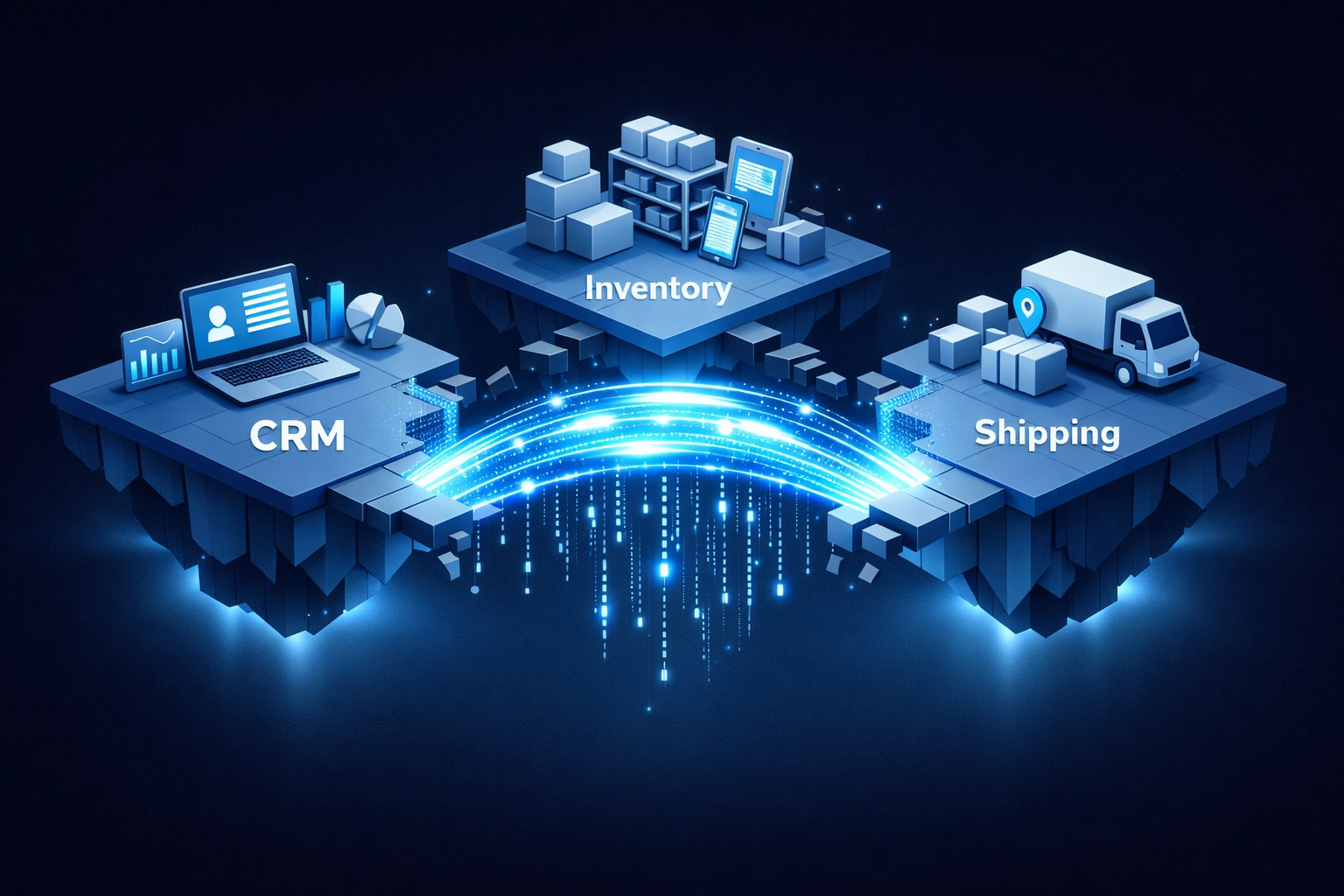
    Your marketing automation doesn't talk to your customer success platform. Your inventory system doesn't communicate with your shipping workflow. Your CRM can't trigger actions in your project management tool.

    Efficiency gains from isolated automation fade quickly. You get 10% faster at one task while the handoff between systems still takes two days and three manual steps.

    Resilience comes from orchestrating processes across domains. That requires systems that can coordinate decisions and actions across multiple workflows, databases, and tools.

    Rule-based tools can't do this alone. They need orchestration layers: platforms where agentic AI coordinates complex, multi-step processes while respecting the rules you've defined.

    The New Question Your Team Should Ask

    Stop asking: "Does this follow the rules?"

    Start asking: "Can this system adapt when conditions change while respecting necessary constraints?"

    That's the difference between 2023 automation and 2026 automation.

    Example: Your fulfillment workflow used to follow rigid rules. Order comes in → check inventory → if available, ship → if not, backorder.

    Now? Your system evaluates: inventory status, customer tier, shipping urgency, supplier lead times, alternative product availability, and margin impact. Then it decides the optimal action. But it never ships restricted items to prohibited regions. Never processes orders flagged for fraud review. Never overrides credit limits.

    The rules exist. They're just not running the show anymore.

    Business system orchestration connecting isolated automation platforms across workflows

    Policy-Driven Schemas Replace Rigid Workflows

    Organizations are shifting to what experts call policy-driven schemas: frameworks that balance flexibility and control.

    Instead of: "If status = X, then do Y"

    You get: "Achieve outcome Z within constraints A, B, and C using available resources and context"

    Your AI agent can choose different paths based on current conditions. It can adapt to exceptions. It can optimize for multiple variables simultaneously.

    But it operates within policies you define. Budget limits. Compliance requirements. Brand guidelines. Security protocols.

    Flexibility with boundaries. That's the operating model.

    What This Means for Your Business Right Now

    If you're still running pure rule-based automation, you're not wrong. You're just limited.

    Your systems work until they don't. They scale until they break. They save time until the exceptions pile up and someone spends three hours a week maintaining Zaps.

    The transition isn't about ripping everything out. It's about layering intelligence on top of existing automation.

    Keep your rule-based triggers for simple operations. Add AI agents for complex decision-making. Build orchestration for cross-system workflows. Implement governance policies as safety nets.

    AI decision tree with policy constraints showing adaptive workflow automation framework

    The Real Risk: Doing Nothing

    Here's what happens when you wait:

    Your competitors reduce fulfillment time by 60% using adaptive routing. You're still following the same workflow you built in 2023.

    Your team spends 15 hours a week on exceptions and edge cases. Their team handles exceptions automatically within policy guidelines.

    Your automation breaks when market conditions change. Their systems adapt in real-time.

    Speed gaps compound. Efficiency gaps widen. Cost advantages multiply.

    How to Actually Make This Shift

    Start with your highest-friction workflows. The ones that break often. The ones that require constant human intervention. The ones where exceptions are the norm, not the outlier.

    Map the decision points, not just the actions. Where does someone need to think, evaluate, or choose? Those are your AI agent opportunities.

    Define your non-negotiables. What rules absolutely cannot be broken? What constraints must always apply? Those become your governance policies.

    Then build hybrid systems that let AI make decisions within those guardrails while keeping simple operations rule-based.

    You don't need to automate everything with AI. You need to automate the right things with the right tools.

    Comparison of manual workflow chaos versus efficient AI-powered automation productivity

    The Bottom Line

    Rule-based tools aren't dead. They're just not enough anymore.

    The businesses winning in 2026 aren't choosing between rules and AI. They're combining both into adaptive systems that operate within governance frameworks.

    Static automation still has a place. But the future belongs to systems that can think, adapt, and execute: while respecting the boundaries you define.

    Ready to build automation that actually adapts to your business instead of breaking when conditions change? Let's talk about what that looks like for your specific workflows.