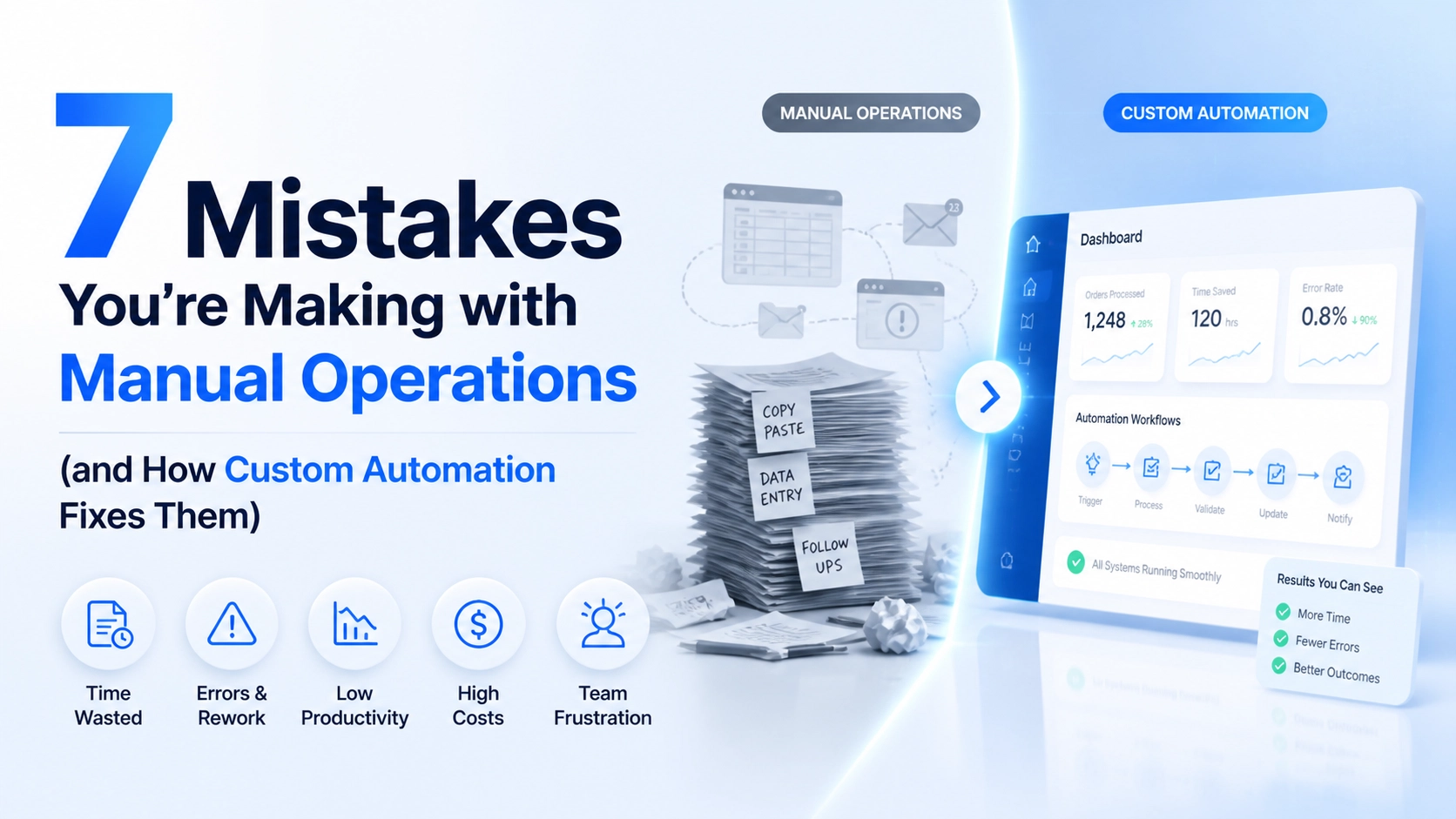
Author: admin

  • From Pop-Up to Powerhouse: How Automation Scales Permanent Jewelry Brands Beyond the Founder

    From Pop-Up to Powerhouse: How Automation Scales Permanent Jewelry Brands Beyond the Founder

    By Amin Said, Founder of Pure Technology Consulting LLC

    The permanent jewelry industry is currently in its "gold rush" phase. It is high-margin, experiential, and has a viral quality that most service businesses would kill for. But there is a ceiling that every founder hits, usually sooner than they expect. It’s the moment you realize that if you aren't the one holding the welder at the pop-up event, the business doesn't make money.

    You’ve built a brand. You have the aesthetic. You have the "spark." But right now, you don't have a scalable company, you have a high-paying, very busy job.

    To move from a weekend pop-up to a regional or national powerhouse, you have to solve the "Founder Bottleneck." Scaling beyond yourself requires more than just hiring a few more technicians; it requires a digital infrastructure that manages the chaos of multi-location operations, lead capture, and local visibility without you having to touch a single spreadsheet.

    At Pure Technology Consulting, we focus on building the custom software and automation roadmaps that turn visionary founders into true CEOs. Here is how we look at scaling a permanent jewelry brand through the lens of high-level automation.

    The Founder Trap: Why Most Brands Stall

    Most permanent jewelry businesses start the same way: the founder does everything. You’re the one booking the venues, running the Instagram, answering the DMs, and doing the welding.

    The problem is that "DM to book" doesn't scale. If a potential client has to wait four hours for you to check your calendar and reply to a message, they’ve already found another artist. More importantly, if your business logic, how you price, how you handle warranties, how you collect deposits, lives entirely in your head, you can never effectively train a team to replace you.

    To scale, you need to move from "manual hustle" to "automated systems." You need a roadmap that allows your brand to exist in three places at once while you’re focusing on the high-level strategy.

    Professional jeweler workbench transitioning into a digital automation interface for scaling.

    Building the Digital Backbone: Scheduling and Lead Capture

    The first step in scaling is removing yourself from the administrative loop. A scalable permanent jewelry brand needs an automated scheduling engine that does more than just put a name on a calendar. It needs to handle the heavy lifting:

    1. Automated Deposit Collection: To reduce no-shows and ensure commitment.
    2. Smart Routing: If you have three technicians at a pop-up, the system should intelligently balance the load.
    3. Lead Capture & Nurture: What happens to the person who clicks your link but doesn't book? In a powerhouse brand, they are entered into a nurture sequence that keeps your brand top-of-mind for their next birthday, bridal shower, or "treat yourself" moment.

    We often see businesses try to patch this together with five different $20/month apps. But as you grow to multiple locations, those "off-the-shelf" tools start to break. They don't talk to each other. This is where bespoke development comes in. We build integrated workflows that unify your booking data with your customer CRM, allowing you to see the lifetime value of every client across every location.

    Dominating the Map: AI Local Boost

    In the permanent jewelry world, "near me" is the most important search term you can own. Whether you are running a permanent studio or a rotating schedule of pop-ups at local boutiques, you need to show up on Google Maps.

    This is where our AI Local Boost capability becomes a game-changer. For a founder, managing Google Business Profiles for five different locations or temporary event spaces is a full-time job. You have to update hours, post photos, and, most importantly, respond to reviews.

    Automation allows you to maintain a dominant local SEO presence without lifting a finger. By automating review requests and using AI to manage local listings, you ensure that your brand is the first one visible when a group of friends decides they want "permanent bracelets" on a Saturday afternoon. This isn't just about "getting found"; it's about building a moat of social proof that competitors can’t touch.

    Digital map showing multi-location business growth and local SEO dominance for jewelry brands.

    Operational Efficiency: Scaling Beyond the Bench

    Once you have the leads and the bookings, the next challenge is operational governance. How do you ensure that a technician in a different city is providing the same "Powerhouse" experience that you would?

    This requires a custom operating model. We specialize in building internal dashboards that track key performance indicators (KPIs) in real-time. Imagine being able to see, from your phone, which location has the highest upsell rate on charms or which technician is generating the most five-star reviews.

    By building custom internal tools, similar to the complex matching engines we’ve built for healthcare or the accountability logs we’ve designed for field operations, we give you the visibility needed to manage a team without micromanaging them.

    Why Custom Software Beats "Off-the-Shelf" SaaS

    You might be wondering, "Can't I just use a basic booking app?"

    For a solo operator, yes. But for a brand looking to hit $1M+ in revenue, those tools become a liability. They own your data, they limit your branding, and they don't integrate with your specific workflow.

    When we engage with a high-ticket client at Pure Technology Consulting, we aren't just selling you a subscription. We are building a proprietary asset. Whether it’s a custom web app that manages your unique inventory of 14k gold chains or a bespoke CRM that automates your aftercare instructions and warranty claims, custom development ensures the software fits your business: not the other way around.

    Mobile business dashboard tracking performance metrics for jewelry shop operational efficiency.

    The Multi-Location Vision

    The transition from pop-up to powerhouse is ultimately a shift in mindset. You stop thinking about "how many bracelets can I weld today?" and start thinking about "how many locations can my system support?"

    Automation provides the "operating system" for your brand. It allows you to:

    • Standardize the customer journey from first click to the final "spark."
    • Scale your marketing through automated local SEO and lead nurturing.
    • Manage a growing team through data-driven dashboards.

    This level of integration is what separates the brands that fizzle out after the trend passes from the brands that become local institutions.

    Moving Forward: Your Strategic Roadmap

    If you are currently feeling the strain of being the "everything person" in your jewelry brand, it’s time to look at your technology stack. Scaling isn't about working harder; it's about building a machine that works for you.

    At Pure Technology Consulting, we don’t just build apps; we architect growth. We bring the same level of technical sophistication we’ve used in healthcare and fintech to the world of high-end service brands.

    If you’re ready to stop being the bottleneck and start being the CEO, let’s talk about building your digital infrastructure. We can help you identify the specific manual tasks that are holding you back and create a roadmap to automate them out of existence.

    The permanent jewelry market is moving fast. The founders who invest in their "digital bench" now are the ones who will own the market two years from now.

    Ready to see how custom automation can scale your brand?
    Request a workflow audit and discovery call.

    Interconnected digital links symbolizing a strong, automated powerhouse jewelry business model.

    About the Author

    Amin Said is the Founder of Pure Technology Consulting LLC. He specializes in helping high-growth businesses move from manual chaos to automated excellence through bespoke software development and strategic technical consulting. From healthcare systems to field operations, Amin’s team builds the digital backbones that allow founders to scale beyond themselves.

    For more insights on scaling through technology, visit our blog or explore our video walkthroughs.

    Contact Us:
    Pure Technology Consulting LLC
    Phone: +1 (803) 921-0969
    Website: https://puretechconsult.com
    Book a Discovery Call

  • The Ultimate Guide to Bespoke AI Solutions: Everything You Need to Succeed in a Post-Manual World

    The Ultimate Guide to Bespoke AI Solutions: Everything You Need to Succeed in a Post-Manual World

    The transition from manual operations to an AI-driven operating model is no longer a futuristic ambition; it is the current baseline for competitive survival. As we move deeper into this post-manual world, the distinction between companies that thrive and those that merely survive depends on the precision of their technology.

    Generic, off-the-shelf SaaS tools offer a temporary fix, but they often introduce "software friction": forcing your unique business processes to bend to the limitations of the code. Bespoke AI solutions represent the reversal of this dynamic. By building custom web applications and AI-powered automations tailored to specific organizational DNA, leaders can achieve operational leverage that was previously unimaginable.

    At Pure Technology Consulting, we view custom software not just as a tool, but as a strategic asset. This guide outlines the roadmap for navigating this transformation, from initial discovery to high-stakes deployment.

    Why Bespoke Architecture Beats "One-Size-Fits-All"

    Standardized AI tools are designed for the "average" user. However, high-performing firms in legal, accounting, and healthcare are rarely average. They have proprietary workflows, unique compliance requirements, and specific data structures that generic tools fail to address.

    Bespoke AI solutions offer three distinct advantages:

    1. Proprietary Algorithms: Instead of relying on public models that lack context, bespoke systems are trained or fine-tuned on your specific historical data, ensuring responses and actions are aligned with your brand’s voice and logic.
    2. Seamless Integration: A custom build doesn’t sit on top of your workflow; it lives within it. By connecting directly to your existing databases and legacy systems, you eliminate the manual "copy-paste" tax.
    3. Scalable Foundations: As your business grows, a bespoke system evolves. You aren't waiting for a third-party vendor to release a feature update that may or may not solve your problem.

    Glowing architectural wireframe illustrating a custom AI software framework for business scalability.

    Phase 1: The Strategic Discovery and Planning

    The most common point of failure in AI implementation is jumping into development before defining the business problem. At Pure Technology Consulting, we prioritize a rigorous discovery phase. This involves stakeholder interviews and a comprehensive workflow audit to identify where manual drag is most prevalent.

    During this phase, we focus on:

    • Problem Definition: We don't just "add AI." We identify a specific bottleneck: such as document intake or client matching: and define what success looks like in measurable terms (e.g., a 40% reduction in cycle time).
    • Data Inventory: AI is only as good as the data powering it. We audit your internal data sources, identify gaps, and establish governance protocols to ensure accuracy and compliance.

    Proof of Work: Precision in Visibility with AI Local Boost

    Our proprietary tool, AI Local Boost, serves as a prime example of how we apply this planning to real-world challenges. Many local businesses struggle with the manual burden of managing Google Business Profiles and local SEO. We developed AI Local Boost as a demonstration of how automation can take a high-frequency, manual task and turn it into a streamlined, AI-managed engine. By automating local visibility, we’ve shown that bespoke logic can outperform manual management at a fraction of the time investment.

    Explore how we handle local automation at https://puretechconsult.com.

    Phase 2: Development and the Power of Custom Logic

    Once the roadmap is established, the focus shifts to architecture. Modern bespoke solutions utilize a microservices approach. This means the software is built in modular components, making it easier to update, scale, and secure without taking the entire system offline.

    The technology stack selection is critical. Whether using frameworks like TensorFlow or PyTorch for heavy-duty machine learning, or building robust custom web apps using modern cloud architectures, the goal is always performance and interpretability. You need to know not just what the AI decided, but why it made that decision.

    Interconnected modules showing the internal logic and architecture of a bespoke software system.

    Proof of Work: Complex Matching in Healthcare with EHRIO Pro

    Complexity is where Pure Technology Consulting excels. Consider our work with EHRIO Pro. In the healthcare sector, matching patients with the right providers or services involves navigating dense datasets and strict HIPAA-adjacent workflows.

    We developed a 70-question intake and matching engine that demonstrates our ability to handle high-ticket, high-complexity logic. This isn't just a form; it’s an intelligent workflow that ensures compliance and accuracy in an industry where there is zero margin for error. We bring this same level of rigor to every bespoke project we undertake.

    Phase 3: Deployment, Integration, and the API Ecosystem

    Deployment is not the end of the journey; it’s the beginning of the optimization cycle. A truly bespoke solution is integrated via APIs into your existing business ecosystem: connecting your CRM, your financial tools, and your communication platforms.

    We implement CI/CD (Continuous Integration/Continuous Deployment) pipelines to ensure that as your business requirements change, the software can be updated seamlessly. Monitoring systems are also established to track performance and ensure the AI remains aligned with the established business objectives.

    Digital representation of a fluid data pipeline and API ecosystem for seamless business automation.

    Proof of Work: Streamlining Communication with ChainHQ and FTP Inform

    Efficient data flow and communication are the backbones of any automated enterprise. Our development of ChainHQ and FTP Inform showcases our expertise in building specialized communication and data-handling tools.

    • ChainHQ demonstrates our capacity to build centralized hubs for complex operations.
    • FTP Inform highlights our ability to solve specific technical gaps, such as real-time notifications and data integrity during file transfers.

    These products aren't just standalone tools; they are proof-of-concept examples of how we can build custom telemetry and attribution models for industries like fintech, debt collection, and professional services. For more on our walkthroughs and technical approach, visit https://puretechconsult.com/video-walkthroughs.

    Identifying High-Value Automation Opportunities

    How do you know when to invest in a bespoke build versus a standard subscription? The decision usually comes down to three factors:

    1. Complexity: If your workflow has more than five steps that require human "judgment" based on internal rules, it’s a candidate for a bespoke AI solution.
    2. Volume: If a task is performed hundreds of times a week, the ROI on automation is realized almost instantly.
    3. Competitive Advantage: If the process is a core part of how you deliver value: something that makes you different from your competitors: you should never outsource it to a generic tool that your competitors also use.

    Where Bespoke AI Beats SaaS

    In industries like legal and accounting, the "human in the loop" is essential. Custom software allows the AI to handle the 80% of repetitive data processing, leaving the final 20% of high-value decision-making to your senior partners. This doesn't replace your staff; it gives them an "operating system" that removes the administrative drag from their day.

    Glowing pillars showing business growth and operational leverage through a strategic AI transformation roadmap.

    Building Your Roadmap to Transformation

    The transition to a post-manual world is a strategic journey. It requires a partner who understands both the technical nuances of AI and the executive-level goals of a growing business. At Pure Technology Consulting, we specialize in bridging that gap.

    Whether you are looking to build a custom matching engine for healthcare, a telephony integration for fintech, or a comprehensive automated workflow for a professional services firm, the goal remains the same: operational excellence through custom technology.

    Our process is consultative and outcome-focused. We don't just write code; we build the infrastructure that allows your business to scale without the proportional increase in overhead.

    Take the Next Step

    The opportunity to lead your industry through bespoke automation is here. To discuss how a custom-built solution can transform your operations, we invite you to schedule a discovery call. We will audit your current workflows and provide a clear roadmap for your digital transformation.

    Contact us today at +1 (803) 921-0969 or book a strategy session directly at https://puretechconsult.com/schedule.

    The manual era is ending. The bespoke era has begun.


    Amin Said, Founder of Pure Technology Consulting LLC
    https://puretechconsult.com

  • Beyond the Spreadsheet: Why Debt Collection Agencies Need AI-Powered Assignment Logic to Recover More Revenue

    Beyond the Spreadsheet: Why Debt Collection Agencies Need AI-Powered Assignment Logic to Recover More Revenue

    By Amin Said, Founder of Pure Technology Consulting LLC

    For years, the debt collection industry has relied on a foundational piece of technology that is, quite frankly, past its expiration date for high-volume operations: the spreadsheet.

    If you’re running a debt collection agency or a high-volume service operation, you know the drill. You have a massive pool of accounts and a finite number of collectors. The goal is simple: recover as much revenue as possible as quickly as possible. But the method used to bridge those two points is often anything but strategic.

    Most agencies still rely on "round-robin" assignments, manual sorting by balance size, or basic filters in a legacy CRM. While these methods worked in a world of lower volume and less data, they are now the primary bottleneck to growth. They create an "invisible ceiling" on your recovery rates.

    The future of debt recovery isn't just about dialing more numbers; it’s about dialing the right numbers with the right person at the right time. This is where AI-powered assignment logic shifts from a "nice-to-have" to a strategic necessity.

    The Invisible Ceiling of Manual Operations

    When you manage your workflow through spreadsheets or basic static rules, you are essentially treating every debtor: and every collector: as an average. But in debt collection, there is no "average."

    Every debtor has a unique psychological profile, a different payment history, and varying levels of "propensity to pay." Similarly, every collector in your building has a specific set of strengths. Some excel at high-intensity negotiations; others are better at empathetic, long-term payment plan structuring.

    When you use a spreadsheet to dump 500 accounts onto a collector’s desk, you lose the ability to match these nuances. You end up with your best negotiators spending half their day on low-propensity accounts, while your most empathetic collectors are getting hung up on by high-conflict debtors.

    This mismatch is where revenue goes to die.

    Digital visualization of AI organizing cluttered debt account data into a strategic recovery stream.

    What is AI-Powered Assignment Logic?

    Think of AI-powered assignment logic as the "brain" that sits between your database and your communication stack. Instead of a static list, it creates a dynamic, living workflow.

    At Pure Technology Consulting, when we talk about custom internal systems for fintech and debt operations, we aren't just talking about a prettier interface. We are talking about a sophisticated engine that analyzes hundreds of variables in real-time to decide which account should be touched next, by whom, and through which channel.

    This logic doesn't just look at the balance amount. It looks at:

    • Historical Payment Behavior: Did they pay on time three years ago?
    • Communication Patterns: Do they answer the phone on Tuesday mornings but never on Friday afternoons?
    • Risk Profiling: Based on 100+ variables, how likely is this account to go into default versus a successful settlement?

    By building custom software tailored to these specific needs, agencies can move away from "guessing" and start "operating."

    1. Intelligent Account Prioritization: Chasing Dollars, Not Pennies

    The biggest drain on a collection agency’s ROI is "waste." Waste occurs when a high-value collector spends 20 minutes on a call that had a 2% chance of recovery, while a "hot" account: one with a 90% chance of immediate settlement: sits at the bottom of a spreadsheet.

    AI-powered systems use machine learning to generate predictive risk scores. These scores allow your system to automatically bubble the most "recoverable" accounts to the top.

    Imagine a system that identifies a debtor who just updated their employment information on a public portal or showed a specific behavioral signal. The AI identifies this "intent to resolve" and immediately moves that account to the front of the queue. This is how you recover revenue that previously would have timed out or been lost in the shuffle.

    Strategic account prioritization showing high-value debt recovery targets rising to the top.

    2. Strategic Collector Matching: The "Skill-to-Account" Fit

    One of the most transformative aspects of custom assignment logic is the ability to match accounts to collectors based on historical success rates.

    Traditional CRM systems might let you assign by "Region" or "Alphabetical Order." An AI-powered custom build allows you to assign by Performance DNA.

    If Collector A has a 40% higher success rate with medical debt accounts over $5,000, and Collector B has a knack for talking down high-conflict debtors in the automotive sector, the system should know that.

    By routing accounts to the agents most likely to close them, you aren't just increasing recovery; you’re increasing agent morale and reducing turnover. Collectors feel more successful because the system is feeding them the types of "wins" they are naturally suited to handle.

    3. Proactive Intervention and Multi-Channel Routing

    In the modern landscape, a "phone-first" strategy is often a losing game. AI-powered logic allows for a sophisticated "if-this-then-that" approach to multi-channel recovery.

    Low-risk, high-propensity accounts don't always need a human touch. Your logic engine can route these debtors toward self-service portals or automated AI phone agents. This keeps your human talent focused on the "hard" cases: the ones that require negotiation, empathy, and complex problem-solving.

    We’ve seen this work exceptionally well in our previous work with telephony integrations and call attribution. When the system knows exactly why a debtor is calling and who they should talk to before the agent even picks up the phone, the friction of the interaction drops significantly.

    Automated multi-channel routing pathways for seamless debt collection communication workflows.

    4. The Continuous Learning Loop

    Unlike a spreadsheet, which is a snapshot of the past, an AI-powered system is a roadmap for the future. Every interaction: every hang-up, every partial payment, every disputed charge: is a data point.

    Custom systems built by Pure Technology Consulting are designed to capture these signals and feed them back into the logic engine. If the system predicted an account was "High Propensity" but the collector failed to recover, the AI analyzes why. Was it the timing? The script? The collector?

    Over months and years, this feedback loop compounds. Your "recovery engine" gets smarter, your predictions get more accurate, and your cost-per-dollar-recovered continues to drop.

    Moving Beyond "Off-the-Shelf" Limitations

    Many agencies hesitate to move away from spreadsheets because they feel "stuck" with their current legacy software. They believe that unless a feature exists in their out-of-the-box CRM, it’s not possible.

    This is where the distinction of a custom build becomes vital. You shouldn't have to change your successful business processes to fit a software’s limitations. The software should be built to amplify your specific "secret sauce."

    Whether it’s building custom middleware that sits on top of your existing database or creating an entirely new workflow automation platform, the ROI of custom logic is measurable. We’ve seen agencies increase their recovery throughput by 20-30% simply by optimizing who gets called when.

    Visualizing the compounding ROI of AI-driven collection systems through a learning feedback loop.

    The Strategic Path Forward

    The debt collection industry is entering a "sophistication war." The agencies that win over the next five years will be the ones that view their operations as a data problem rather than just a volume problem.

    If your team is still spending hours every Monday morning manually dividing up accounts in Excel, you are leaving revenue on the table. You are also exposing yourself to compliance risks, as manual processes are far more prone to human error than automated, logic-based systems.

    At Pure Technology Consulting, we specialize in building the custom web applications and automation engines that allow high-volume service operators to scale without adding massive headcount. From healthcare intake engines like EHRIO Pro to fintech-focused telephony stacks, our goal is to bring high-level technical strategy to industries that have been underserved by "generic" SaaS.

    Ready to Audit Your Workflow?

    Recovering more revenue doesn't always require more collectors. Often, it just requires a better way to direct the collectors you already have.

    If you’re ready to see how custom AI-powered assignment logic can be integrated into your current stack, let’s talk. We don't just build software; we build operating models that drive bottom-line results.

    Amin Said, Founder of Pure Technology Consulting LLC
    https://puretechconsult.com
    +1 (803) 921-0969
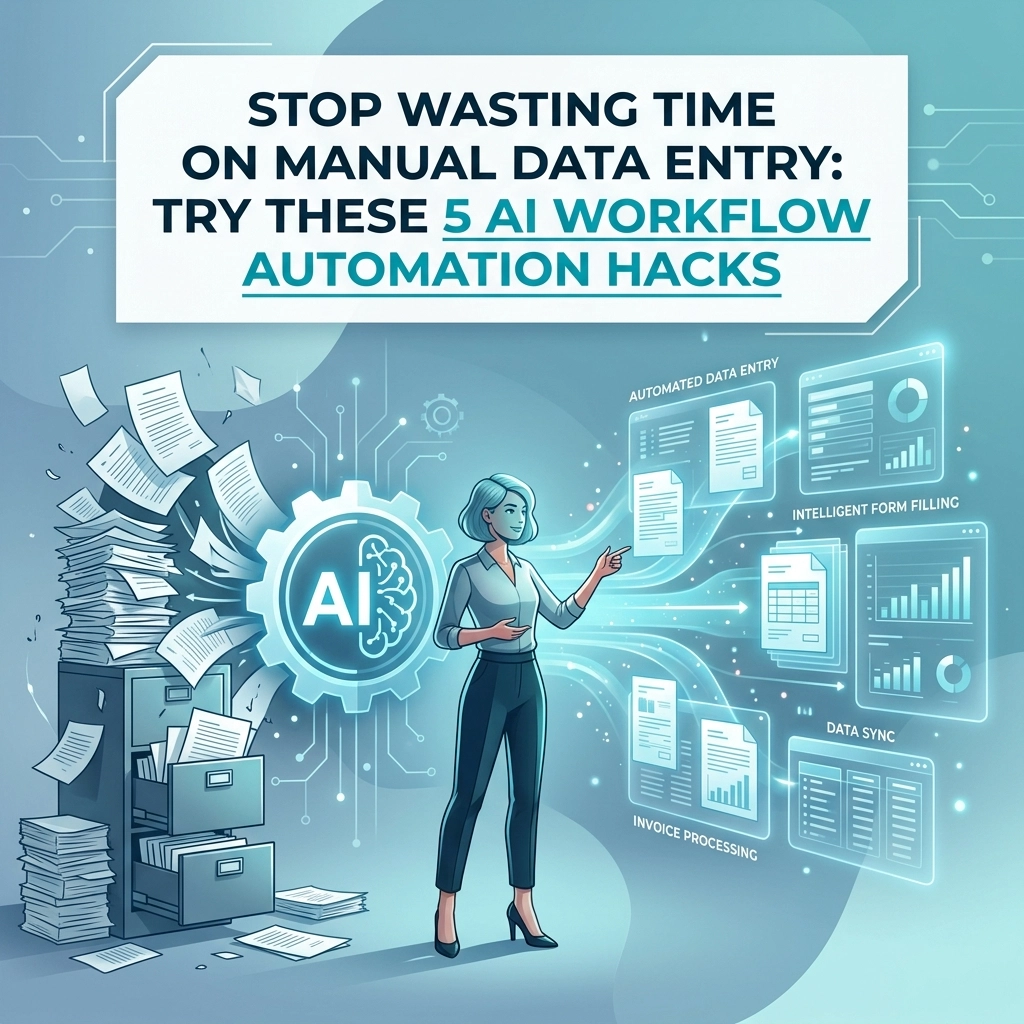
  • 10 Reasons Your Manual Operations Aren’t Scaling (And How AI Workflow Automation Fixes It)

    10 Reasons Your Manual Operations Aren’t Scaling (And How AI Workflow Automation Fixes It)

    For many founders and executives, growth is the ultimate objective. However, there is a silent threshold where the very processes that built your company begin to act as an anchor. In the early stages of a business, manual intervention is a badge of honor: it represents agility and a "whatever it takes" attitude. But as volume increases, those manual workarounds transition from being your greatest strength to your most significant bottleneck.

    At Pure Technology Consulting, we work with organizations that have reached this friction point. They are successful, but they are tired. Their scaling efforts are met with diminishing returns because their operating model is still tied to human linear capacity rather than algorithmic exponentiality.

    If your growth has slowed or your operational costs are ballooning, it is likely because your manual operations simply cannot scale. Here are ten reasons why, and how transitioning to custom AI workflow automation provides the necessary roadmap for sustainable expansion.

    1. Manual Workarounds Have Become Critical Dependencies

    In the beginning, a spreadsheet or a manual data entry step is a quick fix to a gap in your software stack. Over time, these fixes become embedded in your company culture. Employees build their entire workday around these "temporary" workarounds.

    When you try to double your output, these workarounds become dependencies that cannot be easily replicated or taught. They become "black boxes" of tribal knowledge. Custom automation replaces these fragile human links with robust, codified logic, ensuring that your process remains intact regardless of who is operating the system.

    2. The Visibility Gap Leads to Reactive Decision-Making

    As operations grow, the distance between the executive suite and the front-line data increases. If your data relies on manual updates, you are likely looking at information that is 24 to 48 hours old. This lack of real-time visibility creates a "lag" in leadership.

    Without a single, automated source of truth, decisions are made on intuition or outdated reports rather than live operational metrics. By integrating custom web applications: similar to the architecture we’ve deployed for complex matching engines in healthcare: you gain a dashboard that reflects reality in real-time, moving your leadership style from reactive to proactive.

    Interconnected data network nodes representing real-time operational visibility and AI workflow automation.

    3. Inconsistency Multiplies at Scale

    A manual process is only as consistent as the person performing it on a given Tuesday. While one team member might follow the protocol perfectly, another might take a shortcut. At a small scale, these discrepancies are manageable. At a large scale, they result in uneven customer experiences and brand erosion.

    AI-driven workflows do not have "off days." Whether you are processing ten applications or ten thousand, the logic remains identical. This is the level of consistency we bake into proprietary tools like ChainHQ, where logistics and workflows must be precise to maintain operational integrity.

    4. Latency Turns Into Lost Revenue

    In the modern economy, speed is a competitive advantage. Manual steps introduce latency: leads wait hours for a follow-up, contracts sit in an inbox for days, or rate changes take a week to reflect across all platforms.

    At scale, these manageable delays collectively translate into massive amounts of lost conversion. Automation eliminates the "wait time" between steps. Leads can be qualified, routed, and responded to in seconds, ensuring that your revenue velocity matches your growth ambitions.

    5. The Mathematical Trap of Error Multiplication

    Human error is a statistical certainty. At low volumes, an error rate of 1% is easily caught and corrected. However, when you scale to thousands of transactions or data points, that 1% becomes a deluge of mistakes that require a dedicated team just to fix.

    Manual operations force you to spend more time "cleaning up" than "moving forward." Custom-built software, such as our FTP Inform integrations, ensures data integrity at the point of entry, drastically reducing the downstream cost of human fallibility.

    6. Fragmented Data Sources (The Lack of a Single Source of Truth)

    When a business scales manually, information often ends up trapped in silos: email chains, local Excel files, and disparate SaaS tools that don't talk to each other. This fragmentation makes it impossible to get a holistic view of the customer journey.

    Custom development allows for the creation of a centralized hub where all data resides. Whether we are building for legal, accounting, or fintech, our goal is to eliminate data duplication and ensure that every stakeholder is working from the same set of facts.

    Fragmented data merging into a central sphere symbolizing a unified software source of truth.

    7. Increasing Compliance and Regulatory Exposure

    As your business grows, so does your profile. Regulatory bodies and industry standards (such as HIPAA in healthcare or GDPR in data privacy) become more stringent as you capture more market share. Managing these requirements manually is not only exhausting; it’s a high-stakes legal risk.

    We leverage our experience in high-compliance sectors: demonstrated by our work on EHRIO Pro: to build automation that has compliance "baked in." Automated logging, encrypted data handling, and standardized reporting ensure that your growth doesn't outpace your governance.

    8. Processes Fail to Adapt to Emerging Complexity

    Scaling is rarely a linear process of "doing more of the same." It usually involves adding new channels, more complex product tiers, or diverse geographic locations. Manual systems are rigid; they are built for the current state of the business, not the future state.

    Bespoke web applications are designed with modularity in mind. They are built to adapt as your business logic evolves, allowing you to introduce complexity without breaking the underlying operational model.

    9. Reaching the Ceiling of Human Capability

    There is a physiological limit to how much a human team can process before accuracy drops. Research indicates that once manual systems hit high volumes (such as 300+ orders or entries per day), accuracy rates plummet below 97%.

    AI workflow automation handles the "heavy lifting" of repetitive tasks, allowing your high-value employees to focus on judgment, strategy, and empathy: the things machines can’t do. This shift doesn't just improve efficiency; it improves employee retention by removing the burnout associated with "data drudgery."

    10. The Unsustainable Headcount Scaling Model

    The most dangerous trap in manual operations is the belief that doubling your business requires doubling your headcount. If your costs grow at the same rate as your revenue, you aren't truly scaling: you’re just getting bigger.

    True scaling is about increasing the "leverage" of every employee. By implementing sophisticated automation and custom software, we help firms achieve 2x or 5x growth with only fractional increases in staff. This preserves your margins and ensures that your business remains profitable as it expands.

    Visionary digital landscape illustrating business growth through custom software and algorithmic scaling.

    Moving Toward a Visionary Operating Model

    At Pure Technology Consulting, we don’t just build software; we architect the future of your operations. Our approach is consultative and strategic. We look at your current manual bottlenecks and design a roadmap that replaces friction with flow.

    Whether it's leveraging the automation principles of AI Local Boost for your marketing presence or building a deep-stack custom ERP for your field operations, our focus is on creating assets that you own and that grow with you.

    Scaling shouldn't feel like a struggle against your own systems. If you find that your team is spending more time managing the "process" than serving the "client," it is time to move beyond manual operations.

    We invite you to explore what is possible when your business logic is powered by custom AI and bespoke web applications. The transition from manual to automated isn't just an IT upgrade; it is a strategic evolution that defines the next chapter of your success.

    To discuss your operational roadmap and how a custom-built solution can unlock your next phase of growth, reach out to us today.

    Pure Technology Consulting LLC
    Phone: +1 (803) 921-0969
    https://puretechconsult.com/schedule

    Amin Said, Founder of Pure Technology Consulting LLC
    https://puretechconsult.com

  • The Invisible Clinic: Why Your Practice is Losing High-Value Leads (and How AI Local Boost Fixes It)

    The Invisible Clinic: Why Your Practice is Losing High-Value Leads (and How AI Local Boost Fixes It)

    By Amin Said, Founder of Pure Technology Consulting LLC

    You’ve spent years mastering your craft. Whether you are a chiropractor, a physical therapist, or the director of a wellness center, your clinical expertise is likely top-tier. You’ve built a team, invested in the latest equipment, and created a space designed for healing.

    But there is a silent problem keeping your clinic from reaching its full potential: You are invisible to the people who need you most.

    In 2026, the "word-of-mouth" referral is no longer the final step in a patient’s journey; it’s just the starting point. Even when a friend recommends your practice, the very next thing that person does is search for you on Google. If you don’t appear in the "Local Pack" (the top three map results), or if your profile looks stagnant compared to the clinic down the street, that lead evaporates before they ever pick up the phone.

    At Pure Technology Consulting, we’ve seen this pattern across dozens of industries, from fintech to healthcare. We’ve built complex matching engines for medical intakes and automated GPS logging for field reps. What we’ve learned is that high-value leads aren’t lost because of your clinical skill: they are lost because of a "Digital Visibility Gap."

    The Digital Front Door: Why Visibility is Your Biggest Revenue Driver

    Most wellness practices believe that if they provide great service, the patients will come. While that’s a noble sentiment, it ignores the reality of modern consumer behavior. Digital presence is now the front door of your practice.

    If a patient searches for "Physical Therapy near me" and your clinic is buried on page two or three of the search results, you effectively don’t exist to them. High-value leads: the patients seeking specialized treatments or long-term care plans: are looking for signs of authority and accessibility.

    When your practice is "invisible," you aren't just losing a single appointment; you're losing the lifetime value of a loyal patient. This is where the concept of "Strategic Visibility" comes into play. It’s not about just "being online"; it’s about appearing exactly where and when a high-intent patient is looking for a solution.

    A glowing digital doorway symbolizing a wellness clinic's strategic online visibility and digital front door.

    The Reputation Paradox: Why "Good" Isn't Enough

    Many clinics have a 4.5-star rating and think they are doing fine. However, Google’s algorithm prioritizes more than just the average score. It looks at recency, frequency, and keyword density within your reviews.

    If your last review was from three months ago, Google views your business as less relevant than a competitor who received three reviews this week. This is the reputation paradox: you provide excellent care every day, but because you don’t have a system to capture that sentiment, the digital world assumes you’re stagnant.

    High-value leads are risk-averse. They want to see that other people recently had a positive experience. Without reputation automation, you are relying on the 1% of patients who are motivated enough to leave a review on their own: usually only when something goes wrong.

    How AI Local Boost Bridges the Gap

    At Pure Technology Consulting, we don’t just build software; we build operating models for growth. One of our core proprietary assets, AI Local Boost, was developed to solve this exact visibility crisis.

    AI Local Boost isn't a "magic button," but a sophisticated automation framework designed to signal to Google that your practice is the most relevant, active, and trusted authority in your local area. By automating the Google Business Profile (GBP) signals that matter, we remove the operational drag from your front desk and put your practice on the map, literally.

    1. Automated Signal Generation

    Google ranks businesses based on "signals." These include regular photo updates, posts, and responses to queries. For a busy clinic, keeping up with this is a full-time job. AI Local Boost automates these touchpoints, ensuring your profile remains hyper-active without your staff lifting a finger.

    2. Reputation Automation

    We integrate review requests into the patient journey. By the time a patient walks out of your clinic feeling better, they receive a frictionless prompt to share their experience. This ensures a steady stream of fresh, keyword-rich reviews that boost your search ranking.

    3. Intent-Based Content

    The system doesn't just post generic updates. It uses data-driven insights to highlight the specific services your high-value leads are searching for, whether it's "spinal decompression" or "post-surgical rehabilitation."

    Luminous digital core representing AI Local Boost automating patient review signals and lead flow consistency.

    From Click to Clinic: Solving the Lead Flow Consistency Problem

    Visibility is only half the battle. Once a lead finds you, the transition to becoming a patient must be seamless. This is where many practices fall short due to "leaky buckets" in their workflow.

    In our work building custom healthcare solutions like EHRIO Pro and the Thrive matching engine, we’ve perfected the art of the 70-question intake and HIPAA-adjacent workflows. We understand that a lead who has to wait 24 hours for a callback is a lead that will call your competitor.

    By connecting AI Local Boost with a robust follow-up automation, you ensure that the momentum generated by your high visibility isn't wasted. You can see how these systems work in action by viewing our video walkthroughs.

    The Hidden Cost of "Doing It Later"

    The most dangerous phrase in business is "We’ll get to the marketing once we’re less busy." The problem is that without a consistent lead flow, you’ll eventually find yourself very "un-busy," but without the revenue to fix the problem.

    Digital invisibility is a compounding issue. The longer your competitors dominate the Local Pack, the more data Google collects on them, and the harder it becomes for you to unseat them.

    We view local SEO and automation not as an expense, but as a core piece of your practice’s infrastructure: just like your EHR or your medical equipment. When you invest in a custom automation roadmap, you are building an asset that works 24/7 to fill your waiting room with the right kind of patients.

    Digital blueprint of an automated growth infrastructure and roadmap for a thriving wellness practice.

    A Visionary Approach to Practice Growth

    At Pure Technology Consulting, we specialize in taking proven capabilities from high-stakes industries: like fintech telephony integrations and legal workflow governance: and applying them to the local wellness space.

    We aren't just looking to get you "more clicks." We are looking to transform your operating model. We want to take the friction out of your patient acquisition so you can focus on what you actually went to school for: healing people.

    If your practice feels like the best-kept secret in town, it’s time to change that. You don't need a bigger sign on the street; you need a more powerful presence in the pocket of every potential patient in your city.

    Next Steps: Auditing Your Digital Visibility

    If you are ready to stop losing high-value leads to the "invisible clinic" trap, the first step is a strategic audit. We don't believe in one-size-fits-all SaaS products. Every practice has unique constraints, specific high-ticket services they want to promote, and existing workflows that need to be respected.

    We invite you to schedule a discovery call to discuss how a custom implementation of AI Local Boost and our broader automation consulting can fit into your 2026 growth strategy.

    Let's move your practice from the shadows of page two and into the spotlight where it belongs. Your patients are already searching for you: it’s time you let them find you.

    Amin Said, Founder of Pure Technology Consulting LLC
    https://puretechconsult.com
    Contact: +1 (803) 921-0969
    Book a Strategy Session

  • 7 Mistakes You’re Making with AI Workflow Automation (and How to Fix Them with Bespoke AI Solutions)

    7 Mistakes You’re Making with AI Workflow Automation (and How to Fix Them with Bespoke AI Solutions)

    In the current landscape of 2026, Artificial Intelligence has moved beyond the realm of "innovation" and into the core infrastructure of every high-performing enterprise. However, as the initial hype settles, a stark divide is emerging between companies that have simply "added AI" and those that have fundamentally re-engineered their operating models through bespoke automation.

    The promise of AI workflow automation is immense: reduced cycle times, eliminated manual errors, and the ability to scale output without linearly increasing headcount. Yet, many organizations find themselves trapped in a cycle of high costs and diminishing returns. They are discovering that off-the-shelf "wrappers" and generic prompt-engineering are insufficient for the complexities of professional services, healthcare, and specialized SaaS.

    At Pure Technology Consulting, we’ve seen these pitfalls firsthand while architecting high-ticket custom solutions. To help you navigate this transition, we’ve identified the seven most critical mistakes leadership teams make when implementing AI automation: and more importantly, how to fix them with a visionary, bespoke approach.

    1. Automating Broken or Opaque Processes

    The most expensive way to fail is to automate a process that shouldn't exist in the first place. This is the "Garbage In, Garbage Out" principle accelerated to machine speed. When you take an inefficient manual workflow and apply AI, you don't solve the problem; you simply create automated chaos.

    In manual environments, human judgment often acts as a "buffer" for broken steps. AI lacks that intuitive safety net. Without a rigorous audit, your automation will produce technically correct but contextually useless outputs at a rate your team cannot keep up with.

    The Bespoke Fix: Before a single line of code is written, we advocate for "Process Mining." At Pure Technology Consulting, we work with clients to document every keystroke and decision point. By running the process manually five times and documenting the friction, we identify where the workflow actually breaks down. Only once the logic is sound do we layer in automation, ensuring the system scales efficiency rather than errors.

    2. Over-Engineering with "Model Overkill"

    A common mistake is assuming that the most powerful model (like GPT-4o or its successors) is the right tool for every task. Using a massive, high-reasoning model for simple data extraction or classification is like using a surgical laser to cut a piece of cardboard. It’s effective, but the compute costs will erode your ROI within months.

    In 2026, compute costs still represent 70-80% of total AI expenses. Organizations that fail to implement model routing find themselves with ballooning monthly bills and slow latency.

    The Bespoke Fix: Implement strategic model routing. We demonstrate this capability through our proprietary work with ChainHQ. By building custom orchestration layers, we route simple tasks to lightweight, hyper-fast models and reserve the "heavy hitters" for complex reasoning. This architectural choice ensures that your custom web application remains both performant and cost-effective.

    Intelligent AI model routing hub sorting data streams for efficient workflow automation.

    3. Ignoring the "Data Gravity" and Integration Gap

    AI is only as visionary as the data it can access. Many firms try to build automation in a vacuum, separated from their legacy data silos. This leads to "integration friction," where the AI cannot fetch the real-time information it needs to make accurate decisions.

    Whether it’s legal discovery, accounting ledgers, or healthcare records, if the data isn't flowing securely and consistently, the automation will stall.

    The Bespoke Fix: Focus on the "Data Plumbing." For example, our work with FTP Inform showcases how we solve the challenge of secure, automated data movement. By ensuring that disparate data sources are unified and accessible via secure protocols, we allow custom AI agents to act as a single source of truth. A bespoke solution doesn't just "talk" to your data; it integrates into the very fabric of your file systems and databases.

    4. Poor Context Management and "Token Bloat"

    When firms build their own internal AI tools, they often fall into the trap of passing too much context in every prompt. They send entire histories, irrelevant documents, and bloated instructions, hoping the AI will "figure it out." This results in high token usage (higher costs) and increased hallucinations as the model struggles to identify what is actually relevant.

    The Bespoke Fix: Treat prompts as versioned, engineered assets. We use context compression: summarizing previous exchanges and defining explicit output schemas. This ensures the AI agent returns only exactly what is needed for the next step of the workflow. By engineering the context at a foundational level, we reduce operational drag and increase the precision of the output.

    5. Deploying Without a Governance Framework

    In high-stakes industries like healthcare and law, "close enough" isn't good enough. Yet, 68% of successful AI projects owe their victory to mature governance, while those without it see failure rates as high as 70%. Without a framework to monitor spend, accuracy, and compliance, your AI initiative can quickly become a liability.

    The Bespoke Fix: Build-in validation layers. When we developed EHRIO Pro, we focused on high-compliance healthcare environments requiring 70-question intake logic and HIPAA-adjacent workflows. We apply this same rigor to every custom build, establishing monitoring dashboards that track task completion rates and error thresholds in real-time. Governance shouldn't be an afterthought; it should be a feature.

    Bespoke AI governance dashboard for real-time compliance monitoring and workflow oversight.

    6. Vague Scoping: The "Just Use AI" Mandate

    Executive leadership often issues a mandate to "improve efficiency with AI" without defining what success looks like. This leads to engineering teams building toward technical completeness rather than business impact. A project that "works" technically but doesn't move the needle on your KPIs is a failure of strategy.

    The Bespoke Fix: Define hyper-specific outcomes. Instead of "improving onboarding," we target goals like "reducing trial-to-paid abandonment by 15% through automated Salesforce integration setups." At Pure Technology Consulting, we frame every engagement around these executive-level outcomes. We don’t just build software; we solve specific business bottlenecks.

    7. Scaling Too Fast (Automation Sprawl)

    Success in one department often leads to a rush to automate everything at once. This creates "automation sprawl": a disconnected web of triggers, branches, and conflicting workflows that eventually require more human intervention to manage than the manual processes they replaced.

    The Bespoke Fix: Adopt a modular, repeatable framework for growth. Look at how we approached local SEO with AI Local Boost. We didn't try to automate the entire marketing department at once. We built a specific, repeatable engine for Google Business Profile automation that delivers measurable ROI. Once that "module" was perfected, it could be scaled. We help our clients identify these "high-leverage" modules first, ensuring each step of the transformation pays for itself.

    The Path Forward: From Strategy to Execution

    The transition to an AI-powered enterprise is not a single leap but a series of calculated, strategic moves. The mistakes listed above are common, but they are also avoidable with the right architectural approach.

    Bespoke AI solutions are not just about code; they are about understanding the unique DNA of your business operations. Whether you are in legal, accounting, or specialized field services, the goal is to build a system that acts as a force multiplier for your expertise.

    At Pure Technology Consulting, we specialize in bringing these proven capabilities to life. We don't just provide tools; we provide the roadmap to ensure your automation is visionary, inspirational, and: most importantly: profitable.

    Ready to Audit Your Workflow?

    If you’re ready to move beyond generic automation and build a bespoke AI infrastructure that fits your specific operations, let’s define your roadmap. We offer comprehensive workflow audits to identify your highest-leverage opportunities for custom development.

    Connect with us today:

    The future of your industry is being coded right now. Don't just participate in the transformation: lead it.


    Amin Said, Founder of Pure Technology Consulting LLC
    https://puretechconsult.com

  • Owning the Ecosystem: Why Industry Vendors are Switching to White-Label SaaS for Recurring Revenue

    Owning the Ecosystem: Why Industry Vendors are Switching to White-Label SaaS for Recurring Revenue

    By Amin Said, Founder of Pure Technology Consulting LLC

    For decades, the path to success for industry vendors and equipment manufacturers was straightforward: build a high-quality physical product, sell it at a margin, and move on to the next lead. It was a linear, transactional model that worked: until the digital transformation of the 2020s turned "linear" into "limited."

    Today, the most successful vendors are realizing that the physical product is no longer the finish line; it is the entry point. To capture long-term value, you have to own the ecosystem. You have to move from being a "vendor" to becoming the "operating system" for your customers' businesses.

    The vehicle for this transformation? White-label SaaS.

    At Pure Technology Consulting, we’ve seen a massive uptick in industry leaders: those who manufacture hardware, manage large supply chains, or provide specialized professional services: who are pivoting toward subscription-based software models. They aren't doing it just because "SaaS" is a buzzword. They’re doing it because it provides the ultimate business trifecta: predictable recurring revenue, deeper customer retention, and massive scalability without proportional overhead.

    The Transactional Trap vs. The Ecosystem Edge

    Traditional business models suffer from what I call the "Transactional Trap." Every month, your revenue starts at zero. To grow, you must constantly find new customers or convince old ones to buy a newer, shiny piece of equipment. The moment the sale is done, the relationship goes dormant until the next upgrade cycle.

    Compare that to an "Ecosystem Edge." By offering a white-labeled SaaS platform: perhaps one that manages the data from your hardware, automates the workflows of your service, or integrates your clients’ operations: you stay present in their business every single day.

    When you own the platform, you don't just sell a tool; you sell a solution that becomes indispensable. And because it's a subscription, your revenue is predictable. You aren't hunting for the next deal to keep the lights on; you're building a foundation that scales.

    Digital network grid representing the transition to a scalable SaaS ecosystem for industry vendors.

    Why White-Label? The "Technical Backbone" Without the Build

    The biggest barrier for most industry vendors is the perceived cost and risk of software development. Building a robust, scalable, and secure SaaS platform from scratch is a multi-year, multi-million dollar endeavor. It requires a level of technical governance that most hardware-focused companies simply aren't equipped to handle.

    This is where white-labeling: or more accurately, leveraging a proven technical backbone: becomes a strategic masterstroke.

    White-labeling allows you to:

    1. Reduce Market Entry Time: Instead of a 12-to-18-month development cycle, you can bring a sophisticated platform to market in weeks or months.
    2. Mitigate Risk: You are using a platform that has already been stress-tested. The infrastructure, security, and core features are already proven.
    3. Focus on Your Core Competency: You know your industry better than any software developer. White-labeling lets you focus on tailoring the user experience and the value proposition while we handle the underlying code.

    At Pure Technology Consulting, we specialize in building these custom web applications that serve as the technical backbone for our clients. Whether it's a healthcare matching engine like our work with EHRIO or a GPS-logged accountability tool for field operations like D2D Tracking, we provide the high-level automation and architecture that allows our clients to brand and sell the solution as their own.

    The Financial Reality: Why Investors Love White-Label SaaS

    If you are looking to increase the valuation of your company, nothing moves the needle like recurring revenue. Investors and buyers value SaaS revenue at a much higher multiple than one-time hardware sales.

    Why? Because it’s predictable.

    When an industry vendor switches to a white-label SaaS model, they are essentially creating a new, high-margin revenue stream with minimal additional investment. You aren't hiring a massive new sales force; you are leveraging your existing customer base and distribution networks. Your partners and resellers do the heavy lifting of market-specific sales, while you collect a share of the recurring subscription fees.

    By 2030, the SaaS market is projected to reach $887 billion. For an equipment manufacturer, capturing even a tiny sliver of that by bundling software with your hardware is a game-changer for your balance sheet.

    Stacked glowing pillars illustrating the compounding growth of recurring revenue in white-label SaaS models.

    From Healthcare to Field Ops: Proof of the Model

    We’ve seen this strategy work across radically different sectors. The common thread is always a vendor who identifies a repetitive, manual process their customers face and provides a digital solution to solve it.

    • In Healthcare: We’ve built platforms that handle 70-question intakes and HIPAA-adjacent workflows, turning complex data entry into a streamlined matching engine. A vendor providing medical devices can white-label this software to offer hospitals a complete "device + data" package.
    • In Field Operations: For companies managing door-to-door teams, we developed tracking systems that ensure rep accountability via GPS logging. A uniforms or equipment vendor could provide this software to their clients, moving from a commodity supplier to a vital operations partner.
    • In Local SEO: Through our AILB (AI Local Boost) initiatives, we’ve automated Google Business Profile management. This is a perfect example of a service that can be white-labeled by marketing agencies or business consultants to provide ongoing value without manual labor.

    Each of these examples represents a move away from "one-and-done" sales and toward a "platform-first" mentality. You can see more of how these complex systems come together in our video walkthroughs.

    Controlling the Brand Experience

    One of the biggest fears vendors have with third-party software is losing their brand identity. White-labeling solves this by allowing the core platform to power multiple customer-facing solutions under your own flag.

    You maintain the underlying relationship. You control the data. You own the brand experience. Your customers don't see a third-party developer; they see a visionary partner who is providing them with the tools they need to succeed in a digital world. This strengthens brand loyalty and makes it significantly harder for a competitor to swoop in with a lower-priced physical product.

    Central digital engine powering a multi-brand ecosystem to strengthen customer loyalty and brand control.

    Strategic Implementation: How to Start

    Transitioning to a white-label SaaS model is a strategic pivot, not just a marketing one. It requires a clear roadmap and an understanding of where custom software beats off-the-shelf solutions.

    1. Identify the Friction: What is the one thing your customers struggle with every day that your products interact with? That’s where your software should live.
    2. Audit Your Workflow: Before building or licensing, you need a clear picture of the automation potential. We often recommend starting with a workflow audit to see where the most leverage exists.
    3. Choose a Partner, Not a Vendor: You need a technical partner who understands the business stakes, not just the code. Your partner should be able to provide the architecture, integrations, and dashboards that make the platform feel like yours.

    The Visionary Path Forward

    The "Great Convergence" of hardware, services, and software is already happening. Industry vendors who cling to purely transactional models will find their margins squeezed by those who offer complete, software-driven ecosystems.

    By adopting a white-label SaaS strategy, you aren't just adding a product to your catalog. You are evolving your operating model. You are building a business that is more resilient, more profitable, and more valuable.

    If you’re ready to stop selling parts and start owning the ecosystem, it begins with a conversation about your technical backbone. We invite you to schedule a discovery call to discuss how bespoke development can transform your industry presence.

    The future belongs to those who own the platform. Let’s build yours.


    Amin Said, Founder of Pure Technology Consulting LLC
    https://puretechconsult.com
    Contact: +1 (803) 921-0969
    Pure Technology Consulting: Visionary Software Development & Custom Automation.

  • 7 Mistakes You’re Making with AI Workflow Automation (and How to Fix Them)

    7 Mistakes You’re Making with AI Workflow Automation (and How to Fix Them)

    The promise of artificial intelligence in 2026 is no longer a distant vision; it is the fundamental engine of modern enterprise. We have moved past the era of simple "if-this-then-that" triggers and entered a landscape where AI agents can reason, execute, and optimize complex business functions. However, as organizations rush to integrate these capabilities, many fall into predictable traps that lead to operational drag rather than the exponential leverage they seek.

    At Pure Technology Consulting, we view AI workflow automation not as a collection of scripts, but as a strategic operating model. Whether you are a high-growth legal firm or a healthcare provider managing intricate data exchanges, the architecture of your automation determines your ceiling for growth.

    Here are the seven most common mistakes we see in the field, and the visionary approach required to fix them.

    1. Automating an Inefficient, Broken Process

    The most expensive mistake a company can make is automating a process that shouldn't exist in its current form. Automation acts as a force multiplier; if you automate a chaotic or redundant workflow, you simply generate chaos at machine speed. This is the ultimate "garbage in, garbage out" scenario.

    The Fix: The Strategic Process Audit
    Before a single line of code is written or an agent is deployed, perform a deep-dive audit. Document every decision point and handoff. At Pure Technology Consulting, we often find that by redesigning the workflow for an automated environment: eliminating unnecessary approvals and standardizing data formats: we can reduce complexity by 40% before the AI even touches it. Only once the path is lean should it be digitized.

    2. Treating LLMs as Mere Execution Engines

    Many teams build AI automations focused solely on speed. They treat Large Language Models (LLMs) like a faster way to press buttons. However, users often abandon these automations because the "black box" nature of AI creates a lack of trust or understanding.

    The Fix: Implementing Mode-Shifting Capabilities
    Effective automation requires a balance between execution and guidance. Your systems should be able to shift modes: explaining a decision, guiding a user through a complex choice, or executing a routine task autonomously.

    Futuristic digital interface representing AI workflow orchestration and strategic human-in-the-loop guidance.

    We demonstrated this principle through the development of ChainHQ. Rather than just running scripts in the background, ChainHQ was designed to provide a high-level orchestration layer. It allows stakeholders to visualize the workflow, understanding exactly where the AI is making decisions and where human intervention is required. This transparency is what turns a tool into a trusted member of your operations team.

    3. Neglecting Data Hygiene and Input Standardization

    AI thrives on context, but it fails when provided with ambiguous or inconsistent data. A request like "update the client file" is interpreted differently by a human than by an AI agent requiring specific field mappings. Without strict data quality controls, your automation will eventually hallucinate or stall.

    The Fix: Enforcing a Unified Data Schema
    Your automation strategy must include a robust validation layer. This means implementing task mining to understand how your team actually interacts with data and then building interfaces that force standardization. By ensuring your inputs are clean, you allow the AI to operate with 99% accuracy rather than "close enough."

    4. Choosing Generic Platforms for Bespoke Problems

    In an effort to move quickly, many executives opt for off-the-shelf SaaS automation tools that offer a "one-size-fits-all" solution. While these are fine for simple tasks, they often lack the depth required for high-stakes industries like healthcare or fintech. These platforms frequently fail when faced with complex compliance requirements or unique legacy system integrations.

    The Fix: Custom Architecture for High-Ticket Operations
    When the stakes are high, bespoke development is the only way to ensure security and scalability. Our work with EHRIO Pro serves as a perfect case study. In the healthcare sector, data matching isn't just about efficiency: it's about accuracy and HIPAA-adjacent compliance. We built EHRIO Pro with a proprietary matching engine and a 70-question intake system specifically designed to handle the nuances of healthcare data that generic platforms simply cannot touch. For high-ticket clients, the investment in custom architecture pays for itself in risk reduction and operational throughput.

    Bespoke software architecture design illustrating precision-built custom AI solutions for high-ticket clients.

    5. Poor Context Management and "Context Bloat"

    As AI agents perform more tasks, they often accumulate massive amounts of historical data. If not managed properly, this leads to "context bloat," where the agent becomes confused by irrelevant information or generates redundant, expensive outputs. This is a technical hurdle that manifests as a business cost.

    The Fix: Intelligent Context Compression
    Your automation should utilize a summarized context model. Instead of feeding an entire conversation history into every call, the system should summarize previous exchanges and extract only the relevant entities. This keeps the AI focused, fast, and cost-effective. We apply these principles of "lean context" to every custom build to ensure that as your database grows, your automation speed doesn't slow down.

    6. Overlooking Secure Data Transmission

    In the rush to automate, many organizations forget the "plumbing." How is the data actually moving between your AI agent, your CRM, and your external partners? Using unencrypted or non-compliant methods to move sensitive files is a recipe for a security disaster.

    The Fix: Integrated Secure Communication
    Automation must be built on a foundation of security. We addressed this need through FTP Inform, a solution designed to handle automated, secure file communication. By integrating secure transport protocols directly into the workflow, we ensure that as data moves from an AI-generated report to a client’s server, it remains encrypted and compliant. Whether you are dealing with legal discovery documents or accounting records, the "how" of data movement is just as important as the "what."

    7. Scaling Without a Governance Roadmap

    The "pilot trap" occurs when a single automation works brilliantly, leading the organization to rush into automating dozens of other processes without a centralized strategy. This results in "automation sprawl": a fragmented ecosystem of disconnected tools that eventually conflict with one another.

    The Fix: The Automation Center of Excellence
    Before scaling, establish a governance framework. This includes standardized templates for prompts, centralized monitoring of API usage, and a clear hierarchy of which systems take precedence. At Pure Technology Consulting, we help leaders build a roadmap for digital transformation that looks 18–24 months into the future, ensuring every new automation is a brick in a cohesive architectural foundation.

    A strategic digital transformation roadmap symbolizing long-term AI automation governance and scalability.

    Even in niche applications, governance matters. Consider AI Local Boost (AILB), our proprietary solution for local SEO. While it focuses on the specific task of Google Business Profile automation, it succeeds because it follows a strict, governed logic for local visibility. It’s a testament to how even specialized automation must be part of a broader, controlled strategy to deliver consistent results.

    The Path Forward: Strategy Over Software

    AI workflow automation is not a "set it and forget it" project. It is a continuous evolution of your business's operating model. The goal is not just to do things faster, but to do things better: to free your highest-value talent from the burden of routine so they can focus on strategy, relationship-building, and growth.

    If you are seeing the signs of operational drag, or if your current automation efforts are failing to deliver the ROI you expected, it is likely that one of these seven mistakes is at the root of the issue.

    At Pure Technology Consulting, we specialize in building the bespoke web applications and high-level automations that power the world’s most efficient firms. From healthcare matching engines to fintech telephony integrations, we bring proven capabilities to your unique challenges.

    Ready to audit your automation strategy?
    Let’s move beyond the hype and build something that scales. We invite you to request a workflow audit or book a discovery call to explore how custom software can transform your operations.

    Amin Said, Founder of Pure Technology Consulting LLC
    https://puretechconsult.com
    +1 (803) 921-0969

  • The Multi-Location Blueprint: How ChainHQ Synchronizes Operations for Rapid Expansion

    The Multi-Location Blueprint: How ChainHQ Synchronizes Operations for Rapid Expansion

    By Amin Said, Founder of Pure Technology Consulting LLC

    Scaling a service business from a single successful location to a regional powerhouse is a rite of passage for many founders. It starts with a proven concept, a loyal customer base, and a "magic" that seems easy enough to replicate. But as you open your third, fifth, or tenth location, that magic often starts to evaporate.

    Suddenly, you’re not just managing a business; you’re managing a dozen different versions of that business. One location has high employee turnover, another is leaking inventory, and a third is failing to follow the brand’s core service protocols. This is what we call "operational drag": the friction that occurs when your growth outpaces your infrastructure.

    At Pure Technology Consulting, we’ve spent years building custom solutions for high-stakes industries, from healthcare matching engines to fintech telephony integrations. Through this work, we developed ChainHQ, a proprietary framework and technical architecture designed specifically to eliminate operational drag for multi-location service businesses and franchise groups.

    In this blueprint, we’ll explore how centralized synchronization isn’t just a "nice-to-have" for expansion: it’s the only way to scale without losing control.

    The Fragmentation Trap: Why Traditional Scaling Fails

    The traditional approach to scaling involves hiring regional managers and hoping they enforce the same standards you did when you were on the ground. You might use a stack of off-the-shelf SaaS tools: one for scheduling, one for payroll, another for CRM: but these tools rarely "talk" to each other across different geographies.

    When your data is siloed, your visibility vanishes. You end up with:

    • Inconsistent Customer Experience: A client in Charlotte should get the same experience as a client in Atlanta. Without synchronized workflows, brand dilution is inevitable.
    • Information Asymmetry: By the time you realize a location is underperforming, the damage is already done. You’re reacting to last month’s reports instead of today’s data.
    • Resource Waste: Manual reporting and cross-referencing spreadsheets between locations eat up hundreds of hours of executive time.

    To solve this, we don't just look for "better software." We look for a cohesive operating model that uses technology as a nervous system, connecting every limb of the organization back to a central brain.

    Minimalist digital map showing multi-location business locations synchronized to a central management hub.

    Enter ChainHQ: The Synchronization Engine

    ChainHQ isn't just a product you buy off the shelf; it is our blueprint for how multi-site operations should function in the modern era. When we build custom web applications for our clients, we leverage the logic of ChainHQ to create a "single source of truth."

    The goal is simple: total visibility and absolute control from a single dashboard, regardless of how many miles sit between your locations.

    1. Centralized Governance, Local Autonomy

    One of the biggest hurdles in multi-location growth is the tension between centralized control and local flexibility. ChainHQ balances this by creating a hierarchy of permissions and data access. Headquarters can set the "Golden Rules": pricing, service protocols, and compliance standards: while local managers are empowered to handle day-to-day logistics within those guardrails.

    This approach mimics the work we’ve done in high-compliance sectors like healthcare. For instance, in our EHRIO Pro platform, we manage complex matching engines and 70-question intakes that require strict HIPAA-adjacent workflows. We apply that same level of governance to multi-location businesses, ensuring that "the way we do things" is hardcoded into the software itself.

    2. Real-Time Operational Intelligence

    If you can’t see it, you can’t manage it. ChainHQ synchronizes data streams from every location into a unified command center.

    Imagine seeing your labor-to-revenue ratio across five states in real-time. Imagine getting an automated alert when a specific franchise’s inventory levels deviate from the norm. This level of insight allows founders to move from "putting out fires" to "strategic intervention."

    For a deeper look at how we architect these types of data-heavy systems, you can explore our video walkthroughs.

    Automation as the Multiplier

    The secret to rapid expansion isn’t hiring more people; it’s making your existing people more effective through automation. When we implement ChainHQ-inspired systems, we focus on automating the "boring" parts of multi-location management.

    Standardizing the Employee Lifecycle

    In service businesses, your people are your product. We build custom modules that handle everything from centralized recruiting to standardized training and GPS-logged accountability.

    This mirrors our work with D2D Tracking, where we implemented rep accountability and GPS logging to ensure field operations were being executed exactly as planned. When a new location opens, the hiring and onboarding workflow is already built, tested, and ready to deploy. There’s no guesswork.

    Synchronized Marketing and Local SEO

    A major pain point for franchises is local visibility. How do you maintain a dominant presence on Google for 50 different locations without a 50-person marketing team?

    We leverage our AI Local Boost (AILB) capabilities to automate Google Business Profile management. By synchronizing local SEO efforts across all locations, we ensure that every site is capturing local intent without the need for manual updates at each individual branch. It’s about achieving "local feel" at a "global scale."

    A technical blueprint illustrating rapid business expansion and scalable custom software for franchises.

    Why Custom Beats Off-the-Shelf Every Time

    You might be wondering, "Can't I just use a few different SaaS products to do this?"

    The truth is, SaaS products are built for the "average" business. But your business isn't average: your competitive advantage lies in your unique workflows, your specific customer data, and your proprietary way of delivering value.

    Off-the-shelf software forces you to change your business to fit their code. At Pure Technology Consulting, we build code that fits your business. A bespoke build using the ChainHQ blueprint offers:

    1. Ownership: You own the intellectual property. You aren't paying "per seat" or "per location" fees that punish you for growing.
    2. Scalability: The system is built for where you want to be in five years, not where you are today.
    3. Integration: We don't believe in silos. Whether it’s debt agency telephony integrations or healthcare intakes, we ensure your tech stack is a unified ecosystem.

    Digital interface representing a unified command center for synchronized multi-location business operations.

    The Roadmap to Synchronization

    Transitioning to a synchronized multi-location model doesn't happen overnight. It requires a strategic roadmap. Here is how we typically approach a high-level automation and custom development engagement:

    • Audit & Discovery: We analyze your current "operational drag." Where is the data getting stuck? Where are the manual workarounds?
    • Architecture Design: We map out a bespoke web application architecture that centralizes your core operations.
    • Development & Integration: Using the proven pillars of ChainHQ, we build your custom command center, integrating with your existing essential tools (accounting, POS, etc.).
    • Deployment & Optimization: We roll out the system location by location, ensuring your team is trained and the data is flowing correctly.

    We’ve brought this level of capability to industries ranging from Fintech to Law and Accounting. We don't start from scratch; we bring a library of proven capabilities: like our telephony attribution models used in the debt collection space: and apply them to your specific scaling challenges.

    Building for the Future

    The businesses that thrive in the next decade won't be the ones with the most locations; they will be the ones with the best systems.

    If you are looking to expand your footprint and want to move away from the chaos of fragmented management, it’s time to think about a custom operating model. Whether you’re managing a franchise group or a multi-site service firm, the goal is the same: a business that runs like clockwork, regardless of where you are.

    The Multi-Location Blueprint isn't just about software; it’s about the freedom to grow. When your operations are synchronized, expansion stops being a source of stress and starts being a source of leverage.

    Ready to audit your workflow and eliminate operational drag?

    Let’s talk about building your command center. You can schedule a discovery call with our team to discuss your roadmap, or book a session directly with us to dive into the technical possibilities of a custom ChainHQ build.

    For more insights on how we approach custom development and business automation, visit our main blog or check out our full suite of services.

    Amin Said, Founder of Pure Technology Consulting LLC
    +1 (803) 921-0969
    https://puretechconsult.com

  • Why AI Workflow Automation Will Change the Way You Manage Your Team

    Why AI Workflow Automation Will Change the Way You Manage Your Team

    For decades, the role of a manager has been synonymous with "coordinator." Most leaders spend a staggering 60% of their day on "work about work": attending status meetings, chasing updates, manually routing tickets, and trying to decipher messy spreadsheets. It’s an operating model built on human endurance rather than strategic insight.

    But we are entering an era where the administrative friction of management is being dissolved by AI workflow automation. This isn't just about replacing a few manual tasks; it’s about a fundamental shift in how organizations function. When you remove the burden of routine execution from your team, you don't just get faster results: you change the very nature of what it means to lead.

    At Pure Technology Consulting, we see this transformation every day. We don’t just build software; we architect the digital nervous systems that allow businesses to scale without the traditional "growth tax" of administrative bloat.

    The End of the "Coordination Tax"

    The most significant drain on any modern team is the coordination tax. This is the time lost when a project stalls because a manager is waiting for a status update, or when a high-value employee is stuck performing manual data entry instead of solving a client problem.

    AI workflow automation eliminates this tax by acting as an invisible hand that guides data and tasks through your organization. Instead of a manager checking to see if a contract was signed, the AI detects the signature, triggers the onboarding sequence, notifies the accounting department, and sets up the kick-off call: all in seconds.

    Research suggests that organizations integrating AI workflows see a performance boost of nearly 40%. This isn’t because people are working harder; it’s because they are finally working on the right things. By automating the "noise," managers can finally focus on the "signal": the strategy, the culture, and the high-stakes decisions that move the needle.

    Abstract digital network illustrating AI workflow automation organizing complex business management tasks.

    Scaling Expertise Through Custom Logic: EHRIO Pro

    To understand the power of automated management, look at how we’ve approached complex industries like healthcare. In medical recruitment and placement, the "management" of candidates and positions is notoriously manual, involving hundreds of variables from credentials to geographic availability.

    We developed EHRIO Pro as a prime example of how bespoke automation replaces manual matching. In a traditional setting, a manager would spend hours cross-referencing resumes with job requirements. EHRIO Pro uses custom matching engines and 70-question intelligent intakes to do this instantly.

    By automating the "matching logic," the team is no longer bogged down in the logistics of search. They become strategic advisors who focus on the human element of placement, while the system ensures compliance and accuracy. This is the blueprint for modern management: build the logic into the system so your people can focus on the relationship.

    From Gut Feeling to Data-Driven Governance

    One of the hardest parts of managing a team is maintaining visibility without micromanaging. How do you know a project is off track before it’s too late?

    AI-powered automation provides real-time governance. Instead of waiting for a weekly report, managers have access to live dashboards that highlight anomalies and bottlenecks. This creates a shift from reactive management (fixing problems after they happen) to proactive orchestration (preventing problems before they occur).

    This level of oversight is exactly what we facilitate through tools like ChainHQ. By creating a centralized command center for complex workflows, we allow executives to see exactly where a process is stalling. Whether it’s a custom web app for a legal firm or a fintech platform, ChainHQ serves as the proof-of-concept for how high-level automation provides the transparency needed to lead effectively in a digital-first world.

    Centralized digital command interface showing data oversight for transparent team management and automation.

    Automating the Front Lines: AI Local Boost and FTP Inform

    The transformation isn't limited to internal project management; it extends to how you manage your market presence and data integrity.

    Consider the "management" of a company’s local search presence. For a business with multiple locations, keeping Google Business Profiles updated is a full-time job. We built AI Local Boost to handle this operational drag. By automating local SEO and profile management, a marketing manager can oversee 50 locations with the same effort it used to take to manage five.

    Similarly, managing the secure flow of information shouldn't require manual oversight. FTP Inform was designed to solve the "black hole" of data transfers. Instead of a manager constantly checking if a client uploaded a critical file, the system automates the notification and integration process. It’s about creating a "self-managing" data layer that keeps the team informed without them having to go looking for answers.

    These proprietary assets aren't just tools: they are demonstrations of how we take manual, error-prone processes and turn them into scalable, automated assets.

    Reclaiming the "Human" in Human Resources

    When managers are freed from the drudgery of task-tracking, they can return to what they are actually paid to do: coach, mentor, and innovate.

    AI doesn't replace the manager; it empowers the manager. It handles the data analysis, the scheduling, and the routine ticket routing, leaving the human leader to handle the nuanced, emotional, and creative aspects of the job.

    Imagine a workflow where:

    • Onboarding is handled by an AI that guides the new hire through every step, personalized to their role.
    • Performance data is gathered automatically, providing a clear roadmap for professional development.
    • Resource allocation is optimized by an algorithm that predicts project timelines based on historical data.

    This isn't a futuristic dream; it’s what we are building right now for clients in legal, accounting, and field operations. For instance, our work in field operations includes D2D tracking with GPS logging and representative accountability: ensuring that management knows exactly what’s happening on the ground without needing to be there physically.

    Silhouette of a manager with a digital data network, representing human leadership paired with AI automation.

    How to Start Your Automation Journey

    Transitioning to an AI-driven management style doesn't happen overnight, and it certainly doesn't happen by buying off-the-shelf software that only solves 20% of your problems. The real "alpha" in business today comes from bespoke solutions that fit your specific operating model.

    At Pure Technology Consulting, we specialize in building these custom bridges. We look at your current manual bottlenecks and design an automation roadmap that scales with your ambition. Whether you are in healthcare, fintech, or professional services, the goal is the same: eliminate the manual work, secure your data, and empower your team.

    What to automate first:

    1. Repeatable Data Entry: Any task where a human is moving data from one screen to another.
    2. Status Reporting: Automate the collection of metrics so meetings focus on "why" instead of "what."
    3. Standardized Communications: Use AI to handle routine client queries or internal notifications.
    4. Complex Matching/Sorting: Use custom engines (like those in EHRIO Pro) to handle high-volume decision-making.

    If your team feels like they are running in place, it’s likely not a talent problem: it’s a workflow problem. The way you manage your team is about to change forever. The only question is whether you will be the one leading the change or the one trying to catch up.

    Ready to see how custom automation can transform your operations? We’re here to help you scope out the roadmap.

    Book a discovery call with our team to explore how we can build a custom solution for your business.

    Amin Said, Founder of Pure Technology Consulting LLC
    https://puretechconsult.com
    Phone: +1 (803) 921-0969