Author: admin

  • 7 Mistakes You’re Making with Business Process Automation (and How to Fix Them)

    7 Mistakes You’re Making with Business Process Automation (and How to Fix Them)

    Business process automation should free your team. Instead, it's creating new headaches.

    You're spending thousands on automation tools. Your employees are frustrated. Workflows still break. And you're wondering why the promises of efficiency haven't materialized.

    The problem isn't automation itself. It's how you're implementing it.

    Most businesses rush into automation thinking technology alone will solve their problems. They don't plan strategically. They don't involve their teams. They automate chaos and wonder why the chaos just moves faster.

    Here are the seven critical mistakes sabotaging your automation efforts: and exactly how to fix them.

    Mistake #1: Skipping the Discovery Phase

    The Problem: You're automating without understanding what actually needs automation.

    Teams jump straight to solutions. They see a shiny new tool and implement it everywhere. No workflow mapping. No bottleneck analysis. No clear objectives.

    This creates automated systems that solve the wrong problems. Your team wastes time managing tools that don't address root issues.

    The Fix: Map everything first.

    Document your current workflows completely. Interview employees about daily frustrations. Identify where time disappears. Set measurable goals before selecting any automation platform.

    When we built EHRIO Pro for healthcare practices, we spent weeks mapping patient intake workflows. That discovery revealed the real bottleneck wasn't scheduling: it was the 70-question assessment process. We automated that specific pain point and transformed entire practices.

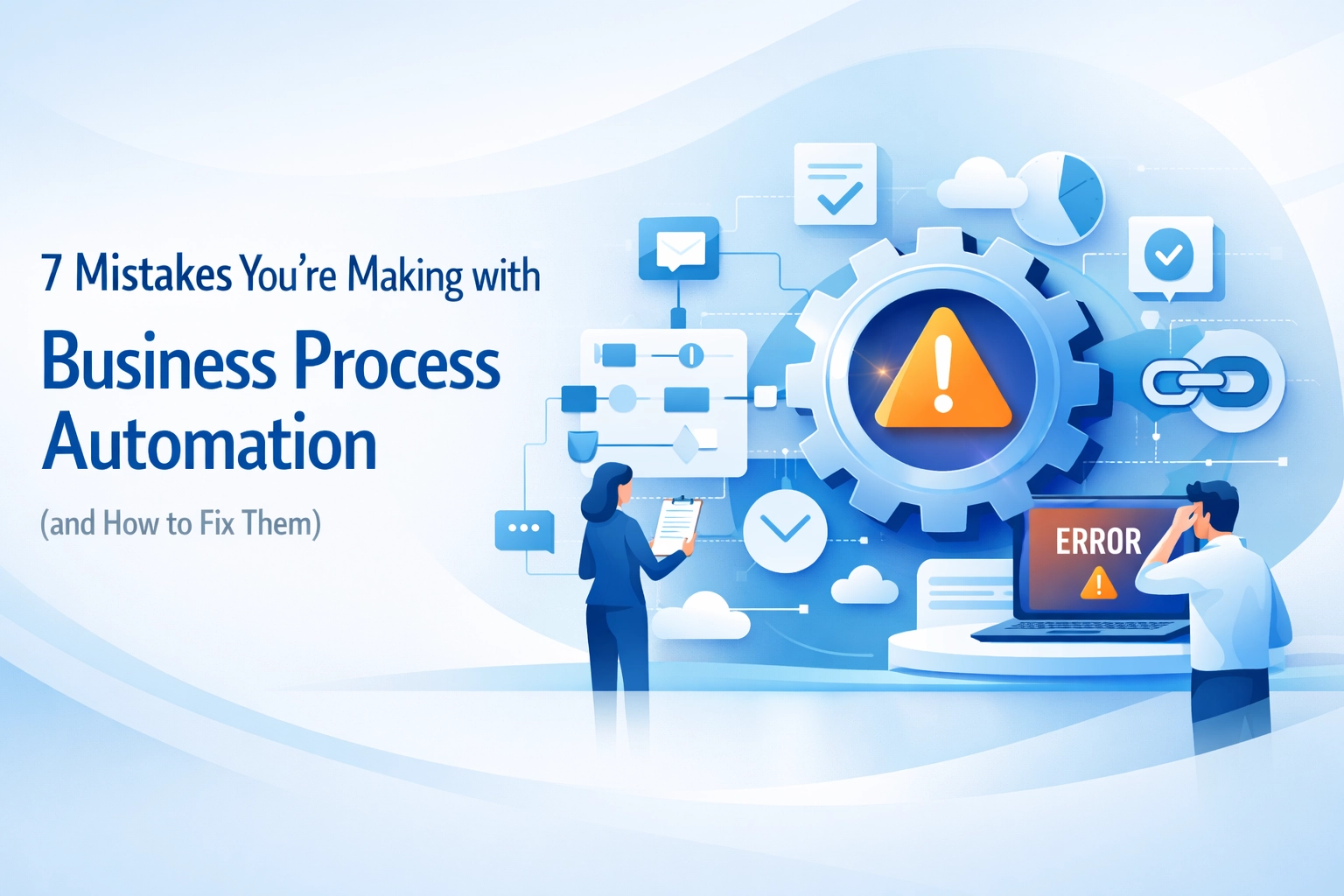
    Workflow diagram showing interconnected business process automation pathways with data analytics

    Mistake #2: Automating Broken Processes

    The Problem: You're making bad processes faster.

    Automation amplifies everything. If your current workflow is inefficient, automation multiplies that inefficiency at digital speed.

    A broken approval chain doesn't improve because it's automated. It just frustrates people faster.

    The Fix: Optimize before you automate.

    Refine your processes manually first. Remove unnecessary steps. Clarify approval hierarchies. Eliminate redundant data entry.

    Then introduce automation to the streamlined workflow.

    Think of automation as a performance multiplier. It takes your current process: good or bad: and scales it. Make sure you're scaling excellence, not dysfunction.

    Mistake #3: Ignoring Your Team's Experience

    The Problem: You're building automation for systems, not people.

    Leadership sees efficiency metrics. Employees see another complicated tool they didn't ask for. Customers experience robotic interactions that feel impersonal.

    When user experience suffers, adoption fails. Your expensive automation sits unused while teams revert to manual processes.

    The Fix: Design for humans first, systems second.

    Involve employees in automation planning. Ask what would actually make their jobs easier. Prioritize intuitive interfaces over feature lists.

    Test automation with real users before full deployment. Gather feedback. Make adjustments.

    AI Local Boost transforms local business automation by keeping the human element central. We automate Google Business Profile management, but the customer interaction remains authentic and personalized. Technology serves people, not the other way around.

    Mistake #4: Treating Automation as a Technical Project

    The Problem: You're ignoring the human side of change.

    Automation shifts responsibilities. It eliminates some tasks and creates new ones. Employees worry about job security. Teams resist because they weren't prepared for the transition.

    This resistance kills automation initiatives faster than any technical failure.

    The Fix: Lead change management alongside technical implementation.

    Communicate early and often. Explain why automation is necessary and how it benefits everyone. Show employees what their roles will become: often more strategic and less repetitive.

    Provide comprehensive training. Create documentation. Designate champions within each team who can help others adapt.

    Make people part of the solution. When teams understand that automation eliminates tedious work so they can focus on meaningful tasks, resistance transforms into enthusiasm.

    Before and after comparison of broken versus optimized business process automation workflow

    Mistake #5: Building for Today, Not Tomorrow

    The Problem: Your automation can't scale.

    You choose tools based on current needs. The system works perfectly for 50 transactions per day. Then your business grows to 500 transactions, and everything crashes.

    Now you're rebuilding from scratch, which costs more than doing it right the first time.

    The Fix: Architect for growth from day one.

    Select platforms that scale effortlessly. Choose cloud-based solutions over on-premise systems. Prioritize APIs that integrate with future tools.

    Build modular automation that can expand without complete overhauls. Add capacity before you need it.

    FTP Inform was built with scalability at its core. Whether you're managing 10 file transfers or 10,000, the system adapts. We designed for tomorrow's volume, not yesterday's limitations.

    Mistake #6: The "Set It and Forget It" Trap

    The Problem: You think automation is permanent.

    Teams implement automation and move on. No monitoring. No optimization. No updates.

    Meanwhile, business needs evolve. Workflows change. The automation that worked last quarter now creates bottlenecks because nobody's watching.

    The Fix: Monitor, measure, and optimize continuously.

    Establish KPIs for every automated process. Track completion rates, error frequencies, and time savings.

    Schedule quarterly reviews. Gather feedback from users. Identify what's working and what's breaking.

    Treat automation as a living system that requires care. Update workflows as business needs shift. Refine based on real-world performance data.

    The most successful automation initiatives include ongoing optimization as standard practice. Build review cycles into your calendar before implementation begins.

    Team collaborating on continuous automation monitoring with holographic workflow interfaces

    Mistake #7: Underestimating Security Risks

    The Problem: You're automating data movement without proper safeguards.

    Automation transfers sensitive information between systems constantly. Customer data. Financial records. Personal health information.

    Without robust security, you're creating vulnerabilities that expose your business to breaches, compliance violations, and catastrophic reputation damage.

    The Fix: Build security into every automation layer.

    Implement encryption for all data transfers. Use role-based access controls. Maintain audit trails of automated actions.

    Ensure compliance with industry regulations: HIPAA for healthcare, SOC 2 for SaaS, GDPR for customer data.

    Choose automation platforms with enterprise-grade security built in, not bolted on afterward.

    ChainHQ manages complex supply chain data with bank-level security. We built encryption, access controls, and compliance frameworks into the foundation. Security isn't a feature: it's the architecture.

    The Path Forward: Strategic Automation Done Right

    Business process automation transforms companies when implemented correctly.

    Start with comprehensive planning. Fix broken processes before automating them. Prioritize user experience for employees and customers. Lead change management alongside technical rollouts.

    Build for tomorrow's scale. Monitor and optimize continuously. Never compromise on security.

    The businesses winning with automation aren't using the most tools. They're using the right tools, implemented strategically, with people at the center.

    Stop making these seven mistakes. Start building automation that actually delivers the efficiency, scalability, and competitive advantage you expected.

    Your team will thank you. Your customers will notice. Your bottom line will reflect the difference.

    Ready to implement automation that works? Schedule a consultation to discover how Pure Technology Consulting builds custom automation solutions that scale with your business.


    Amin Said, Founder of Pure Technology Consulting LLC
    https://puretechconsult.com
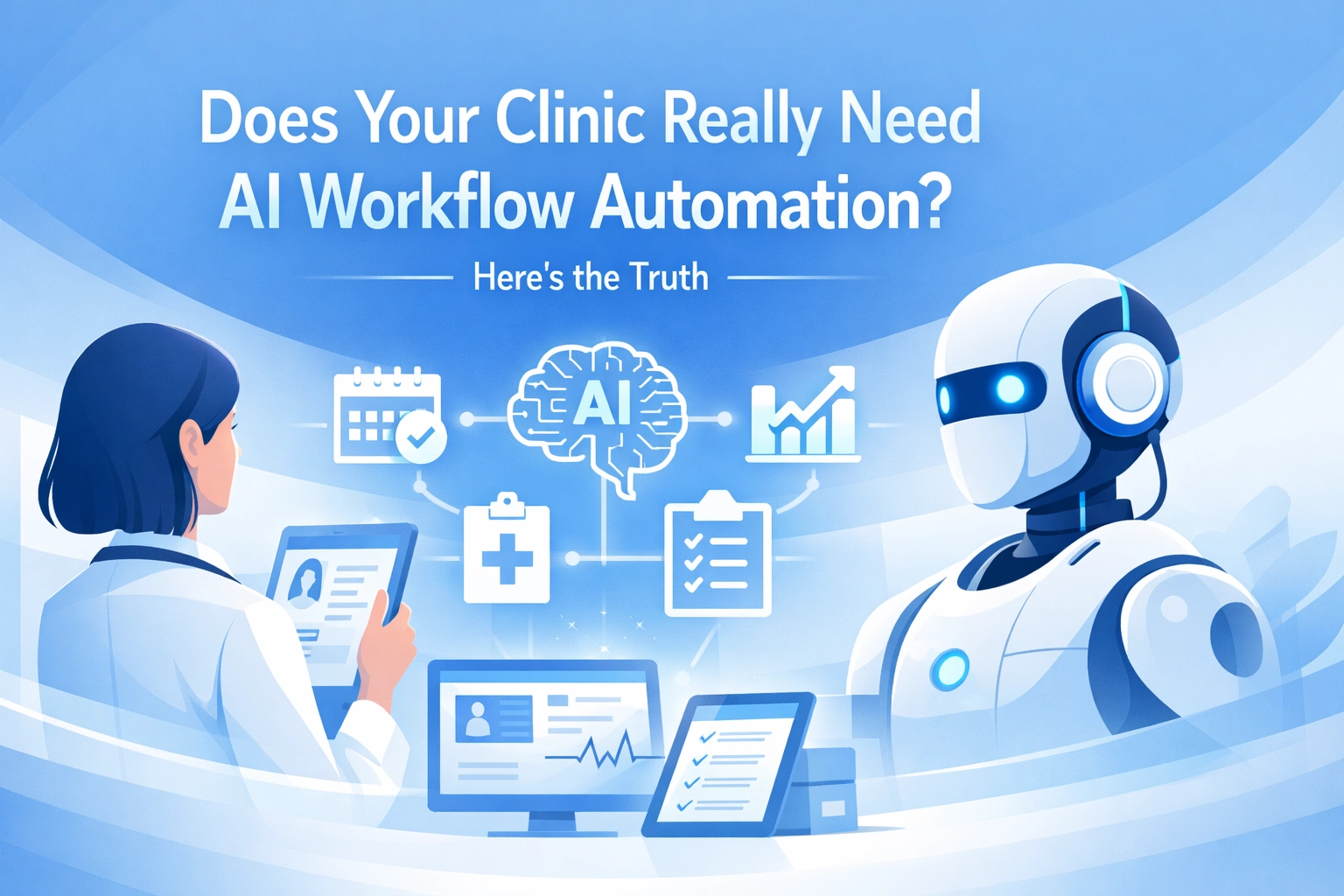
  • Does Your Clinic Really Need AI Workflow Automation? Here’s the Truth

    Does Your Clinic Really Need AI Workflow Automation? Here’s the Truth

    Your front desk staff is drowning in paperwork. Your clinicians spend more time typing than treating. Your patients wait 45 minutes past their appointment time.

    This isn't a staffing problem. It's a workflow problem.

    And AI workflow automation isn't just a nice-to-have anymore. For most clinics facing operational bottlenecks, it's the difference between scaling your practice and burning out your team.

    The Hidden Cost of Manual Clinical Workflows

    Every minute your staff spends on repetitive administrative tasks is a minute stolen from patient care. Think about your typical day: phone calls to schedule appointments, manual data entry into patient records, sorting through referrals, coordinating with specialists, chasing down insurance authorizations.

    Clinic reception desk transforming from paper-based to AI-powered digital workflow automation

    The math is brutal. If your front desk team spends 3 hours daily on scheduling alone, that's 780 hours annually per employee. At $20/hour, you're looking at $15,600 in labor costs just for appointment management. Multiply that across every repetitive task in your clinic.

    But the real cost isn't dollars. It's the opportunity cost of what your team could accomplish if they weren't buried in busywork.

    What AI Workflow Automation Actually Solves

    AI workflow automation isn't about replacing your staff. It's about liberating them from the tasks that machines do better than humans.

    Here's what changes when you implement AI-driven automation:

    Automated Patient Intake: AI captures patient information, medical history, and insurance details before they walk through your door. No more clipboards. No more duplicate data entry. Your staff reviews and confirms instead of transcribing.

    Intelligent Scheduling: The system learns your clinic's patterns. It knows Dr. Martinez needs 15-minute buffer times. It understands that Thursday afternoons fill faster. It automatically suggests optimal appointment slots based on patient type and provider availability.

    Clinical Documentation: AI medical scribes listen to patient visits and generate structured notes in real-time. Your clinicians focus on the patient while the technology handles documentation. This alone saves 2-3 hours per provider daily.

    Before and after comparison of clinic workspace showing manual chaos versus AI workflow efficiency

    Automated Specialist Coordination: When a patient needs a referral, AI extracts relevant clinical data, identifies the appropriate specialist, and sends a complete package. No more patients lost to follow-up because someone forgot to fax records.

    The Numbers Don't Lie

    Healthcare facilities implementing AI workflow automation report measurable improvements across every operational metric that matters.

    A 51% reduction in quantification time for radiology workflows. A 20% decrease in 2D imaging exam duration. These aren't projections. They're documented results from clinics that made the leap.

    Emergency departments using AI-driven triage systems cut door-to-treatment times significantly. Predictive analytics forecast patient admissions 24-48 hours in advance, allowing clinics to optimize staffing before the rush hits.

    But here's the metric that matters most: clinician satisfaction. Burnout is the silent killer of healthcare practices. When your providers spend 60% of their day on documentation and administration, they leave the profession. AI automation returns their time to what they trained for: patient care.

    Doctor providing patient care with AI assistant handling clinical documentation and medical notes

    Three Areas Where AI Delivers Immediate Impact

    Patient Flow Optimization

    Your waiting room shouldn't look like an airport terminal during holiday delays. AI analyzes patient flow patterns and identifies bottlenecks before they cascade into hour-long delays.

    The system tracks how long each appointment type actually takes versus scheduled time. It recognizes when the morning rush will spill into afternoon slots. It automatically adjusts scheduling templates based on real performance data.

    Result: Patients spend less time waiting. Your schedule stays on track. Your team stops apologizing for delays they couldn't prevent.

    Clinical Decision Support

    Your clinicians make hundreds of decisions daily. AI-powered clinical databases deliver evidence-based guidance at the point of care. Medication interactions, treatment protocols, diagnostic criteria: all accessible in seconds instead of minutes spent searching.

    This isn't about replacing clinical judgment. It's about augmenting it with instant access to the latest medical research and safety data. Your providers make better decisions faster.

    Revenue Cycle Automation

    Insurance verification, prior authorizations, claim submissions, payment posting: the revenue cycle drowns practices in administrative complexity. AI automation handles the repetitive verification tasks, flags issues before claims go out, and accelerates the entire payment cycle.

    Clinics implementing revenue cycle automation see claim denial rates drop by 30-40%. That's money you earned actually reaching your bank account instead of disappearing into bureaucratic black holes.

    Is Your Clinic Ready for AI Workflow Automation?

    Not every clinic needs AI automation today. But if you're experiencing any of these pain points, you're ready:

    Staffing Shortages: You can't hire fast enough to keep up with patient demand. AI automation multiplies your team's effectiveness without adding headcount.

    High Administrative Burden: Your clinicians complain about spending more time on computers than with patients. Medical scribe technology and automated documentation solve this immediately.

    Long Patient Wait Times: Your schedule regularly runs 30+ minutes behind. AI-powered patient flow optimization identifies and eliminates the bottlenecks causing delays.

    Provider Burnout: Your best clinicians are considering leaving because administrative tasks are crushing them. Automation returns their focus to the work they love.

    Revenue Leakage: You're losing 15-20% of potential revenue to claim denials and administrative errors. AI-driven revenue cycle management plugs those leaks.

    The Path Forward

    AI workflow automation isn't a distant future technology. It's operational in clinics today, delivering measurable improvements in efficiency, patient satisfaction, and provider wellbeing.

    The question isn't whether AI will transform clinical workflows. That's already happening. The question is whether your clinic will lead the transformation or scramble to catch up three years from now.

    Start with one high-impact area. Automated patient intake. Clinical documentation. Revenue cycle management. Pick the bottleneck that's costing you the most time, money, or sanity. Implement AI automation there. Measure the results. Scale what works.

    Your team deserves to focus on meaningful work instead of repetitive tasks. Your patients deserve their provider's full attention instead of watching them type. Your practice deserves to thrive instead of just surviving.

    AI workflow automation makes that possible. Not someday. Today.

    Ready to explore how AI automation can transform your clinic's operations? The technology is proven. The results are measurable. The only question is when you'll start.


    Amin Said, Founder of Pure Technology Consulting LLC
    https://puretechconsult.com

  • 7 Mistakes You’re Making with Business Process Automation (and How to Fix Them)

    7 Mistakes You’re Making with Business Process Automation (and How to Fix Them)

    Business process automation promises efficiency. It delivers chaos when done wrong.

    Every day, companies rush into automation thinking technology alone solves their problems. They automate broken workflows. They ignore their teams. They treat implementation like a one-time project instead of an ongoing transformation.

    The result? Wasted investment. Frustrated employees. Zero ROI.

    Here are the seven critical mistakes sabotaging your automation efforts: and exactly how to fix them.

    Mistake #1: Jumping In Without a Plan

    You see a shiny automation tool. You buy it. You wonder why nothing improves.

    Sound familiar?

    Rushing into automation without understanding your current workflows is like building a house without blueprints. You end up with systems that don't talk to each other, processes that create more work than they eliminate, and technology that nobody uses.

    The Fix: Map everything first. Document your existing workflows end-to-end. Identify the bottlenecks costing you time and money. Set clear, measurable objectives for what automation should accomplish.

    Ask yourself: What specific outcome do I want? How will I measure success? Which processes, if automated, would free up the most valuable time?

    Only then do you choose your tools.

    Business process automation planning with workflow diagrams and strategic mapping

    Mistake #2: Automating Broken Processes

    Here's a truth that costs businesses millions: Automation makes bad processes fail faster.

    If your current workflow is inefficient, confusing, or riddled with unnecessary steps, automating it just locks those problems into your operations permanently. You're spending money to make problems happen at scale.

    The Fix: Optimize before you automate.

    Strip your processes down to their essential components. Eliminate redundant steps. Clarify decision points. Remove bottlenecks. Get it working smoothly manually first.

    For local service businesses, this is where tools like AI Local Boost create transformation. Before automating your Google Business Profile updates, first establish what content strategy actually drives customer engagement. Then let AI amplify what works.

    The rule is simple: Perfect the process, then automate it.

    Mistake #3: Forgetting About Your People

    Technology doesn't resist change. People do.

    You roll out automation without involving your team. They see it as a threat to their jobs. They find workarounds. They sabotage implementation without even realizing it. Your expensive automation sits unused while everyone goes back to their old ways.

    The Fix: Make your people part of the solution from day one.

    Involve employees in selecting and designing automated workflows. Show them how automation eliminates their most tedious tasks: the work they hate doing anyway. Provide comprehensive training. Address fears directly.

    Frame automation as a tool that elevates their work, not replaces it. When your accounts receivable team spends less time chasing down documents, they can focus on strategic financial analysis. When your intake coordinator isn't manually entering patient data, they can spend more time with patients who need support.

    Change management isn't optional. It's the difference between adoption and abandonment.

    Contrast between broken business processes and optimized automated workflows

    Mistake #4: Set It and Forget It

    Automation isn't a microwave dinner. You can't just set it and walk away.

    Too many businesses treat automation like a one-time implementation. They flip the switch, celebrate the launch, and never look back. Meanwhile, business needs evolve. Processes change. Edge cases emerge that the automation can't handle.

    Six months later, the system is creating more problems than it solves.

    The Fix: Monitor continuously. Optimize relentlessly.

    Establish regular review cycles for every automated process. Track key metrics weekly. Gather feedback from the people using the systems daily. Look for where automation breaks down or creates friction.

    Take FTP Inform as an example. Businesses using it for file delivery tracking don't just set up notifications and forget about them. They monitor delivery patterns, adjust alert settings based on team feedback, and continuously optimize who receives what information when.

    Automation is a living system. Treat it like one.

    Mistake #5: Ignoring the Data Foundation

    Your automation is only as good as the data feeding it.

    Garbage data in means garbage results out: except now those results happen automatically at scale. When customer information lives in five different spreadsheets in three different formats, automation can't magically fix that. It just spreads the chaos faster.

    The Fix: Clean your data before connecting your systems.

    Establish data governance standards. Create single sources of truth for customer information, inventory data, financial records, and operational metrics. Implement consistent formatting. Remove duplicates.

    For healthcare workflows like those in EHRIO Pro, this means standardizing patient intake data before automating matching and routing. For chiropractors using AI Local Boost, it means organizing service descriptions and business information before automating Google Business Profile management.

    Clean data isn't just an IT priority. It's the foundation of every automation that actually works.

    Business team collaborating on automated workflow implementation and data integration

    Mistake #6: Overlooking Security and Compliance

    Speed to automation often means shortcuts on security. Those shortcuts become expensive disasters.

    You automate a customer data workflow without considering HIPAA requirements. You connect systems without proper encryption. You give broad access permissions because it's easier than configuring proper role-based controls.

    Then comes the breach. Or the audit. Or the lawsuit.

    The Fix: Build security into automation from day one, not as an afterthought.

    Work with your IT and legal teams during the planning phase. Understand your compliance requirements: HIPAA for healthcare, SOC 2 for SaaS platforms, industry-specific regulations for your sector. Implement proper encryption, access controls, and audit trails.

    When building custom automation solutions for legal or accounting firms, this means involving compliance officers early. When deploying AI-powered systems like ChainHQ for workflow automation, it means understanding data residency, processing transparency, and regulatory requirements specific to your industry.

    Security isn't a feature. It's a requirement.

    Mistake #7: Choosing Tools That Don't Scale

    You automate for your current needs. Your business grows. Your automation breaks.

    Too many businesses select automation tools based on immediate requirements without considering growth trajectories. They choose solutions that work great for 10 employees but collapse under 100. They build custom integrations that can't handle increased transaction volumes.

    The Fix: Think three years ahead when evaluating automation solutions.

    Ask hard questions: Can this system handle 10x our current volume? What happens when we expand to new locations? How does pricing scale with growth? What's the migration path if we outgrow this tool?

    For local service businesses scaling from one location to five, this means choosing automation that works across multiple Google Business Profiles, not just one. For PT clinics expanding their patient base, it means intake systems that maintain performance as appointment volumes increase.

    Scalability isn't about predicting the future perfectly. It's about choosing flexible solutions that grow with you rather than hold you back.

    Building Automation That Actually Works

    Business process automation isn't about replacing humans with technology. It's about amplifying human capability by eliminating the repetitive, mundane tasks that waste expertise.

    The businesses winning with automation start with clear objectives. They optimize processes before automating them. They involve their teams, monitor continuously, and build on solid data foundations. They prioritize security and choose solutions designed for growth.

    Most importantly, they recognize that automation is a journey, not a destination.

    Whether you're a local chiropractor looking to streamline patient intake, a law firm drowning in document workflows, or an accounting practice managing client deliverables, avoiding these seven mistakes transforms automation from an expensive experiment into a competitive advantage.

    The question isn't whether to automate. It's whether you'll automate intelligently or join the countless businesses learning these lessons the expensive way.

    Ready to implement automation that actually delivers results? Schedule a consultation to discuss how custom automation solutions can transform your operations without the common pitfalls.


    Amin Said, Founder of Pure Technology Consulting LLC
    https://puretechconsult.com

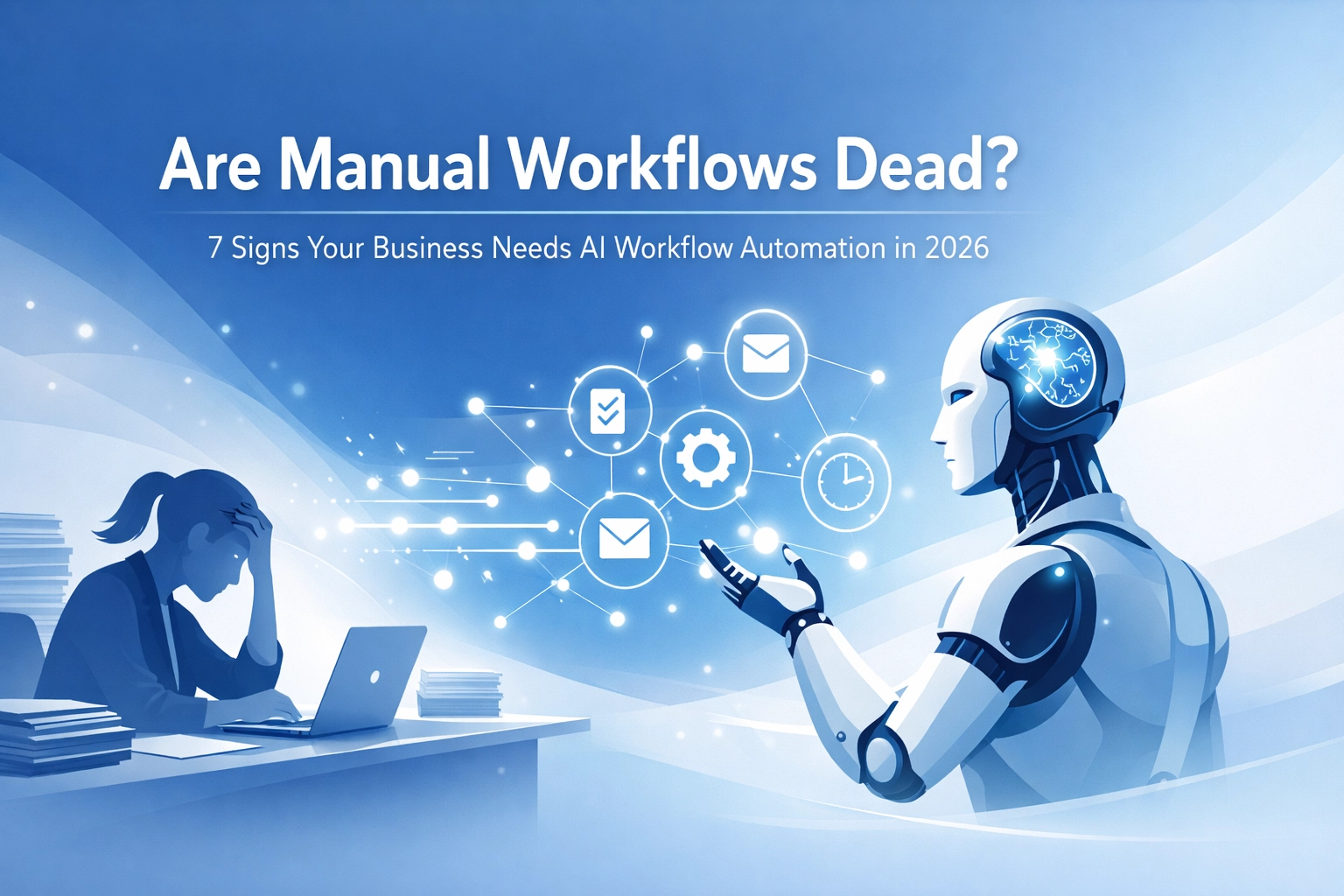
  • Are Manual Workflows Dead? 7 Signs Your Business Needs AI Workflow Automation in 2026

    Are Manual Workflows Dead? 7 Signs Your Business Needs AI Workflow Automation in 2026

    Let's cut through the noise. Manual workflows aren't technically dead, but they're on life support.

    By 2026, 78% of businesses now use AI workflow automation in at least one area. The question isn't whether you'll automate, it's whether you'll do it before your competitors leave you behind.

    The businesses thriving right now? They're the ones who recognized the writing on the wall and made the shift. They're processing invoices overnight instead of over weeks. They're freeing up 40+ hours per employee every single week. They're scaling without the crushing weight of proportional cost increases.

    Here's how to know if your business is one manual workflow away from losing ground.

    Sign 1: Your Team Drowns in Data Entry and Document Handling

    Your talented employees spend hours each day copying information from one system to another. Invoice processing. Data entry. Document classification. Form filling.

    This isn't just inefficient, it's expensive talent waste.

    Finance teams that once spent days processing invoices now complete the same work overnight. Not through hiring more people. Through AI automation that handles intake, processing, and routing without human intervention.

    AI automation digitizing documents and processing data for business workflows

    The math is brutal: If you're paying skilled workers $50-75 per hour to do manual data entry, you're burning cash on work that AI can do for pennies. And unlike your exhausted team at 4 PM on Friday, AI doesn't make typos when processing invoice #847.

    The Reality Check: When experienced employees spend time on monotonous work that adds zero analytical value, you're not just wasting money, you're killing morale and losing your best people to companies that respect their skills.

    Sign 2: Errors Keep Slipping Through Despite "Careful Review"

    Human error isn't a training problem. It's a volume problem.

    Manual data handling at scale guarantees mistakes. A misplaced decimal. A transposed number. A missed field. These aren't character flaws, they're statistical certainties.

    Well-trained document AI now matches careful human review on standard document types and outperforms it on volume and consistency. Not sometimes. Every single time.

    The transformation happens when you stop asking humans to be robots and start letting robots be robots.

    Sign 3: Bottlenecks Are Your New Normal

    Customer inquiries sit in queues. Internal requests languish for days. Approval workflows move at a crawl. Everyone's busy, but nothing's moving fast.

    This is the sound of manual workflows breaking under modern volume.

    Manual workflow chaos transformed into automated system integration with AI

    AI triage and routing systems resolve straightforward requests autonomously and escalate complex ones with full context already gathered. Response times drop from days to minutes. Not through harder work, through smarter orchestration.

    Systems like ChainHQ are built specifically for this: connecting your disconnected tools, automating the handoffs, and ensuring nothing falls through the cracks while humans focus on decisions that actually require judgment.

    Sign 4: Scaling Means Hiring (And Hiring Means Chaos)

    Here's the old playbook: More work requires more people. More people require more management. More management requires more overhead. The cycle never ends.

    Here's the new reality: AI automation tools scale with clicks, not contracts.

    Processing 100 invoices takes the same AI capacity as processing 10,000. The cost difference? Minimal. The hiring headache? Eliminated. The training timeline? Non-existent.

    Growth should feel like opportunity, not impending collapse. When scaling your operations doesn't mean scaling your headcount proportionally, you've unlocked something powerful.

    Sign 5: Your Team Navigates a Maze of Disconnected Systems

    Check how many times your team does this today: Pull data from System A. Copy it to a spreadsheet. Log into System B. Fill out a web form. Move to System C. Repeat 47 more times.

    These multi-system workflows aren't just tedious, they're breaking your operational efficiency.

    AI browser automation executes these multi-step sequences automatically without human intervention at each step. It logs in, navigates, extracts, populates, and submits: while your team tackles work that actually requires human intelligence.

    Professional monitoring AI-powered compliance and regulatory automation system

    The question to ask: "How many hours each week do we spend being human copy-paste machines between systems that refuse to talk to each other?"

    The answer is usually horrifying.

    Sign 6: Compliance Creates Constant Anxiety

    Regulated industries face an impossible demand: perfect accuracy on increasingly complex requirements, processed at growing volume, with zero margin for error.

    Manual compliance workflows guarantee stress and risk. Missed requirements. Submission errors. Audit failures. The exposure keeps growing.

    AI navigates complex regulatory requirements faster than humans and with lower error rates. It doesn't skip steps when it's tired. It doesn't miss deadlines when it's busy. It processes regulatory documents with machine precision while humans verify the strategic decisions.

    For healthcare, legal, and accounting firms especially: Compliance isn't getting simpler. Your manual workflows are becoming liability generators.

    Sign 7: Repetitive Tasks Block Your Skilled Workers from High-Value Work

    This is the sign that costs the most and shows up the least on spreadsheets.

    When your best people spend 60% of their time on repetitive intake work and 40% on actual strategic analysis, you're not getting what you paid for. Neither are they.

    The hidden cost isn't just the wasted hours: it's the strategic opportunities you're missing because your talent is buried in administrative work.

    Marketing teams now use AI for research, iteration, A/B testing, and reporting while humans guide creative strategy and decisions. The hybrid model isn't "some AI, some humans": it's humans making strategic calls while AI handles the execution layer that buries most teams.

    The 2026 Reality: Hybrid Is the Only Path Forward

    Complete automation is a myth. Complete manual operation is suicide.

    The businesses winning right now combine human judgment with AI execution. They've stopped asking "Can AI replace this?" and started asking "What should humans never waste time on again?"

    Strategic decisions, creative direction, relationship building, complex problem-solving: that's where humans dominate. Data processing, pattern recognition, multi-system navigation, repetitive execution: that's where AI dominates.

    The transformation isn't about choosing sides. It's about choosing what each does best.

    Stop Bleeding Time and Talent

    Every day you run manual workflows, you're losing ground. To competitors who ship faster. To opportunities you can't pursue because you're drowning in operational work. To talent who leaves for companies that respect their skills.

    The technology exists right now. AI workflow automation isn't experimental: it's proven, scalable, and accessible.

    Solutions like FTP Inform eliminate file transfer chaos. EHRIO Pro streamlines healthcare workflows with precision. AI Local Boost automates local business operations that used to consume entire teams. These aren't future promises: they're working systems handling real operations right now.

    The question was never "Can we automate?" The question is "How much longer can we afford not to?"

    Your competitors already answered that question. When are you going to answer yours?


    Amin Said, Founder of Pure Technology Consulting LLC
    https://puretechconsult.com

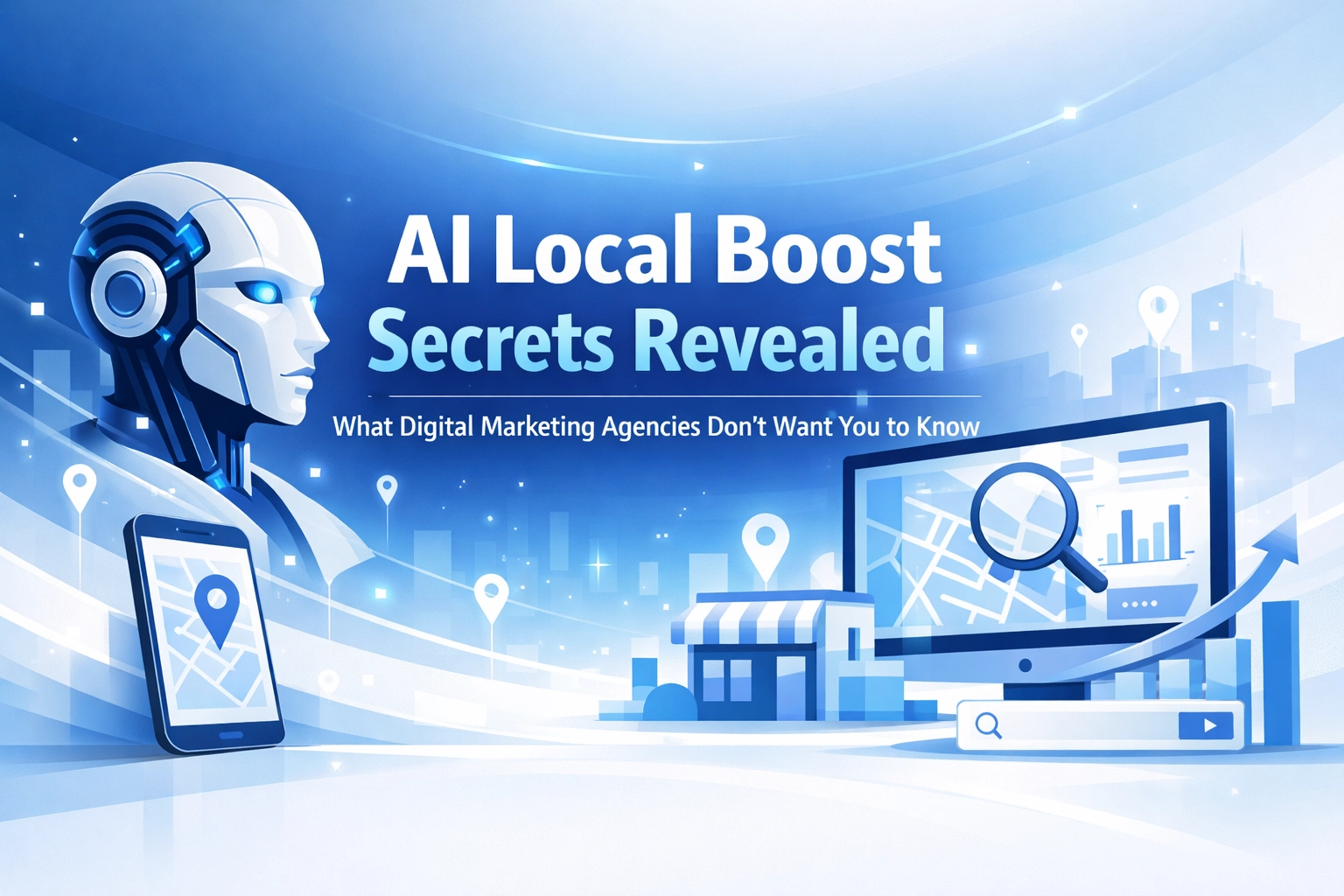
  • AI Local Boost Secrets Revealed: What Digital Marketing Agencies Don’t Want You to Know

    AI Local Boost Secrets Revealed: What Digital Marketing Agencies Don’t Want You to Know

    The Truth Marketing Agencies Hide From Local Service Businesses

    Digital marketing agencies don't want you to know this: the sophisticated tools they charge $2,000-5,000 monthly retainers for are now accessible directly to your business.

    The secret isn't proprietary software or hidden tactics. It's automation.

    Local service businesses: chiropractors, physical therapy clinics, dental practices, home service companies: waste 15-20 hours weekly managing their online presence manually. Agencies know this. They've built entire business models around it.

    But AI-powered automation has eliminated the need for that middleman.

    AI-powered automation dashboard for Google Business Profile management replacing manual marketing tasks

    What Your Marketing Agency Actually Does (And Won't Tell You)

    Your $3,500 monthly retainer covers tasks that now take software minutes to complete:

    • Posting to your Google Business Profile three times weekly
    • Responding to reviews within 24-48 hours
    • Updating business hours during holidays
    • Creating location-specific content
    • Managing NAP (Name, Address, Phone) consistency

    These aren't strategic consulting tasks. They're repetitive operations that eat agency junior staff time: and your budget.

    Marketing agencies position themselves as strategy partners. The reality? 80% of your retainer pays for manual posting and monitoring work that automated systems now handle instantly.

    The AI Local Boost Revolution: What Changes When You Own the System

    AI Local Boost eliminates the agency dependency model entirely.

    Instead of paying monthly retainers for basic posting schedules and review monitoring, local service businesses get complete Google Business Profile automation. No contracts. No hourly consultations. No waiting for "your account manager" to make simple updates.

    Here's what instant automation means for your practice:

    Never Miss Another Review Response
    Get automatic, AI-generated responses within minutes of any new review. Maintain your brand voice without touching your phone during patient appointments or weekend family time.

    Stop Paying for Basic Posting
    Schedule weeks of location-specific content in 30 minutes. AI generates posts tailored to your neighborhood, service area, and seasonal patient needs.

    Eliminate Manual Holiday Updates
    One-click holiday hours management across all locations. No more scrambling December 23rd to update seven different profiles before closing.

    Comparison of manual marketing agency work versus automated AI Local Boost system efficiency

    The 92% Advantage: Why Long-Tail Local Keywords Matter More Than Agencies Admit

    Agencies love selling you on broad keyword rankings. "Chiropractor Denver" sounds impressive in quarterly reports.

    It's also nearly worthless for patient acquisition.

    92% of search queries are long-tail, location-specific phrases. Real patients search "emergency chiropractor Capitol Hill Sunday hours" or "physical therapy knee pain Lakewood near me."

    These high-intent searches convert 3-4x higher than broad terms. But they require hyperlocal content at scale: something manual agency teams can't efficiently produce.

    AI Local Boost solves this through automated content generation that targets exact neighborhood phrases and service combinations. You're not competing for "dentist Seattle." You're dominating "cosmetic dentist Ballard emergency appointments" while agencies chase vanity metrics.

    Voice Search Optimization: The Channel Agencies Ignore Because It's Not Billable

    Voice search queries are conversationally structured. Patients ask questions verbally they'd never type:

    "Which physical therapist takes walk-ins near Swedish Medical Center?"

    "What chiropractor is open right now in Fremont?"

    Traditional SEO agencies optimize for typed queries. Voice search requires natural language processing and immediate response accuracy: capabilities that live in your Google Business Profile, not your website.

    AI Local Boost ensures your profile answers voice queries automatically by maintaining:

    • Real-time hours accuracy
    • Service-specific Q&A updates
    • Location verification across map platforms
    • Response-optimized post formatting

    You capture voice search traffic agencies don't know how to target: because billing that work is complicated.

    Local SEO map showing hyperlocal keyword targeting and near me search queries for businesses

    The Automation Stack Replacing $50K Annual Marketing Retainers

    Local service businesses running AI Local Boost eliminate five separate agency functions:

    Reputation Management Replacement
    Automated review monitoring and response generation saves 8-12 hours monthly. No more manual checking across Google, Yelp, and Facebook.

    Social Posting Replacement
    Location-specific content creation replaces generic agency templates. Your posts reference actual neighborhood landmarks and community events automatically.

    Local SEO Monitoring Replacement
    Automatic NAP consistency checks across directories ensure you maintain map rankings without monthly audits.

    Customer Engagement Automation
    Profile Q&A management responds to patient questions instantly. Agencies take 24-48 hours for the same task.

    Holiday Hours Management
    One-click updates across multiple locations replace the email chains and forgotten profiles that cost you holiday patient opportunities.

    Why Agencies Can't Compete With AI Automation Economics

    Marketing agencies operate on labor-based pricing models. They need billable hours to sustain operations.

    AI automation eliminates hours.

    A three-person agency team managing 25 local service business profiles spends approximately 30 hours weekly on routine posting, review responses, and profile updates. That's 1,560 annual hours billed at $100-150 per hour.

    The same workflow automated through AI Local Boost runs continuously without human intervention. Your cost drops from $150,000 annually across agency fees to a fraction of that investment: while maintaining 24/7 consistency agencies can't match.

    This economic reality terrifies traditional marketing firms. They've structured entire businesses around manual labor that software now handles automatically.

    Voice search interface on smartphone for local business discovery and customer engagement

    The Hyperpersonalization Advantage Small Businesses Now Control

    Enterprise corporations spend millions on personalization engines that deliver customized experiences across customer segments.

    AI-powered local marketing tools brought that capability down-market.

    AI Local Boost enables practice-specific personalization that adjusts content based on:

    • Service specializations within your practice
    • Seasonal patient needs in your exact location
    • Demographic patterns unique to your neighborhood
    • Weather-triggered service promotions
    • Local event tie-ins and community calendar awareness

    A physical therapy clinic in Minneapolis automatically highlights winter sports injury recovery in January while the same practice's Florida location promotes summer marathon training preparation: all without manual content creation or agency consultation.

    Agencies claim to offer personalization. They deliver templated content with your logo swapped in.

    What Pure Technology Consulting Brings to Local Service Operations

    Pure Technology Consulting builds AI automation that solves operational bottlenecks, not marketing vanity metrics.

    AI Local Boost emerged from working directly with chiropractors, PT clinics, and dental practices drowning in administrative overhead. These businesses don't need another strategy deck. They need systems that run while they see patients.

    The same technology powering healthcare intake automation and field service GPS tracking now eliminates Google Business Profile management friction. It's proven infrastructure applied to the local service market's most repetitive tasks.

    When local businesses ask how to compete with enterprise budgets, the answer isn't hiring agencies. It's owning automation that scales without adding headcount.

    Stop paying monthly retainers for tasks software handles instantly. Get complete control over your local presence without agency dependencies or hourly billing.

    AI automation workflow connecting reviews, social posts, SEO monitoring and customer service

    The Strategic Shift From Vendor Dependency to Owned Infrastructure

    Marketing agencies maintain power through information asymmetry. They position local SEO as complex specialist work requiring ongoing expert management.

    It's not.

    The actual work is data entry and content scheduling: tasks automation handles perfectly. The strategic value agencies claim to provide rarely materializes beyond quarterly reports filled with traffic numbers disconnected from patient acquisition.

    Local service businesses that adopt AI automation aren't just cutting costs. They're reclaiming operational control.

    You decide posting schedules without account manager approval delays. You adjust messaging instantly when service availability changes. You respond to market conditions in real-time instead of waiting for your next agency check-in.

    This ownership shift transforms your online presence from vendor-managed uncertainty to predictable automated infrastructure you control completely.

    The agencies charging you $40,000 annually won't explain this transition. They can't afford to.

    Taking Control of Your Local Market Presence

    The competitive advantage in local service markets no longer comes from agency relationships or marketing budgets. It comes from operational efficiency through intelligent automation.

    AI Local Boost represents the infrastructure shift that eliminates agency dependencies while delivering superior consistency and response times. You're not buying software. You're implementing systems that run continuously without human intervention: the same capability enterprises spent decades building.

    Local service businesses that recognize this shift first dominate their geographic markets. The practices still paying agency retainers for manual posting tasks fall behind operationally and economically.

    The choice is clear: continue funding agency labor models or own the automation that replaces them entirely.

    Your local market doesn't wait for agency approval cycles. Neither should your business.


    Amin Said, Founder of Pure Technology Consulting LLC
    https://puretechconsult.com

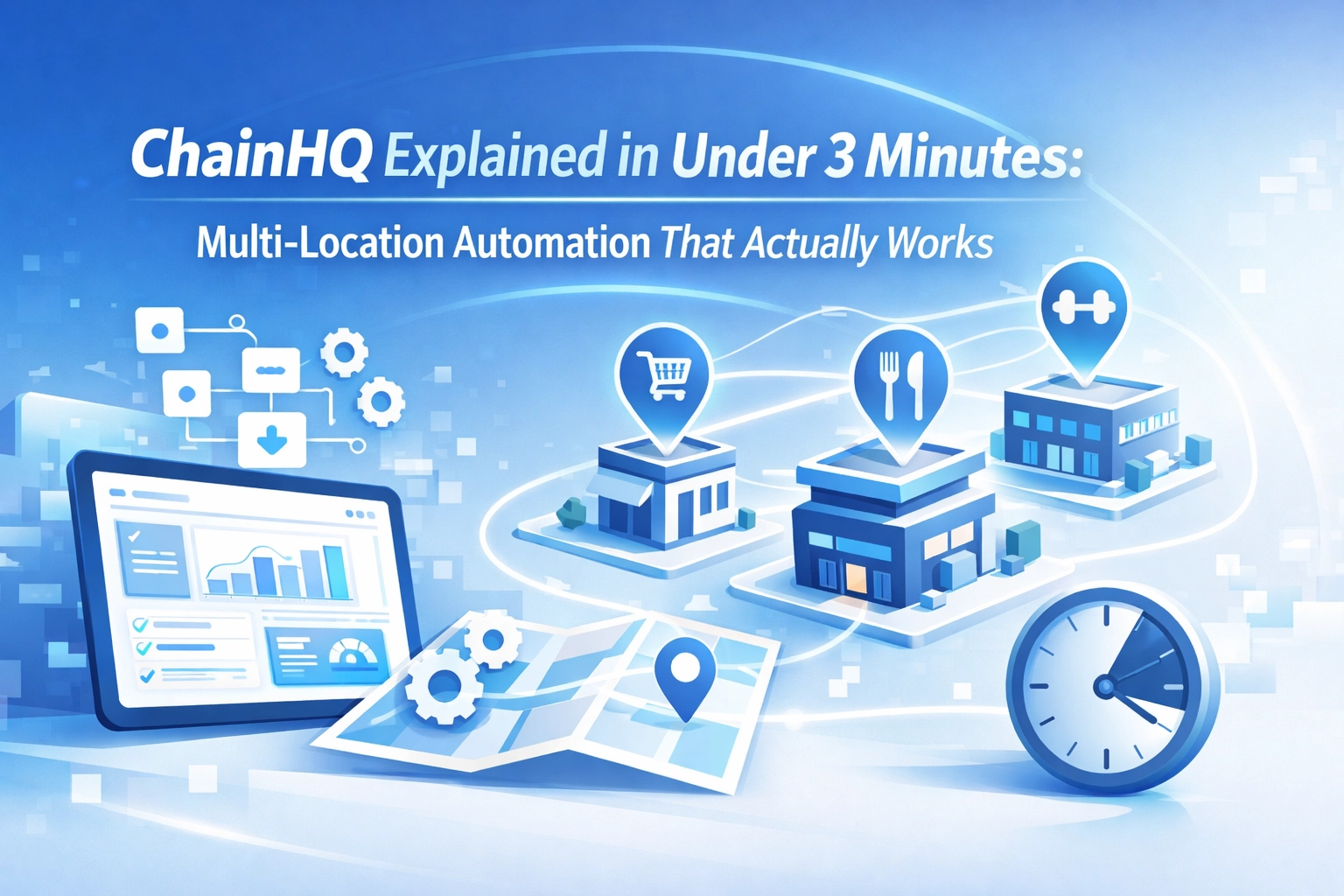
  • ChainHQ Explained in Under 3 Minutes: Multi-Location Automation That Actually Works

    ChainHQ Explained in Under 3 Minutes: Multi-Location Automation That Actually Works

    Managing multiple locations shouldn't feel like juggling chainsaws. Yet most franchise owners, multi-clinic operators, and regional business leaders spend hours each week manually coordinating tasks, tracking performance, and ensuring consistency across locations.

    ChainHQ changes everything.

    The Multi-Location Nightmare You're Living Right Now

    You're managing five, ten, maybe twenty locations. Each morning starts the same way: opening fifteen browser tabs, logging into seven different systems, and manually checking if every location completed yesterday's tasks.

    Employees forget to clock in. Marketing campaigns run at the wrong time. One location updates their Google Business Profile while another hasn't touched it in months. You have no real-time visibility into what's actually happening across your operation.

    The result? Wasted time. Inconsistent customer experiences. Revenue leaking from locations that aren't performing. You built a multi-location business to scale, but you're drowning in coordination chaos.

    Business owner overwhelmed managing multiple location dashboards without automation software

    What ChainHQ Actually Does

    ChainHQ is Pure Technology Consulting's centralized automation platform built specifically for multi-location operations. It eliminates the coordination nightmare by connecting all your locations into one intelligent command center.

    Think of it as mission control for your entire operation. One dashboard. Real-time visibility. Automated workflows that ensure every location executes consistently, every single time.

    No more manual follow-ups. No more wondering if tasks were completed. No more watching one location thrive while another falls behind because they're using different processes.

    Stop Losing Money to Location Inconsistency

    Here's what most multi-location operators don't realize: inconsistency is expensive.

    When one location responds to leads in five minutes while another takes three hours, you lose customers. When marketing automation runs perfectly at your flagship but fails at satellite locations, you waste ad spend. When staff training happens smoothly in one place but gets forgotten elsewhere, service quality crumbles.

    ChainHQ solves this with location-aware automation that adapts to each site while maintaining enterprise-level consistency.

    Your locations operate independently but execute uniformly. Every customer interaction follows proven workflows. Every marketing campaign deploys on schedule. Every operational task gets tracked and verified automatically.

    Comparison of high-performing vs underperforming business locations showing inconsistent results

    How ChainHQ Creates Multi-Location Clarity

    Centralized Task Management That Actually Gets Completed

    Create tasks once, deploy everywhere. ChainHQ automatically assigns work to specific locations, tracks completion, and alerts you to bottlenecks before they become problems.

    • Location-specific task routing
    • Automated deadline reminders
    • Completion verification with timestamps
    • Performance analytics per location

    Unified Marketing Automation Across Every Location

    Your Google Business Profile updates should happen simultaneously across all locations, not whenever someone remembers. ChainHQ synchronizes your local SEO, social media posts, and customer communications without manual intervention.

    Stop paying your marketing team to copy-paste the same update twenty times. Let automation handle consistency while your team focuses on strategy.

    Real-Time Performance Visibility

    Know which locations are crushing it and which need attention. ChainHQ aggregates data from every site into actionable dashboards that show you exactly where to focus your energy.

    • Revenue performance by location
    • Task completion rates
    • Customer response times
    • Lead conversion metrics

    ChainHQ centralized dashboard connecting multiple business locations with automated workflows

    Built for Operations That Refuse to Slow Down

    ChainHQ wasn't designed in a vacuum by developers who've never run a multi-location business. It emerged from working directly with chiropractors managing multiple clinics, service businesses expanding regionally, and franchise operators coordinating dozens of locations.

    We saw the same patterns everywhere: brilliant business operators trapped in coordination hell. They had the vision to scale but lacked the systems to maintain quality across locations.

    That's why ChainHQ focuses on the automation that matters most for operational leaders:

    Staff Accountability Without Micromanagement

    Your location managers shouldn't need daily check-in calls. ChainHQ creates automatic accountability through transparent task tracking and performance metrics that make problems visible immediately.

    Customer Experience Consistency

    Every location delivers the same quality because they're following the same automated workflows. Your brand promise stays consistent whether a customer walks into Location 1 or Location 15.

    Scalability Without Chaos

    Adding new locations shouldn't require rebuilding your entire operational system. ChainHQ lets you onboard new sites rapidly by cloning proven workflows from your best-performing locations.

    Who ChainHQ Was Built For

    This isn't enterprise software that requires a dedicated IT team. ChainHQ serves ambitious operators running 3-50 locations who need enterprise capabilities without enterprise complexity.

    Multi-Clinic Healthcare Practices

    Chiropractors, physical therapists, and dental groups coordinating patient communications, appointment reminders, and staff schedules across multiple locations.

    Franchise Operations

    QSR franchisees, service franchises, and retail chains ensuring brand consistency and operational excellence across every location.

    Regional Service Businesses

    Home services, cleaning companies, and field service operations managing teams across multiple territories or cities.

    Multi-Location Retail

    Boutique chains, specialty stores, and regional retailers coordinating inventory, promotions, and customer engagement across locations.

    Multi-location business operator managing regional operations across connected territories

    The Results: Hours Recovered, Revenue Protected

    ChainHQ users report 15-20 hours saved per week on coordination tasks alone. That's time redirected toward growth strategy, customer experience improvements, and actually running the business instead of babysitting it.

    But the real impact shows up in performance metrics:

    • Lead response times drop from hours to minutes across all locations
    • Marketing campaign deployment happens simultaneously instead of staggered over days
    • Task completion rates increase by 40-60% through automated accountability
    • New location onboarding time cuts in half

    Your best-performing location isn't an outlier anymore. It becomes the baseline for every location.

    Multi-Location Automation That Matches Your Ambition

    You didn't build a multi-location business to spend your days managing spreadsheets and chasing down task updates. You built it to scale impact, serve more customers, and create something significant.

    ChainHQ gives you the operational leverage to make that vision real. It's the command center that lets you lead your operation instead of drowning in it.

    Stop accepting coordination chaos as the cost of scaling. Start running your multi-location operation the way you always envisioned: with clarity, consistency, and control.

    Performance graph showing business growth and time savings from multi-location automation

    Ready to Transform Your Multi-Location Operations?

    ChainHQ is available now for ambitious operators who refuse to let operational complexity limit their growth.

    Schedule a walkthrough to see exactly how ChainHQ eliminates coordination chaos for your specific operation. We'll show you the automations that matter most for your industry and location count.

    Visit https://puretechconsult.com/schedule to book your demonstration.

    Your multi-location business deserves systems as ambitious as your vision.


    Amin Said, Founder of Pure Technology Consulting LLC
    https://puretechconsult.com
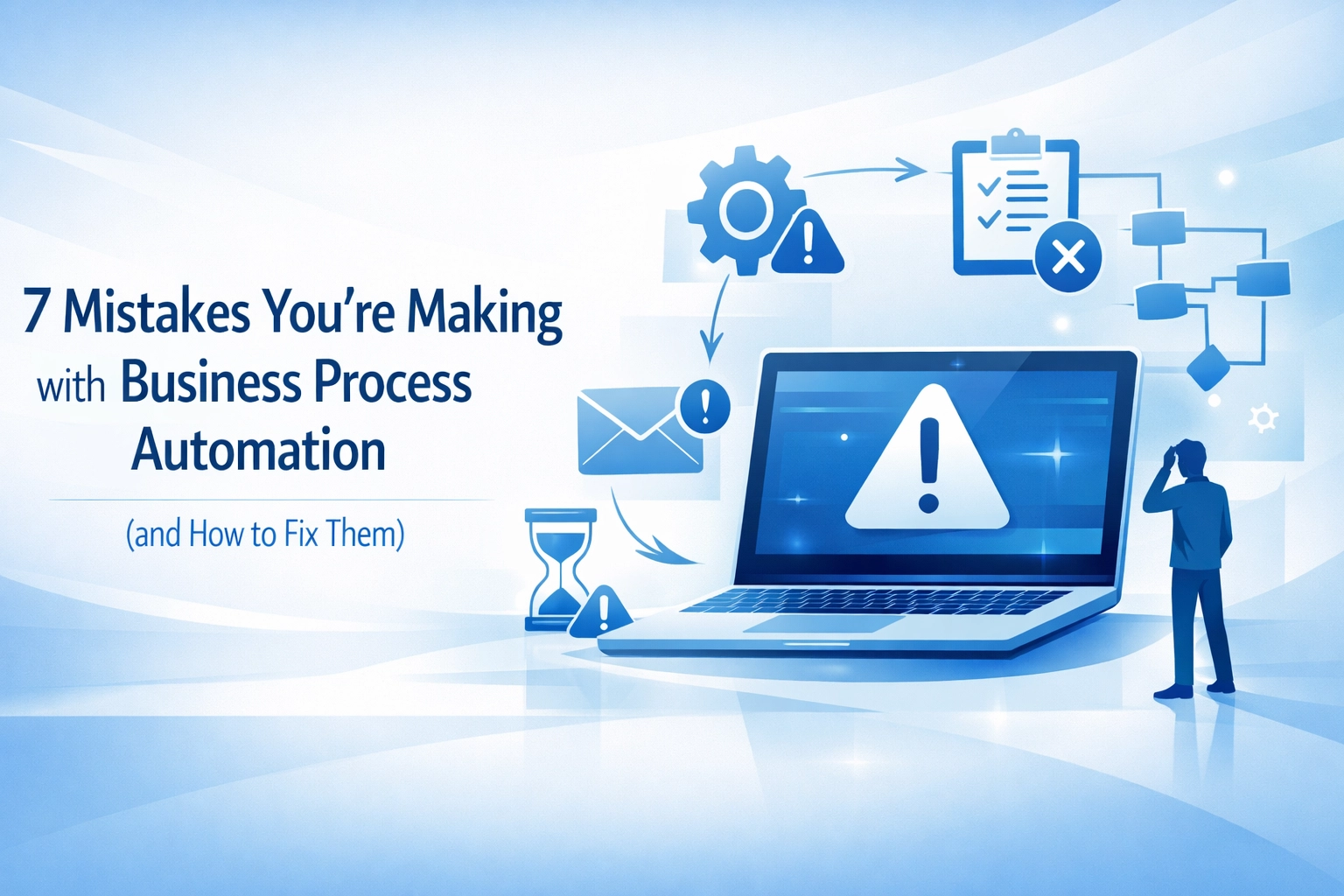
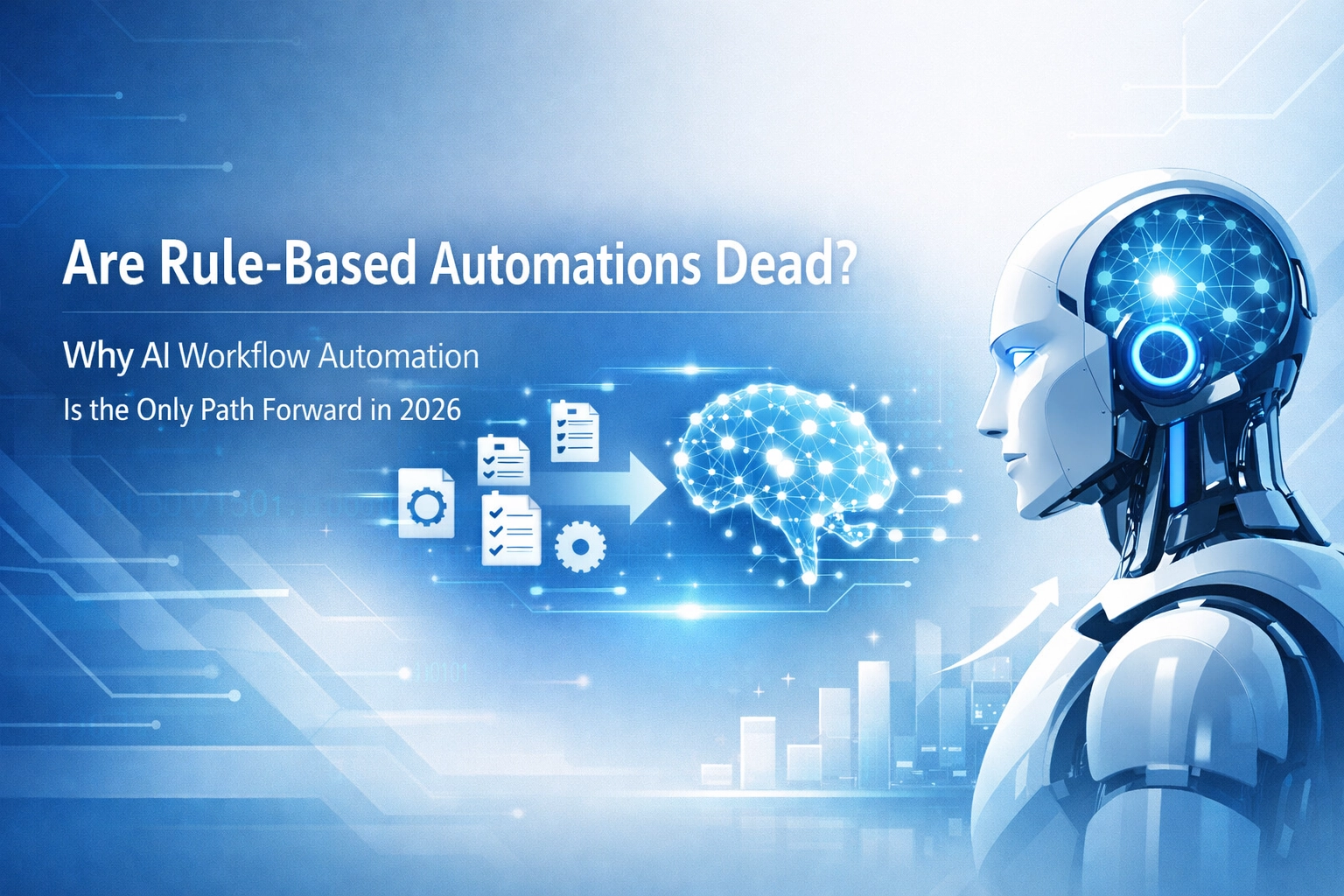
  • Are Rule-Based Automations Dead? Why AI Workflow Automation Is the Only Path Forward in 2026

    Are Rule-Based Automations Dead? Why AI Workflow Automation Is the Only Path Forward in 2026

    Let's cut through the hype.

    Everyone's talking about AI replacing everything. But here's what nobody's telling you: rule-based automation isn't dead. It's just not enough anymore.

    The real question isn't whether to choose rule-based OR AI automation. It's how to use both to transform your business into something unstoppable.

    Rule-Based Automation Still Has Its Place

    Here's the truth most AI evangelists won't admit: rule-based systems are perfect for specific scenarios. They're fast. Reliable. And they work beautifully when you need consistency.

    Think about payroll processing. Leave management. Data entry. These are structured, repetitive tasks with clear rules. No exceptions. No gray areas. Just pure execution.

    One manufacturing company connected their leave data with payroll and slashed errors by 60%. Their HR team saved 20 hours every single week. That's not magic. That's rule-based automation doing exactly what it's designed to do.

    Rule-based systems excel when:

    • Tasks are repetitive with zero variability
    • Rules are clearly defined and rarely change
    • Speed and consistency matter more than flexibility
    • You need immediate ROI without extensive training

    The implementation is straightforward. No machine learning models to train. No data scientists required. You can see positive returns in 2-3 months, not years.

    Rule-based automation and AI workflow automation merging into hybrid system

    Where AI Automation Changes Everything

    Now here's where it gets interesting.

    AI doesn't just follow rules. It reasons. It adapts. It learns from patterns you didn't even know existed.

    Take a simple vacation request. A rule-based system checks your leave balance and policy compliance. Done. Approved or denied.

    But AI? It considers your team's current workload. Upcoming project deadlines. Historical patterns showing when you're most burned out. It makes intelligent decisions based on context, not just rules.

    Organizations using autonomous workflow agents report a 65% reduction in routine approvals that used to need human intervention. That's 65% of your team's time back for strategic work. For building. For creating value.

    AI workflow automation dominates when:

    • Exceptions are common and context matters
    • Data is unstructured or constantly changing
    • Decisions require weighing multiple variables
    • You need systems that improve over time

    We've seen this firsthand at Pure Technology Consulting. When we built AI Local Boost for local service businesses, we didn't just automate Google Business Profile updates. We created systems that understand customer intent, predict service needs, and adapt to each business's unique workflow.

    AI workflow automation processing business analytics and contextual data

    The Real Answer: Hybrid Intelligence

    Stop thinking in binary terms.

    The most successful organizations in 2026 aren't choosing between rule-based and AI automation. They're building hybrid systems that leverage both.

    Start with rule-based automation to capture the low-hanging fruit. Get those quick wins. Automate the structured processes that drain your team's time. Build momentum.

    Then layer in AI capabilities to handle the complexity. The exceptions. The judgment calls. The scenarios that require understanding, not just execution.

    This is exactly how we approach custom automation at Pure Technology Consulting. We've built systems for healthcare clinics handling 70-question patient intakes. For debt agencies managing complex telephony integrations. For field service companies tracking rep accountability with GPS logging.

    Each one starts with solid rule-based foundations. Then we add AI where it creates exponential value.

    What This Means for Your Business Right Now

    You're probably sitting on dozens of processes that are bleeding time and money. Some need rule-based automation. Others need AI intelligence. Most need both.

    The businesses winning in 2026 understand this. They're not waiting for perfect AI solutions. They're implementing hybrid systems today.

    Your immediate action plan:

    • Identify high-volume, low-variability tasks for rule-based automation
    • Map out processes with frequent exceptions that need AI reasoning
    • Start with quick-win rule-based implementations to fund AI projects
    • Build data collection systems that prepare you for AI capabilities

    This isn't theoretical. We've helped local service businesses scale from chaos to systematic growth using this exact approach. Chiropractors managing patient workflows. PT clinics optimizing scheduling. Legal and accounting firms finally escaping manual data entry.

    Hybrid automation architecture combining rule-based foundation with AI layer

    The technology exists. The ROI is proven. The only question is whether you're ready to move forward.

    Building Your Automation Future

    Here's what separates thriving businesses from struggling ones in 2026: they stopped asking "which automation?" and started asking "which automation where?"

    Rule-based systems give you speed and reliability. AI gives you intelligence and adaptability. Together, they create something neither can achieve alone.

    At Pure Technology Consulting, we've seen the transformation this creates. Not just in efficiency metrics, but in how teams work. How leaders make decisions. How businesses scale without drowning in operational complexity.

    The companies still debating whether to automate? They're already behind.

    The companies choosing rule-based OR AI? They're leaving money on the table.

    The companies building hybrid automation systems? They're pulling away from the competition so fast it's not even close.

    You have two paths forward. You can keep managing processes manually while you wait for the "perfect" automation solution. Or you can start building hybrid systems today that transform how your business operates.

    Every week you wait, you're spending hours on tasks that could be automated. You're missing insights AI could surface. You're losing competitive ground to businesses that moved faster.

    The question isn't whether AI workflow automation is the only path forward. It's whether you're ready to combine AI and rule-based automation into something powerful enough to scale your business beyond what you thought possible.

    Ready to stop debating and start building? Schedule a consultation to see how hybrid automation can transform your specific workflows.

    The automation revolution isn't coming. It's here. And the businesses that win won't be the ones that chose perfectly. They'll be the ones that chose quickly and built strategically.


    Amin Said, Founder of Pure Technology Consulting LLC
    https://puretechconsult.com

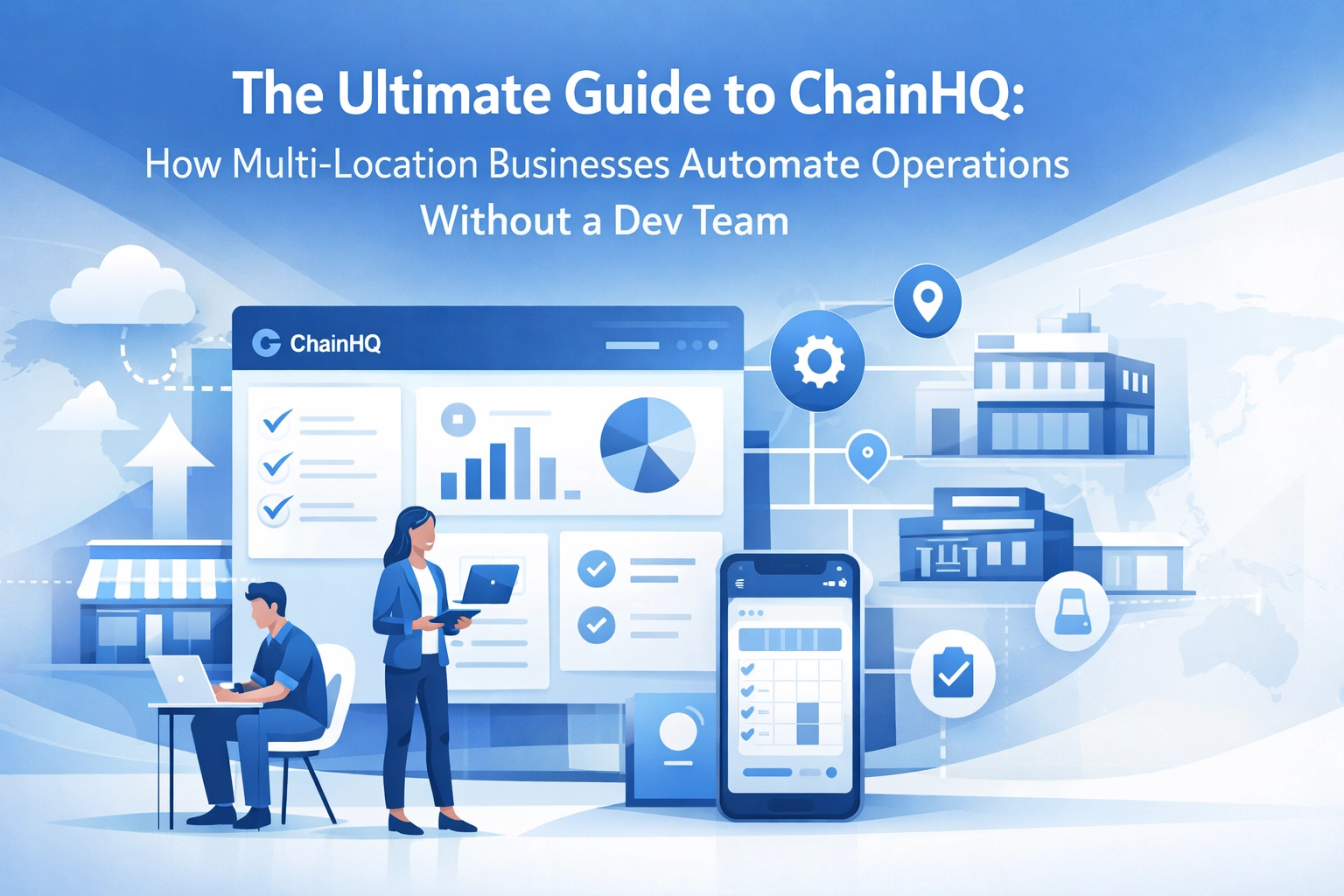
  • The Ultimate Guide to ChainHQ: How Multi-Location Businesses Automate Operations Without a Dev Team

    The Ultimate Guide to ChainHQ: How Multi-Location Businesses Automate Operations Without a Dev Team

    The Hidden Cost of Managing Multiple Locations

    Running three locations feels manageable. Running ten becomes chaos. Running fifty means you're drowning in spreadsheets, missed messages, and inconsistent processes across every site.

    Regional managers spend 15 hours weekly just collecting reports. Store data lives in disconnected systems. Corporate decisions take days to reach frontline teams. Compliance violations slip through because nobody has real-time visibility.

    You know automation is the answer. But hiring developers costs $150K+ annually. Off-the-shelf software forces you to change how you operate. Custom builds take months and still break.

    ChainHQ changes everything.

    What ChainHQ Actually Does

    ChainHQ is the no-code operations platform built specifically for multi-location businesses. Franchises. Restaurant chains. Retail networks. Healthcare systems. Any business running more than one physical location.

    Connect your existing systems. Build automated workflows in minutes. Give every location the same powerful tools without writing a single line of code.

    Stop losing hours to manual processes. Start making decisions with real-time data from every site.

    Multiple retail locations connected by digital network showing automated multi-location operations

    Never Miss Critical Updates Again

    Instant Communication Across Every Location

    Your district manager updates a policy. Every location knows within seconds.

    ChainHQ broadcasts messages, updates, and alerts across your entire network instantly. No more hoping everyone checks email. No more playing telephone across regions.

    • Push notifications to mobile devices
    • SMS alerts for urgent updates
    • In-app messaging by location, region, or role
    • Read receipts prove accountability

    Automated Reporting That Actually Happens

    Employees forget daily reports. Managers get buried chasing numbers. Corporate makes decisions on week-old data.

    ChainHQ automates the entire reporting chain. Set it once. Get consistent data from every location, every day, forever.

    Schedule reports to generate automatically. Pull data from POS systems, inventory tools, and employee apps. Deliver formatted reports to the right people at the right time.

    • Daily sales summaries by location
    • Weekly compliance checklists
    • Monthly performance dashboards
    • Real-time inventory alerts

    Build Workflows Without Developers

    The Visual Workflow Builder

    Drag. Drop. Done.

    ChainHQ's visual builder lets you create sophisticated automation without touching code. Connect your existing tools through 500+ pre-built integrations.

    A new employee starts at Location 47. ChainHQ automatically creates their access credentials, adds them to scheduling software, sends onboarding materials, and notifies their manager. All in the background.

    Mobile workflow builder interface displaying no-code automation for multi-location businesses

    Connect Everything You Already Use

    Your POS system. Scheduling software. Inventory management. Payroll. Security systems. ChainHQ connects them all.

    Stop switching between twelve different platforms. Stop manually copying data between systems. ChainHQ becomes your central nervous system.

    • Square, Clover, Toast integrations
    • Deputy, When I Work scheduling
    • QuickBooks, Gusto payroll sync
    • NetSuite, Shopify inventory

    When inventory hits minimum thresholds, ChainHQ automatically generates purchase orders and notifies suppliers. When a location misses opening procedures, corporate gets instant alerts. When customer feedback drops below standards, regional managers receive immediate notifications.

    Solve the Problems Killing Your Growth

    Inconsistent Operations Across Locations

    Location 12 follows procedures perfectly. Location 38 does everything differently. Corporate has no idea what's actually happening.

    ChainHQ enforces standardized processes while allowing flexibility. Build the workflow once. Deploy it everywhere. Track completion across every site.

    Opening checklists. Closing procedures. Safety protocols. Quality checks. Compliance audits. Every location runs the same playbook.

    Time Wasted on Manual Tasks

    Your regional managers spend 40% of their time on administrative tasks. Data entry. Report compilation. Schedule coordination. Inventory reconciliation.

    ChainHQ eliminates the busywork. Let automation handle repetitive tasks. Let your managers actually manage.

    Calculate the cost: If regional managers make $75K annually and spend 15 hours weekly on tasks ChainHQ automates, you're wasting $28K per manager per year. Five regional managers? That's $140K annually just in wasted salary.

    Real-time operations dashboard displaying multi-location business data and performance metrics

    Compliance and Security Gaps

    One location fails a health inspection. Another misses a security protocol. A third stores customer data incorrectly.

    You find out weeks later.

    ChainHQ monitors compliance in real-time. Track certifications. Verify procedures. Document everything automatically. Know immediately when something falls below standards.

    • Automated compliance checklists
    • Certificate expiration alerts
    • Incident reporting workflows
    • Audit trail documentation

    Real Multi-Location Scenarios

    Restaurant Chains

    Morning deliveries arrive at 47 locations. ChainHQ logs every delivery time, verifies quantities, flags discrepancies, and escalates issues automatically.

    Food safety temperatures get checked every two hours. ChainHQ sends reminders, collects readings, stores records, and alerts managers to violations instantly.

    Retail Networks

    New promotions launch across 120 stores. ChainHQ distributes signage instructions, tracks installation completion, and confirms with photo verification from every location.

    Loss prevention teams get instant notifications when high-value items move. Regional managers see theft patterns across multiple sites in real-time dashboards.

    Healthcare Systems

    Patient intake forms at satellite clinics automatically sync to central records. Schedule changes propagate across all locations instantly. Compliance training tracks completion across hundreds of staff members.

    Franchise Operations

    Franchisees submit sales reports through mobile apps. ChainHQ compiles data, calculates royalties, generates invoices, and delivers financial summaries to franchisors automatically.

    Comparison showing transformation from manual chaos to automated workflows for businesses

    Getting Started Without IT Resources

    No Technical Team Required

    You don't need developers. You don't need IT consultants. You don't need expensive implementations.

    ChainHQ works immediately. Connect your systems through simple authentication. Build your first workflow with guided templates. Deploy across locations in hours, not months.

    Templates for Common Operations

    Start with proven workflows. Daily opening procedures. Inventory management. Employee onboarding. Incident reporting. Quality checks.

    Customize templates to match your specific operations. Add your branding. Adjust to your processes. Deploy enterprise-grade automation without enterprise complexity.

    Mobile-First for Frontline Teams

    Store managers don't sit at desks. Employees don't have company email. Your team operates on phones.

    ChainHQ works everywhere. iOS and Android apps. SMS notifications. Mobile-optimized workflows. Your team gets what they need, when they need it, on the devices they already carry.

    The ROI Nobody Talks About

    Calculate your current cost of chaos:

    How many hours do regional managers spend weekly on administrative tasks? Multiply by hourly cost. Multiply by 52 weeks. That's your baseline waste.

    Add time spent chasing reports. Add delays from miscommunication. Add compliance violations and their penalties. Add lost revenue from operational inconsistencies.

    ChainHQ eliminates that waste. Not reduces. Eliminates.

    A 50-location restaurant chain saves 500+ hours monthly in administrative time alone. At $30/hour, that's $15K monthly or $180K annually. Just from automation.

    Add improved compliance, faster decision-making, and consistent customer experiences. The actual ROI exceeds 800% in the first year.

    Network of connected commercial buildings representing scaled multi-location business operations

    Why Multi-Location Businesses Choose ChainHQ

    Built for Scale

    Start with five locations. Grow to 500. ChainHQ scales effortlessly. No re-implementation. No infrastructure changes. No complexity increases.

    Designed for Non-Technical Users

    If you can send email, you can build automation in ChainHQ. The interface makes sense. The workflows follow logic. The results appear instantly.

    Focused on Operations

    ChainHQ isn't trying to be everything. It solves one problem perfectly: operational automation across multiple locations. No bloat. No unused features. Just powerful tools you'll actually use.

    Your Operations. Automated. Finally.

    Multi-location businesses deserve better than spreadsheets, disconnected systems, and hope-based management.

    ChainHQ gives you visibility, control, and automation without the developer dependency. Build the operations platform your business needs. Connect the systems you already use. Deploy workflows your team will actually follow.

    Stop managing through chaos. Start operating with precision.

    The businesses scaling past 100 locations aren't working harder. They're automating smarter. They're using platforms like ChainHQ to turn operational complexity into competitive advantage.

    Your regional managers shouldn't spend half their time on administrative tasks. Your locations shouldn't operate differently. Your corporate team shouldn't make decisions on outdated data.

    Ready to see what automated operations actually look like? Schedule a demo and watch ChainHQ eliminate the chaos you've been accepting as normal.

    The future of multi-location operations isn't hiring more people to handle complexity. It's deploying smarter systems that remove complexity entirely.


    Amin Said, Founder of Pure Technology Consulting LLC
    https://puretechconsult.com
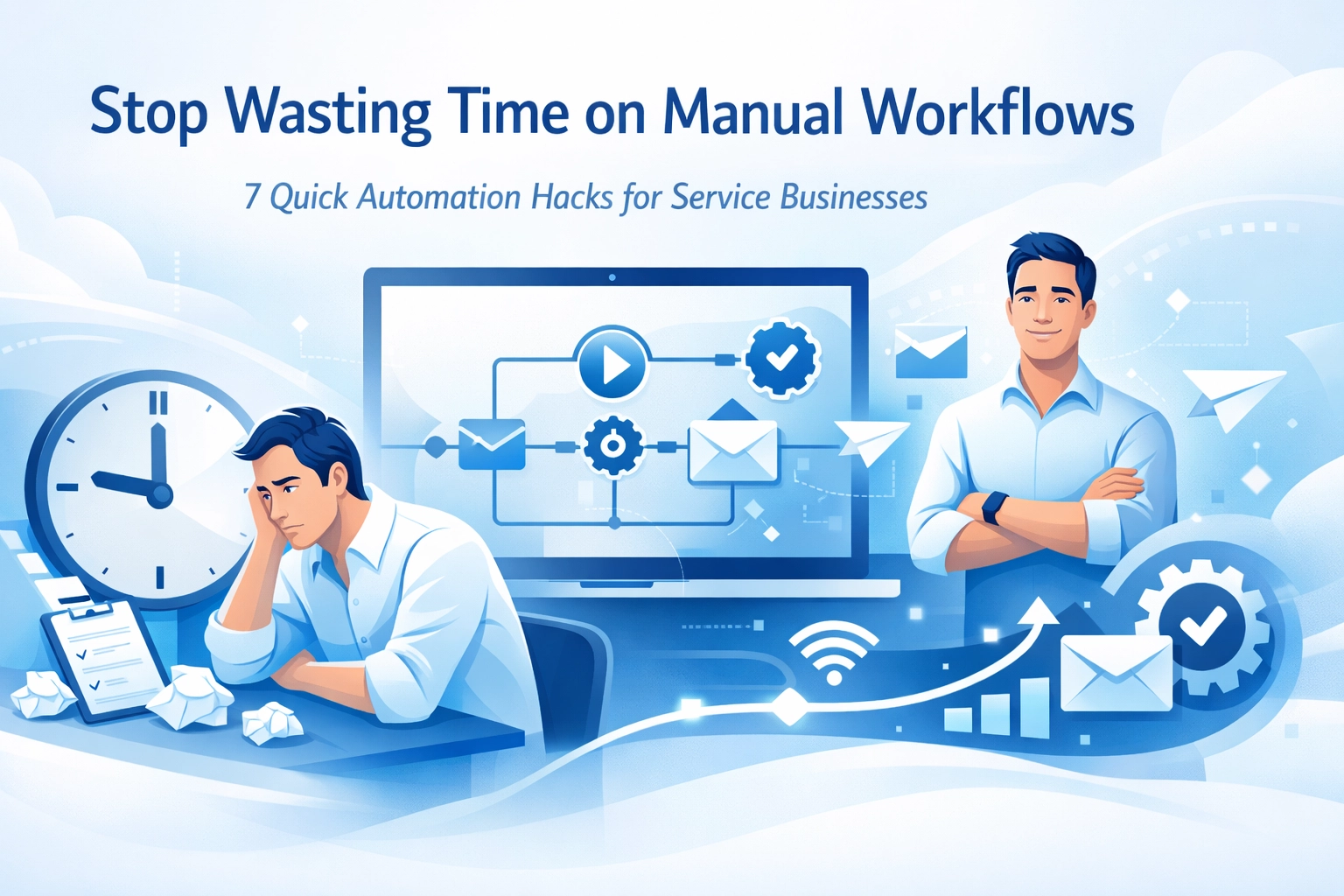
  • Stop Wasting Time on Manual Workflows: 7 Quick Automation Hacks for Service Businesses

    Stop Wasting Time on Manual Workflows: 7 Quick Automation Hacks for Service Businesses

    Your team spends 40% of their workweek on tasks a machine could handle in seconds.

    Every manual email followup. Every copy-paste client onboarding step. Every invoice you generate by hand. That's billable time disappearing into administrative noise.

    Service businesses lose $15,000 per employee annually to workflow friction. The fix isn't hiring more people. It's eliminating the friction entirely.

    Here are seven automation hacks you can deploy this week to reclaim those hours.

    Hack #1: Route Service Requests Automatically Based on Context

    Stop manually sorting through client emails and portal submissions.

    AI categorization pulls keywords, urgency markers, and client history to route requests to the right department instantly. Urgent issues land on your senior team's desk. Routine questions go to support. Complex technical problems route to specialists.

    Set SLA-based escalation rules. If a request sits unanswered for 4 hours, it escalates to management automatically. Nothing falls through the cracks. No more weekend emergencies caused by missed emails.

    What this eliminates:

    • Manual inbox sorting
    • Delayed response times
    • Escalation gaps
    • Cross-department confusion

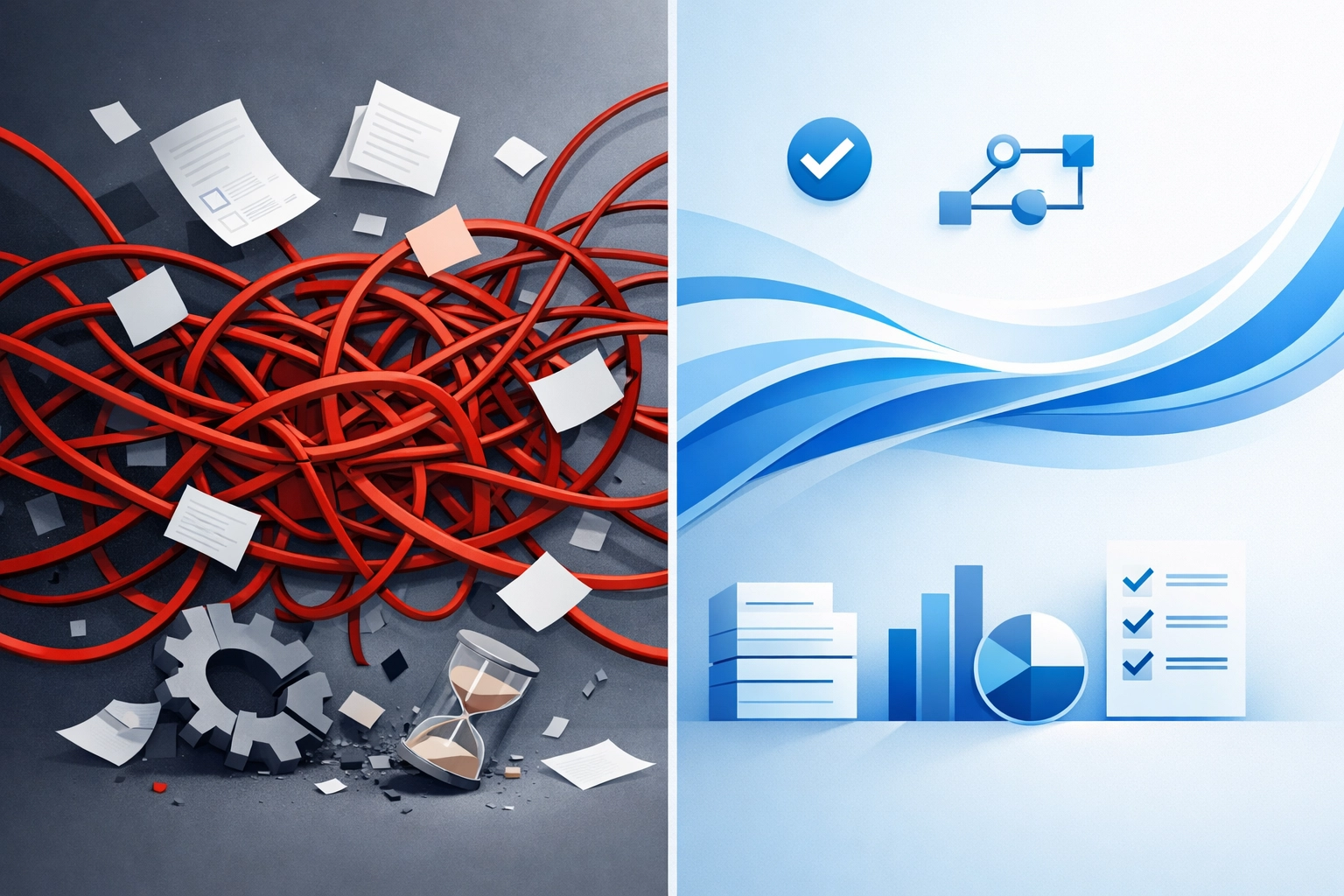
    Automated service request routing system directing inquiries to departments instantly

    Hack #2: Turn Client Onboarding Into a Self-Service Workflow

    Your new client onboarding process shouldn't require 12 back-and-forth emails.

    Build an automated checklist that triggers when contracts are signed. The system requests branding assets, project requirements, payment details, and approval signatures through a centralized portal. It validates completeness. It sends reminders. It notifies your delivery team only when everything is ready to go.

    Tools like ChainHQ centralize multi-step client workflows into intelligent chains that move projects forward without constant human intervention. One trigger: contract signed: initiates an entire sequence of data collection, verification, and team notifications.

    Your team starts projects with everything they need. Clients never answer the same question twice.

    Hack #3: Generate Invoices the Second Work Is Billable

    Manual invoicing is a cash flow killer.

    Set up condition-based invoice automation. When project status changes to "Ready to Bill," the system pulls client details from your CRM, calculates billable hours or deliverables, populates your invoice template, generates a PDF, and emails it to the client.

    No human touches the process. Invoices go out within minutes of project completion instead of days.

    Add automated payment reminders. At 7 days overdue, send a polite nudge. At 14 days, send a firmer reminder. At 21 days, escalate to collections workflow. Your accounts receivable closes faster without awkward phone calls.

    What this unlocks:

    • Same-day invoicing
    • Faster payment cycles
    • Reduced AR aging
    • Eliminated manual data entry

    Hack #4: Let AI Triage Customer Support Tickets

    Your support team shouldn't spend the first 20 minutes of their day sorting tickets by priority.

    AI-powered ticket classification reads incoming requests, extracts intent and urgency, assigns priority levels, and routes to the appropriate team member. It sends Slack alerts for high-priority issues. It groups similar requests so one answer resolves multiple tickets.

    For service businesses running local operations, AI Local Boost integrates support ticket routing with Google Business Profile automation, so customer inquiries from your GMB listing flow directly into your CRM with AI-suggested responses based on past interactions.

    Response times drop from hours to minutes. Customer satisfaction scores climb. Your team focuses on solving problems instead of organizing them.

    AI-powered support ticket dashboard organizing and prioritizing customer requests

    Hack #5: Automate Client Progress Reporting

    Manual reporting steals 3-5 hours per client per month.

    Pull real-time data from your CRM, project management system, or analytics dashboard. Compile milestone-based performance reports automatically. Tailor dashboards to client KPIs. Schedule reports to send weekly or monthly without human involvement.

    When metrics fall below benchmarks, trigger automated task assignments to the relevant team. If a campaign underperforms, your optimization team gets notified immediately with the data they need to fix it.

    EHRIO Pro demonstrates this automation at scale in healthcare workflows, where patient intake data automatically generates progress reports for providers. The same logic applies to service delivery: capture data once, report on it infinitely.

    Clients see consistent, on-time updates. Your team eliminates report-building busywork.

    Hack #6: Track Vendor Performance Without Spreadsheets

    You work with freelancers, contractors, and third-party vendors. Tracking their performance manually is unsustainable.

    Set threshold-based alerts that monitor delivery times, quality scores, and SLA compliance. When a vendor misses a deadline or quality dips below acceptable levels, the system sends automated notifications to project managers and triggers structured feedback workflows.

    FTP Inform showcases this automation philosophy in file transfer monitoring: tracking file delivery status, flagging delays, and alerting teams when critical documents don't arrive on schedule. Apply the same monitoring layer to vendor deliverables.

    You catch performance issues before they impact clients. Vendor relationships improve through data-driven feedback instead of emotional confrontations.

    What this prevents:

    • Missed vendor deadlines
    • Quality degradation
    • Client-facing failures
    • Manual performance reviews

    Automated vendor performance tracking dashboard with real-time metrics and alerts

    Hack #7: Eliminate Data Entry Between Platforms

    Your team copies data from email to CRM to project management tool to invoicing system.

    Every manual transfer introduces errors. Every duplicate entry wastes time.

    API integrations connect your systems so data flows automatically. A new lead in your contact form becomes a CRM record, triggers a welcome email sequence, creates a project folder, and notifies your sales team: all without human intervention.

    ChainHQ specializes in building custom API integration chains that connect disparate business systems into unified workflows. One action in one system cascades through your entire tech stack automatically.

    Data accuracy improves. Team productivity doubles. Nothing gets lost in translation.

    The Bigger Picture: Automation Compounds Over Time

    Each hack saves 2-5 hours per week.

    Stack all seven, and you reclaim 20+ hours per team member monthly. That's half a full-time employee's capacity unlocked without adding headcount.

    The real transformation happens when automation becomes your default operating model. New processes get designed with automation first. Manual workflows become the exception, not the rule.

    Your team focuses on strategy, relationships, and high-value problem solving. Machines handle the repetitive coordination work.

    Ready to Stop Wasting Time?

    Pick one hack from this list. Implement it this week.

    Start with whichever manual workflow causes the most daily friction. Build the automation. Measure the time saved. Then move to the next one.

    Or skip the trial-and-error phase entirely.

    Pure Technology Consulting builds custom automation workflows for service businesses that eliminate manual bottlenecks permanently. We've deployed AI-powered routing, intelligent reporting, and cross-platform integrations for healthcare providers, local service businesses, and professional service firms.

    Schedule a consultation to map your biggest workflow pain points and design automation that fits your exact operations.

    Toll-Free: 888-424-7779
    Local: 803-715-4200

    Your team deserves to work on what matters. Let automation handle everything else.


    Amin Said, Founder of Pure Technology Consulting LLC
    https://puretechconsult.com

  • Struggling With Local SEO? How AI Local Boost Automates What Most Agencies Do Manually

    Struggling With Local SEO? How AI Local Boost Automates What Most Agencies Do Manually

    Struggling With Local SEO? How AI Local Boost Automates What Most Agencies Do Manually

    Most local SEO agencies charge $2,000–$5,000 per month to do work a chiropractor's front desk could automate in 10 minutes.

    They manually update Google Business Profile posts. They copy-paste citation data into spreadsheets. They track rankings by physically searching Google from different zip codes. They reply to reviews one by one, refreshing browser tabs like it's 2015.

    It's expensive. It's slow. And it doesn't scale when you're trying to run a clinic.

    The Hidden Cost of Manual Local SEO

    Local service businesses lose an average of 15–20 hours per month managing their online presence across directories, review platforms, and Google Business Profile. That's half a week of patient care. Half a week of revenue generation. Gone.

    Here's what most agencies do manually:

    • Audit 40–60 business directories to find NAP inconsistencies
    • Update hours, services, and contact information across platforms
    • Generate weekly blog posts optimized for "chiropractor near me" keywords
    • Track local pack rankings by manually searching Google
    • Respond to patient reviews across Google, Yelp, and Facebook
    • Create and schedule GBP posts (photos, offers, updates)

    Each task requires human attention. Each task costs billable hours. Each task delays your ranking improvements by days or weeks.

    Manual local SEO work vs automated AI workflow dashboard comparison

    What AI Local Boost Actually Automates

    AI Local Boost eliminates 95% of the manual work local SEO agencies charge premium rates to perform. It's not a dashboard. It's not a reporting tool. It's a complete automation engine built specifically for local service businesses.
    Instant Citation Management Across 60+ Directories

    Stop paying someone to manually update your business information across the web. AI Local Boost audits every major directory, identifies mismatches, and pushes corrections automatically.

    • Real-time NAP consistency monitoring
    • Automated submission to high-authority directories
    • Priority targeting based on your industry vertical
    • Conflict resolution without human intervention

    One chiropractor in Phoenix had 14 different phone numbers listed across directories. His agency quoted $800 to "clean it up over the next 30 days." AI Local Boost fixed all 14 in 18 minutes.

    Hyperlocal Content That Ranks Without Writers

    You don't need a content team. You need content that answers "chiropractor near [neighborhood]" searches better than your competitors.

    AI Local Boost generates locally optimized blog posts, service pages, and GBP descriptions tailored to your city's neighborhoods. It pulls real community data: local events, seasonal trends, neighborhood demographics: and builds content that ranks.

    • Automated blog ideation based on trending local searches
    • GBP post scheduling (photos, offers, Q&As)
    • Neighborhood-specific landing pages
    • Seasonal content calendars without manual planning

    No more paying $500 per blog post to a freelancer who's never visited your city.

    AI-powered citation management network connecting 60+ business directories

    Real-Time Rank Tracking That Agencies Update Monthly

    Most SEO agencies send reports 30 days after the rankings changed. By the time you see the data, your competitor already stole the #2 spot.

    AI Local Boost tracks your local pack rankings in real time. Every search. Every neighborhood. Every keyword. You see exactly where you rank for "physical therapist [zip code]" the moment Google updates results.

    • Live visibility into local pack performance
    • Competitor movement alerts
    • Keyword opportunity identification
    • Location-specific insights by branch or service area

    When a new competitor launches five blocks away, you'll know before your agency's monthly call.

    Automated Review Management Without the Inbox Chaos

    Patient reviews drive 68% of local search visibility. But logging into Google, Yelp, Facebook, Healthgrades, and Vitals every day to respond? That's admin work disguised as marketing.

    AI Local Boost monitors reviews across every platform from one dashboard. It flags negative sentiment, drafts professional responses, and automates follow-up requests to happy patients.

    • Centralized review monitoring
    • Response templates that sound human
    • Automated review request campaigns
    • Sentiment analysis and trend alerts

    You're not hiring a reputation manager. You're automating reputation management.

    Local SEO neighborhood targeting with location pins on city map

    Why Local Service Businesses Choose Automation Over Agencies

    Here's the math:

    A typical local SEO agency charges $3,000/month. Over 12 months, that's $36,000. They update your GBP twice a week, write two blog posts a month, and send a ranking report you barely read.

    AI Local Boost does the same work: plus citation audits, review monitoring, and real-time rank tracking: for a fraction of the cost. And it runs 24/7 without vacation days, sick leave, or billing hourly rates.

    Built for Chiropractors, PT Clinics, and Multi-Location Practices

    We didn't build AI Local Boost for e-commerce brands or SaaS companies. We built it for local service businesses that need Google visibility without hiring an SEO team.

    If you operate multiple locations, AI Local Boost scales instantly. Manage five clinics or fifty from one dashboard. Every location gets automated citations, content, and rank tracking without multiplying your workload.

    • Multi-location management from a single platform
    • Branch-specific performance insights
    • Standardized NAP data across all locations
    • Scalable automation without per-location fees

    When you're ready to open a second clinic, you're not calling your agency to renegotiate pricing. You're adding a location in 90 seconds.

    Real-time local search ranking dashboard tracking competitor movements

    The Operational Bottleneck Most Clinics Ignore

    Local SEO isn't a marketing problem. It's an operations problem.

    Your front desk team doesn't have time to update 40 directory listings when you change office hours. Your office manager can't write blog posts between patient scheduling and insurance calls. Your clinic director isn't manually tracking rankings while managing staff.

    But Google doesn't care about your bandwidth. It ranks businesses that maintain consistent information, publish fresh content, and earn positive reviews. Miss any of those signals, and you lose visibility to competitors who automate better.

    AI Local Boost solves the operational bottleneck. It removes local SEO from your to-do list entirely. No manual updates. No content calendars. No monthly agency calls where you pretend to understand technical SEO jargon.

    What This Means for Your Growth Strategy

    When local SEO runs on autopilot, you stop treating Google visibility as a monthly expense. You start treating it as infrastructure: reliable, scalable, and predictable.

    You can open new locations without worrying about SEO setup delays. You can launch new services without hiring writers to create landing pages. You can respond to 50 patient reviews without opening 50 browser tabs.

    Most importantly, you can spend your time where it actually matters: treating patients and growing your practice.

    Stop Paying Agencies for Work Automation Handles Better

    Local SEO agencies aren't bad at what they do. They're just inefficient. They charge premium rates for tasks software performs faster, cheaper, and more accurately.

    AI Local Boost doesn't replace strategy. It replaces repetitive manual work that no human should be doing in 2026.

    If you're still paying someone to manually update your Google Business Profile, you're overpaying for automation you could deploy today.


    Amin Said, Founder of Pure Technology Consulting LLC
    https://puretechconsult.com