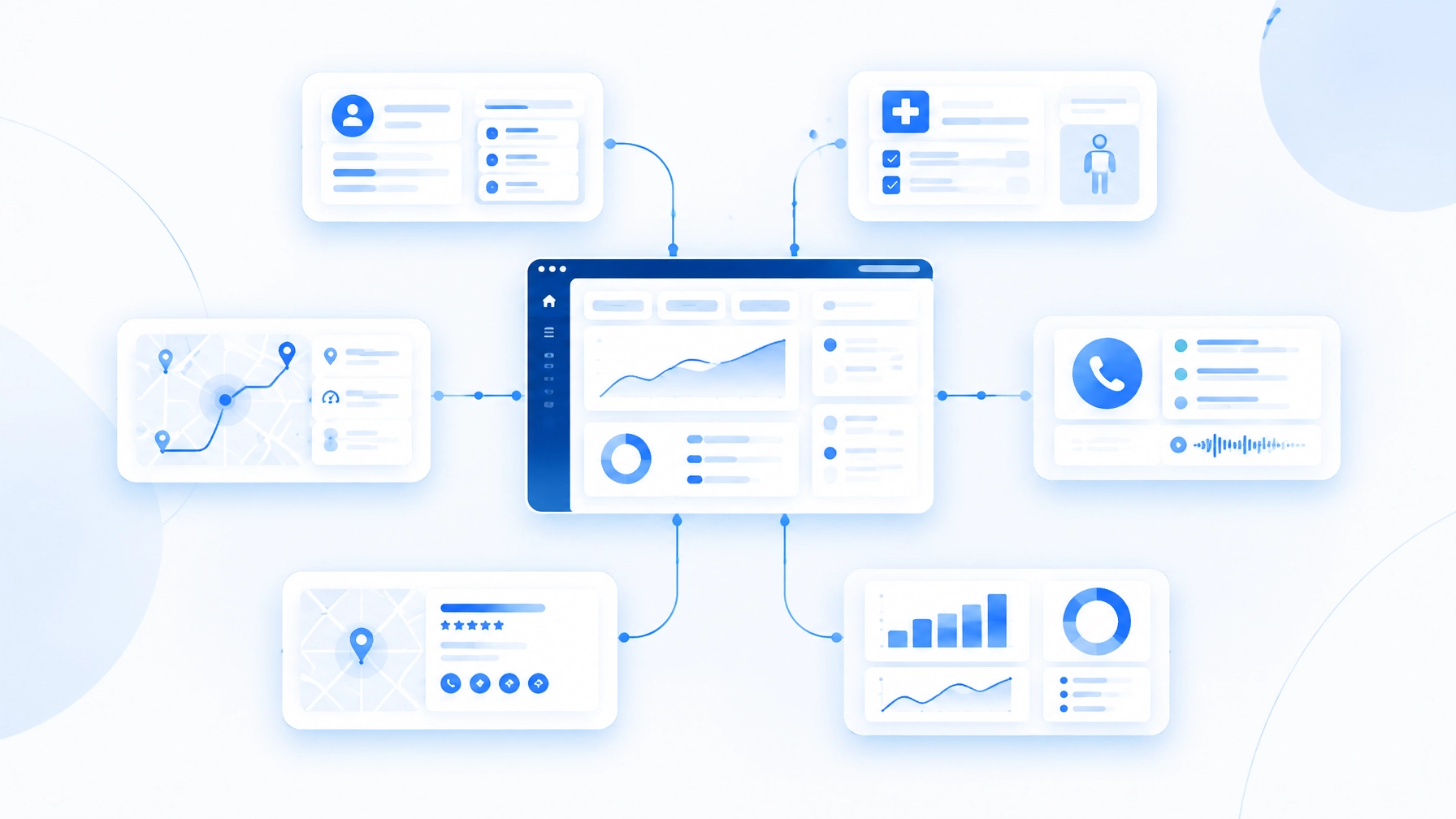
Amin Said here : when a company reaches the point where disconnected tools, manual handoffs, and repetitive administrative work are limiting growth, buying another SaaS subscription is rarely the complete answer.
The real opportunity is to design an operating system around the way the business actually works.
That is the purpose of business process automation consulting. A premium engagement combines operational strategy, custom web application development, integration engineering, governance, and ongoing improvement. It is not simply a collection of automated tasks. It is a structured effort to make the business more measurable, scalable, and resilient.
A scoped custom build of $10,000 or more should produce more than software. It should produce clarity about how work moves through the organization, where decisions belong, which systems should connect, and how leadership will measure improvement.
Here is what that engagement looks like from discovery to deployment.
Why a custom build is different from buying SaaS
SaaS is effective when your business can adapt to a vendor’s predefined workflow. It provides speed and convenience, but it may also require compromises:
- Employees work around rigid process assumptions.
- Data remains divided across several platforms.
- Important exceptions stay manual.
- Reporting reflects the software’s model rather than your operating model.
- Strategic workflows become dependent on tools your competitors can also buy.
Custom software development becomes more compelling when the process itself creates competitive value. This may include patient intake and provider matching, field team accountability, debt collection call attribution, multi-location operations, or a proprietary client onboarding model.
The goal is not to replace every existing tool. The goal is to create the right orchestration layer around your people, data, and systems.
Phase 1: Discovery and operational audit

The first phase is not a software demo. It is an investigation into how work is performed today.
A consulting team interviews executives, managers, and frontline operators. They review systems, documents, spreadsheets, approval chains, communication patterns, and exception handling. The objective is to understand the real workflow, including the steps that are not documented.
What the client gets
A thorough discovery phase typically produces:
- Current-state process maps
- A systems and data-flow audit
- A list of bottlenecks, duplicate tasks, and manual handoffs
- An automation opportunity assessment
- A prioritized roadmap based on business impact and implementation complexity
- Initial success metrics and a recommended phase-one scope
This is where an organization distinguishes between a process that is merely inconvenient and one that is creating material operational drag.
For example, a healthcare intake process may involve a 70-question assessment, provider matching, insurance review, scheduling, and EHR preparation. A field sales operation may require GPS-verified activity logs and rep accountability. A debt collection agency may need telephony integrations that connect calls, attribution, records, and follow-up actions.
Each requires a different operating model.
Decisions the client owns
The client remains responsible for business priorities and risk tolerance. Leadership decides:
- Which workflows matter most to the organization
- Which problems should be addressed first
- What level of human review is required
- Which outcomes define success
- Which systems must remain in place
- What data, teams, or locations belong in the initial scope
The consultant brings structure, technical judgment, and strategic options. The client owns the business decisions.
Phase 2: Architecture and data model

Once the workflow is understood, the team designs the system that will support it.
This phase translates operational requirements into an architecture. It defines how data will be captured, where it will be stored, how systems will communicate, which users can access it, and how the solution can evolve without requiring a complete rebuild.
A high-quality architecture should account for more than the successful path. It must also account for incomplete data, failed integrations, ambiguous cases, permissions, auditability, and future growth.
What the client gets
Typical deliverables include:
- A solution architecture and technical blueprint
- A data model that defines core entities and relationships
- Integration specifications for CRM, EHR, ERP, scheduling, telephony, or other systems
- User roles and permission structures
- Workflow states, business rules, and escalation paths
- Security, logging, and data-retention considerations
- A phased delivery plan with defined milestones
This is also where the team decides whether AI is appropriate. Bespoke AI solutions can support classification, document extraction, recommendations, content generation, and routing. But AI should be placed inside a governed workflow rather than added as a novelty.
Decisions the client owns
The client decides:
- Which data is authoritative when systems disagree
- What information each role can view or change
- Which decisions can be automated
- Which decisions require approval
- How much flexibility users need
- What must be recorded for audit or compliance purposes
- Whether the first release should be a focused internal tool, customer-facing portal, or broader platform
For organizations in regulated or sensitive environments, this includes decisions about security controls, vendor requirements, retention policies, and review procedures. In healthcare, for example, a workflow may be HIPAA-adjacent, but the production compliance assessment must be specific to the client’s systems and obligations.
Phase 3: Build and integration

The build phase turns the architecture into working software.
This may include a custom web application, internal dashboard, customer portal, mobile-responsive workflow, integration layer, or AI-powered business system. The development team connects APIs, creates interfaces, implements business rules, and builds the automation logic required to move work from one stage to the next.
A premium engagement is not just “connecting apps.” It must handle the realities of production operations:
- Missing or inconsistent data
- Duplicate records
- Failed API requests
- Human approvals
- Unusual customer or patient scenarios
- Retry logic and notifications
- Role-based access
- Activity history and reporting
What the client gets
Depending on scope, deliverables may include:
- A working application or workflow engine
- CRM, EHR, ERP, scheduling, payment, or telephony integrations
- Custom dashboards and operational queues
- AI-assisted classification, routing, or content generation
- Notifications, approvals, and exception handling
- Authentication and role-based permissions
- Audit logs and integration monitoring
- Documentation for core workflows and configuration
This is where ai workflow automation becomes practical. The system can classify a request, recommend a provider, draft a response, identify a missing document, or route a case to the right team. Human oversight remains part of the design wherever the decision carries operational, financial, reputational, or compliance risk.
Decisions the client owns
The client reviews working software throughout development and decides:
- Whether the workflow reflects real operating conditions
- Which features are essential for launch
- Which edge cases belong in the first release
- How teams should be notified
- Which metrics belong on leadership dashboards
- When a feature is ready for user acceptance testing
This iterative approach reduces the risk of building a technically elegant system that employees do not trust or use.
Phase 4: Governance, testing, and rollout

A system is not ready because the code runs. It is ready when the organization can operate it with confidence.
Governance and testing establish that confidence. The team validates the workflow in a staging environment, tests integrations, reviews permissions, examines edge cases, and compares automated results with the manual baseline.
Testing may include:
- Functional testing against approved requirements
- Integration and API testing
- Permission and access testing
- Regression testing after changes
- Performance testing under realistic volume
- Edge-case and exception testing
- User acceptance testing with trained staff
- Real or masked production data in a controlled environment
Rollout should generally be staged. A limited group, location, or transaction type may be used first. Feedback from that release informs training, configuration, and final adjustments before wider deployment.
What the client gets
A mature rollout includes:
- Test plans and documented results
- User acceptance criteria
- Deployment and rollback procedures
- Staff training and workflow documentation
- Standard operating procedures
- Monitoring dashboards and alerting
- Early-life support after launch
- A clear ownership model for ongoing administration
Decisions the client owns
Leadership decides:
- Who participates in acceptance testing
- What level of performance is required before launch
- Whether to use a pilot or broader release
- Which employees need training
- Who approves production changes
- What risks require a rollback or manual fallback process
This governance layer is one of the clearest differences between serious enterprise automation consulting and a quick automation project.
Phase 5: Ongoing iteration
A custom system should improve as the organization learns.
After launch, the team monitors cycle time, error rates, throughput, exception volume, user adoption, and other agreed measures. Those metrics reveal where the workflow is creating leverage and where additional refinement is needed.
Ongoing iteration may include:
- Refining business rules
- Improving dashboards
- Adding integrations
- Updating AI prompts or evaluation criteria
- Expanding to additional departments or locations
- Automating new workflow stages
- Strengthening controls based on operational feedback
Pure Technology Consulting has applied these principles across several proof-of-work systems. AI Local Boost demonstrates Google Business Profile automation and multi-location workflow management. EHRIO Pro and Thrive demonstrate healthcare intake, provider-matching engines, 70-question assessments, and HIPAA-adjacent workflows. Field operations work has included GPS-verified accountability for door-to-door sales teams, while debt collection systems have incorporated telephony integrations and call attribution. ChainHQ and FTP Inform further demonstrate the ability to build structured, scalable software around complex business requirements.
These platforms are not presented as substitutes for every client’s needs. They show what a custom software development agency can create when technology is designed around an operating model rather than imposed on top of it.
That experience also transfers into legal, accounting, healthcare, and other professional services environments. The goal is not to start from zero. It is to bring proven capabilities in workflow design, integrations, automation, and product engineering into a new business context.
What a premium engagement should ultimately deliver
A high-ticket custom build should leave the client with more than a new application. It should provide:
- A documented understanding of how the business operates
- A prioritized transformation roadmap
- An architecture aligned with current and future needs
- Integrated systems and structured data
- Governed automation with appropriate human oversight
- A tested and documented production workflow
- Internal capability to manage the system
- A measurable path for continued improvement
That is the difference between buying software and investing in digital transformation consulting. The technology is important, but the larger outcome is operational leverage.
If disconnected systems, manual handoffs, or fragmented data are limiting your next stage of growth, book a discovery consultation. We can evaluate the workflow, identify the highest-value opportunities, and define a practical scope for custom web application development, enterprise automation consulting, or ai consulting services.
Contact Pure Technology Consulting
Call +1 (803) 921-0969 or visit puretechconsult.com.
Amin Said, Founder of Pure Technology Consulting LLC
https://puretechconsult.com
Leave a Reply