A high-ticket custom software engagement should produce more than a polished interface. It should create an operating system for the client’s business: one that connects data, enforces workflow logic, supports governance, and creates measurable operational leverage.
At Pure Technology Consulting, four production platforms demonstrate how we approach that challenge:
- AI Local Boost: governed local SEO and Google Business Profile automation
- ChainHQ: multi-location scheduling, inventory, and operational management
- EHRIO Pro: healthcare intake, matching, scheduling, and practice workflows
- FTP Inform: governed data exchange for compliance-sensitive, file-driven operations
These platforms are not presented as standalone products to purchase. They are proof-of-concept systems that show how Pure Technology Consulting designs and deploys complex web applications, AI-powered workflows, integration layers, and scalable SaaS infrastructure for high-ticket clients.
Across very different industries, the same engineering principles appear repeatedly: multi-tenant architecture, API orchestration, governed AI, compliance-sensitive data handling, white-label infrastructure, and reporting designed around executive decisions.
The shared engineering challenge: complexity rarely lives in one system
Businesses rarely struggle because one application is missing. More often, the problem is the space between applications.
A lead enters through a website, a referral, a phone call, or a partner file. From there, information may move through a CRM, scheduling platform, EHR, telephony system, accounting application, reporting database, or human approval queue.
When those transitions are managed manually, staff members become the integration layer.
That creates familiar problems:
- Data is entered multiple times.
- Important context is lost between systems.
- Exceptions are handled inconsistently.
- Leadership receives delayed or incomplete reporting.
- Growth requires additional administrative headcount.
- Compliance and auditability become difficult to demonstrate.
The four platforms below were built around a different operating model: treat the workflow as a connected system, not a series of disconnected software features.
AI Local Boost: governed automation across locations and brands

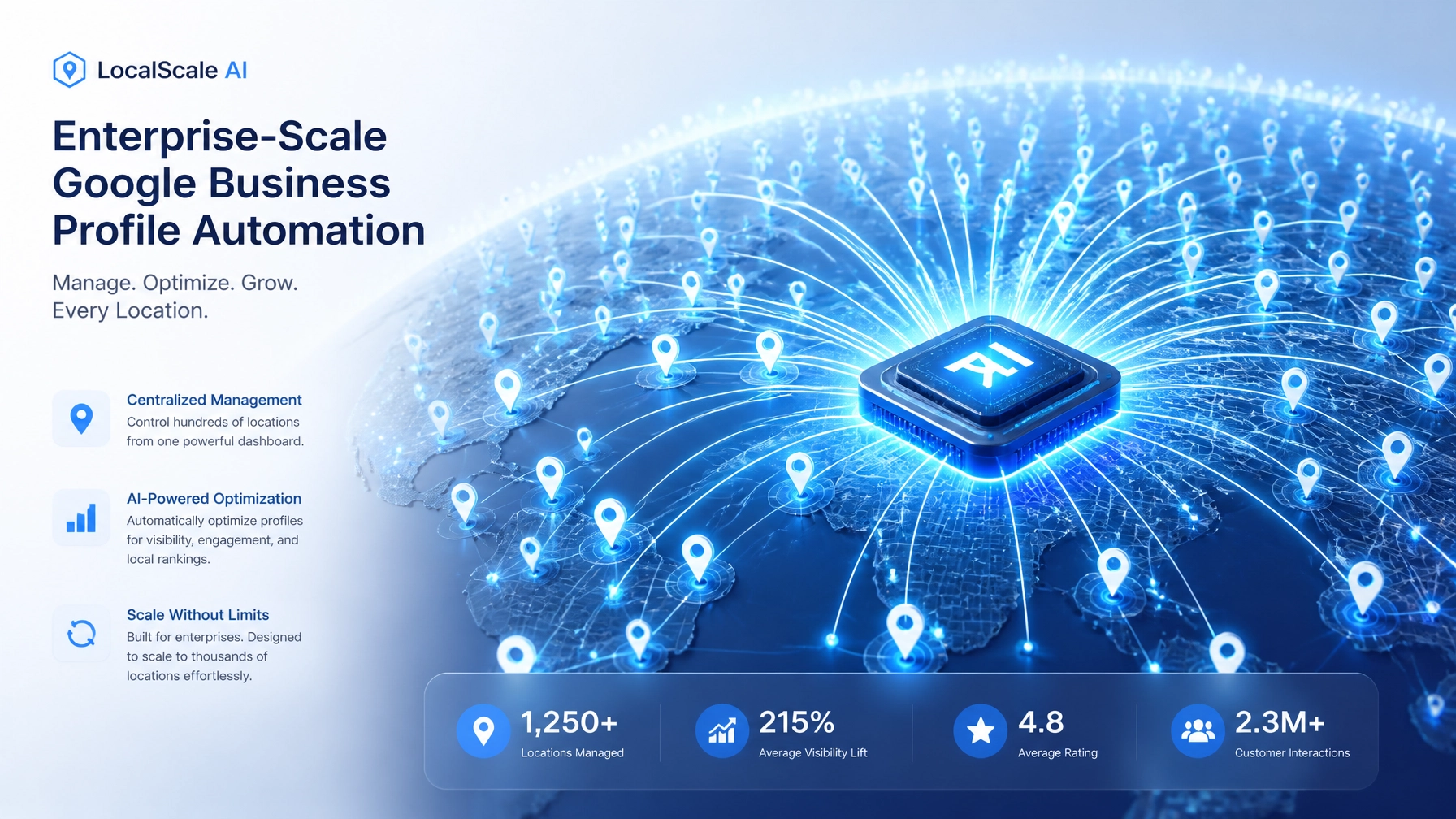
AI Local Boost demonstrates how AI can be integrated into a governed, multi-location workflow rather than used as an isolated content generator.
The platform coordinates local visibility activity across business profiles, locations, reviews, content calendars, and reporting requirements. Its underlying architecture supports:
- Tenant and location-level data separation
- Shared templates with local customization
- Google Business Profile API integrations
- Review ingestion and response workflows
- AI-assisted content generation
- Approval queues and escalation rules
- Scheduled publishing and retry logic
- White-label configurations for agencies and partners
- Location-level and organization-wide reporting
The important engineering distinction is governance. An AI model can draft a review response or local post, but a production system must also determine:
- What information should provide context?
- Which actions can be automated?
- Which changes require approval?
- How should exceptions be routed?
- What should be recorded for audit and reporting?
This “suggest, review, and publish” approach gives operators efficiency without removing control from reputation-sensitive workflows.
For a franchise group, agency, or multi-location service business, white-label infrastructure also requires more than a custom logo. It requires tenant-aware architecture, account isolation, configurable permissions, branded reporting, and flexible business rules.
AI Local Boost shows how these requirements can be combined into a scalable automation layer.
ChainHQ: multi-tenant architecture for distributed operations
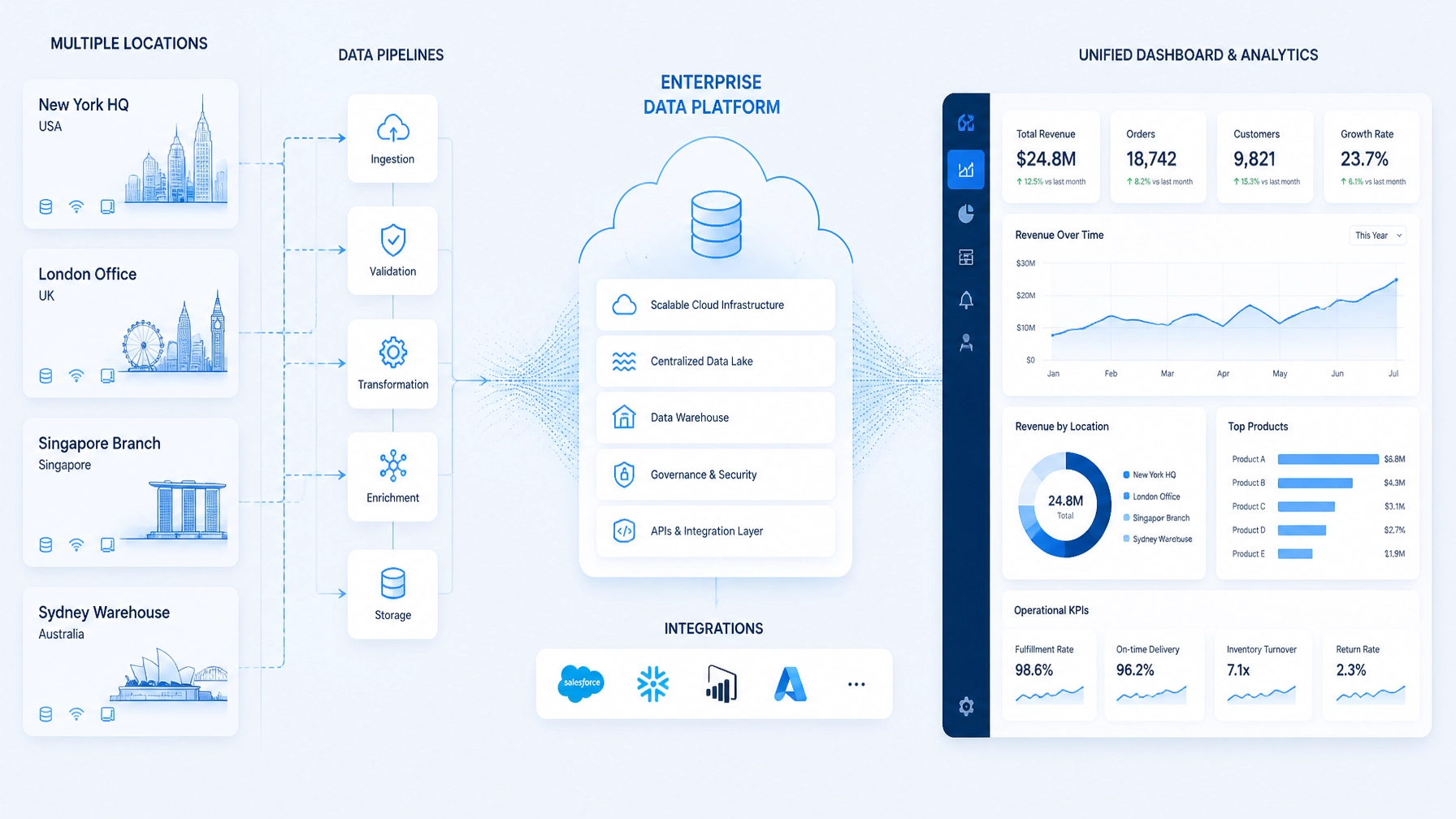
ChainHQ demonstrates the value of a location-aware data model for businesses operating across branches, events, pop-up locations, or regional teams.
The platform was designed around a unified data core rather than isolated software instances for every location. Core records can remain centralized while transactions are scoped with tenant and location identifiers.
That structure supports a balance between corporate visibility and local control:
- Headquarters can view organization-wide performance.
- Regional managers can manage their assigned locations.
- Local teams can access only the workflows relevant to their responsibilities.
- Inventory, scheduling, customer, and transaction data remain connected.
- Role-based permissions preserve governance across the network.
ChainHQ also demonstrates how intelligent assignment logic can replace manual scheduling decisions. Availability, location, skills, workload, timing, and business priorities can be evaluated through configurable rules.
The resulting workflow is more than a calendar. It is a controlled lifecycle:
- A request or event enters the system.
- Required information is validated.
- Matching logic evaluates available resources.
- The system recommends or assigns a team member.
- Notifications are triggered.
- Managers review exceptions.
- Assignment history and outcomes become reportable data.
This architecture is relevant well beyond permanent jewelry operations. The same pattern applies to healthcare groups, field service organizations, franchise networks, and professional services firms coordinating work across distributed teams.
EHRIO Pro: structured intake and compliance-sensitive workflows

EHRIO Pro demonstrates how a custom intake engine can connect information collection, matching, scheduling, and downstream preparation in a healthcare environment.
The proof-of-concept supports detailed, dynamic intake workflows of approximately 70 questions. Instead of presenting every patient with the same static form, the workflow can adapt based on the information already provided, appointment type, location, referral source, insurance status, and practice-defined rules.
The resulting data can support:
- Provider and location matching
- Scheduling preparation
- Insurance and authorization review
- Missing-information follow-up
- Staff exception queues
- EHR preparation workflows
- Pre-visit communications
- Operational reporting
This is a compliance-sensitive environment. EHRIO Pro is best understood as a HIPAA-adjacent workflow automation architecture, not a blanket compliance claim. A production deployment would need to be evaluated against the client’s security program, legal obligations, vendor agreements, access controls, and data-handling requirements.
Relevant engineering considerations include role-based access, encryption, API authentication, activity logging, data minimization, document security, retention policies, and defined human review paths.
The broader lesson applies to any industry handling sensitive intake data. Custom software becomes valuable when a business needs to preserve context, route exceptions, and connect decisions across several systems without turning staff into manual data-entry operators.
FTP Inform: governed data exchange and call attribution
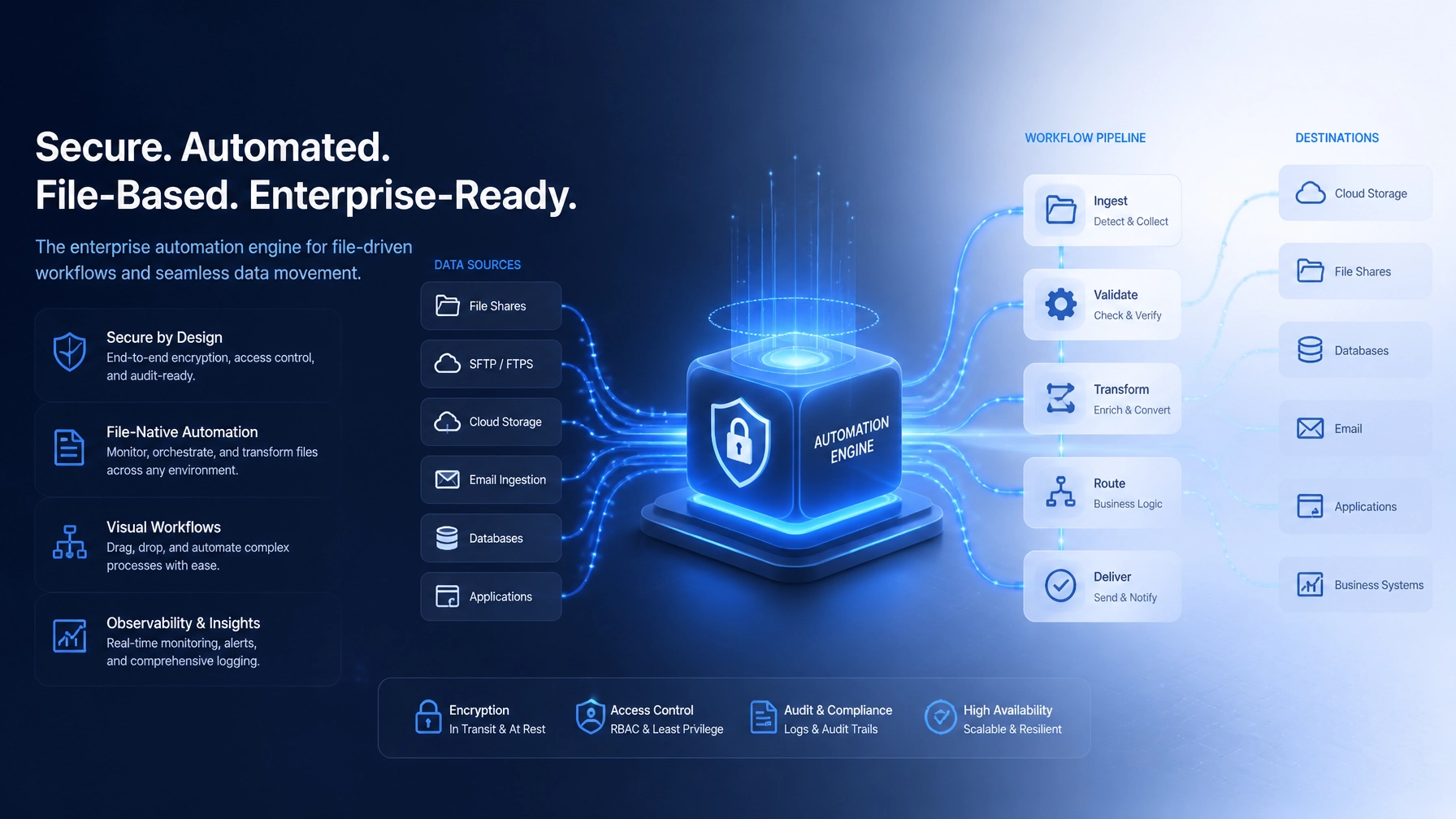
FTP Inform demonstrates how a file-monitoring workflow can become a governed data exchange layer for high-volume operations.
In debt and fintech environments, a partner file may contain account identifiers, balances, payment information, customer records, or telephony fields. Simply receiving the file securely does not answer the operational questions that follow:
- Did the file meet the approved schema?
- Were duplicate or invalid records identified?
- Which exceptions require partner action?
- Where was the validated data routed?
- Which downstream systems consumed it?
- Can the organization reconstruct the processing history?
FTP Inform addresses these requirements through controlled stages:
- Secure partner ingestion
- Technical and business-rule validation
- Transformation into a canonical data model
- Exception classification and ownership
- Deterministic routing
- Downstream delivery
- Reconciliation and audit reporting
The telephony use case makes data lineage particularly important. Call attribution may depend on account IDs, agent IDs, timestamps, dispositions, campaigns, and contact outcomes. If upstream data is incomplete or incorrectly mapped, CRM activity and compliance reporting can become unreliable.
A governed exchange architecture preserves the relationship between the original file, normalized record, transformation logic, routing decision, and downstream result. That creates a more defensible operating model for debt agencies, fintech companies, and other organizations managing sensitive financial workflows.
What the four platforms prove together
Viewed separately, the platforms serve different industries. Viewed together, they reveal a repeatable custom development capability.
1. Multi-tenant architecture is an operating model
Tenant-aware systems must define who owns data, who can access it, which records are shared, and how local flexibility coexists with central governance.
That applies to locations, departments, clients, partners, franchises, and white-label relationships.
2. APIs are part of the workflow, not a technical afterthought
Google Business Profile, scheduling tools, EHRs, telephony platforms, CRMs, file servers, and accounting systems all become more valuable when they participate in a coherent process.
API orchestration connects those systems while preserving business rules, error handling, retry logic, and ownership.
3. AI requires decision boundaries
AI can draft, classify, recommend, summarize, and prioritize. Production automation still requires approval rules, escalation paths, data controls, and auditability.
The most effective AI workflows automate repeatable decisions while preserving human judgment for ambiguous or high-impact cases.
4. Reporting must reflect how the business operates
Operational reporting should answer questions leadership actually asks:
- Where are cases or files stalled?
- Which locations are under capacity?
- How many actions require manual review?
- Which partners generate recurring exceptions?
- What work is being completed automatically?
- Where is administrative labor limiting growth?
Dashboards are most valuable when they expose the organization’s operating model, not just application activity.
Bringing proven capabilities into legal and accounting
Legal and accounting firms face many of the same architectural challenges demonstrated by these systems.
A firm may need to coordinate lead intake, conflict checks, document collection, client communication, approvals, billing, deadlines, and reporting. Generic software may cover individual functions while leaving the firm to manage the handoffs manually.
PTC brings proven capabilities from healthcare intake, local SEO automation, multi-location operations, and fintech data exchange into these professional services environments. That means firms do not have to begin with a blank page. The architecture patterns already exist; the engagement is scoped around the firm’s workflows, systems, governance requirements, and growth strategy.
Potential deliverables may include:
- Custom intake and qualification workflows
- CRM and practice-management integrations
- Secure document routing
- Role-based dashboards
- AI-assisted classification and summarization
- Approval and escalation queues
- Client and partner portals
- Operational and financial reporting
Build the system your operating model requires
AI Local Boost, ChainHQ, EHRIO Pro, and FTP Inform are evidence of a broader principle: complex businesses need software designed around the way work actually moves.
When disconnected systems, repetitive administration, and weak reporting begin to limit growth, the answer may not be another subscription. It may be a custom operating layer that connects the organization’s people, data, decisions, and systems.
Book a discovery call with Pure Technology Consulting to map your workflow, identify high-value automation opportunities, and define a practical roadmap for a bespoke system.
For direct inquiries, contact PTC at +1 (803) 921-0969.
Amin Said, Founder of Pure Technology Consulting LLC
https://puretechconsult.com
Leave a Reply