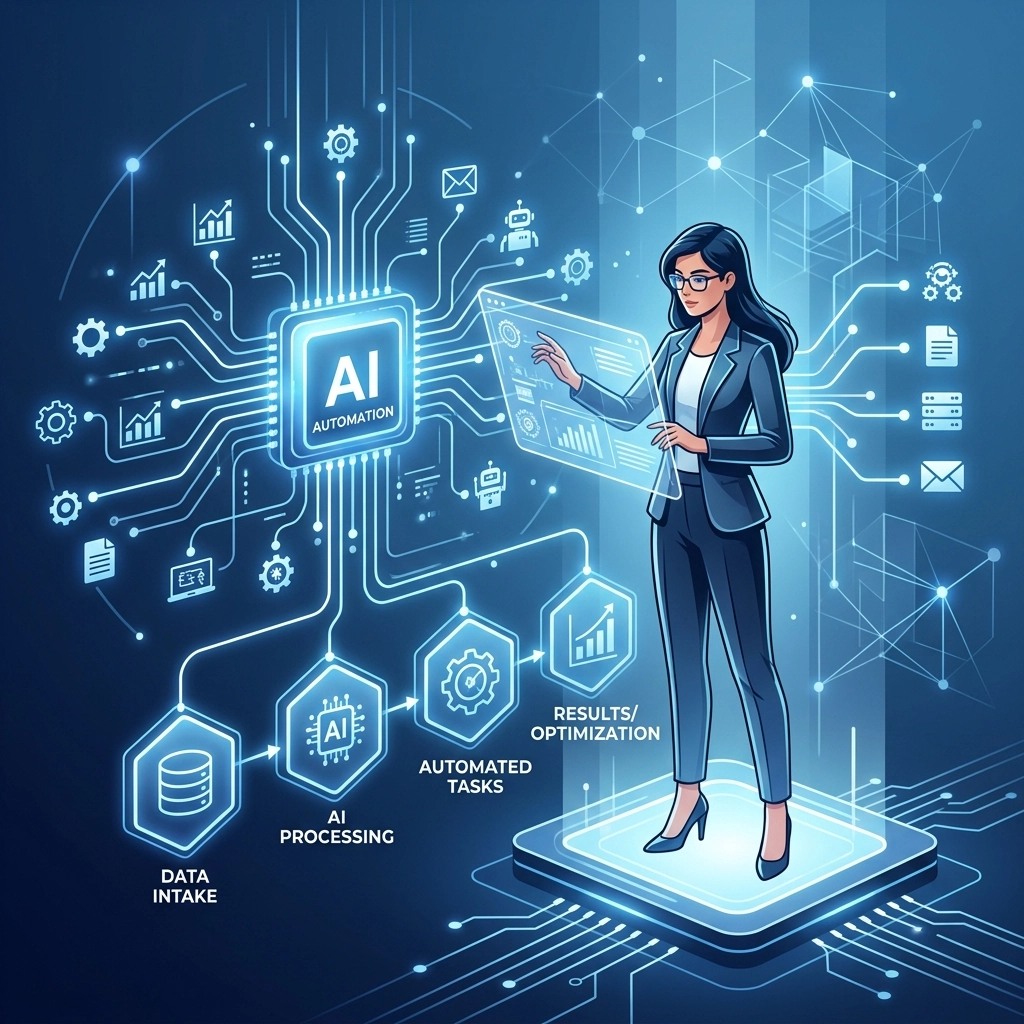
By Tuesday, April 21, 2026, the conversation around Artificial Intelligence has shifted from "what can it do?" to "how can it be seamlessly woven into our operations?" For the modern executive, particularly those navigating the complexities of the C-suite, AI workflow automation is no longer a luxury or an experimental pilot program. It is the new standard for operational leverage.
At Pure Technology Consulting, we view AI workflow automation not as a replacement for human talent, but as a strategic orchestration layer that eliminates manual drag. This guide serves as a roadmap for leaders ready to transition from fragmented manual processes to a visionary, automated operating model.
The Shift from Traditional to Intelligent Automation
Traditional automation followed a rigid "if-this-then-that" logic. It was excellent for moving data between point A and point B, provided the data was perfectly structured. However, in most high-ticket service industries: like legal, accounting, and healthcare: data is rarely that clean. It exists in emails, messy PDFs, recorded consultations, and unstructured spreadsheets.
AI workflow automation changes the game by introducing a layer of "understanding." By utilizing machine learning (ML) and natural language processing (NLP), these systems can interpret intent, categorize documents, and make nuanced decisions that previously required a human touch. This is the difference between a system that simply moves a file and a system that reads the file, realizes it’s a high-priority contract, and alerts the legal team while drafting a summary of the key risks.
The Core Components of an AI-Powered Workflow
To build a system that scales, you must understand the architectural pillars that support it. A successful implementation at the enterprise level requires more than just a handful of "Zaps"; it requires a cohesive strategy.
- The Orchestration Engine: This is the conductor of the orchestra. It manages the sequence of operations, ensuring that data flows correctly between your CRM, your AI models, and your reporting dashboards.
- Intelligent Input Collection: Using tools like intelligent document processing (IDP), the system pulls information from various sources: be it a 70-question healthcare intake form or a complex tax document.
- The Reasoning Layer: This is where the AI models live. These models (predictive, classification, or generative) analyze the input. For example, a predictive model might forecast a patient’s needs, while a generative model creates a customized follow-up plan.
- The Integration Framework: Custom-built APIs and secure data bridges that connect legacy software with modern AI capabilities.

Scaling Expertise: Custom Web Apps vs. Off-the-Shelf SaaS
One of the most common mistakes we see at Pure Technology Consulting is a reliance on generic SaaS products for highly specific business problems. While a monthly subscription might solve a surface-level issue, it often fails to integrate with the deep, proprietary workflows of a growing firm.
When we engage with clients for bespoke software development, we leverage our own proprietary assets as proof-of-concept models. For instance, ChainHQ serves as a perfect example of how we approach complex orchestration. It isn't just a tool; it represents our ability to build high-level automation that manages multiple AI agents and data streams simultaneously. For firms looking for a competitive edge, a custom web app designed specifically for your unique operations: often a $10k+ strategic investment: provides a much higher ROI than a suite of disconnected "affordable" tools.
Sector-Specific Proof: Healthcare and Beyond
Our experience in healthcare has shown that automation must be as secure as it is efficient. With EHRIO Pro, we’ve demonstrated how to handle sensitive, HIPAA-adjacent workflows. We’ve built matching engines and 70-question intake systems that reduce the administrative burden on clinical staff, allowing them to focus on patient outcomes rather than paperwork.
This same philosophy applies to the legal and accounting sectors. By bringing these proven healthcare-grade capabilities into professional services, we help firms automate:
- Conflict Checks and Client Onboarding: Moving from hours of manual verification to minutes of automated screening.
- Document Summarization: Using NLP to distill thousands of pages of discovery into actionable executive summaries.
- Billing and Call Attribution: Similar to our work in Fintech and Debt Agency telephony, ensuring every minute of billable work is captured and attributed correctly via automated call logging.
Data Sovereignty and Security: The FTP Inform Model
In an era where data is the most valuable asset, how you move that data matters. Many organizations fail to realize that their automation is only as strong as its weakest link: often the file transfer stage.
Our proprietary asset, FTP Inform, highlights our commitment to secure, transparent data movement. In a custom automation build, we ensure that every file transfer is tracked and logged. If you are handling sensitive client financial records or legal evidence, you cannot afford a "black box" approach. Real-time notifications and audit trails are essential components of any visionary automation strategy.

Strategic Implementation: What to Automate First?
If you are looking to audit your current workflows, follow this prioritized roadmap to ensure success:
1. Identify "High-Drag" Processes
Look for workflows that are high-volume, repetitive, and prone to human error. A Box-sponsored survey revealed that 73% of top performers in content management have already automated these manual hurdles. If your team is spending more than 20% of their day on data entry or document routing, you have found your first target.
2. Focus on "Agentic" Outcomes
Don't just automate a task; automate a role. AI agents can now act as preliminary reviewers. In marketing, an agent can review campaign copy against brand guidelines before a human ever sees it. In finance, an agent can flag anomalies in expense reports in real-time.
3. Ensure Local Visibility
For businesses with a physical footprint, automation should extend to your digital presence. AI Local Boost is our proof-of-work in the SEO space, demonstrating how Google Business Profile updates and local engagement can be automated to maintain a visionary brand image without daily manual intervention. You can learn more about these strategies at our blog.
The Path Forward: Custom Engineering for Executive Results
The goal of AI workflow automation is to create a "frictionless enterprise." When your systems talk to each other, when your AI understands your business rules, and when your data is secure, your team is freed to do the high-value, visionary work they were hired for.
At Pure Technology Consulting, we don’t just offer software; we offer a partnership in digital transformation. Whether it’s building a bespoke web app from the ground up or integrating complex AI orchestration into your existing stack, our focus is on delivering a high-ticket, high-impact solution that fits your specific operational model.
The transition to an automated future requires more than just technology: it requires a roadmap. We invite you to schedule a discovery call or view our video walkthroughs to see how these custom solutions come to life.
In the legal, accounting, and healthcare fields, the risk isn't in the technology: it's in the delay. The organizations that lead in 2026 are those that have already turned their workflows into a competitive advantage.
Amin Said, Founder of Pure Technology Consulting LLC
https://puretechconsult.com
Phone: +1 (803) 921-0969

For more insights on custom software and digital transformation, visit our main website or explore our category blog. If you're interested in our specific proof-of-concept tools, you can check out FTP Inform's terms or privacy policy for a look at our enterprise-grade standards.
Leave a Reply