By Amin Said, Founder of Pure Technology Consulting LLC
In the landscape of 2026, automation is no longer a luxury or a "future-phase" item on a roadmap: it is the very nervous system of the modern enterprise. We have moved past simple "if-this-then-that" triggers and into an era of intelligent, integrated systems that can handle complex decision-making. However, even with the most advanced AI-powered tools at our disposal, many organizations are still falling into traditional traps that turn expensive automation investments into digital debt.
At Pure Technology Consulting, we’ve spent years building bespoke web applications and high-level automation workflows for industries ranging from healthcare to fintech. We’ve seen firsthand how a visionary approach can transform a business, and how a tactical error can stall it.
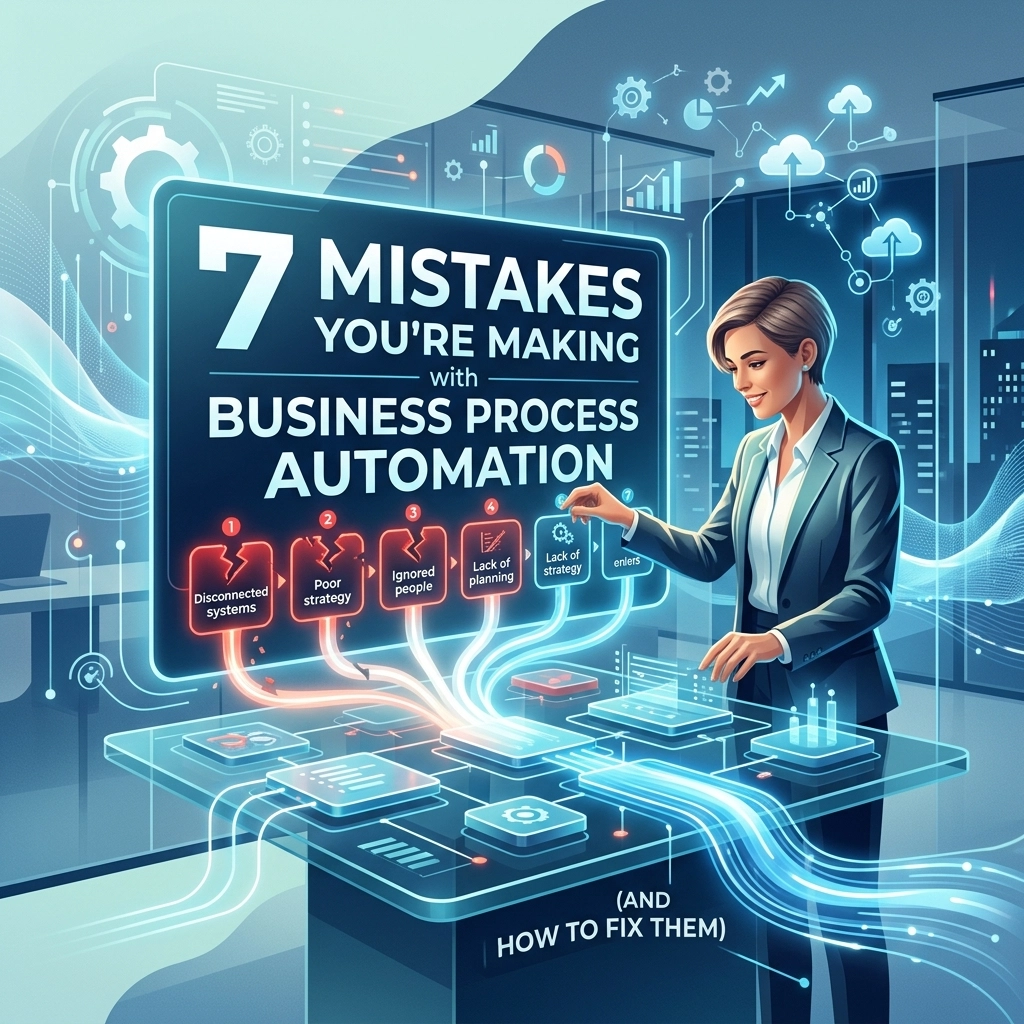
Here are the seven most common mistakes businesses make with process automation and, more importantly, the strategic roadmap to fix them.
1. The Strategy Vacuum: Automating Without a North Star
The most common error is treating automation as a series of disconnected projects rather than a unified business strategy. Many leaders see a repetitive task: like manual data entry or email follow-ups: and immediately look for a tool to "fix" it. This results in a fragmented ecosystem of "zombie apps" that don't talk to each other.
The Fix: Build an Integrated Roadmap
Before writing a single line of code or signing a SaaS contract, you must define your operational North Star. What is the high-level outcome you desire? Is it a 30% reduction in client onboarding time? Is it 100% data accuracy in your legal filings?
At Pure Technology Consulting, we lead with discovery. We look at your business not as a collection of tasks, but as a series of interconnected value streams. By aligning automation with your long-term roadmap, you ensure that every custom build serves the broader vision of your operating model.
2. Paving Over the Cow Path: Automating Broken Processes
If you take a chaotic, manual process and automate it, you haven't solved the problem: you’ve simply made the chaos happen faster. This is often called "paving the cow path." Automating a workflow that includes unnecessary approvals, redundant steps, or unclear ownership only codifies inefficiency.
The Fix: The Optimization-First Principle
You must audit and streamline the process before it enters the development phase. This is an area where our work with EHRIO Pro shines as a proof of concept. When building high-stakes matching engines and intake systems for healthcare, we don't just digitize the old paper forms.
We utilize a 70-question intake logic and HIPAA-adjacent workflows to ensure that the data being captured is exactly what is needed for the next step of the process. By optimizing the logic first, the automation becomes a powerful force multiplier rather than a burden. Always ask: "If we were starting this department today from scratch, how would we design this workflow?"

3. Ignoring the "Data Foundation" and Clean-Up
Automation is only as intelligent as the data it consumes. Many organizations attempt to launch sophisticated AI-powered workflows while their CRM is a graveyard of duplicates and their financial records are scattered across mismatched spreadsheets.
The Mistake: Feeding messy data into an automated system leads to "automated embarrassment": sending the wrong invoice to the wrong client or triggering a marketing sequence for a lead that has already converted.
The Fix: Data Governance and Transparency
Establish a rigorous data clean-up phase as part of your digital transformation. We often point to our proprietary asset, FTP Inform, as a model for how data transparency and secure handling should work.
FTP Inform wasn't just built for file transfers; it was built to provide a secure, notification-driven layer of transparency for complex data exchanges. When we build custom web apps for clients, we prioritize building a clean data architecture that ensures your automations are pulling from a single source of truth.
4. The "Set It and Forget It" Fallacy
There is a pervasive myth that once an automation is built, the work is done. In reality, business environments are fluid. Regulations change, client expectations evolve, and APIs are updated. An automation built in 2024 may be obsolete or even harmful by 2026 if it hasn't been monitored.
The Fix: Active Governance and Iteration
Treat your custom software and automations as living assets. At Pure Technology Consulting, we advocate for a "Build-Measure-Learn" cycle. We don't just deliver a custom app and walk away; we help you set up the governance structures to monitor performance.
For example, when we work with fintech and debt agencies, we integrate telephony and call attribution systems that require constant monitoring for compliance and performance. This is why a partnership with a consulting firm is often more valuable than a one-time software purchase: it ensures your systems evolve alongside your business.
5. Overlooking the Client Experience (CX)
In the rush to save internal time, many businesses sacrifice the very thing that drives their revenue: the customer experience. Over-automated customer service or cold, robotic communication can alienate high-ticket clients who expect a premium, personalized touch.
The Mistake: Using AI or bots in a way that feels "uncanny" or creates friction for the user.
The Fix: Visionary, Human-Centric Automation
Automation should be used to remove friction, not to remove the human element. A perfect example of this balance is AI Local Boost. We designed this to automate the heavy lifting of Google Business Profile management and local SEO, but the goal is to increase the visibility that leads to human interaction.
The automation handles the data-heavy tasks, allowing the business owner to focus on the high-level strategy of their brand. When we build bespoke solutions, we walk through every workflow from the client’s perspective to ensure the automation feels like a concierge service, not a barrier.

6. Failing to Address Team Adoption and Training
Even the most visionary custom web app is useless if your team is afraid of it or doesn't know how to use it. Many leaders underestimate the "Change Management" required to move a team from legacy manual processes to a high-efficiency automated environment.
The Fix: Implementation as Education
Include your key stakeholders early in the discovery phase. When we build custom field ops solutions: like the D2D Tracking systems we've developed for rep accountability: we focus on the user interface as much as the back-end logic.
If the software is intuitive and clearly makes the employee's life easier (by automating GPS logging or report generation), adoption follows naturally. We prioritize building "Bespeak" tools that fit into the employee's existing rhythm, rather than forcing them to adapt to a clunky, off-the-shelf SaaS product.
7. Measuring Activity Instead of Business Value
The final mistake is a failure of metrics. Many organizations celebrate "1,000 tasks automated" without checking if those 1,000 tasks actually moved the needle on profitability, risk reduction, or throughput.
The Fix: Outcome-Based KPI Tracking
Stop measuring clicks and start measuring impact. We utilize frameworks like ChainHQ to provide visibility into complex workflows. ChainHQ serves as a testament to our ability to build hubs that track not just "what happened," but "what the result was."
When we engage with a new client, we define what success looks like in concrete business terms. Is it reducing the debt collection cycle by 14 days? Is it increasing the accuracy of healthcare matches to 99%? By focusing on these high-level outcomes, the automation serves the bottom line, not just the IT department.

The Path Forward: Customization Over Compromise
As we move deeper into 2026, the gap between businesses that use "generic" automation and those that leverage "bespoke" automation will continue to widen. Off-the-shelf SaaS solutions are great for basic tasks, but they often require you to change your business to fit their software.
At Pure Technology Consulting, we believe the software should fit the business. Whether it’s a matching engine inspired by EHRIO Pro or a communication hub like FTP Inform, we bring proven capabilities into the legal, accounting, healthcare, and fintech sectors to build the future of your operations.
If you are ready to stop making these common mistakes and start building a visionary, automated enterprise, it’s time for a strategic audit of your current workflows.
Book a discovery call today to explore how a custom-built automation roadmap can transform your operational leverage.
Contact us at: +1 (803) 921-0969
Amin Said, Founder of Pure Technology Consulting LLC
https://puretechconsult.com
Leave a Reply