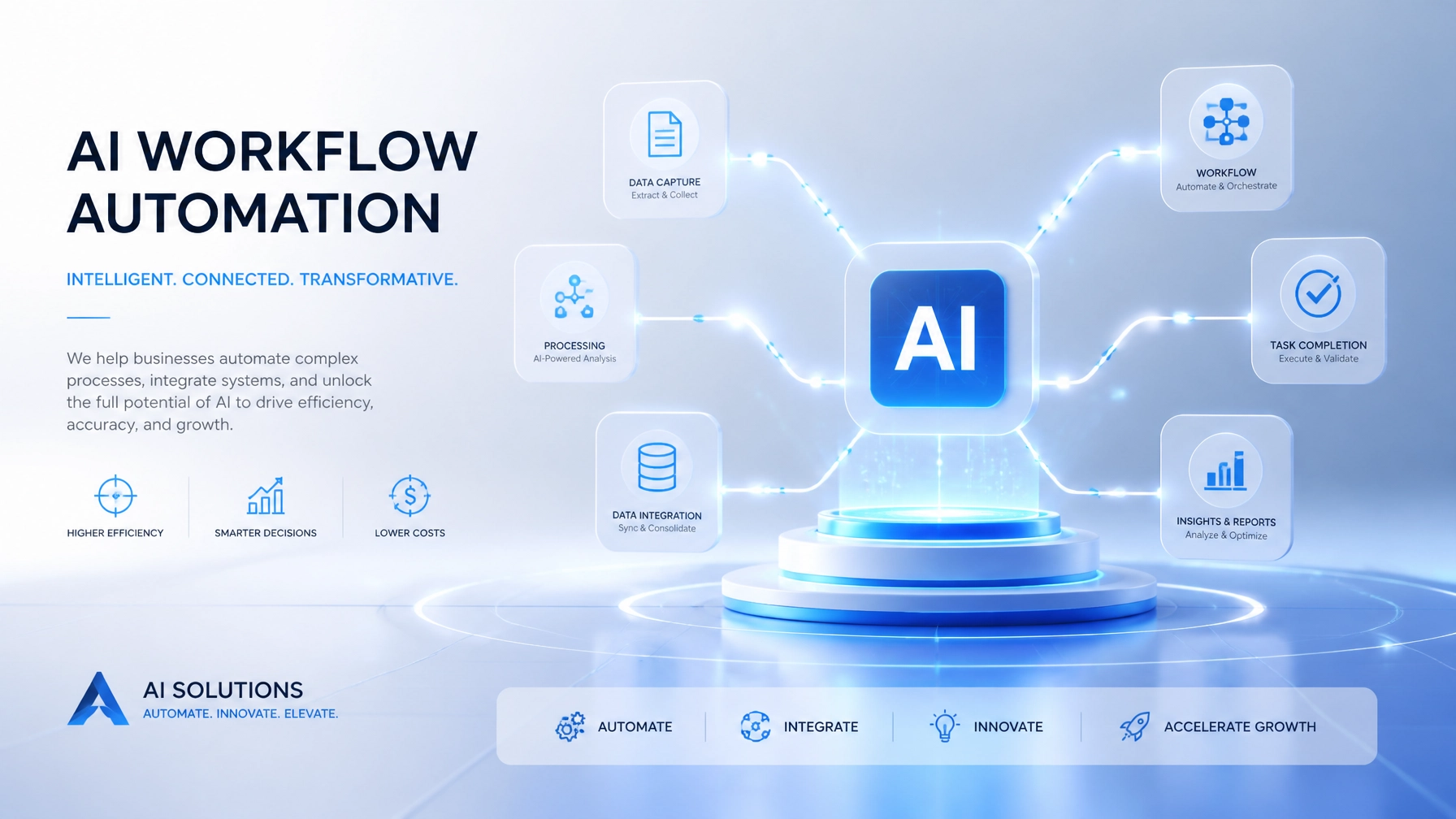
In the current landscape of digital transformation, "AI" has become the siren song for every business leader looking to shave hours off their workweek and add zeros to their bottom line. At Pure Technology Consulting (PTC), we see it daily: growth-minded business owners: from chiropractors to debt collection agencies: rushing to implement the latest automation tools.
The promise is intoxicating. Imagine a world where your lead intake is seamless, your Google visibility scales without manual effort, and your internal operations run like a Swiss watch. But there is a wide chasm between buying an AI tool and integrating a strategic automation ecosystem.
Most businesses fall into a few predictable traps that turn their expensive "innovation" into an operational anchor. Here are the seven biggest mistakes we see in AI workflow automation and, more importantly, how you can fix them to build a scalable, high-performing future.
1. Automating a Broken Process
The most expensive mistake you can make is "AI-ing" a process that is already fundamentally flawed. If your intake form is confusing for patients, or your follow-up logic is inconsistent, applying automation won't fix the friction: it will simply deliver friction to your customers at lightning speed.
At PTC, when we build custom solutions like EHRIO Pro: our proprietary healthcare matching and intake engine: we don't just "plug in" AI. We first map the 70-question intake logic to ensure the data flow is clean.
The Fix: Before you touch a line of code or sign a SaaS contract, document your workflow end-to-end. If you can’t explain the logic to a human in two hours, it’s not ready for a machine. Clean the process first; automate second.

2. The "SaaS Patchwork" Trap
Many small-to-mid-sized businesses suffer from "App Fatigue." You have one tool for CRM, another for scheduling, another for AI-generated emails, and a fourth for reporting. None of them talk to each other. You aren't running an automated business; you're running a digital scavenger hunt.
This disjointed approach creates data silos and fragile workarounds. When one API updates, the entire house of cards falls.
The Fix: Move toward bespoke development or high-level integration. Instead of five different $50/month tools that don't communicate, consider a custom internal system or a unified platform that acts as your "Single Source of Truth." This is why we focus on building custom web applications that fit your operations, rather than forcing your operations to fit a generic SaaS box.
3. Removing the Human Too Early
There is a dangerous trend in 2026: the "Set it and Forget it" fallacy. Business owners assume that because an LLM can draft a response or route a lead, it should do so without oversight. This leads to tone-deaf customer service and, in industries like legal or healthcare, potential compliance nightmares.
The Fix: Implement "Human-in-the-Loop" (HITL) workflows. Use AI to draft, summarize, and suggest, but keep your experts in the "Approval" seat. For example, our AI Local Boost platform automates Google Business Profile optimizations, but we still advocate for human strategy to ensure the brand voice remains authentic and the growth is sustainable.

4. Neglecting Data Integrity (Garbage In, Garbage Out)
AI models are only as good as the data they consume. If your CRM is filled with duplicate entries, misspelled names, or outdated phone numbers, your AI-driven follow-ups will be equally messy. We’ve seen fintech and debt agency telephony integrations fail not because the AI was bad, but because the source data was a disaster.
The Fix: Treat your data as an asset, not a byproduct. Prioritize data cleansing and standardization as part of your automation roadmap. Whether we are building a fintech tool or a field-ops tracker like our D2D Tracking system, we build in data validation at the point of entry.
5. Tool-First Decision Making
It is easy to get distracted by "shiny object" syndrome. You see a demo of a new AI agent and immediately try to find a place for it in your business. This is backwards. You are choosing a hammer and then wandering around your office looking for a nail.
The Fix: Start with the business objective. Do you need to reduce manual intake time by 40%? Do you need to increase lead-to-patient conversion? Define the KPI first, then let the requirements dictate the technology. Often, the solution isn't a new tool: it's a better integration of your existing systems.

6. "Set and Forget" Maintenance
Automations are not static. APIs change, Google algorithms shift, and customer behaviors evolve. A workflow that worked perfectly in June might be broken by September.
This is particularly true in highly regulated industries. If your automated intake or billing logic drifts, the risk isn't just a lost lead: it's a compliance failure.
The Fix: Treat your automations as living systems. This is the core philosophy behind FTP Inform. You need continuous monitoring, periodic prompt updates, and regression testing. If you aren't auditing your AI workflows at least once a quarter, you aren't automating: you're gambling.
7. Failing to Scale (Building for Today, Not Tomorrow)
Many businesses build "brittle" automations: scripts that work for a 5-person team but break when you grow to 25. They rely on "screen scraping" or UI-based triggers that break the moment a vendor changes a button's location.
The Fix: Build for the "Future You." Invest in API-first integrations and scalable architectures. Whether you are looking to white-label a solution like ChainHQ for your franchise or building a private custom application, the foundation must be robust.

The Vision: From Manual Drag to Operational Leverage
The goal of AI workflow automation isn't just to do things faster; it's to do them better. It’s about creating the space for you and your team to focus on high-value strategy while the "digital labor" handles the repetitive, the mundane, and the complex data processing.
At Pure Technology Consulting, we don’t just sell software. We provide a visionary roadmap for businesses ready to move past the "patchwork" phase and into true digital maturity. Whether you are a multi-location wellness clinic or a professional service firm, your technology should be your greatest competitive advantage, not your biggest headache.
Ready to stop making these mistakes and start scaling?
Let’s look under the hood of your current operations. We offer comprehensive workflow audits and custom development scoping to ensure your next investment in technology actually pays off.
Book a discovery call today: +1 (803) 921-0969
Amin Said, Founder of Pure Technology Consulting LLC
https://puretechconsult.com
Leave a Reply