By Amin Said, Founder of Pure Technology Consulting LLC
You didn’t enter the field of behavioral health to become a world-class data entry clerk.
Most founders of counseling centers and specialty wellness clinics started with a vision: to create a space where healing happens, where practitioners are present, and where patients feel seen. But as a practice grows, that vision often gets buried under a mountain of intake forms, insurance verifications, and manual follow-ups.
If you’re reading this, you’ve likely felt the weight of "The Paperwork Problem." It’s that invisible drag on your operations that keeps your best clinicians working until 9:00 PM on "pajama time": doing documentation that should have been finished hours ago.
At Pure Technology Consulting, we look at this through a different lens. We don’t see a "lazy staff" problem or even a "busy practice" problem. We see a systems problem.
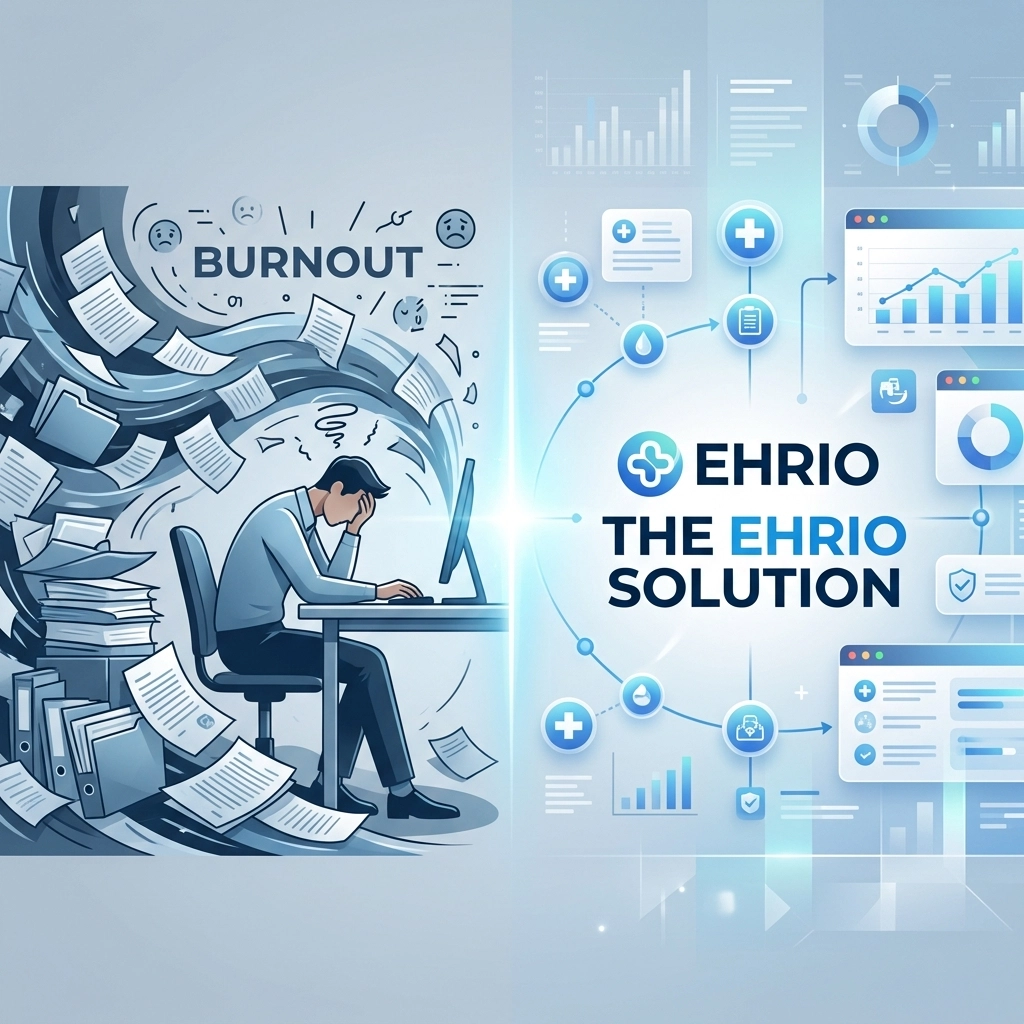
The Quiet Crisis of Clinical Burnout
Research shows that more than 60% of mental health professionals report high levels of burnout. While the work itself is emotionally demanding, it’s rarely the patients who cause the breakdown. It’s the administrative friction.
When a clinician has to navigate fragmented workflows, manual task absorption, and redundant data entry across multiple platforms, they suffer from cognitive overload. They aren't just tired; they are strategically depleted.
This isn't something a wellness stipend or a "resilience training" seminar can fix. You can’t breathe your way out of a broken intake process. To save your staff: and your practice: you have to fix the architecture they work within.

The "Pajama Time" Trap
In the behavioral health world, "pajama time" is the industry’s dirty secret. It’s the hours after the kids are in bed when your therapists are hunched over laptops, trying to catch up on notes and administrative tasks because their daytime hours were swallowed by inefficient systems.
This administrative burden is a direct driver of provider turnover. When your best talent leaves, they aren't just taking their expertise with them; they’re taking the patient relationships that form the backbone of your revenue.
The question isn't how to make your staff work harder. It’s how to make the system work for them.
Moving Beyond "Digital Paper"
Most practices believe they’ve "gone digital" because they use an EHR (Electronic Health Record) and email. But often, they’ve just replaced physical paper with "digital paper": PDFs that still need to be manually read, data that still needs to be re-typed, and emails that still need to be tracked in a spreadsheet.
True transformation happens when you move toward connected systems.
At Pure Technology Consulting, we specialize in building these bridges. Whether it's integrating a CRM with an EHR or automating the 70-question intake process, our goal is to ensure that data flows seamlessly from the first click a patient makes to the final billing statement.
Case Study in Visionary Automation: The EHRIO Pro Model
When we talk about what's possible, we often point to EHRIO Pro. This isn't just a piece of software; it’s a demonstration of how high-level automation can redefine a behavioral health practice.
One of the biggest bottlenecks in specialty clinics is the matching process. How do you ensure the right patient gets to the right provider based on specialty, insurance, availability, and personality fit? In a manual system, this involves a series of "Let me check with so-and-so" emails and frantic calendar shuffling.
With the EHRIO Pro framework, we developed a sophisticated matching engine. Imagine an intake process that:
- Captures Comprehensive Data: A 70-question intake that doesn't feel like an interrogation because it's dynamic and intuitive.
- Automates the Logic: The system instantly analyzes the patient's needs against the provider database.
- Bridges the Gap: It connects the front-end marketing (CRM) with the back-end clinical records (EHR), ensuring no data is lost in transition.
This level of custom development takes the "human error" out of the equation and gives your staff their time back.

The Patient Experience: The First 15 Minutes
We often talk about staff burnout, but what about the patient?
For a person seeking behavioral health support, the intake process is their first impression of your care. If they are met with redundant forms, slow response times, and a "we’ll get back to you in 3-5 days" message, their anxiety increases. They feel like a number in a queue, not a person in need.
By automating the intake workflow, you aren't just saving your staff; you are providing a "white-glove" experience for the patient.
- Instant Confirmation: They know they’ve been heard immediately.
- Seamless Onboarding: They don't have to provide the same insurance info three different times.
- Faster Access to Care: Because the system handles the matching, they get on the calendar days or weeks sooner.
In a visionary practice, technology is the silent partner that makes the human connection possible.
Why Custom Beats "Off-the-Shelf" Every Time
Many practice owners try to solve these problems by buying five different SaaS (Software as a Service) subscriptions. They get one for scheduling, one for forms, one for billing, and another for marketing.
The result? A "Frankenstein" system where nothing talks to each other. Your staff becomes the "human API," manually moving data from one window to another.
We believe in a different approach. We build bespoke web applications and custom automation layers that wrap around your existing tools. We don't ask you to change how you practice medicine; we build the software to fit your specific operating model.
Whether it’s HIPAA-adjacent workflows or complex telephony integrations for call attribution, we focus on the $10k+ problems that are holding your practice back from the next level of scale.

A Roadmap for Transformation
If you feel like your practice is drowning, here is the strategy we recommend to our executive clients:
- Audit the Administrative Drag: Where is the data "getting stuck"? Identify the tasks that require your staff to copy-paste information.
- Prioritize the Intake: The intake is the most high-leverage area for automation. If you fix the "front door," the rest of the house becomes much easier to manage.
- Connect Your Islands: Ensure your CRM and EHR are communicating. If they aren't, you're losing money and clinical hours every single day.
- Invest in Governance: Automation requires clear rules. Define your matching logic and your patient journey so the software can execute it flawlessly.
The Pure Technology Consulting Vision
At Pure Technology Consulting, we don’t just write code. We build the operating models of the future.
We’ve seen how these systems transform healthcare environments, moving them from chaotic and reactive to calm and proactive. When you remove the friction of the "paperwork problem," you don't just improve your bottom line: you restore the joy of practice to your clinicians.
You can see some of our work in action through our video walkthroughs or learn more about our philosophy in our latest blog posts.
The future of behavioral health isn't just about better therapy; it's about better systems that allow that therapy to happen.
Ready to Reclaim Your Practice?
If you’re tired of seeing your team burn out and your growth stagnate because of manual workflows, let’s have a conversation. We specialize in taking complex, high-ticket clinical operations and turning them into streamlined, automated powerhouses.
Book a discovery call with our team today to discuss your workflow audit. No obligation: just a strategic look at how custom technology can solve your practice's biggest bottlenecks.
Let’s build something that scales.
Amin Said, Founder of Pure Technology Consulting LLC
puretechconsult.com
+1 (803) 921-0969
Leave a Reply