PTC AI Insights

  • The Ultimate Guide to AI Workflow Automation: Everything You Need to Succeed

    The Ultimate Guide to AI Workflow Automation: Everything You Need to Succeed

    In the current landscape of 2026, the conversation around Artificial Intelligence has shifted. We are no longer asking if AI can do the work; we are architecting how it does the work. For executives and business owners, the goal isn't just to "use AI": it’s to achieve operational leverage.

    At Pure Technology Consulting, we view AI workflow automation as the ultimate multiplier. It is the difference between a business that scales linearly (adding costs as it adds revenue) and one that scales exponentially. This guide is designed to move you past the hype and into a strategic framework for transforming your operations through bespoke automation and intelligent software.

    The Shift from Manual to Algorithmic Operations

    For years, businesses relied on "hiring their way out of problems." If the intake process was slow, you hired more coordinators. If data entry was lagging, you hired more clerks. In the modern era, that approach creates a "complexity tax" that slows down decision-making and erodes margins.

    AI workflow automation replaces these manual bottlenecks with intelligent systems that minimize human intervention. By integrating machine learning, natural language processing (NLP), and sophisticated orchestration, we enable systems to interpret data, make decisions, and execute tasks with a level of precision that manual processes simply cannot match.

    Abstract visualization of manual process complexity transforming into streamlined AI workflow automation.

    The Core Pillars of a Successful AI Workflow

    To build a system that actually delivers ROI, you must understand the three foundational pillars of modern automation:

    1. Data Integration & Integrity

    An AI is only as good as the data it can access. A visionary automation strategy begins by breaking down information silos. Whether it’s your CRM, your ERP, or niche platforms like FTP Inform, your data must flow seamlessly into the AI engine. We specialize in building custom data pipelines that ensure your models are operating on real-time, high-integrity information.

    2. The Orchestration Engine

    If individual AI tools are the "workers," the orchestration engine is the "manager." Orchestration coordinates tasks across different departments and systems. It handles dependencies: ensuring Step B only happens after Step A is validated: and manages the logic of the entire business process.

    3. Specialized AI Agents

    Unlike broad, general-purpose bots, specialized agents are designed for specific outcomes. Think of an agent that specifically reviews legal contracts for compliance or an agent that handles complex healthcare intake forms. By deploying a swarm of specialized agents, you create a workforce that is both highly skilled and infinitely scalable.

    From Concept to Capability: The ChainHQ Model

    When we talk about high-level automation, we often point to our proprietary work with ChainHQ. We didn’t build ChainHQ as a simple "plug-and-play" tool; we developed it as a demonstration of what is possible when you orchestrate complex AI tasks into a unified sequence.

    ChainHQ represents our ability to build custom web applications that don't just "talk" to AI, but actually manage the lifecycle of a project. For our clients in legal and accounting, this means moving from manual document review to an automated pipeline where an AI agent extracts data, another validates it against regulatory requirements, and a third generates a draft report for human review. This is the level of bespoke development required for high-ticket automation engagements.

    Identifying What to Automate First

    One of the most frequent questions I get during a discovery call is: "Where do we start?"

    The answer lies in identifying your "high-drag" processes. These are workflows that are:

    • High-Volume & Repetitive: Tasks that happen hundreds of times a month and follow a predictable pattern.
    • Data-Heavy & Unstructured: Processes involving PDFs, emails, or handwritten notes that normally require a human to "read and react."
    • Time-Sensitive: Workflows where a delay in response (like a lead intake) directly results in lost revenue.

    Industry Proof: The Healthcare & Legal Pivot

    At Pure Technology Consulting, we don’t start from scratch. We bring proven capabilities from high-stakes industries into new sectors.

    In healthcare, we developed EHRIO Pro, which utilizes sophisticated matching engines and 70-question intake forms to streamline patient data. We’ve taken those same HIPAA-adjacent workflow principles and applied them to the legal and accounting sectors. If we can securely automate a complex medical intake, we can certainly automate a law firm’s discovery process or an accounting firm’s tax preparation pipeline.

    Minimalist digital scan of a data structure representing a strategic AI workflow audit and discovery.

    Strategic Implementation: A Roadmap for Executives

    Implementing AI workflow automation is a strategic transformation, not a software install. Here is the framework we use to guide our clients:

    1. Workflow Audit: We map out your existing manual processes to find the "leaks."
    2. Architecture Design: We design a bespoke web application or integration layer that fits your specific tech stack.
    3. Pilot & Integration: We connect the AI engine to your existing tools (CRM, Email, File Storage) to eliminate manual entry.
    4. Agent Deployment: We roll out specialized AI agents to handle the heavy lifting.
    5. Governance & Human-in-the-Loop: We build dashboards and approval gates to ensure humans remain in control of the final output.

    Why Custom Builds Beat Off-the-Shelf SaaS

    While many "No-Code" tools like Zapier or Make are excellent for simple tasks, they often fall short for enterprise-level operations. When you are dealing with sensitive data, complex compliance requirements, or the need for a proprietary competitive advantage, custom software is the only path forward.

    A bespoke solution built by our team allows for:

    • Deep Integration: Connecting to legacy systems that don't have standard APIs.
    • Scalability: Systems that grow with you without "per-task" pricing that eats your margins.
    • Ownership: You own the logic and the interface, making the automation a company asset rather than a monthly expense.

    For example, our work with AI Local Boost (AILB) shows how we automate Google Business Profile management at scale. This isn't just a simple posting tool; it's a specialized engine that handles local SEO nuances automatically, a capability we can bake into any custom client dashboard.

    Interlocking blocks illustrating the structural integrity of bespoke custom software development and scalability.

    The Human Element: Governance and Safety

    A visionary approach to AI must include a plan for governance. Automation should empower your team, not replace their judgment. We design systems that include "Human-in-the-Loop" checkpoints.

    In our fintech and debt agency work, we’ve integrated telephony and call attribution systems where AI handles the initial routing and data extraction, but a human expert always handles the final negotiation. This ensures that while the "drudge work" is automated, the "relationship work" remains personal.

    Looking Ahead: The Future of Your Operations

    The companies that thrive in the next five years will be those that view their business as a series of interconnected, automated workflows. They will use tools like FTP Inform to handle secure data transfers and custom-built engines to process that data instantly.

    If you are ready to stop managing manual tasks and start managing an automated system, the first step is a conversation. My assistant, Emily, can help coordinate a time for us to sit down and audit your current operations. Whether you are looking for a $10k+ custom automation build or a full-scale digital transformation, we have the architecture ready to support you.

    We aren't just building software; we are building the future of your company’s operating model.

    Ready to Automate?

    Explore our video walkthroughs to see these systems in action, or book your discovery call today.

    Amin Said, Founder of Pure Technology Consulting LLC
    https://puretechconsult.com
    Phone: +1 (803) 921-0969
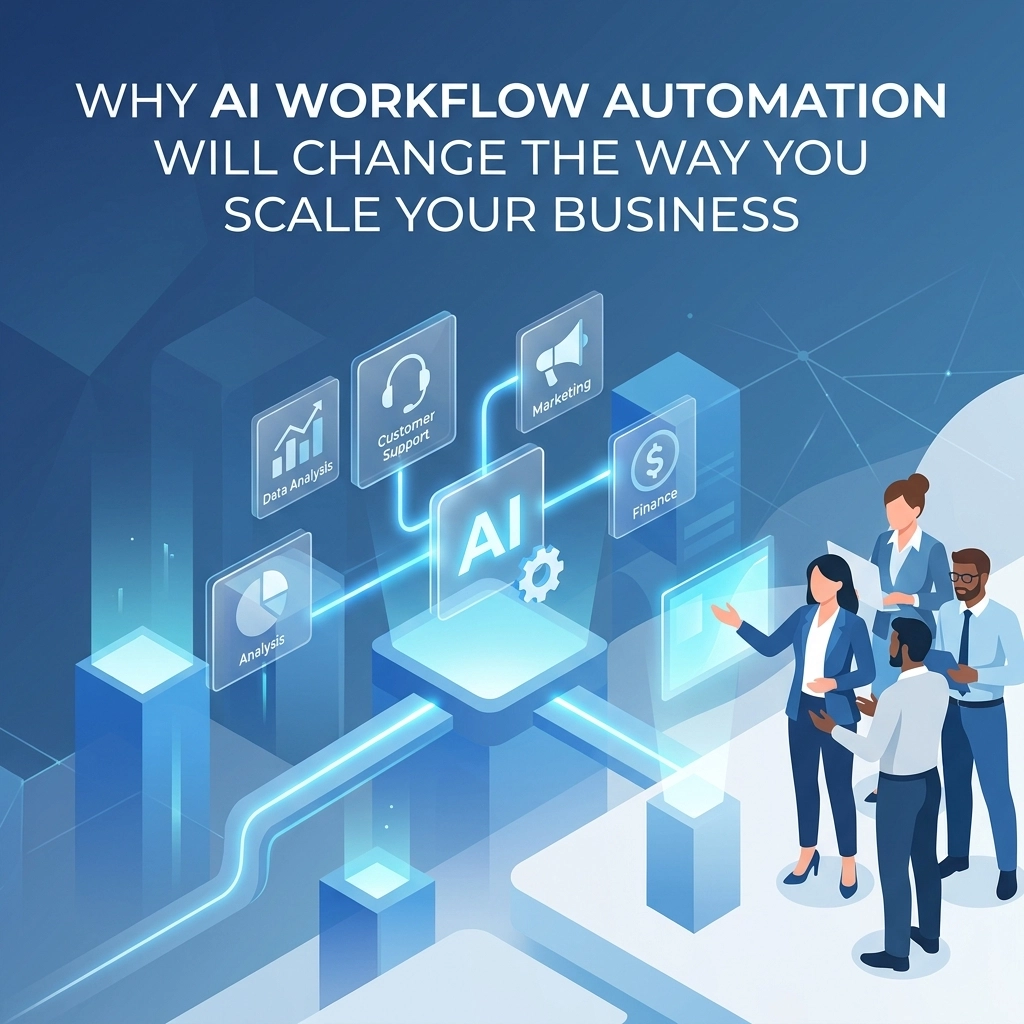
  • Why AI Workflow Automation Will Change the Way You Scale Your Business

    Why AI Workflow Automation Will Change the Way You Scale Your Business

    Scaling a business has historically been a game of addition. You add more clients, so you add more staff. You add more staff, so you add more management. You add more management, so you add more overhead. For decades, this linear relationship: where growth is inextricably tied to headcount: was the only way to play.

    But by April 2026, that model hasn’t just aged; it has become a liability.

    In the current landscape, the most successful organizations aren't the ones with the largest payrolls; they are the ones with the most intelligent workflows. AI workflow automation is no longer a "nice-to-have" efficiency play. It is the fundamental architecture of modern scaling. At Pure Technology Consulting, we’ve seen that when you decouple growth from headcount, you don't just grow faster: you grow smarter, leaner, and with significantly higher margins.

    The End of the Linear Growth Trap

    The traditional scaling model is inherently fragile. When your ability to serve customers depends entirely on human hours, your margins are constantly under pressure from rising labor costs and the friction of onboarding. This is the "Linear Growth Trap."

    AI workflow automation flips this script. Instead of adding a new employee for every 50 new clients, you build a custom digital nervous system that handles the repetitive, the predictable, and the data-heavy. This allows your core team to focus on high-value strategy and relationship management: the things that actually move the needle.

    AI neural network bypassing mechanical gears to represent efficient workflow automation.

    When we talk about automation in 2026, we aren't talking about simple "if-this-then-that" rules. We are talking about agentic workflows that can interpret unstructured data, make logic-based decisions, and interact with your existing stack: CRMs, ERPs, and project management tools: without human intervention. Research shows that companies leveraging this level of intelligence report up to 2.5× higher revenue growth compared to their peers.

    Why Legacy Systems Are Holding You Back

    Many executives believe they are "automated" because they use a few SaaS tools. However, off-the-shelf software often creates data silos. You end up with a "Frankenstein" stack where information is trapped in different platforms, requiring manual "swivel-chair" work to move data from point A to point B.

    True scaling requires a bespoke approach. This is where custom web apps and proprietary automation frameworks change the game. Instead of bending your business processes to fit a software’s limitations, you build the software to mirror your ideal operating model.

    At Pure Technology Consulting, we specialize in building these custom bridges. Whether it’s a matching engine for high-volume healthcare intakes or a complex fintech integration, the goal is the same: eliminate the operational drag that prevents you from doubling your capacity overnight.

    Proof of Concept: ChainHQ and the Power of Proprietary Systems

    When we work with high-ticket clients, we often point to our proprietary products as a testament to what is possible. Take ChainHQ, for example.

    ChainHQ isn't just a tool; it’s a manifestation of how we view workflow intelligence. In complex supply chains or multi-step service delivery models, information often gets lost in the gaps between stakeholders. We built ChainHQ to act as the "single source of truth" that automates the tracking, reporting, and communication cycles that usually require dozens of man-hours.

    By integrating AI into the very fabric of the workflow, systems like ChainHQ can predict bottlenecks before they happen. This is the difference between reactive management and proactive scaling. When you have a custom system that thinks ahead, your leadership team can stop putting out fires and start looking at the three-year roadmap.

    Synchronized data stream illustrating a single source of truth for proactive business scaling.

    Scaling Without the Growing Pains

    The most common fear regarding rapid scaling is the loss of quality control. As you grow, it’s harder to ensure that every client gets the same level of attention and every process is followed to the letter.

    AI automation acts as a digital guardrail. It doesn’t get tired, it doesn’t skip steps, and it provides 100% transparency into your operations.

    1. Lead Management: Imagine a system that not only captures a lead but researches the company, categorizes the opportunity size, and prepares a personalized briefing for your sales team before they even pick up the phone.
    2. Onboarding: Custom web apps can handle 90% of the client onboarding process: from document collection via HIPAA-adjacent workflows to setting up project dashboards: leaving your team to handle only the high-touch "welcome" call.
    3. Reporting: Instead of a team spending all Friday afternoon compiling data into spreadsheets, an automated workflow pulls real-time metrics and generates executive-ready insights instantly.

    This isn't science fiction; it’s the standard we are setting for our clients in legal, accounting, and field services. By bringing proven capabilities from high-stakes industries like healthcare (through our work on EHRIO Pro) into the professional services space, we provide a level of operational maturity that "off-the-shelf" solutions simply can't match.

    The CFO’s Perspective: ROI and Operational Leverage

    From a financial standpoint, the case for AI workflow automation is undeniable. The initial investment in a custom-built solution: often starting in the $10k+ range for a scoped engagement: frequently pays for itself within the first six months.

    Illuminated digital pathway representing a frictionless journey toward automated business scaling.

    Consider the cost of a mid-level operations manager. When you factor in salary, benefits, and overhead, a single hire is a recurring six-figure expense. A custom automation suite is a one-time capital expenditure (with minimal maintenance) that can often do the work of three to five such hires. This is what we call "operational leverage." You are increasing your output without increasing your fixed costs.

    Furthermore, these systems increase the valuation of your business. A company that relies on the "heroics" of a few key employees is risky. A company that runs on a proprietary, automated engine is an asset.

    The Path Forward: How to Start

    Scaling with AI isn't about replacing your team; it’s about elevating them. It’s about moving from a business that is "people-heavy" to one that is "intelligence-heavy."

    The first step is a workflow audit. You need to identify the "bottleneck processes": the ones that require the most manual intervention and provide the least strategic value. Once these are identified, we can design a roadmap for a custom web application or automation suite that removes those hurdles.

    Rising glowing pillars symbolizing the transition from fixed costs to operational leverage.

    At Pure Technology Consulting, we don’t just write code. We act as visionary partners to help you reimagine what your business could look like if manual work simply disappeared. Whether it’s leveraging the local SEO automation of AI Local Boost or the complex data handling of FTP Inform, our goal is to build the infrastructure that makes your growth inevitable.

    Ready to build your scaling engine?

    The transition to an AI-powered operating model is the most significant competitive advantage of this decade. Those who wait will find themselves struggling with overhead while their automated competitors move with a speed and precision that was previously impossible.

    If you are ready to explore how a custom-built AI workflow can transform your business, let’s talk. We specialize in taking complex, high-ticket operations and turning them into streamlined, scalable machines.

    Contact us today to schedule a discovery call:
    Phone: +1 (803) 921-0969
    Website: https://puretechconsult.com/schedule

    Amin Said, Founder of Pure Technology Consulting LLC
    https://puretechconsult.com

  • The Ultimate Guide to ChainHQ: Everything You Need to Succeed with Multi-Location Management

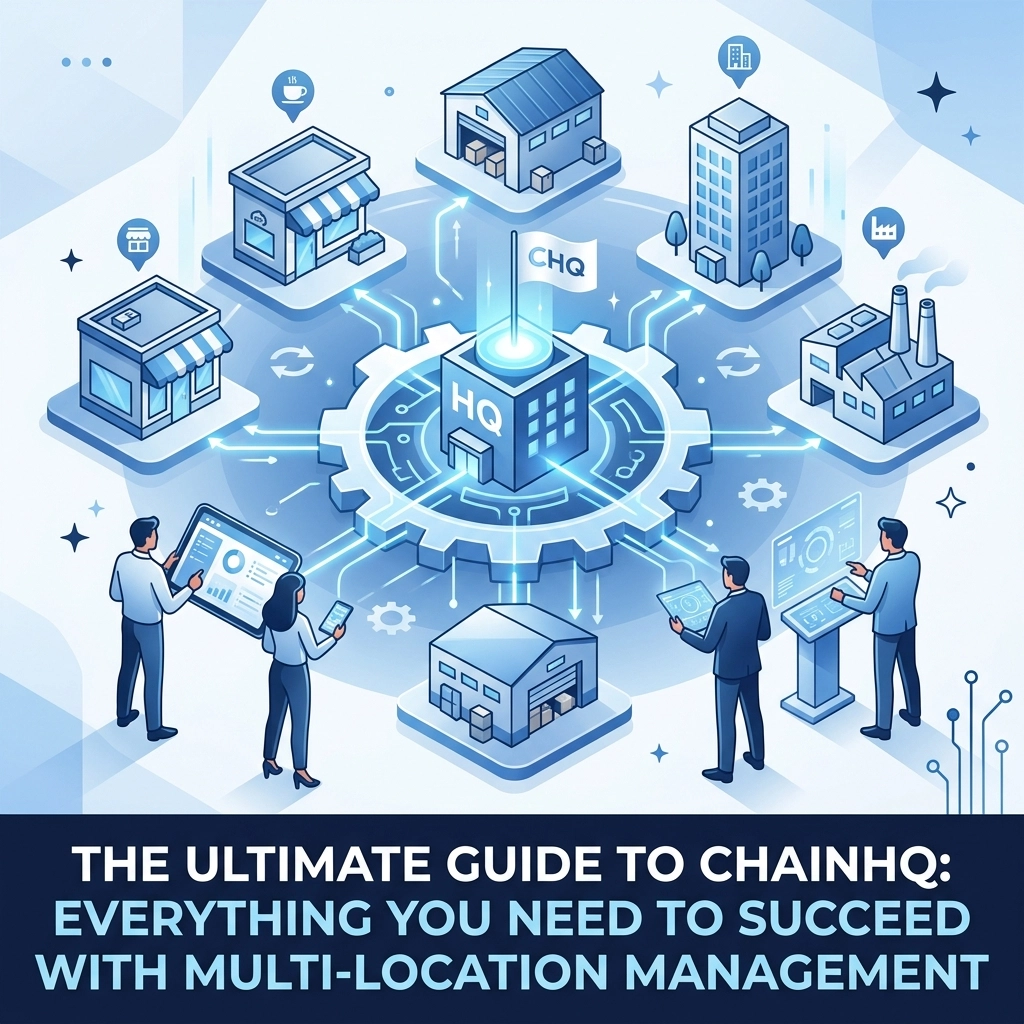
    The Ultimate Guide to ChainHQ: Everything You Need to Succeed with Multi-Location Management

    Scaling a business from a single successful site to a flourishing multi-location enterprise is the ultimate proof of a concept's viability. However, as many executives discover, the transition from managing one location to managing ten: or one hundred: is not a linear increase in workload. It is an exponential increase in complexity.

    When operations are spread across different geographies, the "fragmentation trap" begins to set in. Communication breaks down, brand standards fluctuate, and data becomes siloed within individual branches. To navigate this, visionary leaders are moving away from fragmented spreadsheets and rigid, off-the-shelf software toward integrated ecosystems.

    At Pure Technology Consulting, we developed ChainHQ specifically to address these scaling friction points. This guide explores the strategic framework required to succeed with multi-location management and how bespoke automation serves as the backbone of a modern, scalable enterprise.

    The Architecture of Scalability: Why Traditional Management Fails

    Most multi-location businesses fail to scale not because of a lack of demand, but because of an "operational drag" caused by outdated systems. When each location operates as its own island, the corporate office loses real-time visibility. Decisions are made based on week-old data, and local managers are often left to interpret brand standards on their own.

    The traditional approach relies on manual reporting: emails, phone calls, and disparate POS systems that don't talk to each other. This creates a lag that prevents agile decision-making. To achieve true operational excellence, a business needs a digital nervous system that connects every "limb" of the organization back to a central brain.

    Digital nervous system connecting business locations to a centralized data source.

    Strategic Pillar 1: Establishing a Single Source of Truth

    The most significant hurdle in multi-location management is data disparity. If your inventory levels in New York aren't synced with your procurement office in Charlotte, you are already behind.

    ChainHQ was engineered to serve as this single source of truth. By integrating directly with local workflows, it aggregates data into a high-level executive dashboard. This allows leadership to see:

    • Real-time performance metrics across all territories.
    • Inventory fluctuations that signal supply chain bottlenecks before they become crises.
    • Labor costs and productivity trends that identify which locations are over-indexed on staff.

    In a custom web application environment, this isn't just about viewing numbers; it’s about data governance. Ensuring that the data entering the system is clean, standardized, and immediately actionable is the first step toward reclaiming control over a sprawling footprint.

    Strategic Pillar 2: Standardizing the Unstandardized

    Brand consistency is the currency of a franchise or chain. A customer should have the same experience in Seattle as they do in Miami. However, enforcing Standard Operating Procedures (SOPs) across distances is notoriously difficult.

    This is where custom software development shifts from a "tool" to a "strategy." ChainHQ allows for the digitization of SOPs. Instead of a dusty manual sitting in a back office, the operating model is baked into the software itself.

    • Guided Workflows: Employees follow step-by-step digital processes that ensure compliance.
    • Accountability Loops: Management can track completion rates of daily tasks, maintenance schedules, and safety audits in real-time.
    • Digital Training Modules: When a process changes at the corporate level, it can be pushed to every location simultaneously, ensuring everyone is working from the latest roadmap.

    Strategic Pillar 3: Leveraging AI for Predictive Operations

    Managing multiple locations reactively is a recipe for burnout. The goal of any visionary leader should be predictive management. By leveraging AI-powered automation, ChainHQ doesn't just tell you what happened; it helps you understand what is likely to happen.

    For example, through historical data analysis, our custom builds can help businesses predict seasonal demand surges at specific locations, allowing for automated inventory reordering. This level of automation reduces the cognitive load on local managers, allowing them to focus on staff development and customer experience rather than administrative logistics.

    Advanced digital workflow interface representing automated multi-location management processes.

    The Custom Advantage: Why Off-the-Shelf SaaS Falls Short

    Many organizations attempt to manage multi-site operations using generic SaaS products. While these are often easier to deploy initially, they frequently become a bottleneck as the company grows.

    Generic software forces you to change your business processes to fit the software's limitations. At Pure Technology Consulting, we believe the software should adapt to your unique operating model. Whether you are in the healthcare sector managing clinics (similar to our work with EHRIO Pro) or a field-service enterprise tracking GPS logs and rep accountability, the nuances of your workflow are what give you a competitive edge.

    ChainHQ is designed to be a flexible foundation. We treat it as a proof-of-concept for the high-level custom web applications we build for our clients. By integrating existing legacy systems: whether it’s a specific fintech telephony integration or a specialized accounting platform: we ensure that the digital transformation is seamless and respects the established culture of the company.

    Data Integration and Governance

    A common question we hear from executives is: "How do we bring all our old data into a new system?"

    The answer lies in robust API architecture and middleware. We don't just "plug in" a new tool; we build an integration layer that allows for a smooth transition. This ensures that your historical data remains accessible while your new, automated workflows begin to generate fresh insights.

    Security and compliance are also paramount, particularly for businesses in legal, accounting, or healthcare. Our experience with HIPAA-adjacent workflows and high-level data encryption ensures that as you scale your locations, you aren't scaling your risk.

    Driving Local Growth with AI Local Boost

    While ChainHQ manages the internal operations, the external growth of each location requires a different set of tools. This is where our proprietary AI Local Boost comes into play. In a multi-location model, "local SEO" must be managed at scale.

    Automating Google Business Profile updates, review responses, and local citation management across dozens of sites ensures that while your operations are centralized, your marketing remains hyper-local. Success in multi-location management requires this dual focus: operational efficiency within and market dominance without.

    A digital beacon illustrating centralized operational oversight and strategic market dominance.

    Roadmap to Implementation: The Discovery Process

    Transitioning to a sophisticated management platform like ChainHQ is a strategic journey. It begins with a deep dive into your current "operational drag."

    1. Workflow Audit: We identify where manual intervention is slowing down the scaling process.
    2. Architecture Design: We map out how a custom web application will sit at the center of your multi-site ecosystem.
    3. Deployment & Iteration: We roll out the solution in phases, ensuring that local managers are onboarded and the system is delivering immediate ROI.

    For businesses looking to move beyond the limitations of spreadsheets and rigid software, the path forward is through bespoke automation. It is about building a platform that not only supports where your business is today but provides the infrastructure for where it will be in five years.

    Conclusion: Lead the Transformation

    The complexity of managing multiple locations is a sign of success, but it shouldn't be the ceiling of your growth. By implementing a centralized, AI-driven management system, you transform your business from a collection of sites into a unified, high-performance machine.

    At Pure Technology Consulting, we specialize in building the custom web applications and automation engines that power high-ticket enterprises. If you are ready to eliminate operational drag and scale with confidence, it starts with a conversation about your unique roadmap.

    To discuss a custom workflow audit or to see a demo of our multi-location capabilities, you can book a discovery call or reach out to our team directly.

    Amin Said, Founder of Pure Technology Consulting LLC
    https://puretechconsult.com
    +1 (803) 921-0969

  • Why AI Workflow Automation Will Change the Way You Manage Your Daily Operations

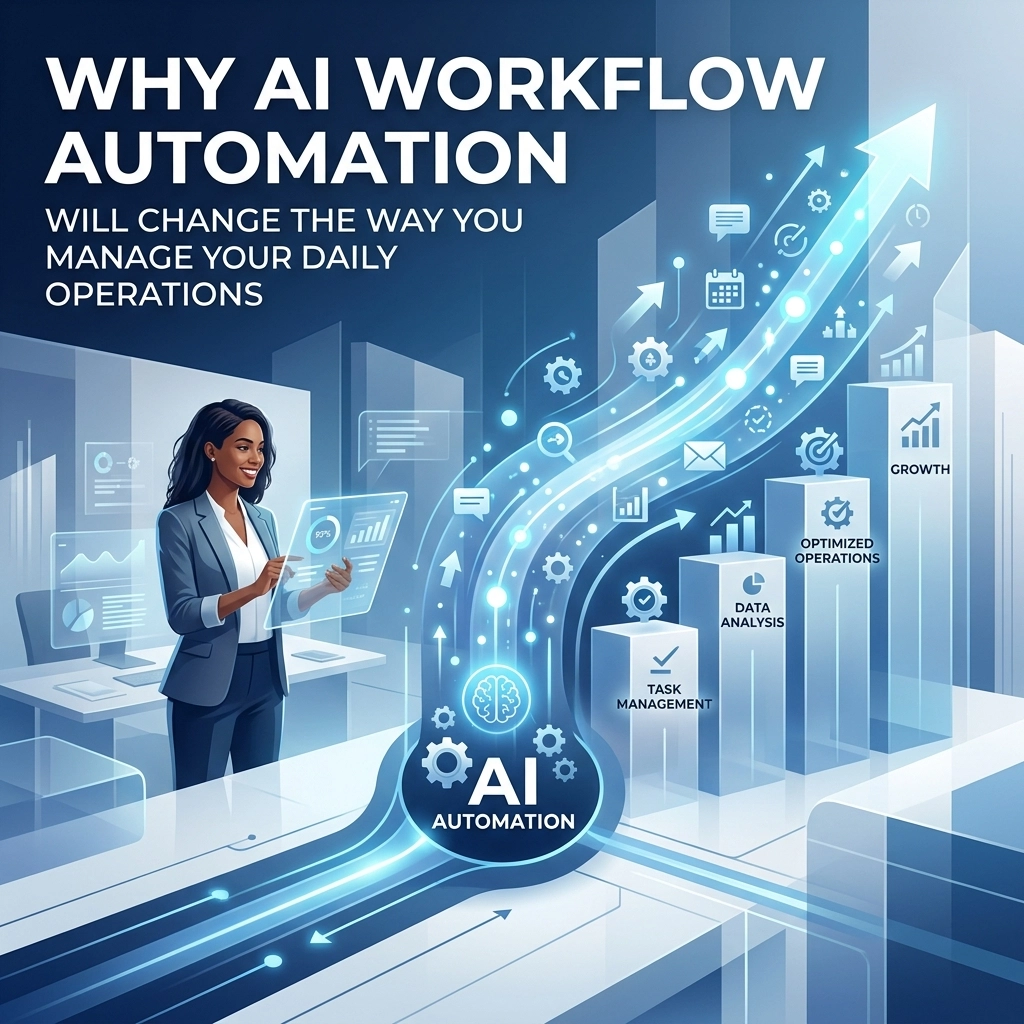
    Why AI Workflow Automation Will Change the Way You Manage Your Daily Operations

    In the high-stakes world of executive leadership, the most expensive commodity isn’t capital: it’s cognitive bandwidth. As we navigate the mid-point of 2026, the divide between companies that are thriving and those that are merely surviving is no longer defined by who has the best product. It is defined by who has the most intelligent operating model.

    Daily operations have historically been the "friction point" of business growth. For every strategic move a CFO or COO wants to make, there is a mountain of manual data entry, fragmented communication, and "check-the-checker" oversight that slows the engine to a crawl. AI workflow automation isn’t just a technological upgrade; it is a fundamental shift in how we conceive of work itself. At Pure Technology Consulting, we view automation not as a way to replace the human element, but as a way to liberate it.

    The Strategic Shift: From Task Management to System Orchestration

    Most businesses manage daily operations through a series of disconnected "to-do" lists. Managers spend upwards of 60% of their day on "work about work": communicating about tasks, searching for information, and navigating legacy software that doesn't talk to each other.

    AI-powered automation changes this by moving the burden of execution from the employee to the system. When you implement bespoke automation, your role shifts from managing people who do tasks to orchestrating a system that executes them. This leads to a dramatic reduction in operational drag, allowing your best talent to focus on the 20% of activities that drive 80% of your revenue.

    A centralized digital node network representing efficient AI system orchestration and data integrity.

    Data Integrity and the Foundation of Trust: The FTP Inform Model

    One of the greatest hurdles in daily operations is the movement and integrity of data. Whether you are in legal, accounting, or debt recovery, moving sensitive information between stakeholders is often a manual, high-risk process.

    To solve this for our high-ticket clients, we developed FTP Inform. While it functions as a robust tool for file management and notification, its real value lies in how it serves as a case study for automated data governance. By automating the "handshake" between different servers and internal databases, FTP Inform eliminates the possibility of human error in file transfers.

    When we build custom web applications for our clients, we integrate this level of automation to ensure that the data driving your daily decisions is accurate, timely, and secure. You can explore how we handle these complex integrations at https://ftpinform.puretechconsult.com.

    Quantifiable Gains: Efficiency, Cost, and Decision Speed

    The impact of AI automation on the bottom line is no longer theoretical. Organizations moving beyond simple scripts into intelligent, context-aware workflows are seeing:

    1. Cost Reductions of 25–50%: By targeting high-volume, low-complexity tasks: such as invoice processing or initial lead qualification: businesses can scale their volume without a linear increase in headcount.
    2. Compressed Decision Cycles: In a manual environment, data often lags reality by days or weeks. AI-driven workflows provide real-time dashboards, allowing executives to pivot based on what is happening now, not what happened last month.
    3. Consistency as a Service: Human beings are prone to fatigue and distraction. AI is not. By automating your core operational logic, you ensure that every client interaction and every internal process meets your gold standard, every single time.

    Ascending illuminated pillars symbolizing scalable business growth and operational efficiency.

    Handling Complexity at Scale: The EHRIO Pro Approach

    In industries like healthcare or legal services, operations aren't just about moving data; they are about making complex matches and navigating intricate intake processes.

    Take our proprietary build, EHRIO Pro, as an example. We designed this matching engine to handle 70-question intakes and HIPAA-adjacent workflows. This isn't just a database; it’s a strategic asset that automates the decision-making process of "Who fits where?"

    For a business owner, this means your daily operations no longer require a senior manager to sit and manually review applications or case files. The system does the heavy lifting, flagging only the outliers for human review. This is the hallmark of a visionary operating model: using custom software to handle the complexity so your team can handle the empathy and strategy.

    The Connectivity Gap: Why ChainHQ Matters

    The most common frustration we hear from executives is that their software "doesn't talk." Your CRM doesn't know what your accounting software is doing, and your project management tool is a ghost town. This fragmentation is the enemy of efficient daily operations.

    Through ChainHQ, we’ve demonstrated the power of absolute connectivity. By building a central nervous system that links disparate tools, we create a unified workflow. When we consult with companies on their digital transformation, we don't just add another tool to the stack. We build the "chain" that holds them together.

    Imagine a daily operation where a customer signs a contract, and the system automatically generates an invoice, sets up the project board, notifies the account manager, and schedules the kickoff call: all without a single human click. That is the reality of the automated enterprise.

    Interlocking blue rings of light representing seamless software integration and unified workflows.

    Beyond the Hype: Building a Roadmap for 2026 and Beyond

    Transitioning to AI-powered operations is not an overnight event; it is a strategic roadmap. At Pure Technology Consulting, we recommend a "crawl, walk, run" approach:

    • Audit the Drag: Identify the three most repetitive, high-volume tasks that consume your team's time.
    • Build Bespoke: Off-the-shelf SaaS often forces you to change your processes to fit their software. Custom web applications, like those we build for our clients, are designed to fit your unique operating model.
    • Integrate and Iterate: Use tools like AI Local Boost to automate your external presence (like Google Business Profile management) while simultaneously optimizing your internal engines.

    The goal is to create a self-optimizing business. As your AI workflows collect more data, they become more efficient, providing deeper insights and more precise execution.

    The Human Element in an Automated World

    There is a common misconception that automation removes the "soul" of a business. In reality, it does the opposite. By removing the robotic tasks from your employees' plates, you allow them to be more human. You give them the time to build deeper relationships with clients, to think creatively about new product lines, and to engage in high-level problem-solving that AI cannot replicate.

    Managing daily operations through AI isn't about removing people; it's about elevating them. It’s about ensuring that when your team shows up to work, they are doing work that actually matters.

    A digital pathway leading toward a visionary horizon for AI-powered business transformation.

    Partnering for Transformation

    The complexity of modern business requires a partner who understands both the code and the boardroom. Whether it’s leveraging our experience in Fintech telephony integrations or our history of building healthcare matching engines, Pure Technology Consulting is dedicated to bringing proven, high-level automation to the legal, accounting, and professional services sectors.

    We don't just build apps; we build the future of your operations. If you’re ready to stop managing tasks and start leading a system, it’s time to look at what custom AI workflow automation can do for your firm.

    To discuss a custom roadmap for your digital transformation or to audit your current operational workflows, you can book a discovery call at https://puretechconsult.com/book/pure-technology-consulting.


    Amin Said, Founder of Pure Technology Consulting LLC
    https://puretechconsult.com
    Direct: +1 (803) 921-0969

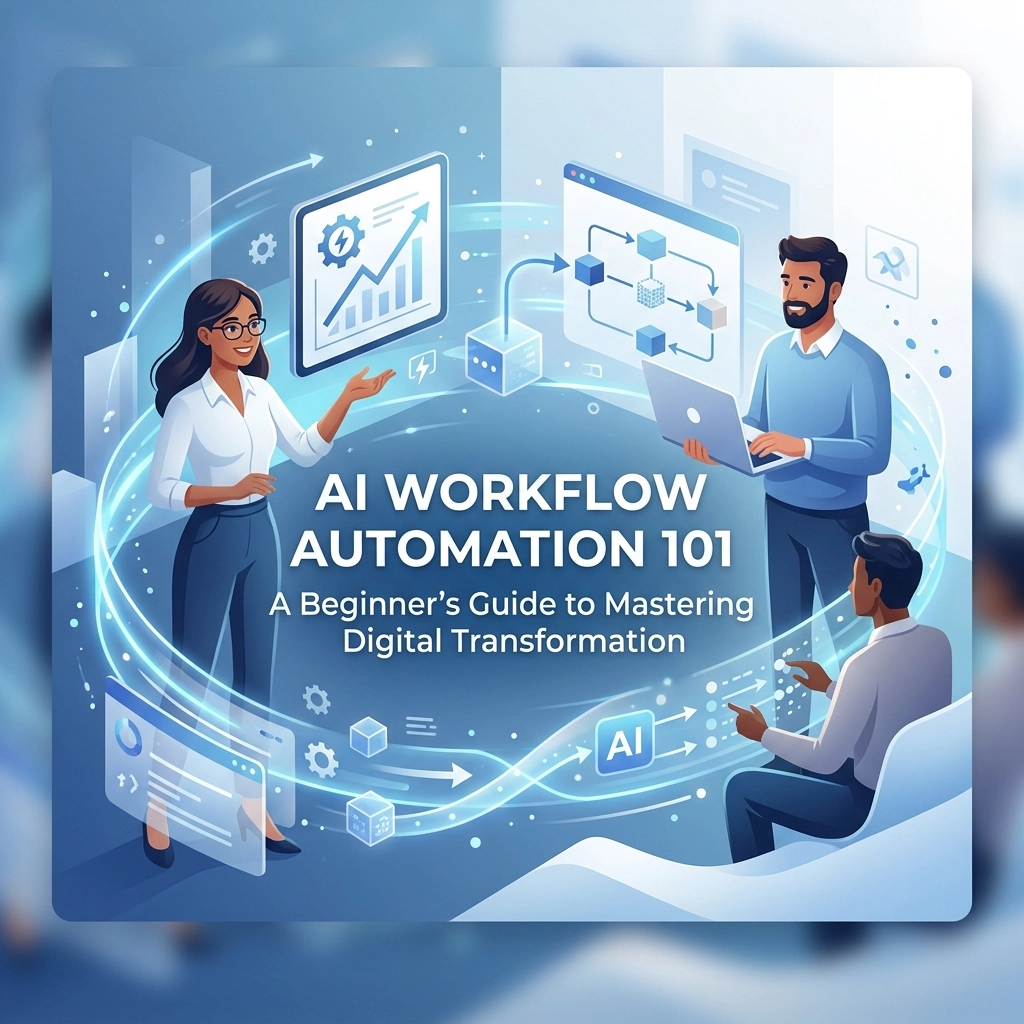
  • AI Workflow Automation 101: A Beginner’s Guide to Mastering Digital Transformation

    AI Workflow Automation 101: A Beginner’s Guide to Mastering Digital Transformation

    The landscape of business operations has undergone a radical shift. As we navigate the mid-2020s, the conversation has moved beyond mere "digitization": simply moving paper to the cloud: toward a more profound evolution: the AI-integrated operating model. For executives and founders, digital transformation is no longer a technical roadmap; it is a strategic imperative to reclaim time, reduce cognitive load, and scale human expertise.

    AI workflow automation is the engine of this transformation. At its core, it is the practice of utilizing artificial intelligence to orchestrate complex tasks across different software systems, mimicking human decision-making without the inherent fatigue or error rate. For a business to thrive today, it must transition from manual, siloed processes to a fluid, automated ecosystem.

    Understanding the Foundation: What is AI Workflow Automation?

    To the uninitiated, "automation" often brings to mind simple "if-this-then-that" rules. While traditional automation handles linear tasks: like moving a file from an email to a folder: AI workflow automation introduces a layer of "intelligence." It can interpret the context of that file, summarize its contents, determine its urgency, and decide which department needs to see it next.

    It represents the bridge between static software and dynamic intelligence. By integrating Large Language Models (LLMs) and machine learning into your daily operations, you create a system that doesn't just follow instructions; it solves problems.

    Demonstrating Capability: Data Synchronization and FTP Inform

    One of the greatest hurdles in digital transformation is the "legacy gap": the friction between modern AI tools and the established systems businesses have used for decades. At Pure Technology Consulting, we believe that custom software should bridge these gaps seamlessly.

    Our proprietary tool, FTP Inform, serves as a prime example of how we approach high-level automation. While many see file transfers as a mundane utility, we view them as a critical data artery. We’ve built FTP Inform to demonstrate our ability to create secure, automated notification layers over traditional protocols. In a custom engagement, we don't just "move data"; we build the intelligence that monitors that data, alerts the right stakeholders in real-time, and triggers subsequent workflows. This ensures that even the oldest parts of your infrastructure can participate in a modern, AI-driven strategy.

    Modern AI data stream connecting legacy business systems to secure cloud workflows.

    The Anatomy of an Intelligent Workflow

    A successful AI-powered workflow is built on four distinct pillars. Understanding these is the first step toward auditing your own business for automation opportunities.

    1. The Trigger: Every automation begins with an event. This could be a new lead from your website, an incoming invoice, or a specific change in a database.
    2. The Reasoning Layer (AI): This is where the magic happens. The data from the trigger is passed to an AI model. For example, in a legal setting, the AI might scan a 50-page contract to flag non-standard clauses.
    3. The Logic Engine: Based on the AI’s findings, the system follows a set of business rules. If the contract is "high risk," it goes to a senior partner; if it’s "standard," it moves to the signing phase.
    4. The Action: The final output. This could be generating a document, updating a CRM, sending a Slack message, or scheduling a meeting on a calendar.

    Scaling Visibility: The AI Local Boost Perspective

    Digital transformation isn't just internal; it’s about how your business interfaces with the world. For many of our clients in the professional services sector, local visibility is the primary driver of growth.

    Through our work with AI Local Boost, we have demonstrated how custom automation can dominate the local search landscape. Instead of a team manually monitoring reviews and updating Google Business Profiles, we architect systems that use AI to handle reputation management and content distribution at scale. This isn't just about "SEO"; it’s about demonstrating how a bespoke automation strategy can take a repetitive, high-stakes marketing task and turn it into a self-optimizing asset. It’s a proof-of-concept for how we scale a firm’s digital footprint without increasing their headcount.

    Glowing blue data network over a city grid representing a scaled digital footprint.

    Where to Start: Identifying High-Value Targets

    The biggest mistake executives make is trying to automate everything at once. This leads to "automation debt": a messy web of brittle scripts that eventually break. Instead, look for tasks that meet the "High ROI Triad":

    • High Frequency: Tasks that happen dozens or hundreds of times a week.
    • Structured Data: Processes that rely on forms, spreadsheets, or consistent document types.
    • Predictable Logic: Tasks where a human can clearly explain the rules they follow to reach a conclusion.

    Common starting points include client onboarding, automated reporting, invoice reconciliation, and customer support triaging. By focusing on these, you prove the value of automation quickly and generate the "operational alpha" needed to fund more complex custom builds.

    Complexity Managed: EHRIO Pro and the Matching Engine

    For organizations in the healthcare or recruitment sectors, the stakes for automation are significantly higher. Compliance, data sensitivity, and the need for extreme precision make off-the-shelf SaaS products insufficient.

    Our work on EHRIO Pro showcases our ability to handle these high-ticket, complex requirements. We developed a proprietary matching engine and a 70-question intake workflow that manages HIPAA-adjacent data with surgical precision. This project exemplifies why "low-code" isn't always the answer. When your business logic requires deep integration between matching algorithms and user-driven data, you need a custom-engineered solution. We bring this same level of rigor to every custom web app we build, ensuring that your digital transformation can handle the most rigorous regulatory and operational demands.

    Interlocking geometric gears representing a precision-engineered custom web application.

    The Strategic Roadmap to Implementation

    Transitioning to an AI-first operating model requires a disciplined approach. We recommend a three-phase roadmap:

    1. The Audit Phase: Map your current workflows. Identify where the "human bottlenecks" are. Use these insights to create a "Workflow Inventory."
    2. The Pilot Phase: Select one high-impact process. Build a custom automation to handle it from start to finish. This is where you measure cycle time reduction and error rates.
    3. The Integration Phase: Connect your pilot automation to the rest of your tech stack. This is where "siloed tools" become a "unified system."

    Centralizing Command: ChainHQ

    As you add more automations and custom apps, management becomes the new challenge. How do you ensure all your digital assets are performing as expected?

    This is the philosophy behind ChainHQ. We built this framework to demonstrate how multi-node operations can be centralized into a single "source of truth." Whether you are managing multiple locations, different service lines, or various AI agents, the goal is total visibility. ChainHQ serves as a testament to our expertise in building "Command and Control" dashboards for mid-market firms who need to see the big picture without getting lost in the technical weeds.

    The Future is Bespoke

    The era of "one-size-fits-all" software is ending. As AI becomes a commodity, the real competitive advantage lies in how you wire that AI into your unique business logic. Digital transformation is not about buying more subscriptions; it’s about building the proprietary systems that allow your firm to out-pace the competition.

    At Pure Technology Consulting, we don’t just consult on these shifts: we build the engines that drive them. From healthcare matching engines to secure data transfer layers, we specialize in high-ticket, custom web applications that turn operational drag into operational leverage.

    The question for 2026 is no longer "Can we automate this?" but "How much faster could we grow if we did?"

    Digital command dashboard visualizing AI workflow automation and business operational leverage.

    Ready to audit your operations and architect a custom automation roadmap? Let's move beyond the basics and build something built to scale.

    Book a discovery call today: https://puretechconsult.com/book/pure-technology-consulting

    Amin Said, Founder of Pure Technology Consulting LLC
    https://puretechconsult.com

  • 7 Mistakes You’re Making with Business Process Automation (and How to Fix Them)

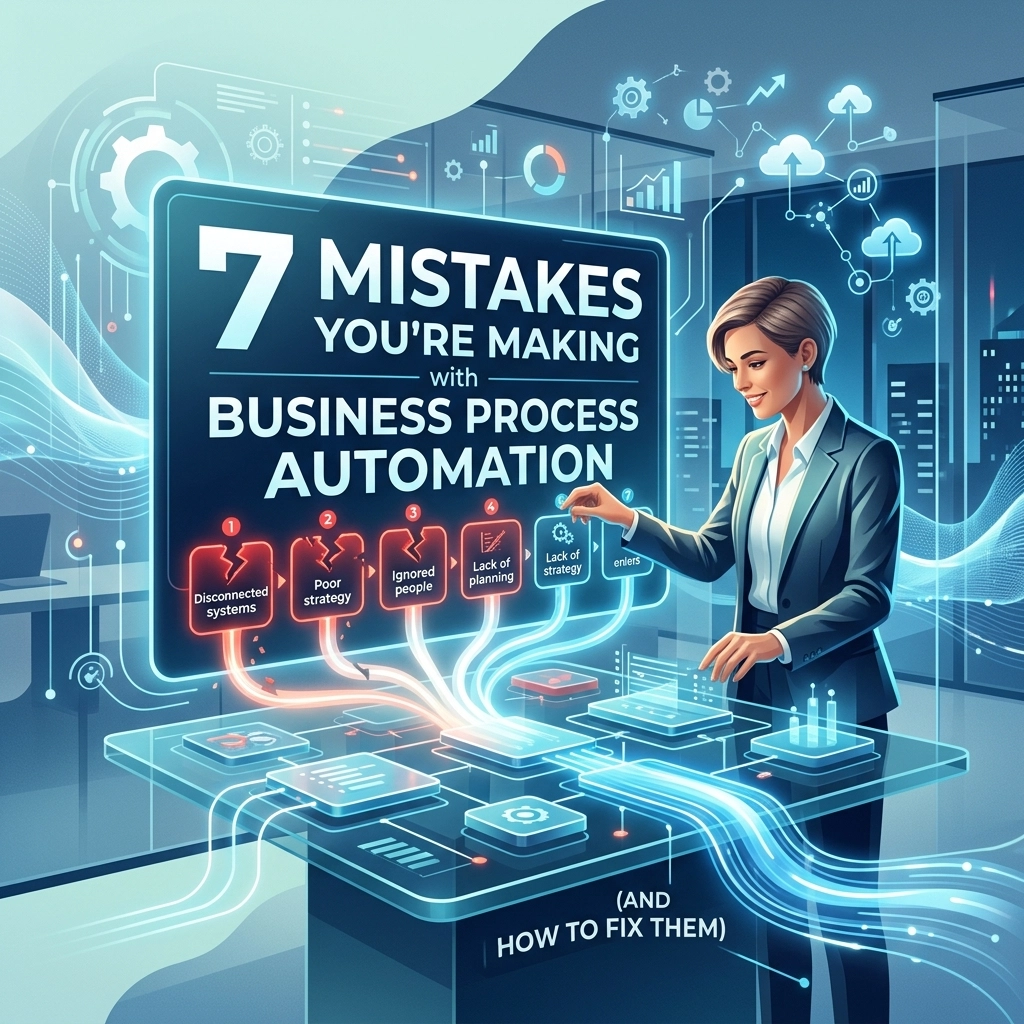
    7 Mistakes You’re Making with Business Process Automation (and How to Fix Them)

    By Amin Said, Founder of Pure Technology Consulting LLC

    In the landscape of 2026, automation is no longer a luxury or a "future-phase" item on a roadmap: it is the very nervous system of the modern enterprise. We have moved past simple "if-this-then-that" triggers and into an era of intelligent, integrated systems that can handle complex decision-making. However, even with the most advanced AI-powered tools at our disposal, many organizations are still falling into traditional traps that turn expensive automation investments into digital debt.

    At Pure Technology Consulting, we’ve spent years building bespoke web applications and high-level automation workflows for industries ranging from healthcare to fintech. We’ve seen firsthand how a visionary approach can transform a business, and how a tactical error can stall it.

    Here are the seven most common mistakes businesses make with process automation and, more importantly, the strategic roadmap to fix them.

    1. The Strategy Vacuum: Automating Without a North Star

    The most common error is treating automation as a series of disconnected projects rather than a unified business strategy. Many leaders see a repetitive task: like manual data entry or email follow-ups: and immediately look for a tool to "fix" it. This results in a fragmented ecosystem of "zombie apps" that don't talk to each other.

    The Fix: Build an Integrated Roadmap
    Before writing a single line of code or signing a SaaS contract, you must define your operational North Star. What is the high-level outcome you desire? Is it a 30% reduction in client onboarding time? Is it 100% data accuracy in your legal filings?

    At Pure Technology Consulting, we lead with discovery. We look at your business not as a collection of tasks, but as a series of interconnected value streams. By aligning automation with your long-term roadmap, you ensure that every custom build serves the broader vision of your operating model.

    2. Paving Over the Cow Path: Automating Broken Processes

    If you take a chaotic, manual process and automate it, you haven't solved the problem: you’ve simply made the chaos happen faster. This is often called "paving the cow path." Automating a workflow that includes unnecessary approvals, redundant steps, or unclear ownership only codifies inefficiency.

    The Fix: The Optimization-First Principle
    You must audit and streamline the process before it enters the development phase. This is an area where our work with EHRIO Pro shines as a proof of concept. When building high-stakes matching engines and intake systems for healthcare, we don't just digitize the old paper forms.

    We utilize a 70-question intake logic and HIPAA-adjacent workflows to ensure that the data being captured is exactly what is needed for the next step of the process. By optimizing the logic first, the automation becomes a powerful force multiplier rather than a burden. Always ask: "If we were starting this department today from scratch, how would we design this workflow?"

    Visual representation of streamlining chaotic workflows into optimized business process automation paths.

    3. Ignoring the "Data Foundation" and Clean-Up

    Automation is only as intelligent as the data it consumes. Many organizations attempt to launch sophisticated AI-powered workflows while their CRM is a graveyard of duplicates and their financial records are scattered across mismatched spreadsheets.

    The Mistake: Feeding messy data into an automated system leads to "automated embarrassment": sending the wrong invoice to the wrong client or triggering a marketing sequence for a lead that has already converted.

    The Fix: Data Governance and Transparency
    Establish a rigorous data clean-up phase as part of your digital transformation. We often point to our proprietary asset, FTP Inform, as a model for how data transparency and secure handling should work.

    FTP Inform wasn't just built for file transfers; it was built to provide a secure, notification-driven layer of transparency for complex data exchanges. When we build custom web apps for clients, we prioritize building a clean data architecture that ensures your automations are pulling from a single source of truth.

    4. The "Set It and Forget It" Fallacy

    There is a pervasive myth that once an automation is built, the work is done. In reality, business environments are fluid. Regulations change, client expectations evolve, and APIs are updated. An automation built in 2024 may be obsolete or even harmful by 2026 if it hasn't been monitored.

    The Fix: Active Governance and Iteration
    Treat your custom software and automations as living assets. At Pure Technology Consulting, we advocate for a "Build-Measure-Learn" cycle. We don't just deliver a custom app and walk away; we help you set up the governance structures to monitor performance.

    For example, when we work with fintech and debt agencies, we integrate telephony and call attribution systems that require constant monitoring for compliance and performance. This is why a partnership with a consulting firm is often more valuable than a one-time software purchase: it ensures your systems evolve alongside your business.

    5. Overlooking the Client Experience (CX)

    In the rush to save internal time, many businesses sacrifice the very thing that drives their revenue: the customer experience. Over-automated customer service or cold, robotic communication can alienate high-ticket clients who expect a premium, personalized touch.

    The Mistake: Using AI or bots in a way that feels "uncanny" or creates friction for the user.

    The Fix: Visionary, Human-Centric Automation
    Automation should be used to remove friction, not to remove the human element. A perfect example of this balance is AI Local Boost. We designed this to automate the heavy lifting of Google Business Profile management and local SEO, but the goal is to increase the visibility that leads to human interaction.

    The automation handles the data-heavy tasks, allowing the business owner to focus on the high-level strategy of their brand. When we build bespoke solutions, we walk through every workflow from the client’s perspective to ensure the automation feels like a concierge service, not a barrier.

    Digital core within a human silhouette illustrating human-centric design in custom automation software.

    6. Failing to Address Team Adoption and Training

    Even the most visionary custom web app is useless if your team is afraid of it or doesn't know how to use it. Many leaders underestimate the "Change Management" required to move a team from legacy manual processes to a high-efficiency automated environment.

    The Fix: Implementation as Education
    Include your key stakeholders early in the discovery phase. When we build custom field ops solutions: like the D2D Tracking systems we've developed for rep accountability: we focus on the user interface as much as the back-end logic.

    If the software is intuitive and clearly makes the employee's life easier (by automating GPS logging or report generation), adoption follows naturally. We prioritize building "Bespeak" tools that fit into the employee's existing rhythm, rather than forcing them to adapt to a clunky, off-the-shelf SaaS product.

    7. Measuring Activity Instead of Business Value

    The final mistake is a failure of metrics. Many organizations celebrate "1,000 tasks automated" without checking if those 1,000 tasks actually moved the needle on profitability, risk reduction, or throughput.

    The Fix: Outcome-Based KPI Tracking
    Stop measuring clicks and start measuring impact. We utilize frameworks like ChainHQ to provide visibility into complex workflows. ChainHQ serves as a testament to our ability to build hubs that track not just "what happened," but "what the result was."

    When we engage with a new client, we define what success looks like in concrete business terms. Is it reducing the debt collection cycle by 14 days? Is it increasing the accuracy of healthcare matches to 99%? By focusing on these high-level outcomes, the automation serves the bottom line, not just the IT department.

    Ascending digital path of connected links representing measurable success and business value from automation.

    The Path Forward: Customization Over Compromise

    As we move deeper into 2026, the gap between businesses that use "generic" automation and those that leverage "bespoke" automation will continue to widen. Off-the-shelf SaaS solutions are great for basic tasks, but they often require you to change your business to fit their software.

    At Pure Technology Consulting, we believe the software should fit the business. Whether it’s a matching engine inspired by EHRIO Pro or a communication hub like FTP Inform, we bring proven capabilities into the legal, accounting, healthcare, and fintech sectors to build the future of your operations.

    If you are ready to stop making these common mistakes and start building a visionary, automated enterprise, it’s time for a strategic audit of your current workflows.

    Book a discovery call today to explore how a custom-built automation roadmap can transform your operational leverage.

    Contact us at: +1 (803) 921-0969

    Amin Said, Founder of Pure Technology Consulting LLC
    https://puretechconsult.com

  • Why AI Workflow Automation Will Change the Way You Scale Your Service Business

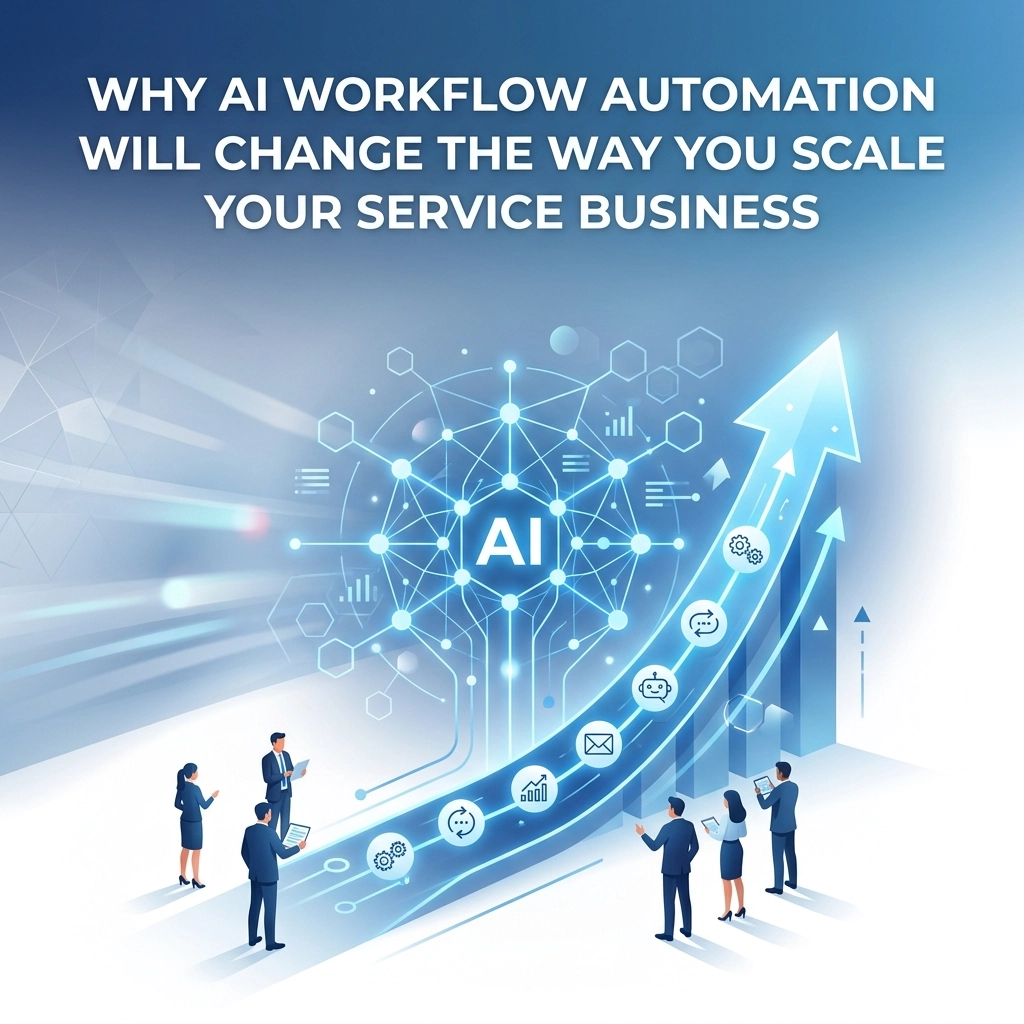
    Why AI Workflow Automation Will Change the Way You Scale Your Service Business

    For decades, the growth of a service-based business followed a predictable, albeit painful, linear path. To double your revenue, you effectively had to double your headcount. Scaling meant more recruiters, more office space, more management layers, and, inevitably, more operational drag. This "linear scaling trap" has capped the potential of even the most ambitious firms in legal, accounting, and healthcare services.

    As we move through 2026, the paradigm has shifted. We are no longer in an era where human labor is the only lever for growth. At Pure Technology Consulting, we view AI workflow automation not merely as a suite of tools, but as a fundamental redesign of the modern operating model. By decoupling growth from headcount, service businesses can now achieve non-linear expansion: increasing output and revenue while keeping overhead remarkably lean.

    The End of the Linear Scaling Trap

    Traditional service models are built on billable hours and manual task execution. Whether it’s an accountant reconciling ledgers or a legal assistant drafting discovery requests, the output is limited by the number of hours in a day. When demand increases, the only solution is to hire.

    However, the "hiring-first" approach brings significant risks:

    • Recruitment Lag: It takes months to find, hire, and train high-level talent.
    • Cultural Dilution: Rapid hiring often weakens the specialized expertise that made the firm successful in the first place.
    • Margin Erosion: As the team grows, communication overhead and management costs often rise faster than revenue.

    AI workflow automation solves this by creating "digital leverage." By automating the 60-80% of tasks that are repetitive and rules-based, you allow your core team to focus on the high-value, strategic work that clients actually pay a premium for.

    Abstract digital structure representing scalable AI workflow automation for service businesses.

    Strategic Efficiency: By the Numbers

    The transition to an automated workflow isn't just a conceptual improvement; it is a measurable financial evolution. Based on the custom architectures we’ve deployed at Pure Technology Consulting, organizations adopting AI-driven scaling typically see:

    1. 30–50% Faster Execution: Processes that once took days: such as client onboarding or complex reporting: are completed in minutes.
    2. 20–40% Reduction in Operational Costs: By minimizing manual data entry and administrative "paper-pushing," firms can reallocate capital to business development.
    3. Near-Zero Error Rates: Automated validation engines ensure that data integrity remains consistent, reducing the risk of compliance failures in sensitive industries like fintech and healthcare.

    Turning Proprietary Innovation into Client Success

    At Pure Technology Consulting, we don’t just consult on automation; we build the infrastructure that powers it. Our proprietary SaaS assets serve as high-level proof-of-concept examples of how we can architect custom solutions for your specific operational bottlenecks.

    Local Authority at Scale: AI Local Boost

    For service businesses that rely on local presence: such as multi-location law firms or medical practices: managing a digital footprint is a full-time job. We developed AI Local Boost to demonstrate how local SEO and Google Business Profile management can be fully automated. Instead of a marketing coordinator manually updating posts and responding to reviews across twenty locations, our engine handles the heavy lifting. This is the kind of bespoke automation we integrate into our clients' custom web applications to ensure they dominate their local markets without increasing their marketing staff.

    Complex Matching and Compliance: EHRIO Pro

    In the healthcare sector, scaling is often hampered by the complexity of patient intake and provider matching. Our work on EHRIO Pro showcases our ability to handle 70-question intakes and HIPAA-adjacent workflows. For our high-ticket clients, we take these proven matching engines and adapt them to their unique business logic, ensuring that as they take on thousands of new patients or clients, the quality of service never wavers.

    Fast data streams representing efficient AI workflow orchestration and automated scaling.

    The Three Pillars of an Automated Service Business

    To successfully scale using AI, a business must look beyond simple "task automation" and move toward "workflow orchestration." We focus on three core pillars when architecting custom solutions for our clients.

    1. The Intake and Onboarding Engine

    The first impression is often the most labor-intensive. By implementing intelligent intake systems, we remove the friction of the "back-and-forth." For example, using the same logic found in our ChainHQ platform, we can build custom middleware that connects your client-facing web app directly to your internal CRM and project management tools. This ensures that the moment a client signs a contract, their folder is created, their first invoice is sent, and their initial data request is triggered: all without a human lifting a finger.

    2. Data Integrity and Distribution: FTP Inform

    Large-scale service businesses often struggle with fragmented data. Information lives in silos: emails, PDFs, legacy databases, and cloud storage. FTP Inform is our answer to the unglamorous but vital task of secure data movement and attribution. In the fintech and debt agency space, we’ve used these capabilities to integrate telephony systems with call attribution, ensuring that every interaction is logged and every piece of data is where it needs to be for executive decision-making.

    3. The Executive Dashboard

    You cannot scale what you cannot measure. A visionary business leader needs a "single pane of glass" view of their operations. Our custom builds include real-time analytics that track decision cycles and throughput. When you can see that your decision cycle has decreased by 25-60%, you have the confidence to push the gas pedal on growth.

    Interconnected data nodes representing a central executive dashboard for strategic business growth.

    Shifting from Execution to Strategy

    When you automate the execution, the role of your staff changes. This is perhaps the most inspirational aspect of the AI revolution. Instead of your senior associates spending their time on data entry, they become strategists.

    In our own operations, my assistant Emily uses these automated workflows to manage the front-end of our discovery process. This allows our consulting team to stay focused on high-level architecture and strategy for our clients, rather than getting bogged down in the minutiae of scheduling and document collection. You can experience this streamlined approach yourself by visiting https://puretechconsult.com/schedule to book a discovery call.

    The Roadmap to Transformation

    For established firms in the legal, accounting, and healthcare sectors, the path to automation isn't about replacing your existing systems; it’s about enhancing them with bespoke layers of intelligence. Whether it’s building custom web apps that fit your specific operations or integrating GPS logging and rep accountability for field operations: like our work in D2D Tracking: the goal is always operational leverage.

    We invite you to view our video walkthroughs to see how these custom-built solutions function in real-world scenarios. Scaling your service business is no longer a matter of how many people you can hire, but how intelligently you can automate your expertise.

    If you are ready to stop scaling linearly and start growing exponentially, let's discuss a roadmap for your custom software and automation needs. We bring proven capabilities from healthcare, fintech, and professional services to ensure your firm is built for the future.

    Amin Said, Founder of Pure Technology Consulting LLC
    https://puretechconsult.com
    +1 (803) 921-0969

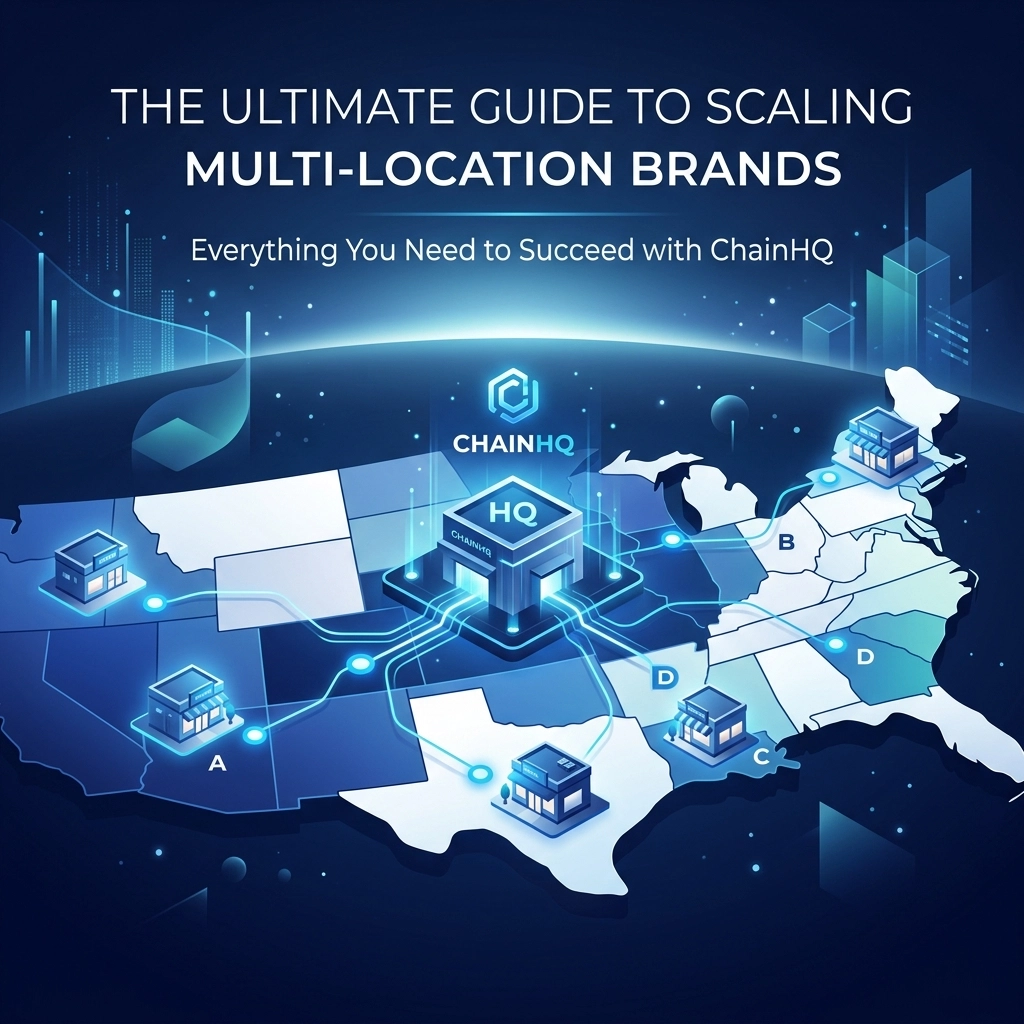
  • The Ultimate Guide to Scaling Multi-Location Brands: Everything You Need to Succeed with ChainHQ

    The Ultimate Guide to Scaling Multi-Location Brands: Everything You Need to Succeed with ChainHQ

    Scaling a brand from a single, successful pilot to a regional or national powerhouse is often described as "multiplying success." But as any CFO or executive who has lived through a rapid expansion knows, scaling is more often an exercise in multiplying complexity. What worked for one location rarely works for twenty: and it certainly won't work for two hundred without a fundamental shift in your digital operating model.

    In the modern landscape, the distance between "thriving multi-location brand" and "operational nightmare" is bridged by technology. At Pure Technology Consulting, we’ve spent years building the frameworks that allow high-growth brands to maintain their soul while automating their operations. The crown jewel of this effort is ChainHQ, our proprietary solution designed specifically for the unique architectural challenges of multi-location businesses.

    This guide explores the roadmap for scaling your brand and how bespoke software architecture transforms "growing pains" into competitive advantages.

    The Multi-Location Paradox: Centralization vs. Localization

    The biggest hurdle in scaling is the "Multi-Location Paradox." To maintain brand integrity, you need centralized control. To drive local revenue, you need local flexibility. If you lean too hard into centralization, you become a rigid corporate monolith that misses local market nuances. If you lean too hard into localization, your brand voice fractures, and your operational costs skyrocket.

    Solving this requires more than just a better spreadsheet; it requires a centralized "Source of Truth" that can push and pull data from every corner of your empire. This is why we developed ChainHQ.

    Centralized data network nodes illustrating the multi-location architecture of ChainHQ.

    Where ChainHQ Fits into Your Strategy

    ChainHQ isn't just another SaaS tool; it is a testament to our philosophy at Pure Technology Consulting. We believe that complex brands shouldn't have to change their workflows to fit a software's limitations. Instead, we build software: like ChainHQ: that acts as the nervous system for your brand.

    ChainHQ allows executives to:

    • Synchronize Real-Time Data: Whether it’s inventory, labor costs, or sales velocity, ChainHQ aggregates data from every location into a single, visionary dashboard.
    • Maintain Operational Governance: Push SOP updates and training modules across the entire network with the click of a button.
    • Empower Local Teams: Give location managers the autonomy to run local promotions or adjust schedules within the guardrails set by the home office.

    By using ChainHQ as a foundation, we help brands move away from reactive management and toward proactive, data-driven expansion.

    Standardizing the "Unstandardizable"

    One of the key insights we’ve gained from our work in sectors like healthcare (with EHRIO Pro) and finance is that every industry thinks their problems are unique. However, scaling always boils down to one thing: The Workflow.

    To scale effectively, you must standardize your operations while leaving room for local excellence. This involves creating detailed standard operating procedures (SOPs) for every process: from customer service to inventory management. But the real magic happens when those SOPs are baked into your custom web apps.

    Instead of a manual that sits on a shelf, we build digital workflows that guide employees through their day. For example, our work with FTP Inform showcases how complex data transfers and communications can be automated to ensure compliance and consistency across disparate teams. When your "way of doing things" is automated into the software your team uses daily, "brand consistency" stops being a goal and starts being the default state.

    Synchronized digital data pipeline representing automated business workflows and brand consistency.

    Dominating the Local Search Landscape with AI

    A multi-location brand is only as strong as its visibility in each specific community. Scaling your digital footprint is often more difficult than scaling your physical one. Managing Google Business Profiles, local reviews, and geo-targeted content for 50 locations is a full-time job for a massive marketing team: unless you leverage AI.

    This is where our AI Local Boost (AILB) framework comes into play. We’ve integrated high-level automation to handle the heavy lifting of local SEO.

    The AILB Strategy for Multi-Location Growth:

    1. Automated Profile Optimization: Ensure that NAP (Name, Address, Phone) consistency is maintained across the web without manual entry.
    2. AI-Generated Local Content: We use AI to create location-specific content variations that maintain your brand voice while speaking directly to the local market's nuances.
    3. Reputation Management at Scale: Use automated response templates and sentiment analysis to monitor and engage with reviews across all locations simultaneously.

    When you combine the operational backbone of ChainHQ with the marketing engine of AI Local Boost, you create a brand that feels like a local favorite in every zip code it enters.

    Digital city map with glowing pins highlighting multi-location search visibility and AI Local Boost.

    Why Custom Web Apps Beat Off-The-Shelf SaaS

    A common mistake we see among high-ticket clients is trying to "duct tape" their operations together using five different SaaS products. You have one for POS, one for HR, one for marketing, and one for inventory. Eventually, you’re paying a "complexity tax": your team spends more time moving data between apps than they do serving customers.

    At Pure Technology Consulting, we specialize in building the bespoke software that sits in the middle. Whether it’s a custom matching engine like we built for EHRIO Pro in the healthcare space or a GPS-logged accountability tool for field reps, our goal is to eliminate the friction in your specific business model.

    Custom software is an investment in your company’s equity. Unlike a SaaS subscription that you’ll pay forever, a custom build on a framework like ChainHQ is an asset you own: one that is tailored to your exact competitive advantages.

    Data Governance: The CFO’s Secret Weapon

    For a CFO, scaling is a risk management exercise. You need to know that your data is secure, your compliance is handled, and your cash flow is predictable.

    Managing the flow of information across silos is where most brands fail. This is why we emphasize "Inspirational Data Visualization." It’s not enough to have the data; you need to see the story the data is telling. By integrating custom dashboards that pull from your various endpoints, we provide executives with a "Control Room" view of the entire organization.

    Bespoke software components interlocking to represent custom web application architecture.

    We’ve brought these proven capabilities into the legal and accounting sectors, ensuring that even the most document-heavy, compliance-sensitive industries can scale with the same agility as a tech startup. Our experience with HIPAA-adjacent workflows and fintech telephony integrations means we don’t just build apps; we build secure, scalable infrastructures.

    Moving from Chaos to Visionary Growth

    Scaling a multi-location brand is a journey from "doing" to "leading." You cannot be in every store, and you cannot oversee every transaction. You have to trust your systems.

    The ultimate guide to success isn't a secret marketing hack or a new hiring strategy: it’s the decision to treat your technology stack as the foundation of your brand, not an afterthought. With tools like ChainHQ and AI Local Boost, and the consultative expertise of the Pure Technology team, you aren't just adding locations; you’re building a legacy.

    If you’re ready to stop fighting your software and start leveraging it, my assistant Emily can help coordinate a discovery call. We don’t just offer products; we offer a roadmap to your brand’s most ambitious future.

    Let’s build the custom architecture your vision deserves.


    Amin Said, Founder of Pure Technology Consulting LLC
    https://puretechconsult.com
    Direct: +1 (803) 921-0969

  • 5 Steps: How to Automate Local SEO and Outrank Competitors (Easy Guide for Business Owners)

    5 Steps: How to Automate Local SEO and Outrank Competitors (Easy Guide for Business Owners)

    The landscape of local search has shifted. In 2026, simply "having a website" is no longer the benchmark for success: it is the bare minimum. For business owners, the challenge isn't just about showing up in search results; it’s about maintaining a dominant, persistent presence without becoming a slave to manual updates and content cycles.

    As a CFO, I look at Local SEO through the lens of operational leverage. If your team is spending hours every week manually posting to Google Business Profiles or chasing down reviews, you are incurring a massive opportunity cost. The goal is to transform your local search presence from a manual labor-intensive chore into an automated, high-yield digital asset.

    Here is the strategic roadmap to automating your local SEO and outranking your competitors through the power of custom automation and visionary technology.

    1. Algorithmic Presence: Automating the Google Business Profile (GBP)

    The Google Business Profile is the front door of your local business. However, the algorithm favors "freshness": it wants to see new photos, regular posts, and updated hours. Most business owners fail here because manual consistency is difficult to maintain.

    To outrank competitors, you need an automated cadence. This is where proprietary logic comes into play. We’ve seen this first-hand with our internal project, AI Local Boost. By creating a system that automatically schedules hyper-local updates and uses AI to generate relevant posts based on real-time business data, we’ve demonstrated that you can maintain a "top three" position in the Map Pack without manual intervention.

    For our high-ticket clients, we don't just recommend a tool; we build custom web applications that integrate directly with the Google Business Profile API. This allows for automated photo tagging, geo-metadata optimization, and post-scheduling that responds to seasonal trends or inventory changes automatically.

    Futuristic digital storefront with data panels representing automated Google Business Profile updates.

    2. Dynamic NAP Consistency and Directory Synchronization

    Consistency is the bedrock of local authority. If your Name, Address, and Phone number (NAP) vary across the web, search engines view your business as unreliable. In the past, "directory cleanup" was a manual service sold by agencies. Today, it must be a synchronized workflow.

    The visionary approach to NAP is not to fix it once, but to govern it via an automated source of truth. We design custom operating models where your core business database serves as the "master." When a phone number or suite number changes in your internal system, a custom-built automation push propagates those changes across 100+ directories instantly.

    This level of integration ensures that your digital footprint remains pristine, signaling to Google that your business is the most authoritative and trustworthy option in the area.

    3. Custom Web Apps for Localized Content Generation

    One of the biggest hurdles to outranking competitors is the "content gap." Competitors might have one "Services" page; you need a page for every neighborhood, every service, and every specific localized query.

    Building 50 landing pages manually is a logistical nightmare. However, by leveraging custom software development, we can create a localized content engine. Imagine a custom web app that takes your core service descriptions and automatically generates SEO-optimized, location-specific landing pages for every zip code in your service area.

    This isn’t about "spinning" content; it’s about programmatic SEO. We use structured data and AI to ensure every page provides real value, local landmarks, and relevant maps. This allows a business to scale its organic reach from one city to an entire region in a matter of weeks, rather than years.

    Isometric digital map showing geographic scaling and localized content automation for regional SEO.

    4. Systematizing Social Proof: Automated Review Orchestration

    Reviews are the primary currency of local SEO. But high-growth businesses often struggle to capture them consistently. To outrank a competitor who has 500 reviews when you have 50, you need a system, not a suggestion.

    Automation allows you to integrate review requests into the very fabric of your customer journey. Whether it’s a HIPAA-adjacent workflow for healthcare providers (similar to our work with EHRIO Pro) or a post-appointment trigger for field services, the request should be automatic.

    Beyond just asking for reviews, the next step in the automation roadmap is Automated Sentiment Response. Using custom-trained AI models, we can help businesses respond to reviews in real-time, addressing specific customer points while naturally incorporating local keywords that search engines love. This turns your review section into a living, breathing SEO asset.

    5. The Executive Dashboard: Moving from Guesswork to Governance

    You cannot optimize what you do not measure. Most business owners are flying blind, relying on monthly PDFs from agencies that are often outdated by the time they are read.

    To truly outrank competitors, you need a real-time command center. We focus on building bespoke dashboards that pull data from Google Search Console, GBP insights, and competitor rankings into a single, actionable view. This is about more than just "rankings"; it’s about tracking conversion rates from local searches.

    By automating the data extraction process: a capability we’ve refined through our work with complex data systems like FTP Inform: we provide executives with the clarity needed to make strategic pivots. If a competitor starts gaining ground in a specific neighborhood, your dashboard should alert you immediately, allowing your automated systems to shift focus and reclaim that territory.

    Modern analytics dashboard visualizing local search performance and business growth metrics.

    The Path Forward: Custom Automation vs. Generic SaaS

    While there are many off-the-shelf SEO tools available, they are often "one size fits all." For businesses looking to dominate their local market, the real advantage lies in custom software and bespoke automation.

    Generic tools create generic results. When you build a custom web application or an integrated automation workflow tailored to your specific business model, you are building a proprietary advantage that competitors cannot simply "buy" a subscription to replicate.

    At Pure Technology Consulting, we specialize in bridging the gap between high-level strategy and technical execution. We don't just talk about digital transformation; we build the custom engines that drive it. Whether it's through the logic we’ve proven in ChainHQ for multi-location management or the automated insights provided by our other proprietary assets, our goal is to give you the leverage to lead your industry.

    Local SEO is no longer a marketing task; it is a technical operation. By automating these five steps, you move from competing for attention to owning the market.

    Ready to Automate Your Growth?

    If you are ready to move beyond manual processes and implement a high-level automation strategy that secures your local dominance, let’s discuss a roadmap tailored to your operations.

    Contact us today to schedule a discovery call:
    Phone: +1 (803) 921-0969

    Website: https://puretechconsult.com/schedule

    Amin Said, Founder of Pure Technology Consulting LLC
    https://puretechconsult.com

  • 7 Mistakes You’re Making with Manual Workflows (and How AI-Powered Business Systems Fix Them)

    7 Mistakes You’re Making with Manual Workflows (and How AI-Powered Business Systems Fix Them)

    As a CFO, you likely spend a significant portion of your week looking at the bottom line. You see the overhead, the payroll, and the software subscriptions. But there is a silent killer of profitability that often hides in plain sight: manual workflows.

    At Pure Technology Consulting, we call this "operational drag." It’s the friction created when your talented team spends 40% of their day acting as "human glue": copying data from one spreadsheet to another, chasing down approvals via email, or manually uploading files to a server.

    In a world moving at the speed of AI, maintaining manual processes isn't just an inconvenience; it’s a strategic risk. We’ve helped organizations transition from fragmented, manual chaos to streamlined, custom-built ecosystems. Along the way, we’ve identified seven recurring mistakes that businesses make when they cling to manual workflows: and how AI-powered systems can turn those liabilities into competitive advantages.

    1. The "Human Glue" Fallacy: Data Silos and Manual Entry

    The most common mistake is assuming that because a process can be done manually, it should be. This creates "human glue," where your employees' primary value is simply moving data between systems that don't talk to each other.

    When your data is siloed, your visibility into the business is always two weeks behind. You’re making decisions based on "stale" spreadsheets. AI-powered business systems eliminate this by creating a single source of truth.

    For example, look at how we approach file management and data triggers with FTP Inform. Instead of having a staff member manually check a folder for a client’s daily report and then alert the team, FTP Inform automates the monitoring and notification process. This ensures that the moment data arrives, the next step in the workflow is triggered without a human ever having to click "refresh." It’s about building custom web apps that act as the connective tissue of your business.

    2. Scaling by Adding Headcount Instead of Systems

    Many growing companies fall into the trap of thinking that more work requires more people. If your accounting department is overwhelmed, you hire another clerk. If your sales team can’t keep up with leads, you hire more coordinators.

    This is a linear solution to an exponential problem. Manual workflows don't scale; they just get more expensive. AI-powered automation allows you to scale your output without a proportional increase in overhead. By implementing bespoke software solutions, you can handle 10x the volume with the same elite team.

    AI-powered automation network helping businesses scale operations and manage workflows through a central digital system.

    3. The GIGO Effect: Ignoring Data Quality and Integrity

    "Garbage In, Garbage Out" (GIGO) is the cardinal sin of manual workflows. Humans are prone to typos, missed fields, and inconsistent formatting. In industries like legal, healthcare, or accounting, a single data entry error can lead to a compliance nightmare or a massive financial discrepancy.

    AI systems don't just move data; they validate it. Consider our work with EHRIO Pro. In the complex world of healthcare staffing and matching, data integrity is everything. We developed 70-question intake engines that ensure every piece of information is structured and verified before it ever hits the database. This level of precision is impossible to maintain manually at scale, but with an AI-powered system, it becomes the baseline.

    4. Process Rot: Managing Workflows That No Longer Exist

    Business changes, but manual processes often stay the same. This leads to "process rot," where employees are still performing steps that were designed for a software version you retired three years ago. Because the workflow is manual, there’s no central "logic" to update.

    When you invest in custom software development, your business logic is baked into the code. When your strategy shifts, the system shifts with you. You aren't just automating an old process; you are engineering a new, optimized operating model.

    5. Visibility Black Holes: The High Cost of "Checking In"

    How much time does your leadership team spend asking for status updates? "Where is the Miller contract?" "Have we processed the March invoices?"

    Manual workflows are opaque. To find out where a project stands, you have to interrupt someone’s work. This creates a culture of constant interruptions and "check-in" meetings.

    Systems like ChainHQ solve this by providing real-time visibility into complex supply chains and workflows. By digitizing the hand-offs and tracking every milestone, you create a dashboard that tells the story of your business in real-time. CFOs can see bottlenecks as they form, not a month later in the P&L statement.

    A real-time business dashboard providing visibility into workflows to identify and resolve operational bottlenecks.

    6. Friction in the Customer Experience

    If your internal workflows are manual, your customers feel it. It manifests as slow onboarding, delayed responses, and a general lack of proactivity. In the local service and legal sectors, reputation is everything.

    Manual reputation management is a losing game. That’s why we developed AI Local Boost. It automates Google Business Profile interactions and review management, ensuring that while your team is focused on high-value client work, your digital footprint is being nurtured and grown by AI. It’s a prime example of how automating a "manual" task like checking for reviews can lead to a direct increase in lead generation and brand authority.

    7. The Security Risk of "Shadow IT" and Manual File Handling

    When official systems are too clunky or manual, employees find workarounds. They start using personal Dropbox accounts, unencrypted email attachments, or unsanctioned messaging apps to get the job done. This is "Shadow IT," and it’s a massive security and compliance risk.

    A manual workflow for sensitive data is an invitation for a breach. AI-powered systems provide a secure, governed environment for data exchange. By integrating tools like FTP Inform into a custom web app, you ensure that file transfers are monitored, logged, and encrypted, satisfying the stringent requirements of industries like fintech and debt collection.

    Secure data exchange hub illustrating automated and encrypted file transfers for financial and legal business systems.

    From Drag to Leverage: The Path Forward

    The goal of digital transformation isn't to replace your people; it’s to liberate them. When you remove the burden of manual workflows, you allow your team to focus on strategy, creativity, and relationship-building: the things AI can’t do.

    At Pure Technology Consulting, we don't just build apps; we build operational leverage. Whether it's our work in healthcare with matching engines, fintech telephony integrations, or local SEO automation, our mission is to bring visionary technology to established industries.

    If you are ready to stop being the "human glue" and start leading an AI-powered enterprise, it’s time to audit your workflows. The cost of doing nothing is far higher than the cost of innovation.

    Are you ready to optimize your operations?
    Book a discovery call with our team to discuss your custom automation roadmap. No obligation: just a strategic look at how we can turn your manual bottlenecks into automated assets.

    Amin Said, Founder of Pure Technology Consulting LLC
    https://puretechconsult.com
    +1 (803) 921-0969