Category: Blog

Your blog category

  • The Hidden ROI of White-Labeling: How to Add Tech Value Without a Single Developer

    The Hidden ROI of White-Labeling: How to Add Tech Value Without a Single Developer

    In the current business landscape, the line between a service provider and a technology company has practically vanished. Whether you are an industry vendor, a franchise group, or a high-growth agency, your clients no longer just want your expertise: they want your ecosystem. They want a centralized place where data lives, workflows are automated, and results are visible in real-time.

    However, most organizations hit a formidable wall when they try to bridge this gap: the "Developer Debt." The traditional path to becoming a tech-enabled powerhouse involves hiring a CTO, recruiting full-stack developers, managing sprints, and navigating the endless cycle of bug fixes and server maintenance. For most, this isn't just a distraction; it's a financial black hole that pulls focus away from their core competency.

    There is, however, a strategic alternative that high-performing organizations are using to scale their valuation and their impact: White-Labeling. By leveraging Pure Technology Consulting (PTC) as your Technical Backbone, you can offer sophisticated software solutions under your own brand, capturing the full ROI of a tech firm without writing a single line of code.

    The Strategic Shift: From Service Provider to Platform Authority

    When you provide a service: be it marketing, consulting, or logistics: you are often viewed as a line item. Line items can be cut during budget reviews. But when you provide the platform that runs your client's operations, you become the infrastructure.

    White-labeling allows you to make this shift overnight. Instead of selling a "project," you are licensing a solution. This transition fundamentally changes your operating model. You move from trading hours for dollars to a scalable, recurring revenue model built on proven software.

    At Pure Technology Consulting, we’ve seen this transformation firsthand. We provide the architecture: the high-level automation, the secure databases, and the intuitive interfaces: while you provide the brand and the industry expertise. It’s a symbiotic roadmap that prioritizes business impact over technical overhead.

    Digital bridge connecting a corporate building to a software network, illustrating white-label platform integration.

    Pillar 1: Compounding Client Lifetime Value (LTV)

    The most significant "hidden" ROI of white-labeling isn't just the new revenue: it’s the retention of the old. Recent industry benchmarks suggest that agencies and vendors who offer integrated technology platforms see a 32% increase in average client lifespan.

    Why? Because software creates "stickiness." When a client’s data is integrated into a dashboard branded with your logo, the cost of switching to a competitor becomes exponentially higher. They aren't just leaving a service; they are abandoning their operational history.

    By integrating PTC’s proven infrastructure into your offering, you provide a seamless experience that strengthens trust. You transition from a vendor they use to a partner they rely on. This deepened relationship allows for more natural cross-selling of your core services, as the software provides the very data that proves you’re doing a great job.

    Pillar 2: Rapid Deployment vs. The Development Slog

    If you were to build a custom web application from scratch today, the timeline to a Minimum Viable Product (MVP) could easily stretch six to twelve months. That is a half-year of capital expenditure before you see a single dollar of return.

    White-labeling flips the script. Because you are leveraging PTC’s existing technical assets: from complex web development frameworks to specialized tools like FTP Inform: the time to market is reduced from months to weeks.

    This rapid deployment allows you to:

    • Seize Market Windows: Respond to industry shifts before your competitors can even hire a project manager.
    • Iterate Based on Real Data: Launch quickly, gather feedback, and let us handle the backend refinements while you focus on the user experience.
    • Minimize Risk: You aren't gambling on an unproven dev team. You are deploying a system that has already been stress-tested in high-stakes environments like healthcare and fintech.

    Pillar 3: Recurring Revenue Expansion and Margin Optimization

    For many agencies and franchise groups, the ceiling is dictated by headcount. To earn more, you have to hire more. This is linear growth, and it’s exhausting.

    White-labeling introduces exponential growth. When you license a platform, your margins actually improve as you scale. Research indicates that well-structured white-label arrangements can maintain 40-60% margins on outsourced technology delivery.

    Consider a scenario where an agency generates $200,000 in annual revenue through manual consulting. By shifting that delivery to a branded software platform powered by PTC, they can often double their client capacity without doubling their staff. The software does the heavy lifting: reporting, data intake, and workflow management: leaving your team to focus on high-level strategy.

    Glowing spine supporting rising pillars in an exponential growth chart, representing scalable white-label software ROI.

    PTC: Your Technical Backbone

    When we talk about being the Technical Backbone, we mean more than just providing a login screen. We provide the governance, the security, and the reliable backend support that high-ticket clients demand.

    Our expertise isn't theoretical. We bring proven capabilities from some of the most rigorous sectors:

    • Healthcare Integration: We’ve built matching engines and HIPAA-adjacent workflows that handle complex intakes.
    • Field Operations: We’ve developed GPS-logged accountability systems for massive sales forces.
    • Fintech & Debt Management: Our team has integrated telephony and call attribution into sophisticated debt recovery platforms.

    When you partner with us, you aren't just buying software; you are gaining an advisory partner. My assistant, Emily, and our entire technical team ensure that your deployment is smooth, your data is secure, and your brand remains the star of the show. We handle the "how" so you can dominate the "what."

    Where Custom Software Beats the "Off-the-Shelf" Trap

    You might ask, "Why not just use a standard SaaS tool?" The answer lies in ownership and brand equity. When you use a generic SaaS product, you are helping their brand grow. You are subject to their price hikes and their feature roadmap.

    When you white-label through Pure Technology Consulting, you own the relationship. You define the terms of use and the user experience. You are building equity in your own platform.

    For industry vendors, this is the difference between being a middleman and being a market leader. Whether it's custom graphic design elements or bespoke backend automations, the platform feels and functions as a native part of your business.

    Bespoke technical backbone integrated into a professional business framework for high-level software automation.

    Starting the Transformation

    The ROI of technology isn't found in the code itself: it’s found in the leverage that code provides. By choosing to white-label, you are choosing leverage over overhead. You are choosing to scale your vision without the drag of technical management.

    We invite industry leaders, franchise owners, and agency founders to look at their current service model. Where are the bottlenecks? Where are the manual tasks that could be transformed into a branded software feature?

    The path to becoming a tech-enabled powerhouse doesn't require a single developer on your payroll. It requires a strategic partnership with a team that has already built the road.

    Ready to explore how white-labeling can redefine your revenue model?

    Book a discovery call to discuss your roadmap. Let’s build the infrastructure your clients deserve.

    Amin Said, Founder of Pure Technology Consulting LLC
    https://puretechconsult.com
    +1 (803) 921-0969


    For more insights on custom automation and software strategy, visit our blog or watch our video walkthroughs.

  • Reducing Labor Dependency: How AI Automation is Saving Professional Service Firms Thousands Monthly

    Reducing Labor Dependency: How AI Automation is Saving Professional Service Firms Thousands Monthly

    For years, the standard playbook for a growing professional service firm was simple: to increase revenue, you increased headcount. If a debt collection agency took on a new portfolio, they hired more agents. If an accounting firm signed more clients, they brought on more junior associates. This linear relationship between labor and growth has long been accepted as the "cost of doing business."

    However, we are entering an era where this model is no longer just inefficient: it is a strategic liability.

    Today’s most successful professional service firms are breaking the link between headcount and output. By leveraging bespoke AI automation and custom internal systems, they are overcoming operational bottlenecks that once required dozens of manual hours. Instead of scaling through recruitment, they are scaling through architecture.

    At Pure Technology Consulting (PTC), we’ve seen firsthand how high-level automation transforms "operationally constrained" businesses into high-margin powerhouses. Here is how visionary leaders are reducing labor dependency and reclaiming thousands in monthly overhead.

    The Invisible Ceiling: Why Manual Labor Limits Your Scale

    Every manual process in your firm acts as a friction point. Whether it’s data entry, manual document review, or the constant toggling between fragmented software tools, these tasks create an "operational drag" that limits your ceiling.

    In professional services, labor typically represents the largest line item on the P&L. When a firm relies heavily on manual intervention, they face three primary risks:

    1. Inelasticity: The inability to handle sudden surges in volume without a lag in hiring and training.
    2. Margin Erosion: As labor costs rise, the cost per unit of service increases, eating into net profits.
    3. Human Error: In high-stakes industries like debt collection or healthcare, a single manual entry error can lead to significant compliance risks or financial loss.

    To move beyond these constraints, firms are turning to Intelligent Process Automation (IPA) and Generative AI. These are not just "tools"; they are digital workforce members that operate with 100% consistency, 24/7.

    Digital data architecture representing AI automation for professional service firm efficiency.

    Strategic Implementation: What to Automate First

    The mistake many firms make is trying to automate everything at once. This leads to "automation fatigue" and fragmented systems. A consultative approach requires identifying the "high-volume, high-friction" tasks that offer the highest ROI.

    1. High-Volume Data Processing and Reconciliation

    In fintech and debt collection, the sheer volume of data is staggering. Historically, firms employed large teams just to reconcile payments, update account statuses, and generate reports.

    By implementing Robotic Process Automation (RPA) and custom internal systems, these tasks can be handled in real-time. For example, at PTC, we have built sophisticated telephony integrations for debt agencies that automatically attribute calls and update ledgers without a human ever touching a keyboard.

    2. Intelligent Document Review and Compliance

    Professional services are governed by compliance. Whether it’s HIPAA in healthcare or FDCPA in debt collection, the cost of a mistake is high.

    Generative AI agents can now be trained to review thousands of documents: intake forms, legal filings, or contracts: flagging anomalies and ensuring every piece of data meets regulatory standards. This doesn't replace the expert; it augments them, allowing a single senior associate to oversee the work of what used to require a team of five.

    The Power of Custom Reporting Dashboards

    You cannot manage what you cannot see. Many professional service firms operate in the dark, relying on monthly reports that are outdated by the time they reach the executive’s desk.

    One of the most significant ways we help firms reduce labor dependency is through the development of Custom Reporting Dashboards. These aren’t generic SaaS templates; they are bespoke windows into your specific operating model.

    When we build a custom dashboard, we integrate data from every corner of the business: your CRM, your billing software, and your automation logs. This provides:

    • Real-time Bottleneck Identification: Instantly see where files are getting stuck in the workflow.
    • Predictive Labor Modeling: Understand exactly when you actually need to hire, versus when you can simply optimize an existing automation.
    • Profitability Transparency: See the exact margin on every client or portfolio, accounting for the reduced "automated" cost of service.

    Custom reporting dashboard showing real-time analytics for automated professional services.

    Case Study: From Debt Collection Constraints to Automated Efficiency

    Consider a debt collection agency managing high-volume portfolios. Traditionally, the bottleneck is the "skip tracing" and initial outreach phase: a process requiring massive manual effort to verify contact information and initiate compliance-heavy communications.

    We’ve seen firms transform this by building custom internal systems that automate the initial data ingestion and verification. By integrating custom web apps that talk directly to telephony providers and credit bureaus, the agency can process ten times the volume with the same number of agents.

    The result? The agents spend their time on the phone closing high-value accounts rather than doing administrative data entry. This is the definition of operational leverage.

    Why Bespoke Development Beats Off-the-Shelf SaaS

    It is tempting to look for a "quick fix" in the form of a subscription-based SaaS product. However, for firms dealing with complex workflows, generic software often creates more problems than it solves.

    Generic tools force you to change your processes to fit their limitations. Bespoke development, on the other hand, builds the technology around your proven winning strategies.

    At Pure Technology Consulting, our expertise lies in creating these high-ticket, custom web applications. We don’t just "install software"; we engineer systems. Our background in complex sectors: from HIPAA-adjacent workflows in healthcare to GPS-logged rep accountability in field operations: allows us to bring institutional knowledge into the legal and accounting space. We don’t start from scratch; we bring a library of proven capabilities to solve your specific bottlenecks.

    Bespoke software engine core symbolizing custom automation systems and internal workflow optimization.

    Moving Toward a "Visionary" Operating Model

    The shift from a labor-dependent firm to an automation-first firm is a strategic evolution. It requires a roadmap that balances immediate cost savings with long-term scalability.

    For many executives, the first step isn't technical: it's advisory. It begins with a workflow audit to identify where manual labor is dragging down the firm’s valuation. When you reduce your reliance on manual labor, you aren't just saving thousands monthly; you are building an asset that is more scalable, more resilient, and ultimately more valuable.

    typical Deliverables for an Automation Engagement:

    • Architecture & Roadmap: A clear plan of what to automate and in what order.
    • Custom Web Applications: Bespoke tools that integrate your existing tech stack.
    • Automated Workflows: End-to-end sequences that handle data without human intervention.
    • Executive Dashboards: Real-time visibility into every KPI that matters.

    Conclusion: Reclaim Your Time and Your Margins

    If your firm is currently operationally constrained, the answer isn't a larger recruiting budget. It is a more intelligent operating model. AI automation is no longer a luxury for the Fortune 500; it is the necessary infrastructure for any professional service firm that intends to thrive in the coming decade.

    The firms that act now will enjoy a "first-mover" advantage, securing higher margins and attracting top-tier talent who want to work with advanced systems rather than manual spreadsheets.

    Are you ready to see how custom automation can remove the ceiling from your growth?

    Book a discovery call today to audit your current workflows.
    Schedule Your Consultation

    Amin Said, Founder of Pure Technology Consulting LLC
    https://puretechconsult.com
    +1 (803) 921-0969

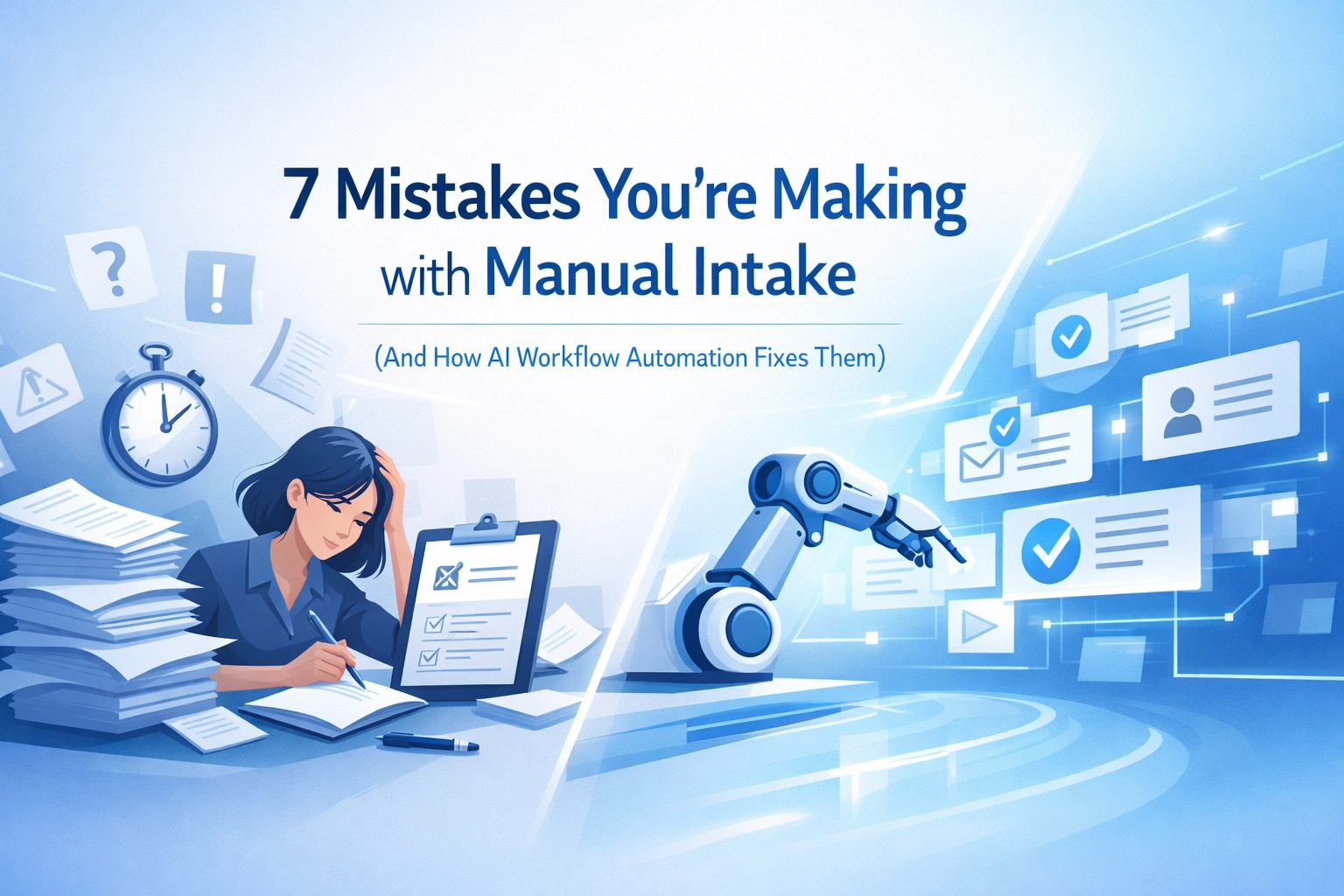
  • 7 Mistakes You’re Making with Manual Intake (And How AI Workflow Automation Fixes Them)

    7 Mistakes You’re Making with Manual Intake (And How AI Workflow Automation Fixes Them)

    In the high-stakes worlds of legal, accounting, and specialized healthcare, the intake process is far more than a simple "get to know you" form. It is the critical first gear in your operational engine. Yet, for many established firms, this engine is grinding against the friction of manual entry, fragmented data, and outdated workflows.

    When a potential client or patient first engages with your brand, they are looking for confidence and efficiency. If your intake process involves a PDF attachment, a scanned paper form, or a redundant 20-minute phone call, you aren't just wasting time, you are signaling a lack of technical maturity.

    At Pure Technology Consulting, we view intake as a strategic opportunity for transformation. By moving away from manual bottlenecks toward AI-powered automation, you don't just "save time"; you create a scalable system that drives revenue and enhances data integrity.

    Here are the seven most common mistakes businesses make with manual intake and the visionary path to fixing them.

    1. The PDF and Paper Trap

    Many organizations still rely on sending PDFs via email or, worse, asking clients to fill out paper forms in the office. This creates an immediate "operational drag." The client has to find a printer, scan the document, or spend their first visit hunched over a clipboard.

    The Fix: Custom Web App Architectures
    A visionary approach replaces static documents with dynamic, bespoke web applications. By building a custom interface, similar to the architecture we developed for our ChainHQ framework, we enable clients to submit data securely from any device. This isn't just a digital form; it's an entry point into a synchronized ecosystem where data flows directly into your CRM or ERP without a single keystroke from your staff.

    Paper forms transforming into digital data streams for seamless CRM and ERP integration.

    2. Overwhelming "Blank Page" Syndrome

    We often see firms asking too many questions at once or, conversely, not enough. A manual form is rigid; it cannot adapt to the user’s answers. This leads to "form fatigue," where high-value leads abandon the process because it feels like an interrogation rather than a service.

    The Fix: Conditional Logic and AI-Driven Intake
    In our work with EHRIO Pro, we mastered the art of the "70-question intake." While 70 questions sound daunting, we utilized sophisticated matching engines and conditional logic. The system only shows the next question based on the previous answer. If a legal client selects "Personal Injury," they aren't forced to scroll past "Corporate Tax" questions. This makes a complex process feel effortless and tailored.

    3. The "Follow-Up" Black Hole

    In a manual system, a completed intake form often sits in an inbox for hours, or days, before a human reviews it. In industries like fintech or legal services, speed is your greatest competitive advantage. Every hour of delay increases the likelihood that a prospect will call your competitor.

    The Fix: Real-Time Workflow Automation
    Automation allows for an "instant-response" operating model. When a form is submitted, AI can immediately categorize the urgency, perform a preliminary conflict check, and schedule a discovery call on your team’s calendar. We implement these types of high-level integrations to ensure that no lead is ever left in the dark.

    Rapid light trails representing high-speed AI workflow automation and real-time business integrations.

    4. Data Inconsistency and Human Error

    Manual transcription is the enemy of data integrity. When staff members have to copy information from a handwritten form into a database, errors are inevitable. Names are misspelled, numbers are transposed, and critical context is lost. Over time, these small errors aggregate into massive reporting headaches.

    The Fix: Single-Source-of-Truth Governance
    By using bespoke automation, the data the client enters is the exact data that populates your systems. There is no middleman. We leverage proprietary capabilities, such as the logic used in our FTP Inform tool, to ensure that data transfers are not only automated but also verified and logged. This creates a transparent audit trail that is essential for accounting and legal compliance.

    5. Lack of Mobile Optimization

    If your intake process isn't optimized for a smartphone, you are ignoring a significant portion of your market. Modern executives and high-net-worth individuals handle their business "on the go." A manual process that requires a desktop computer or a physical signature is a barrier to entry.

    The Fix: Responsive Bespoke Development
    Our approach to custom web development prioritizes a "mobile-first" philosophy. Whether we are building a GPS-logging tool for field operations or a client portal for a law firm, the interface must be intuitive on a 6-inch screen. This accessibility ensures higher completion rates and a more professional brand image.

    Professional mobile-first intake forms on a smartphone and tablet showing responsive software design.

    6. Fragmented File Management

    Intake isn't just about text; it's often about documents, IDs, tax returns, or medical records. In a manual workflow, these files end up scattered across email attachments, local downloads, and physical folders. This fragmentation is a security nightmare and an organizational disaster.

    The Fix: Automated File Routing
    Strategic automation handles the heavy lifting of file management. For example, using the foundations of FTP Inform, we can build systems that automatically route uploaded documents to specific, encrypted cloud folders, rename them according to your firm’s naming conventions, and notify the relevant department head. This turns a chaotic pile of attachments into a structured, searchable asset library.

    7. Neglecting the "Local Boost"

    For many professional service providers, intake begins long before the client reaches your website. It starts on Google. A common mistake is treating your Google Business Profile as a static billboard rather than a dynamic intake funnel.

    The Fix: Integrated Local SEO and Lead Capture
    Through our AI Local Boost (AILB) capabilities, we demonstrate how automation can bridge the gap between a local search and a confirmed appointment. By automating the engagement on your Google profile and linking it directly to your custom intake app, you create a frictionless path from "Search" to "Client." This holistic view of the customer journey is what separates visionary firms from the rest.

    The Pure Technology Approach: From Manual to Masterful

    Transitioning away from manual intake is not merely about buying a subscription to a form-builder. It is about rethinking your entire operating model.

    At Pure Technology Consulting, we don't believe in "one-size-fits-all" SaaS solutions. We believe in building bespoke web applications and high-level automation roadmaps that fit your unique operations. Whether you are a legal firm looking for HIPAA-adjacent workflow security or an accounting firm needing complex telephony integrations, our team brings proven expertise from healthcare, fintech, and field operations to your specific challenge.

    We don't just build software; we build leverage.

    By automating the mundane, you free your high-value talent to focus on what they do best: providing expert advice and driving business growth. If your current intake process feels like a bottleneck, it’s time to look at a custom solution that can scale with your ambitions.

    Ready to Audit Your Workflow?

    The cost of manual intake isn't just measured in minutes; it’s measured in missed opportunities and operational risk. Let’s explore how a custom-built automation strategy can transform your client experience and your bottom line.

    To discuss a bespoke development project or to request a deep-dive workflow audit for your firm, please reach out to us. We specialize in high-ticket, complex builds that require a consultative and visionary approach.

    Contact us today at +1 (803) 921-0969 or schedule a discovery call to begin your digital transformation.

    Digital gateway symbolizing business transformation through visionary AI automation and custom software.

    Amin Said, Founder of Pure Technology Consulting LLC
    https://puretechconsult.com

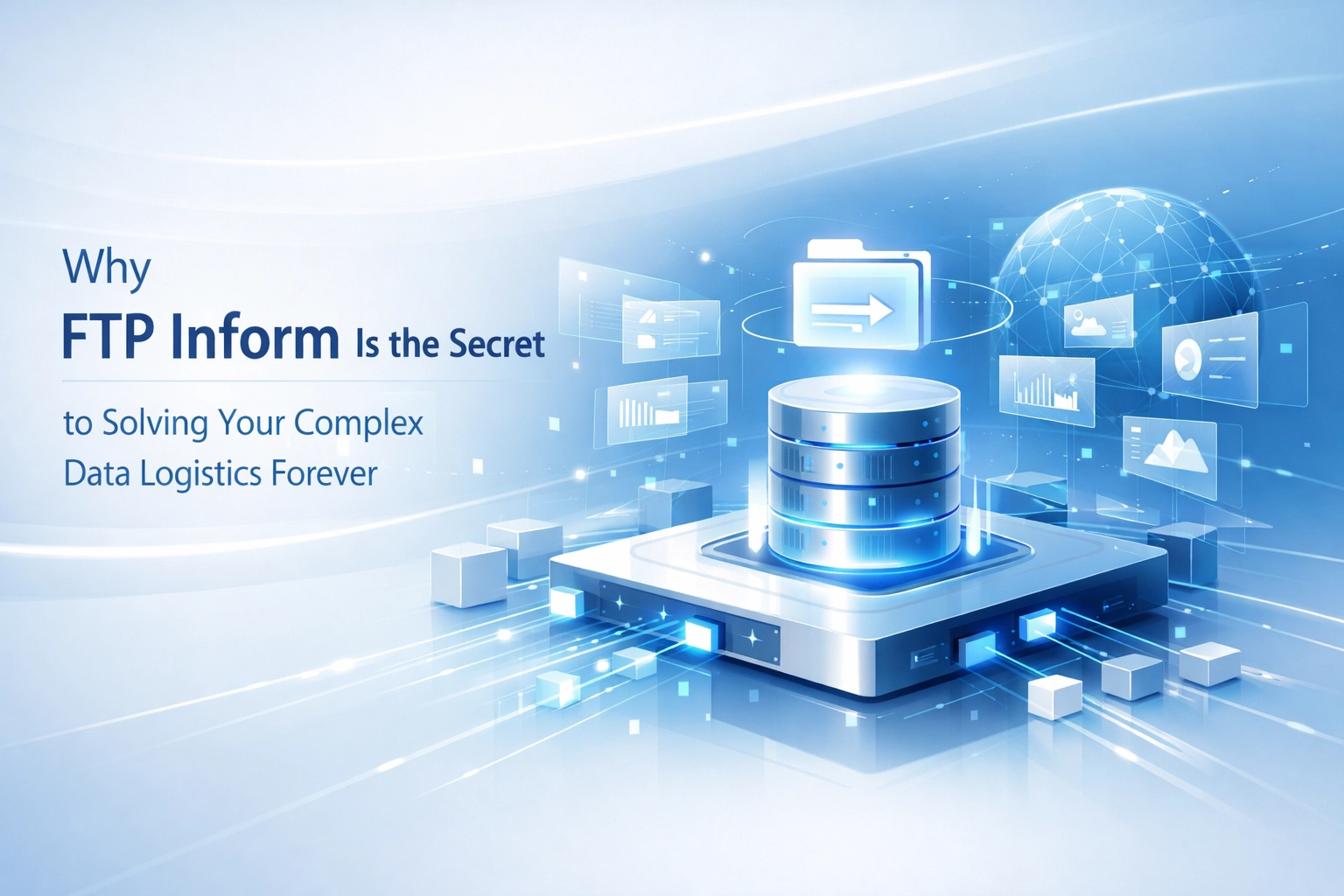
  • Why FTP Inform Is the Secret to Solving Your Complex Data Logistics Forever

    Why FTP Inform Is the Secret to Solving Your Complex Data Logistics Forever

    In the modern enterprise, data is often compared to oil: a raw resource that powers the machine. But for many organizations, a better metaphor is logistics. It doesn’t matter how much "fuel" you have if your delivery trucks are stuck in a manual inspection bay, or if your pipes are leaking every time they cross a legacy border.

    Complex data logistics: the movement, monitoring, and transformation of information across disparate systems: is where many high-growth companies lose their momentum. We see it constantly at Pure Technology Consulting: brilliant teams held back by legacy file transfer protocols and the manual labor required to "babysit" them.

    The solution isn't always to rip and replace forty years of infrastructure. Often, the visionary path is to build a modern, intelligent bridge. That bridge is FTP Inform.

    The Hidden Drag of Legacy Data Systems

    Many of the world's most critical industries: fintech, healthcare, and global supply chains: still rely on FTP (File Transfer Protocol). It is robust, it is established, and it is ubiquitous. However, it was never designed for the era of instant, automated decision-making.

    When a bank generates a daily CSV or an insurance provider drops a massive XLSX file into a folder, what happens next? Usually, a human or a fragile script must check that folder. If the script fails, the data sits. If the human is out sick, the logistics chain breaks.

    This "visibility gap" creates a massive operational drag. You aren't just losing minutes; you are losing the ability to react in real-time. This is why we developed FTP Inform: not just as a file monitor, but as a strategic sentinel for your data logistics.

    Digital bridge connecting legacy data systems to modern automation for seamless logistics.

    What Is FTP Inform?

    At its core, FTP Inform is a proprietary monitoring tool designed to eliminate the manual overhead of data ingestion. It monitors your FTP servers 24/7/365, instantly detecting new CSV, XLS, and XLSX files the moment they land.

    But to view it simply as a "folder watcher" is to miss the strategic value. In the context of a custom software ecosystem, FTP Inform acts as the sensory nervous system. It identifies an event (a file arrival) and triggers a sophisticated chain of automated actions.

    Whether you are coordinating physical transport or managing complex fintech call attributions, FTP Inform ensures that your data logistics move at the speed of your strategy, not the speed of your manual checks.

    Solving Complex Data Logistics with Strategic Automation

    Complex data logistics require more than just a connection; they require a roadmap. At Pure Technology Consulting, we integrate FTP Inform into larger, bespoke automation solutions that handle the "heavy lifting" after the file is detected.

    1. Automating Legacy System Transfers

    Legacy systems are often "black boxes." They export data but don't talk to modern APIs. FTP Inform bridges this gap. By detecting these exports instantly, we can build custom middleware that transforms that raw CSV into actionable data for your modern web applications. This allows you to maintain your stable legacy core while enjoying the agility of custom-built, modern interfaces.

    2. Enterprise-Grade Security and Reliability

    Data logistics in sectors like healthcare (where we deal with HIPAA-adjacent workflows) or finance require more than just speed; they require governance. FTP Inform is built with the reliability expected of enterprise-grade tools. It ensures that no file goes unnoticed and no data point is left in a silo.

    3. Real-Time Visibility and Governance

    For an executive, the biggest risk is "not knowing what you don't know." When files are moving via FTP, there is often a lack of a clear audit trail. By using FTP Inform as part of a custom web development project, we can create dashboards that provide real-time visibility into your data supply chain. You can see exactly when data arrived, when it was processed, and where it went.

    Real-time file monitoring system detecting data arrival within a secure enterprise supply chain.

    Beyond the Tool: The Pure Technology Consulting Approach

    While FTP Inform is a powerful asset, it is a piece of a much larger puzzle. Our mission at Pure Technology Consulting is to build the software that fits your unique operations, not to force your operations into a pre-made box.

    When we engage with high-ticket clients: whether they are legal firms seeking to automate intake or field operations tracking GPS logging: we look at the entire operating model. FTP Inform is often the "Proof of Concept" that demonstrates how quickly we can gain control over a complex environment.

    Where Custom Software Beats SaaS

    Many organizations try to solve data logistics with generic, off-the-shelf SaaS products. The problem? Those products are built for the "average" user. Your business isn't average.

    Your data has specific constraints, your stakeholders have specific reporting needs, and your compliance requirements are non-negotiable. A bespoke build: leveraging tools like FTP Inform: allows for:

    • Deep Integration: Connecting to your specific telephony, CRM, or ERP systems.
    • Scalability: Growing with your volume without skyrocketing "per-seat" licensing costs.
    • Ownership: You own the workflow, the logic, and the competitive advantage it provides.

    Case Studies in Data Logistics

    Our experience across various high-stakes industries has proven that a well-monitored data pipeline is the foundation of growth.

    • Fintech & Debt Management: We have integrated telephony and call attribution data where every second counts. FTP Inform ensures that as soon as a call log is exported, it is attributed and analyzed, providing immediate feedback to the sales floor.
    • Healthcare & EHRIO: Our work with matching engines and 70-question intake forms requires precise data movement. If a patient record isn't transferred accurately between systems, it isn't just a business problem: it’s a care problem.
    • Field Operations: For companies managing "boots on the ground," data logistics involves GPS logging and rep accountability. Automating the ingestion of these logs ensures that management has a visionary view of the field in real-time.

    Bespoke software integration showing custom automation components fitting unique business workflows.

    Why FTP Inform Is Your Secret Weapon

    The "secret" isn't just the monitoring; it's the freedom it grants your team. When you solve the logistics of data movement, your most talented people stop being "data movers" and start being "data users."

    They stop checking folders and start making decisions based on the insights within those folders. That is the visionary transformation we aim for with every engagement.

    If you are currently struggling with manual data transfers, siloed legacy information, or a lack of visibility into your file-based workflows, it is time to look at your data logistics through a new lens.

    Strategic Recommendations for Your Next Steps

    1. Audit Your Manual Touchpoints: Where are your employees manually checking for files or uploading data? These are your biggest risks and your biggest opportunities for ROI.
    2. Evaluate Your Legacy Connectivity: Can your current systems talk to each other? If not, a tool like FTP Inform can act as the translator.
    3. Think Beyond the File: Don't just ask "how do I move this file?" Ask "what business outcome could I achieve if this file moved itself?"

    At Pure Technology Consulting, we specialize in answering that "what if." We don't just provide a tool; we provide the strategy and the development expertise to turn your data into a streamlined logistics machine.

    Strategic vision of an optimized enterprise empowered by automated data logistics and scalability.

    Take Control of Your Data Logistics Today

    Data logistics shouldn't be a source of anxiety; it should be a source of leverage. Whether you are looking to automate a single legacy transfer or build a comprehensive custom web application that manages your entire operation, we are here to guide that transformation.

    Ready to see how FTP Inform and our bespoke automation services can solve your complex data logistics forever? Let’s map out your roadmap.

    Book a discovery call or request a workflow audit today.

    Schedule Your Consultation


    Amin Said, Founder of Pure Technology Consulting LLC
    https://puretechconsult.com
    +1 (803) 921-0969

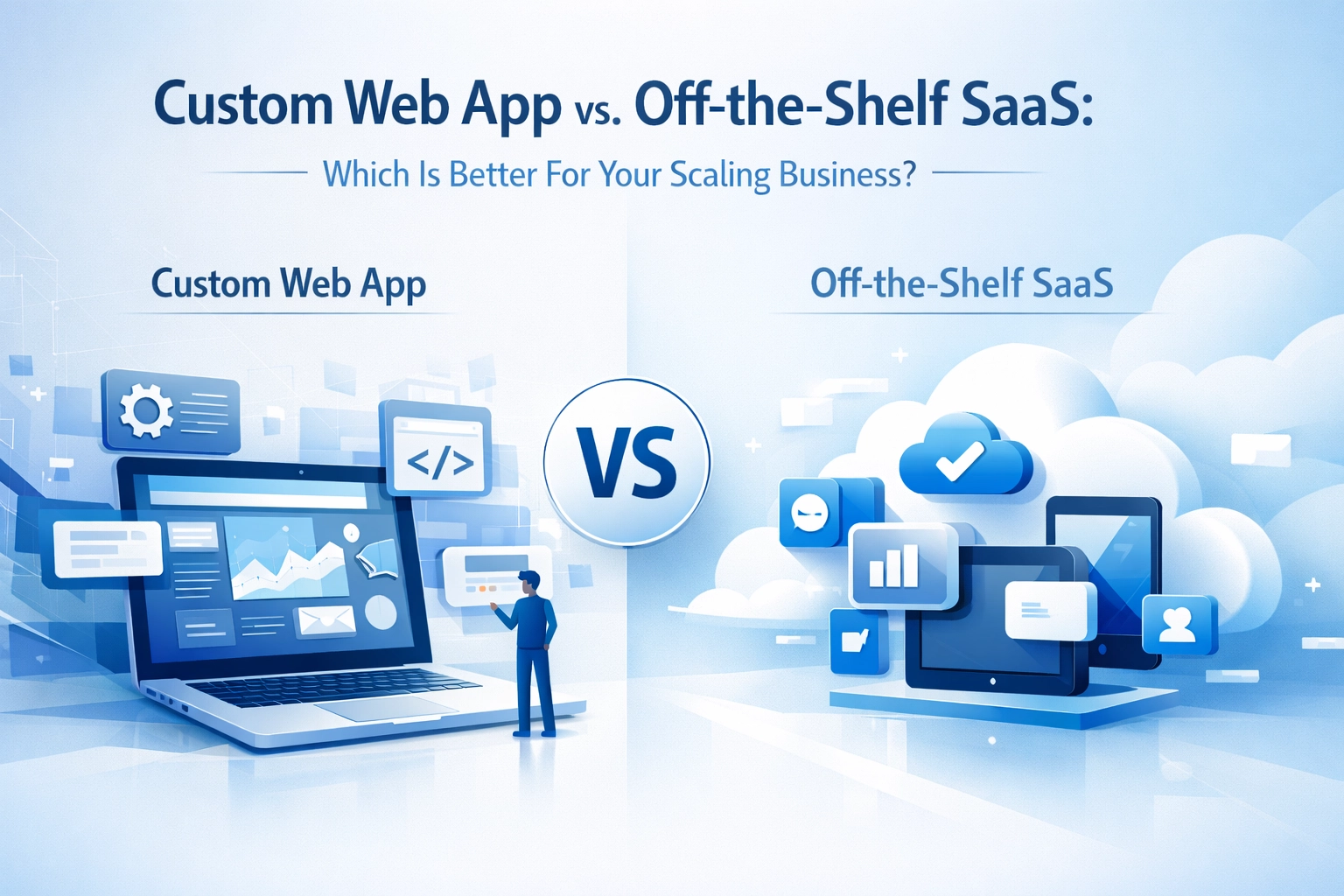
  • Custom Web App vs. Off-the-Shelf SaaS: Which Is Better For Your Scaling Business?

    Custom Web App vs. Off-the-Shelf SaaS: Which Is Better For Your Scaling Business?

    For every scaling enterprise, there comes a defining moment where the tools that fueled your early success begin to feel like a constraint. You started with a vision, a lean team, and a handful of Software-as-a-Service (SaaS) subscriptions. It worked: until it didn’t.

    As your operations expand, the "one-size-fits-all" nature of off-the-shelf software often reveals its limitations. You find your team performing "manual workarounds" to connect two different platforms, or you realize that your per-user subscription costs are ballooning alongside your headcount. This is the growth inflection point: the moment you must decide whether to continue renting your infrastructure or to build a proprietary asset that evolves with you.

    At Pure Technology Consulting, we view software not merely as a utility, but as a strategic engine for digital transformation. The choice between custom web applications and SaaS is more than a budgetary decision; it is a question of how you intend to compete in an AI-driven marketplace.

    The SaaS Mirage: Why "Convenient" Isn't Always "Scalable"

    Off-the-shelf SaaS solutions are designed for the masses. They are built to solve 80% of the problems for 80% of the market. For a startup or a small business, that 80% is a lifeline. It provides a low barrier to entry, predictable monthly costs, and immediate deployment.

    However, for a scaling business, that remaining 20%: the unique way you handle client intake, the proprietary logic in your fulfillment cycle, or the specific compliance requirements of your industry: is exactly where your competitive advantage lies. When you rely solely on SaaS, you are forced to mold your business processes to fit the software’s architecture.

    The Escalating Cost of "Rent"

    The economic appeal of SaaS often fades as you scale. Most platforms operate on per-user or per-record pricing models. As your team grows from 10 to 100, or your database expands from 5,000 to 50,000 records, your "affordable" subscription can quickly become one of your largest overhead expenses.

    Furthermore, you are often forced into higher-tier "Enterprise" plans just to unlock a single feature: like an API integration or advanced security settings: that should have been standard. Over a three-to-five-year horizon, the total cost of ownership for a suite of SaaS tools often exceeds the investment required for a bespoke web application.

    Digital architecture showing the transition from rigid SaaS constraints to a flexible, scalable custom web application.

    Custom Web Apps: Building Your Competitive Moat

    A custom web application is built around your specific workflow. It is an asset that stays on your balance sheet, providing long-term value and operational leverage. In industries with high-stakes complexity: such as legal, accounting, and healthcare: custom software becomes a "moat" that competitors cannot easily replicate.

    Tailored Automation and Workflow Governance

    When we consult with high-ticket clients, we look for "operational drag": the points where data is manually moved between systems or where human error threatens compliance.

    Consider our work in the healthcare sector with EHRIO Pro. We didn't just build a database; we created a sophisticated matching engine and 70-question intake system that aligns with HIPAA-adjacent workflows. This level of granularity is impossible to find in a generic SaaS product. By building custom, you ensure that the software serves the process, not the other way around.

    Strategic Integration and Data Sovereignty

    In a custom environment, you own the data architecture. You aren't at the mercy of a third-party vendor’s API limitations or their decision to sunset a feature you rely on.

    For firms in the fintech or debt recovery space, we have implemented custom telephony integrations and call attribution systems that provide real-time visibility into every interaction. This data isn't just stored; it is leveraged to drive better executive decision-making. Whether it’s GPS logging for field operations or complex debt agency integrations, custom builds provide a level of data sovereignty that SaaS simply cannot match.

    Proving the Vision: The Pure Technology Consulting Portfolio

    Our belief in custom development isn't theoretical. We have spent years building proprietary products that solve complex problems for specific niches. These aren't just tools; they are blueprints for how we approach bespoke development for our clients.

    • FTP Inform: A sophisticated platform that demonstrates our capability in high-security data transfer and monitoring. It highlights how we handle complex backend logic to ensure information flows seamlessly and securely.
    • AI Local Boost: Our flagship for local SEO automation. It showcases how we integrate AI to manage Google Business Profile automation at scale, providing a level of efficiency that manual "off-the-shelf" management could never achieve.
    • ChainHQ: An example of our work in supply chain and logistics transparency, proving that we can build systems capable of tracking intricate movements and accountability across vast networks.

    These projects serve as proof-of-work pillars. They demonstrate that when we talk about custom web development, we are bringing a wealth of experience in building scalable, secure, and highly automated environments.

    Central hub for AI-powered automation and custom web development across legal, healthcare, and fintech industries.

    The AI Factor: The New Frontier of Custom Development

    The rise of AI-powered automation has shifted the "Buy vs. Build" debate even further in favor of custom applications. While SaaS providers are slowly trickling out AI features, a custom build allows you to bake AI directly into your core business logic today.

    Imagine a custom dashboard for an accounting firm that doesn't just store documents, but uses AI to automatically categorize expenses, flag anomalies, and generate predictive cash-flow reports. This isn't a futuristic concept; it is the type of AI-powered automation we are implementing for clients who want to lead their industries.

    By choosing custom, you can integrate Large Language Models (LLMs) and machine learning directly into your proprietary datasets, creating a tool that gets smarter and more valuable the more your business scales.

    Decision Matrix: When to Invest in Custom Software

    How do you know if it’s time to move away from SaaS? Ask yourself these four questions:

    1. Is the software a core part of your value proposition? If the software is the service or creates the customer experience that sets you apart, you should own it.
    2. Are your SaaS costs scaling faster than your revenue? If per-user fees are eating your margins, a one-time investment in a custom build offers a better ROI.
    3. Do you have "franken-systems"? If you are using three different tools and a dozen Zapier automations just to complete one task, your architecture is brittle and prone to failure.
    4. Does your industry have unique compliance needs? For legal and healthcare firms, "standard" software often falls short of the rigorous governance required for data security and rep accountability.

    The Path Forward: Consulting and Strategy

    Choosing the right path requires a strategic roadmap. It isn't just about writing code; it's about understanding the business goals that drive the need for technology. At Pure Technology Consulting, we act as senior advisors to help you navigate this transition.

    We don't start with features; we start with your operating model. We look at where you are experiencing friction and where automation can provide the greatest leverage. Our engagement model is designed for high-stakes, high-ticket projects where the cost of failure is high, but the reward for innovation is even higher.

    If your scaling business is feeling the constraints of off-the-shelf solutions, it may be time to transition to an architecture that you own and control. Our team, led by Amin’s assistant Emily, is ready to help you scope out a solution that fits your long-term vision.

    Whether you need a custom matching engine for healthcare, a GPS-logged rep accountability system, or a high-performance SEO automation platform, we bring proven expertise to the table. Let’s build the engine that will power your next decade of growth.

    To begin your transformation, we invite you to book a discovery call or request a workflow audit. We will work with you to identify the specific automations and integrations that will yield the highest impact for your firm.

    Pure Technology Consulting LLC
    1059 Broad St #1034
    Sumter, SC 29150
    +1 (803) 921-0969

    Amin Said, Founder of Pure Technology Consulting LLC
    https://puretechconsult.com

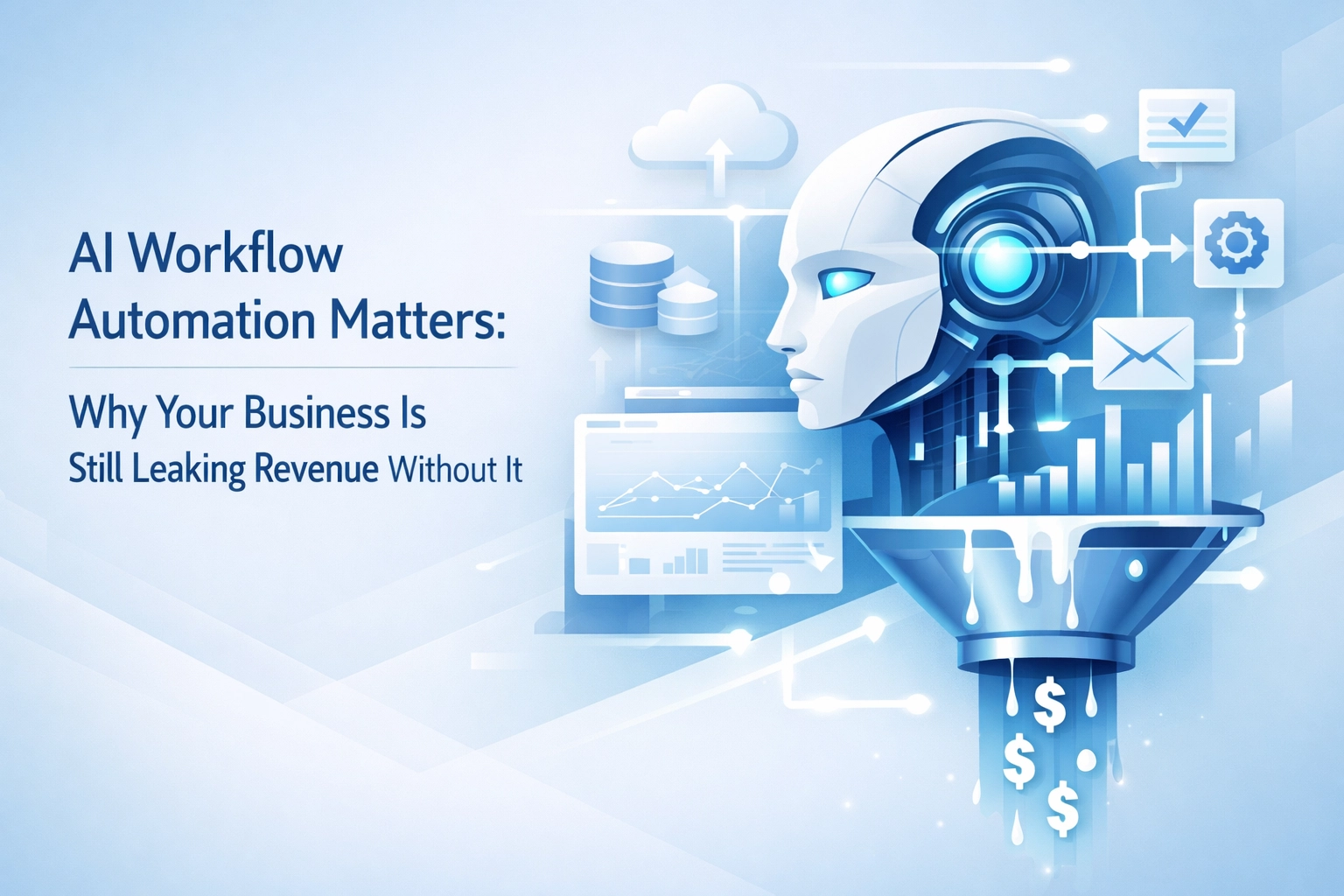
  • AI Workflow Automation Matters: Why Your Business Is Still Leaking Revenue Without It

    AI Workflow Automation Matters: Why Your Business Is Still Leaking Revenue Without It

    In the current economic landscape of 2026, the divide between market leaders and those struggling to maintain margins has never been more apparent. We have moved past the era where digital transformation was a choice; we are now in the age of the Autonomous Enterprise. Yet, many organizations remain tethered to legacy processes that silently drain their resources.

    Business owners often look at their profit and loss statements and wonder why, despite increasing revenue, their net margins remain stagnant. The answer usually isn't found in a lack of effort, but in the "invisible leaks": the operational friction and manual bottlenecks that consume up to 30–40% of a team's potential efficiency.

    At Pure Technology Consulting, we view AI workflow automation not as a luxury upgrade, but as the essential plumbing of a modern, profitable business. If your data isn't moving, your business isn't growing.

    The High Cost of the "Human Middleware"

    For years, businesses have relied on what we call "human middleware": talented employees whose primary job is to move data from one system to another. Whether it’s copying information from an email into a CRM, manually reconciling invoices, or chasing down document approvals, these tasks represent a significant revenue leak.

    Research shows that manual labor and repetitive tasks are the primary drivers of unnecessary operational costs. When an employee spends three hours a day on data entry, you aren't just paying for those three hours; you are losing the opportunity cost of what that employee could have achieved if they were focused on strategy, client relationships, or innovation.

    Furthermore, manual processes are inherently prone to error. In high-stakes industries like legal, accounting, and healthcare, a single data entry mistake can lead to compliance penalties, lost cases, or administrative rework that costs five times the original labor. By implementing AI-driven automation, organizations typically see a 25–50% reduction in costs within targeted processes, simply by eliminating the "rework" cycle.

    Abstract digital flow representing chaotic manual tasks becoming streamlined automated data.

    Scaling Beyond the Linear Growth Trap

    One of the most visionary shifts a business can make is moving away from the linear growth model. Traditionally, if you wanted to double your output, you had to nearly double your headcount. This creates a massive overhead burden that makes scaling risky and expensive.

    AI workflow automation breaks this cycle. It allows for exponential growth with marginal increases in overhead. By building custom web applications that integrate AI into the core of your operations, you create a system that can handle a 500% increase in volume without requiring a single new hire for administrative support.

    This isn't about replacing people; it’s about elevating them. It’s about creating a roadmap where your best minds are freed from the mundane to focus on the visionary.

    Proof in Practice: AI Local Boost and the Automation of Presence

    We don't just consult on these theories; we build them. Our proprietary tool, AI Local Boost, is a prime example of how automation can solve a complex, manual problem at scale.

    Managing a local digital presence across multiple locations used to require a dedicated marketing team to handle reviews, updates, and SEO signals. We automated this entire lifecycle. AI Local Boost demonstrates our capability to take a high-touch manual process: local SEO and reputation management: and turn it into a self-sustaining engine. This is the same philosophy we bring to our bespoke client builds: identify the manual repetitive cycle and build an AI-powered solution to own it.

    For clients looking to dominate their local markets, this type of automation isn't just a "tool": it’s a competitive moat. It ensures 24/7 responsiveness that human-only teams simply cannot match.

    Precision in High-Stakes Environments: The EHRIO Pro Standard

    When we look at industries like healthcare or the legal sector, the "revenue leak" often comes from intake friction. We saw this clearly when developing EHRIO Pro, a platform designed for complex matching engines and high-volume intake workflows.

    In these environments, a "70-question intake form" is common. If handled manually, the drop-off rate is high, and the data validation is a nightmare. By applying AI to these workflows, we’ve been able to automate the matching of patient data to provider requirements with surgical precision.

    This work in healthcare has paved the way for our expansion into the legal and accounting sectors. Whether it is GPS logging for field accountability or GPS-stamped GPS logging for service verification, our experience with EHRIO Pro shows that complex, sensitive data can be automated securely. When your workflow is "HIPAA-adjacent" or requires strict legal compliance, you can't afford a "leaky" manual process.

    Luminous network symbolizing non-linear business growth and scalable AI workflow automation.

    The Infrastructure of Speed: FTP Inform and ChainHQ

    In business, speed is the ultimate currency. AI workflow automation delivers 40–60% faster decision cycles by providing real-time data aggregation.

    Consider FTP Inform, a solution we built to solve the "black hole" of file transfers. In many businesses, critical revenue-generating data is sent via FTP, but no one knows if it arrived or if it was processed correctly until something breaks. FTP Inform automates the monitoring and alerting of these data streams. It’s a visionary approach to "quiet" infrastructure: ensuring that the digital pipes of your business are always clear.

    Similarly, ChainHQ serves as a testament to our ability to create visibility across complex supply chains and workflows. When you have a custom web application that provides a "single pane of glass" view into your entire operation, revenue leaks become visible and actionable. You stop guessing where the bottleneck is because the data tells you exactly where the flow has stopped.

    Custom Development: Why "Off-the-Shelf" Often Fails

    Many businesses attempt to plug their revenue leaks with generic, off-the-shelf SaaS products. While these tools have their place, they often lead to a "SaaS sprawl" where you have ten different subscriptions that don't talk to each other, creating a new kind of manual work: "the integration shuffle."

    The highest ROI comes from bespoke automation. At Pure Technology Consulting, we specialize in building custom web applications and AI integrations tailored specifically to your unique operating model. This is the difference between buying a suit that "mostly fits" and having one tailored to your exact measurements.

    Our approach starts with a deep-dive discovery. We look at:

    • Data Silos: Where is your information trapped?
    • Decision Bottlenecks: Where is a human waiting on a system (or another human) to move forward?
    • Compliance Risks: Where could a manual error lead to a legal or financial catastrophe?

    By addressing these with a custom-coded solution, we ensure that the automation fits your business: not the other way around. These engagements are comprehensive, strategic, and designed for organizations ready to invest $10k+ to secure their operational future.

    Interlocking geometric patterns representing precise data security and custom AI integration.

    The Roadmap to an Automated Future

    The transition to an AI-powered workflow doesn't happen overnight, but the cost of waiting is higher than the cost of implementation. Every month you delay is another month of leaked revenue, uncaptured data, and exhausted employees.

    We are currently helping firms in legal, accounting, and field services transition from manual "swivel-chair" operations to streamlined, AI-driven powerhouses. We bring our proven capabilities from healthcare, fintech, and local SEO to ensure you aren't starting from scratch, but rather building on a foundation of success.

    If you are ready to stop the leaks and start scaling with precision, it’s time to move beyond the standard operating procedures of the past.

    Take the Next Step

    Don't let your business continue to bleed revenue through outdated processes. Let's explore how a custom AI workflow can transform your operating model.

    Book a discovery call today to audit your current workflows and identify your biggest automation opportunities.

    You can schedule a time directly with our team here: https://puretechconsult.com/schedule or reach out via our office line at +1 (803) 921-0969. My assistant, Emily, will ensure you are connected with the right technical lead for your specific industry needs.

    Visionary growth is within reach. Let's build the engine that drives it.

    Amin Said, Founder of Pure Technology Consulting LLC
    https://puretechconsult.com

  • Why Bespoke AI Solutions Will Change the Way You Scale Your Operations

    Why Bespoke AI Solutions Will Change the Way You Scale Your Operations

    For decades, the standard playbook for scaling a business was predictable: increase demand, hire more staff to manage that demand, and invest in more off-the-shelf software to keep the wheels turning. This linear approach to growth worked in the analog and early digital eras. However, in the current landscape, this model often leads to "operational drag", a state where the complexity of managing your growth actually slows your progress.

    At Pure Technology Consulting, we believe that the next era of scaling isn't about adding more "cogs" to the machine. It is about redesigning the machine itself. Bespoke AI solutions represent a fundamental shift from static tools to dynamic, intelligent systems that grow in capability as your business grows in volume.

    The Scaling Paradox: Why Traditional Software Fails

    Most enterprises rely on a patchwork of SaaS platforms. While these tools are excellent for specific, isolated tasks, they are built for the "average" user. When your business hits a certain scale, your needs are no longer average. You face unique bottlenecks, specific compliance requirements, and proprietary workflows that generic software simply wasn't designed to handle.

    Scaling with generic tools often results in "tool sprawl," where your team spends more time moving data between platforms than actually performing high-value work. This is where the performance bottleneck begins. As data volume increases, the manual effort required to bridge the gaps between these systems grows exponentially, eventually eating into your margins and stifling innovation.

    Visual representation of a unified operational architecture eliminating scaling bottlenecks.

    Eliminating Performance Bottlenecks Through Operational Architecture

    Bespoke AI solutions solve the scaling paradox by creating a unified operational architecture. Unlike traditional software that requires manual updates or complex reconfigurations to handle growth, a custom-built AI system is designed to expand alongside your business.

    When we build custom web applications at Pure Technology Consulting, we don't just look at what you need today. We look at the data volumes you expect three years from now. By embedding AI directly into the core of your workflow, we ensure that as your customer base expands, the system handles the increased load without a corresponding increase in human intervention. This allows for a smooth transition from a mid-market player to an industry leader without the usual infrastructure constraints.

    Proven Capabilities: The Proof in the Proprietary Build

    Our philosophy is built on the foundation of our own proprietary products. These are not just standalone tools; they are case studies in how complex, bespoke logic can be packaged into scalable assets.

    For instance, consider EHRIO Pro. In the healthcare and matching sector, we developed a system capable of handling 70-question intakes and sophisticated matching engines. This isn't just a form-builder; it’s an intelligence layer that manages HIPAA-adjacent workflows and complex data relationships. When a business in the legal or accounting space looks to scale, they aren't starting from scratch with us. They are leveraging the same proven architecture that allows EHRIO Pro to process thousands of data points with surgical precision.

    Similarly, our work with FTP Inform demonstrates our capability in data transparency and automated file management. For high-ticket clients, managing the flow of information is often the biggest barrier to scaling. By automating these "unseen" processes, we remove the friction that typically accompanies growth.

    Continuous Adaptation: Software That Gets Smarter

    One of the most visionary aspects of bespoke AI is its ability to learn. Traditional software is depreciating the moment it is deployed; it becomes less relevant as your business evolves. Custom AI, however, is an appreciating asset.

    By integrating continuous retraining cycles, your AI solution can adapt to new data sources and changing market conditions. As you scale into new territories or offer new services, the AI can be refined to recognize new patterns and optimize new workflows. This means your systems grow smarter alongside your operations.

    Adaptive AI systems growing smarter through continuous data flow and operational learning.

    Maximizing Operational Efficiency at Scale

    The impact of custom AI on the bottom line is not theoretical. Businesses that implement purpose-built automation often report productivity improvements of up to 40%. In a scaling environment, these gains are compounded.

    Imagine a scenario in a debt agency or fintech firm. Using telephony integrations and automated call attribution, capabilities we have refined through our fintech and debt agency projects, a firm can handle double the call volume with the same staff. This is not about replacement; it is about leverage. We give your best people the "superpowers" they need to operate at a higher level.

    For local businesses, our product AI Local Boost serves as a prime example of this leverage. By automating Google Business Profile updates and local SEO tasks, we allow businesses to maintain a high-frequency digital presence that would otherwise require a dedicated marketing team. This same logic, automating the repetitive to focus on the strategic, is what we bring to our $10k+ custom consulting engagements.

    Integration as a Strategic Advantage

    The primary reason bespoke AI succeeds where SaaS fails is integration. A custom build from Pure Technology Consulting is designed to sit at the center of your ecosystem. It talks to your CRM, your accounting software, and your proprietary databases without the need for fragile third-party connectors.

    In the legal and accounting sectors, where compliance and accuracy are non-negotiable, this level of integration is a game-changer. We have experience building GPS logging and rep accountability tools, such as our work with D2D Tracking. When you can track every movement and every data point in real-time with 100% accuracy, scaling ceases to be a risk and becomes a calculated strategic move.

    A centralized neural hub representing seamless integration of data systems for business scaling.

    Building Your Proprietary Advantage

    In a world where everyone has access to the same basic AI tools, your data is your only true moat. A bespoke AI solution allows you to train models on your unique business intelligence. This creates a competitive differentiation that pre-built tools can never offer.

    Whether it is predicting customer behavior, automating complex multi-step workflows, or creating a personalized user experience for your SaaS clients, custom development ensures that your intellectual property is baked into your software. You aren't just renting a tool; you are building an asset that belongs to your balance sheet.

    The Path Forward: A Consultative Discovery

    Scaling with AI is a journey that begins with a clear roadmap. It requires an advisory partner who understands the nuances of software development, data governance, and operational strategy.

    If you are finding that your current systems are struggling to keep up with your vision, it may be time to move beyond the limitations of off-the-shelf software. At Pure Technology Consulting, we specialize in building the high-level automation and custom web applications that define the modern enterprise.

    Our process begins with a deep-dive discovery to identify your specific bottlenecks and design a solution that fits your unique operating model. To explore how we can bring these proven capabilities to your organization, I invite you to reach out.

    Secure proprietary AI infrastructure acting as a digital moat for competitive business scaling.

    To schedule a discovery call and begin your workflow audit, please contact Emily at our office or visit our scheduling page. We are ready to help you build the infrastructure of your future.

    Phone: +1 (803) 921-0969
    Schedule a Consultation: https://puretechconsult.com/schedule

    Amin Said, Founder of Pure Technology Consulting LLC
    https://puretechconsult.com

  • Why AI Workflow Automation Will Change the Way You Scale Your Service Business

    Why AI Workflow Automation Will Change the Way You Scale Your Service Business

    Service businesses are built on expertise and trust: but they often scale on spreadsheets, Slack messages, and heroic employees who “just make it happen.” That works… until demand increases. Then the same things that made you great: hands-on delivery, custom client requests, high-touch support: start to create operational drag.

    AI workflow automation changes the scaling equation because it lets you grow output without growing complexity at the same rate. Instead of hiring another coordinator, another admin, another dispatcher, another assistant, you upgrade your operating model: your intake, routing, scheduling, follow-ups, reporting, and QA become systems.

    Research and real-world deployments consistently show meaningful gains when teams automate targeted processes: often 30–40% workflow efficiency improvements and 25–50% cost reductions in the automations’ scope: because repetitive work stops consuming expensive human attention. More importantly, automation protects quality when volume rises, which is the real challenge in services.

    The scaling problem in services: headcount grows faster than margin

    Most service businesses hit one of these ceilings:

    • The inbox ceiling: leads, requests, and follow-ups pile up; response time slips; conversion drops.
    • The handoff ceiling: work gets “stuck” between teams because information is incomplete or inconsistent.
    • The coordination ceiling: scheduling, rescheduling, and status updates become a full-time job.
    • The quality ceiling: as you hire fast, the process becomes less consistent and mistakes rise.
    • The reporting ceiling: leadership can’t see bottlenecks early enough to fix them.

    Traditional scaling says: add staff, add managers, add meetings, add tools. The result is higher payroll, more coordination overhead, and slower decision-making.

    AI workflow automation breaks that pattern by taking the repeatable 60–80% of operational tasks: capturing data, validating it, routing it, triggering reminders, logging outcomes, generating drafts, escalating exceptions: and running it reliably in the background.

    What “AI workflow automation” actually means (without the hype)

    AI workflow automation is not “a chatbot” and it’s not “one more app.” It’s a combination of:

    1. Workflow design: mapping the real steps from request → delivery → billing → renewal.
    2. Automation: moving work between systems (CRM, email, calendar, project boards, billing, EHR, document storage).
    3. AI assistance: extracting meaning from messy inputs (emails, forms, calls), generating structured summaries, and making smart routing decisions.
    4. Governance: permissions, audit trails, approval steps, and exception handling.

    A healthy automation strategy doesn’t aim to replace your team. It aims to protect your team: so they focus on client outcomes, not copy/paste operations.

    Where the biggest leverage shows up

    AI automation is especially effective in the “middle layer” of service delivery:

    • Intake → qualification → assignment
    • Scheduling → reminders → confirmations
    • Document collection → validation → storage
    • Status updates → progress tracking → escalation
    • QA checks → compliance steps → sign-off
    • Reporting → forecasting → capacity planning

    That middle layer is where scaling often breaks, because it’s high volume, high repetition, and easy to standardize.

    The four scaling advantages that change the game

    1) Elastic capacity without proportional hiring

    When workflows scale automatically, your capacity increases with demand. Seasonal spikes no longer require you to scramble, and growth doesn’t immediately force new headcount. You can add throughput by expanding automation coverage: without adding management layers.

    This is what “operational leverage” looks like in a service company: the business grows, and the per-client cost doesn’t rise at the same rate.

    2) 24/7 responsiveness without building a 24/7 team

    Service businesses win deals with responsiveness: especially in competitive markets. AI-driven workflows can:

    • respond to inbound requests,
    • route tickets,
    • send confirmations,
    • collect required details,
    • trigger next steps,

    …even when your office is closed.

    That doesn’t mean you deliver everything instantly; it means the client experience stays consistent and professional around the clock while your human team stays focused.

    3) Faster decisions because data stops living in people’s heads

    AI-enabled workflows produce clean, structured operational data. Instead of “I think the team is busy,” you get:

    • cycle time by service type,
    • bottleneck stage visibility,
    • backlog size and age,
    • conversion by channel,
    • rework rate and top causes.

    That’s how leadership shifts from reactive firefighting to proactive scaling.

    4) Better client experience at scale (the hardest part)

    As volume increases, quality tends to drift. Automation prevents drift by enforcing:

    • required fields,
    • standardized handoffs,
    • validation rules,
    • QA gates,
    • consistent updates.

    The result is a more predictable client journey: often translating into better satisfaction and retention, because reliability scales with volume.

    Abstract digital architecture symbolizing scalable AI workflow automation and operational leverage for service businesses.

    What to automate first: a practical prioritization framework

    Not every workflow should be automated on day one. The fastest wins usually share the same traits:

    1. High frequency (happens daily or weekly)
    2. Clear inputs/outputs (you can define “done”)
    3. Low ambiguity (few edge cases)
    4. High cost of delay (slow response time loses revenue)
    5. High error cost (mistakes create rework or risk)

    If you’re choosing your first 2–3 automations, start with one from each category:

    • Revenue-side automation: lead intake, follow-up, qualification, scheduling.
    • Delivery-side automation: task routing, checklists, document collection, status updates.
    • Finance-side automation: invoicing triggers, payment reminders, reconciliation flags.

    Then build outward in a roadmap: because the real win isn’t one automation. It’s a connected operating model.

    Where custom web apps beat off-the-shelf automation tools

    Many teams start with generic automation platforms and hit walls:

    • workflows don’t match your real process,
    • data models don’t fit your services,
    • integrations are shallow,
    • reporting is limited,
    • compliance and audit trails are weak.

    That’s where custom web applications and bespoke workflow engines matter. A custom build gives you:

    • a data model designed around your delivery,
    • role-based interfaces (ops, sales, admin, leadership),
    • deeper integrations with your systems,
    • governance (approvals, audit logs, permissions),
    • dashboards that reflect how you actually run.

    At Pure Technology Consulting, we typically approach this in phases:

    • Phase 1: Workflow audit + roadmap (what to automate first, what to standardize, what to measure)
    • Phase 2: Minimum viable automation (2–4 core workflows, end-to-end)
    • Phase 3: Systemization (dashboards, QA gates, exception handling, advanced integrations)

    Deliverables often include:

    • workflow maps and automation specs,
    • integration architecture,
    • a custom admin portal (if needed),
    • operational dashboards,
    • documentation for training and governance.

    Industry insight: the “exception-first” operating model

    The most scalable service organizations operate on a simple principle:

    Humans handle exceptions. Systems handle everything else.

    AI workflow automation makes this realistic because AI can interpret messy inputs and convert them into structured tasks. That’s the missing link that used to force humans to be the glue.

    Instead of assigning people to manage routine workflows, you assign them to:

    • high-value client conversations,
    • complex cases,
    • relationship management,
    • proactive service improvements.

    This is how service firms protect margin while expanding capacity.

    Proof-of-work: AI Local Boost as a model for reliable automation

    To make this concrete, look at the type of automation thinking behind AI Local Boost (AILB). Local SEO and reputation management aren’t “one-time projects.” They’re recurring, operational work: publishing updates, keeping profiles consistent, monitoring changes, responding to events, and proving activity over time.

    The value of AILB as a proof point isn’t the category: it’s the operating model:

    • structured inputs (business data, location info, services),
    • repeatable workflows (updates, monitoring, reporting),
    • automation-backed consistency (less reliance on manual checklists),
    • measurable outcomes (activity, visibility signals, operational reporting).

    That same model translates directly to service businesses that want to scale: define the workflow, standardize the data, automate the repeatable steps, and instrument the outcome.

    If you’re exploring a roadmap for workflow automation or a custom internal portal, start with a discovery conversation here: https://puretechconsult.com/schedule

    Risk, compliance, and trust: how to automate without creating chaos

    Automation should reduce risk, not introduce it. The biggest pitfalls we see are:

    • automating broken processes (you just scale the mess),
    • missing access controls (too many people can see too much),
    • shallow logging (no audit trail when something goes wrong),
    • unclear ownership (no one owns exceptions),
    • unclear boundaries (AI outputs treated as “truth” without review).

    A strong automation design includes:

    • Role-based permissions (least privilege by default)
    • Audit logs (who changed what, when, and why)
    • Approval gates for sensitive steps (billing, submissions, compliance events)
    • Human-in-the-loop review where accuracy matters
    • Exception queues (a single place for edge cases)

    This is also where our healthcare and regulated-workflow experience matters. We’ve built and supported complex intake and matching workflows (including 70-question intakes and HIPAA-adjacent processes), which creates good instincts around governance, data handling, and operational accountability.

    Secure digital network representing automated governance and data compliance in service business operations.

    The transformation you should expect in 60–90 days

    When AI workflow automation is implemented with a roadmap (not random automations), the changes show up quickly:

    • Week 1–2: process mapping, bottleneck identification, integration inventory
    • Week 3–6: first automations live (intake → routing → follow-up; reminders; status triggers)
    • Week 7–12: dashboards, exception handling, QA gates, and expansion to adjacent workflows

    What improves first:

    • response time,
    • handoff consistency,
    • rework reduction,
    • leadership visibility.

    What improves next:

    • capacity planning,
    • team utilization,
    • client experience consistency,
    • margin stability during growth.

    This is also the point where service leaders often realize they don’t just need “automation”: they need an operating system for service delivery. That’s exactly where custom web apps and tailored SaaS-style internal tools become strategic.

    A simple way to know you’re ready

    You’re ready for AI workflow automation if any of the following are true:

    • You’re growing, but hiring feels like the only way to keep up.
    • Your best people are buried in admin tasks.
    • Your delivery depends on tribal knowledge and “who remembers what.”
    • Clients ask for updates more than you proactively provide them.
    • Your systems don’t talk, so your team becomes the integration layer.

    The goal isn’t to become “more automated.” The goal is to become more scalable, with a calmer, clearer operation that can grow without breaking.

    If you want help scoping your first automation roadmap: what to standardize, what to integrate, and what to build: book a no-obligation discovery call. You can also reach us at +1 (803) 921-0969. https://puretechconsult.com/schedule

    Amin Said, Founder of Pure Technology Consulting LLC
    https://puretechconsult.com

  • Why AI Local Boost Will Change the Way You Dominate Google Search

    Why AI Local Boost Will Change the Way You Dominate Google Search

    The landscape of local discovery is undergoing a seismic shift. For years, "Search Engine Optimization" was a game of keyword density, backlink counts, and manual updates. But as we move deeper into 2026, the traditional rules of the game are being rewritten by generative AI and intent-based algorithms. Google is no longer just a list of links; it is an AI-driven answer engine.

    For high-ticket professional services, law firms, accounting practices, and specialized healthcare providers, visibility in this new era requires more than just "being online." It requires an automated, intelligent presence that feeds Google’s Search Generative Experience (SGE) the exact data it needs to recommend your business over the competition. This is where AI Local Boost comes into play. Developed by Pure Technology Consulting, this proprietary engine represents our commitment to building bespoke automation that handles the heavy lifting of digital dominance.

    The Evolution from Keyword Matching to Intent-Based Discovery

    The way users find local services has fundamentally changed. A potential client no longer just types "lawyer near me." They ask their AI-enabled device, "Which estate planning attorney in downtown has the best reputation for handling complex trusts and responds quickly to inquiries?"

    Google’s algorithm now prioritizes three core pillars: relevance, proximity, and prominence. While you cannot change your physical proximity to a user, you can strategically dictate your relevance and prominence.

    Manual management of a Google Business Profile (GBP) is no longer sufficient to maintain a competitive edge. To dominate, a business must produce a consistent stream of high-quality, localized content and manage a feedback loop of reviews that signal authority to the algorithm. AI Local Boost was designed to solve the operational drag associated with these tasks, turning a manual chore into a strategic asset.

    Digital city map with highlighted nodes representing AI-powered local search discovery.

    Why Automation is the New Competitive Moat

    In the world of professional services, time is the most valuable commodity. An executive at a law firm or a partner at an accounting practice should not be spending hours drafting Google posts or manually responding to every review. Yet, if these tasks are neglected, the business's visibility plateaus.

    AI Local Boost serves as a demonstration of how custom software can bridge the gap between operational capacity and marketing necessity. By automating the management of Google Business Profiles, the tool ensures that:

    1. Content Frequency is Never Interrupted: The engine generates and schedules location-specific posts that highlight services, expertise, and local relevance. This constant activity signals to Google that the business is active and authoritative.
    2. Review Intelligence: Beyond simple automated responses, the system analyzes the sentiment of reviews, helping businesses appear in "AI mode" search results by reinforcing specific service categories through natural language.
    3. Data Consistency: It ensures that every piece of information, from operating hours to service descriptions, is perfectly synchronized, eliminating the discrepancies that often trigger algorithmic penalties.

    At Pure Technology Consulting, we view AI Local Boost not just as a standalone product, but as a proof-of-concept for how we integrate complex automation into a client’s existing workflow. It is a specialized tool in a broader arsenal that includes custom-built solutions like ChainHQ and EHRIO Pro.

    Positioning for Google’s "AI Mode"

    Google’s "AI Mode" (or SGE) synthesizes information from across the web to provide a single, comprehensive answer to a user’s query. If your business information is sparse or outdated, the AI will overlook you in favor of a competitor who has a robust, data-rich profile.

    AI Local Boost focuses on "Entity Home" optimization. In the eyes of an AI, your business is an "entity" with various attributes. The more high-quality attributes you feed the system, through frequent posts, answered questions, and keyword-rich reviews, the more likely the AI is to trust your business as the primary solution for the user’s intent.

    For our clients in the legal and accounting sectors, this means shifting from a "set it and forget it" mentality to a dynamic, automated strategy. We help firms move away from generic marketing and toward a model where their digital presence is as sophisticated as their professional practice.

    Sleek automation engine core symbolizing bespoke software development and operational efficiency.

    Bespoke Development: Beyond the "Off-the-Shelf" Trap

    Many businesses fall into the trap of using generic, off-the-shelf SEO tools that offer a one-size-fits-all approach. These tools often lack the nuance required for high-stakes industries like healthcare or fintech.

    Pure Technology Consulting specializes in bespoke web development and custom automation. AI Local Boost was born from this philosophy. We recognized that our clients needed a way to scale their local presence without hiring a massive marketing department.

    This same approach is reflected in our work across other sectors:

    • Healthcare: With EHRIO Pro, we’ve built matching engines and HIPAA-adjacent workflows that handle complex intakes.
    • Fintech & Debt: We’ve integrated telephony and call attribution systems for debt agencies to ensure every lead is tracked and optimized.
    • Operations: Our D2D tracking solutions provide GPS logging and representative accountability for field-heavy industries.

    When we deploy AI Local Boost for a client, we aren't just giving them a login; we are integrating a piece of high-level engineering into their growth strategy. It serves as an entry point for businesses to understand the power of custom software, where the software fits the business, rather than the business forcing itself into the constraints of a generic SaaS.

    Strategy Over Software: What to Automate First

    For an executive looking to scale, the question isn't "Should I use AI?" but "Where will AI provide the highest ROI?"

    We recommend a roadmap that begins with high-impact, low-friction areas. Dominating local search through AI Local Boost is often the first step because the results are measurable and the operational relief is immediate. Once the "top of the funnel" is automated and optimized, we can look deeper into the organization's operating model.

    Can your intake process be automated? Can your reporting be synthesized into a custom dashboard like FTP Inform? Can your entire workflow be orchestrated through a custom-built web application? This is the visionary path we chart for our partners.

    Ascending path of light representing a strategic roadmap for custom web app transformation.

    The Pure Technology Consulting Approach

    We don't just build apps; we build operating models. Our founder, Amin Said, has positioned Pure Technology Consulting as a senior advisory firm that happens to write world-class code. When you engage with us, you are working with a team that understands the strategic stakes of your industry.

    Whether we are implementing AI Local Boost to help you dominate the local map pack or developing a complex HIPAA-compliant matching engine, our goal is to create operational leverage. We reduce cycle times, minimize error rates, and increase throughput by replacing manual drag with elegant, automated systems.

    If you are ready to stop chasing the algorithm and start leading it, the first step is a conversation. We invite you to schedule a discovery call with our team to discuss your current workflow and how custom automation can redefine your market position.

    A Vision for 2026 and Beyond

    The businesses that thrive in the coming years will be those that treat their digital infrastructure as a core pillar of their business strategy, not a secondary expense. AI Local Boost is a testament to this shift. It represents the transition from manual, reactive marketing to proactive, automated dominance.

    By leveraging proprietary technology and bespoke development, you can ensure that when Google's AI looks for the best local provider, your business is the only logical answer.

    For more insights into how we are transforming industries through automation, explore our latest case studies or watch our video walkthroughs to see our custom builds in action.

    If you have questions about how these technologies can be tailored to your specific needs, please reach out to my assistant, Emily, to coordinate a time for us to connect.

    Amin Said, Founder of Pure Technology Consulting LLC
    https://puretechconsult.com
    +1 (803) 921-0969

  • Why AI Workflow Automation Will Change the Way You Scale Your Service Business

    Why AI Workflow Automation Will Change the Way You Scale Your Service Business

    For decades, the growth trajectory of a service-based business followed a predictable, albeit painful, linear path. If you wanted to double your revenue, you generally had to double your headcount. This "linear growth trap" meant that scaling often brought more complexity, higher overhead, and thinner margins rather than the exponential rewards founders dreamed of.

    As we move further into 2026, the paradigm has fundamentally shifted. AI workflow automation is no longer a luxury reserved for Silicon Valley giants; it is the primary engine for service businesses looking to decouple revenue growth from labor costs. At Pure Technology Consulting, we view automation not as a tool for replacement, but as a framework for operational leverage.

    The Architecture of Infinite Scale

    Scaling a service business traditionally hits a ceiling when the complexity of managing people outweighs the efficiency of the service provided. AI-driven automation breaks this ceiling by standardizing execution and handling the "cognitive load" of repetitive tasks.

    Research indicates that organizations implementing high-level AI workflows can see a 25–50% reduction in costs within targeted processes, alongside a 30–40% improvement in overall efficiency. This isn't just about doing things faster; it’s about creating an elastic capacity. Whether you have ten clients or ten thousand, an automated infrastructure maintains consistent quality without a proportional increase in your payroll.

    Abstract visualization of a service business scaling efficiently through automated infrastructure layers.

    Case Study in Precision: AI Local Boost

    To understand how we translate this vision into reality, look at our development of AI Local Boost. While many see it as a local SEO tool, we view it as a masterclass in automating high-value signals at scale. For businesses managing multiple locations, the manual labor involved in maintaining Google Business Profile authority is immense.

    We built AI Local Boost to demonstrate how custom automation can handle sentiment analysis, response generation, and activity scheduling. It’s a proof-of-concept for how bespoke web apps can take a complex, human-intensive marketing strategy and turn it into a streamlined, high-output engine. This is the level of sophisticated automation we bring to our high-ticket consulting clients, taking a bottleneck and turning it into a competitive advantage.

    Elevating Human Capital Through Cognitive Offloading

    The most significant impact of AI workflow automation is the elevation of your team. When you remove manual data entry, processing delays, and administrative "glue work," your staff is freed to focus on relationship-driven activities that justify your premium pricing.

    In sectors like legal, accounting, and specialized consulting, expertise is your product. If your experts are spending 40% of their time on administrative coordination, your business is operating at 60% capacity. AI workflows can deliver real-time decision support, reducing decision cycles by 40–60%. This allows your senior advisors to move from "doing the work" to "guiding the outcome."

    Digital map of connected nodes representing AI-driven decision support and operational connectivity.

    Case Study in Connectivity: ChainHQ and FTP Inform

    Operational oversight is often the first thing to break during rapid scaling. This is why we developed ChainHQ and FTP Inform.

    ChainHQ serves as a testament to our capability in building centralized command centers for complex operations. It allows leaders to maintain a "single source of truth" across various service lines. Similarly, FTP Inform was born from the need for high-level data security and real-time monitoring. In a world where data movement is constant, knowing exactly when a file arrives or a process completes is critical.

    These aren't just standalone products; they are examples of the infrastructure we build for firms that cannot afford a lapse in data integrity. When we consult on custom web applications, we pull from the logic of FTP Inform to ensure that your automated workflows are as secure as they are efficient.

    Breaking Silos: The Cross-Departmental Revolution

    As a service business grows, silos naturally form. The marketing team doesn't know what the fulfillment team is doing, and the finance team is lagging behind both. This friction creates a "drag" on your growth.

    AI workflow automation acts as the connective tissue between these departments. By integrating processes across teams, we’ve seen cycle times reduced by 40–70% in end-to-end service delivery. This is particularly vital in high-stakes industries like healthcare or fintech, where we have extensive experience.

    For instance, our work in the healthcare sector with the EHRIO Pro matching engine and 70-question intake systems demonstrates how we handle complex data logic. We’ve brought that same rigor to the legal and accounting sectors, ensuring that a client’s journey from intake to final deliverable is a seamless, automated flow.

    Executive looking at a digital horizon representing strategic freedom gained from automated service delivery.

    24/7 Service Delivery Without the 24/7 Payroll

    Client expectations have evolved. They no longer wait for "business hours" to receive updates or seek support. AI-powered customer workflows allow your business to provide instant responses and proactive issue resolution around the clock.

    Organizations deploying these AI-driven customer workflows often report a 30–50% increase in customer satisfaction. By personalizing responses based on historical data and sentiment, the AI doesn't just "reply", it provides value. This level of service was previously impossible to scale without a massive offshore support team. Now, it’s a matter of code and configuration.

    The Pure Technology Consulting Approach

    We don't believe in "out of the box" solutions for businesses that aim to lead their industries. A $10,000+ custom automation strategy is an investment in your company’s future operating model.

    When you work with us, we don't just hand you a piece of software. We look at your entire roadmap. We analyze your GPS logging requirements, your telephony integrations, and your proprietary data workflows. Whether it's building a D2D tracking system for field accountability or a HIPAA-adjacent workflow for sensitive client data, we specialize in high-complexity, high-reward builds.

    Centralized digital core symbolizing data integrity and single source of truth for custom software automation.

    Moving Toward Your Automated Future

    The transition to an AI-automated service model is not an overnight task, it is a strategic evolution. It requires a partner who understands the nuances of custom software development and the specific pressures of scaling a high-ticket service business.

    If your current operations feel like they are held together by spreadsheets and manual effort, you are likely leaving significant margin on the table. More importantly, you are limiting your ability to scale.

    Our team, supported by my assistant Emily, is ready to help you map out a visionary path forward. We bring proven capabilities from the healthcare, fintech, and SEO sectors to your specific business challenges, ensuring that your custom web application or automation suite is built for where the market is going, not where it has been.

    Are you ready to stop hiring your way out of growth and start automating your way into scale?

    To discuss a custom-built solution for your enterprise or to audit your current workflows, please reach out to us.

    Contact us today at +1 (803) 921-0969 or schedule a discovery call to begin your transformation.

    Amin Said, Founder of Pure Technology Consulting LLC
    https://puretechconsult.com