Author: admin

  • Dominating the Map: Why Multi-Location Service Businesses are Losing to AI-Optimized Competitors

    Dominating the Map: Why Multi-Location Service Businesses are Losing to AI-Optimized Competitors

    By Amin Said, Founder of Pure Technology Consulting LLC

    It’s Tuesday, April 14th, 2026, and if you’re running a service business with 10, 50, or 500 locations, the ground beneath you has shifted.

    A few years ago, "Local SEO" meant making sure your phone number was right on Google and hoping your managers asked for reviews. Today, the game is being played by algorithms that move faster than any manual team ever could.

    I’m seeing a recurring pattern at Pure Technology Consulting. Sophisticated multi-location brands: franchises, clinic networks, and field service groups: are watching their organic traffic bleed out. They aren’t losing to "better" local businesses; they are losing to AI-optimized competitors who have turned their local presence into a high-frequency data stream.

    If you’ve noticed your Map Pack rankings slipping or your lead costs climbing, it’s not a fluke. It’s a systemic failure of your current operating model. Here is why the old way of managing locations is dying, and how the "visionary" leaders are automating their way to the top.

    The AI Reality: Consistency is No Longer Optional

    The biggest mistake most executives make is thinking that Google (or Gemini, or ChatGPT) evaluates each of their locations in a vacuum. They assume if the Dallas branch is doing great, the struggles in Houston won't affect the overall brand health.

    That assumption is now a liability.

    AI-powered search engines evaluate your brand holistically. They look for "consensus signals." When one location has a different category listed than another, or when your business hours on your website don’t match your Google Business Profile (GBP), the AI doesn’t just get confused: it loses confidence.

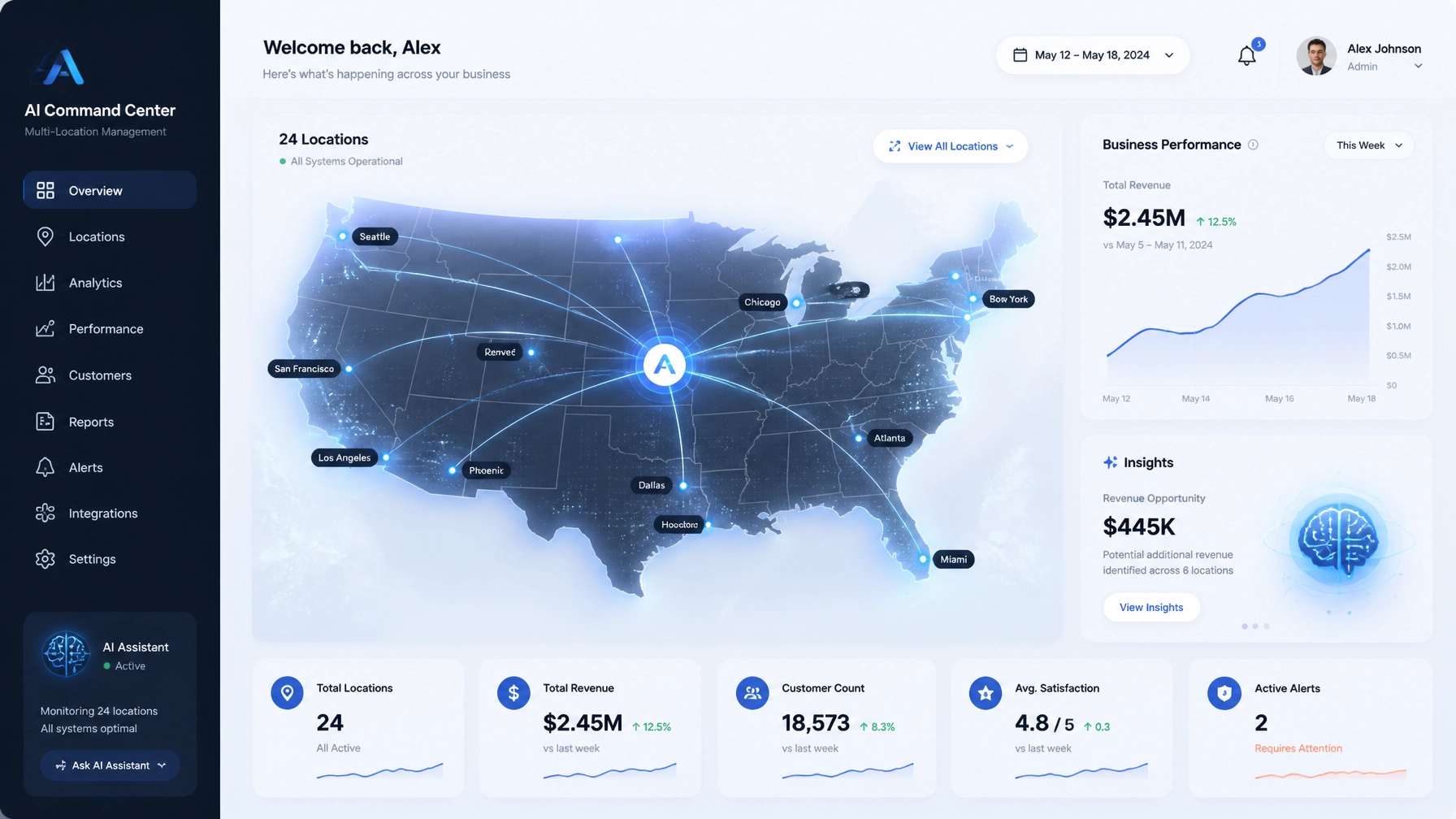
    Digital map showing synchronized business locations representing local SEO data consistency for multi-location brands.

    In the world of AI search, confidence is the primary currency. If the algorithm lacks confidence in your data, it won’t risk its reputation by recommending you to a user. It will instead route that customer to a competitor whose data is consistent, verified, and updated in real-time.

    Why Multi-Location Brands are Particularly Vulnerable

    Managing a single location is easy. Managing fifty is a nightmare of "data fragmentation." This is where the "Weakest Link" theory comes into play.

    In our work building custom automation tools like AI Local Boost (AILB), we’ve found that a single neglected location with outdated hours or a string of unanswered negative reviews can drag down the search authority for the entire network. AI systems interpret these discrepancies as a sign of poor governance.

    Here are the three specific friction points where I see brands losing:

    1. Fragmented Data Governance: You have regional managers, local office admins, and perhaps a central marketing team all touching the same data. Without a centralized automation layer, "data drift" is inevitable.
    2. Weak Consensus Signals: If your clinic in Atlanta is categorized as "Medical Center" but your Nashville branch is "Urgent Care Clinic," the AI struggles to define exactly what your brand is. It sees fragmentation where it should see a unified, powerful entity.
    3. Regional Visibility Gaps: In smaller markets, your locations might be invisible simply because the review volume is lower than in the flagship city. AI-optimized competitors use automated review management to ensure even their smallest "satellite" locations have the social proof required to trigger a recommendation.

    From Manual Management to AI Automation

    At Pure Technology Consulting, we don't believe in just "doing SEO." We believe in building systems that make SEO an automated byproduct of your operations.

    When we developed the framework for our AI Local Boost (AILB) automation, we weren't just thinking about rankings. We were thinking about predictable growth. We’ve applied these same principles across various high-stakes industries:

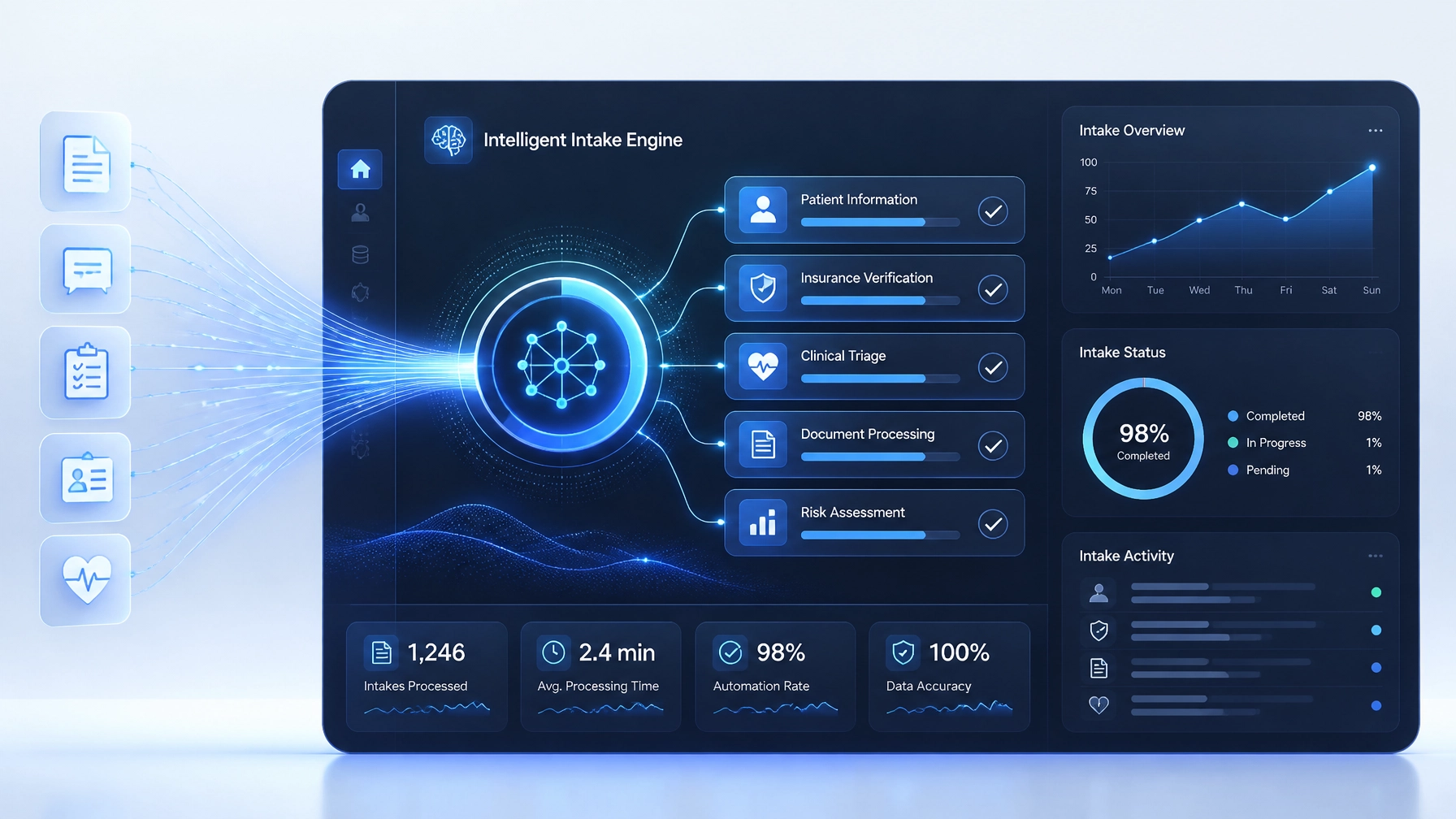
    • Healthcare: Matching engines for clinics that handle 70-question intakes while staying HIPAA-compliant.
    • Field Services: GPS-logged accountability for door-to-door reps to ensure data accuracy from the street level.
    • Fintech: Telephony integrations that attribute calls directly to local visibility efforts.

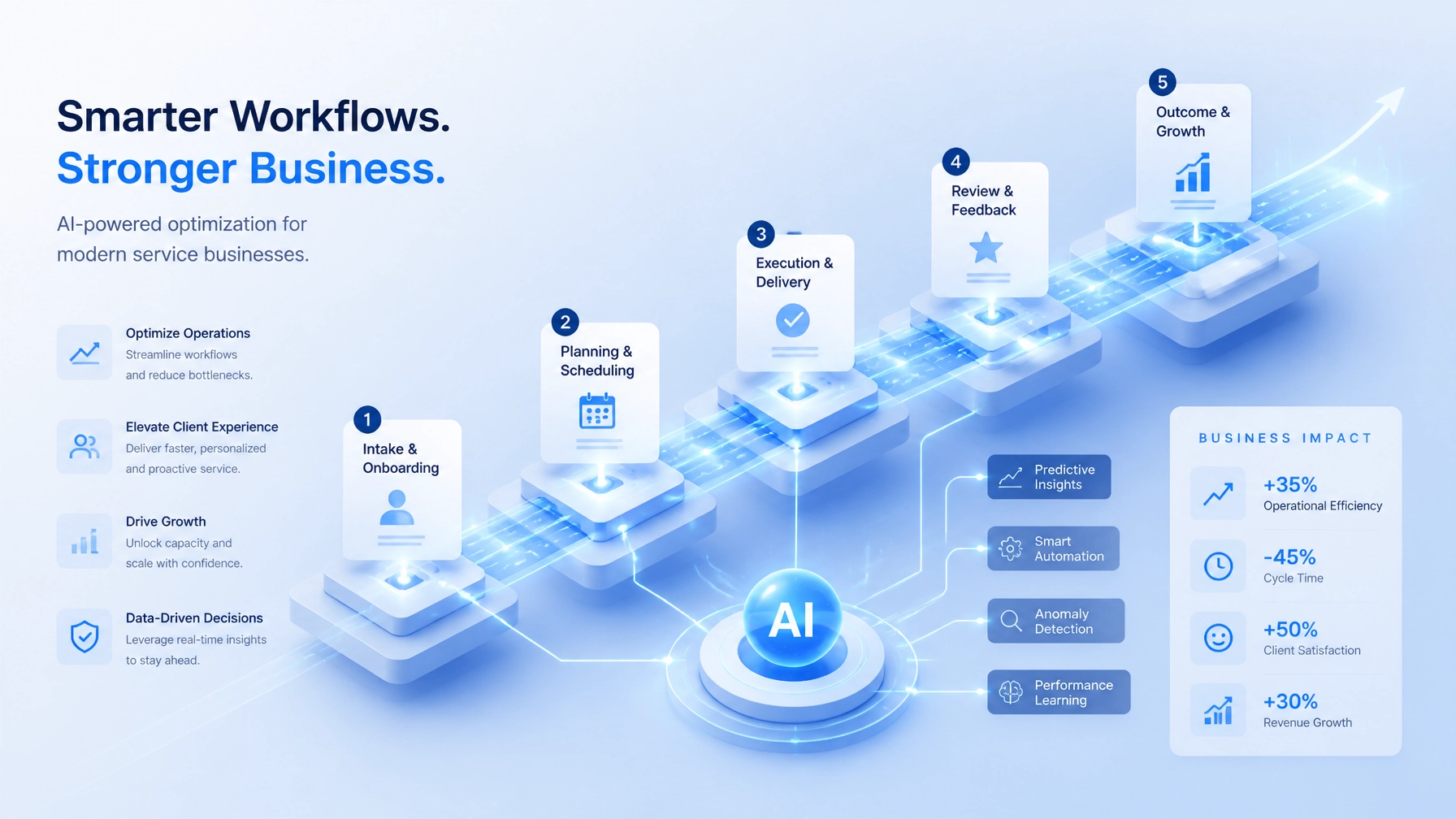
    The goal is to remove the "human element" from the repetitive parts of local visibility. If a human has to remember to post a weekly update to 50 Google Business Profiles, it won't happen. If an AI agent does it based on your actual service data, it happens every time, perfectly.

    Futuristic automation engine representing AI-driven local SEO and scalable growth for service businesses.

    The Cost of "Manual" is Too High

    If you are still paying an agency to manually update your listings or respond to reviews, you are overpaying for an inferior result. Manual management is slow, prone to error, and impossible to scale.

    The visionary approach: the one that wins in 2026: is to treat your local presence as a software problem, not a marketing one. By centralizing your data into a single source of truth and using custom automation to push that data out to the "Map," you create a wall of consistency that competitors can’t break through.

    This isn't just about "Local SEO automation." It’s about Digital Governance. It’s about ensuring that every time a potential customer asks their phone for a service you provide, your brand is the most logical, most trusted, and most visible answer.

    Building Your Roadmap to Map Dominance

    So, how do you stop the bleeding? It starts with an audit of your "consensus signals."

    • Audit your categories: Are they identical across all locations?
    • Sync your hours: Is your website API talking to your Google Business Profiles in real-time?
    • Automate your social proof: Are reviews being requested and responded to within minutes, or days?

    If you’re feeling the drag of managing multiple locations and you know your current tech stack isn't cutting it, it might be time for a custom approach. We specialize in building the web applications and automation engines that help businesses scale without the proportional increase in "operational noise."

    Whether it's the frameworks we've used in our proprietary assets like AI Local Boost or the bespoke HIPAA-adjacent workflows we’ve built for healthcare giants, the core philosophy is the same: Custom software beats off-the-shelf SaaS every single time when complexity is high.

    Let’s Talk Strategy

    The map is getting more crowded, and the algorithms are getting more discerning. You can either be the brand that the AI trusts, or the brand it ignores.

    If you’re ready to move past manual marketing and start building a high-performance local engine, I’d love to help you scope out what that looks like. We don’t just sell tools; we build the strategic roadmaps and the custom code that fuels them.

    You can request a workflow audit or book a discovery call with my team. We’ll look at your current multi-location setup, identify where the data is leaking, and show you how custom automation can turn your map presence into a predictable growth machine.

    No hype, just strategy and engineering.

    Amin Said
    Founder, Pure Technology Consulting LLC
    +1 (803) 921-0969
    puretechconsult.com


    For more insights on how custom software and AI are transforming service industries, visit our blog or watch our video walkthroughs to see our automation in action.

  • 7 Mistakes You’re Making with Manual Workflows (and How Bespoke AI Solutions Fix Them)

    7 Mistakes You’re Making with Manual Workflows (and How Bespoke AI Solutions Fix Them)

    In the modern enterprise, the most expensive resource isn't your server rack or your office lease: it is the cognitive energy of your top-tier talent. Yet, many organizations continue to anchor their growth to manual workflows that drain this resource daily. We see it in legal firms, accounting practices, and healthcare providers: brilliant professionals spending hours on data entry, lead sorting, and report generation.

    At Pure Technology Consulting, we view automation not as a way to replace the human element, but as a strategic lever to amplify it. When you transition from manual "grunt work" to bespoke AI-driven systems, you aren't just saving time; you are reclaiming your competitive edge.

    Here are the seven most critical mistakes companies make with manual workflows and how custom-built technology transforms these liabilities into assets.

    1. Fragmented Data Entry and "Digital Duct Tape"

    One of the most common manual mistakes is the "copy-paste" cycle. Employees move data from an email to a CRM, then from the CRM to a spreadsheet, and finally into an invoicing tool. This fragmentation creates silos and introduces a high margin for human error.

    Bespoke solutions fix this by creating a "Single Source of Truth." For instance, our work with FTP Inform demonstrates how we can automate complex file movements and data extractions. Instead of a staff member manually checking servers for new client files, a custom integration can detect, parse, and route that data to the correct department instantly.

    Digital data streams merging into a central core representing a single source of truth for business workflows.

    2. Lead Qualification Fatigue

    In high-ticket industries like legal and accounting, not every lead is a good lead. Manual qualification: where a human reviews every contact form or answers every introductory call: is a massive bottleneck.

    We solve this through high-level AI automation similar to the logic found in AI Local Boost. By automating the initial engagement via Google Business Profile and web-based intake forms, we filter prospects before they ever reach a partner's desk. Imagine a 70-question intake process that doesn't just collect data but uses an AI matching engine to score the lead’s viability. This ensures your team only speaks with high-value clients, increasing your conversion rate while decreasing operational drag.

    3. Compliance and Accuracy Risks in High-Stakes Documentation

    In healthcare and finance, a manual error isn't just a nuisance; it’s a liability. Relying on manual checks for HIPAA compliance or tax regulations is a recipe for a catastrophic audit.

    Our proprietary work on EHRIO Pro serves as a blueprint for how bespoke software handles high-stakes data. We build matching engines and intake systems that validate data against compliance standards in real-time. By moving away from manual spreadsheets and toward a custom web application, firms can ensure that every document is logged, tracked, and compliant by design, rather than by effort.

    4. The "Labor-First" Scaling Trap

    Many CEOs believe that to grow, they must hire. If you have 100 clients and want 200, the manual mindset suggests you need to double your staff. This is a linear growth model that eventually erodes profit margins.

    A visionary approach uses custom software to decouple labor from output. We help businesses build internal tools: custom SaaS platforms: that allow the existing team to handle 5x the volume. Whether it’s integrating telephony systems for a debt agency to automate call attribution or building a central dashboard for field operations, we turn manual processes into scalable systems.

    A glowing engine lifting a platform, symbolizing operational leverage and scaling business through custom automation.

    5. Inefficient Field and Resource Management

    For companies with "boots on the ground," manual oversight is nearly impossible. Relying on reps to self-report their locations or progress leads to accountability gaps and missed opportunities.

    We’ve solved this for field operations through GPS logging and real-time accountability trackers. By building a custom mobile-responsive web app, managers can see exactly where their assets are and how a project is progressing without a single phone call. This level of visibility is only possible when you move past manual reporting and into automated data streams.

    6. Communication Black Holes

    When a workflow is manual, information often dies in an inbox. A client asks for a status update, a staff member forgets to check the file, and the client feels ignored.

    Through solutions like ChainHQ, we demonstrate the power of multi-channel management. A bespoke automation can trigger an SMS update to a client the moment a milestone is reached in your internal system. No human needs to remember to send the update; the system "knows" the work is done and communicates it instantly. This builds immense trust and brand authority without adding a single task to your team’s to-do list.

    7. Automating Broken Processes

    The final and perhaps most dangerous mistake is trying to automate a process that is fundamentally broken. If your manual workflow is disorganized, a basic off-the-shelf AI tool will only help you do the wrong things faster.

    This is where Pure Technology Consulting differentiates itself. We don't just "plug in" AI; we act as architects. Before we write a single line of code, we conduct a deep-dive audit of your current operating model. We identify the bottlenecks and re-engineer the workflow for maximum efficiency. Our goal is to build a high-performance engine, not just a faster steering wheel.

    Moving From Manual to Bespoke

    The transition from manual workflows to bespoke AI solutions is a journey from operational "survival" to strategic "dominance." When you remove the friction of manual tasks, your team is free to focus on high-level strategy, client relationships, and creative problem-solving.

    Whether you are looking to build a custom matching engine for your medical practice, automate your local SEO lead flow, or integrate complex telephony systems into your fintech firm, the answer lies in technology built specifically for your needs.

    A digital key fitting into a complex lock, representing bespoke software solutions tailored to unique business needs.

    Why Choose a Custom Build Over "Off-the-Shelf" SaaS?

    While many SaaS products offer generic solutions, they often force you to change your business to fit their software. At Pure Technology Consulting, we do the opposite: we build the software to fit your business.

    Our experience across diverse sectors: from tracking door-to-door reps to managing HIPAA-adjacent healthcare data: allows us to bring "cross-industry" intelligence to your specific problem. We aren't just developers; we are partners in your digital transformation.

    If you are ready to stop managing mistakes and start managing growth, it is time to look at what bespoke automation can do for your bottom line.

    Ready to audit your workflows?
    We invite you to schedule a discovery call to discuss how we can build a custom solution tailored to your operational needs. Whether it's a $10k+ custom web application or a complex automation overhaul, let's build the future of your business together.

    Amin Said, Founder of Pure Technology Consulting LLC
    https://puretechconsult.com
    +1 (803) 921-0969

  • The $2M Bottleneck: Why Your Growing Service Business is Still Stuck on Manual Scheduling

    The $2M Bottleneck: Why Your Growing Service Business is Still Stuck on Manual Scheduling

    By Amin Said, Founder of Pure Technology Consulting LLC

    It’s Sunday night, 10:30 PM. Your family is asleep, but you’re staring at a spreadsheet that looks like a game of Tetris gone wrong. You have three technicians out with the flu, two new clients in the suburbs who need morning slots, and a fleet of vans that seem to be burning through fuel faster than you can bill for it.

    If this sounds familiar, you aren’t alone. You’ve successfully scaled your service business to that prestigious $2 million revenue mark. You have a team of 15 to 25 people. You’ve "made it" by most standards. But instead of feeling like a CEO, you feel like a high-priced air traffic controller.

    The reality is that many service businesses plateau right here. They hit a glass ceiling not because of a lack of demand, but because their operating model: specifically their manual scheduling: has become a $200,000-a-year anchor.

    At Pure Technology Consulting, we see this pattern constantly. The very manual hustle that got you to $2M is exactly what is preventing you from reaching $10M. Let’s break down why your manual scheduling is actually a bottleneck, and how bespoke automation can transform your business from a "hub-and-spoke" dependency into a scalable machine.

    The "Owner as the Hub" Trap

    When you started, you knew every client’s name and every technician’s favorite lunch spot. You held the schedule in your head. As you grew, that head-knowledge moved to a whiteboard, then a spreadsheet, and perhaps a basic Google Calendar.

    This is the "Hub-and-Spoke" model. You (the owner) are the hub. Every decision, every conflict, and every scheduling pivot must pass through you.

    The problem? You don't scale.

    Manual scheduling exemplifies this dependency. When the owner or a senior manager is the only one who "knows" how to route the team effectively, the business stops growing the moment that person takes a vacation or gets sick. This model creates a strategic paralysis where you spend 80% of your day on low-level logistics rather than high-impact activities like financial analysis or market expansion.

    Digital visualization of a hub-and-spoke bottleneck in manual scheduling for a service business.

    The Invisible Math: The True Cost of "Free" Spreadsheets

    Most business owners look at a spreadsheet as a "free" tool. In reality, for a $2 million service business, manual scheduling is one of your most expensive line items.

    Let’s look at the numbers. Research shows that for a company with roughly 25 employees, the hidden costs of manual, unstructured scheduling often exceed $170,000 annually.

    Here is how that breaks down:

    • Managerial Drain: Roughly $20,000 a year is spent simply moving boxes around on a screen.
    • Labor Waste: Without optimized routing, you’re likely overstaffing by about 12% to cover "just in case" scenarios, costing you $24,000.
    • The Turnover Tax: This is the big one. Poor scheduling leads to burnout and a lack of work-life balance. Replacing a technician costs between $5,000 and $15,000 in recruiting and training. Total turnover costs from bad scheduling can hit $100,000+ easily.
    • Lost Revenue: If a customer has a bad experience because a technician is late or a slot was double-booked, that’s $35,000 in missed lifetime value.

    When you add it up, staying manual isn't a frugal choice: it's a massive operational leak.

    Why Off-the-Shelf Software Often Fails the $2M Business

    At this stage, you’ve probably tried a few $50-a-month scheduling apps. And you likely found that they didn't quite work.

    Generic SaaS products are built for the "average" business. But a $2M service business isn't average. You have specific logic:

    • "Technician A can only do jobs in Zone 1."
    • "Client B requires a specific certification that only two people on the team have."
    • "We need to integrate this directly with our custom invoicing system to keep cash flow moving."

    When off-the-shelf software requires you to change your successful business processes to fit their code, you lose your competitive edge. This is where bespoke software development becomes the strategic move.

    At Pure Technology Consulting, we don’t just "install an app." We build custom workflows that mirror your specific "secret sauce." Whether it’s GPS-based accountability (like the work we’ve done with D2D Tracking) or complex matching engines for healthcare intakes (similar to our EHRIO Pro foundations), the goal is the same: take the logic out of your head and put it into the code.

    A custom software integration showing bespoke automation fitting perfectly into business workflows.

    The Psychological Shift: From "Fixer" to "Architect"

    One of the hardest parts of scaling is moving from being the "doer" to the "architect."

    Many founders feel an emotional reluctance to hand over the schedule. They feel that if they aren't "fixing" the daily problems, they aren't working. But as a CEO, your job isn't to fix the schedule; it’s to build the system that fixes the schedule.

    The first step is documentation. You need Standard Operating Procedures (SOPs). If a computer is going to handle your scheduling logic, that logic must be defined.

    1. What are the priority tiers for clients?
    2. What is the maximum travel time allowed between jobs?
    3. How do we handle emergency call-outs?

    Once these rules are defined, they can be automated. This allows you to hire a Service Manager who manages the exceptions, while the software handles the rules.

    The Path to Scalability: Automation as a Force Multiplier

    When you implement bespoke scheduling and workflow automation, the ROI isn't just incremental; it’s transformative.

    Imagine a system that automatically assigns the closest qualified technician, sends a real-time tracking link to the customer, and triggers an invoice the moment the job is marked complete. This isn't science fiction: it's the baseline for a modern $10M service enterprise.

    By reducing manual labor dependency, you achieve three things:

    1. Predictability: Your margins become stable because labor costs are optimized.
    2. Scalability: Adding your 26th, 50th, or 100th employee doesn't add more stress to your plate; it just adds more data to the system.
    3. Exit Value: A business that relies on the owner’s brain to function is worth very little to a buyer. A business that runs on a proprietary, automated operating model is a high-value asset.

    Scalable business architecture grid representing automated scheduling and operational efficiency.

    Next Steps: Auditing Your Bottleneck

    If you are stuck at the $2M mark, it is time to look at your workflows with a critical eye. Are you paying a manager $60k a year to be a glorified data entry clerk? Is your turnover high because your team feels the chaos of manual dispatching?

    At Pure Technology Consulting, we specialize in helping service-based businesses transition from manual chaos to automated precision. We don't just build apps; we build the digital infrastructure that allows you to step back and lead.

    We’ve brought high-level automation and custom web app capabilities to industries ranging from fintech and healthcare to field operations. We understand the complexity of HIPAA-adjacent workflows and the necessity of real-time GPS logging.

    Stop being the bottleneck.

    If you're ready to see what a bespoke operating model looks like for your business, let’s talk. We can help you identify exactly where your manual processes are costing you money and how a custom-built solution can provide the leverage you need to hit your next $10M milestone.

    Book a discovery call with our team to start your workflow audit. There is no obligation: just a strategic look at how to get your time back.


    Amin Said, Founder of Pure Technology Consulting LLC
    https://puretechconsult.com
    Phone: +1 (803) 921-0969
    Specializing in bespoke software development and high-level automation for growing enterprises.

    For more insights on scaling your business through technology, visit our blog or watch our video walkthroughs of custom builds in action.

  • The Ultimate Guide to Bespoke AI Solutions: Everything You Need to Scale Without More Staff

    The Ultimate Guide to Bespoke AI Solutions: Everything You Need to Scale Without More Staff

    For years, the standard operating procedure for scaling a business was simple: if you wanted to grow your revenue by 20%, you expected to grow your headcount by a similar margin. But in 2026, that equation is obsolete. We have entered an era where operational leverage is defined not by how many people you manage, but by how effectively you deploy custom intelligence.

    At Pure Technology Consulting, we see a recurring pattern among high-growth firms. They hit a "complexity ceiling" where manual workflows, fragmented SaaS tools, and data silos begin to stall momentum. The answer isn't necessarily more people; it’s a more intelligent operating system. Bespoke AI solutions: custom-built systems designed specifically for your organization’s unique DNA: are the lever that allows you to scale without the overhead of a massive payroll.

    Why Off-the-Shelf Software Is Not the Answer

    Most companies start by buying a suite of "off-the-shelf" SaaS tools. While these are excellent for general tasks, they eventually lead to "SaaS sprawl." You end up with a dozen subscriptions that don't talk to each other, forcing your existing staff to act as the "human glue," manually moving data between systems.

    This manual intervention is the silent killer of productivity. When your team spends 40% of their day on data entry, status updates, or manual reporting, they aren’t innovating. Bespoke AI removes this drag. Instead of forcing your business logic into a rigid software box, we build the software around your logic. This targeted approach eliminates bloated features and focuses entirely on solving the specific bottlenecks that are unique to your industry: whether that’s in legal, accounting, healthcare, or field operations.

    The Power of Specialized Automation: AI Local Boost

    To understand the impact of bespoke logic, look at our proprietary asset, AI Local Boost. We didn't build it to be a generic marketing tool. We built it to solve a very specific problem: the manual intensity of local SEO and Google Business Profile management.

    By automating high-frequency tasks like review management and local content distribution with AI, we allow businesses to dominate local search results without hiring a full-time SEO agency. This is the hallmark of a bespoke approach: taking a complex, recurring workflow and encoding it into an automated system. When you apply this same philosophy to your internal operations, you create an environment where 10 people can do the work of 50.

    Digital visualization of localized business data automation connecting nodes in a smart city grid.

    The Strategic Roadmap to AI Implementation

    Building a bespoke AI solution is a journey from strategy to execution. It’s not just about the code; it’s about the roadmap. Here is how we navigate that process to ensure every project delivers executive-level value.

    Phase 1: Strategy and Data Governance

    Everything starts with problem definition. We don't build AI for the sake of AI; we build it to move a specific needle. We begin by auditing your current workflows and identifying where human capital is being wasted.

    Parallel to this, we develop a data strategy. Your AI is only as good as the data that feeds it. We map your data sources, assess quality, and identify where gaps exist. If your data is siloed in legacy systems, our first job is to build the pipelines to centralize it.

    Phase 2: Bespoke Development and Model Training

    In this phase, we translate business requirements into technical architecture. We might use deep learning for predictive modeling or natural language processing (NLP) for document review. The goal is to create a model that understands your specific industry nuances.

    For instance, a law firm needs a different "understanding" of a document than a healthcare provider. By training models on your proprietary data, we ensure that the AI reflects your firm's standards and compliance requirements.

    Phase 3: Integration and Deployment

    A custom AI tool is useless if it lives in a vacuum. We focus heavily on system integration, ensuring your new solution talks to your existing CRM, ERP, or communication tools. We often utilize microservices architecture: breaking the software into independent modules: so you can upgrade or expand functionality without breaking the entire system.

    Lessons from High-Stakes Industries

    Our work across various sectors has given us a blueprint for what works in high-ticket professional services. We don't start from scratch; we bring proven capabilities into new sectors like law and accounting.

    Healthcare and Deep Discovery: EHRIO Pro

    In healthcare, we developed EHRIO Pro, a sophisticated matching engine and intake system. This involves 70-question intakes and HIPAA-adjacent workflows that require extreme precision. We are now bringing that same level of rigor to the legal and accounting sectors. Imagine a legal intake process that doesn't just collect contact info, but uses AI to perform initial discovery, categorize the case, and flag potential conflicts of interest before a human even opens the file.

    Secure Data Logistics: FTP Inform

    Security is the bedrock of any scaling strategy. Our asset FTP Inform was developed to provide transparent, automated, and secure file transfer notifications. In a bespoke environment, knowing exactly when and where your data is moving is critical for compliance. Whether you are a debt agency dealing with telephony integrations or a fintech firm managing GPS logging for field reps, having a secure, automated data layer is non-negotiable.

    Strategic roadmap pathway through digital portals representing business scaling and data infrastructure.

    Scaling Without the "People Problems"

    Hiring is expensive, risky, and slow. When you scale via headcount, you also scale your management debt. You need more HR, more managers, and more office space (or digital infrastructure).

    Bespoke AI solutions offer a different path:

    • Consistency: AI doesn't have "off days" or skip steps in a workflow.
    • Speed: Tasks that take hours for a human: like reconciling thousand-page ledger or auditing contracts: take seconds for a custom-built model.
    • Knowledge Retention: When an employee leaves, their knowledge often goes with them. A bespoke AI system captures your "company way" and keeps it within your infrastructure.

    Building for the Future: ChainHQ and Beyond

    As we look toward the future of supply chain and operational management, tools like ChainHQ demonstrate the power of visibility. In any business: whether you are moving physical goods or digital assets: transparency is the key to efficiency. Bespoke solutions give you a "command center" view of your operations, allowing you to identify bottlenecks before they become crises.

    Scaling without more staff isn't a futuristic dream; it’s a competitive necessity. The companies that thrive in the next decade will be those that view software not as a utility, but as a strategic asset. By investing in bespoke AI, you aren't just buying a tool: you are building a scalable engine that grows with you, adapts to your needs, and empowers your existing team to do their best work.

    Next Steps for Your Business

    If your team is currently bogged down by manual processes, or if you feel that your growth is limited by your ability to hire and train fast enough, it’s time for a workflow audit. We specialize in identifying these operational drags and building the custom web applications and AI automations that resolve them.

    Bespoke development is a premium investment, but the return: measured in reclaimed time, reduced error, and massive operational leverage: is what separates the market leaders from the rest.

    To explore how custom automation can transform your operating model, you can book a discovery call or view our video walkthroughs to see our capabilities in action.

    Amin Said, Founder of Pure Technology Consulting LLC
    Phone: +1 (803) 921-0969
    https://puretechconsult.com

  • The Patient Retention Paradox: Why Automated Follow-Ups are the Secret Weapon for Physical Therapy Clinics

    The Patient Retention Paradox: Why Automated Follow-Ups are the Secret Weapon for Physical Therapy Clinics

    By Amin Said, Founder of Pure Technology Consulting LLC

    In the world of physical therapy and chiropractic care, we talk a lot about the "magic hands." We talk about the clinical breakthroughs, the moment a patient regains their range of motion, and the relief on their face when the chronic pain finally subsides. But there’s a quieter, more systemic challenge happening behind the front desk that most clinic owners are hesitant to address: the leaky bucket.

    You spend thousands on local SEO, Facebook ads, and community outreach to get a new patient through the door. They show up for the initial evaluation, maybe attend two or three sessions, and then… they vanish. They become a "dormant" file in your EMR.

    This is the Patient Retention Paradox. In an industry built entirely on human connection and physical presence, the key to keeping those human connections alive isn't more manual labor: it’s smarter automation.

    At Pure Technology Consulting, we’ve seen this play out across various high-touch industries. Whether it’s healthcare or complex fintech workflows, the bottleneck is always the same: human beings are inconsistent, but systems are relentless.

    The High Cost of the "New Patient" Obsession

    Marketing studies consistently show that it costs 5–7 times more to attract a new patient than to keep an existing one. For a physical therapy clinic or a wellness center, this gap is even more pronounced. A new patient requires a full intake, a diagnostic overhaul, and a period of building trust from scratch.

    An existing patient already knows your name. They know where to park. They know your value. Yet, many clinics treat retention as a "nice-to-have" secondary goal. They invest heavily in acquisition through aggressive lead flow but overlook the higher-value opportunity of keeping current patients engaged throughout their entire recovery journey.

    If your retention rate drops, your acquisition cost effectively doubles. You aren't just losing a session fee; you’re losing the lifetime value (LTV) of that patient, their potential referrals, and the stability of your practice.

    Visual representation of patient retention and lifetime value in a stable healthcare practice.

    Why Manual Follow-Ups are Failing Your Staff

    I’ve sat in plenty of clinics where the front-desk staff is heroic. They are answering phones, checking people in, handling insurance verifications, and trying to remember to call "Mrs. Jones" because she missed her Tuesday appointment.

    But heroism doesn't scale.

    When follow-ups depend on manual effort, gaps are inevitable. Life happens. The phones get busy, a staff member calls in sick, or the post-it note with the reminder gets buried under a stack of files. Research shows that clinics relying on manual systems suffer from significantly higher no-show rates.

    When a patient misses a session without a prompt follow-up, they feel two things: guilt and a lack of accountability. If the clinic doesn't seem to notice they’re gone, they assume their presence (and their recovery) isn't that important. This is where the "drop-off" happens.

    The Secret Weapon: Automated Follow-Ups

    Automation isn't about replacing the warm greeting at the door; it’s about ensuring the conversation continues when the patient is at home. Modern CRM integration and automated workflows allow a clinic to maintain a "persistent presence" in the patient’s life without adding a single task to the staff’s to-do list.

    1. Reducing No-Shows by 38%

    The data is clear: clinics using automated reminder systems can reduce no-show rates by up to 38%. But a simple "See you tomorrow" text is just the baseline. The real "secret weapon" is the sequence that triggers when an appointment is missed.

    An automated "We missed you" message sent within 15 minutes of a missed appointment: complete with a link to reschedule online: dramatically increases the likelihood of a rebooking before the patient has time to feel "checked out."

    2. Reactivating the "Dormant" Patient

    Every clinic has a goldmine of past patients who finished 80% of their treatment and then stopped. Automated "Check-in" sequences can reach out to these patients at the 30, 60, and 90-day marks.

    Imagine a system that automatically emails a patient three months after their last visit: "Hi Sarah, it's been a few months since your last shoulder session. How are you feeling? If you're noticing any stiffness returning, you can book a quick tune-up here." One functional medicine practice we studied saw an 18% reactivation of dormant patients within 60 days just by implementing this one sequence.

    3. Data-Driven Progress Tracking

    One of the biggest reasons patients drop out of therapy is because they feel they aren't improving fast enough. Automation allows you to send objective progress reports or digital outcome tools (like the Oswestry Disability Index) directly to their phone.

    When a patient sees a visual chart showing their mobility has increased by 25% over three weeks, their "buy-in" resets. Digital platforms provide the ongoing validation that continuing therapy is worth the time and money.

    Automated patient communication system showing reminders and health progress tracking on a mobile device.

    Resolving the Paradox: Automation + Human Touch

    The fear most practitioners have is that automation will make their practice feel "cold" or "robotic." In reality, the opposite is true.

    By automating the routine: reminders, intake forms, and basic follow-ups: you free up your staff to be more human. Instead of spending three hours a day playing phone tag, your front desk can spend three hours focusing on the person standing right in front of them.

    We call this Humanized Automation. It’s a hybrid approach:

    • Automated: Routine reminders, re-engagement emails, and lead nurturing.
    • Human: Personalized clinical care, addressing complex concerns, and building the emotional bond.

    At Pure Technology Consulting, we specialize in building these bespoke workflows. Whether it's integrating your EMR with a high-performance CRM or setting up AI Local Boost to ensure your clinic is the first one people see when they search for care, we focus on the operating model that drives actual revenue.

    The Competitive Advantage

    Less than half of independent clinics currently use advanced automation tools for patient communication. This represents a massive opportunity for the visionary clinic owner.

    When you implement a system that ensures no patient is ever "forgotten," you aren't just running a more efficient business: you’re providing better care. Consistency is a clinical tool. If a patient completes their treatment plan because your system kept them engaged, their clinical outcome is better.

    Better outcomes lead to more five-star reviews, which feeds into your local SEO through tools like AI Local Boost, creating a virtuous cycle of growth. You can see how these pieces fit together in our video walkthroughs.

    Local map visualization showing increased visibility and patient reviews for wellness centers.

    The Path Forward: Strategy Over Hustle

    If you find yourself on the treadmill of constant patient acquisition but your total patient volume isn't growing, it’s time to look at your retention strategy. You don't need more "hustle" from your staff; you need a more robust digital infrastructure.

    At Pure Technology Consulting, we help clinics move from "episodic" care to a "relationship-based" business model through custom software and automation. We’ve done this for healthcare providers, field operations, and fintech firms, bringing a high-level consultative approach to every build.

    Your patients deserve a recovery journey that doesn't have cracks in it. And you deserve a business that grows predictably, even when you aren't watching every single file.

    Ready to stop the leak in your clinic’s bucket?

    Let’s talk about building a system that works as hard as you do. We can audit your current workflow and show you exactly where automation can save your staff time and increase your patient lifetime value.

    Book a discovery call with our team or explore our latest insights to see how we’re transforming the way local businesses operate.


    Amin Said, Founder of Pure Technology Consulting LLC
    puretechconsult.com
    +1 (803) 921-0969
    Visionary software development and custom automation for the modern enterprise.

  • 10 Reasons Your Manual Workflow Isn’t Working (And How AI Consulting Services Fix It)

    10 Reasons Your Manual Workflow Isn’t Working (And How AI Consulting Services Fix It)

    In the rapidly evolving landscape of 2026, the gap between businesses that thrive and those that merely survive is defined by operational leverage. For years, many organizations have relied on "the way we’ve always done it": a patchwork of spreadsheets, email threads, and manual data entry. However, as complexity scales, these manual processes transform from familiar routines into a silent tax on your growth, innovation, and profitability.

    At Pure Technology Consulting, we view manual workflows not just as an inconvenience, but as a strategic bottleneck. When you are operating at a high level: whether in legal, accounting, healthcare, or fintech: every minute spent on a repetitive task is a minute stolen from high-value strategy.

    Here are 10 reasons why your manual workflow is failing your business, and how bespoke AI consulting and custom software development provide the roadmap to a more scalable future.

    1. The Financial Gravity of Human Error

    Manual data entry is inherently prone to error. Whether it’s a mistyped figure in a financial ledger or a misfiled patient record, the "human element" in repetitive tasks often leads to cascading financial losses. In high-stakes industries like healthcare, these errors aren't just costly: they are a compliance risk.

    We addressed this specific challenge when developing EHRIO Pro. By building a proprietary matching engine and automated 70-question intake systems, we demonstrated how custom software can virtually eliminate the "fat-finger" errors common in healthcare workflows. AI consulting doesn't just fix the error; it re-engineers the process so the error becomes impossible to commit.

    2. The Invisible Opportunity Cost of Time

    Time is the only non-renewable resource in your business. When your senior staff spends hours forwarding emails, chasing approvals, or printing documents, your "talent ROI" plummets.

    Inspirational leadership requires focusing your team on what humans do best: empathy, strategy, and creative problem-solving. AI-powered automation takes the "robotic" work away from the humans, allowing your experts to function at the top of their licenses.

    3. Structural Lack of Visibility

    If your workflow lives in private email inboxes or local spreadsheets, you have a visibility crisis. Executives often lack a single source of truth to track progress, identify bottlenecks, or forecast capacity.

    A bespoke web application provides a centralized dashboard that reflects the pulse of your business in real-time. This is why we focus on building custom platforms that integrate with your existing tech stack, providing the transparency needed for visionary decision-making.

    Abstract visualization of centralized data providing total operational visibility and a single source of truth.

    4. Data Inconsistency and Silos

    When data is moved manually between systems, it fragments. One department might be looking at an outdated version of a client file while another uses the current one. This lack of standardization prevents the use of advanced analytics or AI.

    Through our work with FTP Inform, we’ve shown how secure, automated data movement and integration can bridge these silos. Custom automation ensures that when a piece of data changes in one system, it ripples accurately through your entire infrastructure, maintaining a unified data integrity that manual processes simply cannot achieve.

    5. Inefficient Communication and "The Handoff Fail"

    Manual workflows rely on informal conversations and long email threads. These are the graveyards of productivity. Important information gets buried, and task ownership becomes vague.

    AI consulting allows us to design "intelligent handoffs." Imagine a workflow where, upon completion of a task, the system automatically validates the work, updates the CRM, and alerts the next stakeholder with all the necessary context. No "checking in," no "just following up": just seamless execution.

    6. The Scalability Ceiling

    Manual processes do not scale linearly; they scale exponentially in complexity. If it takes one person to manage 10 clients manually, managing 100 clients doesn't just require 10 people: it requires a massive management layer to coordinate those 10 people.

    We see this frequently in the SaaS space. Our work on ChainHQ exemplifies how we build scalable architectures that allow companies to increase throughput without a corresponding increase in headcount. Custom software allows your operations to grow horizontally while your overhead stays manageable.

    7. Disconnection from Business-Critical Systems

    A manual workflow is often an island. It doesn't "talk" to your ERP, your CRM, or your accounting software. This creates a "swivel-chair" effect where employees spend their day moving data from Screen A to Screen B.

    Our approach to custom development focuses on deep integration. We don't just build an app; we build a connective tissue for your business. Whether it’s integrating telephony for fintech debt agencies or GPS logging for field operations, we ensure your tools work as one cohesive unit.

    Synchronized digital gear systems illustrating seamless software integration and cohesive business automation.

    8. Unclear Roles and Task Ownership

    In a manual system, responsibility is often assumed rather than assigned. This leads to the "bystander effect," where critical deadlines slip because everyone thought someone else was handling it.

    When we build custom automation solutions, we embed governance into the code. Every task has an owner, a deadline, and an automated escalation path. This clarity transforms company culture from one of "searching for answers" to one of "executing with confidence."

    9. Technical Debt and Legacy Tool Friction

    Many manual workflows are built around outdated tools that were never meant to handle today’s data loads. Relying on legacy software is like trying to win a modern race in a vintage car; it might look familiar, but it’s going to break down under pressure.

    Visionary business leaders recognize when it’s time to move from "patching" to "pivoting." AI consulting services help you identify which legacy systems are holding you back and replace them with bespoke web apps designed for the 2026 economy.

    10. The Trap of Overcomplication

    Ironically, manual workflows often become more complicated over time as "fix-it" steps are added to solve previous errors. You end up with a process that has 20 steps, 15 of which are redundant.

    AI doesn't just automate your current process; it simplifies it. During our discovery phase, we often find that 40% of a client’s manual steps can be eliminated entirely through smart architectural design. This was the philosophy behind AI Local Boost, where we automated complex Google Business Profile management into a streamlined, high-impact workflow.

    A visual metaphor for transforming complex manual workflows into a streamlined, automated AI-driven path.

    How AI Consulting Services Fix the Foundation

    At Pure Technology Consulting, we don’t just sell software; we deliver strategic operational transformation. When you engage with our team for a custom build or an automation audit, we follow a rigorous roadmap:

    1. Workflow Mapping: We dive deep into your current operations to find the hidden frictions.
    2. Strategic Simplification: Before we automate, we optimize. We remove the redundancies that manual systems accumulate.
    3. Bespoke Development: We build a custom web application tailored specifically to your business logic. We don't force your business into a SaaS box; we build the box around your business.
    4. AI Integration: We leverage Large Language Models and custom algorithms to handle the cognitive load of data categorization, matching, and reporting.
    5. Ongoing Governance: We ensure the system is scalable, secure, and compliant with your industry standards (be it HIPAA, GDPR, or financial regulations).

    The Visionary Path Forward

    The transition from manual to automated is not just a technical upgrade: it is a leadership move. It signals to your team, your clients, and your competitors that you are building for the future.

    Whether you are in the legal sector needing automated document generation, an accounting firm looking to streamline audit trails, or a healthcare provider aiming to optimize patient intake, the solution isn't "more people." The solution is a smarter system.

    Pure Technology Consulting specializes in these high-ticket, high-impact transformations. Our experience in healthcare, fintech, and field operations allows us to bring a seasoned perspective to your unique challenges. We don't start from scratch; we start with a foundation of proven capabilities and build upwards to your specific vision.

    Ready to audit your workflow and unlock your organization's true capacity?

    Stop paying the "manual tax" on your growth. Let’s build the custom infrastructure your vision deserves.

    Contact us today to schedule a discovery call and begin your digital transformation.

    Phone: +1 (803) 921-0969
    Website: https://puretechconsult.com/schedule

    Amin Said, Founder of Pure Technology Consulting LLC
    https://puretechconsult.com

  • Staff Burnout vs. Systems: Why Your Behavioral Health Practice is Drowning in Paperwork (And the EHRIO Solution)

    Staff Burnout vs. Systems: Why Your Behavioral Health Practice is Drowning in Paperwork (And the EHRIO Solution)

    By Amin Said, Founder of Pure Technology Consulting LLC

    You didn’t enter the field of behavioral health to become a world-class data entry clerk.

    Most founders of counseling centers and specialty wellness clinics started with a vision: to create a space where healing happens, where practitioners are present, and where patients feel seen. But as a practice grows, that vision often gets buried under a mountain of intake forms, insurance verifications, and manual follow-ups.

    If you’re reading this, you’ve likely felt the weight of "The Paperwork Problem." It’s that invisible drag on your operations that keeps your best clinicians working until 9:00 PM on "pajama time": doing documentation that should have been finished hours ago.

    At Pure Technology Consulting, we look at this through a different lens. We don’t see a "lazy staff" problem or even a "busy practice" problem. We see a systems problem.

    The Quiet Crisis of Clinical Burnout

    Research shows that more than 60% of mental health professionals report high levels of burnout. While the work itself is emotionally demanding, it’s rarely the patients who cause the breakdown. It’s the administrative friction.

    When a clinician has to navigate fragmented workflows, manual task absorption, and redundant data entry across multiple platforms, they suffer from cognitive overload. They aren't just tired; they are strategically depleted.

    This isn't something a wellness stipend or a "resilience training" seminar can fix. You can’t breathe your way out of a broken intake process. To save your staff: and your practice: you have to fix the architecture they work within.

    Professional silhouette overwhelmed by a digital vortex of administrative paperwork in a mental health clinic.

    The "Pajama Time" Trap

    In the behavioral health world, "pajama time" is the industry’s dirty secret. It’s the hours after the kids are in bed when your therapists are hunched over laptops, trying to catch up on notes and administrative tasks because their daytime hours were swallowed by inefficient systems.

    This administrative burden is a direct driver of provider turnover. When your best talent leaves, they aren't just taking their expertise with them; they’re taking the patient relationships that form the backbone of your revenue.

    The question isn't how to make your staff work harder. It’s how to make the system work for them.

    Moving Beyond "Digital Paper"

    Most practices believe they’ve "gone digital" because they use an EHR (Electronic Health Record) and email. But often, they’ve just replaced physical paper with "digital paper": PDFs that still need to be manually read, data that still needs to be re-typed, and emails that still need to be tracked in a spreadsheet.

    True transformation happens when you move toward connected systems.

    At Pure Technology Consulting, we specialize in building these bridges. Whether it's integrating a CRM with an EHR or automating the 70-question intake process, our goal is to ensure that data flows seamlessly from the first click a patient makes to the final billing statement.

    Case Study in Visionary Automation: The EHRIO Pro Model

    When we talk about what's possible, we often point to EHRIO Pro. This isn't just a piece of software; it’s a demonstration of how high-level automation can redefine a behavioral health practice.

    One of the biggest bottlenecks in specialty clinics is the matching process. How do you ensure the right patient gets to the right provider based on specialty, insurance, availability, and personality fit? In a manual system, this involves a series of "Let me check with so-and-so" emails and frantic calendar shuffling.

    With the EHRIO Pro framework, we developed a sophisticated matching engine. Imagine an intake process that:

    1. Captures Comprehensive Data: A 70-question intake that doesn't feel like an interrogation because it's dynamic and intuitive.
    2. Automates the Logic: The system instantly analyzes the patient's needs against the provider database.
    3. Bridges the Gap: It connects the front-end marketing (CRM) with the back-end clinical records (EHR), ensuring no data is lost in transition.

    This level of custom development takes the "human error" out of the equation and gives your staff their time back.

    Interconnected digital nodes representing automated patient matching and streamlined intake workflows.

    The Patient Experience: The First 15 Minutes

    We often talk about staff burnout, but what about the patient?

    For a person seeking behavioral health support, the intake process is their first impression of your care. If they are met with redundant forms, slow response times, and a "we’ll get back to you in 3-5 days" message, their anxiety increases. They feel like a number in a queue, not a person in need.

    By automating the intake workflow, you aren't just saving your staff; you are providing a "white-glove" experience for the patient.

    • Instant Confirmation: They know they’ve been heard immediately.
    • Seamless Onboarding: They don't have to provide the same insurance info three different times.
    • Faster Access to Care: Because the system handles the matching, they get on the calendar days or weeks sooner.

    In a visionary practice, technology is the silent partner that makes the human connection possible.

    Why Custom Beats "Off-the-Shelf" Every Time

    Many practice owners try to solve these problems by buying five different SaaS (Software as a Service) subscriptions. They get one for scheduling, one for forms, one for billing, and another for marketing.

    The result? A "Frankenstein" system where nothing talks to each other. Your staff becomes the "human API," manually moving data from one window to another.

    We believe in a different approach. We build bespoke web applications and custom automation layers that wrap around your existing tools. We don't ask you to change how you practice medicine; we build the software to fit your specific operating model.

    Whether it’s HIPAA-adjacent workflows or complex telephony integrations for call attribution, we focus on the $10k+ problems that are holding your practice back from the next level of scale.

    A custom digital piece fitting into a modern interface representing bespoke software integration for clinicians.

    A Roadmap for Transformation

    If you feel like your practice is drowning, here is the strategy we recommend to our executive clients:

    1. Audit the Administrative Drag: Where is the data "getting stuck"? Identify the tasks that require your staff to copy-paste information.
    2. Prioritize the Intake: The intake is the most high-leverage area for automation. If you fix the "front door," the rest of the house becomes much easier to manage.
    3. Connect Your Islands: Ensure your CRM and EHR are communicating. If they aren't, you're losing money and clinical hours every single day.
    4. Invest in Governance: Automation requires clear rules. Define your matching logic and your patient journey so the software can execute it flawlessly.

    The Pure Technology Consulting Vision

    At Pure Technology Consulting, we don’t just write code. We build the operating models of the future.

    We’ve seen how these systems transform healthcare environments, moving them from chaotic and reactive to calm and proactive. When you remove the friction of the "paperwork problem," you don't just improve your bottom line: you restore the joy of practice to your clinicians.

    You can see some of our work in action through our video walkthroughs or learn more about our philosophy in our latest blog posts.

    The future of behavioral health isn't just about better therapy; it's about better systems that allow that therapy to happen.

    Ready to Reclaim Your Practice?

    If you’re tired of seeing your team burn out and your growth stagnate because of manual workflows, let’s have a conversation. We specialize in taking complex, high-ticket clinical operations and turning them into streamlined, automated powerhouses.

    Book a discovery call with our team today to discuss your workflow audit. No obligation: just a strategic look at how custom technology can solve your practice's biggest bottlenecks.

    Let’s build something that scales.


    Amin Said, Founder of Pure Technology Consulting LLC
    puretechconsult.com
    +1 (803) 921-0969

  • Stop Wasting Time on Manual Lead Tracking: Try These 7 AI Workflow Automation Hacks

    Stop Wasting Time on Manual Lead Tracking: Try These 7 AI Workflow Automation Hacks

    In the current landscape of high-ticket professional services and enterprise software, time is the ultimate currency. Yet, many executive teams still find their top talent bogged down by the administrative weight of manual lead tracking. When your sales engineers or senior consultants are manually updating spreadsheets or moving cards in a CRM, you aren't just losing time; you are losing the strategic momentum required to dominate your market.

    At Pure Technology Consulting, we view automation not as a luxury, but as a fundamental operating model. Transitioning from manual processes to AI-driven workflows isn't just about efficiency: it’s about building a visionary infrastructure that scales without adding proportional headcount.

    Here are seven AI workflow automation hacks to transform your lead tracking from a manual chore into a high-performance engine.

    1. Implement Deep Lead Scoring and Automated Segmentation

    The most common bottleneck in lead management is the "noise" generated by unqualified inquiries. Manual sorting is prone to human error and bias. By implementing AI-powered lead scoring, you can automatically rank prospects based on high-intent behaviors: frequency of site visits, specific whitepaper downloads, or engagement with technical documentation.

    We applied this philosophy when developing EHRIO Pro. Designed for the healthcare sector, EHRIO Pro utilizes complex matching engines and extensive 70-question intake forms to ensure that data isn't just collected, but intelligently processed. By applying similar logic to your custom lead tracking system, you can ensure your sales team only touches leads that have cleared a pre-defined strategic threshold.

    AI lead scoring visualization transforming raw prospect data into qualified sales opportunities.

    2. Deploy Behavioral Triggers for Real-Time Engagement

    A lead’s interest has a shelf life. Waiting 24 hours to respond to a high-value interaction is an invitation for your competitor to step in. AI workflow automation allows you to set up "if-then" branches based on digital body language.

    If a prospect visits your "Custom Enterprise Solutions" page three times in a single week, the system shouldn't just log it: it should trigger a personalized consultation invite or a bespoke case study relevant to their industry. This level of responsiveness signals to the prospect that your organization is proactive and technologically sophisticated.

    3. Leverage Lead Enrichment via API Integrations

    Manual data entry is the enemy of accuracy. Instead of asking a prospect to fill out a 15-field form, use AI tools to "enrich" a lead using only their business email. Automation can pull data points such as company size, estimated annual revenue, and current tech stack directly into your CRM.

    This creates a comprehensive profile before a human even looks at the lead. This approach mirrors how we build bespoke web applications; we focus on integrating disparate data sources into a single, cohesive operating picture, reducing the friction for both the user and the administrator.

    4. Automate Local Presence and Engagement

    For businesses managing multiple locations or local service hubs, tracking leads across different geographies can become a logistical nightmare. Automation can bridge the gap between local visibility and centralized lead tracking.

    Our proprietary tool, AI Local Boost, serves as a prime example of this capability. By automating Google Business Profile engagement and local SEO signals, it generates high-intent local leads without manual intervention. For a scaling enterprise, integrating this type of automated "always-on" local engine into your lead tracking workflow ensures that no regional opportunity is overlooked due to administrative bandwidth.

    Digital city grid representing automated local business presence and regional lead tracking coverage.

    5. Intelligent Email and Communication Sequencing

    The standard "drip campaign" is dead. Visionary leaders are moving toward intelligent sequencing where the AI adjusts the content based on interaction. If a lead clicks on a link regarding "security and compliance" but ignores "pricing," the next automated follow-up should pivot to address data governance and risk mitigation.

    By segmenting leads dynamically, you ensure your communication is always consultative, never generic. This builds the trust necessary for high-ticket engagements, positioning your firm as a senior advisor rather than a mere vendor.

    6. Automated Call and Meeting Documentation

    High-stakes sales involve complex conversations. Relying on a sales rep’s memory to update a CRM is a significant operational risk. By integrating AI-driven telephony and meeting recording tools, you can automatically transcribe calls, summarize key pain points, and extract action items directly into your lead tracking system.

    We have implemented similar high-level integrations for debt agencies, where call attribution and precise data logging are non-negotiable for compliance and performance. Whether it’s tracking a debt settlement negotiation or a software scoping session, the goal is the same: total data transparency without manual effort.

    7. Strategic Performance Analytics and Reporting

    You cannot optimize what you do not measure. Manual reporting is often retroactive and focuses on vanity metrics. An automated reporting layer: similar to the architecture we developed for FTP Inform: allows you to see the health of your lead pipeline in real-time.

    While FTP Inform focuses on secure file transfer logs and data transparency, the underlying principle is universal: centralized, automated data visualization allows executives to make informed decisions quickly. Your lead tracking should provide a dashboard that highlights where leads are dropping off and which automation "hacks" are yielding the highest ROI.

    Minimalist data dashboard visualizing lead tracking ROI and performance analytics for decision makers.

    Where Custom Software Beats Off-the-Shelf SaaS

    While many SaaS platforms offer basic automation, they often force your business to adapt to their rigid workflows. This is where the "operational drag" creeps back in. For organizations with complex sales cycles: such as legal firms, accounting practices, or specialized healthcare providers: a bespoke solution is often the only way to achieve true automation.

    At Pure Technology Consulting, we don’t just "set up" software; we engineer custom web applications and workflows that fit your unique operating model. Whether it’s building a supply chain transparency tool like ChainHQ or a custom GPS-logged tracking system for field operations, our focus is on creating high-leverage assets for your business.

    What to Automate First?

    If you are looking to start your digital transformation, we recommend a workflow audit to identify your highest friction points. Typically, these include:

    • Initial lead qualification and scoring.
    • Cross-platform data synchronization.
    • Repetitive follow-up tasks.

    The transition from manual tracking to AI-driven automation is not just a technical upgrade; it is a strategic shift. It allows your leadership to focus on vision and growth, while the "digital brain" of your company handles the execution.

    Request a Workflow Audit

    Are you ready to stop wasting time on manual processes and start building a scalable, automated engine for your lead tracking? Pure Technology Consulting specializes in creating bespoke software and high-level automation strategies for high-ticket clients.

    Book a discovery call or request a workflow audit today to see how we can transform your operations.

    Amin Said, Founder of Pure Technology Consulting LLC
    URL: https://puretechconsult.com
    Phone: +1 (803) 921-0969

  • The Software-as-a-Service Asset: How Industry Vendors are Building Recurrent Revenue with White-Label Automation

    The Software-as-a-Service Asset: How Industry Vendors are Building Recurrent Revenue with White-Label Automation

    By Amin Said, Founder of Pure Technology Consulting LLC

    In the current landscape of 2026, the traditional service-provider model is hitting a ceiling. Whether you are a franchise group, a high-level consulting agency, or an industry-specific vendor, you’ve likely felt the friction of the "time-for-money" trap. You provide immense value, but your revenue is tethered to your headcount. When you stop working, the billing stops.

    The most successful organizations we work with at Pure Technology Consulting have realized that the real "alpha" isn’t just in the service they provide: it’s in the infrastructure they own. They are shifting from being service providers to becoming technology landlords. By leveraging white-label automation and SaaS infrastructure, these vendors are building high-margin, recurring revenue streams that scale without the traditional overhead of a massive dev team.

    This isn’t about just putting your logo on someone else’s dashboard. It’s about building a proprietary software asset that serves as the technical backbone for your entire industry vertical.

    The Evolution of the Software Asset

    For years, "white-label" meant buying a generic piece of software, slapping a logo on it, and reselling it for a small markup. That model is dead. Today’s market demands deep integration, AI-driven workflows, and a level of customization that feels bespoke but scales like a product.

    Modern white-labeling is about infrastructure-based pricing. Instead of getting bogged down in "per-user" licensing fees that eat your margins as you grow, visionary vendors are building on platforms that allow them to scale horizontally. You aren’t just reselling a tool; you are providing an automated operating system for your clients.

    When you own the platform, you move from a vendor to an essential partner. You aren’t an expense to be cut; you are the engine that runs their business. This shift creates what we call the "SaaS Asset": a predictable, scalable, and highly valuable business unit that increases the overall valuation of your company.

    Digital infrastructure grid representing a scalable SaaS asset and business valuation growth.

    Why Industry Vendors are Pivoting to Automation

    The demand for AI and automation is at an all-time high, but most mid-sized businesses don't have the internal expertise to build it themselves. They are looking to their trusted industry vendors: the people who already understand their pain points: to provide the solution.

    We’ve seen this play out across several sectors:

    1. Consulting Agencies: Instead of charging a one-time fee for a "strategy," they provide the software that enforces that strategy through automated workflows.
    2. Franchise Groups: They provide their franchisees with a "business-in-a-box" that automates lead gen, operations, and reporting, ensuring brand consistency while collecting a technology fee.
    3. Industry-Specific Vendors: Whether it’s legal, accounting, or field services, vendors are embedding AI agents into their offerings to handle the "grunt work" of data entry and scheduling.

    By offering a white-labeled automation platform, these vendors reduce churn. It is much harder for a client to leave when your software holds their data, manages their workflows, and automates their client communication.

    The Technical Backbone: AI Agents and Private GPTs

    In 2026, the conversation has moved past simple "if-this-then-that" automation. The "gold rush" is now in AI orchestration. Industry vendors are now deploying private GPT models and AI agents that can read documents, interpret intent, and take actions within an ERP system.

    At Pure Technology Consulting, we specialize in building these technical backbones. We don’t just give you a tool; we build a custom environment where your industry expertise is baked into the code.

    For example, imagine a white-labeled platform for accounting firms where an AI agent doesn't just "store" receipts but categorizes them, flags discrepancies based on specific tax laws, and prepares a draft report for the human auditor. That is a high-ticket SaaS asset that commands premium recurring revenue.

    Glowing neural network illustrating AI automation and recurring revenue for white-label vendors.

    Proven Pillars: From Concept to Deployment

    We don’t believe in starting from scratch. When we help a client build a white-label asset, we bring years of "proof-of-work" across various high-stakes industries. This allows for rapid deployment without the $250k+ R&D price tag that usually comes with custom software.

    Our experience across different sectors acts as the foundation:

    • Healthcare & Compliance: We’ve built matching engines and HIPAA-adjacent workflows (similar to our work with EHRIO Pro) that handle complex 70-question intakes. This ensures that the white-labeled solution is secure and compliant from day one.
    • Operations & Field Services: For vendors serving the "boots-on-the-ground" industries, we leverage our experience in GPS logging and representative accountability (seen in our D2D Tracking projects) to ensure the software provides real-world utility.
    • Fintech & Debt Management: Our work with telephony integrations and call attribution for debt agencies allows us to build communication-heavy SaaS assets that are both robust and scalable.
    • Local SEO & Marketing: We use our background in Google Business Profile automation (as seen in AI Local Boost) to help marketing agencies provide automated ranking results for their clients.

    By positioning your custom build on top of these proven capabilities, you bypass the "beta" phase and go straight to a market-ready asset.

    Rapid Deployment vs. Long-Term Development

    One of the biggest fears for any CEO looking to build a software asset is the timeline. "Will this take 18 months and a million dollars to see a return?"

    The answer is no: if you use the right infrastructure. By utilizing a white-label approach, we focus on the 80/20 rule. We use a proven technical core for 80% of the functionality and spend our energy customizing the 20% that makes your solution unique to your industry.

    This approach allows for a rapid "go-to-market" strategy. You can start onboarding your first ten "alpha" clients within weeks, not years. This generates immediate feedback and, more importantly, immediate recurring revenue to fund further iterations.

    Modular digital elements representing rapid deployment of white-label SaaS automation solutions.

    How to Structure Your SaaS Asset for Maximum Value

    To build a truly valuable asset, you need to consider the revenue model. We typically guide our clients through three tiers of monetization:

    1. The Base Subscription: Recurring SaaS revenue based on the infrastructure provided. This covers the "utility" of the software.
    2. The Automation Premium: Charging for the "AI labor." This is often a usage-based fee or a higher-tier subscription for access to AI agents that perform specific tasks.
    3. The Implementation/Consulting Fee: While the goal is recurring revenue, there is often a high-ticket setup fee (often $10k+) to tailor the workflows to a specific client’s needs.

    This hybrid model ensures that you have the cash flow of a service business with the scalability and valuation of a software company.

    The Path Forward

    If you are currently sitting on years of industry knowledge and a client base that trusts you, you are sitting on the raw materials for a Software-as-a-Service asset. The question isn't whether your industry will be automated: it's whether you will be the one to provide the automation or if you will pay a competitor for the privilege.

    Building a proprietary, white-labeled solution is a visionary move. It changes the conversation from "What is your hourly rate?" to "How much more efficient will my business be with your platform?"

    At Pure Technology Consulting, we don't just build apps; we build business models. We help you take your "special sauce" and turn it into a scalable, automated engine.

    Ready to build your asset?

    If you're ready to stop trading time for money and start building a recurring revenue engine, let’s talk. We can conduct a workflow audit to identify exactly where your industry expertise can be automated and packaged into a high-value SaaS asset.

    Book a discovery call today: puretechconsult.com/schedule

    You can also reach out to my assistant, Emily, to coordinate a time for us to dive into your specific roadmap. Let's move your business from the service tier to the asset tier.

    Pure Technology Consulting LLC
    +1 (803) 921-0969
    https://puretechconsult.com


    Amin Said
    Founder, Pure Technology Consulting LLC

  • 7 Mistakes You’re Making with Manual Workflows (and How AI Workflow Automation Fixes Them)

    7 Mistakes You’re Making with Manual Workflows (and How AI Workflow Automation Fixes Them)

    In the modern enterprise, the difference between a market leader and a struggling competitor often comes down to the efficiency of their underlying operating model. For years, businesses have relied on the grit and adaptability of their teams to navigate complex manual workflows. While human intuition is invaluable, using it to bridge the gaps in broken processes is a recipe for stagnation.

    At Pure Technology Consulting, we view digital transformation not as a buzzword, but as a strategic necessity. We help high-ticket clients transition from "spaghetti infrastructure" to streamlined, AI-powered ecosystems. The goal is to move beyond the constraints of manual labor and unlock true operational leverage.

    If your organization is still managing critical operations via spreadsheets, email chains, and manual data entry, you are likely falling into one of these seven common traps. Here is how AI workflow automation: and bespoke software development: can fix them.

    1. Automating an Inherently Broken Process

    One of the most frequent mistakes we see is the desire to "automate what we already do." If your manual process is inefficient, convoluted, or contains redundant steps, automating it as-is only results in making mistakes faster. Humans are remarkably good at working around "broken" steps through improvisation. AI, however, requires a logical roadmap.

    The Fix: Before we write a single line of code, we engage in workflow mapping. We identify where steps can be eliminated rather than just digitized. This is the philosophy behind how we built EHRIO Pro. By taking complex healthcare intake processes: sometimes involving 70+ data points: and refining the matching engine logic first, we ensured the automation served a clean, optimized strategy rather than a legacy mess.

    2. Ignoring the High Cost of Data Inconsistency

    Manual workflows are notoriously prone to data fragmentation. One team member enters a phone number in one format; another misses a required field in a different spreadsheet. Over time, this "dirty data" creates a massive bottleneck. When you try to scale, your systems can’t talk to each other because the foundation is unstable.

    The Fix: AI workflow automation enforces data integrity at the point of entry. In our custom builds, we implement intelligent validation and standardization layers. For instance, our work in the fintech and debt agency sectors involves complex telephony integrations where data attribution must be flawless. By automating the capture and formatting of call data, we eliminate the variance that human entry introduces, providing a "single source of truth" for the executive team.

    Digital visualization of fragmented data merging into a unified sphere representing a single source of truth.

    3. The Hidden "Tax" of Manual Task Burden

    Your highest-paid employees shouldn't be spending 20% of their week moving data between platforms or sending follow-up emails. This "manual task burden" is a silent tax on your profitability. It leads to burnout and, more importantly, distracts your talent from high-value strategic work.

    The Fix: We design custom web applications that handle the "grunt work" autonomously. A prime example is AI Local Boost. In the local SEO space, managing Google Business Profiles manually across dozens of locations is a logistical nightmare. We automated the heavy lifting: from post scheduling to engagement tracking: allowing business owners to focus on growth rather than admin. This same principle applies to any industry; if a task is repetitive and rule-based, it belongs to the machine.

    4. Fragmented "Spaghetti Infrastructure"

    As companies grow, they often adopt "point solutions": a CRM here, a project management tool there, and a stack of Zapier "band-aids" in between. This results in a fragmented ecosystem where data is siloed and maintenance becomes a nightmare. When a key employee leaves, the tribal knowledge of how these systems connect often leaves with them.

    The Fix: We advocate for centralized hubs and bespoke integrations. Our product FTP Inform was born from this exact need. In complex environments where data must move securely between disparate systems, FTP Inform provides the necessary visibility and centralized monitoring. It transforms fragmented data transfers into a transparent, governed process, ensuring that your infrastructure is an asset, not a liability.

    5. Lack of Scalability: The Headcount Trap

    If your only way to handle 20% more business is to hire 20% more people, your business model isn't scalable: it's just larger. Manual workflows create a linear relationship between volume and headcount. This limits your ability to capitalize on sudden market opportunities because your "human engine" can't rev any faster.

    The Fix: AI-powered automation decouples output from headcount. By building bespoke web apps tailored to your specific operations, we create a system that can handle 10x the volume with the same team size. Whether it’s automating GPS logging and rep accountability in field operations or streamlining supply chain management through tools like ChainHQ, our goal is to build an engine that scales infinitely.

    Minimalist blue circuit-style ascending path representing high-speed business scalability and workflow automation.

    6. The Governance and Visibility Gap

    In a manual workflow, it is nearly impossible to get a real-time view of your operations. Where are the bottlenecks? Which department is lagging? Without centralized monitoring, leadership is flying blind, making decisions based on "gut feeling" rather than hard data.

    The Fix: Automated workflows provide built-in governance and performance dashboards. When we develop custom solutions, we integrate real-time reporting that tracks every step of the process. This level of visibility: similar to what we provide in our fintech telephony and call attribution builds: allows executives to identify and resolve friction points before they impact the bottom line. You can see a video walkthrough of how we approach these complex architectures to gain better insight.

    7. Failing to Standardize the Operating Model

    "The way we do things" should not vary from employee to employee. Manual workflows often lack standardization, meaning your quality of service is dependent on who is handling the file that day. This inconsistency erodes client trust and makes training new hires an uphill battle.

    The Fix: We bake your "Best Practices" into the software itself. By using standardized logic and mandatory workflow stages, we ensure that every client experience is identical. Our work with legal and accounting firms focuses on this exact transition: taking the expertise of senior partners and codifying it into an automated system that the rest of the team follows. This is how you move from a "practice" to a "platform."

    Moving from Discovery to Execution

    Transitioning from manual workflows to AI-powered automation is a strategic evolution. It requires a partner who understands the nuance of your industry: whether it's the high-compliance world of healthcare and legal or the fast-paced environment of fintech and local SEO.

    At Pure Technology Consulting, we don't just sell software; we build the custom operating models that drive the next decade of your growth. Our proprietary assets like ChainHQ, EHRIO Pro, and AI Local Boost serve as proof of our ability to solve complex, high-ticket operational challenges.

    Are you ready to audit your current workflows and identify where manual drag is costing you? The path to a visionary operating model begins with a single conversation.

    Translucent digital hand interacting with data networks, symbolizing the synergy between human strategy and AI automation.

    Next Steps for Your Transformation

    • Audit your stack: Identify the three most repetitive tasks your team performs daily.
    • Map your data: Determine if your systems are currently talking to each other or operating in silos.
    • Consult the experts: Let’s discuss how a bespoke build can replace your manual bottlenecks.

    To explore how we can tailor these solutions to your specific business needs, schedule a discovery call with our team. We specialize in high-level automation consulting and bespoke web app development designed for those who refuse to settle for "business as usual."

    For more insights on digital transformation and custom software strategy, visit our blog.


    Amin Said, Founder of Pure Technology Consulting LLC
    https://puretechconsult.com
    +1 (803) 921-0969