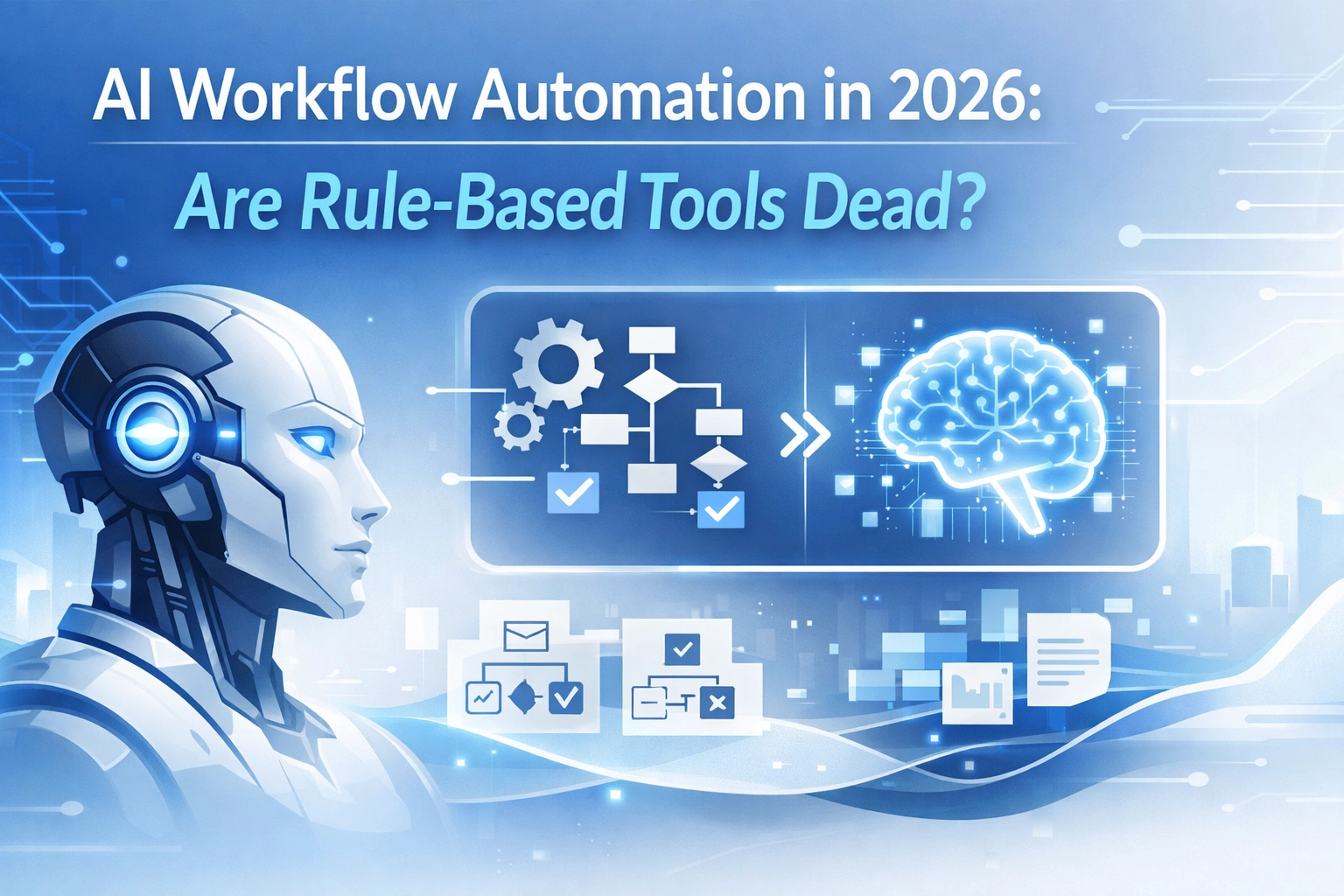
Your automation stack is broken. Not because your tools stopped working: but because the way work gets done changed overnight.
Here's the truth: Rule-based automation isn't dead. It's being absorbed into something more powerful.
The Shift Nobody Saw Coming
We spent years building if-then workflows. Zapier connects to Slack. Gmail triggers a Google Sheet update. A form submission creates a CRM record.
These systems still run. But they can't adapt when conditions change. They break when exceptions happen. They require constant maintenance when business processes evolve.
The 2026 automation landscape looks completely different. We're moving from automation that follows instructions to automation that makes decisions. From static processes to adaptive systems that learn and respond.

Rules Didn't Die: They Got Demoted
Think of it this way: Rules used to be the boss. Now they're the guardrails.
Organizations are embedding rule-based logic as control mechanisms within agentic AI systems. Instead of dictating every action, rules now function as governance frameworks that let AI agents make context-aware decisions while maintaining compliance and safety.
Your old automation said: "When Form A is submitted, create Contact B in System C."
Your new automation says: "When a lead comes in, evaluate priority, check existing records, determine the best system to route it to, and create or update the appropriate record: but never expose PII outside approved systems."
Same outcome. Completely different execution.
The Hybrid Model Taking Over
Stop thinking automation is one thing. It's now three things working together:
Small models handle frequent, simple tasks. These are your rule-based operations. Customer submits a support ticket with keyword "billing"? Route it to finance. No AI needed. Fast, cheap, reliable.
Larger models handle complex reasoning. Customer email says "I was charged twice but only once shows in my portal and I'm considering canceling"? That needs context, analysis, and nuanced response generation. AI agent territory.
High-risk actions trigger human approval. Refund over $500? Contractual commitment? Data deletion request? These pause for verification before execution.
This isn't either-or. It's intelligent routing based on complexity and risk.

What Dies: Isolated Automation
Here's what actually became obsolete in 2026: Disconnected point solutions.
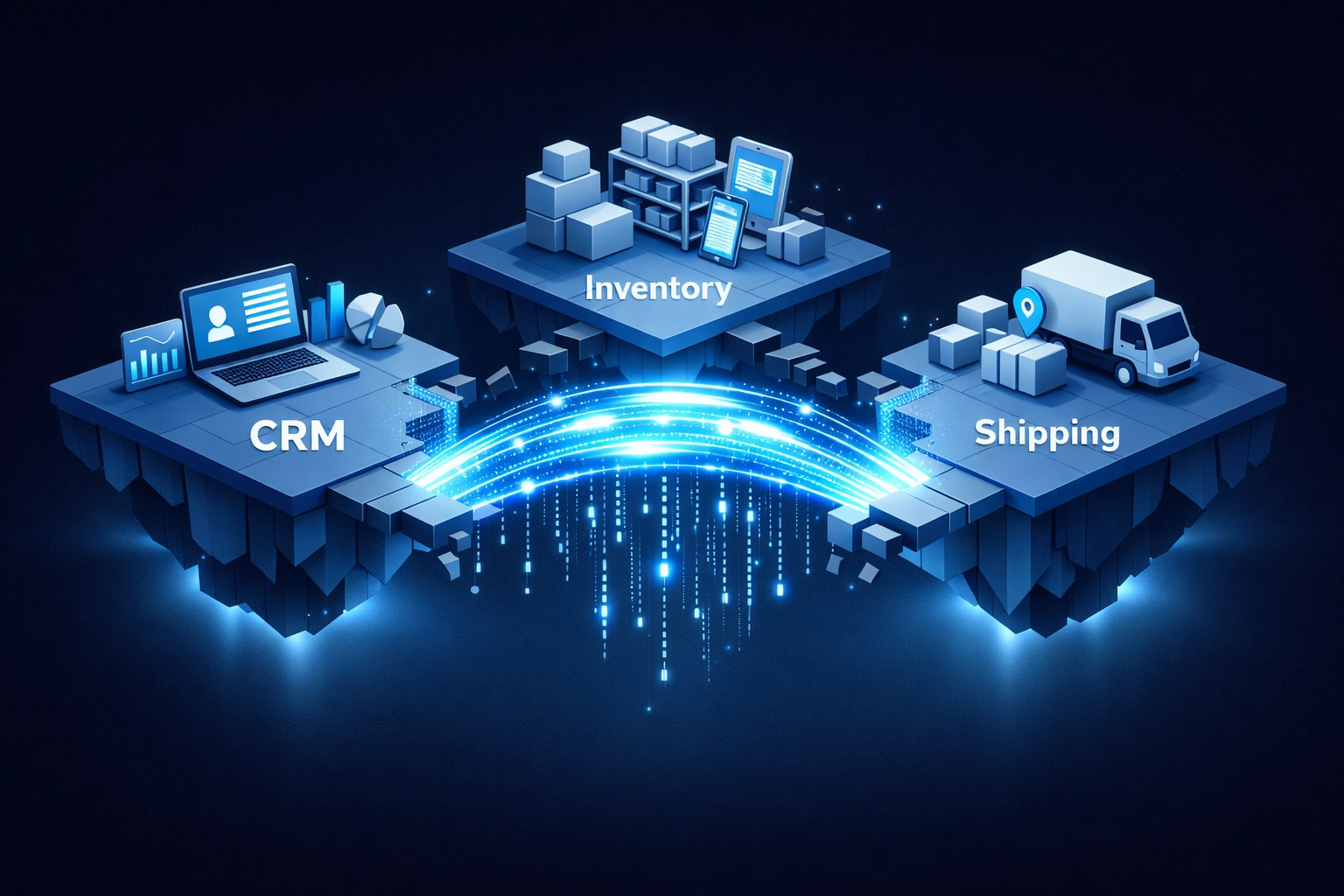
Your marketing automation doesn't talk to your customer success platform. Your inventory system doesn't communicate with your shipping workflow. Your CRM can't trigger actions in your project management tool.
Efficiency gains from isolated automation fade quickly. You get 10% faster at one task while the handoff between systems still takes two days and three manual steps.
Resilience comes from orchestrating processes across domains. That requires systems that can coordinate decisions and actions across multiple workflows, databases, and tools.
Rule-based tools can't do this alone. They need orchestration layers: platforms where agentic AI coordinates complex, multi-step processes while respecting the rules you've defined.
The New Question Your Team Should Ask
Stop asking: "Does this follow the rules?"
Start asking: "Can this system adapt when conditions change while respecting necessary constraints?"
That's the difference between 2023 automation and 2026 automation.
Example: Your fulfillment workflow used to follow rigid rules. Order comes in → check inventory → if available, ship → if not, backorder.
Now? Your system evaluates: inventory status, customer tier, shipping urgency, supplier lead times, alternative product availability, and margin impact. Then it decides the optimal action. But it never ships restricted items to prohibited regions. Never processes orders flagged for fraud review. Never overrides credit limits.
The rules exist. They're just not running the show anymore.
Policy-Driven Schemas Replace Rigid Workflows
Organizations are shifting to what experts call policy-driven schemas: frameworks that balance flexibility and control.
Instead of: "If status = X, then do Y"
You get: "Achieve outcome Z within constraints A, B, and C using available resources and context"
Your AI agent can choose different paths based on current conditions. It can adapt to exceptions. It can optimize for multiple variables simultaneously.
But it operates within policies you define. Budget limits. Compliance requirements. Brand guidelines. Security protocols.
Flexibility with boundaries. That's the operating model.
What This Means for Your Business Right Now
If you're still running pure rule-based automation, you're not wrong. You're just limited.
Your systems work until they don't. They scale until they break. They save time until the exceptions pile up and someone spends three hours a week maintaining Zaps.
The transition isn't about ripping everything out. It's about layering intelligence on top of existing automation.
Keep your rule-based triggers for simple operations. Add AI agents for complex decision-making. Build orchestration for cross-system workflows. Implement governance policies as safety nets.

The Real Risk: Doing Nothing
Here's what happens when you wait:
Your competitors reduce fulfillment time by 60% using adaptive routing. You're still following the same workflow you built in 2023.
Your team spends 15 hours a week on exceptions and edge cases. Their team handles exceptions automatically within policy guidelines.
Your automation breaks when market conditions change. Their systems adapt in real-time.
Speed gaps compound. Efficiency gaps widen. Cost advantages multiply.
How to Actually Make This Shift
Start with your highest-friction workflows. The ones that break often. The ones that require constant human intervention. The ones where exceptions are the norm, not the outlier.
Map the decision points, not just the actions. Where does someone need to think, evaluate, or choose? Those are your AI agent opportunities.
Define your non-negotiables. What rules absolutely cannot be broken? What constraints must always apply? Those become your governance policies.
Then build hybrid systems that let AI make decisions within those guardrails while keeping simple operations rule-based.
You don't need to automate everything with AI. You need to automate the right things with the right tools.
The Bottom Line
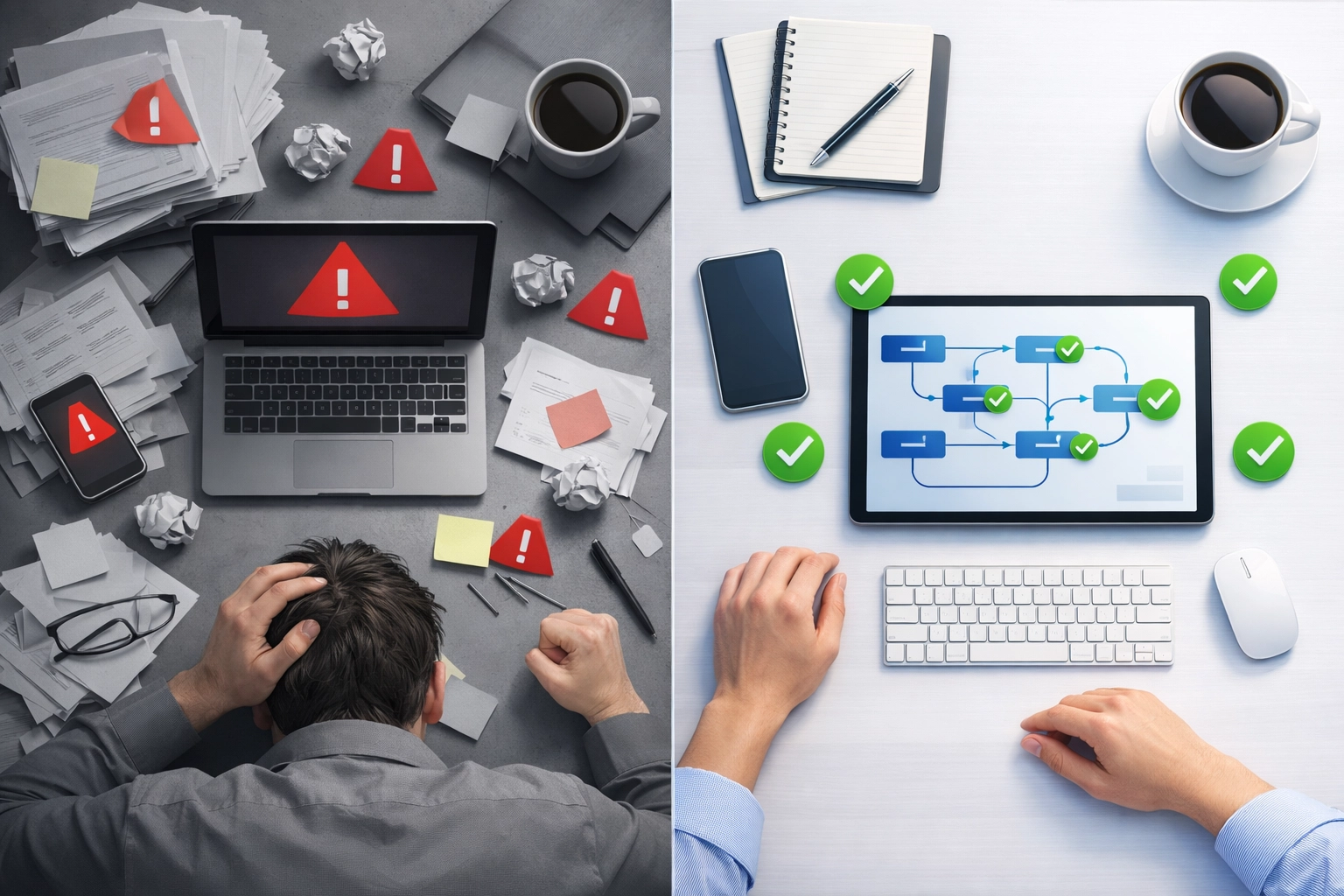
Rule-based tools aren't dead. They're just not enough anymore.
The businesses winning in 2026 aren't choosing between rules and AI. They're combining both into adaptive systems that operate within governance frameworks.
Static automation still has a place. But the future belongs to systems that can think, adapt, and execute: while respecting the boundaries you define.
Ready to build automation that actually adapts to your business instead of breaking when conditions change? Let's talk about what that looks like for your specific workflows.
Leave a Reply