Amin Said, Founder of Pure Technology Consulting LLC
https://puretechconsult.com
This is an illustrative composite case study. No client is named, and the details are drawn from patterns across engagements.
An established equipment manufacturer had spent more than 15 years building relationships with its dealer network. The company wanted to deepen those relationships and create a recurring software revenue line by offering a branded digital platform. But it did not have an internal development team, and building, securing, integrating, and operating a SaaS product from the ground up would require a substantial commitment.
This composite engagement explores how a white-label licensing partnership can turn an established industry relationship into a scalable digital capability. Pure Technology Consulting (PTC) brought experience operating multi-tenant software platforms, then adapted that foundation to the manufacturer’s brand, dealer model, and systems. The goal was not simply to put a new logo on software. It was to make a useful platform part of how the vendor and its dealers work together.
The strategic opportunity: software that strengthens the dealer relationship
The manufacturer already had something a new software company would need time to build: a trusted place in its industry and an established dealer network. That offered a practical route to launching a digital service with relevance from day one.
The opportunity was to offer dealers a shared platform for selected workflows while giving the manufacturer a clearer view of adoption across the network. The manufacturer could extend its value beyond equipment and support, while dealers could use software aligned with the vendor’s processes and identity.
The constraint was equally important. The vendor wanted to pursue this opportunity without hiring and managing a full product engineering organization. It needed a partner able to provide a reliable software foundation, tailor it to the operating model, integrate it with existing systems, and support it over time.
Why white-label infrastructure can beat a ground-up build
Building a SaaS product from scratch can make sense when the product itself is the company’s core competency or when its requirements cannot be met by a configurable foundation. But it also means designing tenant management, access controls, operations, analytics, releases, support, and ongoing maintenance before the business has learned how dealers will use the product.
A white-label partnership can shift that effort toward the parts that distinguish the offer: the manufacturer’s workflows, dealer experience, integrations, and network strategy. It is not a shortcut around product decisions. It is a way to focus development on the decisions that create value instead of rebuilding common platform capabilities.
PTC’s experience operating ChainHQ, AI Local Boost, EHRIO Pro, and FTP Inform helped establish a practical foundation for this work. These platforms demonstrate experience building and operating multi-tenant applications with different user needs and workflows. They are proof of capability, not products being offered for sale in this case study.
For companies exploring a similar path, PTC’s custom web application development combines product architecture with implementation. A custom software development agency should help shape the operating model as well as write code. That includes clarifying who uses the platform, what each role can see, which systems need to connect, and how the vendor will assess adoption.
What the platform looked like
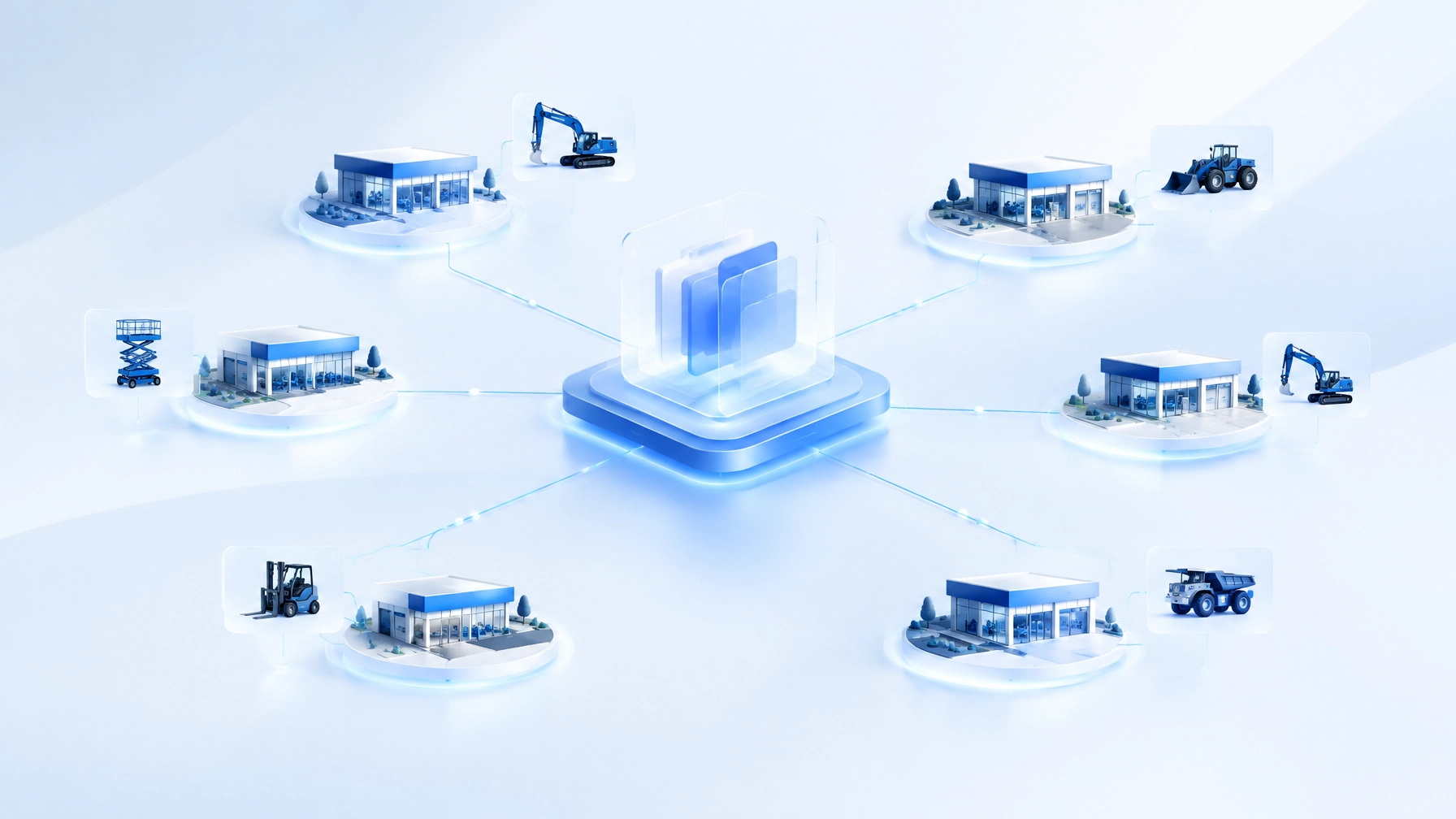
The solution was designed around a shared SaaS foundation with distinct dealer workspaces, rather than a separate application for every dealer. Each dealer had its own authorized users, configuration, and business data. The manufacturer retained network-level oversight appropriate to its role, while dealers worked within their own operational scope.
Multi-tenancy is an architectural choice, not a single configuration. A shared database with strong tenant isolation can support consistent platform operations, while a database-per-tenant pattern can offer more separation for some requirements, with additional operational complexity. The AWS SaaS Lens describes SaaS architecture and multi-tenant design considerations that help teams evaluate these tradeoffs. The right pattern depends on factors such as security needs, regulatory obligations, integrations, cost, and how the service will evolve.

The experience was white-labeled through a configurable branding layer. The manufacturer’s identity shaped the main platform, while permitted dealer-level settings could reflect the network’s structure. This kept the product recognizable as a vendor-supported service without requiring a separate codebase for each dealer.
Role-based access provided another layer of distinction. Manufacturer administrators, dealer managers, and other users received access appropriate to their responsibilities. The design also considered how dealer organizations and locations would be represented, so permissions could reflect how the network actually operates.
Integration work connected the platform with selected back-office systems. Rather than assume every process should move into the new software, the team identified where information needed to flow and where existing tools should remain authoritative. Integration scope depends on the vendor’s systems and data quality, but may include account details, dealer records, product information, or operational events.
The platform also included usage analytics. The manufacturer needed visibility into whether dealers were adopting the service, which areas were being used, and where onboarding or product adjustments might be needed. Dealer-level views could support local operations, while network-level reporting helped the vendor identify broader patterns. Analytics were designed to inform decisions, not simply collect activity.
A phased dealer rollout created room to learn
A network-wide launch would have increased coordination demands and made early issues harder to isolate. Instead, onboarding was organized into cohorts. Initial dealers could help test the setup, clarify training needs, and surface differences in local workflows before the platform expanded to additional groups.
Each cohort followed a consistent sequence: prepare dealer accounts and roles, confirm branding and integrations, introduce the relevant workflows, and collect feedback on use. The rollout could then incorporate lessons before moving to the next group.

This approach also gave the manufacturer a more useful view of progress. A login alone is not the same as adoption. Teams can track practical indicators such as dealer activation, first use of a key workflow, recurring activity, and adoption across roles. With those signals, the vendor can distinguish between a training gap, an integration issue, and a product experience that needs refinement.
What the manufacturer gained
In this composite scenario, the partnership gave the manufacturer a foundation for a recurring software revenue line without requiring it to build an internal development organization from scratch. Just as importantly, the manufacturer could introduce a digital service that complemented its existing dealer relationships.
The vendor gained visibility into adoption and a structured way to learn from dealer use. Dealers received an experience aligned with the manufacturer’s network and processes. The platform also created a basis for expanding capabilities as feedback and operating priorities became clearer.
These are qualitative outcomes, not guaranteed results. Actual commercial performance depends on the product’s relevance, dealer engagement, licensing model, onboarding, and ongoing investment. The software supports a business strategy. It does not replace the work of defining and delivering one.
Lessons for vendors considering a licensing partnership
Start with one flagship module. Choose a focused dealer need that can demonstrate value without making the first release responsible for every process. A clear initial scope makes it easier to validate workflows and refine the experience.
Instrument adoption from day one. Decide which signals will help the vendor understand activation and meaningful use. Build those measures into the product and review them during each onboarding cohort.
Make data rights explicit. Clarify what dealers can access, what the vendor can report on, and how data will be handled if the relationship changes. Commercial licensing, data ownership, and trademark terms belong in a signed licensing agreement and should be reviewed by qualified counsel. This is general information, not legal advice.
Treat software as an operating capability. A licensing partnership involves product decisions, integrations, support, training, and governance, not only a branded interface. Enterprise automation consulting and business automation consulting can help define how these pieces work together. Where relevant, ai workflow automation, ai consulting services, bespoke AI solutions, and other ai-powered business systems can become part of a broader roadmap, but they should support validated workflows rather than distract from the first use case. This is the foundation of purposeful digital transformation consulting.

A white-label platform can help a manufacturer extend the value of its dealer relationships through software. The strongest foundation combines a thoughtful tenant model, a distinct but governed brand experience, useful integrations, phased adoption, and analytics that guide decisions over time. For organizations with established networks, that can create a path to digital growth without beginning every capability from zero.
Discuss your platform opportunity
If your organization is evaluating a white-label SaaS partnership, book a discovery call with Pure Technology Consulting. There is no obligation.
Amin Said, Founder of Pure Technology Consulting LLC
https://puretechconsult.com
+1 (803) 921-0969
Leave a Reply