Amin Said, Founder of Pure Technology Consulting LLC, approaches custom software development from an operational perspective: the right system should reduce friction, improve visibility, and create leverage for the people responsible for growth.
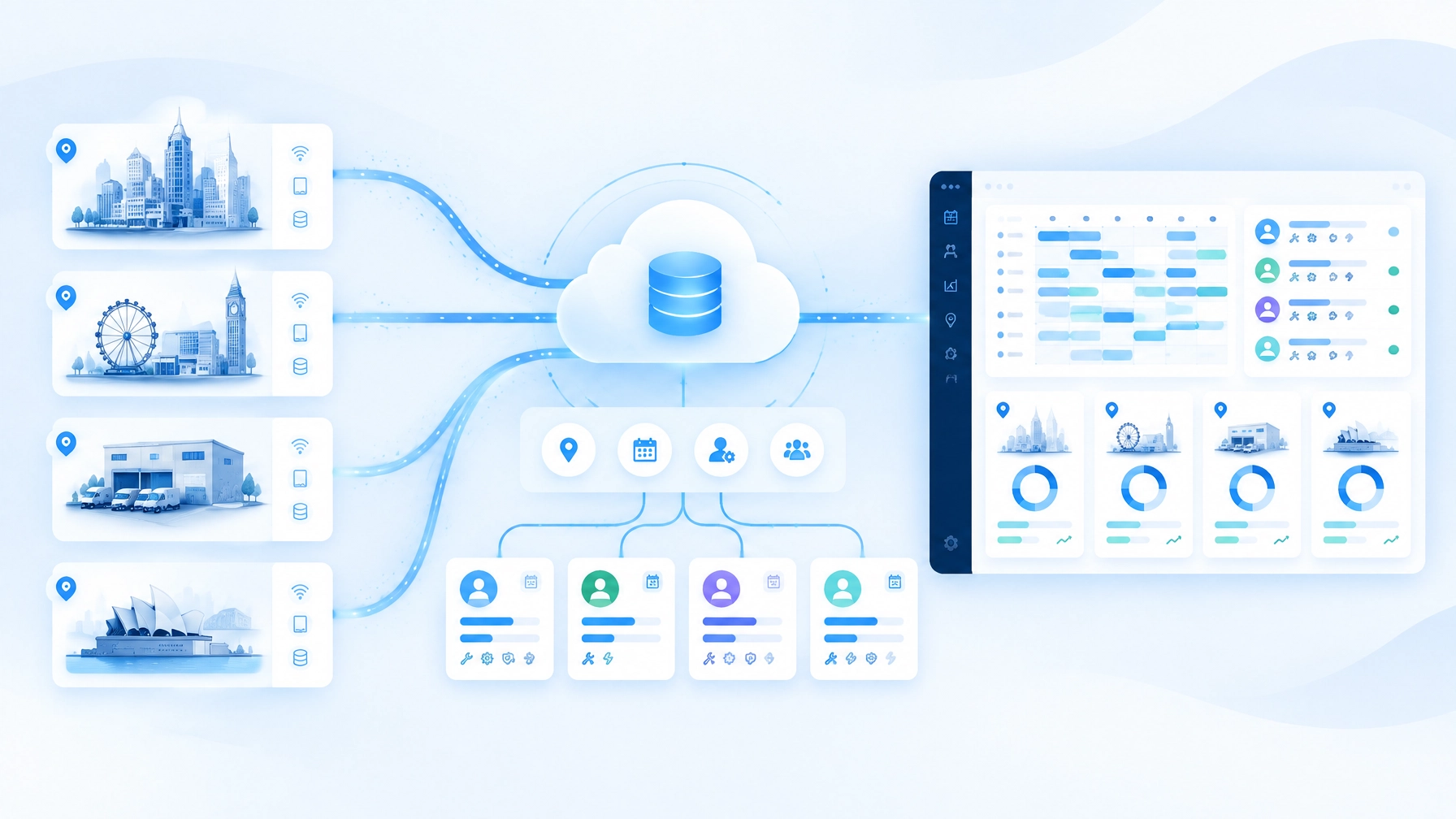
That principle shaped ChainHQ, a proof-of-concept platform demonstrating how Pure Technology Consulting can replace manual scheduling and assignment workflows with an intelligent operating layer for multi-location service businesses.
ChainHQ was designed for environments where work moves between locations, teams, events, and managers. Instead of relying on spreadsheets, text messages, disconnected calendars, and individual staff judgment, the platform centralizes operational data and applies consistent assignment logic across the organization.
The result is not simply a better scheduling screen. It is a scalable foundation for coordinating work, balancing capacity, improving reporting, and reducing dependence on manual administrative labor.
The operating challenge: growth creates scheduling complexity
Multi-location operators often reach a point where their original scheduling process no longer matches the business they have become.
A single-location operator may coordinate assignments through a shared calendar and a few recurring routines. As the organization expands, the same process becomes more difficult to control:
- Each location maintains its own scheduling habits.
- Managers manually compare availability across teams.
- Assignment decisions depend on individual knowledge rather than shared rules.
- Staff members move between branches, events, or service areas.
- Leadership cannot easily see workload, utilization, or bottlenecks across the network.
- Reporting requires repeated exports, spreadsheet consolidation, and manual cleanup.
This fragmentation creates operational drag. The business may continue to grow, but every additional location adds more coordination work. Headcount rises not only to deliver services, but also to maintain the administrative systems required to keep the operation moving.
For growth-focused local businesses, permanent jewelry brands, healthcare groups, and other multi-location service operators, this is a critical inflection point. The question is no longer whether the team can schedule work manually. The question is whether the operating model can scale without making manual coordination a permanent cost center.
ChainHQ as a custom software proof-of-concept
ChainHQ demonstrates how a purpose-built system can treat scheduling and assignment as a business logic problem rather than a calendar problem.
The platform’s broader architecture is location-aware. Customer, staff, inventory, event, and transaction records can be connected to specific locations while remaining visible within a centralized operating environment. This enables local execution without sacrificing organization-wide governance.
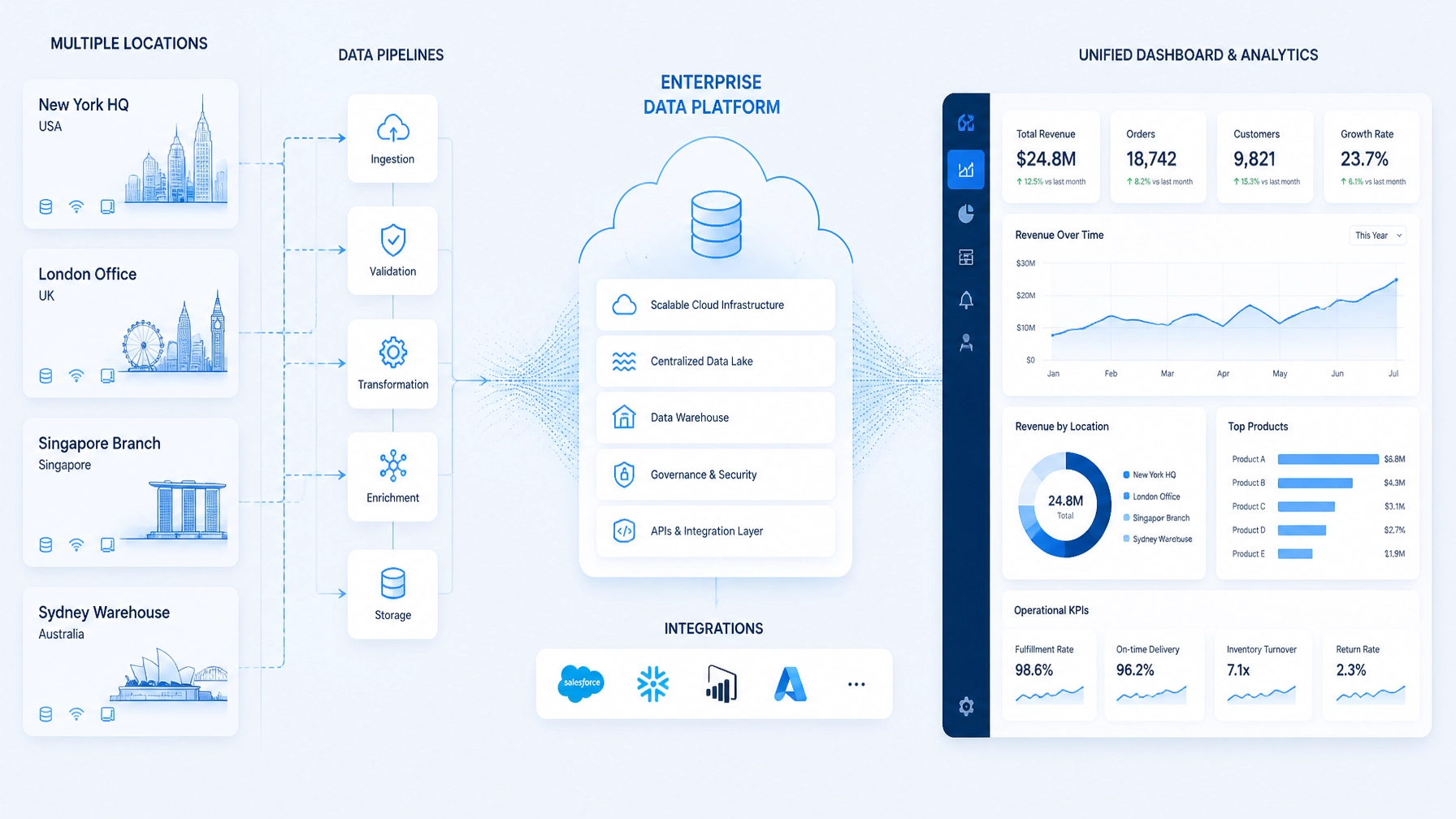
This approach reflects the architectural principles described in Pure Technology Consulting’s ChainHQ multi-location architecture case study:
- A centralized data core with location-scoped records
- Role-based access for executives, regional managers, and local staff
- Shared operational visibility across branches and events
- Integration points for external systems
- A reporting layer designed around real business decisions
The scheduling capability fits into that foundation. Assignments are not isolated calendar entries. They are operational records connected to people, locations, time windows, service requirements, and business priorities.
What intelligent assignment logic changes
Manual assignment usually depends on a manager answering several questions from memory:
- Who is available?
- Who has the right experience?
- Which location or event needs coverage?
- Who is already carrying the heaviest workload?
- Does the assignment create a travel or timing conflict?
- Is the work urgent or tied to a specific customer requirement?
ChainHQ converts these questions into structured rules.
An assignment workflow can evaluate factors such as:
-
Location and service area
The system can prioritize staff members who are assigned to, or located near, the relevant branch, event, or service territory. -
Availability
Existing assignments, working hours, time-off records, and scheduling windows can be considered before work is allocated. -
Skills and role requirements
The assignment engine can distinguish between general availability and qualified availability. A person may be free but not appropriate for a specific service or operational task. -
Capacity and workload balance
Work can be distributed using current assignment volume rather than repeatedly routing tasks to the same experienced employees. -
Priority and business rules
High-priority customers, time-sensitive events, and location-specific requirements can be evaluated using consistent decision criteria. -
Exceptions and manager review
Automation does not eliminate operational judgment. It gives managers a recommended or rules-based assignment while preserving the ability to approve, override, or reassign when circumstances change.

This is the difference between automating a task and designing an operating system. The goal is not to remove people from the process. It is to ensure that people spend their time managing meaningful exceptions instead of repeatedly reconstructing the same scheduling decisions.
From disconnected workflows to a controlled assignment lifecycle
A scalable assignment workflow needs more than a matching algorithm. It needs a complete lifecycle that can be observed and governed.
A typical ChainHQ-style workflow may include:
Intake
A new job, customer request, event requirement, or internal task enters the system with structured information. This prevents critical details from being buried in email threads or informal messages.
Validation
The system checks whether the request contains the information required for assignment. Invalid, incomplete, or conflicting requests can be flagged before they reach a manager.
Matching
The assignment engine evaluates location, availability, skills, workload, timing, and priority against the organization’s configured rules.
Recommendation or allocation
The system either recommends the best-fit resource for review or automatically assigns the work when the rules and confidence level support automation.
Notification
Relevant staff and managers receive the appropriate status updates, reducing the need for separate follow-up messages.
Monitoring
Managers can see assignments by location, status, team member, time period, or exception type.
Audit and reporting
Every significant action can be recorded, creating a history of how work entered the system, how it was assigned, and whether the assignment changed later.
This lifecycle is especially valuable for operators managing multiple branches or mobile teams. It creates a shared operating language across locations while still allowing local managers to handle legitimate exceptions.
Reporting that supports decisions, not just documentation
One of the most persistent limitations of manual scheduling is that it produces weak reporting.
A spreadsheet may show what someone entered. It rarely explains the operational story behind the data. Leadership may struggle to determine:
- Which locations are under capacity?
- Where are assignment delays occurring?
- Which services create the most scheduling friction?
- How frequently are assignments being changed?
- Which employees or teams are consistently overloaded?
- How much work is waiting for manual review?
- Are certain locations dependent on a small number of people?
A unified custom application can make these questions visible through role-specific dashboards.
Executives may need cross-location performance and capacity trends. Regional managers may need assignment queues and exception reports. Local staff may need only their current schedule and task details.
This is where custom development becomes more valuable than forcing every user into the same generic interface. The software can reflect the organization’s operating model, permissions, and decision hierarchy.

Pure Technology Consulting’s broader capabilities include custom dashboards, data integration, API development, and workflow automation. ChainHQ brings those capabilities together in a concrete multi-location use case.
Why this matters for labor leverage
Reducing labor dependency does not mean reducing the value of the team. It means reducing the amount of repetitive coordination required to operate the business.
When assignment logic is centralized and repeatable, managers can focus on:
- Resolving exceptions
- Coaching teams
- Improving service quality
- Planning capacity
- Expanding into new locations
- Reviewing performance trends
That shift creates operational leverage. Growth becomes less dependent on finding another administrator who can manually coordinate an increasingly complex set of schedules.
The business also becomes more resilient. If one manager leaves, the organization does not lose all of the informal knowledge required to assign work. Core rules, records, and workflows remain part of the system.
Where custom development creates the greatest advantage
Off-the-shelf scheduling tools can be useful when the operating model is simple and standardized. They become less effective when the organization needs specialized rules, multiple locations, custom permissions, or integration with existing systems.
Custom development is particularly valuable when:
- Assignment decisions depend on several business-specific variables.
- Teams operate across locations, events, or service territories.
- Existing CRM, POS, inventory, accounting, or communication systems must remain connected.
- Leadership needs reporting that generic tools do not provide.
- The business wants to protect its unique operating model as a competitive advantage.
- Manual work is creating a measurable constraint on growth.
ChainHQ is therefore best understood as a demonstration of capability. It shows how Pure Technology Consulting can translate operational complexity into a structured, scalable web application rather than asking a business to redesign its processes around generic software.
The roadmap for operators facing manual scheduling drag
A practical modernization effort should begin with an operational audit rather than a technology purchase.
Start by documenting:
- Where scheduling requests originate
- Which data managers use to make assignment decisions
- How often assignments are changed
- Which exceptions require human intervention
- Where reporting is manually consolidated
- Which systems need to exchange data
- What should be automated, recommended, or left under manager control
From there, a phased roadmap may include a centralized assignment queue, rules-based matching, manager dashboards, notifications, and deeper integrations.
The right sequence depends on the organization’s priorities and constraints. A high-ticket custom development engagement should be scoped around business impact, system dependencies, governance, and future growth: not just a list of software features.
Build the operating layer behind your growth
ChainHQ illustrates a broader principle: multi-location growth requires more than additional sites. It requires a stronger operating model.
When scheduling, assignment, reporting, and exception management are designed as one connected system, businesses gain a clearer view of how work moves through the organization. Managers receive better tools. Staff experience less administrative friction. Leadership gains the visibility required to make informed expansion decisions.
Pure Technology Consulting builds custom web applications and AI-driven automation systems for businesses that have outgrown disconnected tools and manual workflows. Explore our custom software development and automation capabilities or schedule a consultation to discuss your workflow, integration, and scalability requirements.
Phone: +1 (803) 921-0969
Amin Said, Founder of Pure Technology Consulting LLC
https://puretechconsult.com
Leave a Reply