
By Amin Said, Founder of Pure Technology Consulting LLC
Digital transformation is often described as an upgrade: move to the cloud, add automation, replace outdated software, or introduce artificial intelligence.
That framing is too narrow.
For a growth-focused business, digital transformation is not about installing another tool. It is about redesigning the operating system of the company: the connected structure of workflows, data, roles, decision-making, and technology that determines how work gets done every day.
When that operating system is designed well, growth becomes more repeatable. Teams spend less time reconciling information, leadership gains clearer visibility, and the organization can handle more volume without adding administrative complexity at the same rate.
This is the strategic role of digital transformation consulting and AI workflow automation: not simply to modernize individual tasks, but to create a scalable operating model for the business.
Growth exposes the weaknesses in your operating model
Many businesses do not experience operational friction when they are small. A founder can personally review every lead. A manager can reconcile reports across several spreadsheets. A front-desk employee can re-enter information into multiple systems.
As volume increases, those workarounds become structural constraints.
Growth often exposes:
- Manual data entry between CRM, scheduling, billing, and reporting systems
- Inconsistent processes across locations or departments
- Delayed reporting that prevents timely decisions
- Workflows dependent on individual employees’ memory
- AI tools operating without clear governance or reliable business data
- Disconnected customer, operational, and financial information
The problem is not always that a company lacks software. More often, it has too much software without a coherent architecture connecting everything together.
A digital transformation strategy begins by examining how work actually moves through the organization. Which systems create the data? Who makes decisions? Where are approvals delayed? Which steps are repeated? What happens when information is incomplete or an exception occurs?
Those answers form the blueprint for a better operating model.
A modern operating system has five connected layers
A scalable digital operating model should connect five essential layers.
1. Workflow design
Before automating a process, the process itself must be understood.
A workflow audit documents the steps, owners, systems, handoffs, decision points, exceptions, and measurable outcomes involved in a business process. This prevents companies from automating unnecessary steps or accelerating a process that is already poorly designed.
Typical opportunities include:
- Lead intake and qualification
- Patient or client onboarding
- Scheduling and assignment
- File ingestion and validation
- Approvals and notifications
- Reporting and reconciliation
- Customer follow-up and retention
The goal is not to automate everything. It is to prioritize workflows that are repetitive, high-volume, error-prone, or directly connected to revenue and service delivery.
2. Data architecture
Automation is only as reliable as the information flowing through it.
When customer records, appointments, transactions, and operational events live in separate systems, employees become the integration layer. They copy, reconcile, verify, and interpret data manually.
A stronger architecture creates a trusted source of operational truth. This may involve a centralized data model, secure APIs, event-driven workflows, or a custom orchestration layer that connects existing systems without forcing the company to abandon every tool it already uses.
The result is not simply better reporting. It is better decision-making throughout the business.
3. Custom applications and integrations
Off-the-shelf software is valuable when a company’s workflows are standardized. Custom software becomes strategically important when the organization’s differentiation depends on specialized processes, complex rules, or coordination across multiple systems.
A bespoke web application can provide:
- A unified internal workspace
- Custom intake and routing logic
- Role-based dashboards
- Secure integrations with existing platforms
- Exception handling and approval workflows
- Operational reporting tailored to leadership needs
- Customer or partner portals
The right question is not whether custom development is more advanced than SaaS. The right question is whether the business can continue growing while adapting its operating model to the limitations of generic software.
AI workflow automation should support decisions, not create more noise
AI workflow automation is most valuable when it is connected to a defined process and governed by clear rules.
For example, an AI-enabled workflow may:
- Classify incoming requests
- Extract structured information from documents
- Summarize customer or patient history
- Recommend routing or assignment
- Draft communications for human approval
- Identify missing information
- Trigger follow-up sequences
- Detect exceptions that require escalation
The design principle is simple: use rules for deterministic tasks and AI for tasks that require interpretation, classification, or contextual support.
Human oversight remains essential in high-stakes environments such as healthcare, legal services, accounting, and financial operations. A well-designed system defines where AI can act independently, where a human must review the result, and how every action is recorded.
That combination of automation, visibility, and governance creates leverage without turning the organization into a collection of unmonitored AI experiments.
Proven builds reveal what custom transformation makes possible
At Pure Technology Consulting, proprietary platforms are not presented as generic products to purchase. They are proof-of-concept evidence of the engineering capabilities we bring to complex custom engagements.
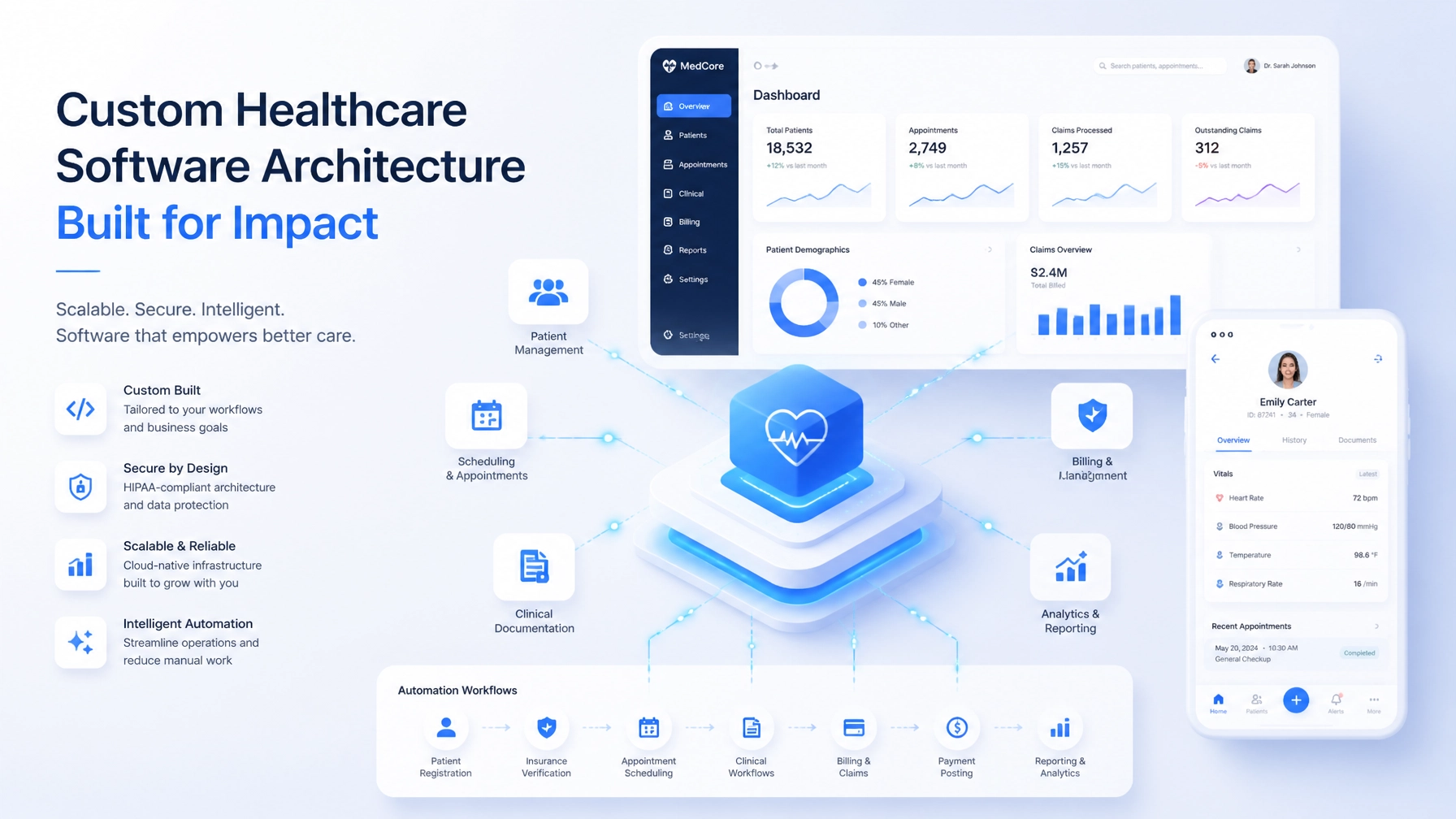
EHRIO Pro: orchestrating specialized healthcare workflows
The architecture behind EHRIO Pro demonstrates how a custom system can coordinate detailed intake, provider matching, scheduling, documentation, billing, and reporting.
The platform’s healthcare workflow model includes a dynamic 70-question intake process, matching logic, secure data synchronization, and role-based access patterns. These capabilities illustrate how technology can be designed around the specific operating model of a clinic rather than forcing staff to work across disconnected portals.
The broader lesson applies beyond healthcare: when the process is specialized, the software should reflect the process.
ChainHQ: turning multi-location complexity into a unified system
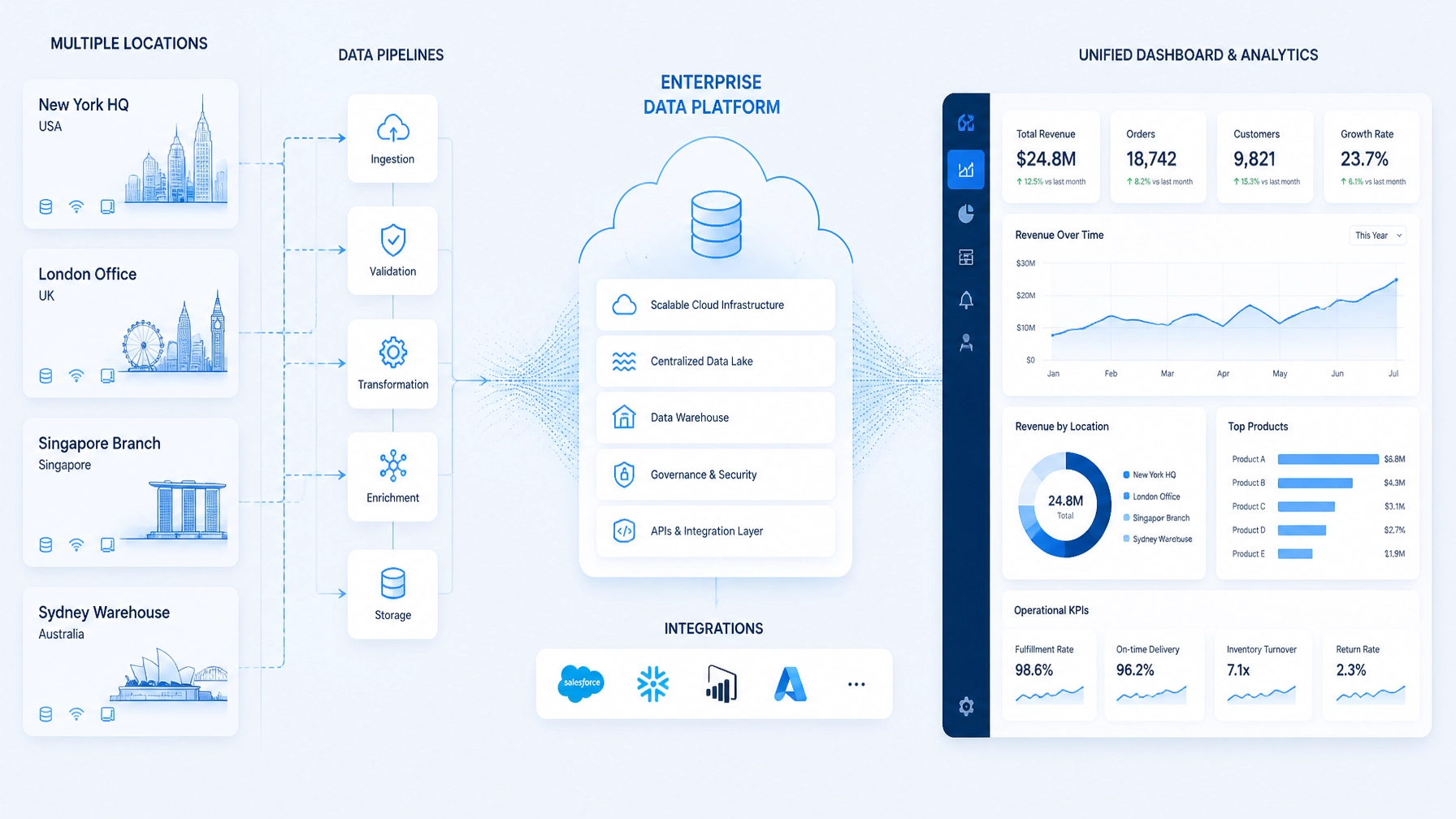
ChainHQ provides a case study in location-aware architecture.
Multi-location businesses often operate with isolated databases, local spreadsheets, and inconsistent reporting. A unified architecture can centralize core records while preserving location-level permissions and workflows.
This approach supports:
- Centralized executive visibility
- Location-specific access controls
- Shared customer and product records
- Automated inventory and operational synchronization
- Consistent governance with local flexibility
The capability is relevant to clinics, franchise groups, field-service businesses, retailers, and professional service organizations operating across branches.
FTP Inform: building automation around file-driven operations
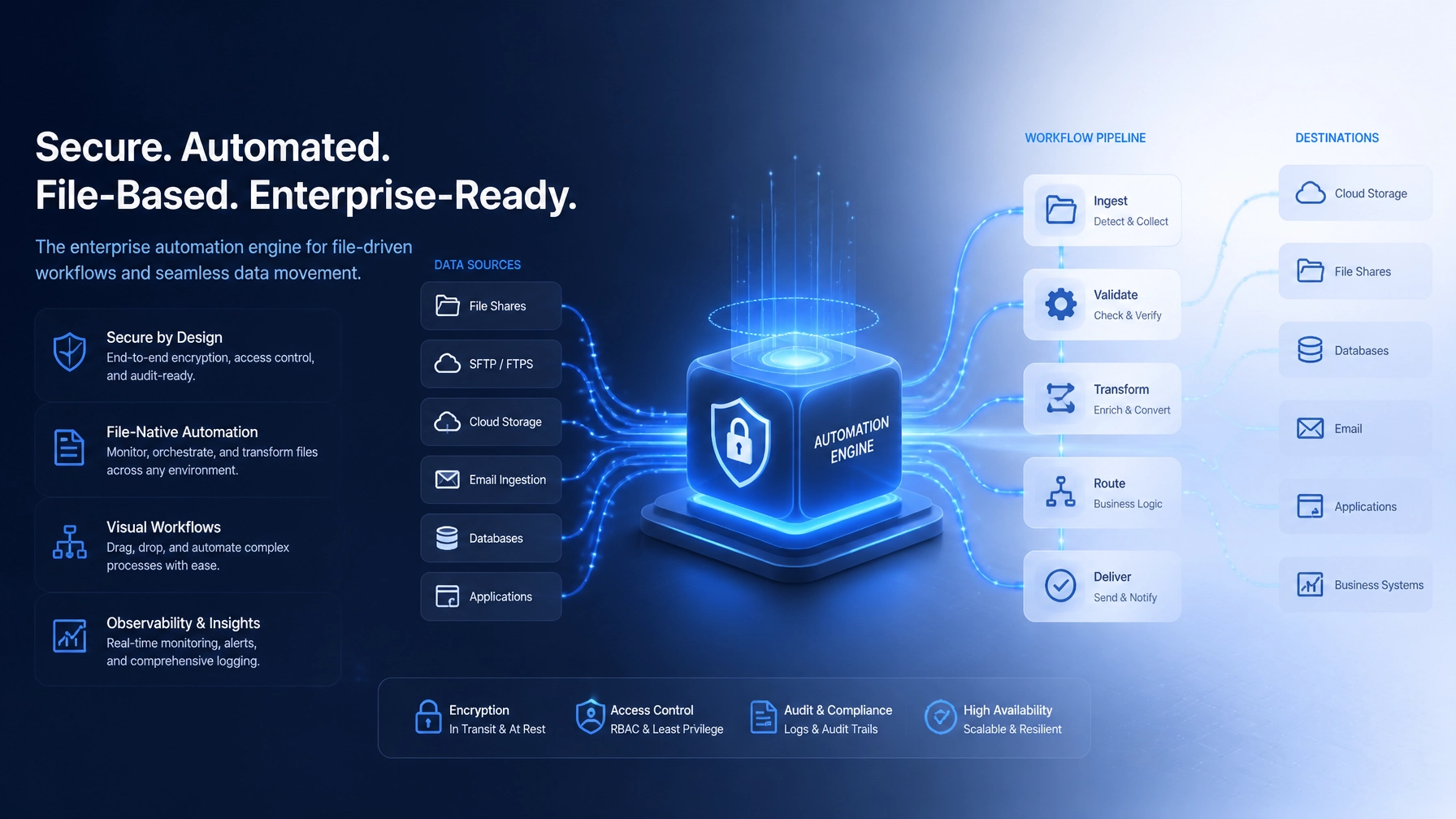
The FTP Inform case study demonstrates another form of transformation: replacing fragmented file-processing tools with a unified ingestion and orchestration engine.
For a national debt collection agency, the system consolidated three enterprise tools into one custom platform. It automated secure file ingestion, schema validation, data transformation, exception handling, and downstream workflow routing.
The documented result included a 40% reduction in cycle time and more than 75% less manual intervention. Those outcomes came from aligning the software architecture with the client’s actual operating model: not from adding a generic automation layer on top of disconnected systems.
How to build a transformation roadmap that creates leverage
A practical transformation roadmap should move through four stages.
Assess the current operating model
Map the workflows that affect revenue, service delivery, compliance, and administrative capacity. Measure cycle times, error rates, handoffs, and manual effort where possible.
Prioritize the highest-value constraints
Choose workflows where automation can produce a measurable operational impact. The best starting point is often a process that is repetitive, costly, visible to customers, or creating a bottleneck for growth.
Design the target architecture
Define the future workflow, data model, integrations, permissions, dashboards, and human review points before development begins. This is where digital transformation consulting creates value beyond software implementation.
Build, measure, and scale
Develop the custom components, connect the required systems, and launch with clear success criteria. Track metrics such as cycle time, error reduction, throughput, response time, and hours of manual work reclaimed.
A transformation program should produce a system that improves over time. Governance, reporting, and continuous optimization are part of the operating system: not optional add-ons.
The strategic shift: from operator to architect
The purpose of digital transformation is not to remove people from the business. It is to remove unnecessary friction from the way people work.
When routine coordination, data transfer, and reporting are automated, leadership can focus on operating the business at a higher level. Teams can spend more time on customer relationships, professional judgment, creative problem-solving, and growth initiatives.
That is the difference between an upgrade and an operating system.
An upgrade improves an existing tool. A redesigned operating system changes how the company creates value.
If your business is growing faster than its internal processes can support, request a discovery consultation with Pure Technology Consulting. We can help map your workflows, identify the highest-value automation opportunities, and define a custom technology roadmap for the next stage of growth.
Amin Said, Founder of Pure Technology Consulting LLC
https://puretechconsult.com
Phone: +1 (803) 921-0969
Leave a Reply