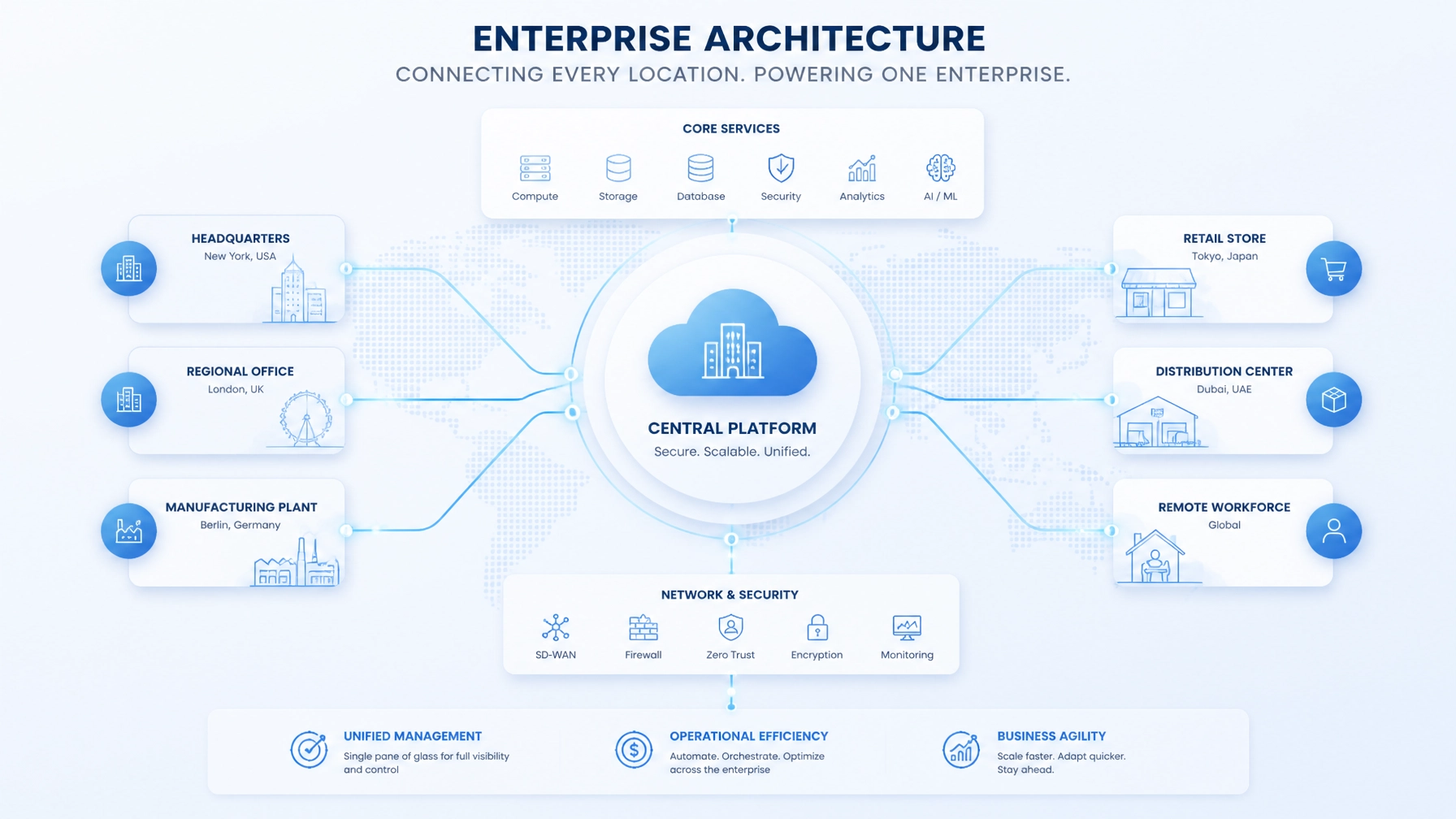
For growing enterprises operating across multiple locations, regional branches, or distributed franchise networks, technology scalability is rarely a simple matter of adding more software licenses. As organizations expand, they frequently encounter a subtle yet destructive operational bottleneck: data silos. When individual sites adopt fragmented tools, localized spreadsheets, or disconnected point solutions, leadership loses unified visibility. Operational friction compounds, reporting lags, and strategic agility grinds to a halt.
At Pure Technology Consulting, we approach multi-location software engineering not as an exercise in patchwork integration, but as a discipline in designing unified operating systems. ChainHQ serves as a prime proof-of-concept of our custom development capabilities: demonstrating how purpose-built multi-location architecture can eliminate data silos, automate complex workflows, and establish an unshakeable foundation for enterprise scale.
In this case study, we examine the architectural strategy behind ChainHQ, the mechanics of eliminating cross-site data fragmentation, and how custom web application development unlocks compounding operational leverage for high-growth businesses.
The Operational Cost of Fragmented Multi-Location Tech Stacks
When enterprises reach a certain revenue and footprint threshold: typically managing multiple facilities, branches, or regional teams: off-the-shelf software often forces a compromise. Standard SaaS tools are engineered for general audiences, meaning they rarely accommodate the nuanced operational hierarchies of multi-entity organizations.

Left unaddressed, this architectural mismatch triggers predictable symptoms:
- Data Fragmentation: Each location maintains its own repository of customer records, inventory counts, and financial transactions, preventing enterprise-wide analysis.
- Redundant Manual Workflows: Staff spend valuable hours manually reconciling reports across disparate systems or re-entering data into separate platforms.
- Governance Vulnerabilities: Inconsistent access controls and decentralized record-keeping elevate compliance risks across regions.
- Delayed Decision-Making: Executive leadership must wait days or weeks for manual data aggregation before gaining a clear picture of enterprise performance.
For businesses operating in demanding sectors: such as multi-location service providers, healthcare networks, and specialized professional firms: these friction points directly suppress top-line growth and inflate operational expenditure.
Engineering the Solution: ChainHQ’s Custom Multi-Location Operating System
To solve these systemic challenges, Pure Technology Consulting engineered ChainHQ as a high-performance, centralized operating architecture designed specifically for distributed organizations. Rather than forcing clients to stitch together disconnected third-party tools, ChainHQ models the entire enterprise hierarchy directly into a unified database schema.
1. Centralized Master Data Management (MDM)
At the core of ChainHQ’s architecture is a single source of truth for critical enterprise entities: customers, assets, pricing schedules, and operational templates. By establishing strict data governance rules at the enterprise layer while retaining flexible parameters for local execution, the platform ensures complete data integrity without sacrificing regional responsiveness.
2. Hierarchical Data Models with Attribute-Level Inheritance
Multi-location businesses require both centralized standardization and localized autonomy. ChainHQ implements a sophisticated hierarchical model (Enterprise → Region → Location → Department) equipped with attribute-level inheritance and override flags:
- Global Defaults: Corporate-wide policies, core workflows, and baseline pricing remain synchronized across every site.
- Regional Overrides: Regional managers can adapt tax rules, currency configurations, or regional compliance parameters.
- Location-Specific Parameters: Individual facilities manage local operating hours, staff assignments, and specific client intake criteria seamlessly within the same unified system.
This architecture ensures that local variations are handled via secure configuration rather than dangerous system forks or isolated spreadsheets.
Streamlining Operations with Custom Workflow Automation
Eliminating data silos is only half the equation; the true transformative value emerges when unified data powers intelligent workflow automation. ChainHQ integrates custom event-driven pipelines that replace manual handoffs with real-time digital routing.

Through API-first integration and microservices architecture, routine administrative tasks: such as multi-site scheduling, cross-facility inventory balancing, and compliance logging: execute automatically. Management dashboards provide real-time visibility into key performance indicators across every operating unit, empowering executives to spot trends, reallocate resources, and resolve bottlenecks instantly.
Our work with ChainHQ reflects the same rigorous engineering methodology we bring to clients across our broader ecosystem, including our specialized healthcare matching engines (EHRIO Pro), automated local visibility platforms, and advanced workflow systems.
Where Custom Software Outperforms Off-the-Shelf SaaS
When business leaders evaluate their technology roadmap, the debate invariably turns to whether they should build custom applications or rely on commercial SaaS subscriptions. For enterprise-grade, multi-location operations, the comparison reveals distinct boundaries:
| Dimension | Commercial SaaS Platforms | Custom Multi-Location Architecture (PTC Approach) |
|---|---|---|
| Data Architecture | Multi-tenant or siloed per account; rigid schemas | Unified enterprise schema with location as a core dimension |
| Workflow Flexibility | Restricted to vendor-provided configuration options | Fully tailored to exact operational workflows and business logic |
| Integration Capability | Dependent on pre-built marketplace connectors and webhooks | API-first design built to interface natively with legacy and modern stacks |
| Ownership & Equity | Monthly licensing fees with zero intellectual property value | Proprietary enterprise asset that compounds in operational value |
For high-ticket, growth-focused businesses, investing in bespoke development transforms technology from an administrative expense into a strategic competitive advantage.
Unlocking Enterprise Scalability and Long-Term Value
Scaling a multi-location enterprise requires an operating infrastructure that grows gracefully without incurring exponential administrative overhead. By unifying data, automating routine workflows, and providing crystal-clear executive visibility, custom architecture enables organizations to double their location footprint without doubling their administrative headcount.

Building this level of sophistication demands more than just technical coding proficiency; it requires deep operational insight, rigorous governance design, and a collaborative partnership approach. At Pure Technology Consulting, we partner with leadership teams to design, architect, and deploy resilient digital systems engineered for long-term compounding returns.
Next Steps for Growing Enterprises
If your organization is navigating the operational friction of data silos, manual reporting bottlenecks, or rigid software limitations across multiple locations, it is time to evaluate a more strategic technological foundation.
We invite you to schedule a collaborative advisory session with our engineering leadership to discuss your operational architecture and explore a tailored roadmap.
Request a Workflow Audit or visit our video walkthroughs to see our engineering capabilities in action.
Amin Said, Founder of Pure Technology Consulting LLC
https://puretechconsult.com
Phone: +1 (803) 921-0969
Leave a Reply