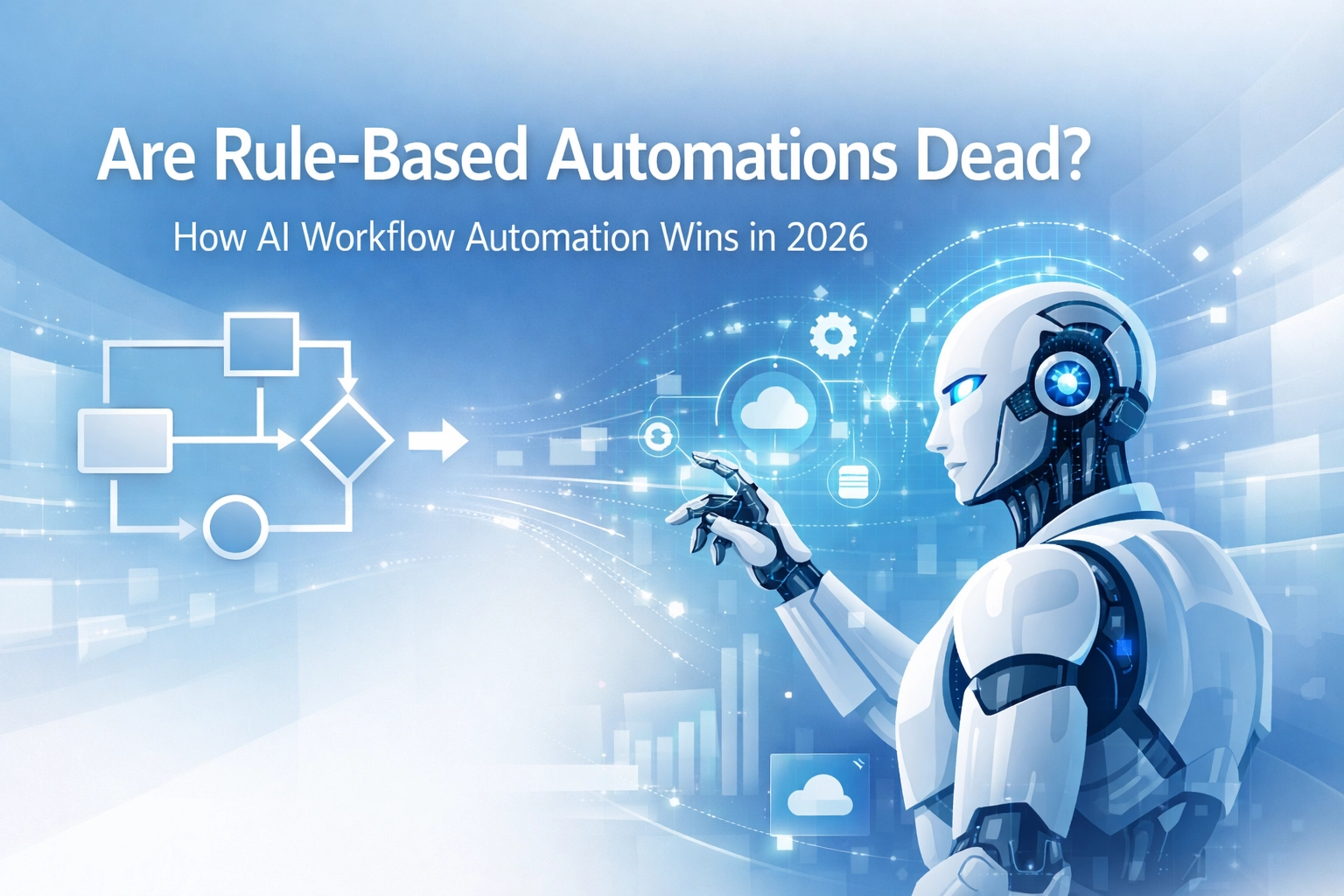
As we move through the first quarter of 2026, the conversation around digital transformation has shifted. A few years ago, "automation" meant simple, rigid triggers: if a form was submitted, send an email. If a file arrived, move it to a folder. These rule-based systems were the backbone of the first wave of the digital revolution.
Today, the landscape looks fundamentally different. We are no longer just automating tasks; we are automating reasoning. At Pure Technology Consulting, we’ve watched this evolution closely, moving from building "if-then" scripts to architecting sophisticated AI agents that understand context, nuance, and intent.
But the question remains: Are rule-based automations dead? The short answer is no. The nuanced answer is that they have found a new, more specialized role within a much larger, AI-driven operating model.
The Shift from Rigid Logic to Fluid Reasoning
In 2026, the competitive advantage isn’t just having automation; it’s having adaptive automation. Traditional rule-based systems are deterministic. They follow a path with 100% accuracy, provided the environment never changes. However, business environments are rarely static. A slight change in a vendor’s invoice layout or a customer’s phrasing in an email would historically break these systems.
AI workflow automation wins today because it bridges the gap between structured data and the "messy" reality of human communication. Instead of failing when an input doesn't match a predefined template, AI agents analyze the input, determine the likely intent, and then execute the necessary steps.

Where Rule-Based Systems Still Anchor the Foundation
Despite the rise of generative AI, rule-based systems remain essential for one specific reason: governance. In industries like finance, legal, and healthcare: sectors where we focus our custom development: predictability is a requirement, not a choice.
Rule-based systems excel at:
- Compliance and Audit Trails: When a regulator asks why a specific transaction was flagged, "the AI thought it looked suspicious" isn't a sufficient answer. You need a deterministic log.
- High-Volume, Low-Variability Tasks: Processing payroll or syncing inventory between a warehouse and a web app doesn't require "reasoning." It requires speed and zero margin for error.
- Data Transport Integrity: This is where tools like our proprietary FTP Inform come into play.
Case Study: Reliability with FTP Inform
When we build custom integrations for high-ticket clients, we often rely on FTP Inform. While it serves as a robust tool for monitoring file transfers, its true value lies in providing a stable, rule-based foundation for data movement. Before an AI can analyze a dataset, that data must arrive securely and predictably. By leveraging FTP Inform, we ensure that the "pipes" of an organization never leak, allowing the more advanced AI layers to function with clean, reliable data.
The 2026 Trend: The Hybrid Architecture
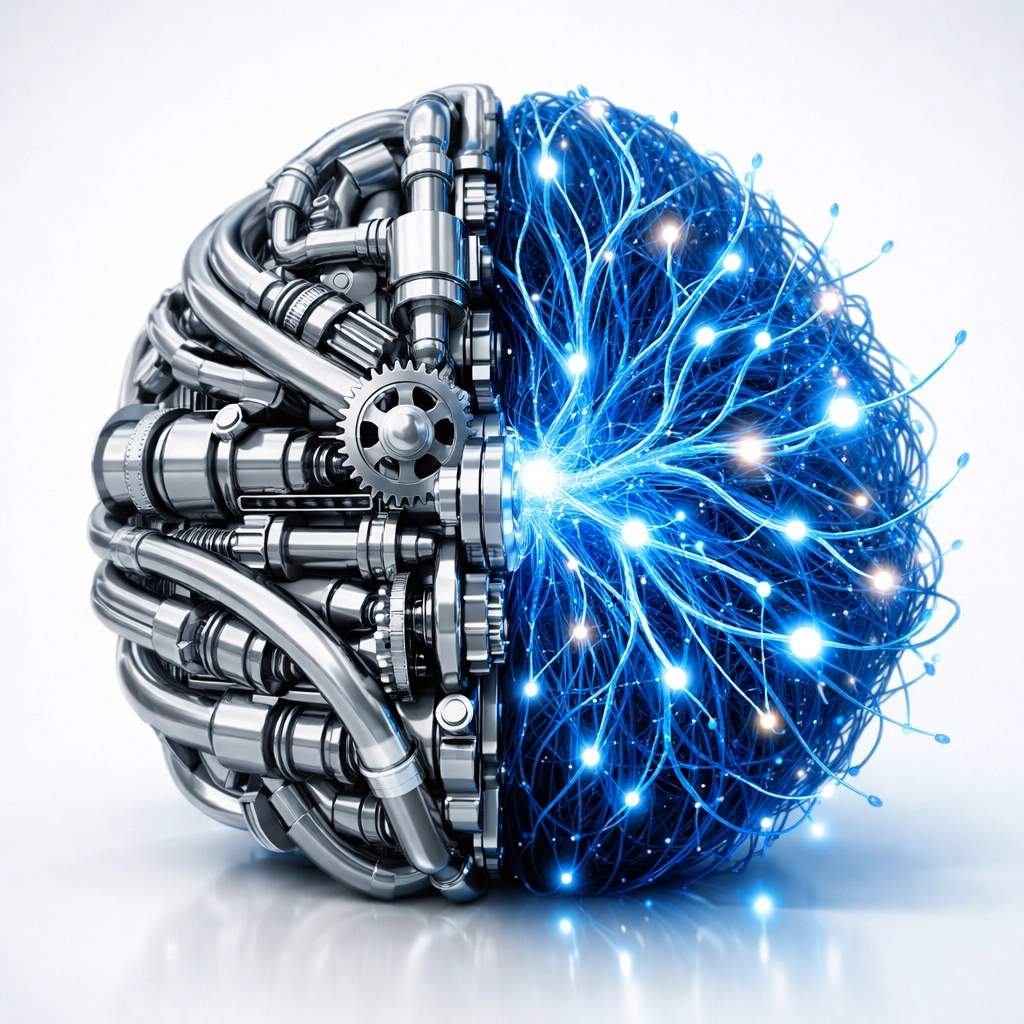
The most successful organizations in 2026 aren't choosing between AI and rule-based systems; they are building hybrid architectures. At Pure Technology Consulting, we call this "Deterministic Execution with Probabilistic Decision-Making."
In this model, an AI agent acts as the "brain." It handles the intake: reading the emails, interpreting the voice memos, or scanning the legal documents. Once the AI understands the intent, it hands the task off to a rule-based system to execute the final action. This ensures that the reasoning is flexible, but the execution remains within the guardrails of business logic.
Scaling Local Impact through Intent-Based Automation
We see this hybrid model working exceptionally well in the realm of Local SEO and reputation management. For years, businesses tried to automate their Google Business Profiles with rigid scheduling tools. The results were often robotic and disconnected from the local community.
Our solution, AI Local Boost (AILB), represents the 2026 approach to local presence. It doesn’t just "post content." It uses AI to analyze local trends, sentiment, and customer reviews to generate responses and updates that feel human and relevant. However, the distribution of that content follows strict rules to ensure compliance with search engine guidelines. This combination allows a single marketing manager to oversee hundreds of locations with the precision of a local specialist.
This is the hallmark of modern web development and automation: using AI to handle the creative and analytical heavy lifting, while rules maintain the brand's integrity.
Solving Complexity in Regulated Industries
As we pivot our focus toward the legal and accounting sectors, the demand for "intelligent" automation becomes even clearer. These fields are defined by 70-question intakes, complex matching engines, and HIPAA-adjacent workflows. A simple Zapier integration isn't enough to handle the lifecycle of a high-value legal case or a complex tax audit.
This is where our experience in healthcare tech: specifically with EHRIO Pro: becomes a strategic asset. EHRIO Pro was designed to handle the intense data demands of electronic health records, where matching the right patient to the right data point is a matter of safety, not just efficiency.
We take the logic we developed for EHRIO Pro: the ability to parse through vast amounts of structured and unstructured data to find a "match": and apply it to bespoke automations for law firms and financial institutions. Whether it’s matching a new lead to the right attorney based on historical case success or automating the intake process for a debt agency, we build systems that reason like an expert but document like an auditor.

Managing the Modern Workflow with ChainHQ
When you move away from simple "one-off" automations and toward full-scale AI agents, you need a way to orchestrate the entire lifecycle. You need a command center.
ChainHQ is our proof-of-concept for this level of orchestration. In a world where you might have ten different AI agents and fifty rule-based workflows running simultaneously, ChainHQ provides the visibility and governance required to keep the gears turning. For our clients, this doesn't just mean "more software." It means a custom-built dashboard where they can monitor the health of their entire digital operating model.
When we engage in a consultation, we don't just talk about features. We talk about the "Roadmap to Autonomy." How do we move your business from manual labor to AI-assisted workflows, and finally to AI-orchestrated operations?
What to Automate First: A 2026 Strategy
For executives looking at their 2026 budget, the question isn't whether to automate, but what to prioritize for the highest ROI. Based on our current engagements, we recommend the following strategic framework:
- High Variability + High Volume: These are your best candidates for AI Agentic workflows (e.g., Customer support, lead qualification, initial document review).
- Low Variability + High Risk: Keep these rule-based (e.g., Financial reporting, data backups, user access management).
- High Complexity + Low Frequency: These are candidates for custom web apps that facilitate human-in-the-loop AI (e.g., Strategic planning tools, high-value contract negotiation).
The goal is to reduce "operational drag": those tasks that eat up 20% of your senior staff's time but provide 0% of the strategic value.

The Pure Technology Consulting Approach
At Pure Technology Consulting, we don’t believe in "out-of-the-box" solutions for complex problems. If your business is unique, your software should be too. We specialize in building the bespoke bridges between your legacy data and the future of AI.
Our engagements often start with a thorough audit of your existing workflows. We look for the friction points: the places where your team is currently acting as a "human bridge" between two systems. Then, we design a custom roadmap that utilizes our proven pillars:
- Data Integrity: Ensuring your foundation is solid (The FTP Inform pillar).
- Intelligent Scaling: Automating growth without losing the human touch (The AI Local Boost pillar).
- Complex Matching: Connecting the dots in highly regulated data environments (The EHRIO Pro pillar).
- Centralized Orchestration: Giving you a single pane of glass to view your operations (The ChainHQ pillar).
The era of "set it and forget it" rule-based automation is indeed ending. We have entered the era of the "Living Workflow": systems that learn, adapt, and grow alongside your business.
If you are ready to move beyond simple adjustments and toward a fully automated reasoning engine, we are here to architect that future with you.
Amin Said, Founder of Pure Technology Consulting LLC
https://puretechconsult.com
Leave a Reply