By Amin Said, Founder of Pure Technology Consulting LLC
For many e-commerce entrepreneurs, the journey from zero to six figures is fueled by hustle, manual oversight, and a patchwork of third-party SaaS tools. You manage your Amazon Seller Central, flip between eBay tabs, and perhaps keep a "master" spreadsheet that is never quite up to date. This works: until it doesn't.
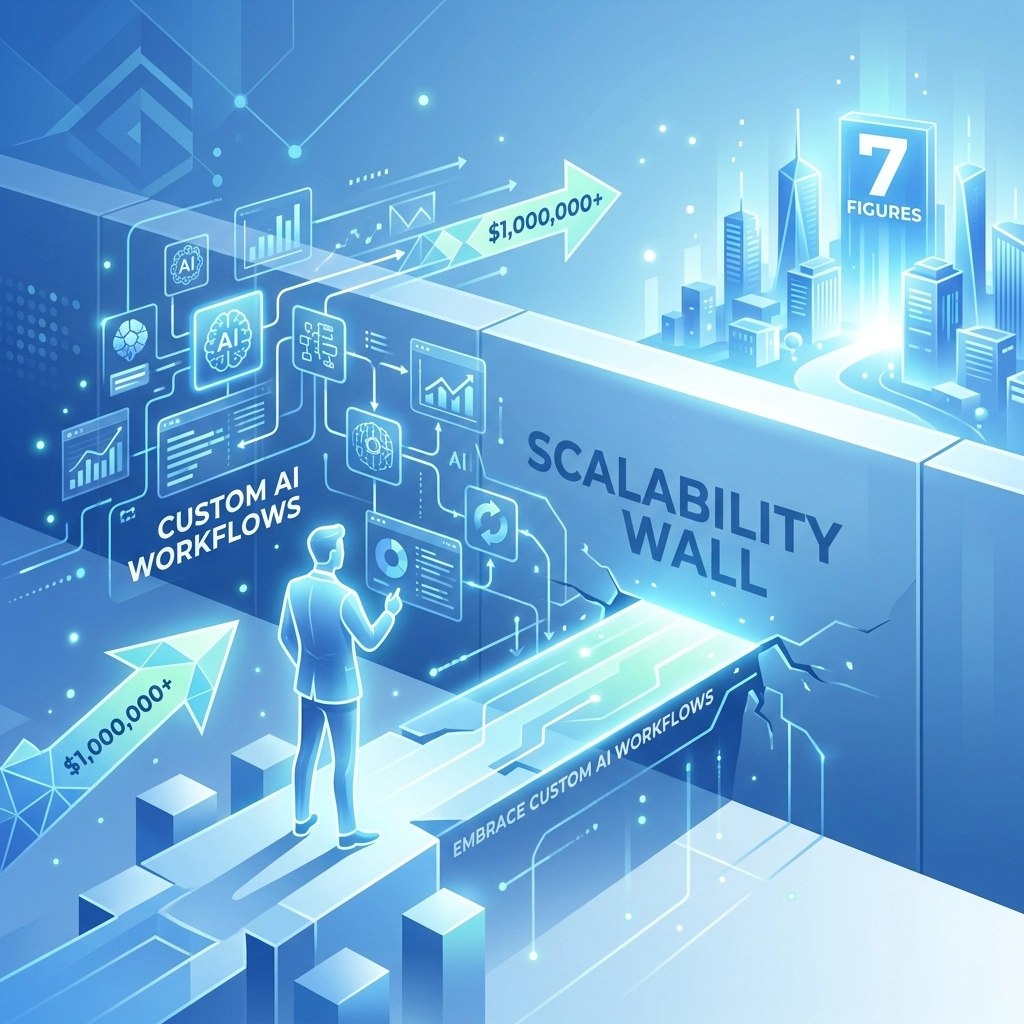
There is a phenomenon I call the Scalability Wall. It usually hits when a brand crosses the $300,000 to $500,000 annual revenue mark. Suddenly, the very processes that got you here become the anchors holding you back. Your "hustle" is replaced by operational drag. Errors in inventory lead to stockouts or, worse, account suspensions. Data is scattered across silos, making it impossible to see your true profitability in real-time.
To scale past that wall and hit the 7-figure mark, the strategy must shift. You cannot simply work more hours or add more disconnected apps. You need a custom operating model: a bespoke ecosystem of AI-driven workflows designed specifically for your unique business logic.
The "Disconnected Freelancer" Trap
Recent research into the e-commerce landscape reveals a common mistake: most sellers treat AI like a disconnected freelancer. They use one tool for PPC optimization, another for repricing, and perhaps ChatGPT for listing descriptions.
While these tools are powerful individually, they operate in isolation. They don't "talk" to your inventory levels, your supplier's lead times, or your shipping costs on eBay versus Amazon. This lack of integration creates a ceiling. When your AI tools aren't embedded into your core business workflows, they are just extra tabs open on your browser, not engines of growth.
At Pure Technology Consulting, we see this as the primary barrier to entry for the 7-figure club. Real scaling happens when your technology stack moves from a collection of apps to a unified internal system.

Pillar 1: Inventory Automation and Predictive Logic
Inventory is the most capital-intensive part of an e-commerce business. In the 7-figure range, "guessing" when to reorder is a recipe for bankruptcy.
Standard inventory tools often use basic "days of cover" logic. However, a custom AI workflow can do much more. It can scan your supplier catalogs in real-time, cross-reference historical seasonal trends, and account for current shipping delays or geopolitical disruptions.
Why Customization Wins Over SaaS
Off-the-shelf software is built for the "average" seller. But if you deal with perishable goods, complex bundles, or high-volatility electronics, "average" logic doesn't apply. Custom automation allows you to:
- Auto-Adjust for Lead Times: If a supplier in Vietnam is slowing down, your system should automatically throttle your Amazon ad spend to prevent a stockout and the subsequent ranking hit.
- Dynamic Bundling: Identify products that are frequently bought together and automatically create virtual bundles across platforms without manual SKU management.
- Supplier Catalog Scanning: Instantly identify new profitable opportunities within a wholesaler’s 10,000-item spreadsheet by comparing real-time Amazon/eBay pricing against wholesale costs.
Pillar 2: Breaking the Data Silos
The biggest threat to a scaling business is fragmented data. If you are selling on Amazon, eBay, and perhaps a Shopify store, your data is likely trapped in three different "walled gardens."
When an executive asks, "What was our net profit yesterday after accounting for ad spend, shipping surcharges, and returns?" most sellers can't answer without three hours of spreadsheet gymnastics.
A custom-built multi-channel reporting dashboard acts as the central nervous system of your business. By pulling data via APIs from every platform you touch, we create a single source of truth. This isn't just about looking at pretty charts; it’s about governance. It’s about having the data to know which products to kill and which to double down on before the month-end report tells you you’ve lost money.

Pillar 3: The Move from Manual to Autonomous PPC
At the 7-figure level, advertising is often your largest expense after COGS. Managing thousands of keywords manually is impossible. While Amazon’s internal AI tools (like Dynamic Canvas) are improving, they are designed to make Amazon more money, not necessarily to maximize your specific bottom line.
A custom AI workflow can integrate your PPC strategy with your inventory levels.
- Overstock Liquidation: If the system detects a surplus of a certain SKU at an FBA warehouse that is accruing storage fees, it can automatically increase ad bids to liquidate that specific stock.
- Profit-First Bidding: Instead of bidding for "ACOS," the system bids based on "TACOS" (Total Advertising Cost of Sale) relative to your net margins after all fees.
This level of sophistication is what separates the retailers who struggle to stay profitable from the brands that dominate their categories.
Building Your Custom Internal System
Many sellers worry that "custom software" means a multi-year project with a six-figure price tag. In reality, the modern development landscape: combining robust APIs with AI-driven logic: allows us to build these systems with surprising agility.
Our approach at Pure Technology Consulting focuses on creating bespoke web applications that fit your existing operations. We don't ask you to change how you work to fit our software; we build the software to empower how you work.
Where to Start?
- Audit Your Manual Tasks: What is the one thing your team does every day that takes more than an hour? That is your first candidate for automation.
- Identify Your Data Gaps: Where do you feel "blind"? If you don't know your exact margins per SKU daily, that is a data silo that needs to be broken.
- Integrate, Don't Just Add: Before buying a new SaaS subscription, ask if it can be integrated into a central dashboard. If it can't, it might just be more operational drag.

The Visionary Path Forward
Scaling to 7 figures and beyond is not a matter of trying harder; it is a matter of building better systems. The "Scalability Wall" is real, but it is not impassable. It is simply a signal that your manual processes have reached their limit.
By moving away from the "disconnected freelancer" approach to AI and investing in custom workflows, you regain control over your time and your margins. You stop being a "seller" and start being the CEO of a technology-driven brand.
If you are ready to stop fighting your tools and start leveraging them, let's discuss how a custom roadmap can transform your operations. We specialize in building the high-level automation and bespoke systems that high-ticket e-commerce brands require to dominate.
For a deep dive into how we’ve solved complex integration challenges in other high-stakes industries like healthcare and fintech, you can explore our video walkthroughs or check our latest insights on the Pure Tech Blog.
Are you ready to break through the wall?
Schedule a discovery call today to audit your current workflows and see what a custom AI ecosystem can do for your bottom line.
Amin Said, Founder of Pure Technology Consulting LLC
https://puretechconsult.com
Phone: +1 (803) 921-0969
Leave a Reply