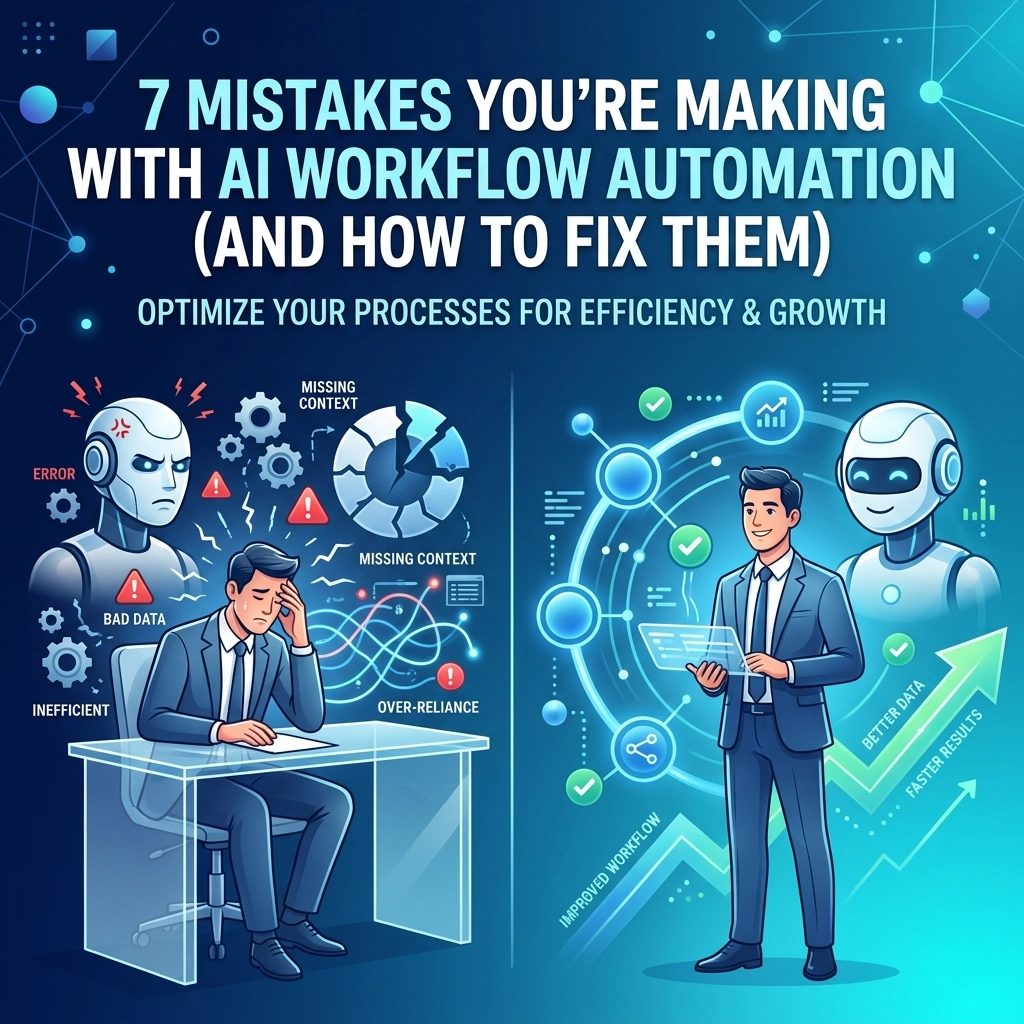
We are living through a period of unprecedented operational leverage. As we navigate 2026, the conversation has shifted from "Can AI help us?" to "How fast can we integrate it?" However, in the rush to modernize, many organizations are inadvertently building "digital debt": complex, fragile systems that create as many problems as they solve.
At Pure Technology Consulting, we view AI not as a magic wand, but as a sophisticated architectural component. When implemented with a visionary strategy, it transforms businesses into high-velocity engines. When implemented poorly, it simply automates chaos.
Here are the seven most common mistakes we see in AI workflow automation and the strategic roadmaps to fix them.
1. Automating Broken or Inefficient Processes
The most dangerous mistake is the belief that automation can fix a bad process. If your current manual workflow for client onboarding is convoluted, layering AI on top of it will only result in a convoluted automated workflow that fails faster and at a larger scale. This is the "Garbage In, Garbage Out" principle for the age of intelligence.
The Fix: Before writing a single line of code or prompt, perform a deep-dive audit. We often utilize process mining to identify where the actual friction points lie. Strip the process down to its essential outcomes. Ask: "If we started this department today from scratch, would this step even exist?" Simplify first, then automate.
2. Treating Data Reliability as an Afterthought
AI thrives on context, but it is allergic to inconsistent data. Many firms attempt to automate reporting or decision-making while their data is trapped in silos, formatted inconsistently, or riddled with missing values. The result is a "silent failure": an automation that runs to completion but provides inaccurate insights that lead to poor executive decisions.
The Fix: Build a robust data foundation. At Pure Technology Consulting, we developed FTP Inform to address the foundational challenges of data movement and reliability. While many see file transfers as a legacy concern, we recognize that secure, automated, and validated data ingestion is the bedrock of any AI strategy. By ensuring that your data pipelines are transparent and monitored, you provide your AI agents with the high-fidelity "truth" they need to operate effectively.

3. Using "Sledgehammer" Models for "Nail" Tasks
We see a recurring trend where organizations default to the most powerful models (like GPT-4 or Claude 3.5) for every single task, from simple email routing to basic data extraction. This is a strategic error in resource allocation. Compute costs in 2026 can represent up to 80% of an AI department's budget. Using an enterprise-grade model for a task that a lightweight, specialized model could handle is an operational drag.
The Fix: Implement intelligent model routing. Use large-scale models for complex reasoning and creative synthesis, but deploy smaller, fine-tuned models for repetitive classification or extraction tasks. This tiered approach reduces latency, slashes costs, and allows for greater scalability.
4. Over-Automating Without a Human-in-the-Loop Strategy
There is a temptation to aim for "100% automation" from day one. However, in high-stakes industries like legal, healthcare, and accounting, total automation is often a liability. When an AI makes an autonomous decision without a clear audit trail or a human checkpoint, you lose the "expert intuition" that defines your brand's value.
The Fix: Adopt a "Copilot" philosophy rather than an "Autopilot" one. Design workflows where AI handles the heavy lifting: data gathering, initial drafting, and cross-referencing: but presents the final 10% to a human expert for validation. This is exactly how we approached the development of EHRIO Pro. In healthcare and matching-engine contexts, EHRIO Pro utilizes complex 70-question intakes and HIPAA-adjacent workflows to organize massive amounts of data, yet it is designed to empower providers, not replace their clinical judgment. It provides the "matching" intelligence, but the human remains the final arbiter.
5. Ignoring the User Experience of the Workflow
Many automations are built from a purely technical perspective, ignoring the person who has to interact with them. If a workflow executes perfectly but the user is left wondering, "What is the AI doing right now?" or "Why did it make this choice?", the system will eventually be abandoned or bypassed.
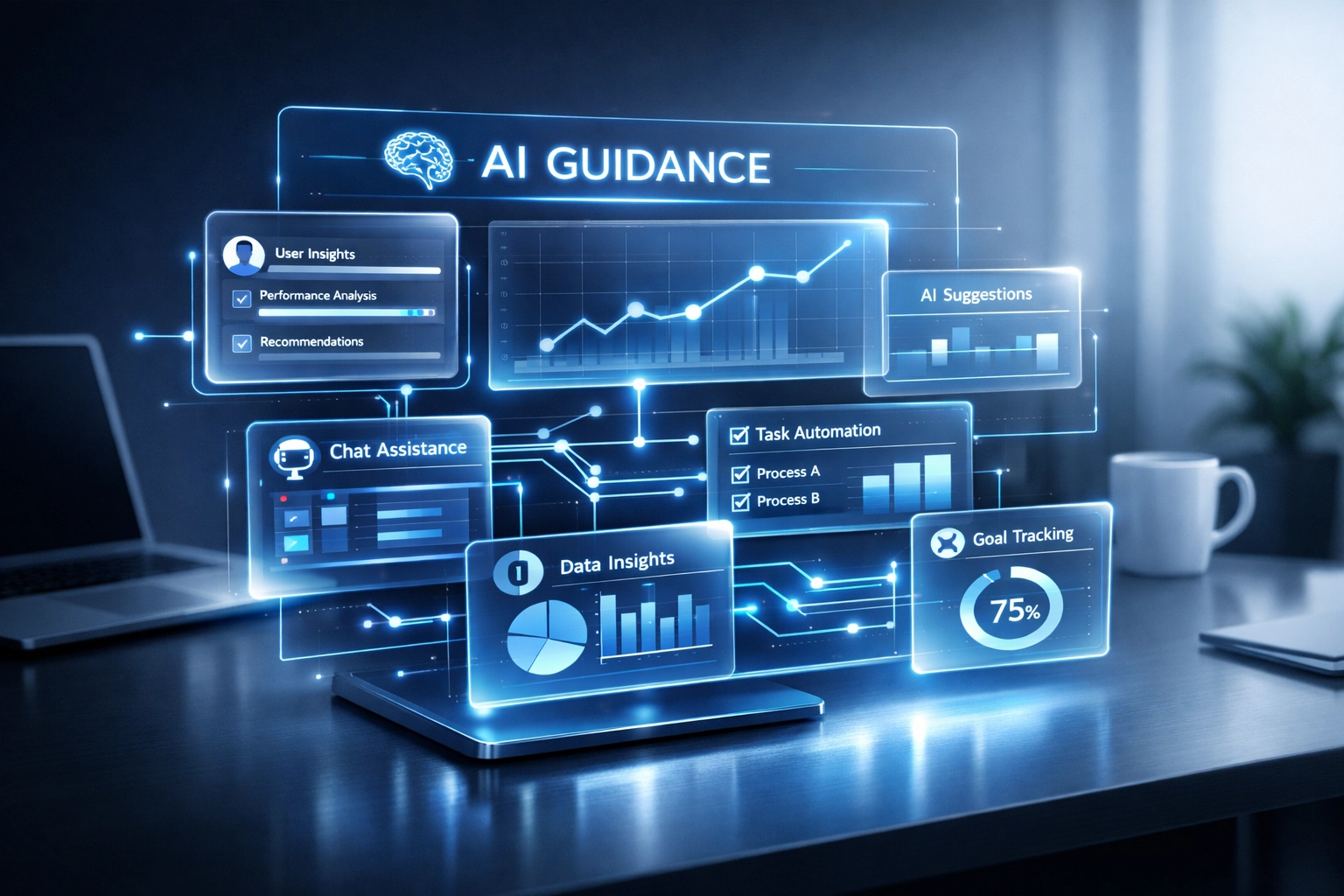
The Fix: Shift from "Execution" to "Guidance." Your automation should be communicative. It should explain its steps and guide the user through the lifecycle of a task. Whether it's a custom web app for a debt agency or a specialized fintech tool, the interface must provide transparency. A visionary workflow doesn't just do the work; it teaches the organization how the work is being done.
6. Poor Context Management and Prompt Architecture
Most cost overruns and "hallucinations" stem from poor context management. Passing an entire 50-page document into a prompt for a 2-sentence summary is inefficient and expensive. Conversely, giving an AI too little context leads to generic, unusable outputs.
The Fix: Treat prompts as versioned architectural assets. Move away from "chatting" with AI and toward "Prompt Engineering" as a structured discipline. Use context compression techniques and summarize previous exchanges rather than carrying forward full histories. For instance, with our AI Local Boost solution, we don't just "ask" an AI to manage Local SEO. We provide it with highly structured, specific data points about Google Business Profiles and local ranking factors. This precise targeting allows the automation to drive real-world results without the "fluff" of unnecessary tokens.
7. Scaling Without Governance and Centralized Monitoring
Success can be its own trap. Once a team sees the ROI of a successful automation, they often rush to replicate it across every department. Without a centralized roadmap, you end up with "Automation Sprawl": different departments using different tools, conflicting logic, and redundant subscriptions.
The Fix: Establish a Center of Excellence for your digital transformation. This doesn't mean slowing down; it means building on a shared infrastructure. This is the philosophy behind ChainHQ. We built ChainHQ to serve as a robust framework for scalable, complex web applications and custom automations. It provides the structural integrity needed to ensure that as your automation footprint grows, it remains manageable, secure, and aligned with your broader business objectives.
The Roadmap Forward
The difference between a company that "uses AI" and a company that is "AI-powered" lies in the architecture. It requires a shift from tactical fixes to visionary strategy. Whether we are building telephony integrations for debt agencies or GPS-logged accountability systems for field operations, our focus at Pure Technology Consulting is always on bespoke development that fits your unique operations like a glove.
The "Gold Rush" phase of AI is ending; the "Infrastructure" phase has begun. Don't settle for off-the-shelf solutions that only solve 60% of your problem while creating 40% more complexity.
If you are ready to audit your current workflows and build a custom, high-ticket automation engine that scales your expertise, we are ready to guide you. Our engagements are designed for organizations looking for premium, scoped offerings that deliver measurable operational leverage.
Ready to transform your operations?
Let’s discuss your roadmap. We specialize in bringing proven capabilities from healthcare, fintech, and field operations into the legal and accounting sectors.
Contact Pure Technology Consulting:
Phone: +1 (803) 921-0969
Schedule a Discovery Call
Amin Said, Founder of Pure Technology Consulting LLC
https://puretechconsult.com
Leave a Reply