PTC AI Insights

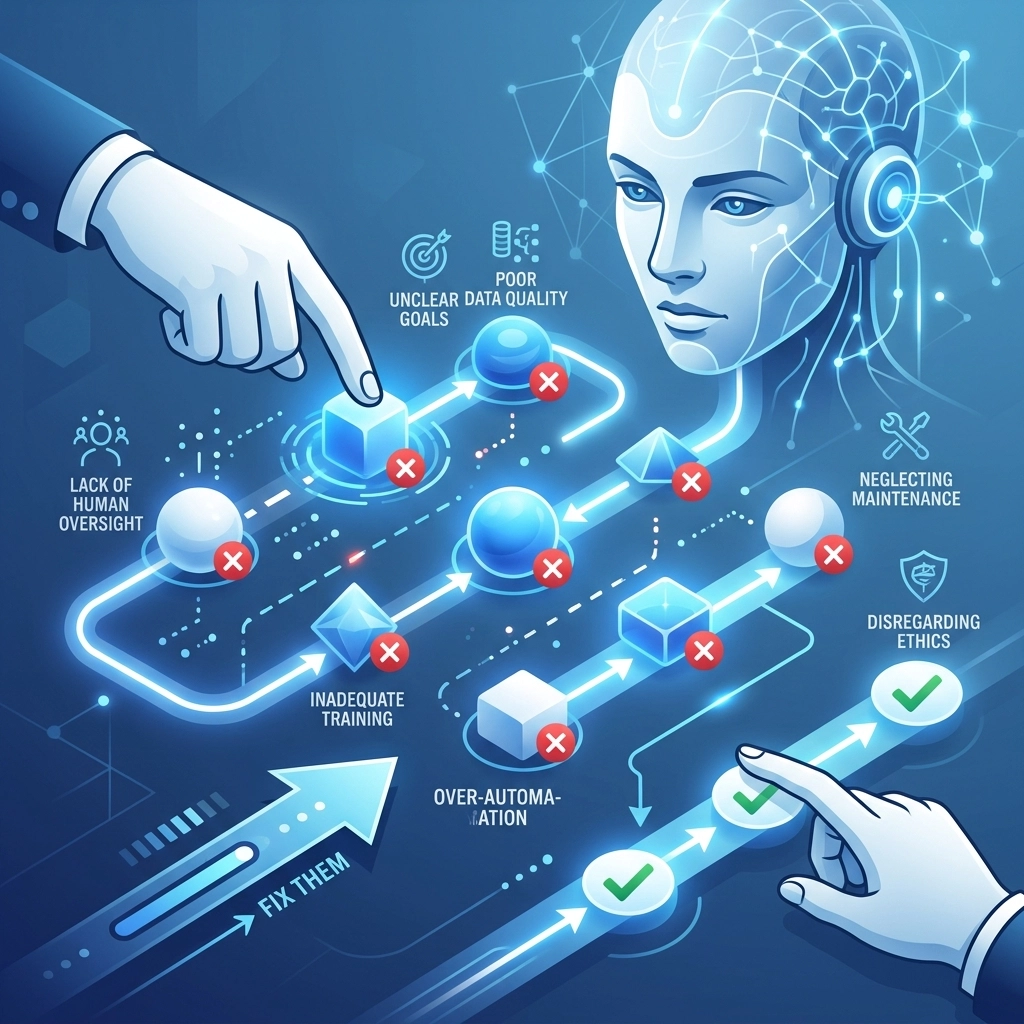
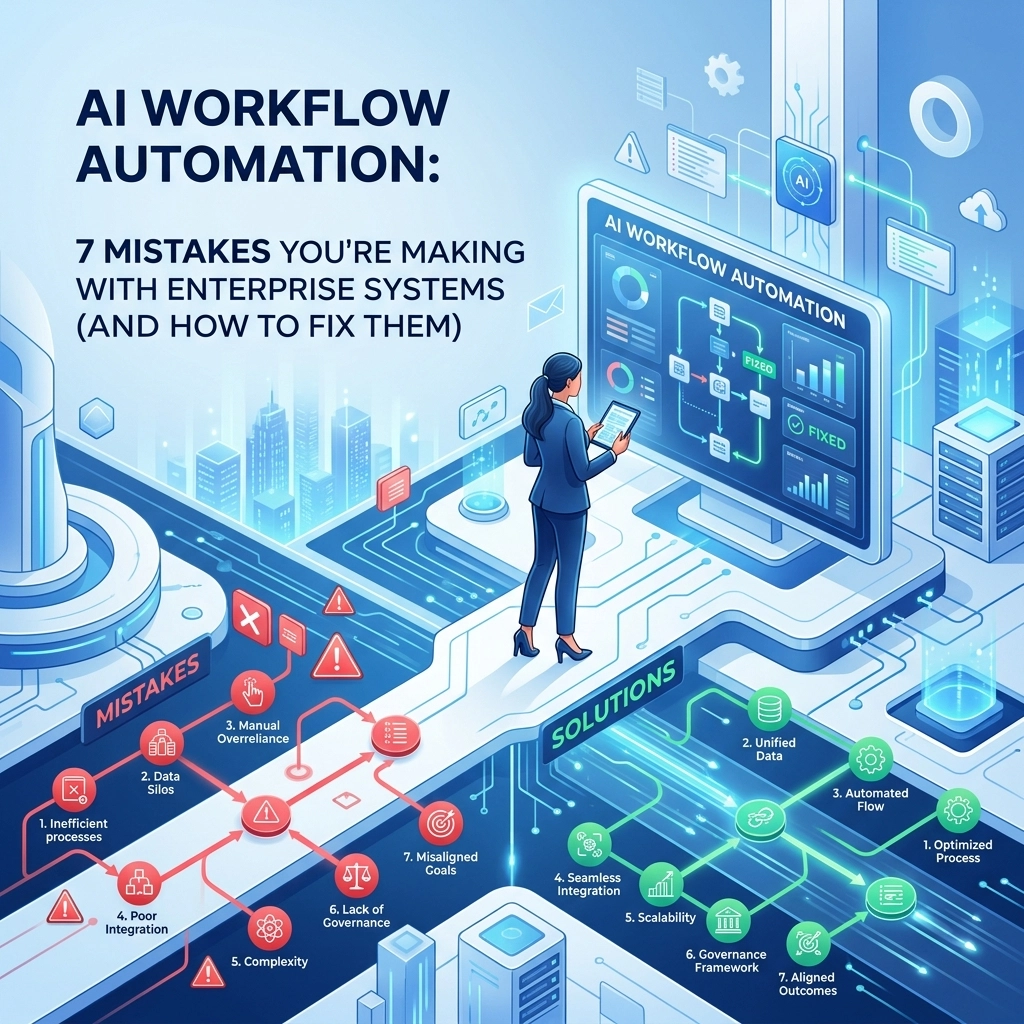
  • 7 Mistakes You’re Making with Manual Workflows (and How AI Workflow Automation Fixes Them)

    7 Mistakes You’re Making with Manual Workflows (and How AI Workflow Automation Fixes Them)

    In the current landscape of rapid digital transformation, the greatest threat to a growing enterprise isn't necessarily a smarter competitor, it’s the internal friction of "the way we’ve always done it." As we move deeper into 2026, the divide between companies that operate on manual intuition and those that run on AI-driven precision is becoming an unbridgeable chasm.

    At Pure Technology Consulting, we see it every day: brilliant CEOs and visionaries buried under the "operational drag" of manual workflows. They are trying to build the future while their teams are stuck manually entering data, chasing email approvals, and toggling between disconnected SaaS tools. This isn't just a productivity issue; it’s a strategic risk.

    If your organization is still relying on human-to-human handoffs for repetitive tasks, you are likely making these seven critical mistakes. Here is how AI workflow automation, and bespoke software architecture, can turn that operational drag into a massive competitive advantage.

    1. The High Cost of "Fatigue-Induced" Human Error

    Manual data entry is the silent killer of profitability. No matter how diligent your team is, humans are biologically incapable of performing repetitive data tasks with 100% accuracy over a long period. A single typo in a legal filing, a misplaced decimal in an accounting spreadsheet, or a misfiled patient record can lead to catastrophic financial or reputational damage.

    How Automation Fixes It:
    AI doesn’t get tired. By implementing automated data capture and validation layers, we eliminate the need for manual transcription. At Pure Technology Consulting, we applied this logic to our EHRIO Pro engine. Originally designed to handle complex healthcare data matching and 70-question intakes, it demonstrates how AI can process vast amounts of sensitive information with zero "fatigue" errors. When you automate the intake, the system validates the data against pre-set business rules before it ever hits your database, ensuring your "Source of Truth" remains untainted.

    AI data validation system transforming chaotic manual data into a precise digital source of truth.

    2. The Sequential Bottleneck: Waiting for Approvals

    In a manual world, work moves linearly. Task A must finish before Task B begins, and both usually stop dead when they hit an "Approval" stage. If an executive is in meetings or out of the office, the entire workflow grinds to a halt. This "sequential friction" adds days or weeks to project timelines that should take hours.

    How Automation Fixes It:
    AI-driven workflows allow for parallel processing. While a human might need to review a final contract, an AI can simultaneously run compliance checks, update the CRM, notify the finance team, and prepare the onboarding sequence. By the time the executive clicks "Approve," 90% of the post-approval work is already done. We specialize in building custom web apps that intelligently route these approvals, escalating them to the right person at the right time, or even auto-approving tasks that meet specific risk-threshold criteria.

    3. The "Black Box" Visibility Crisis

    If I asked you right now exactly where a specific client's project stands, could you answer without sending an email or checking a Slack channel? For most manual-heavy organizations, the answer is "no." Work disappears into a "black box" once it’s assigned. You lose real-time visibility, which makes it impossible to identify bottlenecks until it’s too late.

    How Automation Fixes It:
    True digital transformation involves creating a "Glass Box" operation. Automated workflows provide a real-time audit trail and dashboarding. For instance, our FTP Inform tool was built to solve a specific visibility problem: knowing exactly when and how data is moving between systems. In a custom automation build, we integrate these types of monitoring capabilities so that leadership can see a high-level heat map of their operations. If a process stalls, the system flags it immediately, allowing for proactive management rather than reactive firefighting.

    4. Compliance Hazards and The Missing Audit Trail

    For firms in the legal, accounting, or healthcare sectors, compliance isn't optional: it’s the foundation of the business. Manual workflows are notoriously difficult to audit. Relying on "I sent that in an email" or "I think John handled that" doesn't hold up under regulatory scrutiny. When there is no automated record of who did what and when, you are one audit away from a major crisis.

    How Automation Fixes It:
    Automation creates a permanent, immutable digital footprint. Every action taken by an AI agent or a triggered workflow is timestamped, logged, and categorized. When we build bespoke solutions for high-stakes industries, we bake HIPAA-adjacent workflows and SOC2-level logging into the architecture from day one. You don't have to "prepare" for an audit; the system is essentially auditing itself every second of every day.

    Secure digital audit trail illustrating immutable records for HIPAA compliance and SOC2 governance.

    5. The Ambiguity of Accountability

    In manual processes, responsibility often gets diffused. When a task falls through the cracks, it’s rarely because someone was lazy; it’s because the handoff was ambiguous. "I thought you were doing that" is the anthem of the manual workflow.

    How Automation Fixes It:
    AI workflow engines assign clear ownership at every micro-step. If a task isn't completed within a predefined window, the system can automatically re-assign it or escalate it to a supervisor. This level of accountability is what we implemented in our field operations work, where GPS logging and rep accountability are integrated directly into the workflow. There is no room for "I thought," only "I did."

    6. The Linear Growth Trap (The Scalability Wall)

    This is the mistake that keeps CEOs from sleeping. In a manual environment, if you want to double your output, you have to double your headcount. This is linear growth, and it’s expensive, slow, and risky. It tethers your ability to scale to the speed of your hiring and training processes.

    How Automation Fixes It:
    AI allows for exponential growth. Once a workflow is optimized and automated, the marginal cost of handling the 1,000th task is nearly identical to the cost of the 1st. Look at our AI Local Boost platform. It automates Google Business Profile management and local SEO actions that would otherwise require dozens of manual hours per client. By leveraging this type of automation, businesses can scale their client base 10x without needing to 10x their staff. We help our clients build these "scale engines" directly into their custom web applications.

    7. Automating a Mess (Process Debt)

    Perhaps the most common mistake is trying to automate a process that is fundamentally broken. If you take a redundant, inefficient manual workflow and apply AI to it, you just get "faster inefficiency." Many organizations carry "process debt": steps that were added five years ago for a reason that no longer exists.

    How Automation Fixes It:
    The path to automation requires a fundamental redesign. When we engage with a client for a custom software build, we don't just write code; we act as architects of your operating model. We look for redundant approval layers, outdated steps, and duplicate work. We strip the process down to its core value and then build the AI around that lean, optimized structure. It’s about working smarter, not just faster.

    Removing process debt by streamlining complex manual workflows into a lean AI-first operating model.

    Moving Toward an AI-First Operating Model

    The transition from manual to automated isn't just a technical upgrade: it’s a visionary shift in how you view your business. It’s about moving your human talent away from being "data movers" and toward being "decision makers."

    At Pure Technology Consulting, we don't believe in one-size-fits-all SaaS. We believe in building bespoke, high-performance engines that fit your specific business like a glove. Whether it's integrating telephony for call attribution in fintech or building complex matching engines for healthcare, our goal is to eliminate the manual mistakes that are holding your vision back.

    If you are ready to stop managing "manual drag" and start leading an automated powerhouse, we should talk. My assistant, Emily, can help coordinate a discovery call to audit your current workflows and identify where custom automation can provide the highest ROI.

    You can reach us directly at +1 (803) 921-0969 or schedule a strategy session via our website.

    Let’s build something that scales.

    Amin Said, Founder of Pure Technology Consulting LLC
    https://puretechconsult.com

  • Why Chiropractic Clinics are Losing Patients in 2026 (and How AI Automation Plugs the Leak)

    Why Chiropractic Clinics are Losing Patients in 2026 (and How AI Automation Plugs the Leak)

    It is March 2026, and the landscape of local healthcare has shifted. If you’re running a chiropractic or physical therapy clinic today, you’ve likely noticed something unsettling. Your clinical results are as good as ever, maybe better, but your patient retention is flickering.

    The "leaky bucket" problem isn't new, but in 2026, the holes have grown significantly larger. Patients aren't just leaving because they feel better; they’re leaving because they feel forgotten. In an era where every other service in their life is hyper-personalized and automated, the "we’ll call you to remind you of your appointment" model feels like a relic from the 90s.

    At Pure Technology Consulting, we’ve spent years looking under the hood of local businesses. We’ve seen clinics that are absolute masters of the adjustment but struggle to keep their schedules full. The reality is that in 2026, the clinical side is only 50% of your business. The other 50% is the data-driven engagement that happens between those office visits.

    The Great Divide: Weekly Engagement vs. The "Ghost" Clinic

    Recent data has highlighted a stark divide in the wellness industry. On one side, you have clinics that "disappear" between visits. They treat the patient, set a follow-up for two weeks out, and then… silence. On the other side, you have high-growth practices that maintain consistent, automated contact.

    The numbers are hard to ignore. Practices that implement weekly engagement, whether through educational content, progress checks, or automated wellness tips, see open rates of 50-70% on their communications. More importantly, they see a massive spike in patient reactivations.

    When a patient doesn’t hear from you, they don’t just forget their next appointment; they forget the value you provide. They start to see your care as a luxury or a "when I have time" activity rather than a fundamental part of their health ecosystem.

    Digital comparison of a disconnected patient versus one engaged through automated clinic communication.

    Why Manual Systems are Failing the Modern Practitioner

    If you’re still relying on a front-desk person to manually call every lead or text every "no-show," you’re fighting a losing battle. Manual systems have three major flaws that are magnified in 2026:

    1. Inconsistency: Humans have bad days. They get busy. They forget to follow up with that lead who clicked an ad at 11:00 PM on a Tuesday.
    2. Delayed Response Time: In 2026, a lead is "cold" in about five minutes. If your team isn't responding to inquiries instantly, that potential patient has already moved on to the clinic down the street that has an AI chatbot handling their scheduling.
    3. Lack of Personalization: A generic "see you tomorrow" text is the bare minimum. Patients now expect "Hey Sarah, hope your lower back is feeling better after Tuesday's session. Here’s a 30-second video on the stretch we discussed."

    Doing that manually for 200 patients is impossible. Doing it with bespoke automation is effortless.

    Enter the Era of AI-Driven Wellness

    We aren't just talking about simple auto-responders anymore. The technology we’re building at Pure Technology Consulting leverages AI to create a seamless "health journey" for the patient.

    Imagine an ecosystem where your EHR (Electronic Health Record) isn't just a digital filing cabinet, but a living part of your marketing and retention engine. This is where the concept of interoperability comes into play. By integrating custom software with your existing tools, we can trigger specific automation based on actual clinical data.

    For example, if a patient’s wearable device (like an Oura ring or Apple Watch) detects a spike in sedentary behavior or a drop in sleep quality, an automated system can reach out with a personalized wellness tip or a suggestion to book a maintenance adjustment. This isn’t "creepy" tech; it’s proactive care. It’s showing the patient that your clinic is a partner in their health 24/7, not just when they are on your table.

    AI automation optimizing clinical workflows by replacing inefficient manual chiropractic scheduling.

    Proof of Concept: Plugging Gaps with EHRIO Pro

    To understand how this looks in practice, you only have to look at the work we’ve done with EHRIO Pro. We designed EHRIO Pro as a high-level matching and intake engine specifically for healthcare environments. It’s a prime example of how bespoke development beats "off-the-shelf" SaaS every time.

    In many clinics, the intake process is a friction point. Patients hate filling out 70-question forms on a clipboard. With the workflows we developed for EHRIO Pro, we turned that intake into a smart, HIPAA-adjacent engine that not only gathers data but starts the "nurture" process immediately.

    By the time the patient walks through your door, the system has already:

    • Qualified their needs.
    • Cross-referenced their symptoms with your specific expertise.
    • Sent them a personalized welcome video.
    • Added them to a specific "Post-Treatment" sequence.

    This is the level of sophistication required to dominate a local market in 2026. It’s about taking the administrative weight off your shoulders so you can actually be a doctor.

    Inconsistent Lead Flow: The Silent Killer

    The biggest complaint I hear from clinic owners is the "rollercoaster" of lead flow. One month you’re overbooked; the next, you’re staring at a half-empty calendar.

    This happens because most clinics only market to "new" patients. They ignore the goldmine sitting in their database. AI automation allows you to "mine" your existing list for reactivations without lifting a finger.

    Using custom scripts and local SEO automation: something we’ve perfected with our AI Local Boost capabilities: we ensure your clinic stays top-of-mind. We build systems that monitor your Google Business Profile, respond to reviews instantly (which boosts your ranking), and re-engage patients who haven't been in for 90 days with a personalized "Check-in" offer.

    A digital pipeline representing automated lead flow and patient reactivation for wellness clinics.

    Automation Without Complexity

    I know what you’re thinking: "I’m a chiropractor, not a tech genius. I don’t have time to manage a complex software stack."

    That is exactly why we focus on bespoke development. The problem with most SaaS products is that they force you to change your workflow to fit their software. At Pure Technology Consulting, we do the opposite. We look at how you already work and build the automation around you.

    My assistant, Emily, often coordinates with clinic managers to identify the "friction points" in their day. Is it the insurance verification? Is it the back-and-forth of rescheduling? Once we identify those, we build a custom bridge to fix it.

    The goal is "Automation without Complexity." You shouldn't have to log into five different dashboards. You need one source of truth that tells you your lead flow is steady and your patient retention is climbing.

    The Visionary Path Forward

    The "Old Guard" of chiropractic care will continue to struggle with manual processes and "ghosting" patients. They will blame the economy or the competition.

    But the visionary owners: the ones who see themselves as health CEOs: will embrace the transformation. They will use AI not to replace the human touch, but to amplify it. They will use technology to ensure no patient ever feels like just another number on a chart.

    Healthcare CEO managing a digital ecosystem to improve chiropractic patient retention and growth.

    If your clinic is feeling the "leak" in 2026, it’s time to stop patching it with more ad spend and start plugging it with better systems. Whether it’s integrating wearables, streamlining your EHR, or building a custom intake engine like EHRIO Pro, the path to growth is through operational leverage.

    At Pure Technology Consulting, we don’t just write code; we build the operating models that allow local businesses to scale. We’ve done it in healthcare, we’ve done it in fintech, and we’ve done it in high-ticket professional services.

    If you're ready to see how custom automation can transform your clinic’s bottom line, let’s talk. We can start with a workflow audit to see exactly where your patients are slipping through the cracks. No fluff, just a roadmap to a more efficient practice.

    You can explore some of our video walkthroughs to see these systems in action, or reach out directly to start the conversation.

    The future of your clinic isn't just in your hands; it's in your systems.

    Amin Said, Founder of Pure Technology Consulting LLC
    https://puretechconsult.com
    Phone: +1 (803) 921-0969

  • Stop Wasting Time on Manual Data Entry: Try These 7 AI Workflow Automation Hacks

    Stop Wasting Time on Manual Data Entry: Try These 7 AI Workflow Automation Hacks

    In the modern enterprise, time is the most liquid asset. Yet, many high-growth organizations remain anchored by a hidden operational drag: manual data entry. It is a silent thief of productivity, consuming hours of high-value human talent on tasks that require zero creative judgment. From the perspective of a visionary leader, manual data entry isn't just a "chore", it is a strategic bottleneck that prevents your team from focusing on innovation, client relationships, and high-level strategy.

    The shift toward autonomous operations is no longer a futuristic concept; it is the current standard for industry leaders. At Pure Technology Consulting, we view automation not as a simple replacement for labor, but as a mechanism for scaling human potential. By leveraging AI-powered workflow automation, we transform fragmented data points into cohesive, actionable intelligence.

    Here are seven AI workflow automation hacks designed to eliminate manual entry and reclaim your team’s focus.

    1. Capture Data at the Source: The "No-Transcription" Mandate

    The most efficient way to handle data is to never type it in the first place. Many businesses suffer from "transcription lag", the time between receiving information and manually entering it into a CRM or database. Whether it is a lead from a web form or a request from an email, manual transcription introduces a high risk of human error.

    The solution is to automate at the origin. By integrating tools like custom web forms directly with your internal systems, data flows seamlessly from the client’s fingertips into your operational roadmap. For professional services in legal and accounting, this means 70-question intakes can be processed instantly, allowing practitioners to walk into meetings with a complete profile rather than a stack of papers.

    2. Implement Universal Data Synchronization

    One of the greatest sources of operational drag is the maintenance of duplicate records across disparate systems. When a spreadsheet doesn't talk to a CRM, and a CRM doesn't talk to an invoicing tool, your team spends half their day simply "matching" data.

    Digital network illustrating seamless bidirectional data synchronization across a unified tech stack.

    A visionary approach involves creating a unified data layer. By setting up bidirectional syncs, an update in one system reflects across your entire tech stack. This eliminates "missing lead" scenarios and ensures that every stakeholder, from sales to fulfillment, is looking at a single version of the truth. At Pure Technology Consulting, we specialize in building these bespoke integrations that connect the common tools you already use, such as Gmail, Google Sheets, and enterprise CRMs, into a singular, cohesive engine.

    3. Leverage FTP Inform for Intelligent Data Monitoring

    Automation is only as good as its awareness. In many complex industrial and financial workflows, data is often moved via legacy protocols like FTP. Traditionally, someone would have to manually check these folders for new files, download them, and then input the data into a modern dashboard.

    This is where our proprietary tool, FTP Inform, demonstrates its power as a proof-of-concept for custom automation. FTP Inform monitors your file transfers and provides instant notifications and updates when new data arrives. Instead of your team constantly "checking for updates," the updates come to them. This capability is a prime example of how we bridge the gap between legacy infrastructure and modern, AI-driven workflows. It ensures that your data entry triggers are automated the moment a file lands, reducing cycle time and increasing throughput.

    4. Deploy AI Quality Governance and Validation

    Data entry is often slowed down by the need for quality checks. Teams manually review entries to find duplicates, flag missing fields, or correct formatting errors. This is a task perfectly suited for AI agents.

    By implementing AI quality checks before data even enters your primary system, you establish a governance layer that maintains reporting accuracy. These agents can detect anomalies, classify records based on content, and even flag invalid information for human review. This "Human-in-the-Loop" strategy ensures that while the heavy lifting is automated, the high-level oversight remains intact, significantly reducing the risk of "garbage in, garbage out."

    AI-powered data validation and intelligent document processing for improved accuracy and quality.

    5. Intelligent Document Processing (IDP) for Complex Sources

    For industries like legal, healthcare, and accounting, data often arrives in unstructured formats: PDFs, scanned contracts, and handwritten notes. Standard automation often fails here, but Intelligent Document Processing (IDP) thrives.

    Using advanced AI extraction, IDP can identify and capture relevant data fields, such as invoice numbers, contract expiration dates, or patient identifiers, without a single keystroke from your staff. We have applied similar logic in healthcare settings with EHRIO Pro, where matching engines and complex intakes require absolute precision. This level of automation allows a firm to process thousands of documents in the time it would take a human to process ten, all while maintaining a higher degree of accuracy.

    6. Utilize AI Agents for Batch Processing and Consistency

    When dealing with bulk data updates, human fatigue is the enemy of consistency. A team member might format a phone number one way at 9:00 AM and another way at 4:00 PM. AI data entry agents, however, maintain perfect consistency across millions of records.

    Batch processing with AI allows for simultaneous updates across your entire database. Whether you are re-categorizing a decade of financial records or updating lead statuses after a major marketing campaign, AI agents follow standard conventions precisely. This ensures your dashboards and analytics remain clean and reliable for executive-level decision-making.

    Digital grid representing AI batch processing and consistent data mapping for business dashboards.

    7. Strategic Field Mapping and Integration

    The final hurdle in eliminating manual entry is the "mapping" problem, ensuring that Data Point A in System 1 lands in the correct Field B in System 2. Manual field mapping is tedious and prone to error.

    Modern automation platforms, coupled with bespoke software development, use intelligent field mapping to recognize standard conventions. By analyzing the data type and context, these systems can automatically suggest and implement the correct mapping. This reduces the setup time for new integrations from weeks to hours. At Pure Technology Consulting, we focus on these high-ticket custom web app builds that ensure your software fits your operations perfectly, rather than forcing your operations to fit into a generic SaaS box.

    The Path Forward: From Manual to Autonomous

    Moving away from manual data entry is not just a technical upgrade; it is a leadership decision to value the time and intellect of your workforce. The hacks mentioned above, from source capture to proprietary monitoring via FTP Inform, are the building blocks of a truly digital enterprise.

    As we continue to pivot our capabilities into the legal and accounting sectors, we bring proven expertise from healthcare, fintech, and field operations. Whether it is our work in GPS logging for field reps or telephony integrations for debt agencies, our focus remains on creating bespoke, high-level automation that drives operational leverage.

    The future of your business shouldn't be spent in a spreadsheet. It should be spent in the boardroom, in the laboratory, and in front of your clients.

    Ready to Audit Your Workflows?

    If your organization is still losing hundreds of hours to manual data entry, it is time for a strategic roadmap. We invite you to explore how custom web applications and bespoke automation can transform your operating model.

    To discuss a workflow audit or to scope a custom development project, please reach out to my assistant, Emily, to schedule a discovery call.

    No obligation: just a visionary look at what your business could become when it is finally unchained from manual entry.

    Amin Said, Founder of Pure Technology Consulting LLC
    https://puretechconsult.com
    +1 (803) 921-0969
  • From Manual to Medical: Automating the Intake Maze for Behavioral Health Practices in 2026

    From Manual to Medical: Automating the Intake Maze for Behavioral Health Practices in 2026

    As we move through the first quarter of 2026, the behavioral health sector has reached a definitive crossroads. The days when a local counseling center could thrive on word-of-mouth and a paper-based filing system are firmly in the rearview mirror. Today, the complexity of payer rules, the surge in telehealth demand: now reaching an 85% adoption rate: and the sheer volume of intake data have turned administrative management into a high-stakes game of operational chess.

    For the growth-focused practice owner, the challenge is no longer just finding qualified clinicians; it is managing the "Intake Maze." This is the friction-filled journey a patient takes from their first inquiry to their first session. When this journey is manual, it is a sieve for revenue and a primary cause of staff burnout. At Pure Technology Consulting, we view this not just as a software problem, but as a strategic inflection point where custom automation separates the market leaders from the struggling practices.

    The Administrative Drag: Why Manual Intake is Failing in 2026

    In the current landscape, manual intake is a liability. When a practice relies on staff to manually check insurance eligibility, chase prior authorizations by phone, and hand-key patient data into disconnected systems, they are operating at a 40% disadvantage compared to automated competitors.

    Payers have spent the last three years heavily investing in AI-driven systems to flag claims and process denials faster than a human team can possibly react. If your intake process is still reactive, you are essentially fighting a high-speed algorithm with a spreadsheet. This leads to the "Intake Maze": a series of bottlenecks where:

    • Insurance verification happens too late, leading to denied claims.
    • Clinicians are assigned patients without checking if their specific authorization covers the complexity of the case.
    • Patient drop-off increases because the "time-to-care" exceeds 48 hours.

    To scale a practice in 2026, the operating model must shift from manual entry to exception-based management. This means your team should only intervene when the system flags a unique issue, rather than touching every single file.

    A clear path through a maze symbolizing the transition from manual entry to automated behavioral health intake.

    Bridging the Chasm: The CRM and EHR Integration Gap

    One of the most significant hurdles we see at Pure Technology Consulting is the "Disconnected System" syndrome. Many practices use a modern CRM for marketing and lead tracking, but a legacy Electronic Health Record (EHR) for clinical documentation.

    When these two systems don't talk, data silos form. A prospective patient fills out a web form, a front-desk person calls them back (hopefully), and eventually, the data is manually re-entered into the EHR for scheduling. This gap is where HIPAA risks live and where leads die.

    Our approach focuses on building bespoke integration layers that unify these environments. By treating your technology stack as a single, cohesive ecosystem, we ensure that:

    1. Lead Capture is Clinical-Ready: Data captured during the initial inquiry flows directly into the clinical intake pipeline.
    2. Real-Time Eligibility (RTE): Verification happens the moment a lead enters the system, not the morning of the appointment.
    3. Automated Documentation Requests: Systems automatically prompt patients for necessary signatures and IDs based on their specific insurance provider’s requirements.

    The EHRIO Pro Blueprint: Strategy Applied to Workflow

    To illustrate the power of bespoke automation, we look at the logic behind EHRIO Pro: a framework we’ve developed to handle complex healthcare matching and intake. While many off-the-shelf SaaS products offer "generic" intake forms, growth-focused practices require something more robust: a matching engine.

    Imagine a 70-question intake process that doesn't feel like an interrogation. By using conditional logic and automated scoring, the system can determine: in real-time: which clinician is the best fit for a patient’s specific diagnosis, insurance, and availability.

    Interconnected digital nodes representing a clinical matching engine for automated patient-provider alignment.

    Key capabilities we integrate into these custom builds include:

    • Prior Authorization Tracking: This is the highest-ROI automation in 2026. The system tracks active authorizations, flags renewal deadlines weeks in advance, and automatically prepares the documentation for the provider.
    • Smart Scheduling Controls: We build "guardrails" into the calendar. If an authorization is about to expire or a clinician has exceeded their authorized hours, the system prevents the booking until the administrative hurdle is cleared.
    • Outcome Aggregation: As practices shift toward value-based care, proving outcomes is non-negotiable. Custom automation allows you to aggregate clinical data into dashboards that demonstrate your practice's efficacy to payers, making contract negotiations significantly easier.

    Moving Beyond "Off-the-Shelf" Limitations

    Many business owners ask, "Why can't I just use a standard EHR?" The answer lies in your growth strategy. Standard EHRs are built for the "average" practice. They are rigid. If your business model involves a unique intake flow, specialized clinical specializations, or a high-volume multi-site operation, the "standard" software becomes a straitjacket.

    Custom web application development and bespoke automation allow you to build software around your best practices, rather than forcing your staff to work around the software's limitations. Whether it's integrating GPS logging for field-based clinicians or complex telephony integrations for high-volume call centers, the goal is operational leverage.

    The 2026 Security and Compliance Landscape

    In 2026, compliance is no longer just about a signed BAA. With the rise of AI-assisted intake, data governance has become a top-tier executive concern. Automating the intake maze requires a deep understanding of HIPAA-adjacent workflows. Every automation we build at Pure Technology Consulting is designed with security-first architecture, ensuring that as you scale your intake volume, you aren't scaling your liability.

    We leverage proven capabilities from our work in fintech and healthcare: where 70-question intakes and complex matching engines are the norm: to ensure your practice is not just efficient, but audit-proof.

    A digital shield protecting data pillars, illustrating secure HIPAA-compliant architecture for behavioral health.

    Conclusion: A Roadmap to Scalable Care

    The transition from manual to medical automation is not a luxury; it is the prerequisite for scaling a behavioral health practice in today’s environment. By eliminating the manual maze, you allow your clinicians to focus on care and your administrative staff to focus on strategy.

    The roadmap to this transformation begins with a workflow audit. We look at where the data stops moving, where the manual re-entry happens, and where the revenue leakage is highest. From there, we build the custom tools: like the logic found in EHRIO Pro: to turn your intake process into a competitive advantage.

    If your practice is ready to move beyond the friction of manual systems and toward a visionary, automated future, it is time to evaluate your technology roadmap.

    Ready to audit your intake workflow?
    Schedule a discovery call with our team to discuss how bespoke automation can transform your operations.

    Amin Said, Founder of Pure Technology Consulting LLC
    https://puretechconsult.com
    +1 (803) 921-0969

  • The Ultimate Guide to Bespoke AI Solutions: Everything You Need to Scale Without the Chaos

    The Ultimate Guide to Bespoke AI Solutions: Everything You Need to Scale Without the Chaos

    Growth is often described as a goal, but for many organizations, it manifests as a series of increasing frictions. As a company expands, the systems that once felt nimble begin to buckle under the weight of new data, more complex workflows, and higher stakeholder expectations. This is the "chaos" of scaling, a phase where manual workarounds become the norm and generic software solutions reach their breaking point.

    To scale successfully in 2026, the strategy is no longer about just adding more "tools." It is about architecting bespoke AI solutions that act as the backbone of your operations. Custom AI development isn’t a luxury; it’s a strategic necessity for those who intend to lead their industries rather than just participate in them.

    The Strategic Shift: Why Generic SaaS Fails the Scale Test

    Most businesses begin their digital transformation by subscribing to off-the-shelf SaaS platforms. While these are excellent for getting started, they are built for the "average" user. When your business model relies on a unique competitive advantage, whether that’s a proprietary intake process for a law firm or a specialized matching algorithm for healthcare, generic software forces you to compromise your process to fit the tool.

    This compromise leads to operational drag. You end up hiring more people to manage the software, rather than the software managing the work. Bespoke AI solutions flip this dynamic. By building a system around your specific workflow, you eliminate the friction that causes chaos.

    Bespoke AI solution fitting into complex business architecture to replace generic software.

    Engineering Precision: Lessons from EHRIO Pro and Healthcare Workflows

    At Pure Technology Consulting, we’ve seen the power of bespoke architecture firsthand through our work in high-compliance sectors. Consider our development of EHRIO Pro, a platform designed to handle complex matching engines and high-volume intake processes.

    In healthcare and adjacent fields, the intake process isn't just about collecting names; it’s about navigating 70-question intake forms and HIPAA-adjacent workflows with zero margin for error. A generic CRM cannot handle that level of logic without significant, often clunky, modification.

    By building bespoke solutions, we allow firms, particularly in the legal and accounting sectors, to automate these deep-dive discovery phases. This ensures that by the time a high-value professional sees a file, the AI has already categorized, risk-assessed, and prepared the data. This isn't just "automation"; it's an intelligent operating model.

    The ROI of Customization: Moving Beyond the Initial Investment

    A common executive hesitation regarding bespoke development is the upfront cost. However, when viewed through the lens of long-term operational leverage, the ROI is undeniable. Research indicates that companies utilizing custom AI and tailored software see an average efficiency gain of 23% and a cost reduction of 17% within the first year.

    For a firm generating significant revenue, these percentages translate into millions in recovered time and resources. Bespoke AI allows for:

    • Scalability without headcount: You can double your output without doubling your staff.
    • Reduced Error Rates: Custom validation rules ensure data integrity that "one-size-fits-all" tools miss.
    • Future-Proofing: When your business pivots, your custom software evolves with you, rather than requiring a total system overhaul.

    Managing Data Integrity with FTP Inform and ChainHQ

    In the realm of logistics and data management, the chaos of scaling often stems from fragmented information. As operations grow, data lives in silos, some on legacy servers, some in the cloud, and some in transit.

    We addressed these challenges through the development of FTP Inform and ChainHQ. These assets demonstrate our capability to build secure, transparent data pipelines. FTP Inform provides critical logging and visibility into file movements, while ChainHQ offers the kind of logic-heavy workflow orchestration required for complex supply chains.

    When we consult with high-ticket clients, we use these frameworks to show how bespoke automation can bridge the gap between legacy systems and modern AI. Whether it’s GPS logging for field reps or telephony integrations for fintech debt agencies, the goal is the same: absolute visibility and control over every data point.

    Healthcare data engineering silhouette showing precise algorithmic matching and data visibility.

    Why Legal and Accounting Firms are the New Frontier for AI

    Law firms and accounting practices are traditionally "document-heavy" and "labor-intensive." These are exactly the environments where bespoke AI delivers the most significant impact. The "chaos" in these industries usually looks like a mountain of unorganized evidence, complex tax codes, or endless billable hours spent on administrative discovery.

    By implementing custom web applications with integrated AI, these firms can:

    1. Automate Document Review: AI can scan thousands of pages to identify specific clauses or anomalies in seconds.
    2. Predictive Case/Audit Outcomes: Using historical data to forecast risks.
    3. Client Intake Excellence: Using the "70-question intake" model we perfected in healthcare to ensure no detail is missed during the onboarding of a new client.

    This transition isn't just about saving time; it’s about increasing the quality of the service provided. A lawyer who isn't bogged down by discovery is a lawyer who can spend more time on strategy and advocacy.

    Visibility and Local Authority: The AI Local Boost Strategy

    Scaling isn't just an internal challenge; it's a market-facing one. As a business expands into new territories, maintaining a dominant digital presence becomes increasingly difficult to manage manually.

    Our proprietary work on AI Local Boost (AILB) serves as a proof-of-concept for how bespoke automation can handle localized SEO and Google Business Profile management at scale. Instead of a marketing manager manually updating hundreds of locations, custom AI-driven workflows ensure that each location remains optimized, active, and responsive to local market shifts. This level of automated governance is what separates a visionary company from one that is merely reactive.

    Secure data pipeline representing automated governance and visibility for scaling businesses.

    How to Start Your Bespoke AI Roadmap

    Transitioning from "chaos" to "bespoke" requires a structured approach. It is not about a single "buy" decision, but a strategic partnership. Here is the roadmap we typically follow at Pure Technology Consulting:

    1. The Discovery and Workflow Audit

    Before a single line of code is written, we audit your current "chaos points." Where are the manual workarounds? Where is data being lost? We look at your existing systems, from HIPAA-adjacent healthcare databases to fintech telephony, and identify the highest-leverage opportunities for automation.

    2. Architecture and Governance

    We design the solution with a focus on integration. A bespoke app should never be an island. It must talk to your existing stack while providing a superior layer of logic and security.

    3. Iterative Deployment

    We believe in building for the future while delivering value today. We deploy core modules first, such as the high-volume intake or the data logging features, and then scale the AI’s capabilities as the organization adapts.

    Strategic AI development roadmap visualizing the path to scalable custom software solutions.

    Conclusion: Leading the Transformation

    The next decade will belong to the companies that own their technology. Relying on the same generic tools as your competitors means you are limited by the same constraints as your competitors. Scaling without chaos requires a commitment to bespoke solutions that respect the uniqueness of your business operations.

    Whether you are looking to automate a complex intake process, secure your data pipelines, or build a custom web application that serves as your primary operating system, the path forward is clear: move beyond the "off-the-shelf" mindset and embrace the visionary potential of custom AI.

    If you are ready to audit your current workflows and see where bespoke automation can take your firm, let’s start that conversation. Growth shouldn't be chaotic; it should be calculated, automated, and extraordinary.

    To discuss your roadmap or request a comprehensive workflow audit, please contact our team.

    Amin Said, Founder of Pure Technology Consulting LLC
    https://puretechconsult.com
    +1 (803) 921-0969

  • Building Your Own Ecosystem: How Franchise Groups Leverage PTC’s White-Label Infrastructure with ChainHQ

    Building Your Own Ecosystem: How Franchise Groups Leverage PTC’s White-Label Infrastructure with ChainHQ

    In the modern enterprise landscape, franchise groups and large-scale networks face a unique paradox. To scale, they require rigid standardization across dozens or hundreds of locations. Yet, to remain competitive and agile, they need the ability to innovate and customize their digital tools at a moment’s notice. Most organizations find themselves trapped between two undesirable options: over-extending their budget on a completely bespoke "from scratch" build that takes years to launch, or settling for a "one-size-fits-all" SaaS platform that offers zero competitive differentiation.

    At Pure Technology Consulting (PTC), we propose a third way. By leveraging our white-label infrastructure: specifically our ChainHQ framework: franchise groups can build their own proprietary ecosystems. This isn't just about putting a logo on someone else’s software; it is about establishing a technical backbone that scales with your vision, provides full governance over your data, and serves as a significant asset on your balance sheet.

    The Strategic Shift: From Renting Software to Owning an Ecosystem

    For many years, the standard operating procedure for franchise groups was to "rent" their infrastructure. They would sign enterprise agreements with massive CRM or ERP providers, pay exorbitant per-seat licensing fees, and hope the platform’s roadmap aligned with their business goals.

    The shift we are seeing today is visionary. High-level executives are no longer content with being "users" of a platform. They want to be the platform. This transformation is driven by the realization that in 2026, a franchise's value is as much in its data and technology as it is in its physical assets.

    When you leverage PTC’s ChainHQ infrastructure, you are moving away from the "operational drag" of generic tools. You are building an environment where every franchisee, every manager, and every customer interacts with a unified, branded experience that you own and control. This is the difference between an expense on the P&L and a foundational asset.

    Blue digital foundation representing a robust technical backbone for custom franchise software.

    ChainHQ: The Technical Backbone for Rapid Deployment

    One of the greatest risks in custom software development is the "blank page" problem. Starting from zero leads to long development cycles and increased risk of project failure. ChainHQ serves as our proven, battle-tested starting point. It is a high-performance infrastructure designed for multi-tenant environments: exactly what a franchise group needs.

    What does "technical backbone" mean in practice? It means we have already solved the complex, expensive problems that plague most custom builds:

    • Multi-Tenant Architecture: Securely separating data between different franchise locations while maintaining a global administrative view.
    • User Permission Logic: Sophisticated roles that allow for regional managers, individual owners, and frontline staff to see only what they need.
    • White-Label Skinning: A design system that allows for rapid deployment of custom branding, ensuring the platform feels like a native extension of your company.
    • API-First Design: The ability to plug in your existing telephony, accounting, or marketing tools without reinventing the wheel.

    By using ChainHQ as a foundation, PTC can deliver a fully customized, enterprise-grade application in a fraction of the time it would take to build from the ground up. This allows franchise groups to go from concept to market-ready in weeks, not years.

    Scalability: Managing 10 to 1,000 Nodes

    A common hurdle for growing franchise groups is the "infrastructure wall." A system that works for ten locations often crumbles when you try to scale to a hundred. Managing updates, security patches, and feature rollouts across a fragmented network is a nightmare for IT departments.

    PTC’s approach to white-label infrastructure emphasizes centralized governance. When we build a custom ecosystem for a client, we ensure that the core codebase remains robust and unified. If a franchise group decides to roll out a new AI-driven lead nurturing feature, it can be deployed across the entire network simultaneously.

    This scalability is not just about server capacity; it’s about operational leverage. Whether you are managing five locations or five hundred, the administrative effort required to maintain the ecosystem should not grow linearly. We design these systems to reduce the workload on your corporate team, allowing them to focus on strategy rather than software troubleshooting.

    Interconnected network grid illustrating scalable white-label infrastructure for large franchise groups.

    Proven Capabilities: The PTC Authority

    When we discuss building complex ecosystems, we aren't speaking theoretically. Pure Technology Consulting has spent years building and maintaining scalable, high-ticket custom web applications across high-stakes industries. Our work with healthcare matching engines like EHRIO involved navigating 70-question intakes and HIPAA-adjacent workflows. Our experience with field operations through D2D Tracking involved GPS logging and rep accountability for massive sales teams.

    These are not just projects; they are proof-of-work pillars. We bring this same level of rigor to franchise technology. Whether you are in the legal sector, accounting, or service-based franchising, we apply the lessons learned from fintech telephony integrations and high-volume local SEO automation (like our AILB framework) to ensure your platform is unbreakable.

    Data Ownership and Competitive Advantage

    In a world where data is the most valuable commodity, "renting" your platform from a third-party SaaS provider is a strategic risk. When your data lives inside a generic platform, you are often limited by their export capabilities, their reporting tools, and their data privacy policies.

    Building your own ecosystem with PTC means you own the data.

    • Predictive Analytics: Because you have direct access to the database across all franchise locations, you can identify trends, forecast revenue, and spot operational bottlenecks with a level of precision that off-the-shelf software cannot match.
    • Customized Workflows: Most SaaS platforms force you to change your business processes to fit their software. We do the opposite. We build the software to mirror your most successful operating models.
    • Valuation: A franchise group that owns its own proprietary technology stack is significantly more valuable to investors and potential buyers than one that is beholden to third-party vendors.

    The Deployment Roadmap: How We Partner with You

    We do not believe in high-pressure sales or artificial urgency. Our process is consultative and outcome-focused. We begin by understanding your current operational drag: where are your franchisees struggling? Where is the data falling through the cracks?

    1. Workflow Audit: We analyze your existing systems and identify where a custom ecosystem would provide the most leverage.
    2. Architecture & Scoping: We define the roadmap, utilizing ChainHQ to create a fast-track to deployment.
    3. Bespoke Development: Our team builds out the custom features and integrations that make your franchise unique.
    4. Deployment & Training: We handle the technical heavy lifting, ensuring a smooth transition for your network.
    5. Ongoing Governance: We serve as your long-term technical partner, ensuring the system evolves as your business grows.

    Strategic digital dashboard view showing long-term technical governance for a custom software ecosystem.

    Why Settle for Less Than an Ecosystem?

    The question for franchise leaders in 2026 is no longer if they should invest in technology, but how. Settling for a generic solution is a recipe for stagnation. Building from scratch is often a recipe for waste.

    Leveraging Pure Technology Consulting’s white-label infrastructure provides the "Goldilocks" solution: the speed and reliability of a proven framework with the flexibility and ownership of a custom build. It is the most pragmatic path to building a visionary digital asset that defines your brand.

    If you are ready to stop managing a patchwork of tools and start building a unified ecosystem, we invite you to take the next step. Our team, supported by Emily, is ready to help you navigate the complexities of this transition.

    Ready to explore a custom ecosystem for your franchise group?
    Book a discovery call with our team to discuss your roadmap and request a workflow audit.

    Amin Said, Founder of Pure Technology Consulting LLC
    https://puretechconsult.com
    +1 (803) 921-0969


    For more insights on custom software and automation, visit our blog or explore our video walkthroughs.

  • Why AI Workflow Automation Will Change the Way You Scale Your Service Business

    Why AI Workflow Automation Will Change the Way You Scale Your Service Business

    In the traditional service industry model, growth has always been a double-edged sword. To increase revenue, you traditionally had to increase headcount. This linear relationship created a "scaling trap": as your client base grew, your overhead ballooned, your management complexity intensified, and your profit margins often compressed under the weight of a larger, more fragmented team.

    By 2026, the paradigm has shifted. We are no longer in an era where "more people" is the primary answer to "more business." Visionary leaders are now looking toward AI workflow automation as the lever to decouple growth from operational costs. At Pure Technology Consulting, we view this not just as a technical upgrade, but as a fundamental reimagining of the service business operating model.

    The End of Linear Scaling

    For decades, service businesses: from law firms and accounting practices to healthcare providers: have operated on a manual-heavy framework. When volume increased, the response was to hire more administrators, more intake specialists, and more project managers.

    However, manual scaling is inherently fragile. It relies on the consistency of human data entry and the speed of manual communication. AI workflow automation introduces "elastic capacity." This is the ability of your business to handle a 50% or 100% increase in workload without a proportional increase in your monthly payroll. Research indicates that organizations implementing high-level AI workflows can achieve 25–50% cost reductions in targeted processes, with those savings compounding as the business expands.

    Digital platforms breaking free from anchors symbolizing AI workflow automation and business scaling.

    Transforming Operational Drag into Strategic Momentum

    The primary friction point in any service business is "operational drag": the repetitive, non-billable tasks that consume your team's most valuable asset: time. When your senior consultants or specialized staff are bogged down in data entry, document routing, or scheduling, your scaling potential is capped by their burnout.

    AI automation eliminates these bottlenecks by connecting fragmented processes. Instead of a human moving data from an email to a CRM, and then to a project management tool, a bespoke AI layer orchestrates the entire journey. This integration can reduce process cycle times by 40–70%, allowing your firm to deliver results to clients faster than ever before.

    Case Study in Orchestration: ChainHQ

    When we talk about complex workflow orchestration, we look to our proprietary development like ChainHQ. While many businesses try to stitch together generic SaaS tools, ChainHQ demonstrates the power of a custom-built environment designed to manage sophisticated, multi-step operations. For our high-ticket clients, this means building a centralized "brain" that monitors every touchpoint of a service delivery, ensuring that nothing falls through the cracks even as volume scales. It’s about creating a system that doesn’t just store data but acts upon it.

    The Human-AI Hybrid: Elevating the Client Experience

    One common fear is that automation diminishes the "human touch" essential to service businesses. In reality, the opposite is true. By automating the mundane, your team is freed to focus on high-value, empathetic client interactions.

    Consider the intake process. In professional services like law or healthcare, the intake is often the most critical yet most tedious phase. If a client has to wait 24 hours for a response or spend an hour filling out redundant paperwork, the relationship starts with friction.

    Redefining Intake with EHRIO Pro

    At Pure Technology Consulting, we’ve applied our expertise in complex workflows to develop solutions like EHRIO Pro. Originally built to handle high-stakes healthcare matching and 70-question intake forms, EHRIO Pro serves as a blueprint for how we build custom web apps for legal and accounting firms. By automating complex intakes and utilizing HIPAA-adjacent security standards, we ensure that the first step of the client journey is seamless, secure, and instantaneous. This type of automation increases customer satisfaction by 30–50% because clients feel heard and processed immediately, regardless of the time of day.

    A professional interacting with a glowing digital interface representing human-led AI client service.

    Scaling Visibility and Reputation Automatically

    Scaling a service business isn't just about managing the work you have; it's about consistently attracting the work you want. For many firms, marketing and reputation management are the first things to suffer when the team gets busy.

    Traditional growth requires a dedicated marketing team to manage local SEO, respond to reviews, and maintain a digital presence. AI changes this by making visibility a background process rather than a manual chore.

    Automated Authority with AI Local Boost

    Our work with AI Local Boost showcases how we automate the heavy lifting of local SEO and Google Business Profile management. For a service business looking to scale, maintaining high-ranking visibility across multiple locations is a massive undertaking. By building custom automation that handles review monitoring and profile optimization, we allow founders to focus on delivery while the system ensures a steady stream of high-intent leads. This is how a firm scales its front-end growth without hiring a full-time marketing agency.

    Data Transparency and the Speed of Decision Making

    The faster a business grows, the more dangerous "blind spots" become. When data is trapped in silos or manual spreadsheets, leadership is often making decisions based on information that is weeks old.

    Scaling effectively requires real-time decision support. AI workflows provide a 40–60% increase in decision-making speed by aggregating data across the enterprise and presenting it in actionable dashboards. This allows you to see exactly where your bottlenecks are before they become crises.

    Integrating Data Flow with FTP Inform

    A critical component of this transparency is how data moves between legacy systems and modern AI tools. We developed FTP Inform to solve the common challenge of data fragmentation. By ensuring that file transfers and data integrations are monitored and logged with precision, we provide our clients with a clear audit trail and real-time visibility. This level of technical governance is what separates a "growing" business from a "scalable" one. Whether it’s fintech telephony integrations or call attribution for debt agencies, the ability to see the data as it moves is paramount.

    A centralized glowing core with data streams illustrating operational transparency and workflow integration.

    The Roadmap to 2026: Building Your Bespoke Operating Model

    Scaling your service business through AI is not about buying a dozen different software subscriptions. It is about building a bespoke digital operating model that fits your specific workflow.

    At Pure Technology Consulting, we specialize in high-ticket, custom web applications and automation consulting. We don't just provide tools; we architect the infrastructure that allows your business to function as a high-performance machine. Our approach focuses on:

    1. Workflow Auditing: Identifying the 20% of tasks causing 80% of your operational drag.
    2. Custom Architecture: Building web apps that integrate with your existing systems (CRM, ERP, Telephony).
    3. Automated Governance: Implementing systems like GPS logging for field operations or HIPAA-compliant data handling for healthcare and legal sectors.
    4. Continuous Optimization: Using AI to analyze performance and suggest further efficiencies.

    If your growth is currently capped by your headcount, you aren't facing a hiring problem: you're facing an architecture problem. The future of the service industry belongs to the firms that can deliver elite human expertise backed by an unbreakable foundation of AI-driven automation.

    Take the Next Step in Your Transformation

    The transition from a manual-heavy business to an automated powerhouse requires a strategic partner who understands the nuances of high-stakes industries. Whether you are in legal, accounting, healthcare, or field operations, we bring proven capabilities to help you scale without the traditional friction.

    To explore how a bespoke AI workflow can redefine your growth trajectory, we invite you to schedule a discovery call with our team. Let’s audit your current operations and build a roadmap for a truly scalable future.

    You can also reach us directly at +1 (803) 921-0969 to discuss your custom software needs.

    Amin Said, Founder of Pure Technology Consulting LLC
    https://puretechconsult.com

  • Scaling Recurring Revenue: Why Industry Vendors are Switching to White-Label AI Solutions

    Scaling Recurring Revenue: Why Industry Vendors are Switching to White-Label AI Solutions

    The landscape for industry vendors: ranging from industrial equipment manufacturers to niche SaaS providers: is undergoing a seismic shift. For decades, the roadmap to growth was simple: build a better product, sell it at a margin, and provide maintenance or support. But in an era where software is eating the world and Artificial Intelligence is redefining efficiency, the "one-off sale" model is becoming a liability.

    The most forward-thinking vendors are no longer just selling tools; they are selling ecosystems. They are transforming from hardware or service providers into technology partners. The primary vehicle for this transformation? White-label AI solutions.

    By integrating sophisticated, branded AI capabilities into their existing offerings, vendors are unlocking scalable recurring revenue streams without the catastrophic risks associated with building complex software from scratch.

    The Strategic Pivot: From Vendor to Indispensable Partner

    The traditional vendor relationship is often transactional. You provide a piece of equipment or a specific service, and the client pays. The problem with this model is the "churn of the budget." Every year, your place in their balance sheet is up for debate.

    When you add a software layer: specifically one powered by AI: you move from a line-item expense to an integrated operating model. By providing a white-label interface that helps your clients manage data, predict maintenance, or automate workflows, you become the "brain" of their operation.

    At Pure Technology Consulting, we’ve seen this play out across multiple sectors. Whether it’s healthcare providers using matching engines or field ops teams leveraging GPS logging, the goal is the same: move the relationship from "vendor" to "infrastructure."

    Digital core connecting industrial systems, representing the shift from vendor to AI infrastructure.

    Build vs. License: The Hidden Costs of Innovation

    When an industry vendor decides to offer AI, the first instinct is often to build it in-house. On paper, it sounds logical. You own the IP, you control the roadmap, and you keep all the upside. However, the reality of bespoke software development for non-software companies is often a graveyard of missed deadlines and ballooning budgets.

    The Development Timeline

    Building a proprietary AI platform from the ground up typically requires an 18-24 month development cycle. In the tech world, 18 months is an eternity. By the time your "Alpha" version is ready, the underlying models have likely been surpassed three times over.

    The Financial Burden

    A seven-figure investment is often just the entry fee. Beyond the initial build, you face the ongoing costs of:

    • Talent Acquisition: Hiring and retaining AI engineers, data scientists, and DevOps specialists.
    • Infrastructure Management: Scaling servers, ensuring low latency, and managing data security.
    • Governance and Compliance: Keeping up with shifting AI regulations and data privacy laws.

    Licensing a white-label solution from a partner like Pure Technology Consulting bypasses these hurdles. You get a market-ready, proven infrastructure that is branded as your own. You focus on the client relationship and the industry-specific application; we handle the technical debt, the API integrations, and the backend stability.

    Why White-Label AI is a Recurring Revenue Powerhouse

    The primary motivator for the switch to white-label AI is the fundamental shift in unit economics. Project-based billing is volatile. Subscription-based recurring revenue is predictable, scalable, and carries significantly higher valuation multiples.

    High-Margin Scalability

    White-label AI platforms typically allow for profit margins ranging from 50% to 75%. Because the heavy lifting of R&D has already been completed by the technology partner, the vendor can mark up the service significantly while still providing immense value to the end user. For example, a vendor might license a seat for a base cost and charge their clients a premium for the branded experience, the data insights, and the integrated support.

    Built-in Expansion Mechanics

    AI creates a "gravity" effect within a client’s business. Once a client starts using your branded AI to automate their workflows or analyze their data, the cost of switching becomes prohibitively high. Furthermore, AI naturally leads to "add-on" opportunities. As the client’s data grows, they require more processing power, more storage, and more advanced analytics: all of which can be monetized through tiered subscription models.

    A rising staircase of light pillars representing compounding growth in white-label AI recurring revenue.

    Leveraging Proven Infrastructure: The PTC Advantage

    The biggest risk in a white-label partnership is the reliability of the partner. If the software goes down, it’s your brand that takes the hit. This is why industry vendors are moving away from "startup" AI tools and looking for established consultancy partners with a track record of building robust, high-ticket systems.

    Pure Technology Consulting (PTC) provides the "industrial-grade" backend that vendors need to scale with confidence. Our expertise isn't just in writing code; it's in building scalable architectures that have been stress-tested in demanding environments.

    Proof of Work: Reliability at Scale

    We bring a history of building complex web applications and custom automation for high-stakes industries:

    • Fintech & Debt Management: We’ve built telephony integrations and call attribution systems that handle massive volumes with precision.
    • Healthcare: Through platforms like Thrive and EHRIO, we’ve managed 70-question intakes and HIPAA-adjacent workflows that require 100% uptime and rigorous data integrity.
    • Operations & Field Services: Our work with GPS logging and rep accountability for D2D tracking shows our ability to handle real-world, mobile-first data synchronization.

    When you license our white-label solutions or work with us for bespoke web development, you aren't just getting a "wrapper" around an AI model. You are getting a battle-tested infrastructure designed to support high-ticket clients.

    Speed to Market: Winning the AI Arms Race

    In the current market, speed is a competitive advantage. Your competitors are likely looking at AI integrations right now. If they beat you to market with a branded solution, they effectively "lock in" the market's early adopters.

    By choosing a white-label approach, you can deploy a branded, fully functional AI platform in weeks, not years. This allows you to:

    1. Capture Market Share Early: Position yourself as the innovative leader in your specific industry niche.
    2. Iterate Based on Real Feedback: Instead of guessing what features your clients want during a two-year build, you can put a tool in their hands immediately and refine your offering based on actual usage.
    3. Minimize Opportunity Cost: Your internal teams can focus on what they do best: selling and servicing your core products: while the AI layer generates passive, high-margin revenue in the background.

    A high-speed light streak representing rapid market deployment with white-label software solutions.

    The Future of Industry-Specific AI

    The "Generalist AI" era is ending. While tools like ChatGPT are impressive, businesses want solutions that understand their specific industry constraints, terminology, and workflows.

    This is the golden opportunity for industry vendors. You already have the domain expertise. You know the pain points of your customers. By layering a white-label AI solution over your industry knowledge, you create a "moat" that is incredibly difficult for generic software companies to cross.

    Whether it’s automating local SEO through something like our AI Local Boost concepts or building a custom portal via FTP Inform, the goal is to provide a seamless, high-value experience that feels like it was built specifically for your client’s world.

    Conclusion: Strategic Scaling

    Scaling recurring revenue isn't just about adding a "Subscribe" button to your website. It’s about strategically adding value to your ecosystem in a way that is sustainable, reliable, and high-margin.

    White-label AI solutions offer industry vendors a "shortcut" to technological relevance. It allows you to leverage the R&D and infrastructure of experts like Pure Technology Consulting while keeping your brand at the forefront of the client relationship.

    If you are ready to explore how a white-label AI strategy or a custom-built automation roadmap can transform your business's revenue model, we are here to help you navigate the transition.

    Ready to discuss your roadmap?
    Book a discovery call to see how we can build the backend for your future.

    Amin Said, Founder of Pure Technology Consulting LLC
    https://puretechconsult.com
    +1 (803) 921-0969

  • 7 Mistakes You’re Making with AI Workflow Automation (and How to Fix Them)

    7 Mistakes You’re Making with AI Workflow Automation (and How to Fix Them)

    The promise of AI workflow automation is intoxicating: a world where repetitive tasks vanish, human error becomes a relic of the past, and your team is freed to focus on high-level strategy. But for many organizations, the reality of implementation falls short. Instead of a streamlined engine of efficiency, they end up with a "digital Rube Goldberg machine": a fragile, overly complex system that requires more maintenance than the manual work it replaced.

    At Pure Technology Consulting, we view automation not just as a series of scripts, but as a fundamental shift in your operating model. Achieving visionary scale requires moving beyond "plug-and-play" tools and toward bespoke, integrated architectures. If your automation efforts feel like they are stalling, you’re likely falling into one of these seven common traps.

    1. Automating an Inherently Broken Process

    The most expensive mistake any executive can make is automating a process that shouldn’t exist in the first place. When you digitize an inefficient, manual workflow without first optimizing it, you don't solve the problem; you simply accelerate the chaos.

    Think of it this way: if your intake process for new clients requires three redundant approval steps and four different spreadsheets, an AI bot will just complete those redundant steps faster. It won’t tell you they are unnecessary.

    The Fix: Before writing a single line of code or deploying an LLM, conduct a thorough workflow audit. Map every touchpoint. Ask "Why?" at every stage. Use this as an opportunity for digital transformation, not just digital replication. We often find that by the time we build a bespoke web application, the underlying process has been lean-optimized to be 30% more efficient before the AI even touches it.

    Tangled lines unraveling into a straight path representing a transition from operational chaos to streamlined automation.

    2. Neglecting the "Data Cleanliness" Mandate

    AI is a reflection of the data it consumes. If your source data is inconsistent, siloed, or riddled with errors, your automation will generate "hallucinations" or catastrophic failures at scale. Manual processes often survive because of human intuition: a person can spot a misspelled address or an obviously wrong invoice total. An automated script cannot unless it is specifically programmed to handle those edge cases.

    The Fix: Establish a rigorous data governance framework. This is where tools like FTP Inform demonstrate their value. In our work with high-ticket clients, we’ve used the principles behind FTP Inform to ensure that data transfer and synchronization between legacy systems and modern cloud environments are not just fast, but validated and secure. By creating a single source of truth, you provide your AI with the "high-octane fuel" it needs to perform without stalling.

    3. Treating Automation as "Set It and Forget It"

    Many businesses treat AI implementation like a home appliance: plug it in and expect it to work forever. However, APIs change, software updates break integrations, and business requirements evolve. Without continuous monitoring, an automated workflow can fail silently, creating a backlog of errors that might not be discovered for weeks.

    The Fix: Shift from a project mindset to a product mindset. Automation requires ongoing stewardship. At Pure Technology Consulting, we advocate for real-time dashboards and predictive alerts. For example, in our EHRIO Pro ecosystem: which manages complex healthcare-adjacent matching engines: we build in 70-question intake validations and HIPAA-adjacent monitoring. This level of oversight ensures that even as the scale grows, the integrity of the workflow remains ironclad.

    4. Building Overly Complex "Spaghetti" Workflows

    Over 60% of automation failures stem from complexity. When a workflow has too many branches, dependencies, and external calls, the "surface area" for failure becomes too large to manage. If your team cannot explain the logic of an automated process on a single whiteboard, it is likely too complex.

    The Fix: Deconstruct large goals into modular, interoperable components. Instead of one giant bot that handles everything from lead gen to invoicing, build specialized micro-services. This is the philosophy behind ChainHQ. By orchestrating complex supply chain and logistics data into manageable, high-visibility segments, we allow for "graceful degradation." If one part of the chain fails, the rest of the business keeps moving.

    Geometric interlocking blocks illustrating a modular and perfectly organized custom software architecture.

    5. Choosing the Wrong "Tool for the Job"

    There is a massive gap between consumer-grade "no-code" tools and enterprise-level custom software. While Zapier or Make are excellent for simple tasks, they often lack the security, scalability, and deep integration capabilities required for high-stakes industries like legal, accounting, or fintech. Relying on a $20/month tool to manage a $10M revenue stream is a recipe for operational risk.

    The Fix: Match the platform to the stakes. For mission-critical workflows involving GPS logging, rep accountability, or debt agency telephony integrations, bespoke development is the only way to ensure 100% reliability. We specialize in bringing proven capabilities: like our D2D Tracking GPS logging frameworks: into professional service firms to provide a level of oversight that off-the-shelf software simply cannot match.

    6. Scaling Too Fast Without Governance

    Success can be a trap. When a company sees the ROI from its first automated workflow, the natural instinct is to automate everything immediately. This leads to "automation sprawl," where different departments use different tools, creating new silos and a nightmare for the IT or security teams.

    The Fix: Create a Center of Excellence (CoE) or a centralized governance roadmap. Before scaling, define your standards for security, data privacy, and documentation. When we deploy solutions like AI Local Boost for local SEO automation, we don't just "turn it on." We implement a governed framework that ensures Google Business Profile updates are consistent, brand-compliant, and optimized across hundreds of locations simultaneously without losing the "human-in-the-loop" quality control.

    A central core distributing data to a wide network of nodes representing scalable and governed AI workflows.

    7. Ignoring the User Experience (UX) of the Team

    Workflow automation should serve the people, not the other way around. If an automated system makes a consultant's job harder: perhaps by forcing them to use a clunky interface or providing poorly formatted data: the team will eventually find a "workaround," rendering the automation useless.

    The Fix: Involve end-users early in the design phase. The most successful AI implementations we’ve handled at Pure Technology Consulting are those that feel like a "superpower" for the employee. Whether it’s a custom dashboard for an accounting firm or a streamlined intake app for a law office, the focus must stay on the user experience.

    The Visionary Path Forward

    AI workflow automation is not a commodity you buy; it is a capability you build. To truly lead your industry, you must move past the "trial and error" phase and toward a strategic, custom-engineered approach. This means looking at your business not as a collection of departments, but as a series of interconnected data flows that can be optimized for maximum leverage.

    If you are ready to audit your current workflows and move toward a bespoke, high-performance automation strategy, we are here to guide that transformation. Our experience in healthcare, fintech, and local SEO gives us a unique perspective on how to build systems that aren't just automated: they are resilient.

    Ready to stop making these mistakes and start scaling with precision?

    Book a discovery call today to discuss your custom web app or bespoke automation needs. Let’s build something that fits your operations perfectly.

    Pure Technology Consulting LLC
    +1 (803) 921-0969

    https://puretechconsult.com

    Amin Said, Founder of Pure Technology Consulting LLC
    https://puretechconsult.com

  • From Data Gaps to Dashboards: How AI Automation is Streamlining Reporting for High-Volume E-commerce Brands

    From Data Gaps to Dashboards: How AI Automation is Streamlining Reporting for High-Volume E-commerce Brands

    If you’re running a high-volume e-commerce brand or managing a multi-location operation, you know the "Monday Morning Dread." It’s that window between 8:00 AM and noon where your brightest analysts aren't actually analyzing anything. Instead, they are digital manual laborers: copying data from Shopify, pasting it into Excel, Exporting CSVs from Amazon Seller Central, and trying to figure out why the Meta Ads ROAS doesn't match the internal sales numbers.

    By the time the "Weekly Performance Dashboard" is ready on Tuesday afternoon, the data is already stale. You’re making decisions based on what happened four days ago, while the market moved three hours ago.

    At Pure Technology Consulting, we see this operational constraint every day. It’s not a lack of talent; it’s a data gap. In a world of infinite scale, relying on manual reporting is like trying to navigate a jet engine with a paper map. The solution isn't hiring more analysts to build more spreadsheets: it’s leveraging AI automation to turn your fragmented data into a unified, real-time command center.

    The Strategic Drag of Fragmented Data

    For an operationally constrained business, every hour spent on "data janitorial work" is an hour stolen from growth strategy. When your reporting is manual, it’s fundamentally broken at scale.

    High-volume brands often juggle:

    • Shopify/BigCommerce for direct sales.
    • Amazon/Walmart Marketplace for third-party reach.
    • Klaviyo/Mailchimp for lifecycle marketing.
    • Meta/Google/TikTok for customer acquisition.
    • Inventory Management Systems (IMS) for fulfillment.

    When these systems don't talk to each other, you end up with "Data Silos." You might see a spike in sales on one dashboard but fail to realize your shipping costs on another platform just ate your entire margin. This lack of visibility leads to missed revenue, overstocked inventory, and inefficient ad spend.

    Fragmented digital nodes representing e-commerce data silos and operational visibility gaps.

    How AI Automation Bridges the Reporting Gap

    The visionary approach to reporting isn't about "better spreadsheets." It’s about building a bespoke data ecosystem that operates autonomously. We’re talking about moving from reactive troubleshooting to proactive decision-making. Here is how we bridge that gap using custom AI-driven architectures.

    1. Unified Data Integration (The ETL Revolution)

    Traditional reporting requires a human to be the "bridge" between systems. AI-powered automation replaces that bridge with a permanent, digital highway. Through custom web development and API integrations, we extract, transform, and load (ETL) data from all your disparate sources into a single cloud database.

    Instead of an analyst spending 15 hours a week consolidating data, an AI agent does it in seconds, 24/7. This ensures that the data in your dashboard is always the "single source of truth."

    2. Intelligent Anomaly Detection

    Raw data is just noise unless you know what to look for. This is where AI moves beyond simple automation. By layering large language models (LLMs) and machine learning algorithms over your data, we can build systems that flag issues before you even know they exist.

    Imagine receiving a Slack notification saying: "Inventory for SKU-402 is depleting 30% faster than forecasted in the Northeast region; recommend shifting $2k from Meta Ads to Google Search to optimize remaining stock." That isn't just a report; that's a strategy.

    3. Real-Time Visibility via Custom Dashboards

    Off-the-shelf SaaS reporting tools often feel like wearing a suit that’s two sizes too small. They give you the metrics they think matter, not the ones that drive your specific business.

    We focus on building bespoke, high-level dashboards that reflect your unique operating model. Whether you need to track multi-location inventory levels or complex attribution models, a custom build ensures you see the forest and the trees.

    AI automation integrating chaotic data sources into structured real-time reporting dashboards.

    Reducing Missed Revenue and Operational Drag

    What does this look like in terms of the bottom line? When we automate the reporting lifecycle for high-volume brands, the impact is measurable and immediate.

    • Reclaimed Time: Teams typically reclaim 10–20 hours per week. This is time redirected toward creative strategy, product development, and customer experience.
    • Error Reduction: Manual entry is prone to "human drift." A missed decimal point in a spreadsheet can lead to thousands of dollars in wasted ad spend. AI execution is consistent and governed by strict logic.
    • Faster Pivot Cycles: In e-commerce, the brand that learns the fastest wins. Real-time dashboards allow you to kill underperforming ads or double down on viral trends in minutes, not days.

    Moving Beyond "Off-the-Shelf" Limitations

    Many brands start with basic plugins or "connector" apps. These are fine for $1M brands, but as you scale toward $10M, $50M, or $100M+, these tools become bottlenecks. They break, they have data latency, and they lack the security governance required for enterprise-level operations.

    At Pure Technology Consulting, we position custom automation as a premium, scoped investment. We don't just "plug things in." We architect a roadmap. Our background in building complex systems: from healthcare matching engines to GPS-logged field operations: allows us to bring a level of technical rigor to e-commerce that most "marketing agencies" simply can't match.

    What a Strategic Rollout Looks Like

    If you are currently feeling the weight of reporting limitations, the path forward isn't a "quick fix": it’s a strategic transition. Our process involves:

    1. Discovery & Audit: We dive deep into your current tech stack to identify where the data gaps are and where revenue is leaking.
    2. Architecture Design: We map out a bespoke data flow that integrates your sales, marketing, and logistics into a unified hub.
    3. Deployment & Integration: We build the custom connectors and AI layers, ensuring they play nice with your existing platforms like Shopify or Amazon Seller Central.
    4. Continuous Optimization: As your brand grows, your data needs change. We provide the governance and monitoring to ensure your dashboards stay as fast as your sales.

    A digital interface showing upward growth metrics and optimized e-commerce sales performance.

    The Vision: A Self-Reporting Business

    The ultimate goal of AI automation in reporting is to make the business "self-aware." Imagine a scenario where your scheduling, your inventory, and your marketing are all synced perfectly, providing you with a visionary outlook on the next quarter rather than a post-mortem on the last one.

    High-volume e-commerce is no longer just about who has the best product; it’s about who has the best systems. By eliminating the manual drag of fragmented reporting, you free your brand to do what it was meant to do: innovate and scale.

    If your team is buried in spreadsheets and your "real-time" visibility is anything but, it's time to talk about a custom solution. Let’s stop looking at what happened and start building what’s next.


    Ready to automate your operational reporting?
    Let’s map out your custom data strategy.
    Schedule a discovery call here

    Amin Said, Founder of Pure Technology Consulting LLC
    https://puretechconsult.com
    Phone: +1 (803) 921-0969