Category: Blog

Your blog category

  • The White-Label Revolution: How Franchise Groups and Vendors Are Scaling SaaS in 2026 Without a Dev Team

    The White-Label Revolution: How Franchise Groups and Vendors Are Scaling SaaS in 2026 Without a Dev Team

    In the first quarter of 2026, the landscape of software delivery has fundamentally shifted. For years, franchise groups and large-scale equipment vendors faced a binary choice: settle for generic, off-the-shelf software that didn't quite fit their operational DNA, or embark on a multi-million dollar journey to build a proprietary platform from scratch.

    Today, that binary is dead. We are witnessing the peak of the White-Label Revolution.

    For organizations with deep industry expertise but no desire to manage a 50-person engineering department, white-labeling has transitioned from a "cheap alternative" to a sophisticated strategic advantage. It is no longer about slapping a logo on a basic portal; it is about deploying high-performance, enterprise-grade infrastructure: like our ChainHQ framework: to capture recurring revenue and secure data sovereignty without the technical debt.

    The High Cost of the "Build From Scratch" Delusion

    Historically, the drive to own the intellectual property (IP) led many CEOs down a path of "developer sprawl." They hired teams, managed sprints, and eventually realized they weren't a franchise group or a vendor anymore: they were a struggling software house.

    By the time the MVP (Minimum Viable Product) launched, the market had shifted, the tech stack was aging, and the maintenance costs were cannibalizing the very margins the software was supposed to protect. In 2026, the strategic question has changed from "Can we build this?" to "Why would we build the foundation when we can own the experience?"

    White-label SaaS allows you to bypass the architectural heavy lifting: user authentication, database sharding, API security, and multi-tenant scaling: and focus entirely on the workflows that make your business unique.

    Digital bridge showing the transition from technical debt to a streamlined white-label SaaS infrastructure.

    Scaling with Strategic Infrastructure: The ChainHQ Model

    At Pure Technology Consulting, we’ve spent years refining how complex organizations manage multiple locations, vendors, and data streams. This expertise culminated in ChainHQ, a framework designed specifically for the "Orchestrator": the business that sits at the center of a large ecosystem.

    Franchise groups and industry vendors are using this infrastructure to solve two critical problems:

    1. Rapid Deployment: Instead of a 12-month development roadmap, companies are launching fully branded, high-performance SaaS platforms in weeks.
    2. Unified Governance: For a franchise group, seeing real-time data across 500 locations is a requirement, not a luxury. Our white-label approach provides a "glass-pane" view of the entire operation, integrated directly into the custom-branded interface.

    By leveraging a proven foundation, you aren't starting from a blank page. You are starting with a system built on the same rigor we applied to HIPAA-adjacent healthcare engines and complex fintech telephony integrations. You get the stability of an enterprise platform with the agility of a bespoke build.

    Turning Cost Centers into Recurring Revenue

    The most compelling shift in 2026 is the transformation of the IT budget. Traditionally, software was a line-item expense. Now, through white-labeling, it is a profit center.

    Consider an equipment manufacturer. Historically, they sold hardware and perhaps a service contract. Today, they provide the hardware plus a proprietary, branded software ecosystem that manages the equipment, predicts maintenance via AI-driven analytics, and automates re-ordering.

    They aren't just selling a machine; they are selling a SaaS subscription.

    The Strategic Advantages of the Reseller Model:

    • Customer Ownership: The client never sees the underlying provider. They interact with your brand, your domain, and your support team.
    • Predictable Margins: You control the pricing. Whether you bundle the software with physical products or sell it as a standalone value-add, you define the ROI.
    • Deep Integration: Unlike generic SaaS, white-label platforms can be deeply integrated into your specific industry workflows, such as the GPS logging and rep accountability systems we developed for field operations.

    The 2026 Standard: AI and API-First Architecture

    We are no longer in the era of static dashboards. To remain competitive in 2026, a white-label solution must be intelligent. This means moving beyond simple data entry and into automated decision-making.

    The platforms we are helping our partners deploy today include:

    • Automated Workflows: Reducing human error by triggering actions across the tech stack based on real-world events.
    • Predictive Analytics: Using historical data to forecast trends for individual franchise locations.
    • API-First Flexibility: Ensuring the platform doesn't become a silo. It must talk to the CRM, the ERP, and the local SEO tools seamlessly.

    Connected digital ecosystem illustrating AI integration and API-first architecture for scaling software.

    Why Pure Technology Consulting is the Partner for This Shift

    We don't just provide a piece of software; we provide a roadmap for digital transformation. Our background isn't in "selling licenses": it’s in building complex, high-ticket web applications and custom automation for clients who cannot afford to fail.

    When we talk about white-labeling, we are talking about bringing the same engineering excellence found in our EHRIO Pro matching engines or FTP Inform's data handling to your brand. We position your company as a tech leader in your space, backed by our consultative approach to architecture and governance.

    We understand the stakes for a CEO. You need a partner who can talk about EBIDTA and operational leverage just as fluently as they talk about React or Node.js.

    The Move from Service Provider to Tech Partner

    The "White-Label Revolution" is ultimately about leverage. It’s about taking your industry-specific knowledge and scaling it through technology without the risk of a ground-up build.

    Whether you are a franchise group looking to unify your operations or a vendor looking to add a digital layer to your physical products, the infrastructure is ready. You don't need a dev team; you need a strategy.

    If you are ready to explore how a custom-branded SaaS platform can redefine your business model and create a moat around your customer base, let’s start the conversation. We can audit your current workflows and identify exactly where a white-labeled solution can offer the highest leverage.

    The future isn't built. It’s orchestrated.


    Ready to take the next step?

    We specialize in building the systems that allow you to scale. From bespoke web applications to white-label SaaS infrastructure, we provide the technical foundation for your visionary growth.

    Book a discovery call today to discuss your roadmap.

    Amin Said, Founder of Pure Technology Consulting LLC
    https://puretechconsult.com
    Direct: +1 (803) 921-0969


    For more insights on software strategy and custom development, visit our blog or explore our web development services.

  • 7 Mistakes You’re Making with AI Workflow Automation (and How to Fix Them)

    7 Mistakes You’re Making with AI Workflow Automation (and How to Fix Them)

    As we navigate through 2026, the conversation around Artificial Intelligence has shifted. It is no longer about whether AI can help your business: it is about how deeply integrated your automated workflows are into your core operating model. At Pure Technology Consulting, we’ve seen a massive surge in organizations attempting to implement "AI first" strategies. However, there is a stark difference between a company that automates tasks and a company that transforms its entire delivery through intelligent design.

    Recent industry data suggests that nearly 70% of AI-driven automation projects stumble or fail entirely. These failures aren't usually due to a lack of computing power or sophisticated models; they fail because of strategic misalignment and foundational errors.

    If you are currently building out your internal automation roadmap, here are the seven most common mistakes we see executives making, and more importantly, the strategic pivots required to fix them.


    1. Automating Broken or Inefficient Processes

    The most dangerous thing you can do for your operational efficiency is to automate a process that doesn't work manually. In the industry, we call this "paving the cow path." If a workflow is cluttered with redundant steps, unclear decision points, or unnecessary bureaucratic hurdles, automating it only serves to generate "garbage" at machine speed.

    The Fix:
    Before writing a single line of code or deploying an LLM agent, conduct a thorough process audit. Aim for a 50% reduction in manual steps through pure logic and streamlining first. Map out your workflows using process mining techniques to identify where the friction truly lies. Only once a process is lean and standardized should it be considered a candidate for custom automation.

    2. Choosing the Wrong Automation Architecture

    Many businesses fall into the trap of selecting a platform based on market hype or a low-cost entry point. The result is often "vendor lock-in" or a system that lacks the necessary integrations to talk to your legacy software. At the executive level, this translates to technical debt that will eventually cost more to undo than the original implementation.

    Case Study in Capability: FTP Inform
    When we developed FTP Inform, we didn't just build a notification tool; we built a proof-of-concept for how custom automation handles secure, mission-critical data transfers. For clients in legal and finance, generic SaaS solutions often fail to provide the granular visibility and custom logic required for high-stakes file monitoring. By building bespoke solutions, we ensure the architecture fits the business, not the other way around.

    Secure data architecture showing a glowing core with organized file transfers and digital protection rings.

    The Fix:
    Evaluate your tech stack based on strategic fit. Perform a proof-of-concept with your actual data and test integrations with your most critical applications: whether that’s a legacy CRM or a modern ERP: before committing to a long-term roadmap.

    3. Ignoring Data Quality and Governance

    Automation acts as an amplifier. If your data is inconsistent, duplicate-heavy, or fragmented across siloed departments, your AI agents will produce hallucinations or erroneous outputs that can damage client trust. Manual processes can often "work around" bad data because a human can spot an error. Automated workflows cannot.

    The Fix:
    Establish a rigorous data governance policy. This includes automated data cleansing protocols and standardized input formats. At Pure Technology Consulting, we emphasize building "clean-room" data environments where AI agents can operate with high-fidelity inputs, ensuring that the outputs are actionable and accurate.

    4. Over-Relying on AI Without Human Oversight

    The visionary's dream is often a "lights-out" operation where the AI handles everything. However, removing the human entirely from the loop is a recipe for disaster, especially in high-ticket service industries like law, accounting, or healthcare. AI lacks the nuanced judgment required for final approvals or sensitive client interactions.

    The Fix:
    Implement a "Human-in-the-loop" (HITL) architecture. Use AI to handle the heavy lifting: data extraction, initial drafting, and pattern recognition: but keep a human expert at the final checkpoint.

    Our Approach with EHRIO Pro:
    Our work with EHRIO Pro and the Thrive matching engines serves as a prime example. In healthcare and legal environments, we use 70-question intakes and HIPAA-adjacent workflows to filter and match data. While the AI handles the complex matching logic, the final decision remains with the practitioner. This hybrid approach ensures efficiency without sacrificing professional accountability.

    Human professional overseeing a digital AI data network representing human-in-the-loop workflow automation.

    5. Setting Vague Objectives and Tracking the Wrong KPIs

    "Increasing efficiency" is not a goal; it’s a wish. Many automation projects fail because the leadership hasn't defined what success looks like in measurable terms. Without clear KPIs, you cannot justify the ROI of a $50k+ custom web app or a complex automation suite.

    The Fix:
    Set SMART objectives for every automation initiative. Instead of "improving support," aim to "reduce initial response time by 40% while maintaining a 90% satisfaction rate." Focus on operational leverage: cycle time reduction, error rate decrease, and throughput increase.

    6. Treating Automation as "Set and Forget"

    A common misconception is that once an automated workflow is deployed, the work is done. In reality, APIs change, data schemas evolve, and Google’s algorithms shift. A workflow that works today may break tomorrow due to an external update in a third-party service.

    Case Study in Maintenance: AI Local Boost (AILB)
    Through AI Local Boost, we’ve demonstrated the necessity of ongoing automation management. Maintaining a Google Business Profile isn't a one-time task; it requires constant, automated interaction and data updates to stay ahead of local SEO trends. If the automation isn't monitored and adjusted to reflect the latest search behaviors, its effectiveness plateaus.

    Digital grid with a rising trend line symbolizing continuous performance monitoring and AI growth optimization.

    The Fix:
    Establish performance baselines and alert thresholds. Your automation should have built-in monitoring that notifies your technical team the moment a process fails or performance degrades. Treat your custom software as a living asset that requires periodic audits.

    7. Scaling Too Fast Without Governance

    Success breeds the desire to automate everything at once. When one department sees the success of a custom web app, every other department wants their own. This leads to "automation sprawl": a chaotic mess of disconnected scripts and apps that are impossible to manage centrally.

    The Fix:
    Before scaling, establish a centralized governance framework. You need a unified architecture that allows different automations to coexist and share data securely.

    The Vision of ChainHQ:
    We designed ChainHQ to address this exact problem. It serves as a demonstration of how complex, multi-step, and multi-agent AI workflows can be managed from a central point. By creating a sophisticated "orchestration layer," businesses can scale their automation efforts across various departments without losing control of their data or their strategy.


    The Path Forward: A Bespoke Strategy

    Automation is the most powerful lever available to the modern executive, but it is a double-edged sword. To truly capture the value of AI, you must move beyond off-the-shelf tools and look toward bespoke web development and custom-engineered workflows that align with your unique business logic.

    At Pure Technology Consulting, we don’t just build tools; we build the digital infrastructure that allows your business to scale without adding headcount. Whether it's integrating GPS logging for field accountability or building complex telephony integrations for fintech, our focus is on creating high-ticket, high-impact solutions.

    If you’re ready to stop making these common mistakes and start building a scalable, automated future, we are here to guide the way.

    Ready to audit your current workflows?
    Schedule a Discovery Call or call us directly at +1 (803) 921-0969.

    Amin Said, Founder of Pure Technology Consulting LLC
    https://puretechconsult.com

  • The Invisible Advantage: Why Local Businesses Scaling in 2026 Use AI Local Boost to Own Their Neighborhood

    The Invisible Advantage: Why Local Businesses Scaling in 2026 Use AI Local Boost to Own Their Neighborhood

    It’s March 2026, and the game of "being found" has fundamentally changed. If you’re still thinking about SEO in terms of keyword density and backlink counts from 2022, you’re already invisible.

    The reality for local business owners today: whether you’re running a high-end permanent jewelry brand or a multi-location home service empire: is that customers aren't just "googling" anymore. They are asking their AI assistants, "Where can I get a permanent gold bracelet near me that’s open now and has the best reputation for safety?"

    In this landscape, visibility isn't about being on page one; it's about being the only answer the AI provides. At Pure Technology Consulting, we call this the "Invisible Advantage." It’s the difference between struggling with inconsistent lead flow and owning your neighborhood with clinical precision.

    The Shift from Search Engines to Answer Engines

    In 2026, the traditional search results page is a relic. We now live in the era of the "Answer Engine." Platforms like ChatGPT, Gemini, and the evolved Google Search Generative Experience (SGE) act as gatekeepers. They don't give users a list of ten blue links; they give a recommendation.

    If your business data is messy, your reviews are stagnant, or your local profile hasn't been updated since last Tuesday, you don't exist in the eyes of these LLMs (Large Language Models). They prioritize Digital Governance. They look for businesses that demonstrate high authority, consistent data across the web, and a "living" digital presence.

    This is where many growth-focused owners hit a wall. You’re great at your craft, but you’re likely suffering from "Poor Google Visibility" because the manual work required to keep up with these AI algorithms is, quite frankly, impossible for a human to maintain.

    A local storefront glowing with digital authority and AI search visibility in a modern neighborhood.

    Why Manual Review Management Is a Thing of the Past

    Remember when "Review Management" meant sitting down once a week, scrolling through Google, and typing out "Thanks for the 5 stars!" to your customers?

    In 2026, that strategy is a liability.

    AI assistants now analyze the sentiment, frequency, and specific keywords within your reviews to determine your ranking. They look for context. If a customer mentions "painless permanent jewelry experience" and you don't respond in a way that reinforces that topical authority, you’re missing a massive signal.

    Using AI Local Boost (AILB), our clients have moved beyond manual labor. We’ve built automation that doesn’t just "reply" to reviews: it analyzes the feedback, matches the brand voice, and injects local SEO signals that tell AI discovery platforms exactly what you do and where you do it. This isn't just about being polite; it's about building a data fortress that competitors can't penetrate.

    Solving the Inconsistent Lead Flow Rollercoaster

    We see it all the time with multi-location service businesses: one month you’re booked solid, the next your technicians are sitting on their hands. This "lead flow rollercoaster" is usually caused by a lack of Topical Authority.

    To own a neighborhood, you need to be seen as the local expert in your specific niche. But how do you do that across five, ten, or fifty locations?

    The answer lies in automated local SEO strategies. By leveraging the same logic we used to build bespoke web applications for healthcare and fintech: like our EHRIO matching engines: we’ve applied that high-level logic to local discovery.

    AI Local Boost acts as a 24/7 digital manager. It handles:

    • NAP Consistency: Ensuring your Name, Address, and Phone number are identical across every corner of the web (a key trust signal for AI).
    • Dynamic Content Updates: Posting localized updates to your Google Business Profile that reflect real-time demand.
    • Intent-Based Interaction: Moving prospects from "just looking" to "booked" via automated missed-call texting and instant lead scoring.

    Scaling the "Unscalable": Permanent Jewelry and Service Brands

    Take a permanent jewelry brand looking to scale from one boutique to a regional powerhouse. In the old world, each new location required a new marketing hire or a massive agency retainer.

    In 2026, the visionary approach is to build an automation roadmap. Instead of hiring more people, you deploy a system. AI Local Boost ensures that the moment a new location opens, it is instantly indexed and optimized to capture the local "answer" traffic.

    This is the same philosophy we bring to our custom software builds. Whether it’s GPS logging for field reps or HIPAA-adjacent workflows in healthcare, the goal is always the same: Operational Leverage. You want to scale your revenue without scaling your headcount.

    Strategic business scaling using automated workflows and digital systems for jewelry and service brands.

    The Governance of Trust: Why AI Trusts Some Businesses and Not Others

    Why does an AI assistant recommend your competitor down the street instead of you? It usually comes down to "Digital Friction."

    If your website takes too long to load, if your terms of use are outdated, or if your business hours are inconsistent across different platforms, the AI views your business as a "high-risk" recommendation. It would rather recommend a business it is certain is open and reliable.

    At Pure Technology Consulting, we don’t just "do SEO." We provide a strategic operating model for your digital presence. We look at your business through the lens of a software architect. We ensure that your digital infrastructure: from your privacy policy to your Google Business Profile: is optimized for machine readability and human trust.

    Moving Beyond SaaS: The Bespoke Advantage

    There are plenty of "off-the-shelf" tools out there, but high-ticket local businesses are moving toward bespoke solutions. Why? Because a generic tool can’t capture the unique voice of your brand or the specific nuances of your local market.

    We position our proprietary assets like AI Local Boost not just as products, but as proof-of-concept for what we can build for you. If you need a custom dashboard to track lead attribution across fifty locations, or a telephony integration that syncs your calls with your CRM (similar to our work in the fintech debt agency space), that’s where we thrive.

    The businesses "owning their neighborhoods" in 2026 aren't just lucky; they are systematic. They have replaced manual guesswork with automated governance.

    A protective digital moat over a neighborhood map signifying local business dominance and SEO governance.

    What to Automate First: Your Neighborhood Ownership Roadmap

    If you’re feeling the pressure of poor visibility, the path forward isn't to work harder: it's to integrate better. Here is the roadmap we recommend for local scaling:

    1. Audit Your Digital Governance: Is your information consistent everywhere? If not, start there.
    2. Automate Your Reputation Engine: Move review management from a human task to an AI-driven SEO engine.
    3. Optimize for Conversational Search: Ensure your website and local profiles answer the specific questions your customers are asking their AI assistants.
    4. Connect the Dots: Integrate your local visibility efforts with your actual booking or sales systems to eliminate lead leakage.

    The "Invisible Advantage" is only invisible to those who aren't looking. To your customers, you’ll be the only logical choice. To your competitors, you’ll be the brand that seemingly overnight took over the local map.

    Let’s Build Your Digital Moat

    The landscape of 2026 demands more than just "marketing." It demands a technical strategy that aligns with how modern AI actually works.

    At Pure Technology Consulting, we specialize in bringing the high-level automation logic of enterprise software to the local business world. Whether you're interested in how AI Local Boost can transform your visibility or you need a custom web application to handle your backend operations, we’re here to lead the way.

    Stop fighting for crumbs on page one. Start owning the neighborhood.

    Ready to audit your local strategy?
    Book a discovery call with our team and let’s look at your roadmap.

    Amin Said, Founder of Pure Technology Consulting LLC
    https://puretechconsult.com
    +1 (803) 921-0969

  • Why AI Workflow Automation Will Change the Way You Scale in 2026

    Why AI Workflow Automation Will Change the Way You Scale in 2026

    As we move through the first quarter of 2026, the landscape of business growth has undergone a fundamental shift. For decades, the blueprint for scaling was predictable: to grow your revenue by 2x, you generally needed to grow your headcount and your operational overhead by a similar, linear margin. But the "linear growth" era is officially over.

    Today, scaling is no longer about adding more people to handle more tasks; it’s about architecting intelligent systems that can absorb exponential workloads without breaking a sweat. AI workflow automation has evolved from simple task-triggering tools into autonomous business engines that manage, optimize, and execute complex logic. At Pure Technology Consulting, we’ve seen firsthand how this shift allows mid-sized firms to compete: and win: against global enterprises.

    The End of Linear Scalability

    The most significant bottleneck for any growing company has always been the cost of labor and the complexity of human-led management. When you scale a manual process, you don't just add productive hours; you add communication overhead, training time, and the inevitable risk of human error.

    In 2026, the data is clear: organizations that have integrated high-level AI automation are experiencing labor efficiency growth up to 4.8 times greater than their peers. By decoupling output from headcount, these businesses are achieving what we call "Infinite Leverage." They are processing 1,000% more data or managing 5x the client load while keeping their core strategic teams lean and focused.

    Exponential growth curve visualization representing AI workflow automation scaling for businesses.

    Case Study in Complexity: EHRIO Pro and Healthcare Automation

    When we look at high-stakes industries like healthcare and recruitment, the "workflow" isn't just a series of emails. It involves complex matching logic, compliance checks, and sensitive data handling. This is where bespoke solutions like EHRIO Pro demonstrate the power of custom-built automation.

    EHRIO Pro was designed to solve a specific, high-friction problem: matching qualified candidates to specialized healthcare roles using a 70-question intake and HIPAA-adjacent workflows. In a traditional setting, a team of recruiters would spend hundreds of hours manually vetting these profiles. By automating the matching engine, we’ve demonstrated that a custom web application can handle the cognitive heavy lifting of an entire department. This allows the business to scale its placement volume without hiring an army of coordinators. This is the difference between "using software" and "building an automated operating model."

    Compressing Time: The Velocity Advantage

    Scale is often measured in volume, but in 2026, the real metric is velocity. How fast can you move a lead from "interested" to "onboarded"? How quickly can your system identify a bottleneck in your supply chain and resolve it?

    AI workflow automation has compressed critical business cycles by staggering margins:

    • Hiring and Onboarding: 67% faster through automated screening and documentation.
    • Customer Response: 40% reduction in response times via intelligent triage.
    • Decision Cycles: 30% faster execution in high-stakes environments like fintech and legal services.

    When your systems operate at the speed of silicon rather than the speed of a weekly sync meeting, you create a competitive moat that is nearly impossible to cross. Your business becomes a self-optimizing engine that detects delays before they escalate into crises.

    Intelligent Market Presence: AI Local Boost (AILB)

    Scaling isn't just an internal operations challenge; it’s a visibility challenge. For businesses with a local footprint: from legal firms to medical practices: maintaining a dominant presence across Google Business Profiles and local SEO used to require a dedicated marketing agency or a massive internal team.

    We developed AI Local Boost (AILB) as a direct response to this scaling hurdle. By automating the management of local SEO and engagement, we’ve empowered businesses to dominate their local search environment at scale. Instead of a human manually posting updates or managing reviews for fifty different locations, AILB handles the heavy lifting through automated, intelligent workflows. It’s a prime example of how Pure Technology Consulting leverages proprietary AI tools to give clients an unfair advantage in the marketplace without the high-ticket price tag of a traditional marketing department.

    Urban digital grid illustrating automated local SEO and market dominance for growing brands.

    From Task Automation to Self-Optimizing Engines

    The automation we’re implementing today is vastly different from the Zapier-style triggers of 2020. We are now building autonomous "agents" that sit inside custom web applications. These agents don't just follow a script; they understand the context of the data they are processing.

    Imagine a system that monitors your project management dashboard. It notices that a specific developer is consistently hitting roadblocks on certain types of tasks. Instead of waiting for a project manager to notice this in a bi-weekly report, the AI autonomously reassigns the workload, updates the client on a revised timeline, and flags a training resource for the team member: all in real-time.

    This level of governance is what allows a $10M company to operate with the efficiency of a $100M corporation. It removes the "administrative drag" that usually kills momentum during rapid growth phases.

    Data Integrity at Scale: ChainHQ and FTP Inform

    As you scale, your data becomes your most valuable: and most volatile: asset. If your automation is built on fragmented or messy data, you aren't scaling; you're just accelerating your mistakes. This is why we prioritize data architecture and secure transfer protocols in every custom build.

    Tools like ChainHQ and FTP Inform serve as the backbone for these high-scale operations. FTP Inform, specifically, was built to provide transparency and intelligence to what is often a "black box" process: file transfers and data synchronization. In large-scale logistics or fintech operations, knowing exactly when data moves and being alerted to anomalies in real-time is the difference between a seamless workflow and a catastrophic system failure.

    By integrating these proprietary insights into our custom web apps, we ensure that as our clients' businesses grow, their data infrastructure remains resilient, transparent, and fully optimized.

    Interconnected data nodes representing secure information flow in custom web applications.

    The Strategic Human: Focus on High-Value Output

    Perhaps the most inspirational aspect of AI workflow automation in 2026 is what it does for the human workforce. When you automate the repetitive, cognitive "grunt work": data entry, basic compliance checks, scheduling, and reporting: you free your team to do what humans do best: strategy, relationship building, and creative problem-solving.

    Organizations that embrace this model report nearly 90% higher job fulfillment among their staff. Why? Because their employees are no longer treated like programmable bots. They are treated like architects of the business. Scaling becomes a collective effort of innovation rather than a grueling march of more tasks.

    Why Custom Development is the Only Path Forward

    While "off-the-shelf" SaaS products have their place, they are designed for the average user. If your goal is to disrupt your industry and scale at an unprecedented rate, "average" is your enemy.

    At Pure Technology Consulting, we specialize in building the bespoke infrastructure that these generic tools can't provide. Whether it's a telephony integration for a debt agency that requires precise call attribution or a GPS-logged accountability system for field operations, our approach is always the same: we build the technology to fit your vision, not the other way around.

    Interlocking digital components symbolizing bespoke AI technology and custom software engineering.

    Building Your 2026 Roadmap

    The window for "getting ahead" of the AI curve is closing. In 2026, AI workflow automation is no longer a luxury; it is the standard operating procedure for any company that intends to be relevant in 2030.

    If you are feeling the "operational drag" of your current systems: if your growth feels heavy, expensive, and slow: it is time to re-evaluate your architecture. We are here to help you move from manual processes to an autonomous, self-optimizing business engine.

    Let’s discuss how we can build the custom software and automation workflows that will define your next stage of growth. We don't just provide tools; we provide the strategic roadmap to infinite leverage.

    To explore how we can transform your operations, contact us at +1 (803) 921-0969 or visit our website to schedule a discovery call.

    Amin Said, Founder of Pure Technology Consulting LLC
    https://puretechconsult.com

  • The Automation Cure: How Debt Collection Agencies are Scaling Recovery Without Adding Staff in 2026

    The Automation Cure: How Debt Collection Agencies are Scaling Recovery Without Adding Staff in 2026

    The landscape of debt recovery in 2026 is no longer a battle of headcount. For decades, the industry standard for scaling an agency was simple, albeit expensive: hire more collectors, lease more floor space, and increase the volume of outbound calls. But as we move further into this decade, that model has hit a terminal ceiling. Labor costs are rising, regulatory scrutiny is at an all-time high, and the sheer volume of data makes manual oversight impossible.

    At Pure Technology Consulting, we are seeing a fundamental shift. The most successful agencies aren't the ones with the largest call centers; they are the ones with the most sophisticated internal systems. We call this "The Automation Cure." It is the strategic implementation of bespoke software and AI-driven workflows that allow agencies to 10x their recovery capacity without adding a single seat to their payroll.

    The Strategic Drag: Why Manual Workflows Are Costing You Millions

    The primary obstacle to growth in the modern debt collection environment isn't a lack of debt to collect: it’s the "operational drag" created by redundant manual workflows. Many agencies are still tethered to legacy systems where data is trapped in silos. When a collector has to manually cross-reference a debtor’s payment history from one database, check a settlement status in another, and then manually trigger a follow-up email, the system is failing.

    These redundant actions aren't just an annoyance; they are a direct hit to your recovery rate. Every minute an agent spends on data entry is a minute they aren't on a high-value negotiation. Furthermore, reporting limitations often mean that leadership is looking at data that is 24 to 48 hours old. In a market where timing is everything, operating on old data is like driving looking only at the rearview mirror.

    Digital transition from slow manual workflows to efficient automated debt recovery systems.

    The 2026 Productivity Shift: By the Numbers

    The transformation we are witnessing is backed by staggering data. According to recent industry research, intelligent automation is now capable of reducing debtor coverage costs by up to 70%. In 2026, the global labor cost savings from AI deployment in debt collection are projected to reach $80 billion.

    But the real story isn't just about saving money; it’s about making it. Agencies utilizing custom internal systems are seeing:

    • 2-4x growth in collector productivity.
    • Up to 15% improvement in total recovery rates.
    • A 60% reduction in operational overhead.

    By implementing autonomous AI agents: systems that can verify identity, evaluate settlement proposals, and process payments in under 90 seconds: agencies are operating 24/7 without a night shift. These systems don't just "handle" the work; they optimize it, ensuring that the most probable accounts are contacted at the exact right moment through the most effective channel.

    Fixing Inefficient Scheduling and Assignment Logic

    One of the most common "silent killers" of agency efficiency is flawed assignment logic. The traditional "round-robin" approach to lead distribution is obsolete. Not all debts are created equal, and not all collectors have the same strengths.

    Bespoke systems, like those we build at Pure Technology Consulting, utilize machine learning segmentation. Instead of assigning accounts randomly, the system analyzes real-time behavioral data. It identifies which accounts are "low-hanging fruit" that can be resolved via an automated video walkthrough or SMS link, and which require the high-touch negotiation skills of your top-tier collectors.

    When your software handles the "assignment logic" automatically, your human staff is always working on the highest-probability, highest-value accounts. This eliminates the "cherry-picking" problem and ensures that your talent is never wasted on accounts that could have been resolved by a bot.

    Central AI core streamlining debt recovery operations across a global digital network.

    Eradicating Data Silos to Boost Recovery Rates

    Data silos are the enemy of recovery. If your telephony system doesn't talk to your CRM, and your CRM doesn't talk to your payment processor, you are losing money through the cracks. We’ve seen agencies where a debtor pays their balance through an online portal, but because the systems aren't integrated, a collector calls them eight hours later to demand payment. This doesn't just hurt your reputation; it creates legal risk.

    At PTC, we specialize in building the "connective tissue" between these systems. By integrating telephony, call attribution, and GPS logging (a capability we honed in high-stakes field operations), we provide a 360-degree view of the debtor. This level of transparency allows for:

    1. Predictive Analytics: Forecasting payment behavior based on cross-platform data.
    2. Instant Compliance: Ensuring that every interaction follows state and federal guidelines automatically.
    3. Real-time Reporting: Giving executives the ability to see recovery trends as they happen, not a week later.

    Automated sorting of debt accounts through intelligent digital gateways for improved recovery logic.

    The Hybrid Model: Empowering Humans with AI

    The goal of the "Automation Cure" is not to replace humans entirely; it is to elevate them. In 2026, the role of the collector has evolved. They are no longer data-entry clerks who happen to use a phone. They are high-level negotiators and conflict resolution specialists.

    The most successful model we see is a hybrid approach. AI handles the scale: sending the reminders, answering the FAQs, and processing routine settlements. This frees your human agents to intervene only when a case requires empathy, complex negotiation, or a nuanced assessment of a debtor’s vulnerability.

    This hybrid model allows an agency to scale its volume indefinitely. Because the "routine" is automated, your fixed staff costs remain flat even as your portfolio grows by 50% or 100%. This is the definition of operational leverage.

    Why Custom Internal Systems Beat Off-the-Shelf SaaS

    Many agencies try to solve these problems by buying a dozen different SaaS subscriptions. They end up with a "Frankenstein" tech stack that is expensive, difficult to maintain, and: worst of all: still leaves them with data silos.

    Bespoke development is the only way to ensure your software fits your specific operational DNA. At Pure Technology Consulting, we bring proven capabilities from fintech and healthcare into the debt collection space. Whether it’s building high-level automation for $10k+ engagements or designing custom web apps that integrate your entire workflow, we focus on the roadmap, the strategy, and the eventual ROI.

    We don't just build features; we build systems that scale. We look at your operating model and identify where automation can replace manual drag. From there, we architect a solution that includes:

    • Customized Dashboards: Visualizing exactly what leadership needs to see.
    • Automated Workflows: Moving accounts through the recovery lifecycle without manual intervention.
    • Deep Integrations: Ensuring your telephony, CRM, and legal tools operate as a single unit.

    The Roadmap to 2026 and Beyond

    If your agency is feeling operationally constrained: if you feel like you can't take on more clients because your staff is already at capacity: it’s time to look at your tech stack. Scaling in 2026 is about intelligence, not headcount.

    The agencies that will dominate the next five years are the ones that stop viewing IT as a cost center and start viewing it as a revenue generator. By curing the manual redundancies and siloed data that plague the industry, you aren't just fixing a problem; you are building a competitive fortress.

    Are you ready to audit your current workflows and see where custom automation can unlock your next phase of growth? Let’s map out your transition from a headcount-heavy agency to an autonomous recovery powerhouse.

    Ready to scale without the hiring headache?
    Book a discovery call today to discuss your custom software roadmap.

    Amin Said, Founder of Pure Technology Consulting LLC
    https://puretechconsult.com
    +1 (803) 921-0969

  • Stop Wasting Time on Manual Operations: 7 AI Workflow Hacks for 2026

    Stop Wasting Time on Manual Operations: 7 AI Workflow Hacks for 2026

    By the second quarter of 2026, the divide between high-performing enterprises and those struggling with operational drag has become an unbridgeable chasm. The differentiator isn't just "using AI": it is the strategic deployment of autonomous systems that eliminate manual intervention entirely. In today’s landscape, if your team is still manually classifying emails, updating CRM fields, or chasing document approvals, you aren't just losing time; you are losing market share.

    At Pure Technology Consulting, we view automation not as a peripheral upgrade, but as the core operating model for the modern business. The goal is no longer to "assist" humans, but to delegate entire categories of work to digital labor.

    Here are the seven AI workflow hacks that are defining operational excellence in 2026.

    1. Shift from Reactive Bots to Agentic AI Systems

    The era of the "chatbot" is over. In 2026, the most effective organizations have moved toward Agentic AI. Unlike traditional automation that waits for a specific trigger to perform a linear task, agentic systems are goal-oriented. They monitor your business environment, identify priorities, and take action independently within defined permissions.

    Imagine an AI agent that doesn’t just wait for a customer support ticket to arrive but monitors your product's performance data, predicts a user’s frustration, and proactively reaches out with a solution before the ticket is ever created. This shift from reactive assistance to proactive execution is the cornerstone of a modern digital transformation strategy.

    2. Bridge Legacy Data with Modern Automation via FTP Inform

    Many organizations struggle to automate because their core data is trapped in legacy protocols. Whether you are dealing with financial records, legal filings, or logistics manifests, data often moves via secure FTP servers: a system that is reliable but notoriously manual to manage.

    This is where our proprietary tool, FTP Inform, serves as a case study for bespoke integration. By layering AI-driven monitoring over traditional FTP protocols, we enable businesses to trigger complex workflows the moment a file hits a server. Instead of a staff member manually downloading, renaming, and uploading a file to a CRM, our custom builds use the logic found in FTP Inform to parse the data, classify the intent, and route it to the correct department automatically. This bridges the gap between 20th-century infrastructure and 2026 AI capabilities.

    Digital conduit bridging the gap between legacy data infrastructure and cloud-powered AI automation.

    3. Orchestrate Multi-Agent Systems Across Departments

    One of the biggest bottlenecks in medium-to-large enterprises is the "silo effect." HR has its automation, Sales has its own, and Operations is running something else entirely. True leverage comes from Multi-Agent Orchestration.

    In this hack, different AI agents are programmed to communicate with one another. For instance, when a Sales agent closes a high-ticket contract, it doesn’t just notify the team. It triggers a Finance agent to generate an invoice, a Legal agent to archive the compliance documents, and an Operations agent to spin up a project management board. By creating a unified automation landscape, you eliminate the information gaps that typically require human "check-ins" to bridge.

    4. Optimize High-Stakes Intakes with EHRIO Pro Logic

    In industries like healthcare and law, the "intake" process is often the most manual and error-prone stage of the customer journey. We’ve solved this complexity through the logic embedded in EHRIO Pro, our specialized solution for complex matching and intake engines.

    By utilizing AI-powered intake forms: some featuring up to 70 dynamic questions: we can automate the triage process. Instead of a human reviewing a 20-page application to decide where it goes, the system uses natural language processing (NLP) to extract intent, evaluate urgency, and match the client with the most qualified professional in real-time. This level of bespoke web development transforms a manual administrative burden into a competitive advantage, ensuring that your most valuable human assets are only spending time on the most critical cases.

    5. Embed Decision Intelligence into Approval Workflows

    The most significant "time-waster" in any organization is the approval loop. Waiting for a manager to sign off on a routine expenditure or a standard contract can stall a project for days. In 2026, visionary companies are using Decision Intelligence to automate judgment calls.

    By feeding your historical data and corporate policy into a custom AI model, the system can learn to make routine approvals autonomously. If a request falls within a 95% confidence interval of your standard operating procedures, the AI executes the approval. If it’s an outlier, it flags it for human review. This "management by exception" model reduces administrative bottlenecks by up to 80%, allowing your leadership team to focus on strategy rather than signatures.

    AI-driven decision intelligence system automating approvals and flagging exceptions for human oversight.

    6. Scale Brand Authority with AI Local Boost

    For businesses with a local footprint: such as law firms, accounting practices, or medical clinics: maintaining a digital presence is a full-time manual job. Reviews need answering, Google Business Profiles need updating, and local SEO trends change weekly.

    We developed AI Local Boost to demonstrate how custom automation can handle reputation management at scale. Instead of a marketing coordinator manually responding to every review, our AI systems analyze the sentiment, draft a brand-consistent response, and even identify service gaps based on customer feedback. This hack allows a single operator to manage the local reputation of dozens of locations with the precision of a dedicated agency. It’s about being "everywhere at once" without hiring an army of coordinators.

    7. Build an API-First Infrastructure with ChainHQ

    Finally, the most sustainable way to stop wasting time is to ensure your entire software stack is interconnected. Many businesses suffer from "SaaS Fatigue," where they use 50 different apps that don’t talk to each other. The hack here is to move toward a cloud-native, API-driven architecture.

    Our platform ChainHQ serves as the blueprint for this approach. By using ChainHQ's integration logic, we build custom web applications that act as a central nervous system for your business. Whether it’s syncing telephony data from a debt collection agency or GPS logs from a field operations team, an API-first approach ensures that data flows seamlessly between systems. When your data is synchronized, manual entry becomes a thing of the past.

    The Pure Technology Consulting Approach

    At Pure Technology Consulting, we don’t just sell software; we build the digital infrastructure that allows your business to scale without a linear increase in headcount. Our experience: ranging from HIPAA-adjacent healthcare workflows to complex fintech telephony integrations: allows us to approach your operational challenges with a consultant’s eye and a developer’s precision.

    The manual operations of today are the technical debt of tomorrow. By implementing these AI workflow hacks, you aren’t just saving time; you are building a resilient, autonomous organization capable of out-competing anyone still relying on a "manual-first" mindset.

    Ready to Audit Your Workflows?

    The transition from manual to autonomous requires a clear roadmap. If you are ready to explore how custom web applications and bespoke AI integrations can transform your operations, we are here to guide that journey.

    Contact us today to schedule a discovery call and see where your biggest opportunities for automation lie.

    Amin Said, Founder of Pure Technology Consulting LLC
    https://puretechconsult.com

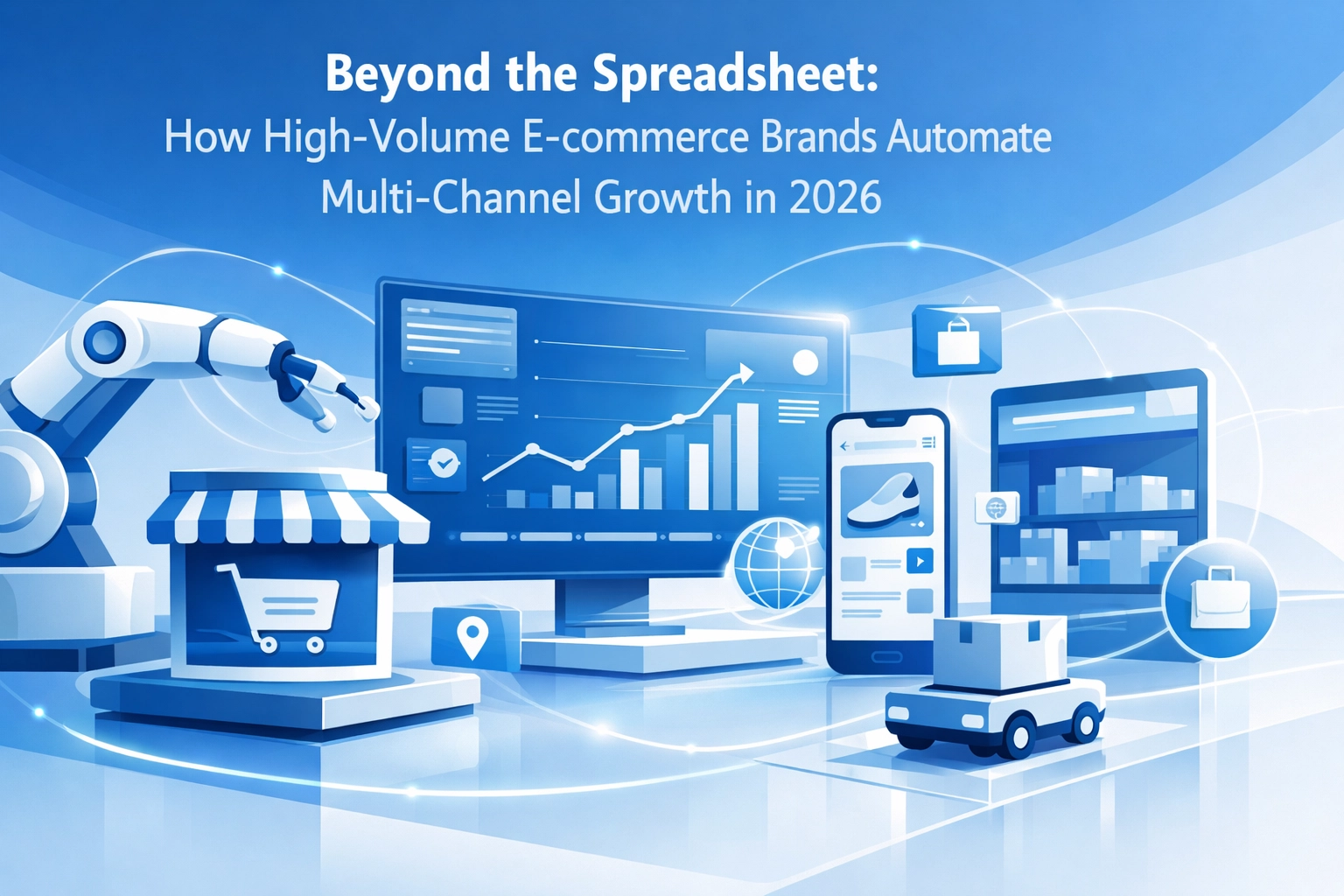
  • Beyond the Spreadsheet: How High-Volume E-commerce Brands Automate Multi-Channel Growth in 2026

    Beyond the Spreadsheet: How High-Volume E-commerce Brands Automate Multi-Channel Growth in 2026

    For a long time, the humble spreadsheet was the backbone of the e-commerce world. It was where you tracked your inventory, calculated your margins across Amazon and eBay, and tried to make sense of your ad spend. It worked when you were doing $500k a year. It even worked, albeit with some friction, at $2 million.

    But we are now in 2026. The landscape has shifted. If your high-volume brand is still relying on manual data entry and "Frankensteined" spreadsheets to manage multi-channel growth, you aren't just slowing down: you are hitting an invisible ceiling.

    The complexity of modern e-commerce: managing TikTok Shop, Amazon, eBay, Walmart, and your own Shopify store: requires more than just a better pivot table. It requires a fundamental shift in how your business operates. It requires moving from manual oversight to automated orchestration.

    At Pure Technology Consulting, we see this transition every day. Operationally constrained brands are realizing that their biggest bottleneck isn't their marketing or their product: it's their internal infrastructure.

    The Cost of the "Manual Drag"

    When you sell across multiple channels, data silos are your greatest enemy. Your Amazon team is looking at one set of numbers, your warehouse manager is looking at another, and your finance team is trying to reconcile everything two weeks after the fact.

    This "manual drag" manifests in several ways:

    • Overselling: Selling an item on eBay that just went out of stock on Amazon because the inventory sync took 30 minutes instead of 30 seconds.
    • Data Fragmentation: Spending 10 hours a week just cleaning data from different platforms to create one semi-accurate reporting dashboard.
    • Labor Dependency: Hiring more virtual assistants just to move data from point A to point B, rather than hiring talent that can actually grow the brand.

    In 2026, high-volume brands generate 140% more revenue when they sell on three or more channels. But you can't capture that revenue if your operations are built on a foundation of manual labor.

    Visualizing a business roadmap moving from manual data silos to automated e-commerce growth.

    Unified Commerce: The 2026 Standard

    The leaders in the space have moved beyond basic multi-channel selling into what we call Unified Commerce. This isn't just about having an API connection; it’s about real-time inventory orchestration.

    Instead of your inventory sitting statically in a warehouse waiting for an order, a unified system dynamically allocates stock based on real-time demand, fulfillment costs, and proximity to the customer. If a particular SKU is trending on TikTok, your system should automatically prioritize that channel's fulfillment without a human ever touching a keyboard.

    This level of synchronization ensures that your "Available to Promise" (ATP) inventory is accurate across every single touchpoint. It eliminates the risk of account suspensions due to stockouts and frees your team to focus on strategy rather than crisis management.

    Why Off-the-Shelf SaaS Often Falls Short

    You might be thinking, "Can't I just buy a subscription to a big-name inventory tool?"

    For many mid-market brands, the answer is a frustrating "sort of." Standard SaaS tools are built for the average user. But high-volume brands aren't average. You have unique workflows, specific 3PL integrations, and proprietary logic for how you bundle products or handle returns.

    When you try to force a complex, high-growth business into a rigid SaaS box, you end up creating "workarounds." These workarounds usually involve: you guessed it: more spreadsheets.

    This is where custom internal systems become a competitive advantage. At Pure Technology Consulting, we specialize in building the "connective tissue" that SaaS misses. Whether it’s a bespoke web development project that integrates your legacy ERP with modern marketplaces or a custom automated reporting dashboard, we build solutions that fit your business, not the other way around.

    Leveraging AI for Demand Forecasting and AEO

    In 2026, automation isn't just about moving data; it’s about making decisions. High-volume brands are now leveraging AI to move from reactive to predictive operations.

    1. Demand Forecasting

    Instead of looking at what you sold last month to determine what to buy next month, AI models analyze thousands of data points: seasonal trends, social media sentiment, and even weather patterns: to predict stock needs. This prevents the "capital trap" of overstocking items that are losing steam while ensuring you never run dry on your winners.

    2. Answer Engine Optimization (AEO)

    Product discovery has changed. Consumers aren't just typing keywords into search bars; they are asking AI assistants (like ChatGPT, Perplexity, and Gemini) for recommendations. High-volume growth now requires automating your product content to be "AI-ready." This means dynamically updating your listings across all channels to answer specific consumer questions, a process that is impossible to do manually at scale.

    A glowing digital grid symbolizing AI-powered demand forecasting and automated multi-channel orchestration.

    Reducing Labor Dependency Through Custom Automation

    One of the most significant shifts we help our clients navigate is the reduction of labor dependency. If your growth plan requires you to double your headcount every time you double your order volume, your business model is fundamentally broken.

    Custom automation allows you to scale your output without scaling your overhead. Think about the processes that eat up your team’s time:

    • Reconciling Amazon settlements.
    • Updating tracking numbers across five platforms.
    • Generating daily performance reports for stakeholders.

    By building custom internal systems, we turn these multi-hour tasks into background processes that happen in milliseconds. This doesn't just save money; it improves morale. Your best people want to solve problems and build the brand; they don't want to spend their lives in a spreadsheet.

    Building Your Scalable Operating Model

    If you are currently feeling the "operational squeeze," the path forward involves three strategic steps:

    1. Audit the Silos: Identify exactly where data is being manually moved or reconciled. Every manual touchpoint is a point of failure.
    2. Centralize the Source of Truth: You need one central hub: whether it’s a custom-built dashboard or a deeply integrated IMS: where every department sees the same numbers in real-time.
    3. Automate the "Boring" Stuff First: Start with the high-frequency, low-complexity tasks like order synchronization and basic reporting. This provides immediate ROI and proves the value of automation to your team.

    At Pure Technology Consulting, we bring the same level of technical rigor to e-commerce that we’ve used in high-stakes industries like healthcare and fintech. Whether it’s building complex matching engines or HIPAA-adjacent workflows, we understand that at the end of the day, it’s all about data integrity and operational leverage.

    The Visionary Path Forward

    The brands that will dominate the late 2020s are those that treat their software stack as a core asset, not just a monthly expense. They understand that bespoke automation is the key to unlocking true multi-channel growth.

    The era of the "Spreadsheet CEO" is over. The era of the "Automated Enterprise" has begun.

    If you’re ready to stop fighting your internal systems and start scaling your vision, it’s time to look beyond the spreadsheet. We can help you build the custom infrastructure you need to win.

    Ready to audit your workflow and see where automation can unlock your next level of growth?

    Schedule a discovery call with our team today to discuss your custom software roadmap.


    Amin Said, Founder of Pure Technology Consulting LLC
    https://puretechconsult.com
    +1 (803) 921-0969

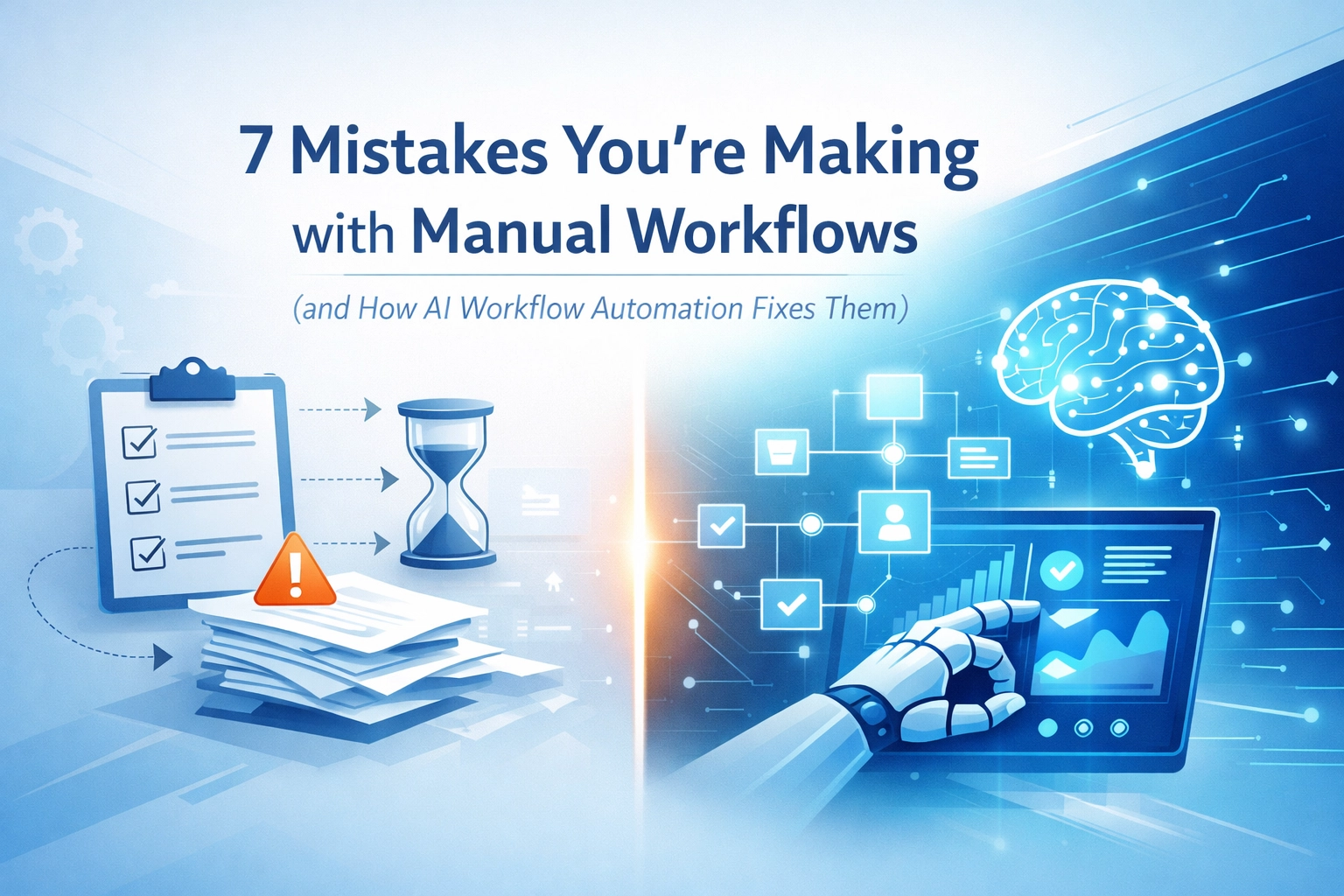
  • 7 Mistakes You’re Making with Manual Workflows (and How AI Workflow Automation Fixes Them)

    7 Mistakes You’re Making with Manual Workflows (and How AI Workflow Automation Fixes Them)

    In the current landscape of rapid digital transformation, the greatest threat to a growing enterprise isn't necessarily a smarter competitor, it’s the internal friction of "the way we’ve always done it." As we move deeper into 2026, the divide between companies that operate on manual intuition and those that run on AI-driven precision is becoming an unbridgeable chasm.

    At Pure Technology Consulting, we see it every day: brilliant CEOs and visionaries buried under the "operational drag" of manual workflows. They are trying to build the future while their teams are stuck manually entering data, chasing email approvals, and toggling between disconnected SaaS tools. This isn't just a productivity issue; it’s a strategic risk.

    If your organization is still relying on human-to-human handoffs for repetitive tasks, you are likely making these seven critical mistakes. Here is how AI workflow automation, and bespoke software architecture, can turn that operational drag into a massive competitive advantage.

    1. The High Cost of "Fatigue-Induced" Human Error

    Manual data entry is the silent killer of profitability. No matter how diligent your team is, humans are biologically incapable of performing repetitive data tasks with 100% accuracy over a long period. A single typo in a legal filing, a misplaced decimal in an accounting spreadsheet, or a misfiled patient record can lead to catastrophic financial or reputational damage.

    How Automation Fixes It:
    AI doesn’t get tired. By implementing automated data capture and validation layers, we eliminate the need for manual transcription. At Pure Technology Consulting, we applied this logic to our EHRIO Pro engine. Originally designed to handle complex healthcare data matching and 70-question intakes, it demonstrates how AI can process vast amounts of sensitive information with zero "fatigue" errors. When you automate the intake, the system validates the data against pre-set business rules before it ever hits your database, ensuring your "Source of Truth" remains untainted.

    AI data validation system transforming chaotic manual data into a precise digital source of truth.

    2. The Sequential Bottleneck: Waiting for Approvals

    In a manual world, work moves linearly. Task A must finish before Task B begins, and both usually stop dead when they hit an "Approval" stage. If an executive is in meetings or out of the office, the entire workflow grinds to a halt. This "sequential friction" adds days or weeks to project timelines that should take hours.

    How Automation Fixes It:
    AI-driven workflows allow for parallel processing. While a human might need to review a final contract, an AI can simultaneously run compliance checks, update the CRM, notify the finance team, and prepare the onboarding sequence. By the time the executive clicks "Approve," 90% of the post-approval work is already done. We specialize in building custom web apps that intelligently route these approvals, escalating them to the right person at the right time, or even auto-approving tasks that meet specific risk-threshold criteria.

    3. The "Black Box" Visibility Crisis

    If I asked you right now exactly where a specific client's project stands, could you answer without sending an email or checking a Slack channel? For most manual-heavy organizations, the answer is "no." Work disappears into a "black box" once it’s assigned. You lose real-time visibility, which makes it impossible to identify bottlenecks until it’s too late.

    How Automation Fixes It:
    True digital transformation involves creating a "Glass Box" operation. Automated workflows provide a real-time audit trail and dashboarding. For instance, our FTP Inform tool was built to solve a specific visibility problem: knowing exactly when and how data is moving between systems. In a custom automation build, we integrate these types of monitoring capabilities so that leadership can see a high-level heat map of their operations. If a process stalls, the system flags it immediately, allowing for proactive management rather than reactive firefighting.

    4. Compliance Hazards and The Missing Audit Trail

    For firms in the legal, accounting, or healthcare sectors, compliance isn't optional: it’s the foundation of the business. Manual workflows are notoriously difficult to audit. Relying on "I sent that in an email" or "I think John handled that" doesn't hold up under regulatory scrutiny. When there is no automated record of who did what and when, you are one audit away from a major crisis.

    How Automation Fixes It:
    Automation creates a permanent, immutable digital footprint. Every action taken by an AI agent or a triggered workflow is timestamped, logged, and categorized. When we build bespoke solutions for high-stakes industries, we bake HIPAA-adjacent workflows and SOC2-level logging into the architecture from day one. You don't have to "prepare" for an audit; the system is essentially auditing itself every second of every day.

    Secure digital audit trail illustrating immutable records for HIPAA compliance and SOC2 governance.

    5. The Ambiguity of Accountability

    In manual processes, responsibility often gets diffused. When a task falls through the cracks, it’s rarely because someone was lazy; it’s because the handoff was ambiguous. "I thought you were doing that" is the anthem of the manual workflow.

    How Automation Fixes It:
    AI workflow engines assign clear ownership at every micro-step. If a task isn't completed within a predefined window, the system can automatically re-assign it or escalate it to a supervisor. This level of accountability is what we implemented in our field operations work, where GPS logging and rep accountability are integrated directly into the workflow. There is no room for "I thought," only "I did."

    6. The Linear Growth Trap (The Scalability Wall)

    This is the mistake that keeps CEOs from sleeping. In a manual environment, if you want to double your output, you have to double your headcount. This is linear growth, and it’s expensive, slow, and risky. It tethers your ability to scale to the speed of your hiring and training processes.

    How Automation Fixes It:
    AI allows for exponential growth. Once a workflow is optimized and automated, the marginal cost of handling the 1,000th task is nearly identical to the cost of the 1st. Look at our AI Local Boost platform. It automates Google Business Profile management and local SEO actions that would otherwise require dozens of manual hours per client. By leveraging this type of automation, businesses can scale their client base 10x without needing to 10x their staff. We help our clients build these "scale engines" directly into their custom web applications.

    7. Automating a Mess (Process Debt)

    Perhaps the most common mistake is trying to automate a process that is fundamentally broken. If you take a redundant, inefficient manual workflow and apply AI to it, you just get "faster inefficiency." Many organizations carry "process debt": steps that were added five years ago for a reason that no longer exists.

    How Automation Fixes It:
    The path to automation requires a fundamental redesign. When we engage with a client for a custom software build, we don't just write code; we act as architects of your operating model. We look for redundant approval layers, outdated steps, and duplicate work. We strip the process down to its core value and then build the AI around that lean, optimized structure. It’s about working smarter, not just faster.

    Removing process debt by streamlining complex manual workflows into a lean AI-first operating model.

    Moving Toward an AI-First Operating Model

    The transition from manual to automated isn't just a technical upgrade: it’s a visionary shift in how you view your business. It’s about moving your human talent away from being "data movers" and toward being "decision makers."

    At Pure Technology Consulting, we don't believe in one-size-fits-all SaaS. We believe in building bespoke, high-performance engines that fit your specific business like a glove. Whether it's integrating telephony for call attribution in fintech or building complex matching engines for healthcare, our goal is to eliminate the manual mistakes that are holding your vision back.

    If you are ready to stop managing "manual drag" and start leading an automated powerhouse, we should talk. My assistant, Emily, can help coordinate a discovery call to audit your current workflows and identify where custom automation can provide the highest ROI.

    You can reach us directly at +1 (803) 921-0969 or schedule a strategy session via our website.

    Let’s build something that scales.

    Amin Said, Founder of Pure Technology Consulting LLC
    https://puretechconsult.com

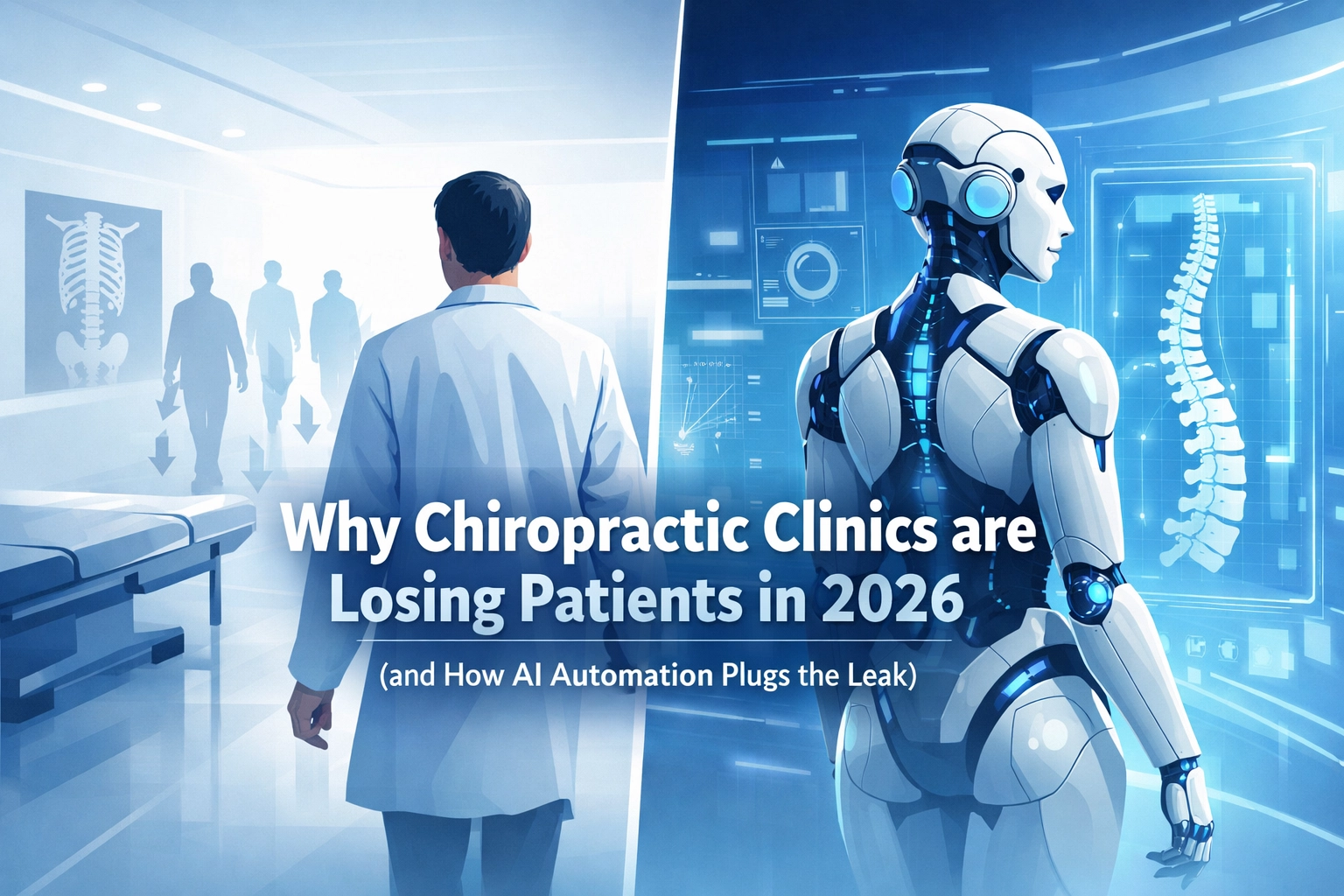
  • Why Chiropractic Clinics are Losing Patients in 2026 (and How AI Automation Plugs the Leak)

    Why Chiropractic Clinics are Losing Patients in 2026 (and How AI Automation Plugs the Leak)

    It is March 2026, and the landscape of local healthcare has shifted. If you’re running a chiropractic or physical therapy clinic today, you’ve likely noticed something unsettling. Your clinical results are as good as ever, maybe better, but your patient retention is flickering.

    The "leaky bucket" problem isn't new, but in 2026, the holes have grown significantly larger. Patients aren't just leaving because they feel better; they’re leaving because they feel forgotten. In an era where every other service in their life is hyper-personalized and automated, the "we’ll call you to remind you of your appointment" model feels like a relic from the 90s.

    At Pure Technology Consulting, we’ve spent years looking under the hood of local businesses. We’ve seen clinics that are absolute masters of the adjustment but struggle to keep their schedules full. The reality is that in 2026, the clinical side is only 50% of your business. The other 50% is the data-driven engagement that happens between those office visits.

    The Great Divide: Weekly Engagement vs. The "Ghost" Clinic

    Recent data has highlighted a stark divide in the wellness industry. On one side, you have clinics that "disappear" between visits. They treat the patient, set a follow-up for two weeks out, and then… silence. On the other side, you have high-growth practices that maintain consistent, automated contact.

    The numbers are hard to ignore. Practices that implement weekly engagement, whether through educational content, progress checks, or automated wellness tips, see open rates of 50-70% on their communications. More importantly, they see a massive spike in patient reactivations.

    When a patient doesn’t hear from you, they don’t just forget their next appointment; they forget the value you provide. They start to see your care as a luxury or a "when I have time" activity rather than a fundamental part of their health ecosystem.

    Digital comparison of a disconnected patient versus one engaged through automated clinic communication.

    Why Manual Systems are Failing the Modern Practitioner

    If you’re still relying on a front-desk person to manually call every lead or text every "no-show," you’re fighting a losing battle. Manual systems have three major flaws that are magnified in 2026:

    1. Inconsistency: Humans have bad days. They get busy. They forget to follow up with that lead who clicked an ad at 11:00 PM on a Tuesday.
    2. Delayed Response Time: In 2026, a lead is "cold" in about five minutes. If your team isn't responding to inquiries instantly, that potential patient has already moved on to the clinic down the street that has an AI chatbot handling their scheduling.
    3. Lack of Personalization: A generic "see you tomorrow" text is the bare minimum. Patients now expect "Hey Sarah, hope your lower back is feeling better after Tuesday's session. Here’s a 30-second video on the stretch we discussed."

    Doing that manually for 200 patients is impossible. Doing it with bespoke automation is effortless.

    Enter the Era of AI-Driven Wellness

    We aren't just talking about simple auto-responders anymore. The technology we’re building at Pure Technology Consulting leverages AI to create a seamless "health journey" for the patient.

    Imagine an ecosystem where your EHR (Electronic Health Record) isn't just a digital filing cabinet, but a living part of your marketing and retention engine. This is where the concept of interoperability comes into play. By integrating custom software with your existing tools, we can trigger specific automation based on actual clinical data.

    For example, if a patient’s wearable device (like an Oura ring or Apple Watch) detects a spike in sedentary behavior or a drop in sleep quality, an automated system can reach out with a personalized wellness tip or a suggestion to book a maintenance adjustment. This isn’t "creepy" tech; it’s proactive care. It’s showing the patient that your clinic is a partner in their health 24/7, not just when they are on your table.

    AI automation optimizing clinical workflows by replacing inefficient manual chiropractic scheduling.

    Proof of Concept: Plugging Gaps with EHRIO Pro

    To understand how this looks in practice, you only have to look at the work we’ve done with EHRIO Pro. We designed EHRIO Pro as a high-level matching and intake engine specifically for healthcare environments. It’s a prime example of how bespoke development beats "off-the-shelf" SaaS every time.

    In many clinics, the intake process is a friction point. Patients hate filling out 70-question forms on a clipboard. With the workflows we developed for EHRIO Pro, we turned that intake into a smart, HIPAA-adjacent engine that not only gathers data but starts the "nurture" process immediately.

    By the time the patient walks through your door, the system has already:

    • Qualified their needs.
    • Cross-referenced their symptoms with your specific expertise.
    • Sent them a personalized welcome video.
    • Added them to a specific "Post-Treatment" sequence.

    This is the level of sophistication required to dominate a local market in 2026. It’s about taking the administrative weight off your shoulders so you can actually be a doctor.

    Inconsistent Lead Flow: The Silent Killer

    The biggest complaint I hear from clinic owners is the "rollercoaster" of lead flow. One month you’re overbooked; the next, you’re staring at a half-empty calendar.

    This happens because most clinics only market to "new" patients. They ignore the goldmine sitting in their database. AI automation allows you to "mine" your existing list for reactivations without lifting a finger.

    Using custom scripts and local SEO automation: something we’ve perfected with our AI Local Boost capabilities: we ensure your clinic stays top-of-mind. We build systems that monitor your Google Business Profile, respond to reviews instantly (which boosts your ranking), and re-engage patients who haven't been in for 90 days with a personalized "Check-in" offer.

    A digital pipeline representing automated lead flow and patient reactivation for wellness clinics.

    Automation Without Complexity

    I know what you’re thinking: "I’m a chiropractor, not a tech genius. I don’t have time to manage a complex software stack."

    That is exactly why we focus on bespoke development. The problem with most SaaS products is that they force you to change your workflow to fit their software. At Pure Technology Consulting, we do the opposite. We look at how you already work and build the automation around you.

    My assistant, Emily, often coordinates with clinic managers to identify the "friction points" in their day. Is it the insurance verification? Is it the back-and-forth of rescheduling? Once we identify those, we build a custom bridge to fix it.

    The goal is "Automation without Complexity." You shouldn't have to log into five different dashboards. You need one source of truth that tells you your lead flow is steady and your patient retention is climbing.

    The Visionary Path Forward

    The "Old Guard" of chiropractic care will continue to struggle with manual processes and "ghosting" patients. They will blame the economy or the competition.

    But the visionary owners: the ones who see themselves as health CEOs: will embrace the transformation. They will use AI not to replace the human touch, but to amplify it. They will use technology to ensure no patient ever feels like just another number on a chart.

    Healthcare CEO managing a digital ecosystem to improve chiropractic patient retention and growth.

    If your clinic is feeling the "leak" in 2026, it’s time to stop patching it with more ad spend and start plugging it with better systems. Whether it’s integrating wearables, streamlining your EHR, or building a custom intake engine like EHRIO Pro, the path to growth is through operational leverage.

    At Pure Technology Consulting, we don’t just write code; we build the operating models that allow local businesses to scale. We’ve done it in healthcare, we’ve done it in fintech, and we’ve done it in high-ticket professional services.

    If you're ready to see how custom automation can transform your clinic’s bottom line, let’s talk. We can start with a workflow audit to see exactly where your patients are slipping through the cracks. No fluff, just a roadmap to a more efficient practice.

    You can explore some of our video walkthroughs to see these systems in action, or reach out directly to start the conversation.

    The future of your clinic isn't just in your hands; it's in your systems.

    Amin Said, Founder of Pure Technology Consulting LLC
    https://puretechconsult.com
    Phone: +1 (803) 921-0969

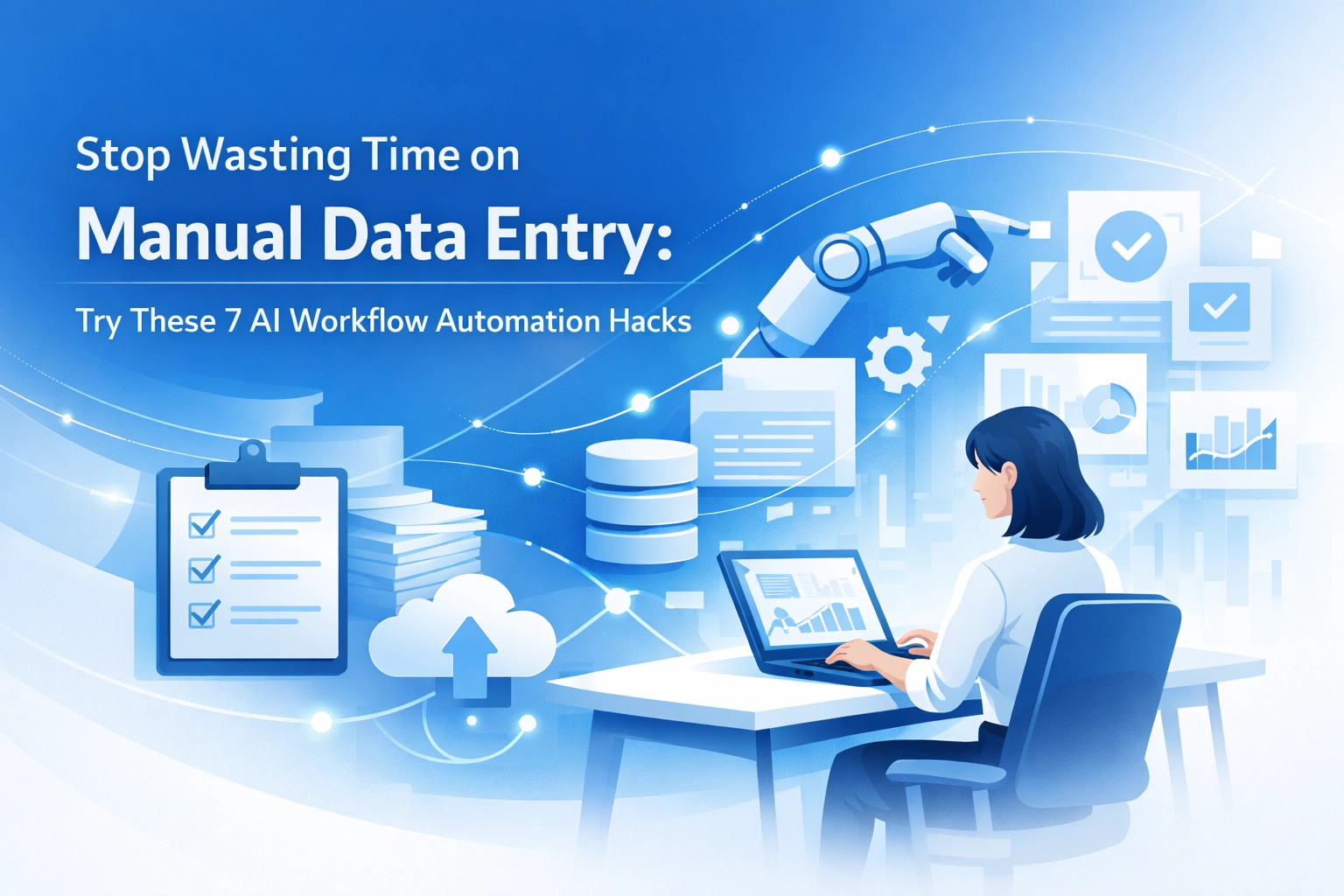
  • Stop Wasting Time on Manual Data Entry: Try These 7 AI Workflow Automation Hacks

    Stop Wasting Time on Manual Data Entry: Try These 7 AI Workflow Automation Hacks

    In the modern enterprise, time is the most liquid asset. Yet, many high-growth organizations remain anchored by a hidden operational drag: manual data entry. It is a silent thief of productivity, consuming hours of high-value human talent on tasks that require zero creative judgment. From the perspective of a visionary leader, manual data entry isn't just a "chore", it is a strategic bottleneck that prevents your team from focusing on innovation, client relationships, and high-level strategy.

    The shift toward autonomous operations is no longer a futuristic concept; it is the current standard for industry leaders. At Pure Technology Consulting, we view automation not as a simple replacement for labor, but as a mechanism for scaling human potential. By leveraging AI-powered workflow automation, we transform fragmented data points into cohesive, actionable intelligence.

    Here are seven AI workflow automation hacks designed to eliminate manual entry and reclaim your team’s focus.

    1. Capture Data at the Source: The "No-Transcription" Mandate

    The most efficient way to handle data is to never type it in the first place. Many businesses suffer from "transcription lag", the time between receiving information and manually entering it into a CRM or database. Whether it is a lead from a web form or a request from an email, manual transcription introduces a high risk of human error.

    The solution is to automate at the origin. By integrating tools like custom web forms directly with your internal systems, data flows seamlessly from the client’s fingertips into your operational roadmap. For professional services in legal and accounting, this means 70-question intakes can be processed instantly, allowing practitioners to walk into meetings with a complete profile rather than a stack of papers.

    2. Implement Universal Data Synchronization

    One of the greatest sources of operational drag is the maintenance of duplicate records across disparate systems. When a spreadsheet doesn't talk to a CRM, and a CRM doesn't talk to an invoicing tool, your team spends half their day simply "matching" data.

    Digital network illustrating seamless bidirectional data synchronization across a unified tech stack.

    A visionary approach involves creating a unified data layer. By setting up bidirectional syncs, an update in one system reflects across your entire tech stack. This eliminates "missing lead" scenarios and ensures that every stakeholder, from sales to fulfillment, is looking at a single version of the truth. At Pure Technology Consulting, we specialize in building these bespoke integrations that connect the common tools you already use, such as Gmail, Google Sheets, and enterprise CRMs, into a singular, cohesive engine.

    3. Leverage FTP Inform for Intelligent Data Monitoring

    Automation is only as good as its awareness. In many complex industrial and financial workflows, data is often moved via legacy protocols like FTP. Traditionally, someone would have to manually check these folders for new files, download them, and then input the data into a modern dashboard.

    This is where our proprietary tool, FTP Inform, demonstrates its power as a proof-of-concept for custom automation. FTP Inform monitors your file transfers and provides instant notifications and updates when new data arrives. Instead of your team constantly "checking for updates," the updates come to them. This capability is a prime example of how we bridge the gap between legacy infrastructure and modern, AI-driven workflows. It ensures that your data entry triggers are automated the moment a file lands, reducing cycle time and increasing throughput.

    4. Deploy AI Quality Governance and Validation

    Data entry is often slowed down by the need for quality checks. Teams manually review entries to find duplicates, flag missing fields, or correct formatting errors. This is a task perfectly suited for AI agents.

    By implementing AI quality checks before data even enters your primary system, you establish a governance layer that maintains reporting accuracy. These agents can detect anomalies, classify records based on content, and even flag invalid information for human review. This "Human-in-the-Loop" strategy ensures that while the heavy lifting is automated, the high-level oversight remains intact, significantly reducing the risk of "garbage in, garbage out."

    AI-powered data validation and intelligent document processing for improved accuracy and quality.

    5. Intelligent Document Processing (IDP) for Complex Sources

    For industries like legal, healthcare, and accounting, data often arrives in unstructured formats: PDFs, scanned contracts, and handwritten notes. Standard automation often fails here, but Intelligent Document Processing (IDP) thrives.

    Using advanced AI extraction, IDP can identify and capture relevant data fields, such as invoice numbers, contract expiration dates, or patient identifiers, without a single keystroke from your staff. We have applied similar logic in healthcare settings with EHRIO Pro, where matching engines and complex intakes require absolute precision. This level of automation allows a firm to process thousands of documents in the time it would take a human to process ten, all while maintaining a higher degree of accuracy.

    6. Utilize AI Agents for Batch Processing and Consistency

    When dealing with bulk data updates, human fatigue is the enemy of consistency. A team member might format a phone number one way at 9:00 AM and another way at 4:00 PM. AI data entry agents, however, maintain perfect consistency across millions of records.

    Batch processing with AI allows for simultaneous updates across your entire database. Whether you are re-categorizing a decade of financial records or updating lead statuses after a major marketing campaign, AI agents follow standard conventions precisely. This ensures your dashboards and analytics remain clean and reliable for executive-level decision-making.

    Digital grid representing AI batch processing and consistent data mapping for business dashboards.

    7. Strategic Field Mapping and Integration

    The final hurdle in eliminating manual entry is the "mapping" problem, ensuring that Data Point A in System 1 lands in the correct Field B in System 2. Manual field mapping is tedious and prone to error.

    Modern automation platforms, coupled with bespoke software development, use intelligent field mapping to recognize standard conventions. By analyzing the data type and context, these systems can automatically suggest and implement the correct mapping. This reduces the setup time for new integrations from weeks to hours. At Pure Technology Consulting, we focus on these high-ticket custom web app builds that ensure your software fits your operations perfectly, rather than forcing your operations to fit into a generic SaaS box.

    The Path Forward: From Manual to Autonomous

    Moving away from manual data entry is not just a technical upgrade; it is a leadership decision to value the time and intellect of your workforce. The hacks mentioned above, from source capture to proprietary monitoring via FTP Inform, are the building blocks of a truly digital enterprise.

    As we continue to pivot our capabilities into the legal and accounting sectors, we bring proven expertise from healthcare, fintech, and field operations. Whether it is our work in GPS logging for field reps or telephony integrations for debt agencies, our focus remains on creating bespoke, high-level automation that drives operational leverage.

    The future of your business shouldn't be spent in a spreadsheet. It should be spent in the boardroom, in the laboratory, and in front of your clients.

    Ready to Audit Your Workflows?

    If your organization is still losing hundreds of hours to manual data entry, it is time for a strategic roadmap. We invite you to explore how custom web applications and bespoke automation can transform your operating model.

    To discuss a workflow audit or to scope a custom development project, please reach out to my assistant, Emily, to schedule a discovery call.

    No obligation: just a visionary look at what your business could become when it is finally unchained from manual entry.

    Amin Said, Founder of Pure Technology Consulting LLC
    https://puretechconsult.com
    +1 (803) 921-0969